
Are cows friendly? Many are calm, curious, and willing to interact with people they know. Cattle are social animals that can distinguish familiar from unfamiliar humans, form preferences within a herd, and become more willing to approach after consistent, gentle handling. But friendliness is individual—not a guarantee of safety.
A cow that walks toward you may be curious, expect food, follow the movement of the herd, or monitor a nearby calf. Treat an approach as information, not permission. On a farm, sanctuary, or public footpath, get the handler’s permission before touching or feeding cattle and always leave the animal room to move away.
Key takeaways
- Cattle are social animals with individual temperaments and learned preferences.
- They can distinguish familiar people and connect a known person’s face with their voice.
- Consistent, gentle handling can reduce avoidance and build familiarity.
- Following, staring, licking, or approaching does not automatically mean a cow wants to be touched.
- Cows with calves, bulls, frightened animals, and cattle in pain or crowded spaces require extra distance.
What does “friendly” mean in a cow?
Strictly speaking, a cow is an adult female bovine, while cattle includes cows, bulls, steers, heifers, and calves. This article uses “cow” in the everyday sense when answering the search query and “cattle” when discussing the wider group.
“Friendly” is a human label, not a scientific temperament category. A more useful question is whether the animal voluntarily approaches, remains relaxed, accepts contact, and can leave whenever it chooses. Behavior must be read in context because the same action can have more than one cause.
| What you observe | What it may mean | Safest response |
|---|---|---|
| Slow approach, sniffing, and a loose posture | Curiosity, familiarity, or an expectation of food | Stay calm and let the cow choose the distance. Touch only with the handler’s permission. |
| The cow remains for gentle contact and returns after you stop | The interaction may be familiar or rewarding to that individual | Continue briefly and gently, then stop again to give the cow a choice. |
| The cow follows a person or vehicle | Curiosity, herd movement, or a learned association with feed | Do not run, tease, or hand-feed the animal. Keep moving calmly toward a clear exit. |
| The cow licks skin or clothing | Taste, salt, exploration, or social contact | Do not treat licking alone as proof of affection. Keep your face away and step back if uncomfortable. |
| The cow turns away, steps back, or avoids touch | The animal wants more space | Stop the interaction and increase your distance. |
| The body stiffens, the head lowers, or the animal repeatedly advances after you retreat | Elevated arousal, defensive behavior, or an escalating encounter | Leave calmly by the safest route and put a sturdy barrier between you and the animal if possible. |
| A cow positions herself between you and a calf | Maternal monitoring or protective behavior | Move away. Never pass between a cow and her calf. |
Cows are social animals, but “best friend” is a strong claim
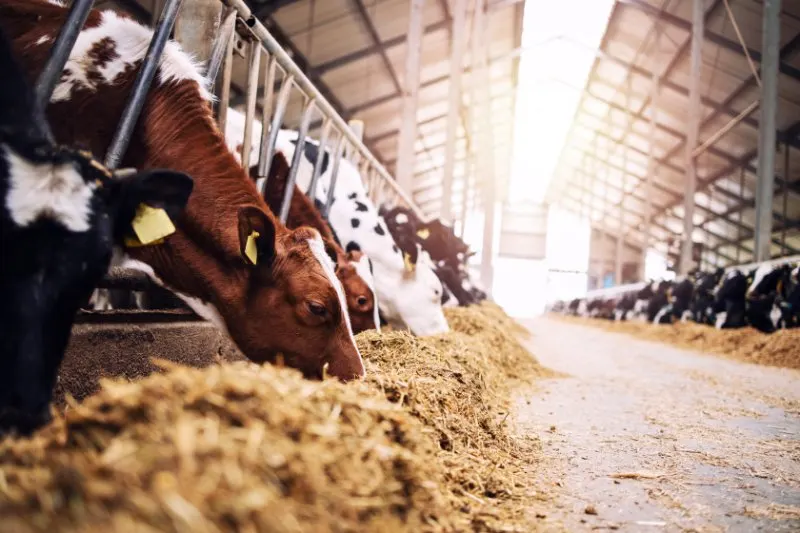
Cattle are gregarious animals whose daily lives are shaped by the herd. In a study of dairy cows after regrouping, familiar animals were more likely to remain connected as grooming partners and feeding neighbors. Another social-network study found that grooming patterns were related to familiarity, age, and previous grooming between individuals.
Social grooming and familiar partners
Social licking, also called allogrooming, can help maintain relationships and provide access to body areas an animal cannot easily reach. It is not random: a 2020 study of dairy-cow grooming networks found patterns of reciprocity and partner selection.
Calling these relationships “friendships” may be understandable in everyday language, but the evidence deserves care. A 2025 systematic review of peer social bonds in farm animals found evidence of non-random relationships in cattle while concluding that research has not yet tested every criterion needed to establish stable, reciprocal, stress-buffering bonds. The safest summary is that cows have preferred and familiar social partners; “best friend” is a plausible interpretation, not a settled label for every pair.
Can cows recognize and bond with humans?
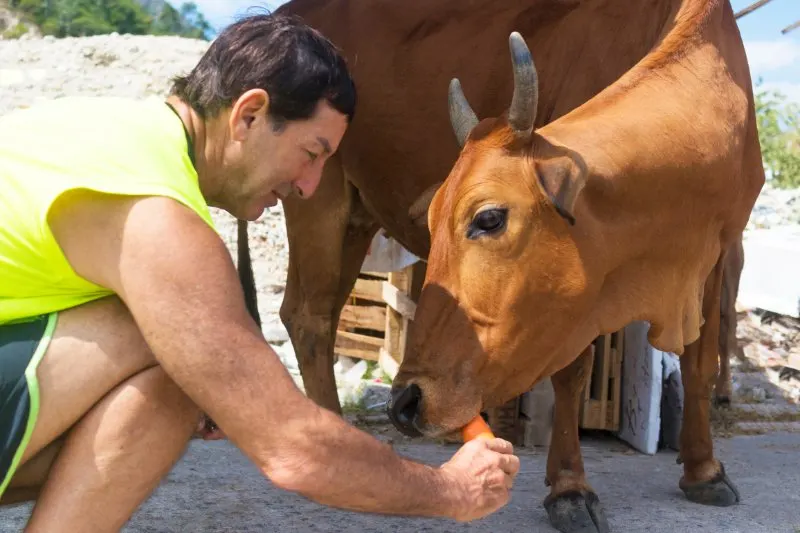
Yes, cattle can learn who particular people are. In a controlled study published in 2026, cows distinguished familiar from unfamiliar human faces and matched familiar voices with the correct faces. A separate 2026 experiment found that cows remembered whether unfamiliar people had been shown expressing joy or anger and later spent more time near the person associated with joy.
Those studies show discrimination, memory, and sensitivity to human cues. They do not prove that every cow forms an emotional bond with a caretaker or can read every human feeling. Individual temperament, handling history, housing, health, and the immediate situation still matter.
Human behavior also changes the relationship. Research on dairy farms has associated positive stockperson attitudes with calmer responses from cows, while an experimental study found that gentle stroking and quiet talking reduced avoidance distance over time.
Do cows like being petted?
Some well-socialized cows appear to seek or accept gentle touch, particularly from familiar people. In one study, repeated stroking on the lower neck made cattle more willing to approach and less avoidant of human contact. That result does not make petting universally welcome.
- Ask the owner or handler before approaching, feeding, or touching the animal.
- Approach from a visible angle rather than directly behind the cow.
- Stop outside the animal’s personal space and allow it to approach you.
- If contact is allowed, use slow strokes on the neck or shoulder area recommended by the handler.
- Stop if the cow steps away, becomes tense, turns sharply toward your hand, or blocks your movement.
- Do not hug, climb on, corner, or surprise cattle, even when they appear calm.
Possible signs of trust
A cow may be comfortable with a person when it voluntarily approaches, remains nearby without being restrained, accepts brief touch, and returns after the interaction pauses. Familiarity is more convincing when the behavior is repeated across calm situations. No single gesture—including licking, following, or leaning—proves affection on its own.
How cows communicate
Cattle communicate through distance, posture, movement, touch, scent, and vocalizations. Their calls are not interchangeable: research has found individual identity cues in high-frequency cattle calls across different farming situations.
- Distance: approaching, remaining nearby, or withdrawing shows how much space the animal is choosing.
- Orientation: facing, watching, turning away, or positioning the body between a person and a calf can change the meaning of an encounter.
- Touch: licking and rubbing can be social, practical, exploratory, or related to an itch.
- Vocalization: a call may occur during separation, anticipation, social contact, or heightened arousal. A “moo” does not have one universal translation.
Researchers interpret behavior by combining several signals with context rather than assigning a human emotion to one movement. The same caution applies when asking whether animals smile or display emotions in human-like ways.
Why do cows follow people?
Following is often less mysterious than it looks. A cow may associate a person, bucket, or vehicle with feed; investigate something unfamiliar; move with other cattle; recognize a regular caretaker; or keep watch when a calf is nearby. The safest response is to remain calm, avoid offering food, and keep a clear route out of the area.
When can a friendly cow become dangerous?
Any cow can cause injury without intending to “attack.” Cattle are large, fast, and capable of knocking a person down. Official safety guidance gives particular attention to newly calved cows, cows with calves, bulls, and encounters involving dogs.
Situations that increase risk
- A person approaches a calf or moves between the calf and its mother.
- A dog excites, chases, or is perceived as threatening the herd.
- An animal is cornered, separated from the herd, startled, or crowded at a gate or feed source.
- Pain, illness, lameness, heat stress, hunger, or other discomfort changes the animal’s normal response.
- A person enters the animal’s flight zone too quickly or approaches from the blind area directly behind it.
- An unfamiliar bull or other large animal is treated as safe because it appears quiet.
How to behave safely around cattle
This is general public-safety guidance, not a substitute for livestock-handling training or local rules. Follow instructions from the landowner, employer, sanctuary, farm, or site operator.
- Ask permission before entering a pasture, pen, or barn, and follow every posted instruction.
- Observe the herd before entering. Choose another route if cattle block the path or the situation feels uncertain.
- Give cows with calves a wide berth and never walk between them.
- Move quietly and predictably. Do not run toward or through the herd.
- Stay where cattle can see you. Penn State Extension advises avoiding the blind spot directly behind cattle, which can startle them.
- Do not corner an animal or deliberately push into its flight zone.
- Keep dogs under close control and follow local countryside guidance. Dogs can trigger protective behavior, especially around calves.
- If cattle become threatening, create distance and move toward the safest exit or a sturdy barrier. Seek urgent medical help after any significant impact, fall, crush injury, or horn injury.
Health, housing, and handling shape temperament
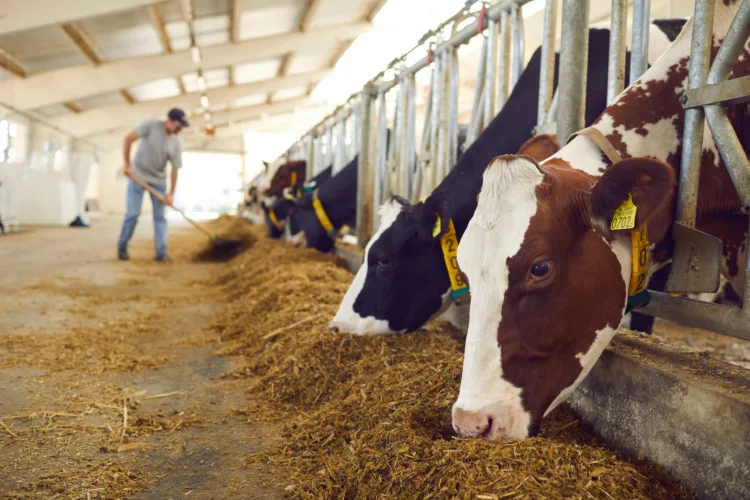
Temperament is partly individual, but behavior also reflects what is happening around the animal. A calm cow may become avoidant or defensive when it is in pain, overheated, hungry, crowded, separated from companions, or repeatedly handled roughly. A frightened animal generally has a larger flight zone than one accustomed to low-stress contact.
Good management includes reliable access to food and water, comfortable resting areas, adequate space, ventilation or shade, social contact, timely veterinary care, and handling that does not rely on fear. Cornell’s guidance on cow comfort and farmstead planning explains why housing details matter to health and daily behavior.
Some behavior reflects short-term learning, while other traits and responses develop over generations. Our guide to behavioral and physical animal adaptations explains the difference between an individual response and an inherited adaptation.
Maternal behavior and the cow–calf bond
Mother cows nurse, groom, stay near, and respond to their calves. A 2024 study comparing full-time and part-time cow–calf contact found that contact schedules changed the amount of nursing and grooming, while measures of bond strength were more complex and required further research.
Separation can also affect calves. In a controlled judgment-bias study, calves responded more pessimistically to ambiguous cues after separation from their mothers, a pattern consistent with a negative emotional state. These findings support taking maternal behavior seriously without turning every protective response into a claim about personality.
For visitors, the practical rule is simple: never approach a calf, enter the space between a cow and calf, or assume the mother’s earlier calm behavior will continue when her calf is involved.
The bottom line
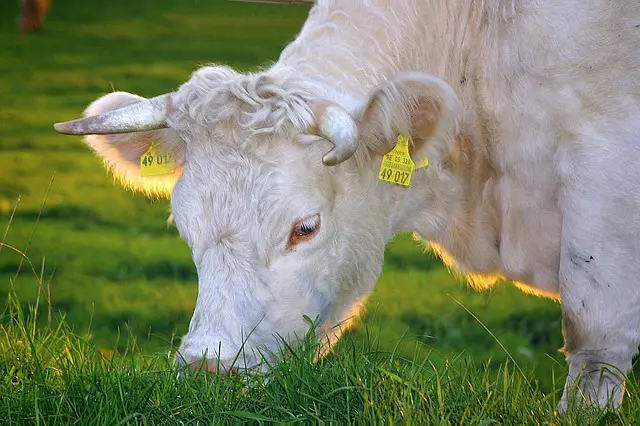
Cows can be friendly to humans. They can recognize familiar people, learn from repeated interactions, and choose to approach or accept contact. They are also autonomous, powerful animals whose behavior changes with context. Curiosity is not consent, familiarity is not complete predictability, and a calm animal still deserves space.
The most respectful approach is also the safest: observe first, ask permission, let the cow choose contact, stop when it withdraws, and support farms or sanctuaries that use low-stress handling and meet the animals’ physical and social needs.
Frequently asked questions about cow behavior
Are cows friendly to humans?
Many cows are calm and can become comfortable with familiar people through repeated, gentle handling. Individual temperament and past experience matter, and an approach does not guarantee that touching is welcome or safe.
Do cows like being petted?
Some well-socialized cows appear to seek or accept gentle stroking. Ask the owner or handler first, let the cow approach, touch only where the handler recommends, and stop if the animal steps away or becomes tense.
How do cows show trust or affection?
Possible signs include voluntarily approaching, remaining near a familiar caretaker, returning after an interaction, and calmly accepting touch. No single behavior proves affection, so interpret the whole situation rather than one gesture.
Can cows recognize individual humans?
Yes. Controlled studies published in 2026 found that cows distinguished familiar from unfamiliar human faces, matched familiar voices with faces, and used remembered human emotional cues when choosing whom to approach.
Why do cows follow people?
A cow may follow because it is curious, expects food, recognizes a handler, is moving with the herd, or is monitoring a nearby calf. Following should not automatically be treated as an invitation to pet or feed the animal.
Are cows dangerous?
They can be. Their size alone can cause serious injury, and risk rises around calves, bulls, dogs, crowding, pain, illness, or an animal that feels trapped. Give unfamiliar cattle space and follow the owner’s or local authority’s safety guidance.
What should I do if cattle approach me?
Stay calm, avoid sudden movements, do not run through the herd, and move toward the safest exit or a sturdy barrier. Keep clear of calves, avoid getting behind an animal, and follow local instructions for dogs and public-access fields.
Are bulls friendly?
Some familiar bulls may appear calm, but that does not make them safe to approach or pet. Bulls should be handled only by trained people using suitable facilities and separation.