
Quick answer: Ratel, zebra, mouse, sheep, whale, sloth, viper, gecko, skink, ranid, siren, galah, raven, junco, eagle, trout, sprat, grunt, midge, roach, and Musca are all animal words with exactly five letters.
This illustrated list keeps the 21 names from the original article, but it distinguishes single species from broader common names and taxonomic groups. That matters because “whale,” “zebra,” and “eagle” each cover multiple species, while Musca is a genus and “ranid” means a member of the frog family Ranidae.
Use the list for word games, classroom activities, or quick animal reference. The facts were reviewed in August 2026, and the wording avoids treating an entire animal group as endangered when conservation status actually varies by species or population. For more context, see how animals adapt to their environment.
Five-letter animals at a glance
| Animal | Group | What the name refers to |
|---|---|---|
| Ratel | Mammal | Another common name for the honey badger |
| Zebra | Mammal | Any of three living African equid species |
| Mouse | Mammal | A broad common name; this article profiles the house mouse |
| Sheep | Mammal | The domestic sheep, Ovis aries |
| Whale | Mammal | A broad name for baleen and toothed cetaceans |
| Sloth | Mammal | Tree-dwelling mammals of Central and South America |
| Viper | Reptile | A venomous snake in the family Viperidae |
| Gecko | Reptile | A diverse group of mostly small lizards |
| Skink | Reptile | A lizard in the family Scincidae |
| Ranid | Amphibian | A frog in the family Ranidae |
| Siren | Amphibian | An aquatic salamander in the family Sirenidae |
| Galah | Bird | An Australian pink-and-gray cockatoo |
| Raven | Bird | A large corvid; this article profiles the common raven |
| Junco | Bird | A small New World sparrow; this article profiles the dark-eyed junco |
| Eagle | Bird | A broad common name for many large birds of prey |
| Trout | Fish | Several salmonid fishes, mostly associated with cool water |
| Sprat | Fish | Small schooling marine fishes related to herrings |
| Grunt | Fish | A fish in the family Haemulidae |
| Midge | Insect | A broad common name for several families of small flies |
| Roach | Insect | A shortened common name for a cockroach |
| Musca | Insect | A genus of flies that includes the house fly |
How this list was checked
- Every featured name contains exactly five letters in its singular English form.
- The list is not exhaustive. Koala, tiger, horse, panda, otter, snake, shark, and camel are other valid examples.
- Some entries are broad common names rather than one species. Conservation claims therefore need a species-level source.
- Scientific names are italicized where used. Learn more about what biologists mean by a species.
Five-letter mammal names
1. Ratel
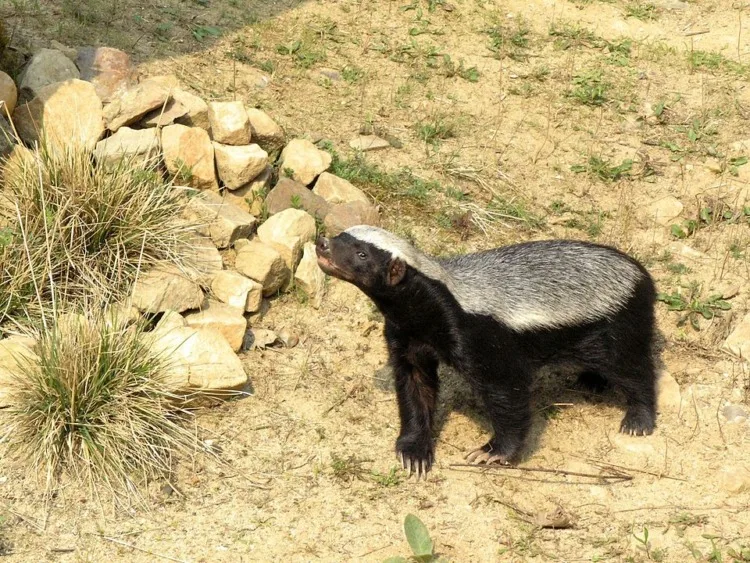
Ratel is another name for the honey badger, Mellivora capensis, a member of the weasel family found across much of Africa and parts of Asia. Its loose, tough skin and strong foreclaws help it defend itself and dig for food or shelter.
Honey is only one part of a ratel’s varied diet. Honey badgers also eat insects, reptiles, birds, small mammals, carrion, roots, and fruit. They are mostly solitary, and females usually raise one cub after a gestation of about seven to ten weeks, according to the San Diego Zoo’s honey badger profile.
2. Zebra
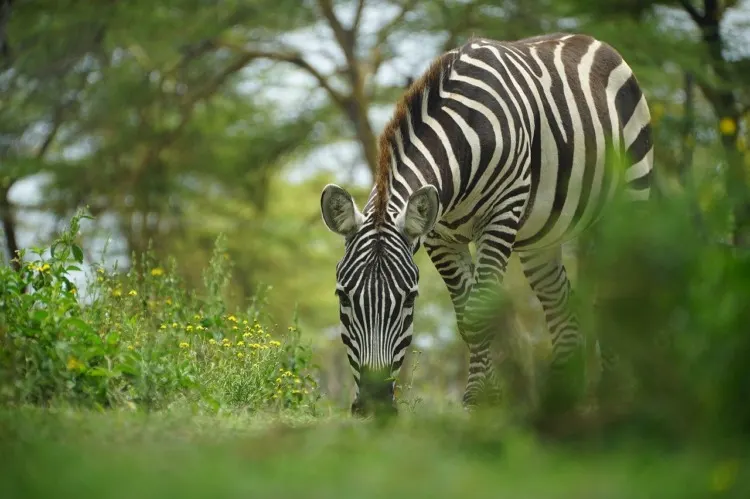
Zebra is a common name for three living African equid species: the plains zebra, mountain zebra, and Grévy’s zebra. All have black-and-white coats, but stripe width, spacing, and body pattern differ among species and individuals. Like horses and asses, zebras are hoofed grazers with teeth adapted to processing fibrous vegetation.
It is inaccurate to label every zebra endangered simply because zebras have predators. Conservation status differs by species. The Smithsonian’s National Zoo identifies Grévy’s zebra as the most threatened zebra species and estimates that fewer than 2,500 remain in the wild.
3. Mouse
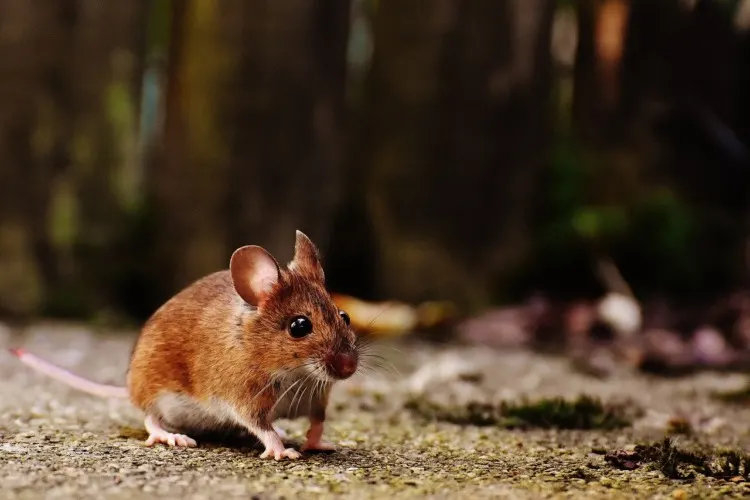
Mouse is a broad common name for many small rodents. The familiar house mouse, Mus musculus, typically has a pointed snout, rounded ears, and a long, lightly furred tail. It has spread around the world by living close to people in homes, barns, warehouses, fields, and other human-modified habitats.
Mice can climb, jump, burrow, and squeeze through small openings. They are also important research organisms in genetics and medicine. A mouse is not simply a young rat: mice and rats include different species with distinct body sizes, proportions, and behavior. Browse more animals that start with M.
4. Sheep
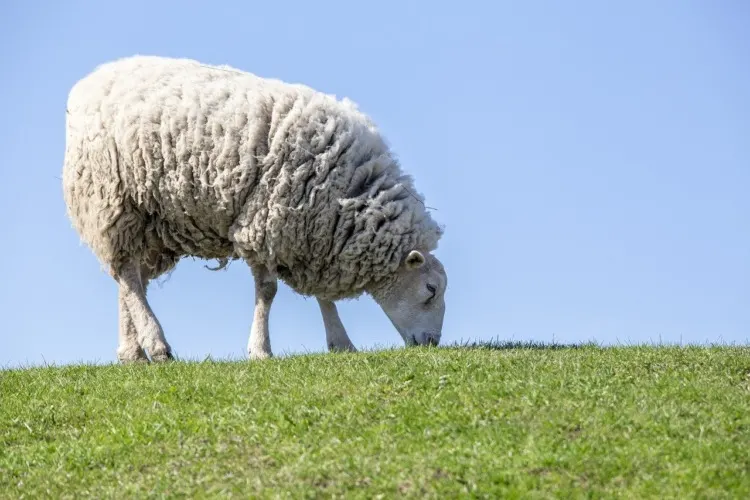
Sheep usually refers to the domestic species Ovis aries. People raise sheep for wool, milk, meat, hides, and land management. Breeds differ greatly in size, coat, horn shape, and tolerance for different climates.
Sheep are ruminants, so they graze and later regurgitate and rechew plant material as cud. Their strong flocking instinct helps explain why they move and rest in groups; separation from the flock can be stressful. These social and feeding behaviors are more accurate descriptions than the old stereotype that sheep are unintelligent.
5. Whale
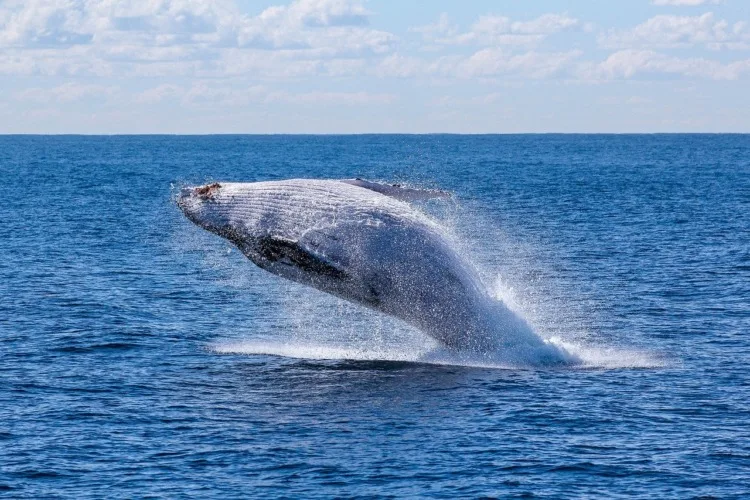
Whale is a broad common name for marine mammals in the cetacean group. Whales are divided into baleen whales, which filter prey such as krill from the water, and toothed whales, which catch fish, squid, or other animals. The blue whale is the largest animal known to have lived, but whale species range widely in size, diet, range, and conservation status.
Not every whale species is headed for extinction. Some remain in serious danger, however. In its July 29, 2026 update, NOAA Fisheries reported a most recent abundance estimate of about 380 North Atlantic right whales, including roughly 70 reproductively active females. Entanglement in fishing gear and vessel strikes remain leading threats. See more facts about whales.
6. Sloth
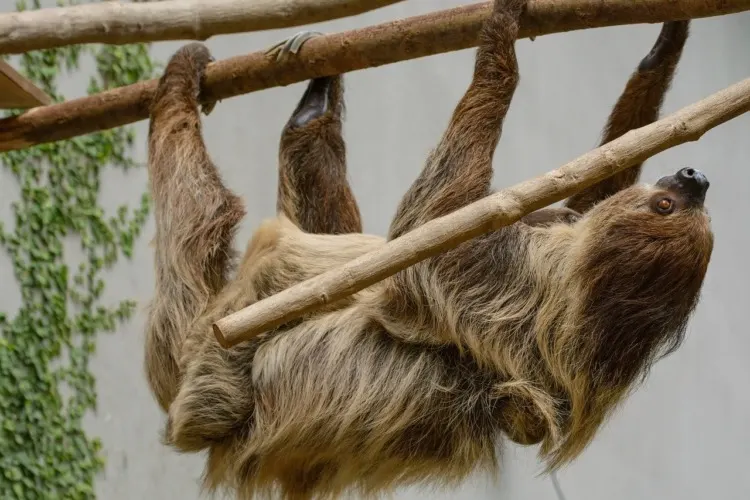
Sloth refers to slow-moving, tree-dwelling mammals native to tropical Central and South America. Living species are commonly grouped as two-toed or three-toed sloths. Their slow pace reflects a low-energy diet and metabolism rather than laziness.
Grooves in sloth fur can support algae, giving some animals a greenish tint that helps them blend into foliage. Sloths are awkward on the ground but capable swimmers. Sleep time varies by species and setting, so a single “15 to 20 hours” figure should not be applied to every sloth. Our profile of the pygmy three-toed sloth explains why one species has an especially restricted range.
Five-letter reptile names
7. Viper
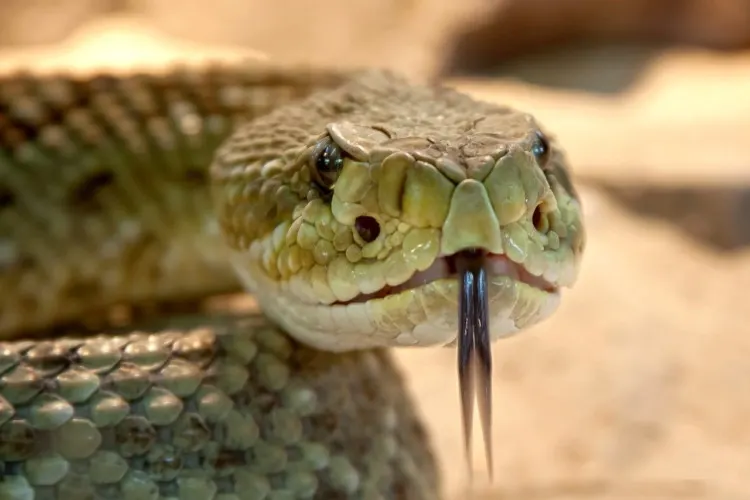
A viper is a venomous snake in the family Viperidae. Vipers have long, hinged front fangs that fold back when the mouth closes and swing forward during a strike. The fangs inject venom—not poison—to immobilize prey and begin digestion.
Only pit vipers have the heat-sensitive facial pits located between the eye and nostril; this feature does not occur in every viper. Activity patterns, temperament, habitat, and venom effects vary greatly by species. Never handle or approach an unidentified wild snake. See other animals that start with V.
8. Gecko
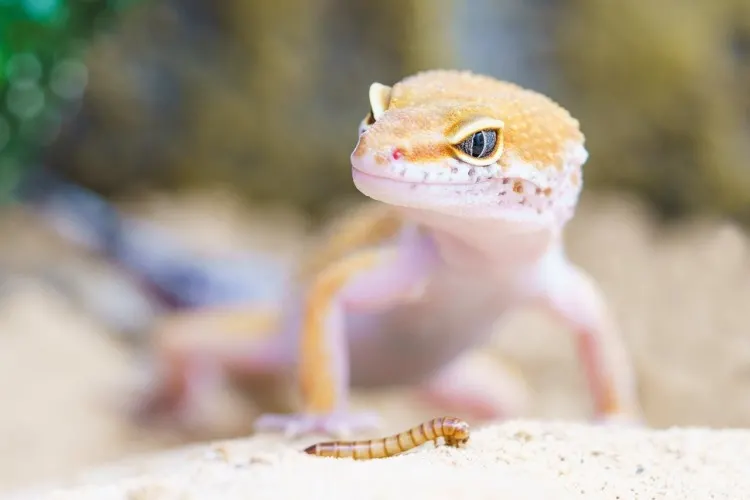
Gecko is a broad name for a diverse group of lizards found on every continent except Antarctica. Many geckos have microscopic structures on their toe pads that help them grip smooth surfaces, but this is not universal. Leopard geckos, for example, have claws rather than adhesive toe pads and live on rocky, arid ground.
Some geckos can detach part of the tail when threatened. Regeneration takes time, the replacement may look different, and not every species regrows a lost tail equally well. Reproduction also varies, although many geckos lay small clutches of eggs.
9. Skink
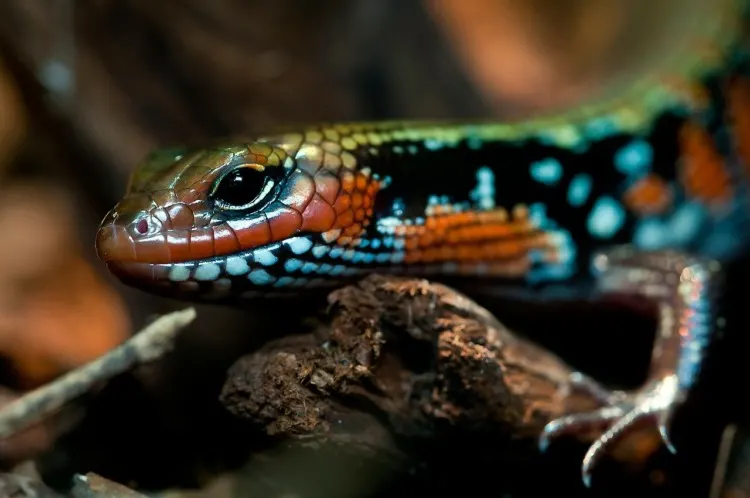
A skink is a lizard in the family Scincidae. Many skinks have smooth, overlapping scales and long bodies, but the group includes substantial variation. Some have well-developed limbs, while others have reduced limbs or no visible limbs and may be mistaken for snakes.
Skinks occupy forests, grasslands, deserts, wetlands, gardens, and underground burrows. Many eat insects and other small invertebrates; larger species may also take fruit, flowers, or small vertebrates. Tail shedding and regrowth occur in many skinks, but these defenses vary by species.
Five-letter amphibian names
Amphibians depend on moisture in different ways, and many species are sensitive to habitat change, pollution, disease, and climate shifts. Our overview of endangered amphibians covers those pressures in more detail.
10. Ranid
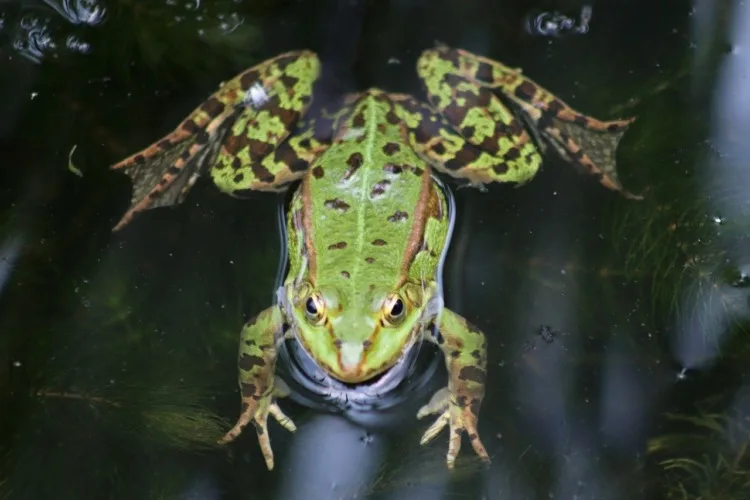
Ranid is a noun or adjective for a frog in the family Ranidae, often called the “true frogs.” It does not name one species. Many ranids have smooth, moist skin, strong hind legs, webbed toes, and a visible eardrum behind each eye.
The family occupies aquatic and terrestrial habitats across much of the world. Eggs are typically laid in water and hatch into free-living tadpoles. AmphibiaWeb’s Ranidae account is a useful current reference because frog taxonomy changes as species are described or reclassified.
11. Siren
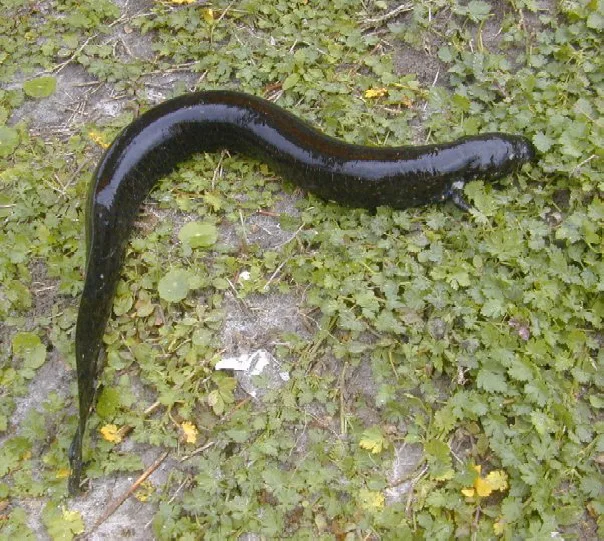
A siren is an eel-like aquatic salamander in the family Sirenidae. Sirens retain external gills as adults, have small forelimbs, and lack hind limbs. They live in slow-moving or still freshwater habitats in the southeastern United States and northern Mexico.
The pictured greater siren, Siren lacertina, can survive dry periods by burrowing into mud and entering a dormant state. Its wild lifespan is not well established. The Animal Diversity Web profile notes that one captive greater siren was reported to be at least 25 years old; claims that females live for centuries are unsupported.
Five-letter bird names
12. Galah
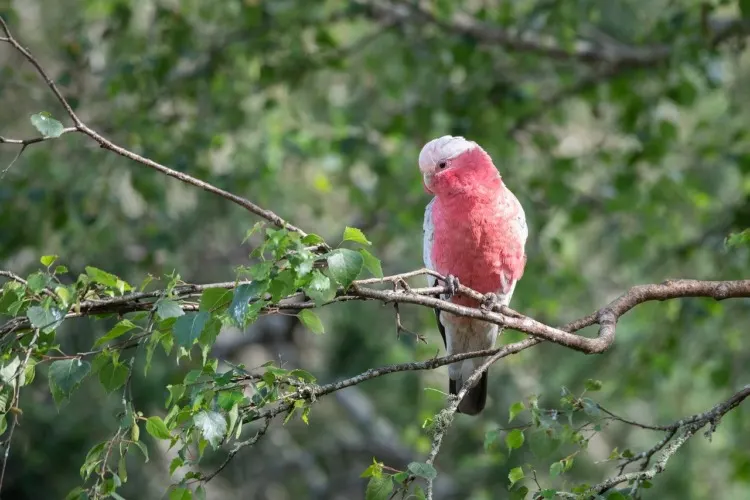
The galah, Eolophus roseicapilla, is an Australian cockatoo with a pink face, breast, and underparts set against a gray back and wings. It occurs across most of mainland Australia and uses open woodland, farmland, parks, and towns.
Galahs are highly social and often feed in flocks on seeds, grasses, grains, fruit, and other plant material. They nest in tree hollows, and pairs may remain together for long periods. The Australian Museum’s galah profile provides identification and range details.
13. Raven
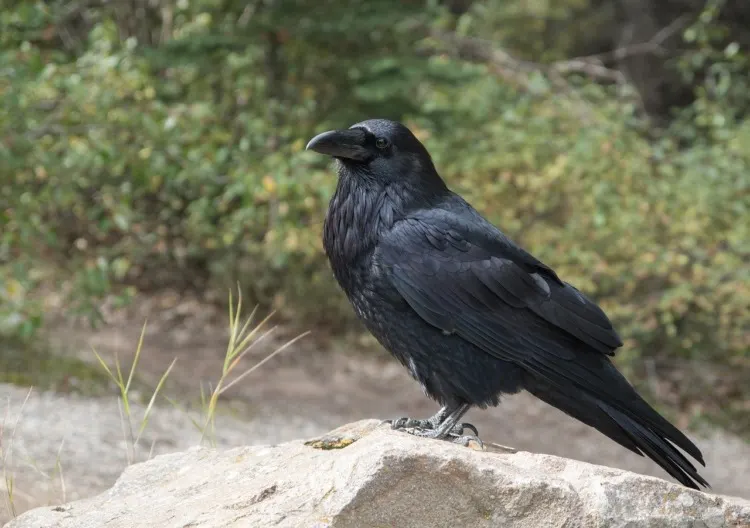
Raven can refer to several large, heavy-billed birds in the crow family. The common raven, Corvus corax, ranges across much of the Northern Hemisphere and eats a flexible diet that may include carrion, insects, seeds, fruit, eggs, and small animals.
Common ravens solve problems, play, and use a wide range of calls. The Cornell Lab of Ornithology notes that they can imitate other bird species and, in captivity, may copy human words. Ravens are often seen alone or in pairs, although larger groups gather around rich food sources. These observations are more defensible than ranking raven intelligence as equal to a chimpanzee or dolphin.
14. Junco
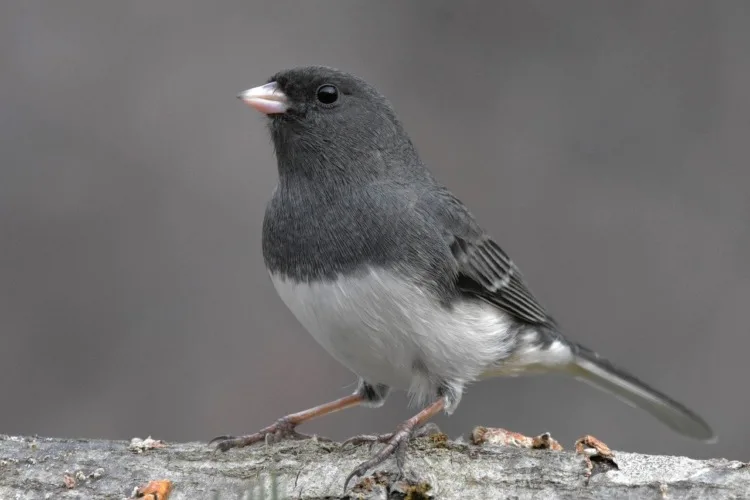
Junco is the name of a sparrow genus native to North America. The dark-eyed junco, Junco hyemalis, is especially widespread and shows substantial geographic variation in plumage. Most forms have a pale bill and flash white outer tail feathers in flight.
Dark-eyed juncos usually forage on or close to the ground for seeds and insects. Their nests are often placed on the ground or in low, sheltered sites rather than high in trees. The Cornell Lab of Ornithology describes them as among North America’s most abundant forest birds.
15. Eagle
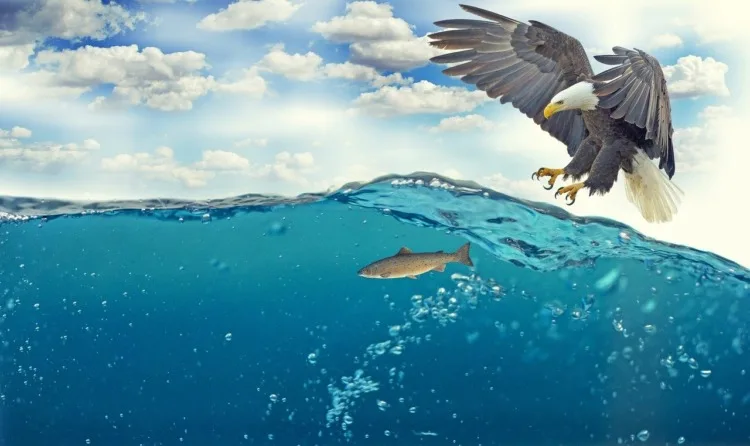
Eagle is a broad common name for many large birds of prey rather than a single taxonomic group. Eagles use hooked bills to tear food and strong feet with curved talons to seize prey. Their vision is adapted to detecting detail at long distances, although exact visual performance differs among species.
The bald eagle has appeared on the Great Seal of the United States since 1782. In December 2024, federal law formally designated it as the national bird. Eagles also include highly threatened species such as the Philippine eagle, showing why conservation status should be stated species by species.
Five-letter fish names
Fish are vertebrate animals, although their anatomy and life cycles differ from those of mammals, birds, reptiles, and amphibians. The article Is a Fish an Animal? explains the biological classification.
16. Trout
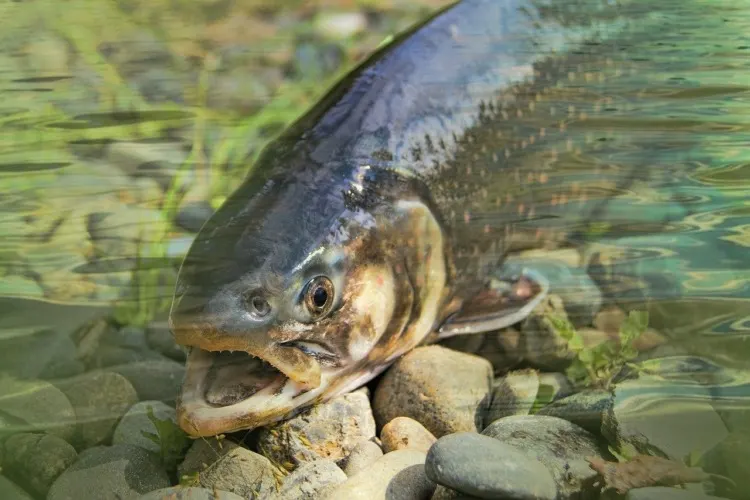
Trout is a common name for several fishes in the salmon family. Many live in cool, well-oxygenated streams and lakes, feeding on aquatic insects, crustaceans, and smaller fish. Body color and spotting vary by species, age, habitat, and breeding condition.
The simple claim that trout live in freshwater while salmon live in saltwater is misleading. Both groups begin life in freshwater, and some members migrate to sea. Rainbow trout that migrate to the ocean are called steelhead; those that remain in freshwater are still rainbow trout. NOAA Fisheries explains this life-history difference.
17. Sprat
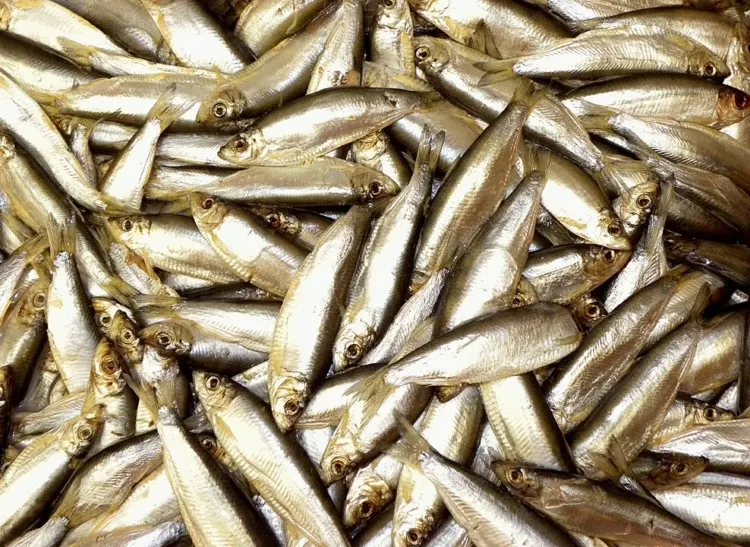
Sprat refers to small, silvery, schooling marine fish related to herrings and sardines. The European sprat, Sprattus sprattus, occurs in the northeast Atlantic and connected seas, including the Baltic, Mediterranean, and Black Sea.
The FAO species account identifies the European sprat as a marine fish in the herring-and-sardine group. Sprats feed largely on plankton and form an important link in marine food webs because larger fish, seabirds, and marine mammals eat them. People also harvest sprats for food, fishmeal, and oil. Reproductive output and lifespan vary with species, population, age, and environmental conditions, so a single egg count should not be presented as universal.
18. Grunt

A grunt is a fish in the family Haemulidae, a group found mainly in tropical and subtropical seas. Many have compressed bodies, thick lips, and silvery coloring marked with stripes or spots. Adults of several species school around reefs or sandy bottoms.
The name comes from sound production. Grunts grind pharyngeal teeth in the throat, and the swim bladder amplifies the vibration. Some species also perform mouth-to-mouth territorial pushing that can resemble kissing. The Florida Museum’s white grunt profile documents both behaviors.
Five-letter insect names
19. Midge
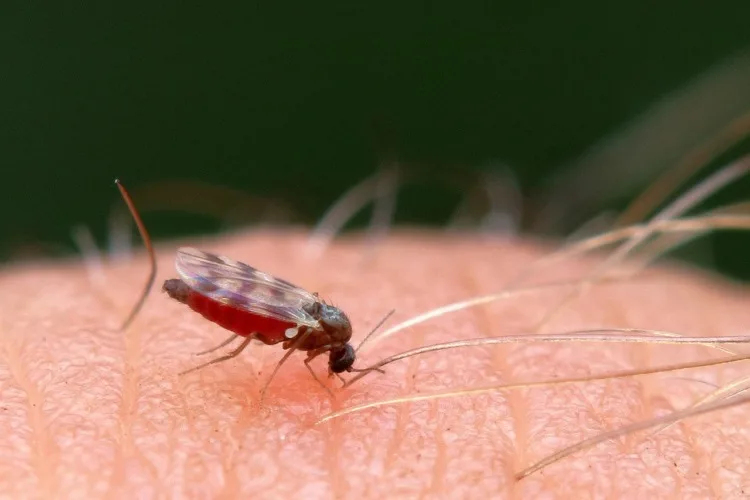
Midge is a broad common name for several groups of small flies. Some midges resemble mosquitoes, but the terms are not interchangeable. Non-biting midges do not take blood, while females of certain biting-midge species use blood to develop eggs.
Health significance depends on the species and region. Some biting midges transmit pathogens to people or livestock, while many do not; Purdue Extension’s overview explains the differences among biting-midge groups. Larvae may develop in ponds, streams, marshes, damp soil, rotting wood, or other moist habitats. This variation is why “midge” should not be described as one uniformly biting or disease-free insect.
20. Roach
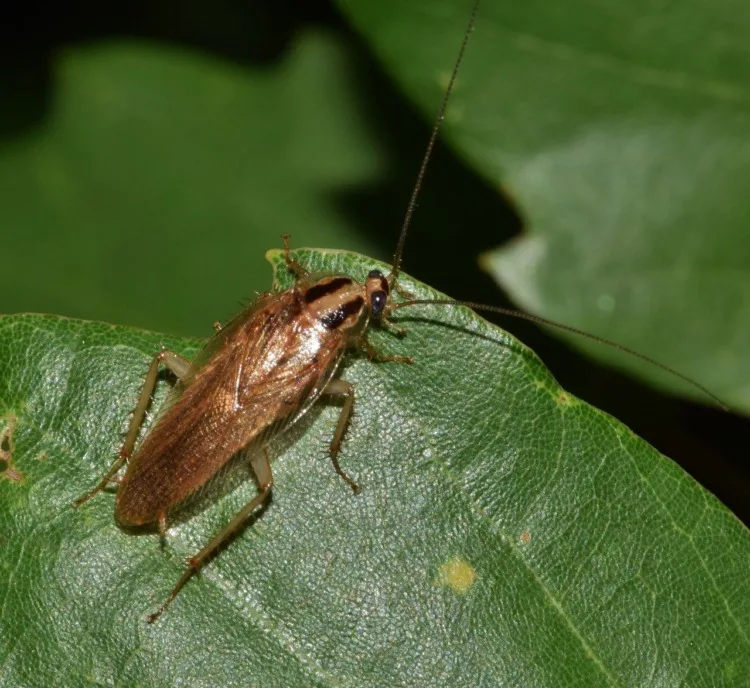
Roach is a shortened common name for a cockroach, an insect in the order Blattodea. According to Victoria’s public-health guidance, more than 4,000 cockroach species are known worldwide, but only a small minority are major household pests. Most live outdoors and help break down organic material.
Pest species such as the German and American cockroaches often hide in warm, dark, humid spaces and emerge at night. They can contaminate food and surfaces, and their shed skins and waste may aggravate allergies. The broad statement that every cockroach “carries disease” ignores the ecological diversity of the group.
21. Musca
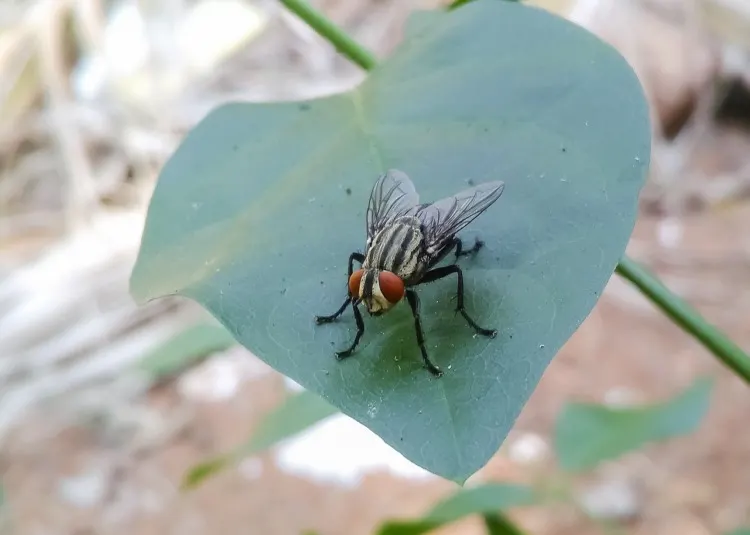
Musca is a genus of flies, not another common name for one species. The familiar house fly is Musca domestica; other species in the genus have different habits and host associations.
House flies undergo four life stages: egg, larva, pupa, and adult. In warm conditions, eggs can hatch within hours and the full cycle can be completed quickly. Adults have sponging mouthparts, so they liquefy solid food before feeding, as described by the University of California IPM program. They do not bite, but contact with waste and food means they can mechanically transfer disease-causing organisms.
Why a five-letter name is not a conservation label
A word count tells you nothing about extinction risk. “Zebra,” “whale,” and “eagle” each cover species with different population trends and legal protections. For conservation claims, identify the exact species, location, assessment date, and source rather than applying one label to the whole common-name group.
The same caution applies to taxonomy. “Ratel” and “galah” identify particular species, “viper” and “skink” name large families or groups, “ranid” means a member of a family, and Musca is a genus. Clear scope makes the article easier for readers, search engines, and AI systems to interpret correctly.
Frequently asked questions
What is an animal with five letters?
Koala is one example of an animal name with exactly five letters. Other examples include zebra, whale, mouse, sheep, sloth, tiger, horse, panda, otter, snake, and shark.
Which mammals have five-letter names?
Five-letter mammal names include ratel, zebra, mouse, sheep, whale, sloth, koala, tiger, horse, panda, otter, bison, camel, and llama.
Which five-letter animals start with S?
Sheep, sloth, skink, siren, sprat, snake, shark, and snail are animal names that start with S and contain five letters.
Is zebra a five-letter animal?
Yes. Zebra is spelled Z-E-B-R-A, so it has exactly five letters. The word refers to three living African equid species rather than one species.
Are all five-letter animal names species names?
No. Some are common names for one species, while others describe a genus, family, or broad group. Musca is a genus, ranid means a frog in the family Ranidae, and whale covers many species.
Keep exploring animal names and traits
A letter-count list is a useful starting point, but the most interesting questions concern how animals live, communicate, reproduce, and respond to environmental change. Continue with these related guides: