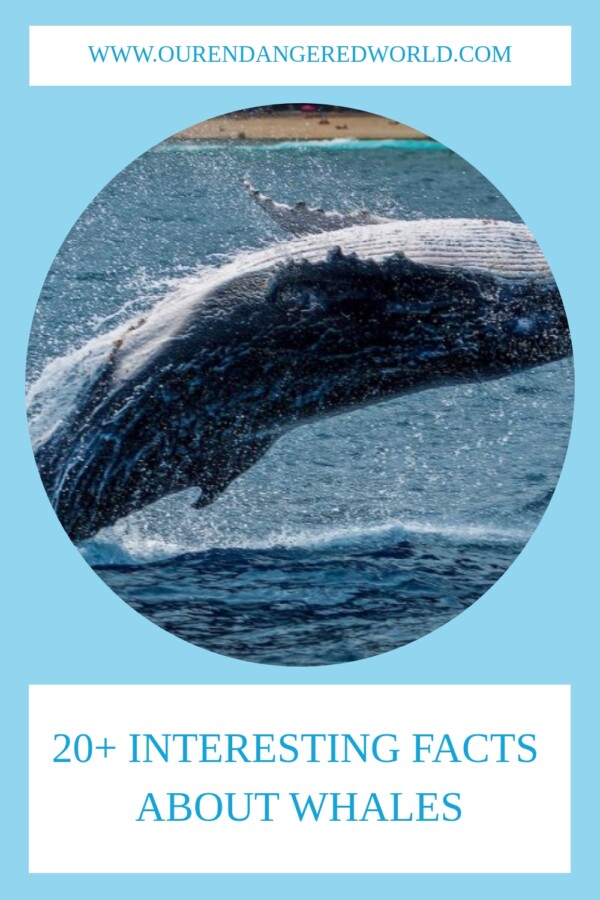
Whales are warm-blooded, air-breathing mammals—not fish. They belong to Cetacea, the group that also includes dolphins and porpoises. These 23 fun facts about whales explain how cetaceans feed, communicate, rest, evolved, and shape ocean ecosystems, while correcting several myths that are still repeated online.
Last fact-checked: August 14, 2026.
Key takeaways
- The Society for Marine Mammalogy recognizes 94 living or recently living cetacean species as of April 2026, including one listed as possibly extinct.
- Cetaceans fall into two living branches: 15 baleen-whale species and 79 toothed-whale species, including dolphins and porpoises.
- The Antarctic blue whale can reach about 110 feet and weigh more than 330,000 pounds, making it the largest animal known to have lived.
- Research published in 2026 documented exceptionally loud long-range sperm-whale clicks and showed how resting sperm whales use bubbles to fine-tune buoyancy.
- Whales recycle nutrients in the ocean, but claims that whale recovery alone can materially solve climate change go beyond the current evidence.
Whale facts at a glance
| Question | Evidence-based answer |
|---|---|
| What is a whale? | An air-breathing mammal in the cetacean lineage. |
| How many cetacean species are recognized? | 94 as of April 2026, including dolphins and porpoises. |
| What are the two main groups? | Baleen whales (Mysticeti) and toothed whales (Odontoceti). |
| Are dolphins whales? | In evolutionary taxonomy, dolphins are toothed whales. |
| What is the largest species? | The blue whale. |
| Which animal has the largest brain? | The sperm whale has the largest absolute brain mass known. |
| Do all whales sing? | No. Many vocalize, but full, structured song is documented in particular species and contexts. |
| Are blue whales endangered? | Yes. NOAA lists blue whales as endangered throughout their range under the U.S. Endangered Species Act. |
Whale biology and classification
1. Whales are mammals, not fish
Whales breathe air through blowholes, maintain a stable internal body temperature, give birth to live young, and produce milk for their calves. Some species also retain sparse sensory hairs around the mouth. Those traits place them firmly among mammals.
Their body plan can look fish-like because both groups evolved streamlined shapes for moving through water. One useful distinction is motion: whale tail flukes move mainly up and down, while most fish propel themselves with side-to-side tail movements. For the broader classification question, see why fish are animals but whales are not fish.
2. Scientists recognize 94 cetacean species
The Society for Marine Mammalogy’s April 2026 taxonomy recognizes 94 cetacean species, one of which is listed as possibly extinct. This count includes the animals commonly called whales, dolphins, and porpoises.
The total can change as genetic studies split or combine populations and researchers formally describe new species. That is why older articles commonly cite 90 or fewer. Our explanation of what scientists mean by a species gives more context for these revisions.
3. Living cetaceans split into baleen whales and toothed whales
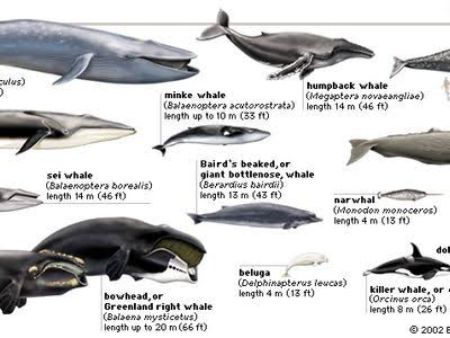
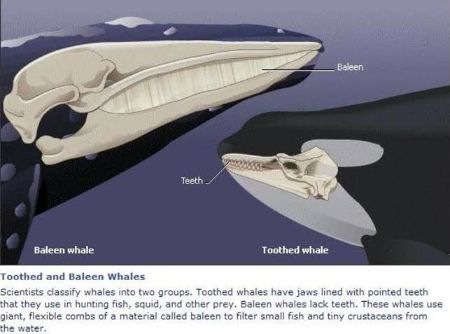
The 94 recognized species fall into two major branches. Mysticeti contains 15 baleen-whale species. Odontoceti contains the remaining 79 toothed-whale species, including sperm whales, beaked whales, belugas, narwhals, dolphins, and porpoises.
Baleen whales have comb-like plates instead of teeth and generally have two blowholes. Toothed whales have teeth, one blowhole, and the ability to echolocate. The labels describe evolutionary lineages, not simply body size: some toothed whales are larger than some baleen whales.
4. Dolphins are part of the toothed-whale lineage
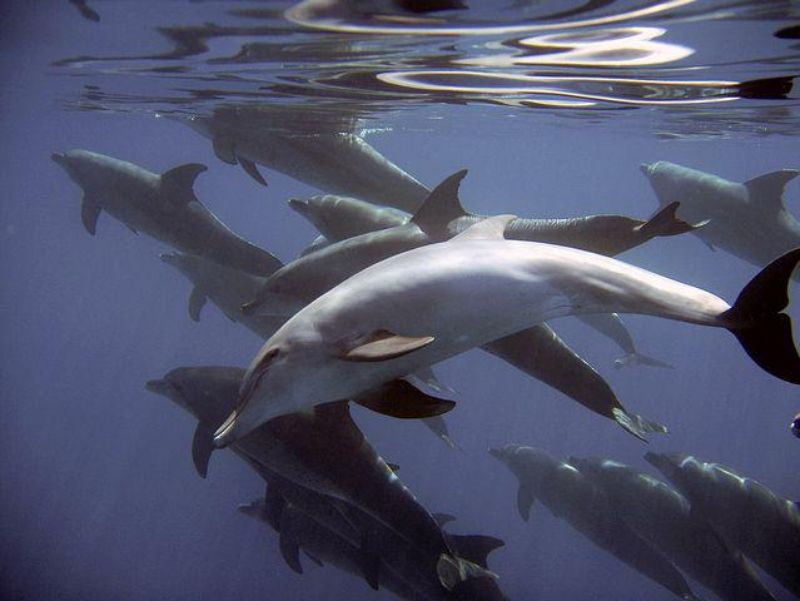
“Whale” and “dolphin” are useful common names, but evolutionary taxonomy places every dolphin inside Odontoceti, the toothed whales. In that scientific sense, all dolphins are whales, although not all whales are dolphins.
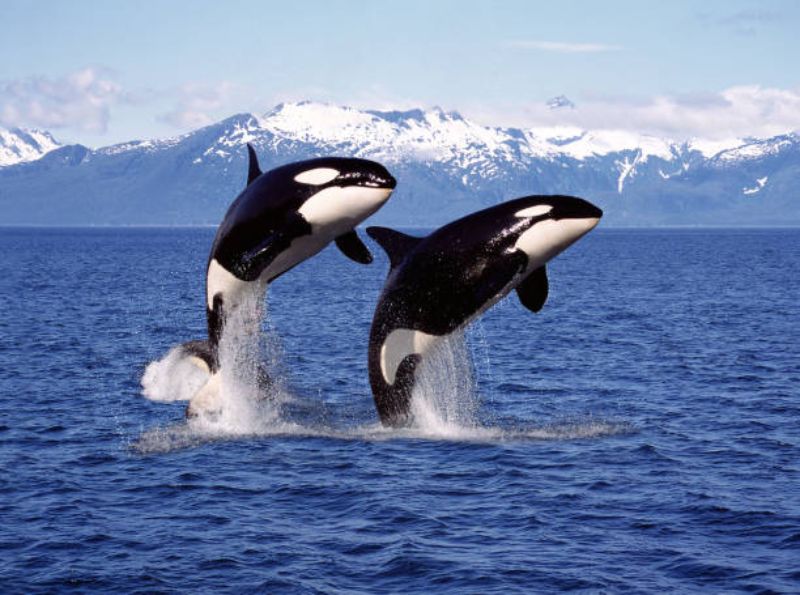
Orcas make the relationship easier to see: the animal commonly called the killer whale is the largest member of the oceanic dolphin family. Compare the major types of dolphins, then see our killer whale species profile.

How whales feed
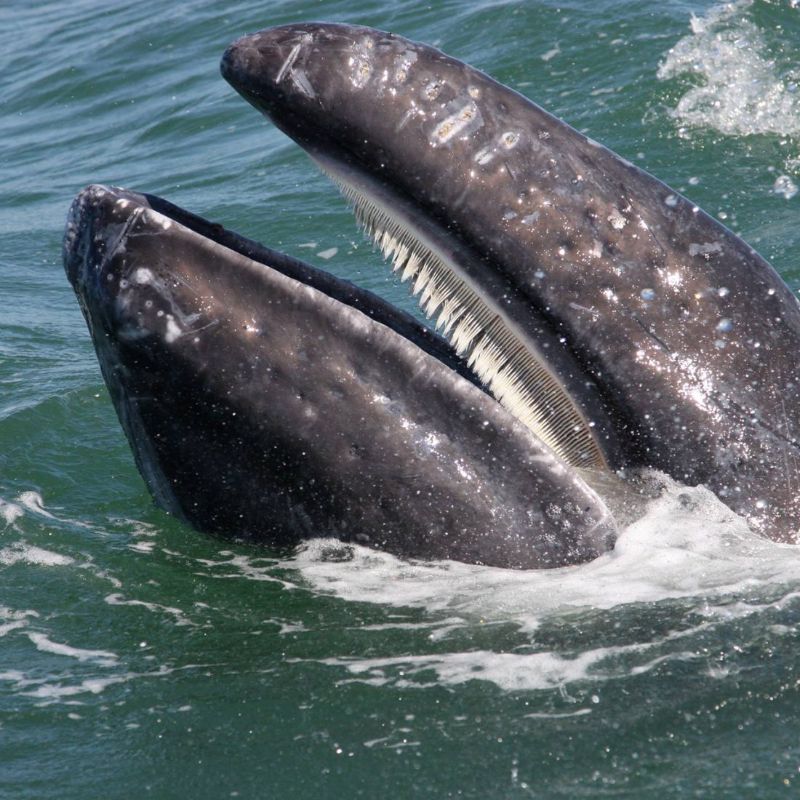
5. Baleen is made from keratin
Baleen plates grow from a whale’s upper jaw and are made largely from keratin, the structural protein found in human hair and nails. The inner edges fray into dense bristles that trap prey while water flows back out of the mouth.
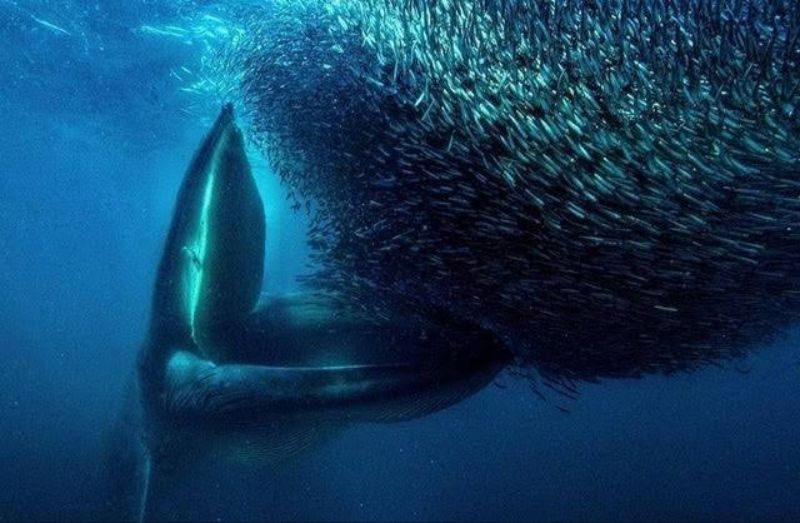
Different species use that filter in different ways. Right whales skim continuously through patches of zooplankton, while rorquals such as blue and humpback whales expand their pleated throats and engulf enormous mouthfuls of prey-filled water.
6. Toothed whales usually grip and tear rather than grind food
Most toothed whales do not chew with a grinding motion like humans. Their teeth help capture, hold, or tear prey, which is then swallowed whole or in large pieces. Sperm whales can suction-feed on squid, while orcas may pull apart larger prey before swallowing it.
Tooth form also varies sharply. Dolphins may have many similar conical teeth, sperm whales have prominent lower-jaw teeth, and most beaked-whale species expose only a small number of teeth in adult males.
7. A narwhal tusk is a sensory tooth with more than one role
The narwhal’s spiraled tusk is an elongated tooth, usually the upper left canine of a male. A 2014 anatomical study found a pathway capable of transmitting information from seawater through the tusk to the nervous system, supporting a sensory function.
Canadian researchers have also filmed narwhals striking Arctic cod with their tusks before eating them. That does not mean stunning fish is the tusk’s only or primary purpose. Evidence also supports a role in sexual selection, and researchers continue to study how these functions overlap. See the sensory-tusk research and the Canadian field observation.

8. Whale diets range from krill to sharks and other marine mammals
There is no single whale diet. Some baleen whales filter copepods, krill, or small schooling fish. Sperm whales forage for squid and deep-water fish. Different orca populations specialize in prey that can include salmon, rays, seals, sharks, or other cetaceans.
Scale can be deceptive: NOAA reports that the largest blue whales may consume up to six tons of krill in a day. Learn more about the types of sharks that share whale habitats.

9. Whale stomachs contain multiple compartments
Cetacean stomachs are divided into chambers that process prey swallowed with little or no chewing. The arrangement differs among lineages, so the popular claim that every whale has three or four “stomachs” is too simple.
Beaked whales are especially unusual. Anatomical work on Baird’s beaked whales found two main stomach compartments, two pyloric compartments, and a variable series of connecting chambers. Depending on how those chambers are counted, an individual can have roughly 11 to 14 stomach compartments—not 13 separate stomach organs. The underlying research is summarized in the Smithsonian-hosted anatomical paper.

10. Migrating humpback whales can fast for months
Many humpback populations feed intensively at high latitudes, store energy as blubber, and then migrate to lower-latitude breeding grounds where feeding is limited. A University of Hawaiʻi report on recent research describes a three- to five-month fasting period for pregnant humpbacks during migration and reproduction.
The exact duration varies by population, sex, reproductive status, migration route, and prey conditions. Claims that all humpbacks routinely go eight months without food should therefore be treated cautiously. See the University of Hawaiʻi research summary.
Whale songs and underwater sound
11. Humpback songs are structured, but not every whale sings
Whales produce many sounds, including clicks, whistles, pulses, moans, and calls. “Song” has a narrower meaning: a repeated, organized sequence with recognizable themes and patterns.
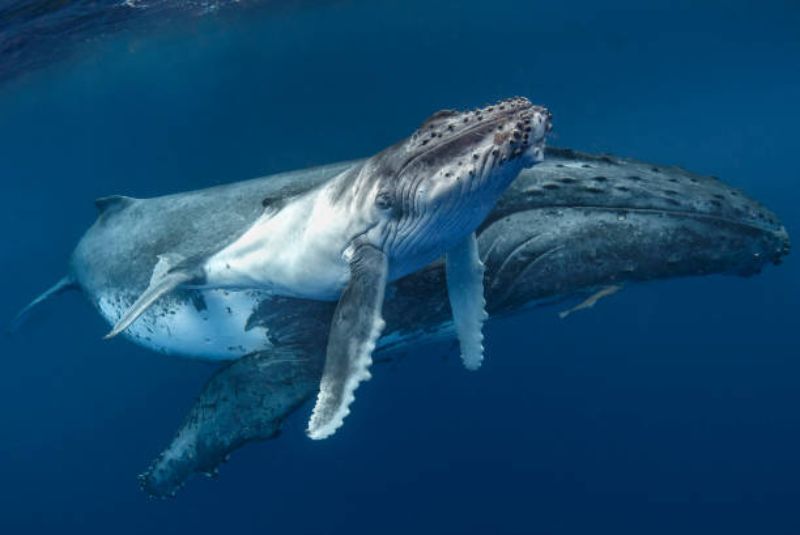
In humpbacks, full song is produced by males, primarily in breeding contexts, while males, females, and young whales all produce other calls. Song is associated with sexual selection, but researchers are still testing how it functions in mate attraction, competition, spacing, and social interaction. NOAA’s acoustics program explains the difference between humpback song and calls.
12. Humpback songs spread through social learning
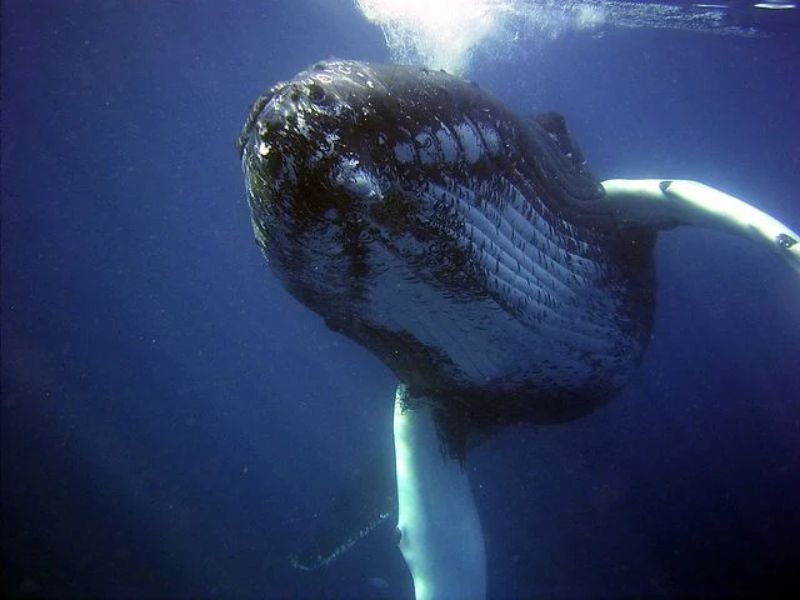
Male humpbacks within a population tend to converge on a shared song, then alter it over time. A landmark 2011 study tracked complete song types spreading eastward across South Pacific populations in cultural waves—one of the clearest examples of large-scale social learning outside humans.
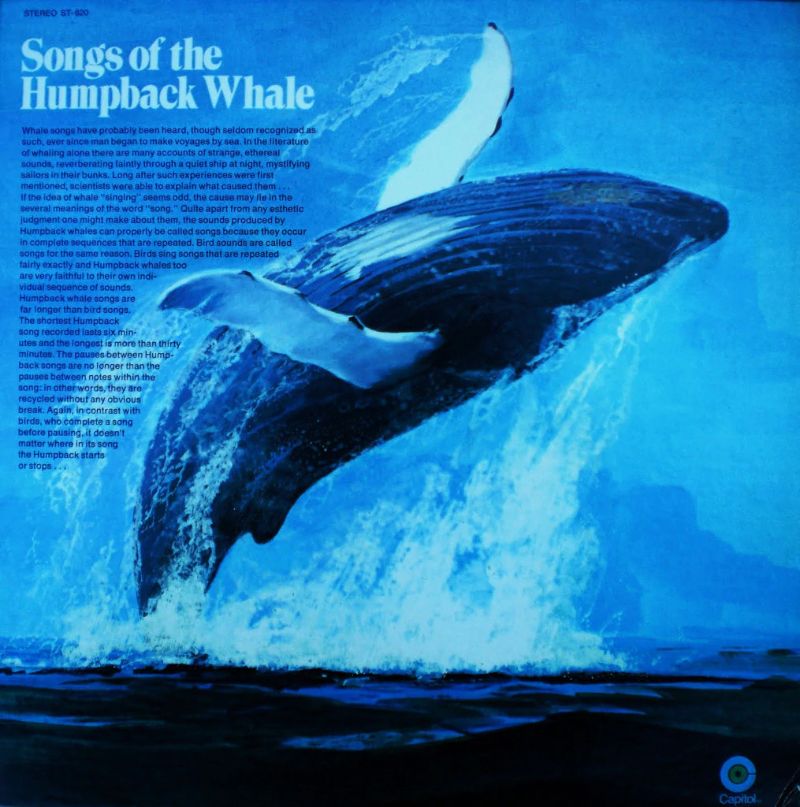
Whale song also changed human culture. The 1970 album Songs of the Humpback Whale, built from recordings by Roger Payne, Frank Watlington, and others, was added to the U.S. National Recording Registry in 2010. The Library of Congress credits the recording with helping shift public opinion against whaling. Read the South Pacific song-transmission study and the Library of Congress registry note.
13. Blue whale calls can travel extraordinary distances
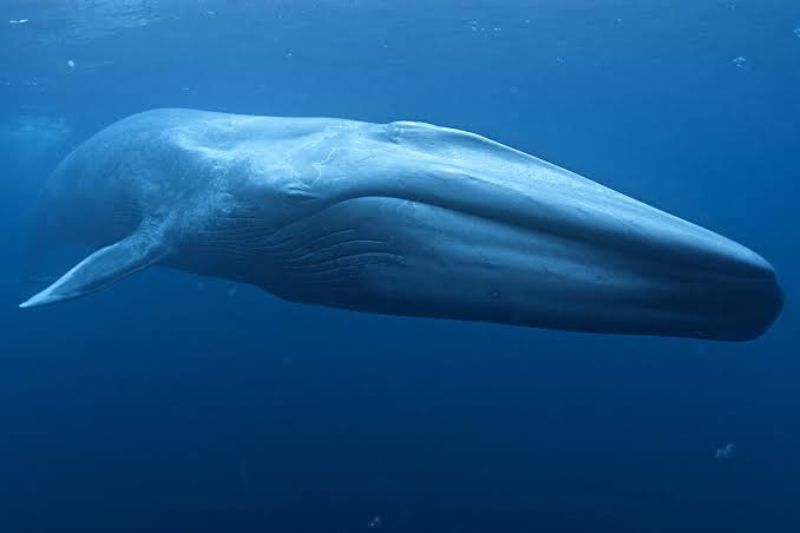
Blue whales produce powerful, low-frequency pulses and moans. NOAA reports that, under favorable oceanographic conditions, another whale may detect these signals from as far as 1,000 miles away.
That range is not fixed. Water temperature, depth, seafloor structure, background noise, and the call’s frequency all affect propagation. The claim is therefore about what is possible under the right conditions, not the normal range of every call.
Evolution, records, behavior, and conservation
14. Whale ancestors walked on land
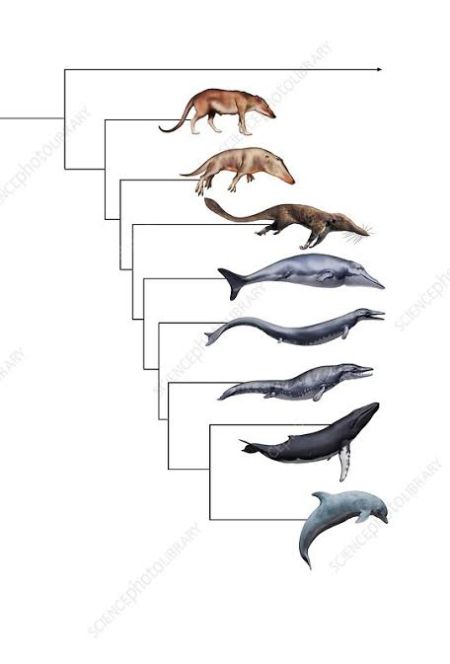
Fossils, anatomy, and DNA show that whales descended from land-dwelling mammals. Their lineage is closely related to the lineage containing modern hippos, with the shared evolutionary story extending back more than 50 million years.
The transition did not happen in one leap. Early whale relatives gradually developed stronger swimming adaptations, reduced hind limbs, shifted nostrils toward the top of the skull, and specialized their hearing for underwater sound. The Smithsonian Ocean overview of whale evolution traces that transition.
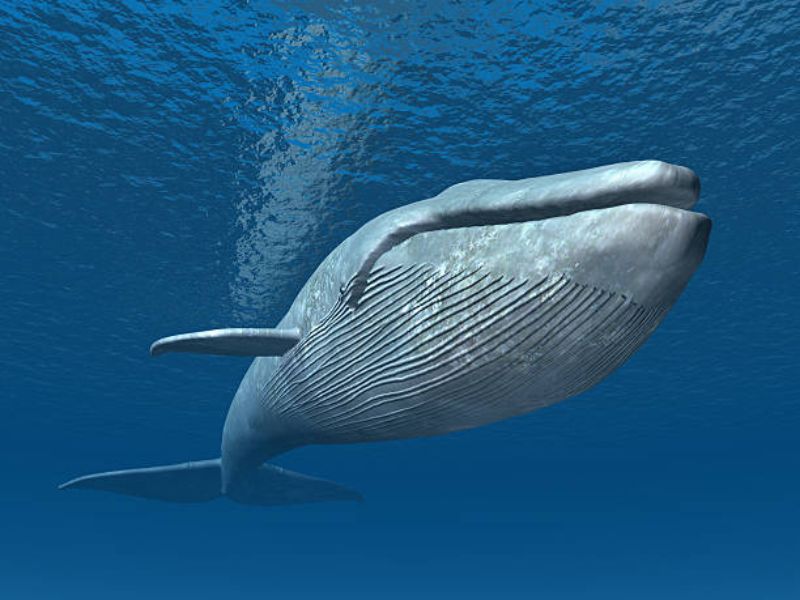
15. The blue whale is the largest animal known to have lived
Antarctic blue whales can reach about 110 feet and weigh more than 330,000 pounds. No known dinosaur or other animal has a reliably established body mass greater than the largest blue whales.
Size varies among populations and subspecies, and most individuals are smaller than the record-setting extremes. Our blue whale species guide covers their range, diet, and conservation in more depth.
16. Blue whales are mottled blue-gray, not bright blue
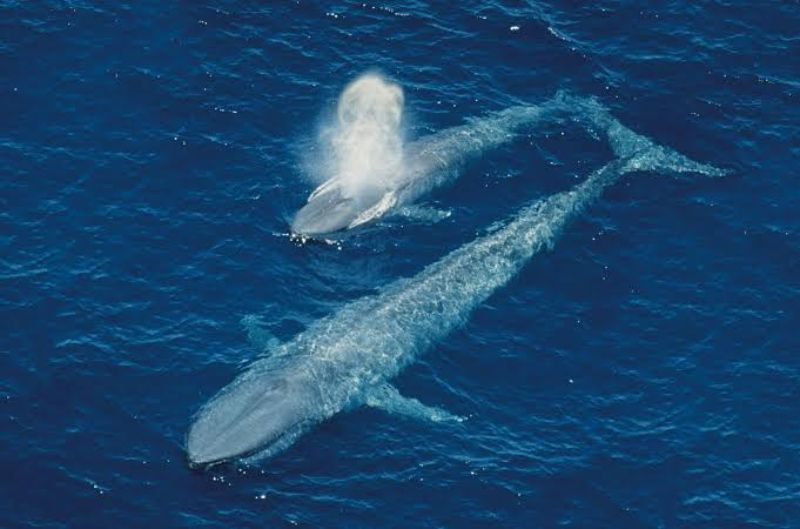
A blue whale’s skin is mottled blue-gray. Underwater light makes that coloration appear paler and more distinctly blue, which explains the common name. Individual mottling patterns can also help researchers identify whales in photographs.
17. Sperm whales have the largest brains by absolute mass
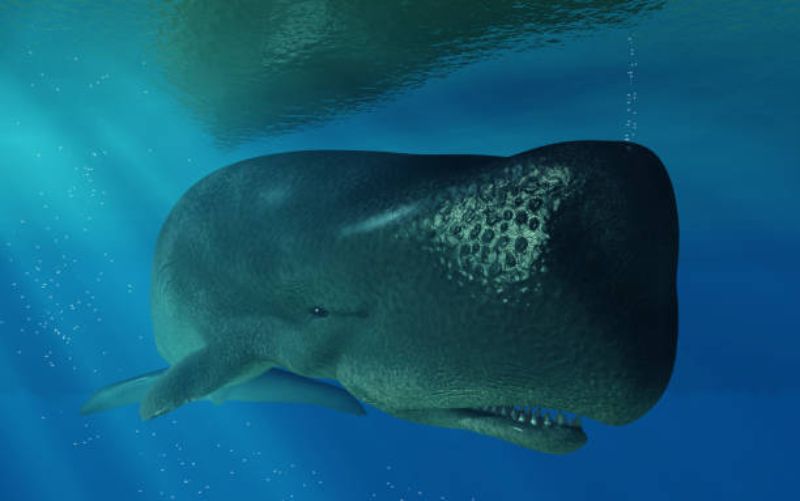
A sperm whale brain can weigh up to about 20 pounds—roughly five times the mass of a human brain. That is the largest absolute brain mass known in any living animal.
Brain mass alone does not produce a simple intelligence ranking. Body size, neural organization, social structure, sensory demands, and behavior all matter. Explore our sperm whale guide for more on their deep-diving anatomy and social lives.

18. Male sperm whales produce the loudest known mammalian communication signal
A 2026 peer-reviewed study found that male sperm whales produce slow, low-frequency clicks exceeding 200 underwater decibels referenced to 1 micropascal. Modeling indicated that these rhythmic signals could have an active range of up to about 70 kilometers in deep-ocean conditions.
The careful wording matters: the study describes the loudest known communication signal among mammals, not every echolocation click or every sound made by a sperm whale. Underwater and airborne decibel values also use different reference pressures, so comparisons with rockets, gunshots, or human hearing are misleading. Read the 2026 sperm-whale click study and the underwater-decibel explanation from Discovery of Sound in the Sea.
19. Some whale feces are reddish because of diet
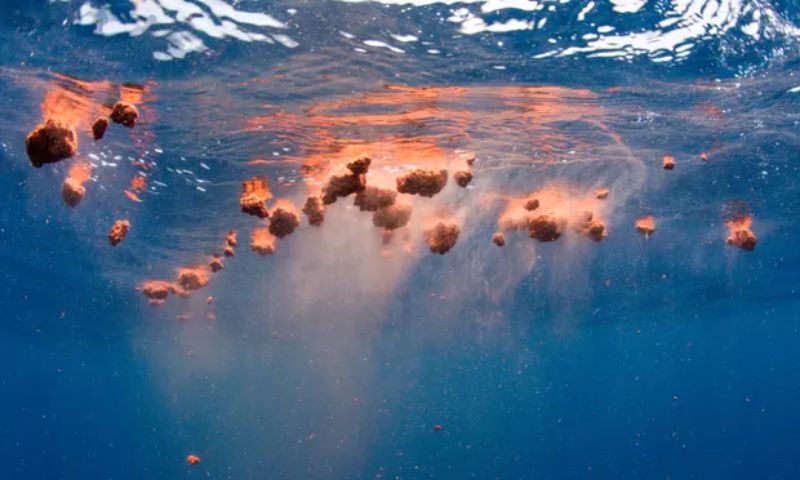
Whale feces are not always red. Color varies with species and prey. Krill-eating whales can produce pink or reddish fecal plumes because krill contain red-orange pigments, while fish-heavy diets can produce darker brown, gray, or green material.
The plume is scientifically useful as well as visually unusual. Researchers can analyze it for hormones, DNA, diet indicators, and nutrients such as nitrogen, phosphorus, iron, and copper.
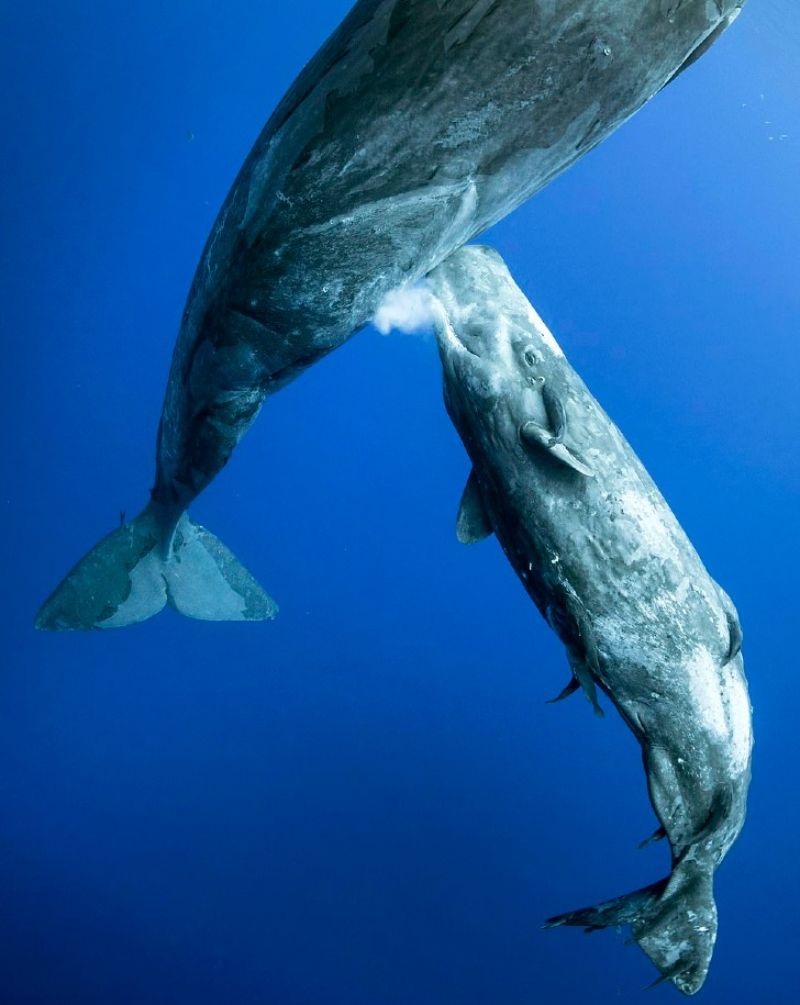
20. Resting sperm whales release bubbles to control buoyancy
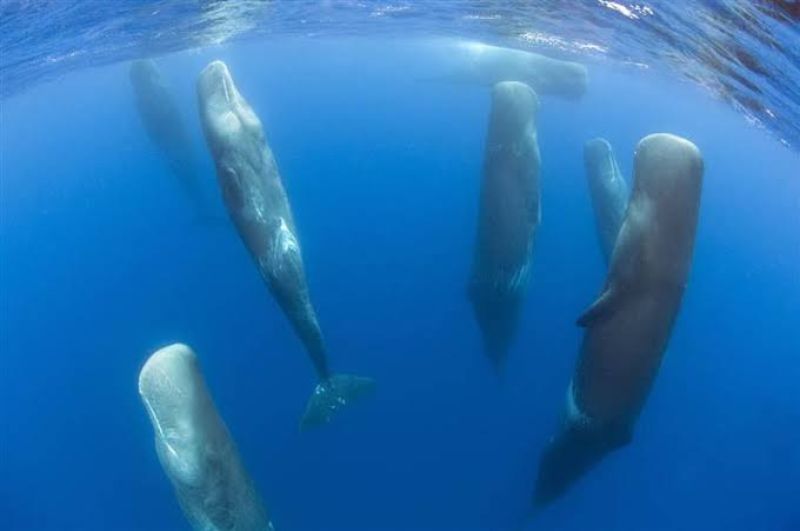
Sperm whales are famous for resting in a near-vertical posture below the surface. Research published in the Journal of Experimental Biology in July 2026 found that resting whales release bubbles as they drift upward, reducing the expanding gas volume that would otherwise make them increasingly buoyant.
Scientists generally use the cautious word “resting” because confirming sleep requires brain-activity measurements that have not yet been made in free-ranging sperm whales. The behavior is nevertheless consistent with a low-activity rest state. Read the 2026 buoyancy study.
21. Whales can pass learned behavior through culture
In animal-behavior research, culture means information or behavior learned socially and shared within a group. Whales provide examples in song, migration knowledge, feeding techniques, dialects, and group-specific hunting strategies.
Historical whaling records offer a striking case. A 2021 analysis found that sperm whales rapidly changed their behavior after encounters with open-boat whalers, with social learning providing the most plausible explanation for how evasive tactics spread. Newer conservation research argues that protecting a population may also require protecting its learned knowledge. See the sperm-whale social-learning study and the 2025 review of baleen-whale culture.
22. Whales recycle ocean nutrients, but their climate effect is easy to overstate
Many whales feed below the surface and release feces and urine higher in the water column. This “whale pump” can return limiting nutrients to sunlit waters where phytoplankton grow. A 2025 study in the Nordic and Barents seas found that whale-derived nutrients can meaningfully increase primary production in certain nutrient-poor places and seasons.
That ecological benefit does not justify simplistic claims that each whale offsets a fixed amount of carbon or that whale restoration can replace rapid emissions cuts. Reviews identify plausible carbon pathways through whale biomass, sinking carcasses, and phytoplankton stimulation, but the indirect global effect remains uncertain and varies by region. The ocean produces roughly half of Earth’s oxygen, not more than 80 percent, and marine life consumes roughly the same amount it produces.
For the evidence and its limits, see the original whale-pump study, the 2025 nutrient-modeling study, the review of whales in the carbon cycle, and NOAA’s explanation of how much oxygen the ocean produces.
23. Blue whales remain endangered
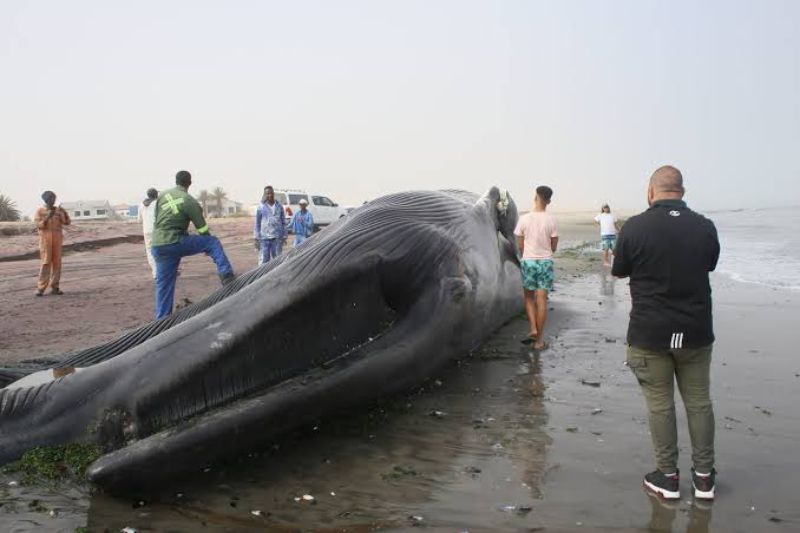
Industrial whaling reduced blue whale populations to a small fraction of their former abundance. Commercial hunting is no longer the main threat in most of their range, but recovery is slow because blue whales reproduce gradually and continue to face human-caused risks.
NOAA lists blue whales as endangered throughout their range. Current threats include vessel strikes, entanglement in fishing gear, ocean noise, habitat degradation, pollution, disturbance, and climate-driven changes in prey. Avoid a single global population figure: blue whales are divided into regional populations and subspecies with different estimates and trends. Read NOAA’s current blue whale assessment and our overview of the history and impacts of whale hunting.
How to watch whales responsibly
Viewing rules vary by country, species, and location. In U.S. waters, NOAA recommends staying at least 100 yards from whales unless stricter rules apply. Required distances rise to 200 yards for killer whales in Washington State inland waters and 500 yards for North Atlantic right whales anywhere in U.S. waters.
- Choose an operator that follows local distance and speed rules.
- Never chase, feed, touch, encircle, or block a whale’s path.
- Give extra space to mothers with calves and to resting animals.
- Treat sightings as wildlife encounters, not guaranteed performances.
Review NOAA’s marine-life viewing distances before a U.S. trip, and check the rules issued by the relevant local authority elsewhere.
Affiliate disclosure: We may earn a commission if you book through the following link, at no additional cost to you.
Planning a California trip? This San Diego whale-watching cruise is one current option. Before booking, compare the operator’s wildlife policy, accessibility, cancellation terms, trip length, and recent reviews. Sightings depend on wild animals and cannot be assumed.
Frequently asked questions
What are whales?
Whales are warm-blooded, air-breathing mammals in the cetacean lineage. They give birth to live young and nurse their calves. Cetacea also includes dolphins and porpoises.
How many whale species are there?
As of April 2026, the Society for Marine Mammalogy recognizes 94 cetacean species, including the animals commonly called whales, dolphins, and porpoises. One species on the list is considered possibly extinct, and the total can change as taxonomy is revised.
Are dolphins whales?
Yes in evolutionary taxonomy. Dolphins belong to Odontoceti, the toothed-whale branch of Cetacea. Orcas are the largest members of the oceanic dolphin family.
How do whales sleep without drowning?
Cetacean rest patterns vary by lineage. Dolphins and several studied toothed whales can use unihemispheric slow-wave sleep, keeping part of the brain responsive while surfacing to breathe. Sperm whales rest vertically, although researchers still use the cautious term resting because brain activity has not been measured in free-ranging animals.
Do whales have 13 stomachs?
Whales have multi-compartment digestive systems rather than 13 separate stomach organs. In Baird’s beaked whales, researchers have counted roughly 11 to 14 compartments because the number of small connecting chambers varies among individuals.
Are blue whales endangered?
Yes. NOAA lists blue whales as endangered throughout their range under the U.S. Endangered Species Act. Major present-day threats include vessel strikes, fishing-gear entanglement, ocean noise, habitat degradation, and climate-related changes in prey.
The clearest lesson from whale science
Whales are extraordinary without exaggeration. Their lineage returned from land to water, developed two radically different feeding systems, evolved long-distance acoustic communication, and built social traditions that can persist across generations. The strongest version of this article is therefore not the one with the biggest numbers; it is the one that separates established evidence from appealing myths.
One final distinction is worth keeping straight: despite its name, a whale shark is a fish, not a whale.