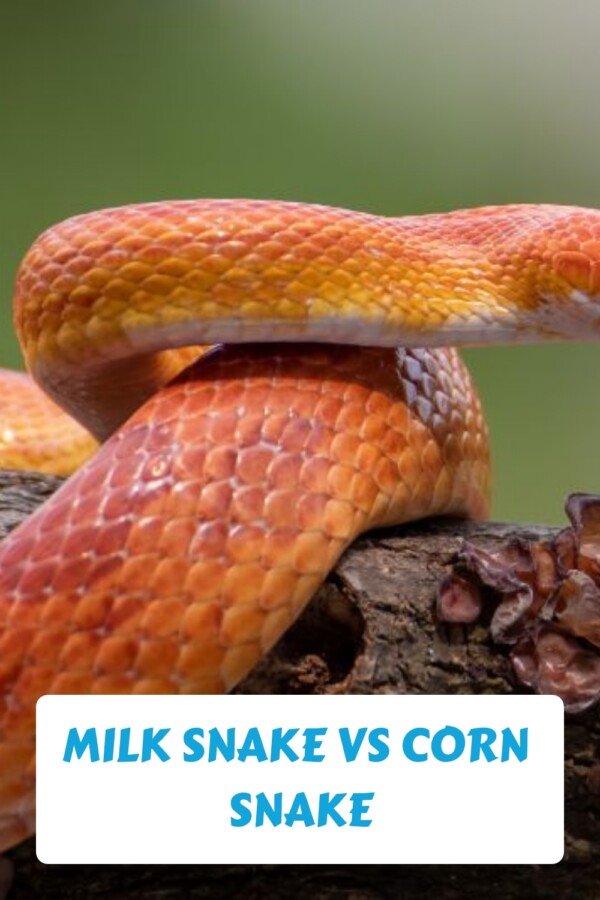
Quick answer: In a corn snake vs milk snake comparison, both are nonvenomous constrictors with broadly similar care needs. For most first-time keepers, a captive-bred corn snake is the simpler choice because its adult size is more predictable, its care is well documented, and many individuals tolerate gentle handling well. A milk snake can be just as rewarding, but the name covers several regional forms and species with wider variation in size, color, and behavior.
- Best for most beginners: Corn snake.
- Best for bold banded patterns: Milk snake, provided you research the exact species or locality.
- Typical adult size: Corn snakes are commonly about 3–5 feet long; milk snakes range more widely by type, from roughly 2 feet to around 6 feet.
- Care difference: Smaller than many people expect. Both need a secure enclosure, a warm-to-cool temperature gradient, moderate humidity, hiding places, fresh water, and individual housing.
- Long-term commitment: Either snake may live for two decades or longer in human care.
Corn Snake vs Milk Snake at a Glance
| Feature | Corn snake | Milk snake |
|---|---|---|
| Scientific classification | Pantherophis guttatus | Several Lampropeltis species and regional forms are called milk snakes |
| Typical pet size | Usually about 3–5 feet; the broader documented range is 2–6 feet | Varies by type; eastern milk snakes are often 2–3 feet, while some Central American forms approach 5–6 feet |
| Usual appearance | Orange, red, tan, or brown with black-edged saddle-shaped blotches; many captive morphs exist | Often red, black, and cream bands, but some forms have brown or reddish blotches on a gray or tan background |
| Temperament | Often calm and tolerant of gentle handling, though individuals vary | Often secretive; juveniles and newly acquired snakes may be more likely to hide, musk, tail-vibrate, or strike defensively |
| Activity | Active and capable climber; daily activity shifts with temperature and season | Often secretive and active at dawn, dusk, or night, with seasonal and regional variation |
| Captive diet | Appropriately sized frozen-thawed rodents | Appropriately sized frozen-thawed rodents; wild milk snakes also eat reptiles and other small vertebrates |
| Housing | Secure, enriched enclosure that permits full-body stretching; house alone | Secure, enriched enclosure sized for the exact type; always house alone |
| Captive lifespan | Can reach 20-plus years | Often 15–25 years, depending on the exact type and care |
| Best fit | Most first-time snake keepers | Keepers who want a specific milk snake type and are willing to verify its adult size and care |
Why “Milk Snake” Needs an Asterisk
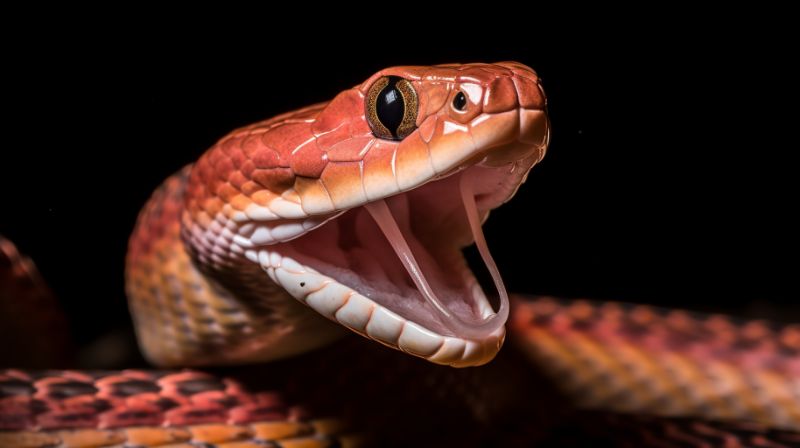
A corn snake is one species, Pantherophis guttatus. “Milk snake” is less precise. A 2014 genetic study of the traditional milk snake complex found multiple lineages rather than one simple, uniform species. Modern references may therefore assign familiar pet-trade forms to different Lampropeltis species.
That taxonomic detail has a practical consequence: a seller should be able to identify the snake’s scientific name, locality, or recognized pet-trade type. An eastern milk snake, a Pueblan milk snake, and a Honduran-type milk snake can differ substantially in adult size and appearance. Our explanation of what scientists mean by a species provides useful context for why names can change as genetic evidence improves.
Neither common name describes the animal’s diet. Corn snakes do not eat corn, and milk snakes do not drink milk. The corn snake’s name may refer to its checkerboard belly markings or its association with grain stores where rodents gathered. The milk snake’s name came from an old barnyard myth that it drank milk from cows.
Appearance and Identification
What a corn snake looks like
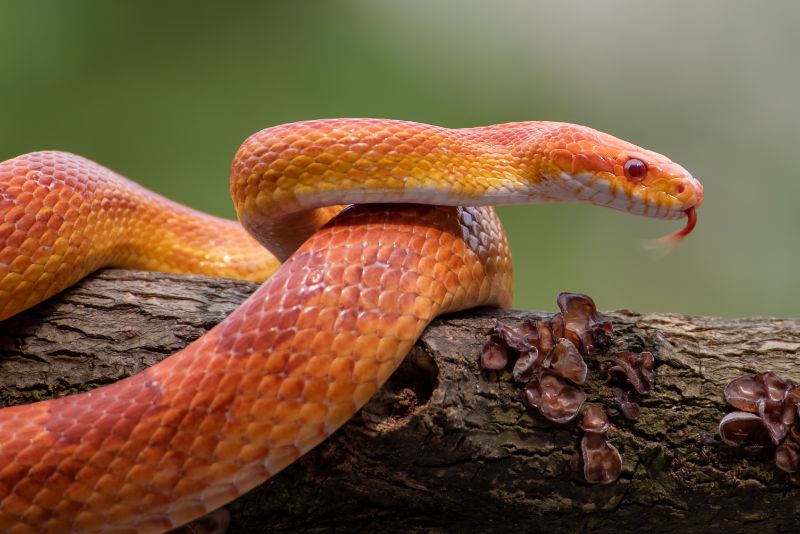
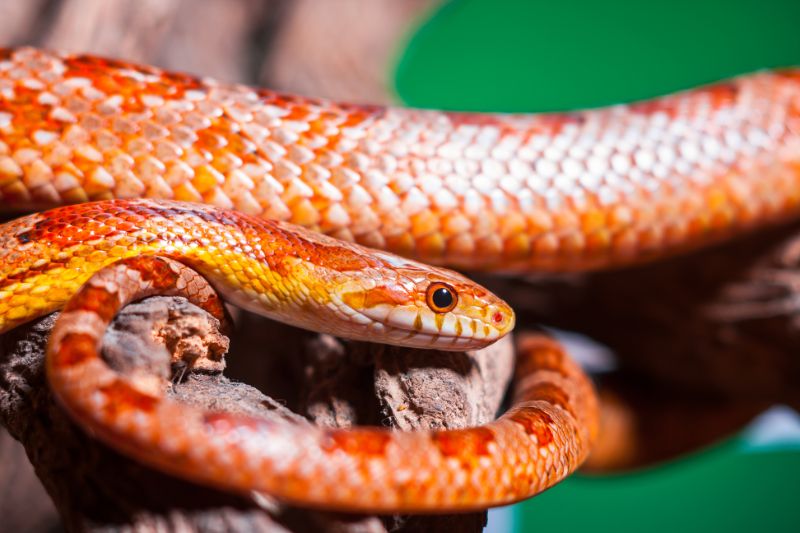
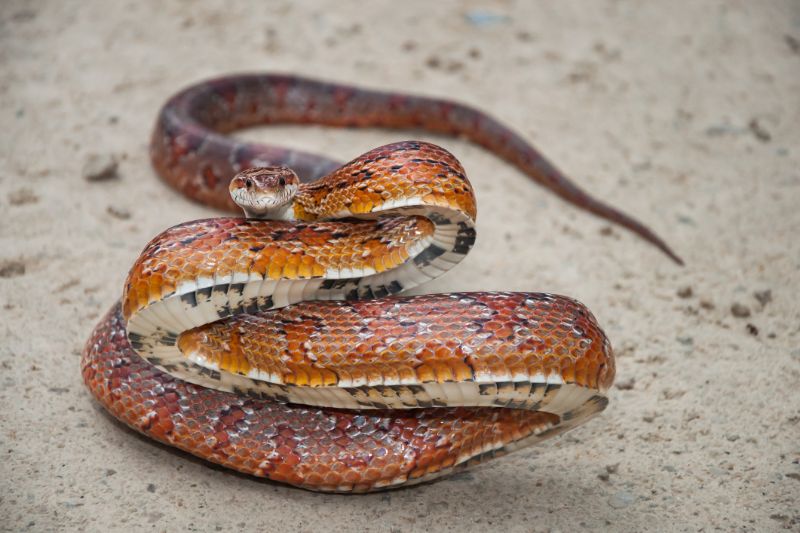
According to the Smithsonian’s eastern corn snake profile, wild-type corn snakes are usually orange or brownish yellow with large red dorsal blotches outlined in black. Their bellies commonly show alternating black-and-white marks that form a checkerboard pattern. Captive breeding has produced many color and pattern morphs, including pale, red, gray, and nearly patternless animals, so color alone is not always enough to identify a pet.
What a milk snake looks like
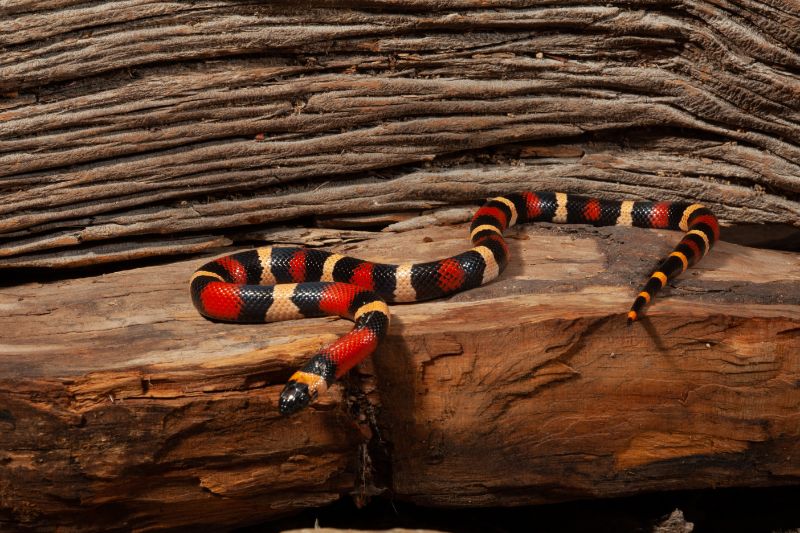
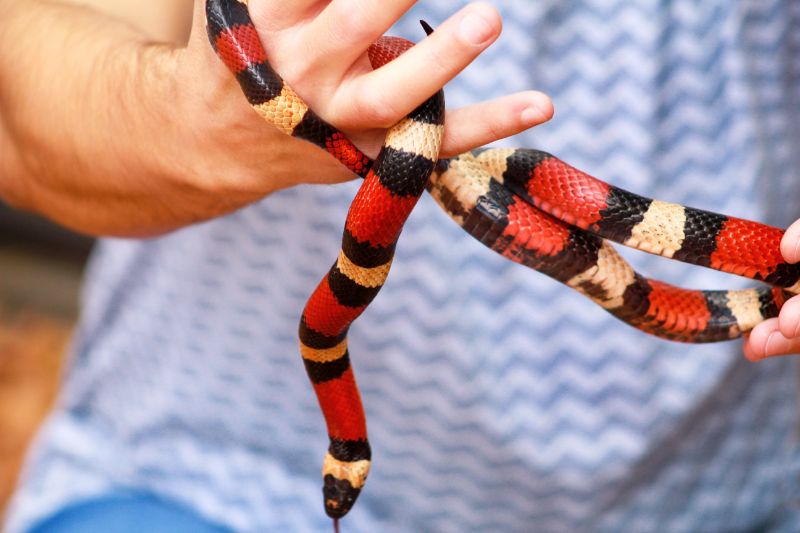
Milk snake appearance varies much more. Many popular captive forms have red, black, and cream or yellow bands. The Minnesota Department of Natural Resources’ eastern milk snake profile, however, describes a light gray or tan background with reddish-brown or brown blotches outlined in black and a pale Y- or V-shaped marking on the neck.
Wild-snake safety: Do not handle an unfamiliar snake to confirm its identity. The North Carolina Wildlife Resources Commission warns that the familiar coral-snake color rhyme should never be used in tropical America, and abnormal color patterns can create confusion elsewhere. Photograph the animal from a safe distance and consult a local wildlife agency or qualified herpetologist. For more context on defensive behavior and venomous species, see these facts about rattlesnakes.
Size and Enclosure Planning
Corn snakes have a documented adult length range of about 24–72 inches, although many captive adults fall near 3–5 feet. Milk snake size cannot be summarized with one reliable number because the common name covers several types. Eastern milk snakes are commonly about 24–36 inches, while larger Lampropeltis forms can approach 6 feet.
Plan the enclosure around the expected adult length, not the snake’s size at purchase. Current welfare guidance for both corn snakes and North American Lampropeltis recommends an enclosure long enough for the snake to stretch out fully, with additional width and height for movement, climbing, hides, and a thermal gradient. Both species are skilled escape artists, so doors, lids, vents, and cable openings must be secure.
A hatchling can use a smaller enclosure or a well-furnished adult enclosure with many tight hiding places. The goal is not to keep a young snake in a bare, cramped box; it is to provide security without sacrificing room to move.
Temperament, Activity, and Handling
Corn snakes have earned their beginner-friendly reputation because many captive-bred individuals settle into routine handling and feeding. That does not make every corn snake calm at all times. Hatchlings, recently transported snakes, animals in shed, and snakes exposed to strong food odors may act defensively.
Milk snakes are also commonly kept successfully, but many are more secretive. A frightened milk snake may hide, flatten or pull back its neck, vibrate its tail, hiss, musk, or strike. These are defensive behaviors, not evidence that the animal is “mean.” Temperament also varies by individual, age, prior handling, and exact milk snake type.
Safe handling basics
- Allow a newly acquired snake about a week to settle before unnecessary handling.
- Scoop the snake up gently and support the body with both hands rather than grabbing it.
- Keep early sessions short—often about 10–15 minutes—and return the snake before it becomes chilled or stressed.
- Wait about 48 hours after feeding before handling to reduce the risk of regurgitation.
- Avoid handling during shedding or when the snake holds its neck in a tense S-shaped posture.
- Wash your hands after touching feeder rodents and before handling the snake so food odor does not trigger a feeding response.
Can corn snakes and milk snakes live together?
No. House both species individually. Corn snakes are solitary, and milk snakes belong to a group that naturally eats other reptiles, including snakes. Cohabitation can cause chronic stress, feeding mistakes, injury, or cannibalism even when two animals appear compatible at first.
Diet and Feeding
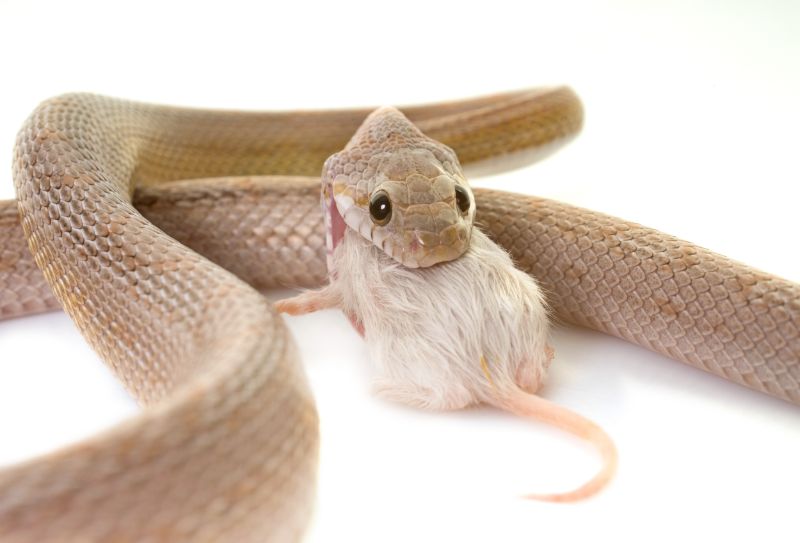
Both species are carnivores and constrictors. In captivity, a suitable staple diet is appropriately sized, fully thawed feeder rodents from a reputable source. Frozen-thawed prey is generally preferable to live prey because a live rodent can injure the snake.
Feeding frequency depends more on age, prey size, body condition, and health than on whether the animal is a corn snake or milk snake. A common starting schedule is one small meal every five to six days for hatchlings, gradually extending to about every seven to 14 days for many adults. The prey item is commonly selected to be slightly wider than the widest part of the snake’s body. Regular weighing is more useful than following a rigid calendar.
Use feeding tongs, provide fresh water daily, and avoid handling for roughly 48 hours after a meal. Never feed wild-caught rodents, and consult a reptile veterinarian if a snake repeatedly refuses food, loses weight, regurgitates, or shows other changes in behavior.
Natural Range and Habitat
Corn snakes are native to the eastern United States, from southern New Jersey to Florida and west into Louisiana, with part of the range extending into Kentucky. They use wooded groves, rocky hillsides, meadowlands, barns, abandoned buildings, and other places that provide cover and prey.
Milk snakes as a broader group occur across much of North America and parts of Central America. Eastern milk snakes use fields, farmland, woodland edges, rocky hillsides, river bottoms, and structures such as barns where rodents are present. Other milk snake types occupy different climates and habitats.
That geographic variation helps explain why milk snake color, adult size, activity, and humidity tolerance cannot be reduced to one universal profile. It is a practical example of how animals adapt to their environment across different types of ecosystems.
Care Requirements Compared
The ranges below are useful starting points, not substitutes for a care sheet for the exact animal. Use thermostat-controlled heat, check temperatures with digital thermometers, measure humidity with a hygrometer, and confirm the setup with an experienced reptile veterinarian.
| Care factor | Corn snake baseline | Milk snake baseline |
|---|---|---|
| Warm or basking zone | About 28–30°C (82–86°F) | About 26–30°C (79–86°F), adjusted for the exact type |
| Cool end | About 20–24°C (68–75°F) | About 21–24°C (70–75°F) |
| Relative humidity | About 40–50%, plus a humid hide when needed | Often about 40–55%, with locality-specific adjustment |
| Enclosure size | Long enough for full-body stretching, with useful width and height | Same principle, but size it for the exact milk snake’s adult length |
| Hides and enrichment | At least one hide at each end, climbing branches, cover, and a humid hide | Multiple snug hides, cover for secretive behavior, branches, and a humid hide |
| Lighting | Consistent day-night cycle; modern welfare guidance recommends low-output UVB with shade | Consistent day-night cycle; low-output UVB with a light-to-shade gradient |
| Water | Fresh water at the cool end in a bowl large enough for bathing | Fresh water at the cool end in a bowl large enough for bathing |
| Social housing | House alone | House alone; cannibalism is a specific risk |
The small difference between the general humidity ranges is not a strong reason to choose one species over the other. Enclosure security, adult size, enrichment, temperature control, and the exact milk snake type matter more.
Which Snake Is Better for Beginners?
Choose a corn snake if you want:
- A widely kept first snake with predictable general husbandry.
- An active animal that often becomes comfortable with short, gentle handling sessions.
- A well-established captive diet based on appropriately sized frozen-thawed rodents.
- Many captive-bred colors and patterns without the size variation hidden by the broad “milk snake” label.
Choose a milk snake if you want:
- A specific banded or blotched Lampropeltis type whose adult size you have verified.
- A more secretive snake that may spend substantial time under cover.
- A pet you are willing to acclimate patiently if it musks, hides, or acts defensively at first.
- An individually housed snake with a secure, enriched enclosure and species-specific care plan.
Choose neither—at least for now—if:
- You are not comfortable storing and feeding whole rodents.
- You cannot provide a secure enclosure large enough for the adult to stretch out fully.
- You are not prepared for a commitment that may exceed 20 years.
- You do not have access to a veterinarian who treats reptiles.
- Your household includes a child under five, an adult over 65, or a person with a weakened immune system and you have not discussed the CDC’s reptile-related germ guidance as a household.
Health, Hygiene, and Long-Term Commitment
A healthy-looking reptile can carry Salmonella. The CDC’s reptile and amphibian safety guidance recommends washing your hands with soap and running water after handling the snake, feeder rodents, waste, water bowls, or enclosure equipment. Keep the animal, its food, and its cleaning supplies out of kitchens and other food-preparation areas. Freezing feeder rodents does not eliminate all germs.
Before bringing either species home, locate a reptile-experienced veterinarian through the Association of Reptile and Amphibian Veterinarians directory. Check state, local, rental, and property rules; set up and test the enclosure in advance; verify the animal is captive-bred or responsibly rehomed; and obtain its feeding history, age, sex if known, and exact scientific or locality name.
Brumation is a seasonal reduction in activity, not a reproductive process. It should not be induced casually in a pet snake. A snake that stops eating, loses weight, breathes with its mouth open, has discharge, retains shed around the eyes or tail, or regurgitates needs prompt assessment by a reptile veterinarian.

Final Verdict
For most beginners comparing a corn snake vs milk snake, the corn snake wins by a small but meaningful margin. Its care is well documented, adult size is easier to predict, and many captive-bred individuals become accustomed to routine handling.
A milk snake is the better choice when you are drawn to a specific Lampropeltis type and have confirmed its adult size, temperament tendencies, and care requirements. The right decision is not based on color alone. It is the snake whose full adult needs you can meet consistently for its entire life.
Choosing a captive-bred or responsibly rehomed animal also reduces pressure on wild populations and supports the broader importance of wildlife conservation.
Frequently Asked Questions
Are corn snakes and milk snakes venomous?
No. Corn snakes and milk snakes are nonvenomous constrictors. They can still bite defensively, and any bite should be cleaned because reptiles can carry germs.
Which is better for a beginner, a corn snake or a milk snake?
A captive-bred corn snake is usually the easier first snake because its size and care are more predictable and many individuals tolerate handling well. A milk snake can also suit a beginner who researches the exact type and accepts that it may be more secretive or defensive at first.
How can you tell a corn snake from a milk snake?
Corn snakes usually have red or orange saddle-shaped blotches outlined in black and often a checkerboard belly. Many milk snakes have red, black, and cream bands, but eastern and other forms may be gray or tan with dark-edged blotches. Never handle a wild snake to identify it.
Can corn snakes and milk snakes live together?
No. Both should be housed individually. Cohabitation can cause stress, feeding errors, injury, and, with milk snakes, a real risk of one snake eating the other.
Do corn snakes and milk snakes need the same temperature and humidity?
Their general requirements overlap, but they are not identical. Corn snake guidance commonly uses a 28–30°C warm zone, a 20–24°C cool end, and 40–50% humidity. Many milk snake types use a 26–30°C warm zone, a 21–24°C cool end, and roughly 40–55% humidity. Confirm the exact milk snake type.
Do corn snakes eat corn or milk snakes drink milk?
No. Both are carnivores. Corn snakes were probably named for their checkerboard belly pattern or their presence near grain stores, while the milk snake name came from an old myth that the snakes drank milk from cows.
See Related: Is Corn Bad for the Environment?