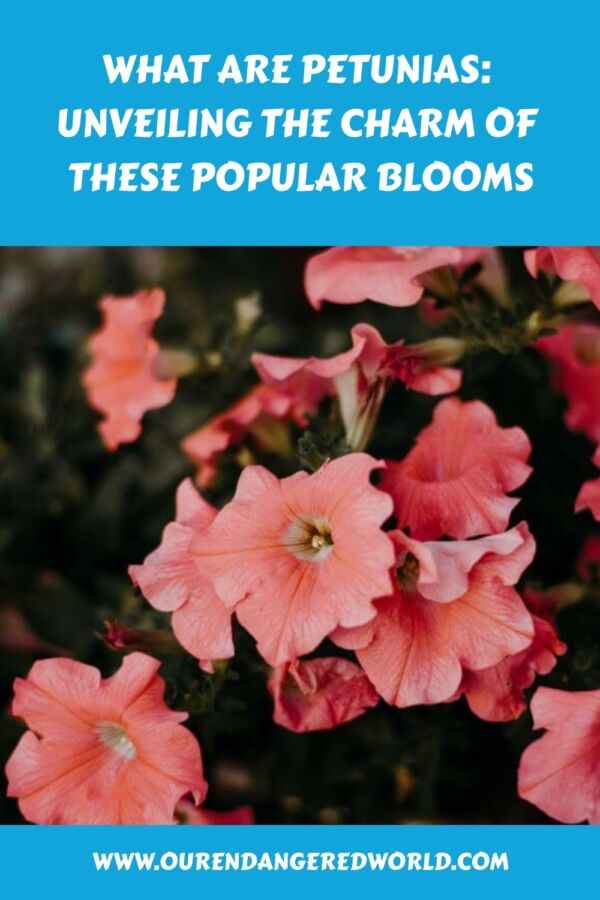
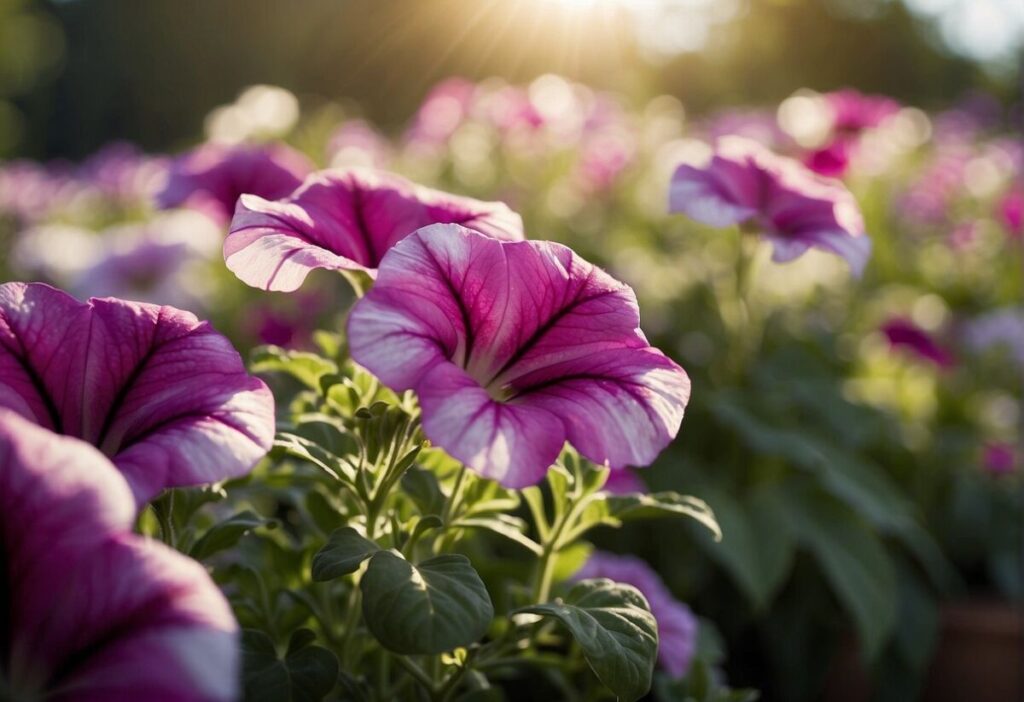
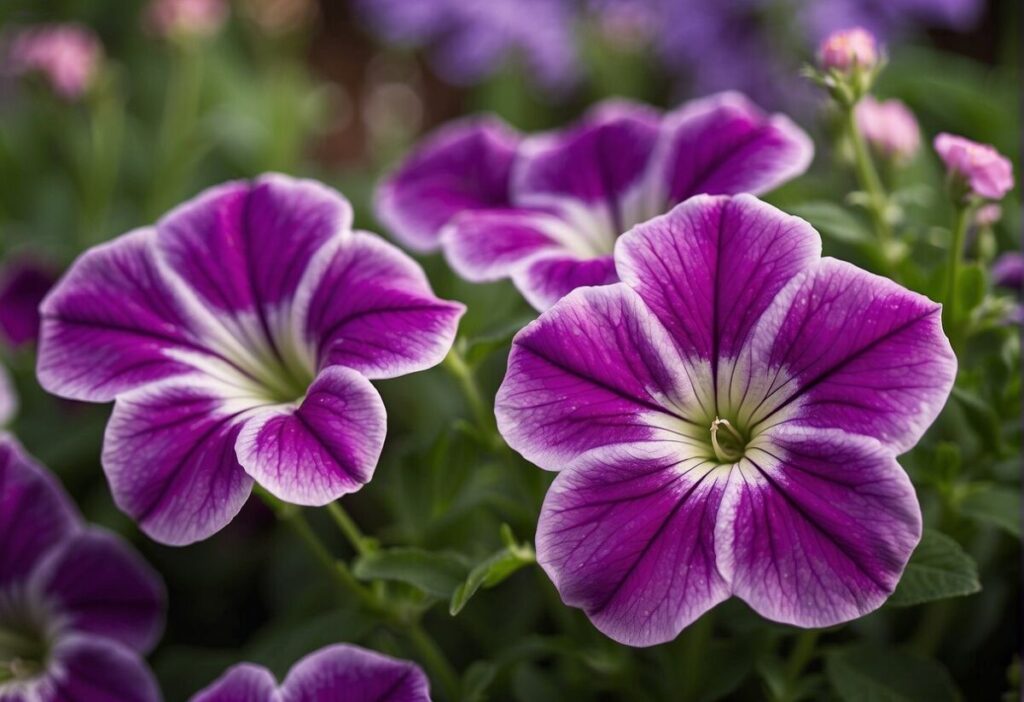
What are petunias? Petunias are South American flowering plants in the genus Petunia and the nightshade family, Solanaceae. Their funnel-shaped flowers appear in solid colors, contrasting veins, stripes, stars, and double forms.
Most plants sold for gardens belong to a cultivated hybrid group. The accepted botanical name is Petunia × atkinsiana, although Petunia × hybrida remains common on plant labels and in gardening references. These plants are tender perennials, but they are grown as annuals wherever winter frost kills the top growth and roots.
For the strongest flowering, give petunias full sun, well-drained soil, consistent moisture, and regular feeding. Many cultivars bloom from late spring until frost, but the right care depends on whether the plant is compact, mounding, or spreading.
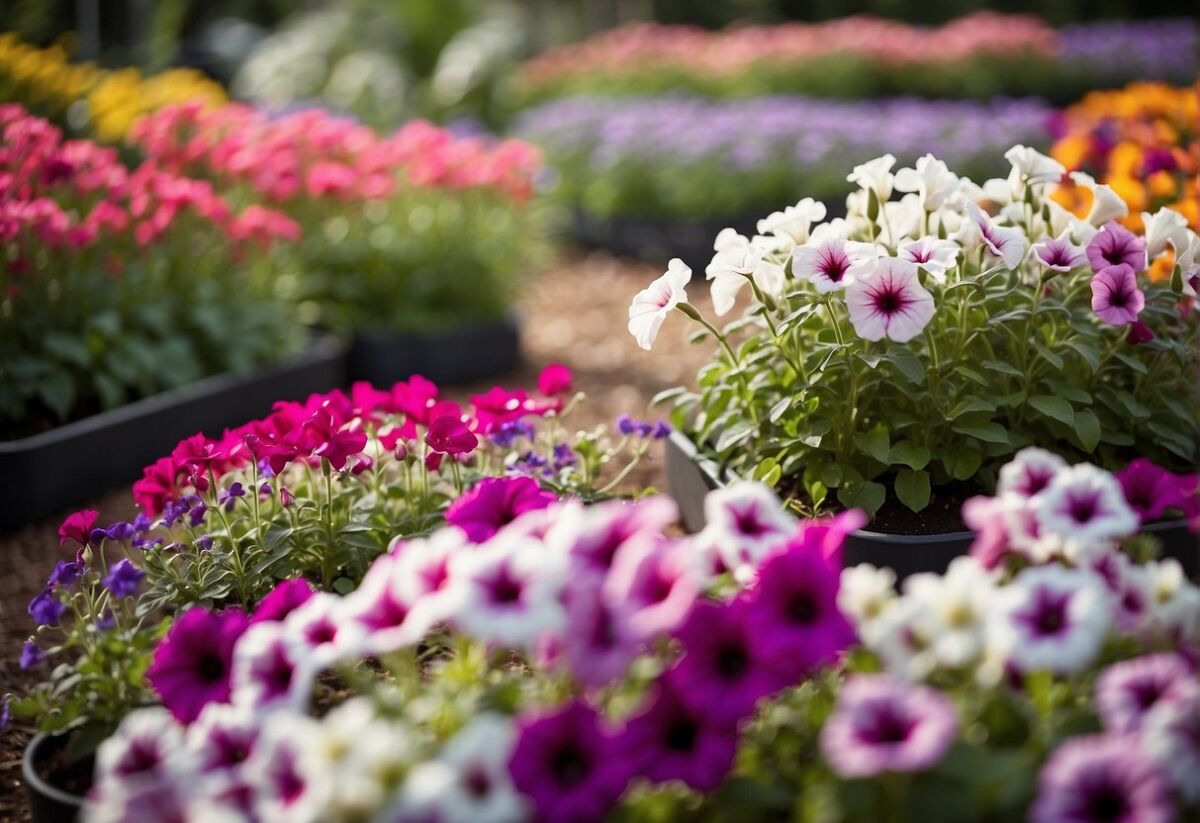
- Best light: At least five to six hours of direct sun, with fuller flowering in all-day sun.
- Life cycle: A tender perennial that is usually treated as an annual in frost-prone climates.
- Water: Deep, consistent watering without leaving the roots in saturated soil.
- Best uses: Beds, borders, pots, window boxes, hanging baskets, and seasonal groundcover.
- Main choice: Select by growth habit and flower size, not color alone.
Petunia basics
The genus contains multiple species; if the term is unfamiliar, see our explanation of what a species is. Most garden-center plants are cultivated hybrids selected for flower size, color, weather tolerance, and growth habit. Petunias are related to tomatoes, peppers, potatoes, and tobacco through the Solanaceae family, but family membership does not mean every plant shares the same chemistry or toxicity.
| Feature | Petunia facts |
|---|---|
| Botanical group | Petunia genus; most garden plants belong to the hybrid group Petunia × atkinsiana |
| Plant family | Solanaceae, or nightshade family |
| Native range | The genus is native from Bolivia through southern South America and southeastern and southern Brazil |
| Life cycle | Tender perennial; usually grown as an annual where winters freeze |
| Bloom period | Typically late spring through frost, depending on planting time and climate |
| Sunlight | At least five to six hours of direct sun; full sun produces more flowers |
| Soil | Moist but well-drained soil, generally around pH 6.0 to 7.0 |
| Common uses | Flower beds, borders, containers, window boxes, hanging baskets, and seasonal groundcover |
| Pet safety | The ASPCA lists Petunia species as non-toxic to dogs, cats, and horses |
Petunia leaves and stems often feel slightly sticky because they have glandular hairs. The flowers are usually funnel- or trumpet-shaped. Fragrance varies: some cultivars have a noticeable sweet scent, while others have little or no fragrance.
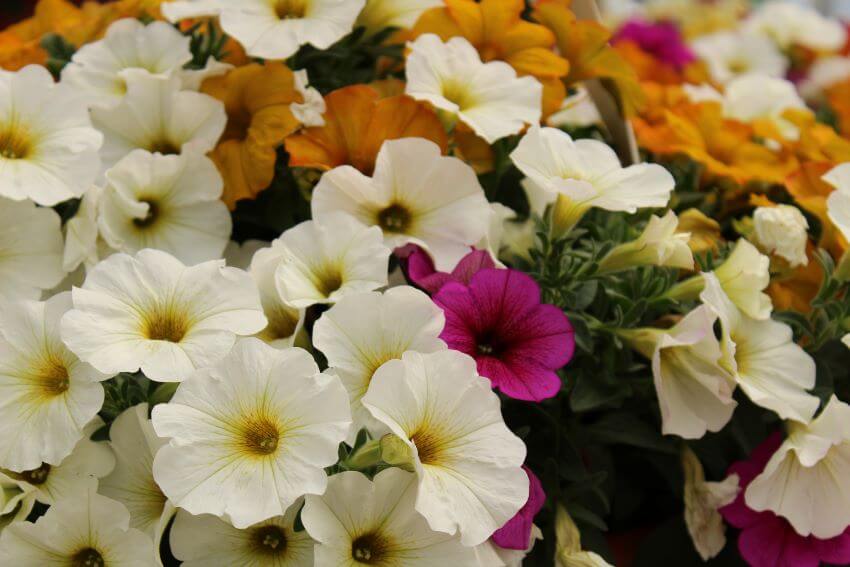
Types of petunias
Gardeners usually group petunias by flower size and plant habit. The categories are useful, but modern breeding has blurred some boundaries, so the cultivar label remains the best source for mature height, spread, and care needs.
| Petunia type | Typical traits | Best uses | Main tradeoff |
|---|---|---|---|
| Grandiflora | The largest flowers, often up to about 4 inches wide; single or double forms | Patio pots, window boxes, and sheltered beds where each bloom can be seen | Large petals are more likely to look battered after heavy rain |
| Multiflora | Smaller flowers, usually around 2 inches wide, produced in greater numbers | Mass planting, borders, and exposed garden beds | Individual flowers are less dramatic than grandiflora blooms |
| Milliflora | Compact plants with many small flowers | Edging, small pots, mixed containers, and tight spaces | The display has less impact when viewed from a distance |
| Floribunda | A horticultural group combining relatively large flowers with abundant bloom | General-purpose beds and containers | Performance varies by cultivar, so the label matters |
| Spreading or trailing | Long stems and a wide or cascading habit; often sold in series such as Wave-type petunias | Hanging baskets, large containers, retaining walls, and seasonal groundcover | Fast growth usually means more frequent watering and feeding |
For a hanging basket, choose a trailing cultivar with a documented spread. For a neat border, use a compact mounding or milliflora type. In a garden exposed to frequent rain, multiflora types generally recover more cleanly than very large-flowered petunias.
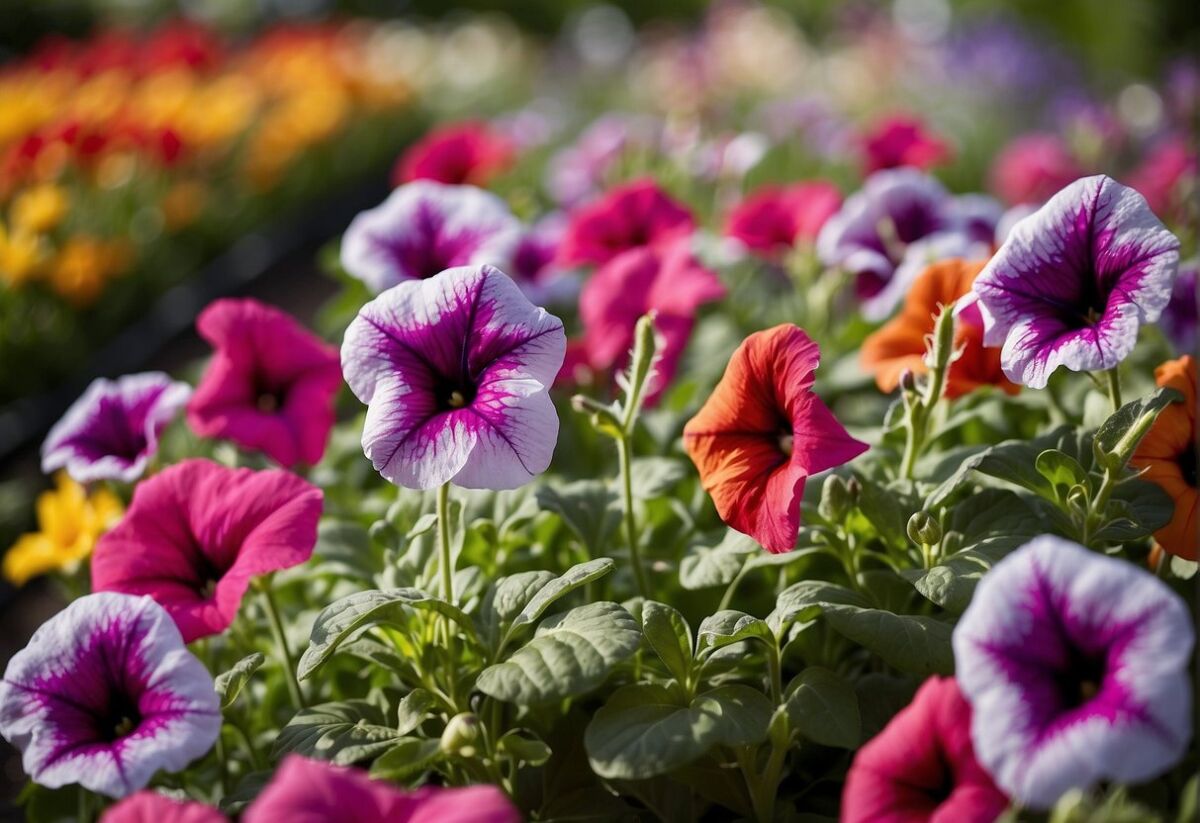
How to grow petunias
Choose a sunny site
The University of Minnesota Extension recommends at least five to six hours of good sunlight, with better flowering in full sun. Plants may survive in partial shade, but they usually stretch toward the light and produce fewer flowers. In very hot climates, light afternoon shade can reduce stress as long as the plants still receive strong direct light for most of the day.
Plant after frost and space by growth habit
Transplant petunias outdoors after the danger of frost has passed and the soil has warmed. Set plants at the same depth they grew in their nursery pots. Compact milliflora types may be spaced about 4 to 6 inches apart, many grandiflora and multiflora types about 12 inches apart, and spreading types at least 18 inches apart. Always follow the cultivar tag when it gives a larger mature spread.
Use well-drained soil and containers
Petunias perform best in soil that holds some moisture but drains promptly. A pH near 6.0 to 7.0 suits most garden petunias. Improve a bed with finished compost when the soil is very sandy or compacted, but avoid creating a water-holding pocket in heavy clay.
For containers, use fresh potting mix and a pot with open drainage holes rather than dense garden soil. A larger soil volume dries more slowly and gives vigorous spreading cultivars more root space. When replacing old containers, compare practical nursery pot options before choosing by appearance alone.
Water according to the soil, weather, and container
Use the soil as the trigger rather than following a rigid calendar. Water deeply when the upper layer begins to dry, then allow excess water to drain. Most in-ground plants need less frequent irrigation than hanging baskets and window boxes. During hot or windy weather, a small container may need water every day.
Apply water at soil level when practical. Constantly wet foliage and flowers, crowded plants, and poor airflow can increase the risk of gray mold and other disease problems. Persistent wilting in wet soil is not a signal to add more water; it may indicate damaged roots or poor drainage.
Feed for continued flowering
Petunias flower heavily and use nutrients throughout the season. In beds, base fertilizer decisions on a soil test or a labeled product for flowering annuals. In containers, a controlled-release fertilizer at planting plus periodic liquid feeding is often practical. Fast-growing spreading types generally need feeding more often than compact garden types. Follow the product label and avoid assuming that more fertilizer will always produce more flowers.
Start petunias from seed
Start seeds indoors about 10 weeks before the intended outdoor planting date. Petunia seeds are tiny and require light to germinate, so press them onto the surface of a moist seed-starting mix without covering them. Iowa State University Extension recommends a warm location around 75 to 80°F; under suitable conditions, seeds commonly germinate in 7 to 10 days.
After germination, remove the humidity cover, provide strong light for 12 to 16 hours a day, and grow the seedlings somewhat cooler. Transplant after they develop true leaves, then harden them outdoors before planting. Saved seed from a hybrid may produce plants that differ from the parent. For other techniques, see these plant propagation methods.
How to keep petunias blooming
Deadhead when the cultivar needs it
Traditional grandiflora and double-flowered petunias often bloom better and look cleaner when faded flowers are removed. Pinch off the spent flower and the swollen seed-forming structure beneath it. Many modern spreading and small-flowered cultivars are self-cleaning, so they shed old blooms without regular deadheading.
Prune long, bare stems
When stems become long with flowers only at the tips, shorten part of the plant by roughly one-third. A severely overgrown plant can be cut back by up to half, but avoid removing every green shoot at once during extreme heat. Water after pruning and resume an appropriate feeding schedule to support new branching.
Diagnose common petunia problems
| Symptom | Likely cause | Practical response |
|---|---|---|
| Few flowers and long stems | Too little light, mature leggy growth, or excessive nitrogen | Increase sun if possible, prune long stems, and use a balanced fertilizer according to its label |
| Wilting while soil stays wet | Poor drainage or root disease | Pause watering, confirm the drainage holes are open, and inspect roots before adding more water |
| Wilting in a light, dry container | Drought stress | Water thoroughly until excess drains, then check the container more often in heat and wind |
| Yellow new leaves with greener veins | High root-zone pH, limited iron availability, or damaged roots | Check drainage and pH before applying an iron product or changing fertilizer |
| Sticky, curled new growth | Aphids or other sap-feeding insects | Inspect leaf undersides, rinse small infestations with water, or use a labeled insecticidal soap when necessary |
| Ragged holes in leaves or flowers | Slugs, snails, caterpillars, or flea beetles | Inspect at dusk and beneath pots, remove pests where practical, and use controls targeted to the identified pest |
| Gray or brown damaged flowers and stems | Botrytis or another moisture-related disease | Remove affected tissue, improve airflow, avoid wetting flowers, and discard severely affected plants |

Petunias in pots, beds, borders, and hanging baskets
Containers and hanging baskets
Trailing and spreading petunias work well where stems can spill over an edge. Use a container large enough for the cultivar’s mature spread, keep drainage holes clear, and leave room for airflow. A bigger basket or pot is generally easier to keep evenly moist than a small one.
When mixing plants, choose companions with similar sun, water, and feeding needs. Compact petunias can act as fillers, while trailing forms act as spillers. For small patios and balconies, use the same principles when planning an apartment container garden.
Beds, borders, and seasonal groundcover
Multiflora and milliflora petunias create a dense display along paths and at the front of beds. Spreading cultivars can cover open soil for a season, but they are not a permanent weed barrier. Give them the spacing listed on the plant tag so the foliage can fill in without creating a stagnant, disease-prone mat.
Good companions include other sun-loving annuals and grasses with compatible moisture needs. Avoid pairing petunias with shade plants or drought plants that require substantially drier soil.

Are petunias annuals or perennials?
Petunias are tender perennials, but most gardeners grow them as annuals. North Carolina State Extension lists garden petunias for USDA zones 10a through 11b; in colder zones, frost normally ends the outdoor season.
A plant can be moved indoors before frost, but overwintering is not always the most efficient option. It needs a bright location, careful watering, and inspection for aphids, mites, and other pests. Many gardeners instead take cuttings from a valued cultivar or buy fresh plants in spring.
Petunias, pets, deer, and pollinators
Are petunias safe for cats and dogs?
The ASPCA lists Petunia species as non-toxic to dogs, cats, and horses. That does not make the plant a food, and fertilizers, pesticides, slug bait, or contaminated potting mix may present separate hazards. Contact a veterinarian if an animal develops symptoms after chewing any treated plant.
Do deer eat petunias?
Petunias are often described as seldom damaged by deer, but browsing pressure varies with location, season, and available food. No flowering annual is reliably deer-proof. See the detailed answer to whether deer eat petunias before relying on them in an exposed bed.
Do petunias help pollinators?
Some petunia flowers are visited by butterflies, moths, hummingbirds, and other pollinators. For stronger habitat value, use ornamental petunias alongside plants native to your region rather than as a complete substitute. The National Park Service recommends selecting native species suited to the local ecoregion and maintaining flowers across the growing season.
Petunia look-alikes and confusing names
Petunia vs. calibrachoa
Calibrachoa, often sold as million bells or mini petunia, belongs to a separate genus. It usually has smaller flowers and a trailing habit, which makes it common in hanging baskets. The care needs overlap, but calibrachoa grown in small baskets may require especially close attention to watering, drainage, and feeding.
Mexican petunia is not a true petunia
Mexican petunia is Ruellia simplex, a member of the Acanthaceae family rather than the genus Petunia. It spreads by rhizomes and seed and can behave aggressively in warm climates. Check regional invasive-plant guidance before planting it near natural areas.
Frequently asked questions
Are petunias annuals or perennials?
Petunias are tender perennials, but gardeners usually grow them as annuals in places with winter frost. In warm, frost-free climates, they may survive for more than one season.
How much sun do petunias need?
Petunias need at least five to six hours of direct sunlight for reliable flowering. Full sun generally produces denser growth and more flowers, while too much shade leads to fewer blooms and longer stems.
How often should petunias be watered?
Water when the upper layer of soil begins to dry, then soak the root zone and let excess water drain. In-ground plants may need water about weekly in ordinary weather, while small pots and hanging baskets may need daily checks during heat or wind.
Do petunias need deadheading?
Traditional large-flowered and double petunias often benefit from deadheading. Many modern spreading and small-flowered cultivars are self-cleaning, although any petunia may benefit from pruning when its stems become leggy.
Are petunias safe for cats and dogs?
The ASPCA lists Petunia species as non-toxic to cats and dogs. Pets should still be kept from chewing treated plants because fertilizers, pesticides, and slug-control products can create separate risks.
Can petunias be grown from seed?
Yes. Start the tiny seeds indoors about 10 weeks before outdoor planting, press them onto moist seed-starting mix without covering them, and provide warmth and light. Harden the seedlings before transplanting after frost danger has passed.
Why are my petunias getting leggy?
Common causes include insufficient sun, mature stems that need pruning, inconsistent feeding, and heat stress. Move the plant to stronger light when possible, shorten long stems by about one-third, and resume appropriate watering and feeding.
Choose the petunia that fits the space
Petunias are easiest to manage when the cultivar’s growth habit matches the planting site. Use compact or multiflora types for tidy beds, milliflora types for small spaces, and spreading or trailing types for large pots, baskets, and seasonal groundcover. Then provide enough sun, drainage, water, and fertilizer for that specific habit rather than applying one care schedule to every plant.
Keep the plant label when possible. It provides the most useful details about mature spread, self-cleaning flowers, and feeding needs—differences that matter more than the flower color alone.