
An “eco-friendly microwave” is not a formal product category. The practical choice is a right-sized model that heats small meals quickly, draws little power while idle, avoids functions you will not use, and is likely to remain useful for years.
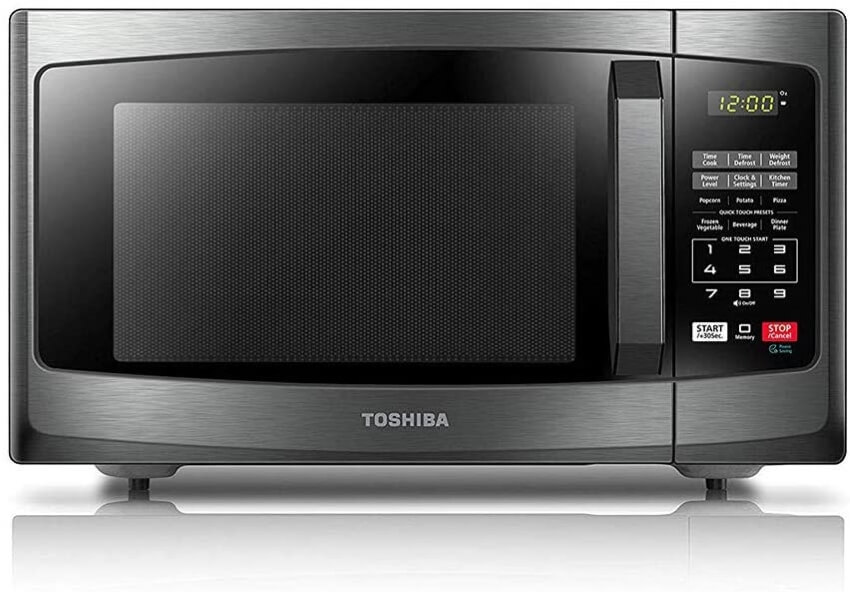
For most U.S. households, the Toshiba EM131A5C-BS is the best all-around choice because its 1.2-cubic-foot cavity, humidity sensor, and simple controls cover everyday reheating without the size and complexity of a convection combination. The Panasonic NN-SD372S is the stronger compact choice when inverter control matters, while the Galanz SpeedWave makes sense only if its air-fry and convection modes will replace other appliance or full-size oven use.
This update keeps all 23 original product images, but the active ranking has been reduced to 15 verifiable models. Eight discontinued, recalled, unidentified, or miscategorized products now appear in a clearly labeled legacy section instead of being presented as current recommendations. Specifications and status were last checked on July 29, 2026. Stock, model suffixes, and retailer listings can change.
Affiliate disclosure: Our Endangered World may earn a commission from qualifying purchases made through some links on this page. This guide is based on manufacturer documentation, government sources, and product-status research. We do not claim hands-on testing unless explicitly stated.
Key takeaways
- No standalone household microwave carries an ENERGY STAR microwave certification. ENERGY STAR’s residential electric-cooking specification excludes products with microwave components.
- U.S. federal microwave efficiency rules focus on standby and off mode. New units manufactured in or imported into the United States on or after June 22, 2026 must meet tighter standby limits, but there is still no federal active-mode cooking-efficiency score for comparing models.
- Choose capacity before wattage. The smallest model that fits your normal plates and dishes usually avoids unnecessary material and counter space, but a unit that forces repeated batches can be a false economy.
- Sensor and inverter features solve different problems. Sensors adjust time from food moisture; inverter systems provide steadier lower-power cooking. Neither feature is a universal guarantee of lower total electricity use.
- Keep a safe, working microwave unless replacement solves a real problem. A small standby reduction rarely justifies discarding a functional appliance early. For broader household savings, review these home energy-saving products.
What makes a microwave more eco-friendly?
A microwave can be the lower-energy tool for reheating and small portions because it heats the food directly rather than preheating and maintaining a large oven cavity. That advantage depends on the task. A full-size oven may still be the better tool for several trays, large roasts, or foods that need sustained dry heat.
The label is also easy to misuse. ENERGY STAR’s residential electric-cooking specification excludes combined products with a microwave component, and standalone household microwaves do not have a consumer-facing ENERGY STAR category. A retailer’s “energy efficient” badge is therefore not equivalent to an independent microwave efficiency certification.
The U.S. Department of Energy’s microwave standard measures standby and off-mode power, not cooking efficiency. For models manufactured in or imported into the United States on or after June 22, 2026, the maximum average standby power is 0.6 watt for microwave-only and countertop convection models and 1.0 watt for built-in and over-the-range convection models. Retail shelves may still contain stock made earlier.
For this guide, a stronger environmental fit means the model performs well against five practical criteria:
- Right-sized capacity: enough room for the dishes used most often, without buying an oversized cavity by default.
- Appropriate cooking system: a solo microwave for simple reheating, or a combo only when the extra modes will replace other appliance use.
- Useful control technology: sensor cooking, inverter power, multi-stage programs, or an eco standby mode that addresses a real need.
- Current model identity: an exact SKU with verifiable specifications, voltage, support, and market availability.
- Durability and serviceability: a realistic chance of staying in use rather than becoming premature electronic waste.
Best eco-friendly microwaves at a glance
| Best for | Model | Market | Capacity | Cooking output | Why it made the list |
|---|---|---|---|---|---|
| Best overall for most U.S. kitchens | Toshiba EM131A5C-BS | U.S. | 1.2 cu. ft. | 1,000 W | Humidity sensor; right-sized cavity |
| Best compact inverter microwave | Panasonic NN-SD372S | U.S. | 0.8 cu. ft. | 950 W | Inverter power control; compact cavity |
| Best large-capacity inverter microwave | Panasonic NN-SN966S / NN-SN966SR | U.S. | 2.2 cu. ft. | 1,250 W | Inverter and Genius Sensor |
| Best microwave with a grill and eco mode | Samsung MG11T5018CC | U.S. | 1.1 cu. ft. | 1,000 W microwave | Eco standby mode; grill can replace broiler use |
| Best large sensor microwave | Toshiba ML-EM45P(BS) | U.S. | 1.6 cu. ft. | 1,200 W | Sensor menus; large turntable |
| Best straightforward midsize sensor microwave | Panasonic NN-SU696S | U.S. | 1.3 cu. ft. | 1,100 W | Genius Sensor; moderate footprint |
| Best value 1.1-cubic-foot microwave | Farberware FMO11AHTBKB | U.S. | 1.1 cu. ft. | 1,000 W | Right-sized basic model; multi-stage cooking |
| Best colorful programmable microwave | Farberware FMO11AHTBSB | U.S. | 1.1 cu. ft. | 1,000 W | Multi-stage programming; no combo hardware |
| Best compact microwave with eco and mute modes | Toshiba EM925A5A-BS | U.S. | 0.9 cu. ft. | 900 W | Eco standby mode; compact cavity |
| Best ultra-compact budget microwave | BLACK+DECKER EM720CB7 | U.S. | 0.7 cu. ft. | 700 W | Very small cavity and footprint |
| Best microwave, air fryer, and convection combination | Galanz SpeedWave GSWWA16S1SA10 | U.S. | 1.6 cu. ft. | 1,000 W microwave | Inverter and sensor; can replace separate appliances |
| Best simple commercial microwave | Sharp R-21LCFS | U.S. | 1.0 cu. ft. | 1,000 W | Simple dial controls; built for repeated use |
| Best built-in microwave for EU kitchens | AEG MSB2547D-M | EU / 230 V | 25 L | 900 W microwave | Right-sized built-in with grill |
| Best simple manual microwave for the UK | Igenix IG2081S | UK / 230 V | 20 L | 800 W | Manual controls; compact solo design |
| Best retro-style compact microwave for the UK | Russell Hobbs RHMD804CP | UK / 230 V | 17 L | 800 W | Small solo cavity |
Market note: U.S. models are generally designed for 120 V/60 Hz service; UK and EU models usually require 220-240 V/50 Hz. Do not import a microwave across electrical markets without manufacturer confirmation, the correct safety approvals, and local service support.
How we evaluated these microwaves
This is a research-based buying guide, not a laboratory test. We checked exact model numbers against manufacturer pages, manuals, government safety notices, and current retailer records. We removed volatile prices and star ratings because they change frequently and can make an evergreen guide misleading.
The ranking gives more weight to capacity fit, solo-versus-combination design, sensor or inverter functions, current support, and clear model identity than to marketing claims. We did not award points merely for lower cooking wattage: a low-output microwave may run longer, and the advertised cooking output is not the same as the input power drawn from the wall.
Every recommendation also has a stated trade-off. The “best” microwave is the one that completes your normal cooking task with the least unnecessary appliance, not the model with the longest feature list.
Best eco-friendly microwaves for U.S. kitchens
1. Toshiba EM131A5C-BS: Best overall for most U.S. kitchens
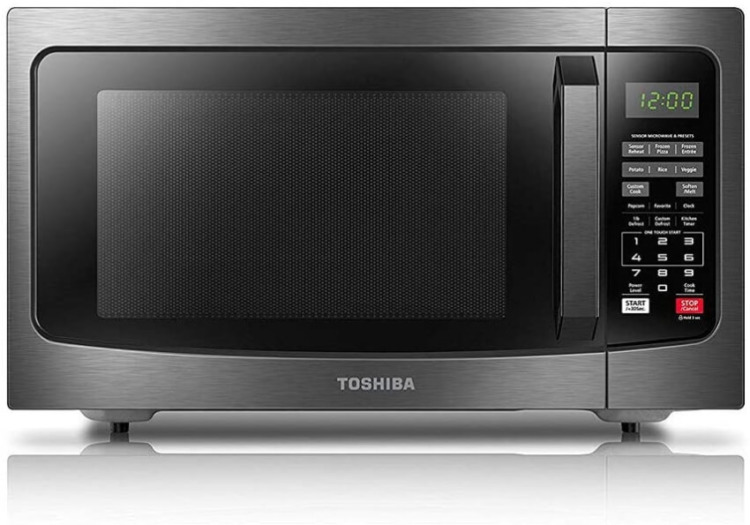
Best for: households that want one practical countertop microwave for reheating, defrosting, and everyday cooking.
The EM131A5C-BS balances capacity, straightforward controls, and sensor cooking without moving into a bulky convection platform. Toshiba lists a 1.2-cubic-foot cavity, six sensor menus, ten power levels, an easy-clean interior, and a mute function. The humidity sensor can stop or adjust a cycle based on the steam released by food, which is more useful than simply adding extra minutes “just in case.”
This is not an independently certified “green” microwave. Its place at the top comes from fit: it is large enough for a standard dinner plate but not oversized for most households, and its sensor features can reduce avoidable overcooking. Buyers who want true inverter power control should choose a Panasonic model instead.
Advantages: Balanced size, sensor cooking, simple controls, and a mute option.
Trade-offs: No verified inverter system; measure the 20.6-inch width and ventilation clearance before buying.
2. Panasonic NN-SD372S: Best compact inverter microwave
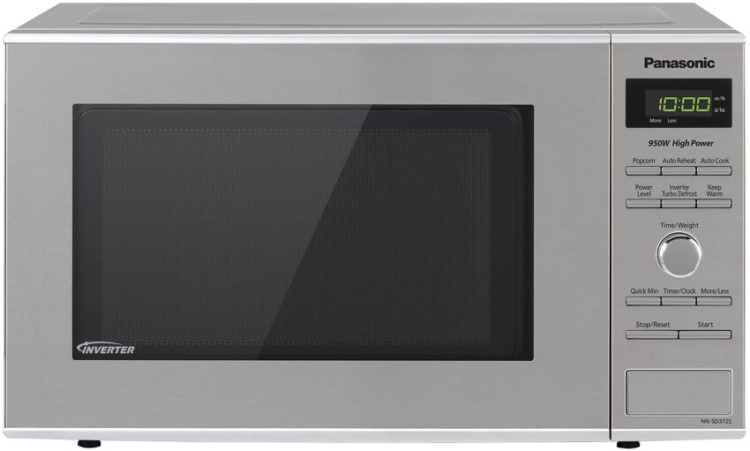
Best for: one- or two-person households that want a small microwave with controlled low-power cooking.
Panasonic still lists the NN-SD372S as a current 0.8-cubic-foot, 950-watt inverter microwave. Inverter control supplies steadier power at lower settings instead of repeatedly cycling full power on and off. That can improve gentle reheating and defrosting, although no U.S. government test currently converts inverter performance into a comparable active-mode efficiency rating.
The compact cavity reduces the material and counter-space burden of buying more appliance than you use. Check your largest plate and preferred containers before ordering, because 0.8 cubic feet can feel restrictive for casseroles or family portions.
Advantages: Compact footprint, inverter control, sensor functions, and a current Panasonic support page.
Trade-offs: Small cavity and an older control design; availability can vary by retailer.
3. Panasonic NN-SN966S / NN-SN966SR: Best large-capacity inverter microwave
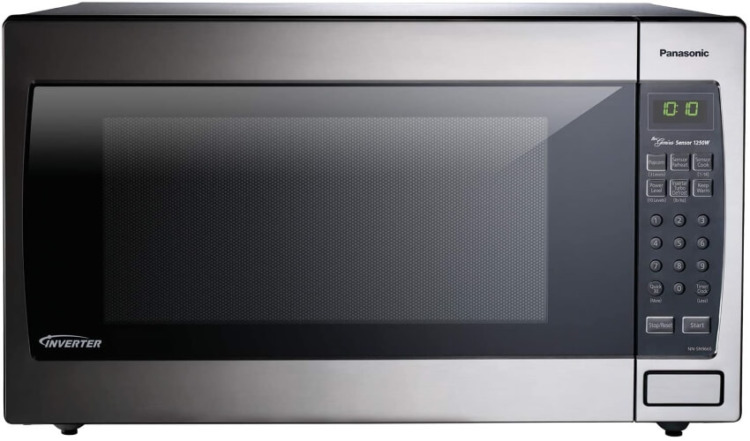
Best for: families that regularly heat large serving dishes and will use the full 2.2-cubic-foot cavity.
The current NN-SN966SR is the closest manufacturer-listed version of the original NN-SN966S in this article. Panasonic specifies 1,250 watts of cooking power, inverter technology, Genius Sensor cooking, turbo defrost, and a keep-warm function. It is a strong choice when a smaller model would force repeated batches.
Size is the deciding factor. A large microwave is not automatically more efficient, and this model occupies nearly 24 inches of counter width. Choose it for real capacity needs, not because the higher wattage sounds better.
Advantages: Large usable cavity, inverter control, sensor programs, and fast cooking.
Trade-offs: Large exterior footprint and high peak power; excessive for small portions or tight kitchens.
4. Samsung MG11T5018CC: Best microwave with a grill and eco mode
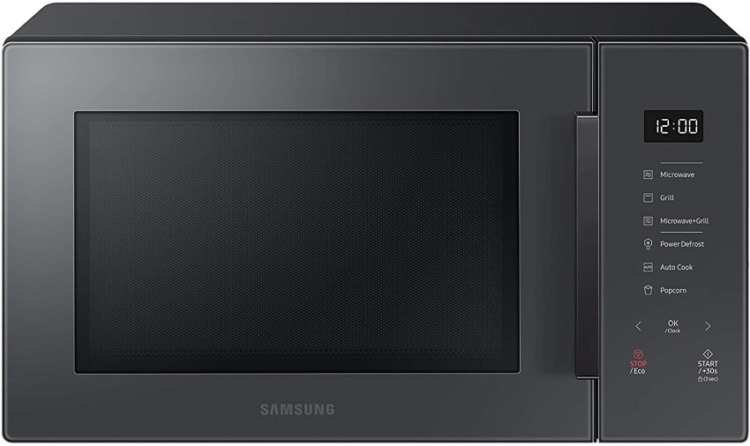
Best for: people who want microwave speed plus occasional browning without turning on a full-size oven.
Samsung lists a 1.1-cubic-foot cavity, 1,000 watts of microwave output, ten power levels, Eco Mode, a ceramic enamel interior, and a separate grilling element. Eco Mode addresses standby use; it does not make the active cooking cycle inherently more efficient. The grill is most defensible when it replaces short broiler or oven sessions.
The specification sheet lists 1,600 watts of microwave input and a 1,300-watt grill. That distinction matters: the wattage advertised on the front of a microwave is normally cooking output, while the electrical label or manual shows the wall-power draw used for cost estimates.
Advantages: Eco standby mode, grill function, easy-clean interior, and a moderate 1.1-cubic-foot size.
Trade-offs: More complex and power-hungry than a solo model; buy it only if you will use the grill.
5. Toshiba ML-EM45P(BS): Best large sensor microwave
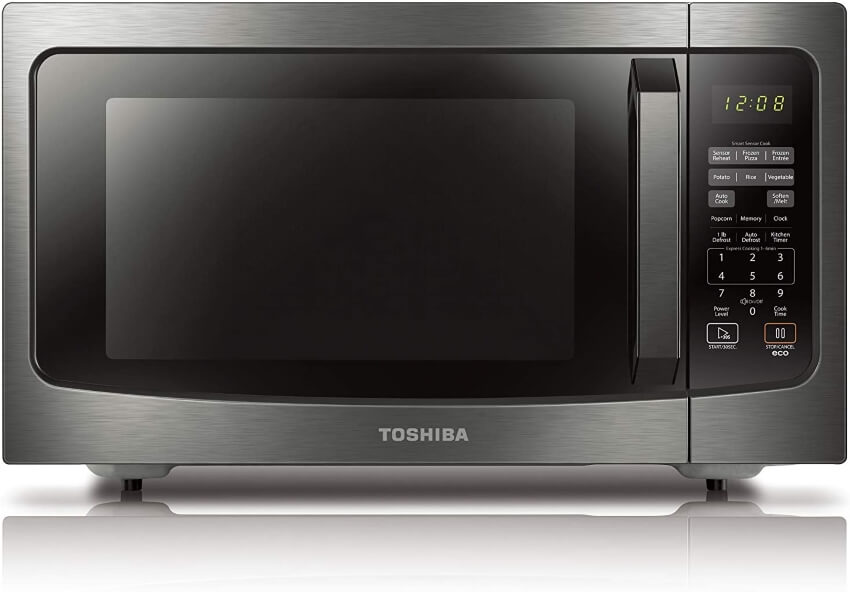
Best for: households that need a wider turntable and faster heating but do not need convection or air frying.
The ML-EM45P(BS) has a 45-liter, roughly 1.6-cubic-foot cavity, 1,200 watts of microwave output, and a 13.58-inch turntable. Its larger cavity can be sensible for family dishes, and sensor programs help avoid repeatedly opening the door and extending the cycle.
The manual lists 1,600 watts of rated input power, so this is not a low-draw appliance while running. Its efficiency case depends on finishing the job quickly and avoiding multiple batches. A smaller model is a better material and space fit for one-person households.
Advantages: Large turntable, high output, sensor functions, and no unused convection hardware.
Trade-offs: Large footprint and 1,600-watt input; unnecessary for small plates and occasional reheating.
6. Panasonic NN-SU696S: Best straightforward midsize sensor microwave
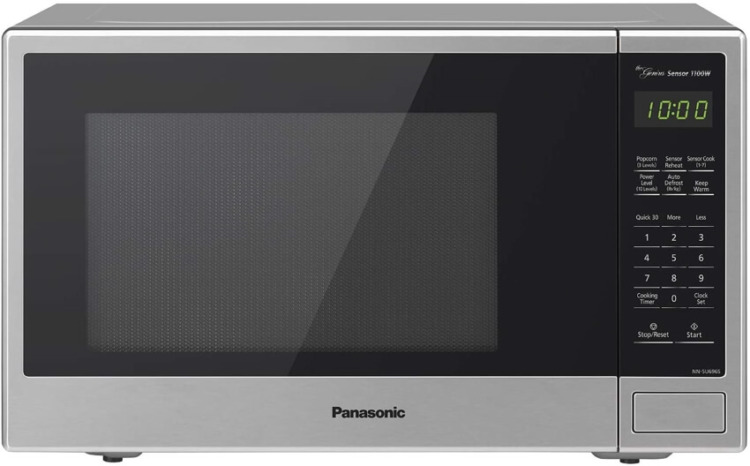
Best for: families that want sensor reheating in a conventional microwave without paying for a combo appliance.
Panasonic specifies a 1.3-cubic-foot cavity, 1,100 watts of cooking power, and Genius Sensor settings that adjust time and power. The footprint is smaller than many large-capacity models while still accommodating common dinner plates.
This model should not be confused with Panasonic inverter microwaves. Its value is simpler: sensor control and a practical capacity. Compare exterior dimensions, door-clearance needs, and the current child-lock behavior before ordering.
Advantages: Useful capacity, sensor cooking, and a relatively simple feature set.
Trade-offs: No inverter system; only three manual power levels are highlighted on the current product page.
7. Farberware FMO11AHTBKB: Best value 1.1-cubic-foot microwave
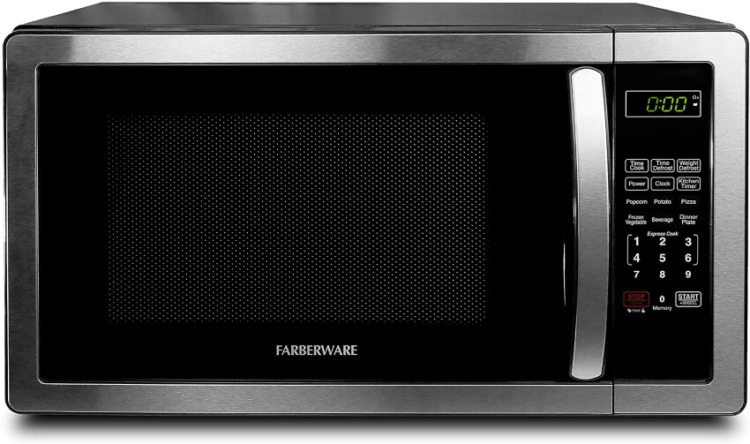
Best for: buyers who want familiar controls and useful capacity without paying for convection or smart features.
Farberware lists this model at 1.1 cubic feet and 1,000 watts. It includes express keys, multi-stage cooking, defrost settings, memory, and a rotating glass turntable. A basic microwave can be the more responsible purchase when advanced functions would go unused.
The original version of this article described inverter technology, but current product information does not verify an inverter or a food sensor for the FMO11AHTBKB. Treat it as a conventional, programmable microwave rather than an automatic efficiency leader.
Advantages: Useful size, simple programs, multi-stage cooking, and generally accessible pricing.
Trade-offs: No verified inverter or sensor; basic interior and control-panel design.
8. Farberware FMO11AHTBSB: Best colorful programmable microwave
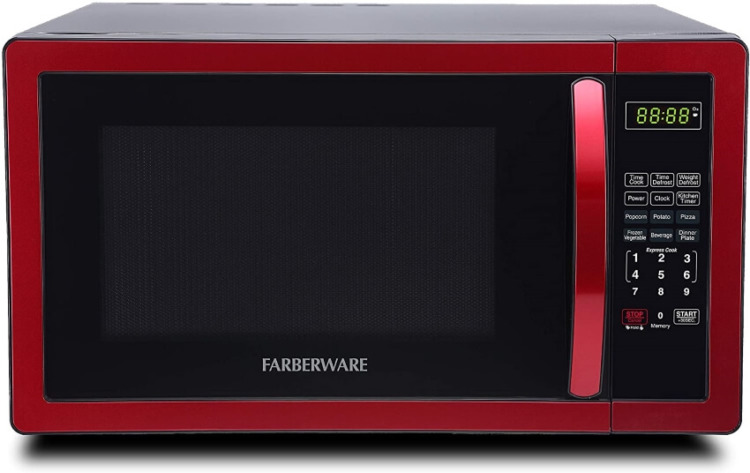
Best for: buyers who want a conventional 1.1-cubic-foot microwave in a less generic finish.
The FMO11AHTBSB is another 1,000-watt Farberware model with ten power levels, multi-stage cooking, memory, defrost options, and one-touch programs. It is a better fit for the “eco-friendly” brief than a feature-heavy combo when those basic functions cover your needs.
Retail listings for closely named FMO11AHT variants do not always describe the sensor feature consistently. Match the complete model suffix on the listing, packaging, and manual before relying on any advertised sensor or energy-saver function.
Advantages: Practical capacity, multi-stage cooking, several finishes, and no convection hardware.
Trade-offs: Model naming is easy to confuse; verify the exact suffix and feature list before purchase.
9. Toshiba EM925A5A-BS: Best compact microwave with eco and mute modes
Best for: apartments, offices, and small households that need a compact microwave with a dark-display option.
The EM925A5A-BS provides 0.9 cubic feet of capacity, 900 watts of cooking output, ten power levels, six auto menus, a memory function, Eco Mode, and a mute button. Eco Mode lowers standby demand by switching off the display; it does not change the energy required to heat a meal.
This is not a sensor microwave, despite occasional confusion with Toshiba’s larger sensor models. It is a compact conventional model with useful low-power-mode controls.
Advantages: Small footprint, Eco Mode, mute function, and straightforward controls.
Trade-offs: No humidity sensor or inverter; 900 watts may require longer cycles than larger models.
10. BLACK+DECKER EM720CB7: Best ultra-compact budget microwave
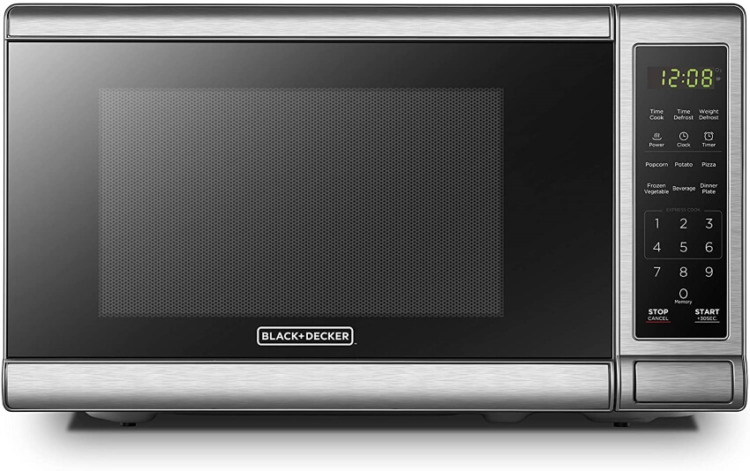
Best for: dorms, break rooms, and kitchens where footprint matters more than speed or capacity.
The EM720CB7 has a 0.7-cubic-foot cavity, 700 watts of cooking output, ten power settings, a 30-second key, and a child lock. The manufacturer listing also shows 1,050 watts of rated input power, illustrating why output wattage alone is not an electricity-consumption figure.
A 700-watt microwave may run longer than a 1,000-watt model for the same food. Buy this one because the small size fits your normal dishes, not because the lower output number automatically guarantees lower energy use.
Advantages: Compact dimensions, low purchase cost, simple presets, and a removable turntable.
Trade-offs: Small cavity, slower cooking, and no sensor, inverter, or dedicated eco mode.
11. Galanz SpeedWave GSWWA16S1SA10: Best microwave, air fryer, and convection combination
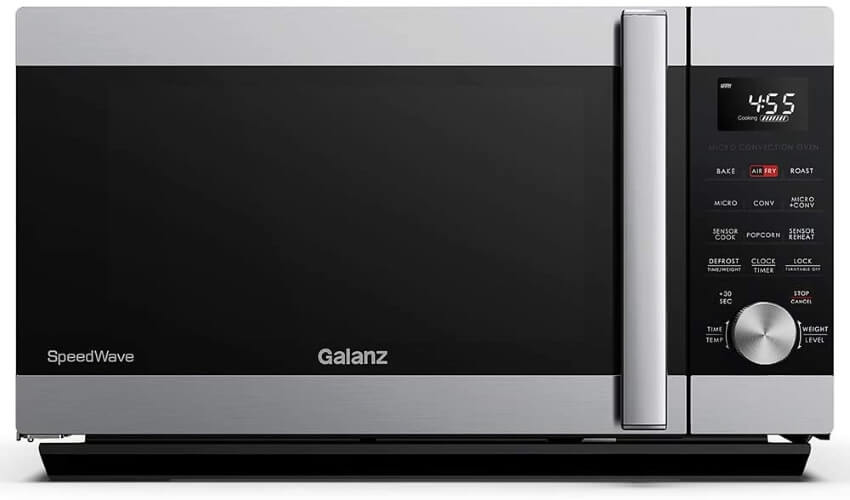
Best for: households that will regularly use microwave, convection, and air-fry modes in one appliance.
Galanz lists a 1.6-cubic-foot cavity, 1,000 watts of microwave output, inverter technology, sensor cook and reheat, true convection, and TotalFry 360 air frying. Combining functions can save counter space and may reduce use of a full-size oven for small meals.
Combination microwaves generally use more energy and material than solo models. This purchase makes sense only when the extra modes replace appliances or oven sessions you would otherwise use. It is not the best choice for someone who only reheats leftovers.
Advantages: Three cooking systems, inverter control, sensor programs, and a stainless steel cavity.
Trade-offs: Large, complex, and more demanding than a solo microwave; steeper learning curve.
12. Sharp R-21LCFS: Best simple commercial microwave
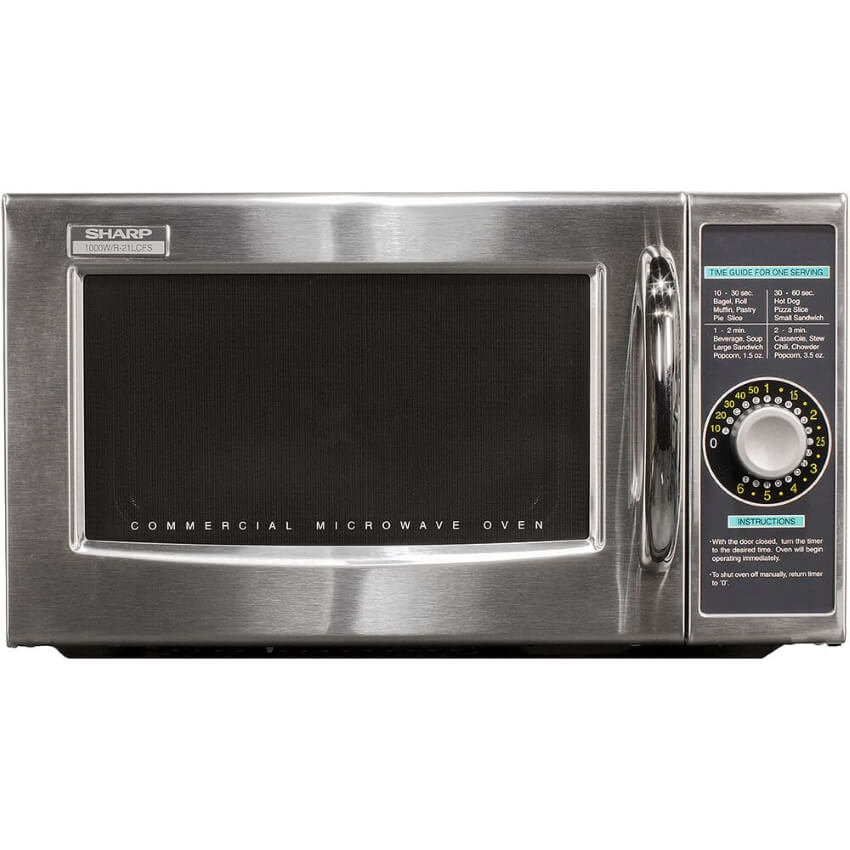
Best for: offices, shared kitchens, and buyers who value simple controls and repeated-duty construction.
Sharp positions the R-21LCFS as a medium-duty commercial microwave with a 1.0-cubic-foot cavity, 1,000 watts of output, and a dial timer. Its appeal is operational simplicity rather than sensor automation. Fewer menus and display functions can also make it easier for many people to use consistently.
Commercial construction does not automatically make a product environmentally superior, and this model may cost more than a residential microwave. It is most sensible where durability and simple shared use justify the added expense.
Advantages: Simple timer, stainless steel construction, useful cavity size, and commercial-duty positioning.
Trade-offs: No sensor, inverter, or advanced presets; overbuilt and expensive for many homes.
Best eco-friendly microwaves for UK and EU kitchens
These models use regional voltage and installation standards. The AEG is an integrated EU appliance; the Igenix and Russell Hobbs are compact UK-oriented products. Compare them only with models designed for the same electrical market.
13. AEG MSB2547D-M: Best built-in microwave for EU kitchens
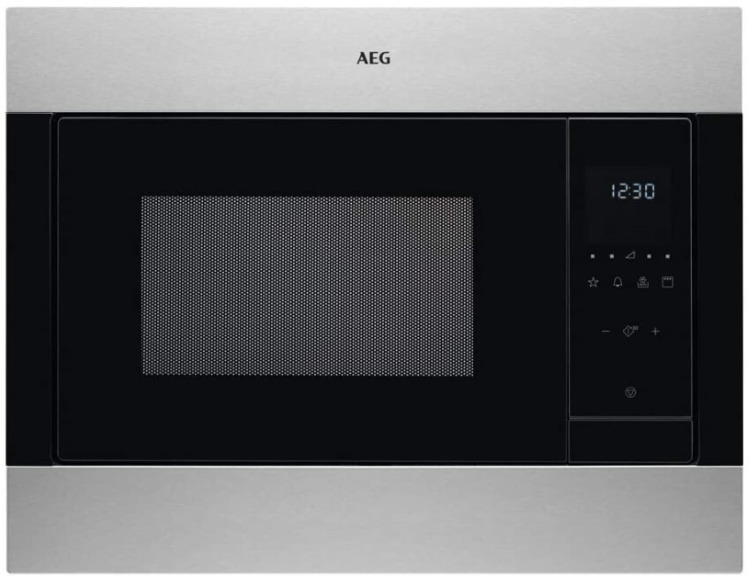
Best for: European kitchens that need a 230-volt integrated microwave and will use the grill.
AEG lists a 25-liter cavity, 900 watts of microwave output, a 1,000-watt grill, five power levels, a 315-millimeter turntable, child safety controls, and built-in installation. The current product page also provides spare-parts information tied to European ecodesign requirements.
This is a 230-volt integrated appliance and is not a substitute for U.S. countertop models. Confirm cabinet cutout, ventilation, electrical supply, service access, and regional warranty coverage before purchase.
Advantages: Integrated design, useful 25-liter capacity, grill, and current manufacturer documentation.
Trade-offs: Professional installation may be needed; the grill adds complexity and energy use.
14. Igenix IG2081S: Best simple manual microwave for the UK
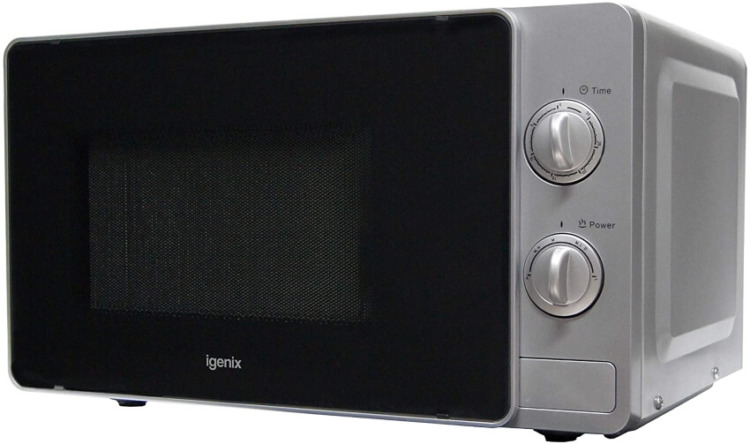
Best for: UK buyers who prefer two dials over a digital control panel.
The IG2081S is a 20-liter, 800-watt freestanding solo microwave with manual controls. Its restrained feature set suits people who do not want app connectivity, convection, or layers of one-touch menus.
Mechanical simplicity can support ease of use, but it should not be mistaken for a verified efficiency rating. Check the appliance label for input power and standby draw, and confirm that a 20-liter cavity fits your plates.
Advantages: Simple controls, compact body, solo-microwave design, and no unnecessary smart functions.
Trade-offs: Limited precision and presets; UK voltage and retailer availability restrict its market.
15. Russell Hobbs RHMD804CP: Best retro-style compact microwave for the UK
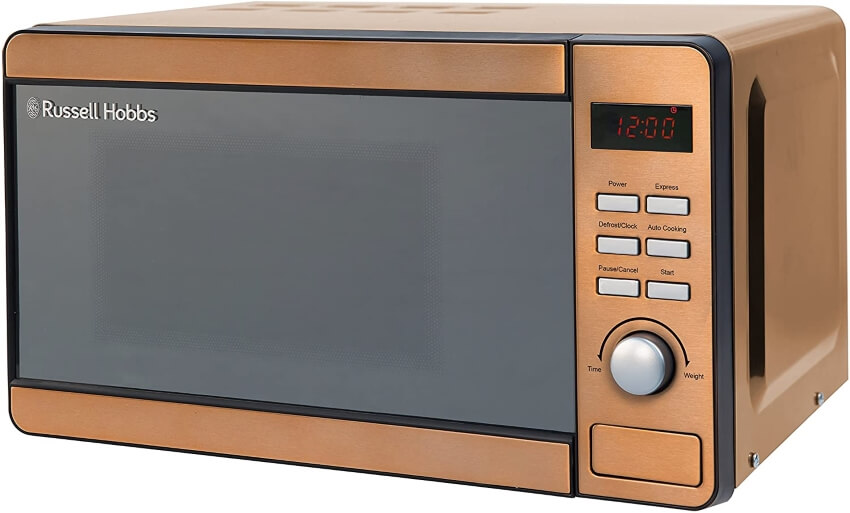
Best for: UK households that want a genuinely compact microwave and care about exterior design.
Current retailer specifications list 17 liters of capacity, 800 watts of microwave output, eight automatic programs, and a 245-millimeter turntable. The small cavity and solo format are more aligned with basic reheating than a larger combination appliance.
The compact size is also its limitation. Measure your dinner plates, bowls, and door clearance. Buyers outside the UK should choose a model designed for their voltage, plug, safety approvals, and service network.
Advantages: Compact solo design, eight programs, and a distinctive copper finish.
Trade-offs: Small cavity and market-specific availability; styling may cost more than a basic model.
Eight legacy models removed from the current ranking
The original article mixed current microwaves with discontinued products, a generic brand recommendation, and two countertop ovens that were not microwaves. The images remain below for continuity and to help owners identify a model, but these products are no longer ranked as current purchases.
GE Profile PVM9179SKSS
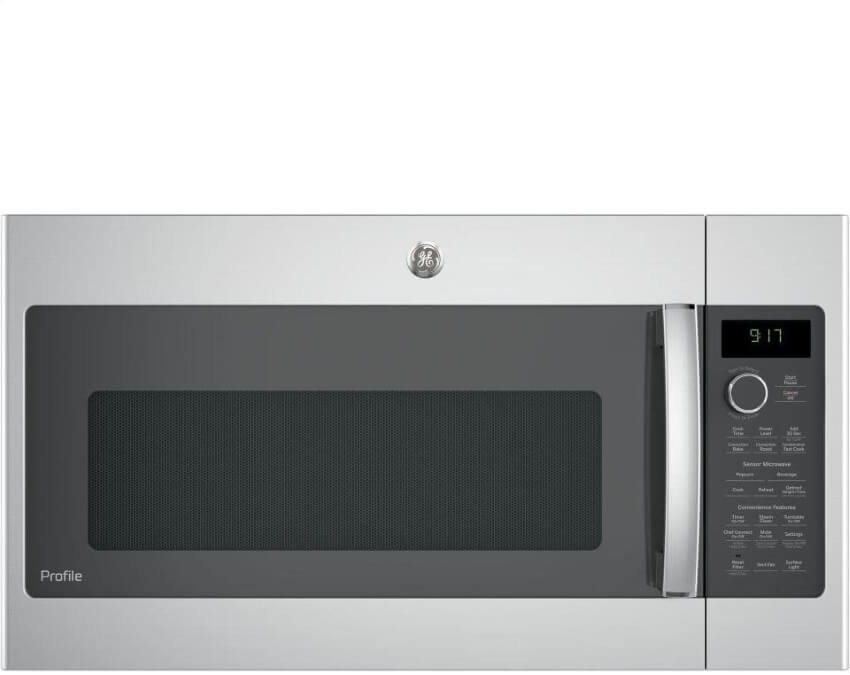
Status: Removed because the exact model is discontinued.
GE lists the PVM9179SKSS as no longer manufactured. The current PVM9179SRSS is the closer successor, but over-the-range fit, venting, electrical requirements, trim, and cabinet clearances must be checked as a new purchase rather than assumed from the old model.
Miele M 6160 TC
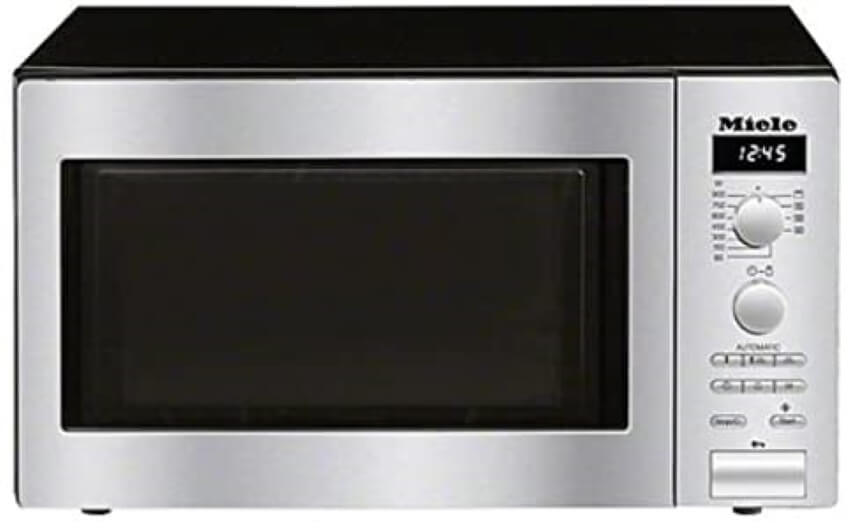
Status: Removed because current availability and support vary.
The M 6160 TC was a 1.66-cubic-foot, 900-watt built-in microwave with automatic programs and a keep-warm function. The exact model is now a legacy product with uneven retail availability, so it should not be presented as a current best buy without confirming authorized stock, parts, installation accessories, and warranty coverage.
Beko solo microwave shown in the original article
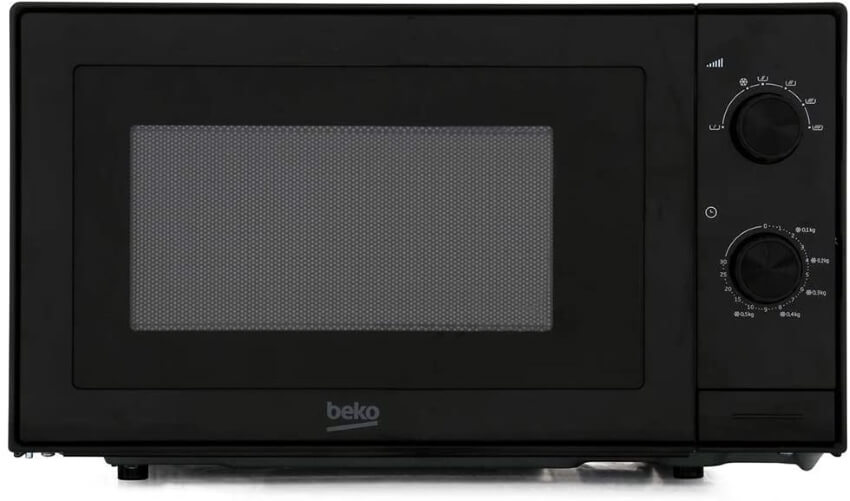
Status: Removed because no exact model was supplied.
Beko still sells microwaves, but the original article recommended only the brand and used a generic solo-microwave image. A product roundup needs an exact model number, voltage, capacity, power, warranty, and current market. Without that entity-level detail, the recommendation cannot be fact-checked or compared fairly.
Cuisinart CMW-200
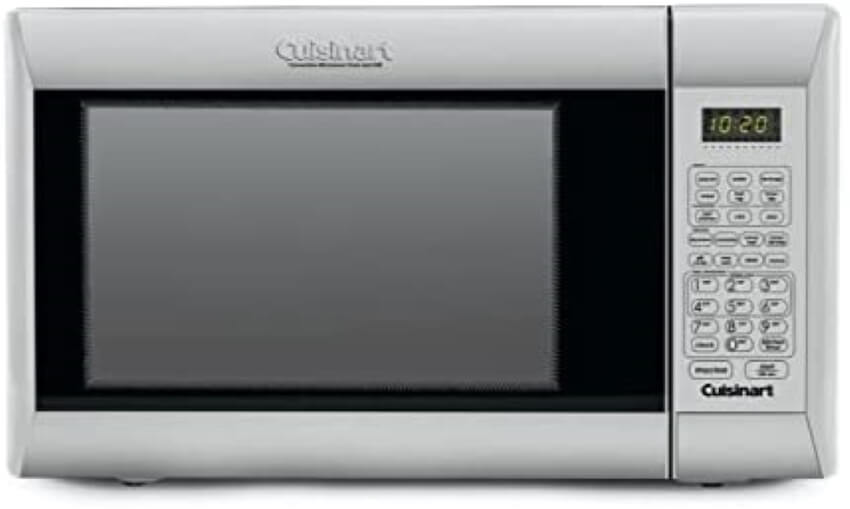
Status: Removed because Cuisinart marks it discontinued.
Cuisinart marks the CMW-200 as discontinued. It combined a 1.2-cubic-foot microwave, convection oven, and grill, but a discontinued model with uncertain warranty and parts availability should not remain in a current ranking.
Oster TSSTTVFDDG French-door oven
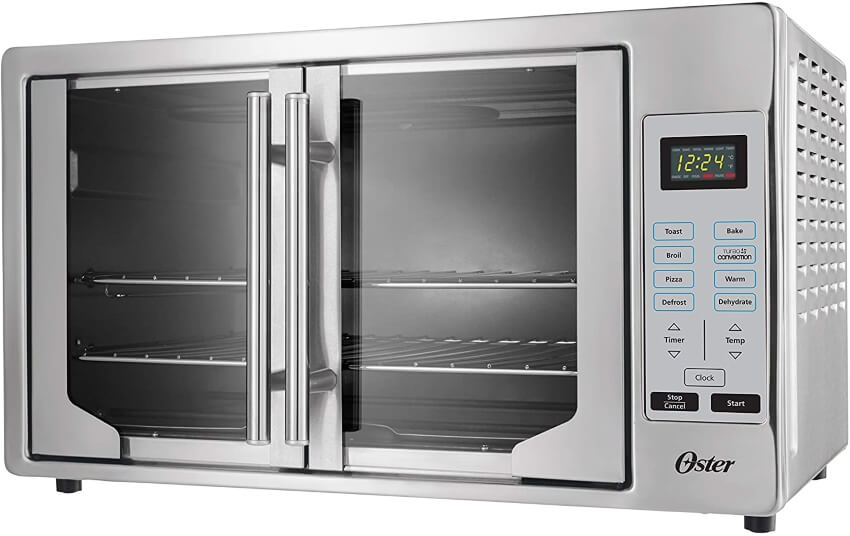
Status: Removed because it is miscategorized and recalled.
The Oster TSSTTVFDDG is a countertop convection/toaster oven, not a microwave. It is also among the model numbers named in the U.S. Consumer Product Safety Commission’s 2025 recall of more than one million Oster French-door countertop ovens because the doors could close unexpectedly and cause burns. Owners should follow the recall instructions rather than continue using the product as a recommendation.
See the official CPSC recall notice for affected model numbers and remedy instructions.
KitchenAid KCO255BM
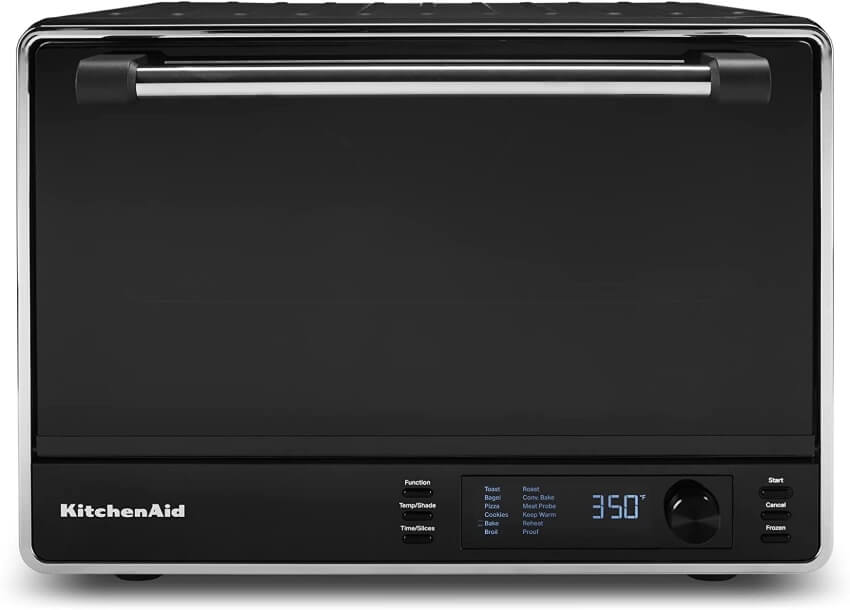
Status: Removed because it is a countertop oven, not a microwave.
KitchenAid identifies the KCO255BM as a dual-convection countertop oven. It can bake, broil, toast, and roast, but it does not belong in a microwave comparison. Keeping appliance categories separate prevents misleading energy and performance comparisons.
GE Profile PEB9159SJSS
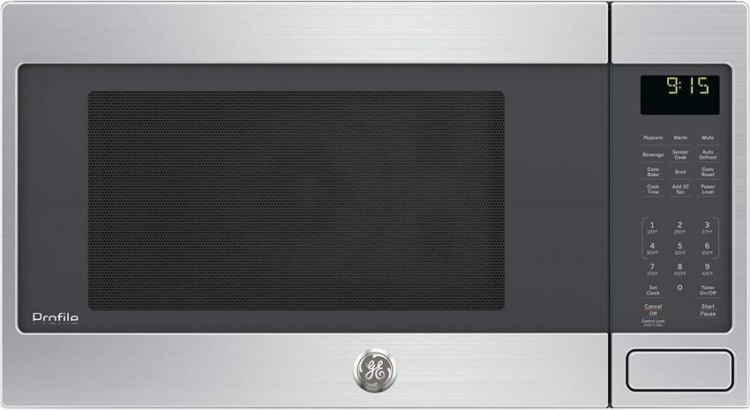
Status: Removed because current retail status is unstable.
GE still maintains a product and support page for the 1.5-cubic-foot PEB9159SJSS, but the model appears in clearance and legacy channels rather than as a stable evergreen recommendation. Confirm current manufacturing status, trim-kit compatibility, parts, and warranty before treating remaining inventory as new-stock value.
Frigidaire FGMO3067UD
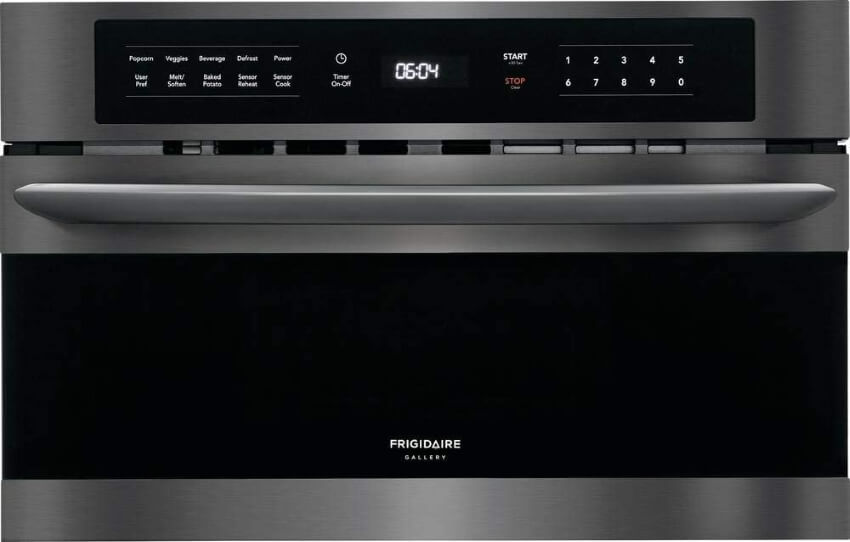
Status: Removed because it is discontinued and was misclassified.
Frigidaire marks the FGMO3067UD as discontinued. The original article also described it as a wall oven, but it is a 30-inch built-in microwave with a drop-down door. Replacement decisions should start with current cutout dimensions and approved trim or replacement models.
How to choose an energy-smart microwave
Start with the dishes you actually use
Measure your largest regular dinner plate, meal-prep container, casserole, and the available counter or cabinet space. Leave the ventilation clearances required by the manual. A 0.7- to 0.9-cubic-foot model often suits one person or a break room; 1.0 to 1.3 cubic feet covers many households; 1.6 to 2.2 cubic feet is justified by large dishes or frequent family use.
The most environmentally sensible capacity is not always the smallest. Reheating one family dish in a large microwave can be more practical than running several batches in a compact unit.
Choose solo, grill, or convection by task
A solo microwave is normally the leanest choice for reheating, defrosting, steaming, and simple cooking. A grill model adds browning. A convection or air-fry combination adds dry heat and circulating air, but also adds hardware, controls, and power demand.
Buy a combination model when it can replace a toaster oven, air fryer, or short full-size-oven session. Otherwise, the simpler solo model is usually the better fit. The same task-based logic applies when comparing microwaves with the energy trade-offs of double ovens.
Separate input wattage from cooking output
The large wattage in a product name usually describes microwave cooking output. Electricity-cost calculations need the rated input power on the label or in the manual. A 700-watt-output model can draw more than 1,000 watts from the wall, while a 1,200-watt-output model may draw around 1,600 watts.
Use this formula for a rough cycle estimate: input watts ÷ 1,000 × cooking minutes ÷ 60 = kilowatt-hours. A microwave drawing 1,500 watts for five minutes uses about 0.125 kWh. Real consumption varies as power cycles, modes, and sensors operate.
Understand what sensor, inverter, and eco mode do
- Sensor cooking detects moisture or steam and adjusts time or power. It can reduce guesswork and avoid needless extra cooking, but results depend on the food and covered-container instructions.
- Inverter technology supplies steadier lower power instead of repeatedly switching full power on and off. It is useful for gentle heating and defrosting, but the United States does not currently publish a standardized active-mode efficiency score that proves one inverter model uses less electricity than every conventional model.
- Eco mode usually turns off or dims a clock or display to reduce standby power. It does not transform the active cooking cycle.
- Multi-stage cooking changes power automatically during one program. Its main benefit is accurate, unattended cooking rather than a guaranteed energy reduction.
Check service, parts, and installation before checkout
A repairable appliance that remains in service can be a better long-term choice than a feature-rich model replaced early. Check warranty terms, authorized service, parts availability, turntable and rack replacements, and the cost of trim kits. Built-in and over-the-range units also require exact cutout, venting, electrical, and mounting compatibility.
For a functioning appliance, replacement should solve a real issue such as unsafe damage, repeated failure, wrong capacity, or a kitchen redesign. Avoid creating electronic waste for a minor standby saving alone; use these broader ideas to reduce household waste instead.
How to use a microwave more efficiently
- Match the appliance to the portion. Use the microwave for leftovers, single dishes, vegetables, and small meals that do not justify preheating a full oven.
- Cover food with a microwave-safe lid or vented cover. Retained steam can shorten reheating time and reduce splatter. Follow the container and appliance instructions.
- Use the correct power level. Lower power can improve even heating for dense foods, although it may not reduce total energy if the cycle becomes much longer.
- Use sensor programs as directed. Sensors work best when vents are not blocked and the food is covered or uncovered as the manual specifies.
- Stop when the food is safely heated. Add short increments instead of routinely overprogramming the first cycle.
- Keep vents, door seals, and the cavity clean. Clean equipment operates safely and lets you see damage early.
- Turn on eco mode when available. It reduces display-related standby use. Unplugging is optional when access is safe and convenient; do not create a trip, outlet, or clock-reset problem for tiny savings.
See our practical energy conservation techniques for higher-impact actions across heating, cooling, lighting, and other household loads.
Microwave safety and end-of-life recycling
The U.S. Food and Drug Administration explains that microwave radiation is non-ionizing and regulates microwave ovens to limit leakage. Do not use an oven with a bent door, damaged hinges or latches, broken seals, or a door that does not close firmly. Repairs involving the high-voltage system or microwave containment belong with qualified service technicians.
Use only microwave-safe cookware and follow the manufacturer’s instructions. Metal can arc in many situations, and foil should be used only when the appliance and food instructions explicitly allow it. After use, check local rules for disposal; our guide to recycling aluminum foil covers the separate packaging question.
When a microwave reaches the end of its useful life, do not place it in curbside recycling unless your local program accepts appliances. The U.S. Environmental Protection Agency recommends checking manufacturer, retailer, municipal, and electronics-recycling options. Remove personal smart-home data from connected models before reuse or recycling.
Frequently asked questions
Which eco-friendly microwave should you buy?
Choose the Toshiba EM131A5C-BS when you want the most balanced U.S. countertop model: a moderate cavity, sensor menus, and simple controls. Choose the Panasonic NN-SD372S for a compact inverter microwave, or the Panasonic NN-SN966SR only when you genuinely need a large 2.2-cubic-foot cavity.
The Galanz SpeedWave is the strongest combination option, but it earns that position only for households that will use its air-fry and convection modes instead of maintaining several countertop appliances or running a full-size oven. For basic reheating, a right-sized solo microwave remains the cleaner decision.
Before checkout, confirm the exact model suffix, exterior dimensions, required clearances, input power, voltage, warranty, and current availability. Those checks matter more than an unverified “eco-friendly” badge.
See Related: 15 Eco-Friendly Tips for Sustainable Living in 2026
See Related: Eco-Friendly Living: How to Reduce Your Carbon Footprint in 5 Easy Steps