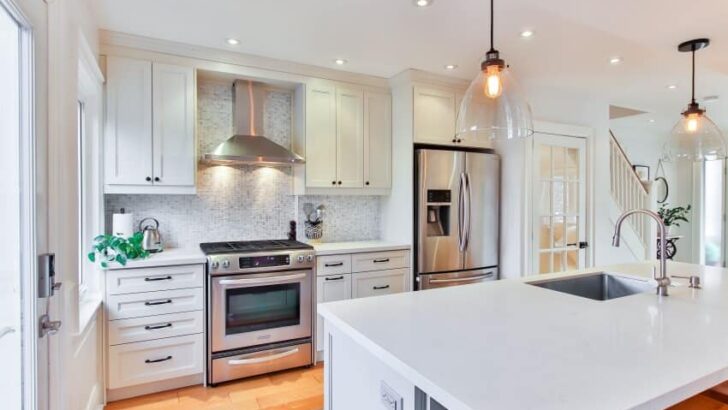
Are double ovens more energy efficient? Not automatically. A model with a smaller upper cavity can use less energy for a tray of food than heating a large single oven, but running both cavities usually increases total energy use. The best choice depends on cavity size, cooking time, temperature, insulation, cooking mode, and how often you genuinely need two separate ovens.
When a double oven creates an energy advantage, it usually comes from using the smallest suitable cavity—not simply from owning two ovens. If you rarely cook dishes at different temperatures, a well-sized single convection oven plus a countertop oven may be cheaper to buy and run.
U.S. and EU labeling information in this article was checked on July 22, 2026. Product specifications and certification rules can change, so verify the current model documentation before buying.
Key takeaways
- A smaller oven cavity often uses less energy for a small meal because there is less interior space and appliance mass to heat.
- Using both cavities generally consumes more energy than using one, although it may be more practical than cooking several batches at different temperatures.
- Two full-size wall-oven cavities do not create an automatic efficiency advantage over one comparable full-size oven.
- Compare energy use per cooking cycle where that data is available, then calculate cost with your own utility rate and expected use.
- In the United States, an ENERGY STAR label on an eligible range does not directly certify the active baking efficiency of its oven cavities.
What is a double oven?
A double oven has two independently controlled cooking cavities. A double oven range combines those cavities with a cooktop, while a double wall oven stacks two built-in cavities without a cooktop. Some models have two similarly sized ovens; others pair a compact upper oven with a larger lower oven.
Why double-oven energy use depends on your cooking habits
Oven power ratings are usually shown in kilowatts or watts, but your utility bills for energy in kilowatt-hours. The U.S. Energy Information Administration explains that watts measure power at a moment in time, while kilowatt-hours measure power used over time. A high-capacity oven does not draw its full rated power continuously; heating elements cycle as the thermostat maintains temperature.
That is why a nameplate figure such as 4.8 kW or 8.6 kW cannot tell you what one baking session will cost. Useful comparisons need a measured or declared kWh-per-cycle figure, the cooking duration, and your local energy price.
A smaller cavity has less interior volume and appliance mass to heat. In its 2024 technical analysis, the U.S. Department of Energy noted that oven energy use scales with cavity volume under the test methodology it evaluated. That is why a compact upper oven may use less energy for a small dish. The advantage can disappear when both cavities run, when the smaller cavity is poorly insulated, or when one large oven could hold the entire meal at the same temperature.
When a double oven can save energy
You use the smaller cavity for everyday meals
This is the clearest efficiency case. Heating a compact upper oven for a casserole, sheet pan, or reheated meal can require less energy than bringing a large cavity to the same temperature. The saving is model-specific, so treat smaller size as a useful indicator rather than a guarantee.
You regularly cook at two different temperatures
A double oven lets you roast one dish while baking another at a different temperature. It may reduce total elapsed cooking time compared with waiting for one oven to finish, cool, and preheat again. That does not mean two cavities always use less energy; it means the second cavity can be justified when it replaces a second full cooking cycle and solves a recurring timing problem.
Convection shortens suitable cooking cycles
Convection circulates hot air through the cavity. The Department of Energy notes that convection mode can reduce energy use for suitable food loads, but it is not appropriate for every type of food. Follow the recipe and manufacturer guidance rather than assuming every dish should use convection. A double oven may have convection in one cavity, both cavities, or neither—double-oven layout and convection technology are separate features.
When a double oven uses more energy
- Both cavities are on for food that could fit in one. You are heating more surfaces and maintaining two temperature zones.
- The appliance has two full-size cavities. Using one may be similar to using a comparable single wall oven, so the second oven adds capacity rather than routine efficiency.
- The second cavity is rarely used. Any small operating saving may be outweighed by the higher purchase price, installation work, and additional appliance materials.
- You rely on long warm-hold periods or unnecessary self-cleaning cycles. Convenience settings still consume energy.
- The oven is oversized for your normal meals. A single oven paired with a microwave, toaster oven, or air-fryer-style countertop oven may be the more efficient setup for a small household.
Double oven configurations compared
| Configuration | Typical layout | Energy implication | Best fit |
|---|---|---|---|
| Double oven range | Two cavities below one cooktop, often with a smaller upper oven | The small cavity can reduce energy for everyday meals; both cavities increase the total load | Households replacing a standard range that also need two temperatures |
| Double wall oven | Two stacked built-in cavities, often similar in size | Provides high capacity, but one full-size cavity may use about as much as a comparable single wall oven | Frequent entertainers, batch bakers, and large households |
| Flex or divider oven | One large cavity that can be split into two zones | May avoid heating the full cavity for some meals, but modes and temperature independence vary | Buyers who want occasional dual-zone flexibility |
| Single oven plus countertop oven | One full-size oven and one small portable appliance | Often efficient for small meals and usually costs less upfront | Small households and people who need a second oven only occasionally |
An induction range can include a double oven, but induction describes the cooktop. The oven cavities use gas flame or electric resistance heating; they do not cook by induction.
How to compare energy efficiency before buying
- Map a normal week of cooking. Count small meals, full-cavity meals, multi-rack baking sessions, and occasions when you need two temperatures. Do not buy around one holiday dinner if the second cavity will sit unused for the rest of the year.
- Compare each cavity, not just total capacity. Record usable volume, conventional and fan-assisted energy figures, preheat options, and which cavity has convection.
- Use kWh per cycle where available. In the European Union, domestic oven labels and product information report energy consumption per cycle for each cavity in conventional and fan-forced modes. The European Commission’s domestic ovens guidance explains the label and its measurements.
- Understand the U.S. data gap. The current FTC Energy Labeling Rule does not require a yellow EnergyGuide label for residential ranges or ovens. Ask the manufacturer for comparable test data or an energy-use specification, but confirm that the figures use the same test method before comparing them.
- Read ENERGY STAR claims precisely. Under the ENERGY STAR Version 1.0 specification, eligible electric cooktops and the cooktop component of electric ranges can qualify; standalone electric ovens are excluded. For an eligible range, the oven criterion addresses low-power mode rather than active baking energy.
- Check installation requirements. Confirm cabinet cutout, ventilation clearances, circuit amperage, voltage, plug or hardwire requirements, and the cost of electrical or cabinetry work. Use the exact installation manual and a qualified installer.
- Prioritize useful features. A genuinely helpful small cavity, accurate thermostat, effective convection mode, no-preheat setting, clear window, and reliable door seal matter more than a long list of rarely used presets.
A simple running-cost example
Use this formula for an electric oven:
Annual cost = kWh per cycle × cycles per year × your electricity price per kWh
Assume a model’s small cavity uses 0.70 kWh per cycle and its large cavity uses 0.95 kWh. At $0.20 per kWh, the small cavity costs about $0.14 per cycle and the large cavity costs about $0.19. Using the small cavity five times a week would save roughly $13 a year in this illustrative example. Replace every number with the actual model data and your utility rate.
For a gas oven, use the manufacturer’s fuel-consumption figure and your local gas tariff. Do not compare gas input ratings with electric kWh-per-cycle figures unless both have been converted to the same energy unit and measured under comparable conditions.
This calculation is deliberately conservative: it shows why a double oven should usually be purchased for cooking flexibility first, with energy savings as a secondary benefit.
How to use a double oven more efficiently
- Use the smallest cavity that comfortably fits the food and cookware.
- Cook dishes together when they need similar temperatures and airflow.
- Use convection when the recipe and oven instructions support a lower temperature or shorter time.
- Preheat only when the recipe requires it; many reheating tasks and some no-preheat modes do not need a long empty preheat.
- Use the oven light and window instead of repeatedly opening the door.
- Keep door seals clean and replace damaged seals according to the manufacturer’s instructions.
- Limit long warm-hold periods and unnecessary high-temperature cleaning cycles.
- Batch-cook when you are already heating a large cavity, then cool and store food safely.
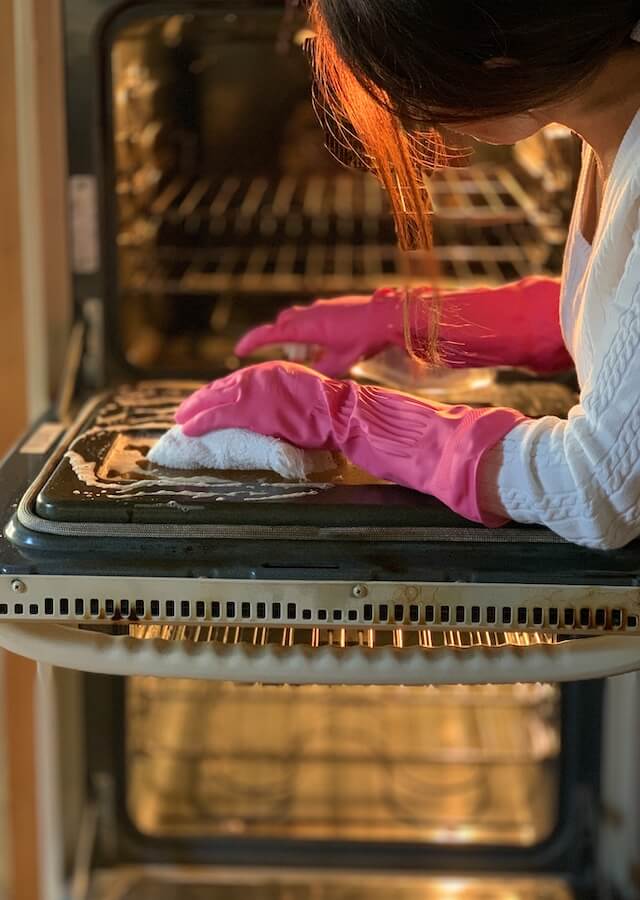
For additional household strategies, see these practical energy conservation techniques.
Is a double oven worth it?
| A double oven is a strong fit when… | A single oven may be the better choice when… |
|---|---|
| You cook several dishes at different temperatures every month | You usually cook one dish or use one temperature zone at a time |
| You bake in batches or host large meals frequently | The second cavity would be used only for annual holidays |
| A smaller upper cavity would handle most weekday meals | A countertop oven already covers small meals and reheating |
| You have the space, circuit capacity, and installation budget | Cabinet changes or electrical upgrades make the project expensive |
| Time and temperature flexibility matter more than maximizing storage | You value a large single cavity, warming drawer, or lower purchase price |
The most defensible buying decision is based on repeated use. If the smaller cavity will replace a large oven several times a week, a double oven may reduce operating energy. If the second cavity is mostly unused, the appliance is a capacity upgrade rather than an energy-efficiency upgrade.
Affiliate disclosure: We may earn a commission from qualifying purchases made through the shopping link below, at no additional cost to you. Compare specifications and installation documents before buying.
Environmental impact beyond the utility bill
Operational emissions depend on the appliance’s fuel and the electricity mix where you live. Our overview of how energy sources affect greenhouse gas emissions provides broader context.
Also consider appliance longevity. Replacing a working oven solely to obtain a second cavity may not deliver meaningful financial or environmental savings. Repairing a serviceable appliance, choosing a durable model, and avoiding an oversized purchase can be the more resource-efficient decision. For other practical upgrades, review these home energy-saving products.
Frequently asked questions
Do double ovens use more electricity than single ovens?
Not always. One smaller cavity may use less electricity for a small meal than a large single oven, but running both cavities usually uses more than running one. Compare kWh per cycle and your actual cooking pattern.
Is the smaller oven in a double oven cheaper to run?
Often, but not automatically. A smaller cavity usually has less space and material to heat, which can reduce energy use. Insulation, controls, temperature, and cooking duration still matter.
Are double wall ovens more efficient than double oven ranges?
Neither layout is inherently more efficient. A double oven range often has a compact upper cavity that can be useful for small meals, while a double wall oven often has two larger cavities. Compare each cavity’s energy data and size.
Does convection make a double oven more energy efficient?
Convection can reduce energy use when it allows a lower temperature or shorter cooking time. It does not make every recipe more efficient, and it is a separate feature from the double-oven configuration.
Does ENERGY STAR certify double ovens?
ENERGY STAR Version 1.0 excludes standalone electric ovens. An eligible electric range can qualify under combined cooking-product criteria, but its ENERGY STAR status should not be interpreted as a direct rating of active baking efficiency in the oven cavities.
The bottom line
A double oven can be more energy efficient for small, frequent meals when one cavity is meaningfully smaller and you use it instead of a full-size oven. It is usually less efficient when both cavities run unnecessarily. Buy one for repeated cooking flexibility, verify comparable energy data where available, and calculate the likely annual saving before paying a premium.