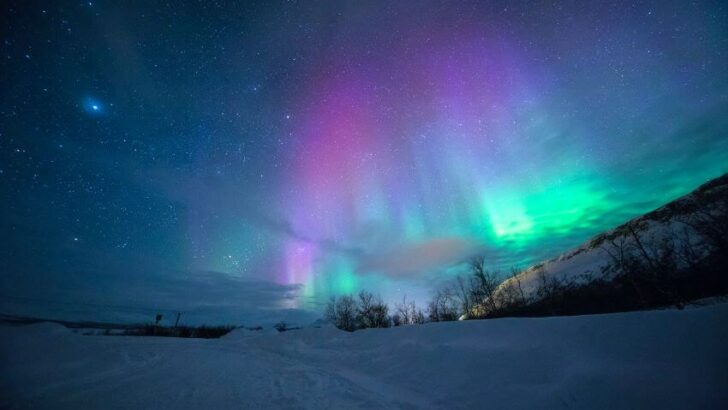
The commonly cited Seven Natural Wonders of the World are the Aurora Borealis, Grand Canyon, Great Barrier Reef, Harbor of Rio de Janeiro, Mount Everest, Parícutin Volcano, and Victoria Falls. This is a popular editorial list rather than an official UNESCO or IUCN ranking.
Together, the seven entries represent atmospheric physics, river erosion, coral reef ecology, coastal geography, mountain building, volcanic activity, and the force of falling water. Some are fixed places. The aurora is a phenomenon that moves across the polar sky.
The Seven Natural Wonders of the World at a Glance
| Natural wonder | Location | Type | What makes it notable |
|---|---|---|---|
| Aurora Borealis | High-latitude Northern Hemisphere | Atmospheric light phenomenon | Solar particles and Earth’s magnetic field produce moving bands of colored light. |
| Grand Canyon | Arizona, United States | River canyon | It extends 277 miles and exposes an immense sequence of rock layers. |
| Great Barrier Reef | Queensland, Australia | Coral reef ecosystem | The approximately 2,300-kilometer system includes more than 2,900 separate reefs. |
| Harbor of Rio de Janeiro | Rio de Janeiro, Brazil | Bay and mountain landscape | Guanabara Bay is framed by steep granite peaks, forest, coastline, and the city. |
| Mount Everest | Nepal–China border | Mountain | At 8,848.86 meters, its summit is the highest point above sea level. |
| Parícutin Volcano | Michoacán, Mexico | Scoria cone volcano | Its development was observed and scientifically documented from its emergence in 1943. |
| Mosi-oa-Tunya/Victoria Falls | Zambia–Zimbabwe border | Waterfall | The falls form a curtain of water about 1,708 meters wide on the Zambezi River. |
Most entries are landforms or ecosystems. The aurora is the exception because it is a changing atmospheric event rather than a permanent location. For a wider explanation of mountains, canyons, plains, and other landforms, see our guide to types of terrain.
Who Chose the Seven Natural Wonders?
The Seven Natural Wonders organization attributes this version of the list to an investigative reporter from CNN. The choices were intended to represent exceptional natural features and processes, including the largest coral reef system and the highest point above sea level.
That history is different from a government designation or an international scientific ranking. There is no universally binding authority that decides which seven natural features everyone must recognize.
The UNESCO World Heritage Committee administers a separate treaty-based system for cultural, natural, and mixed properties. The Committee meets annually and decides which nominated properties enter the World Heritage List. The International Union for Conservation of Nature evaluates and advises on natural nominations, but it does not maintain this seven-item wonders list.
Key distinction: The Seven Natural Wonders list is a popular list of seven places and phenomena. The UNESCO World Heritage List is an international conservation and recognition program containing many cultural, natural, and mixed properties.
Seven Natural Wonders vs. New7Wonders vs. UNESCO
| List or program | Who runs it | How it works |
|---|---|---|
| Original Seven Natural Wonders | A popular list now documented and promoted by Seven Natural Wonders | Recognizes seven exceptional natural places or phenomena. It is not an intergovernmental designation. |
| New7Wonders of Nature | New7Wonders Foundation | A separate worldwide voting campaign whose results were announced in 2011. |
| UNESCO World Heritage List | World Heritage Committee under the World Heritage Convention | States nominate properties, advisory bodies evaluate them, and the intergovernmental Committee makes inscription decisions. |
The 2011 New7Wonders of Nature were the Amazon, Ha Long Bay, Iguazu Falls, Jeju Island, Komodo, Puerto Princesa Underground River, and Table Mountain. Those seven should not be substituted for the Aurora–Grand Canyon–Everest list without explaining that they came from a different campaign.
The Seven Natural Wonders Explained
1. Aurora Borealis
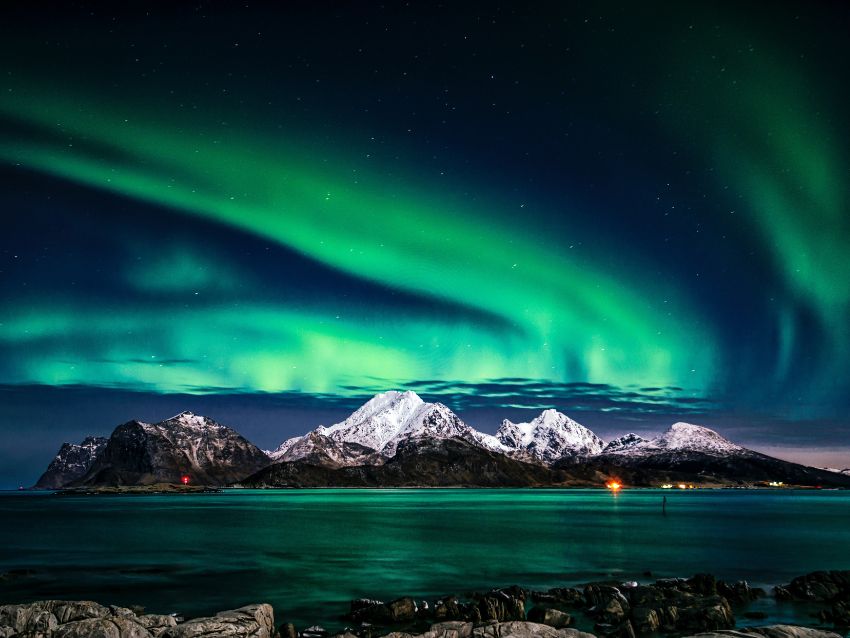
The Aurora Borealis, or Northern Lights, is the list’s only wonder that is neither a landform nor a fixed destination. It is a changing display of light produced in Earth’s upper atmosphere.
According to the NOAA Space Weather Prediction Center, the process begins with the solar wind, a stream of charged particles moving away from the Sun. Interactions with Earth’s magnetosphere energize particles that collide with gases high in the atmosphere. Those collisions produce colors that can include green, red, violet, and blue.
Aurora Borealis is the name used in the Northern Hemisphere. The corresponding Southern Hemisphere phenomenon is the Aurora Australis. Both are concentrated around Earth’s magnetic polar regions, although strong geomagnetic activity can make auroras visible farther from the poles.
Darkness, clear skies, solar activity, and latitude all affect visibility. The lights are not limited to one country or one short season, although long winter nights and periods near the equinoxes can improve viewing opportunities at high latitudes.
2. Grand Canyon
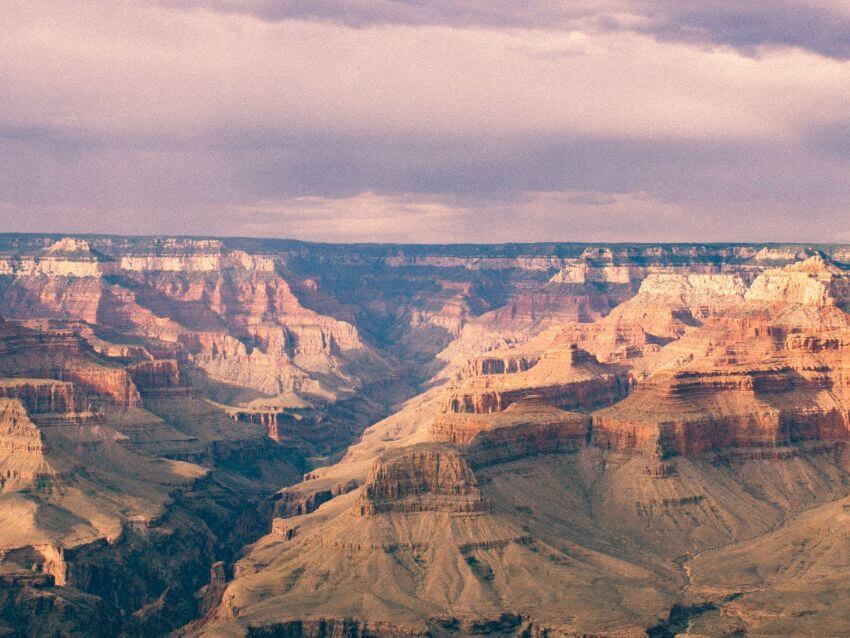
The Grand Canyon is an immense river canyon in northern Arizona. The Colorado River and its tributaries cut through the Colorado Plateau while weathering, erosion, uplift, and changing drainage systems shaped the wider landscape.
The U.S. National Park Service measures the canyon at 277 miles, or 446 kilometers, in length. It averages about 4,000 feet in depth, reaches 6,000 feet at its deepest point, and is as much as 18 miles wide.
Its importance is not based on being the world’s longest or deepest canyon. The defining features are its overall scale, the exposure of layered rocks, and the way elevation changes support markedly different habitats within one protected landscape.
The canyon is protected within Grand Canyon National Park. For area-based comparisons with other protected landscapes, see our guide to the world’s largest national parks.
3. Great Barrier Reef
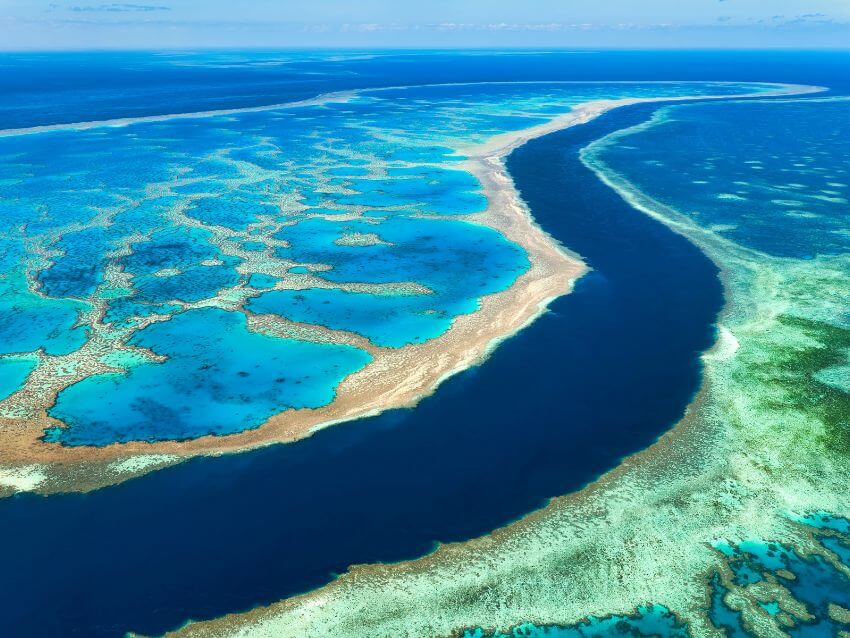
The Great Barrier Reef is not one continuous reef. It is a connected marine ecosystem extending for approximately 2,300 kilometers along the Queensland coast in northeastern Australia.
The Great Barrier Reef Marine Park Authority identifies it as the world’s largest coral reef ecosystem. It includes more than 2,900 separate reefs, while the wider World Heritage Area also contains about 1,050 islands and many non-reef habitats, including channels, seagrass beds, mangroves, and deep-water features.
That connected habitat supports corals, fish, marine turtles, seabirds, sharks, rays, marine mammals, and many other species. The relationships among those organisms help illustrate why biodiversity matters to ecosystems.
The Reef’s scale does not make it immune to damage. The 2024 Great Barrier Reef Outlook Report found that warming oceans and severe cyclones are compounding pressures from poor water quality, crown-of-thorns starfish outbreaks, and some fishing activities. Climate change remains its most serious long-term threat.
4. Harbor of Rio de Janeiro
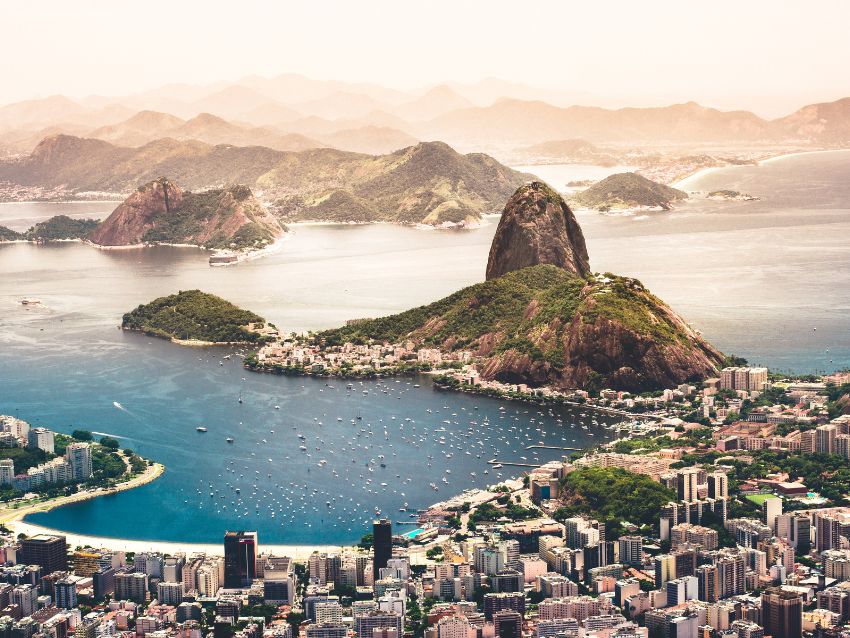
The “Harbor of Rio de Janeiro” entry refers primarily to Guanabara Bay and the steep mountains surrounding it. It should not be confused with Rio’s port infrastructure or described through an unsupported claim that it is the world’s largest natural harbor.
The bay is framed by recognizable peaks and ridges, including Sugarloaf Mountain, Urca, Corcovado, and the Tijuca massif. Forest, exposed rock, beaches, islands, open water, and dense urban development occupy a narrow area between the Atlantic Ocean and the mountains.
UNESCO recognizes the wider setting as Rio de Janeiro: Carioca Landscapes Between the Mountain and the Sea. That property is listed as a cultural landscape because Rio’s identity and development reflect an unusually visible interaction among natural topography, designed landscapes, and urban life.
This distinction matters: the natural wonder is the bay-and-mountain setting, while the UNESCO designation considers how people and the city have interacted with that setting.
5. Mount Everest
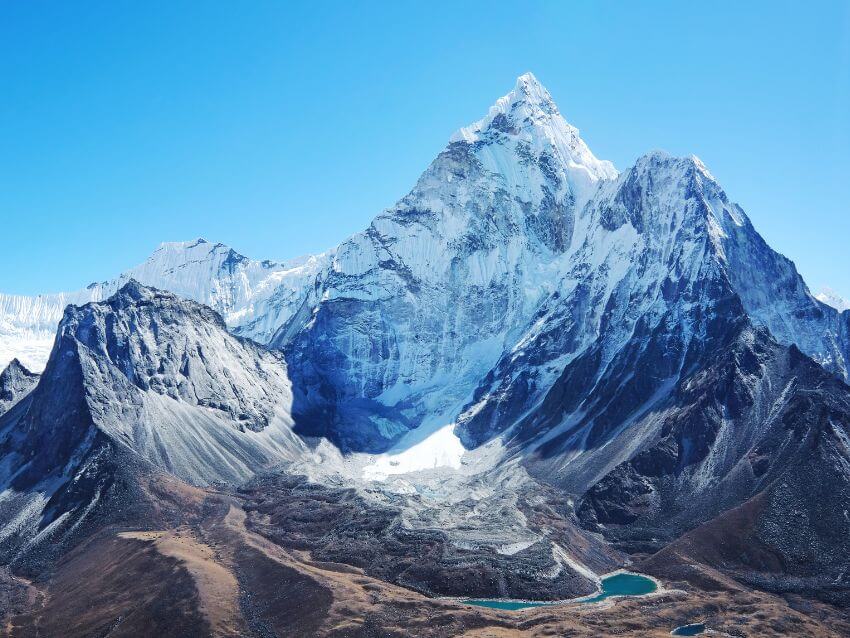
Mount Everest rises in the Himalayas on the international border between Nepal and China’s Tibet Autonomous Region. The summit is known as Sagarmatha in Nepal and Qomolangma or Chomolungma in Tibetan usage.
Nepal’s official Mountaineering Facts and Figures gives Everest an elevation of 8,848.86 meters, or 29,031.69 feet, above sea level. That makes its summit the highest point on Earth when elevation is measured from mean sea level.
Everest’s importance extends beyond a single measurement. The mountain is part of a high-altitude landscape shaped by the ongoing collision of the Indian and Eurasian tectonic plates. Glaciers, extreme weather, low atmospheric pressure, and steep relief make the region physically demanding and ecologically sensitive.
The mountain should not be described as belonging exclusively to Nepal, China, or “Nepal, China, and Tibet” as three separate countries. Its summit boundary is shared by Nepal and China; Tibet is an autonomous region within China.
6. Parícutin Volcano
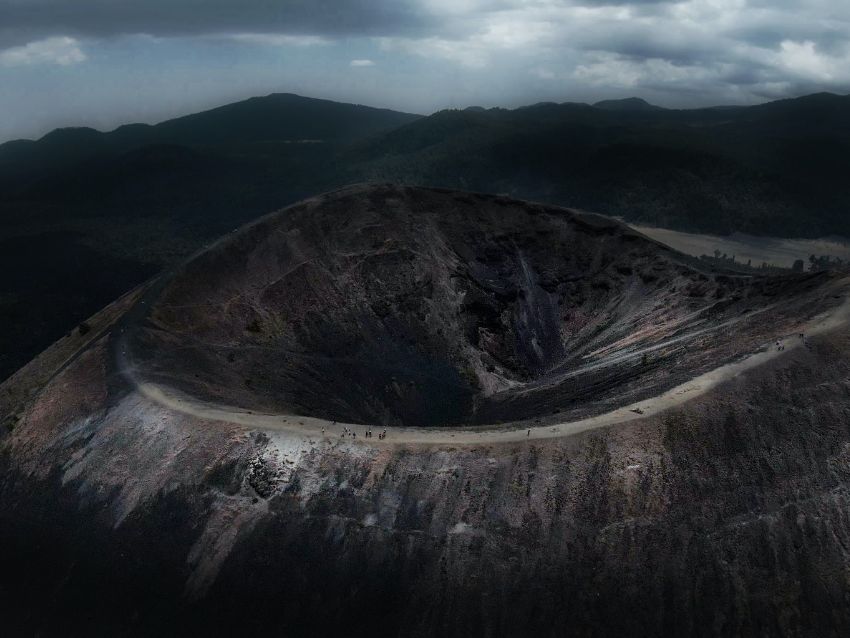
Parícutin is a scoria cone volcano in Michoacán, Mexico. Its place on the list comes from the unusual opportunity people had to observe and document a volcano’s development from its earliest stage.
The eruption began in a cornfield in 1943 and continued until 1952. According to the Smithsonian National Museum of Natural History, the cone grew more than 305 meters during its first year.
Parícutin was scientifically valuable, but the eruption was not a harmless spectacle. Ash covered nearby communities, residents had to abandon homes, and lava destroyed fields and much of San Juan Parangaricutiro. The surviving church tower and altar area remain surrounded by hardened lava.
The eruption ended in 1952. Describing the volcano simply as “the youngest volcano in America” is less useful than explaining its real significance: its emergence, growth, lava flows, effects on communities, and eventual end were documented by residents and scientists.
7. Mosi-oa-Tunya/Victoria Falls
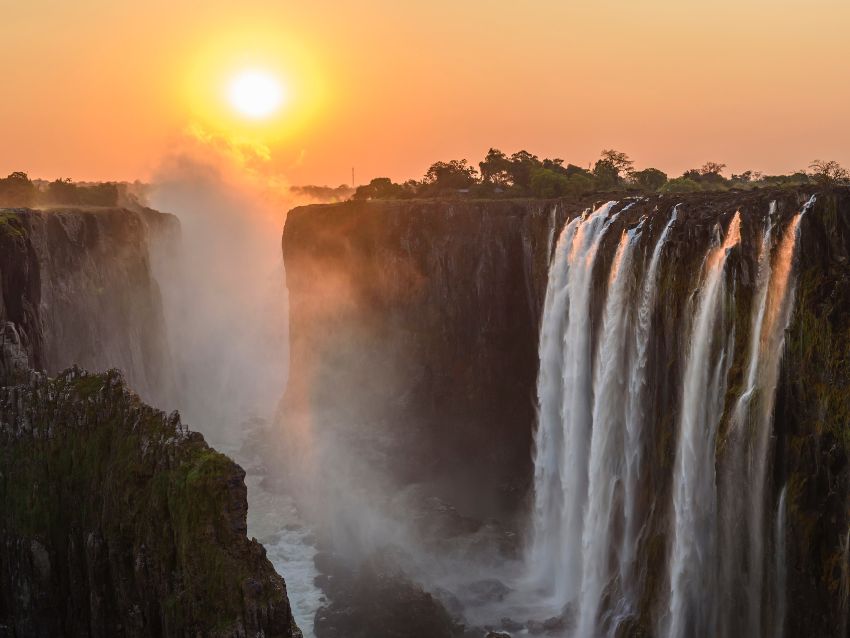
Mosi-oa-Tunya/Victoria Falls lies on the Zambezi River at the border between Zambia and Zimbabwe. The traditional name Mosi-oa-Tunya is commonly translated as “The Smoke That Thunders,” referring to the sound and spray created by the falling water.
The UNESCO World Heritage Centre measures the falls at approximately 1,708 meters wide. The average drop is about 100 meters, while the deepest point reaches 108 meters. During high flow, the water and spray form what UNESCO describes as the world’s greatest sheet of falling water.
The falls are part of a larger geological system. The Zambezi has cut through layered basalt, creating a succession of steep, narrow gorges downstream. Erosion continues to alter the position and shape of the waterfall over geological time.
Scottish missionary and explorer David Livingstone recorded the falls for European audiences in 1855 and applied the name Victoria Falls. He did not “discover” a place already known to and named by local communities.
Why These Natural Wonders Still Matter
A seven-item list cannot objectively rank every important landscape or natural process on Earth. Its value is simpler: it gives people an accessible way to compare radically different expressions of nature, from charged particles in the upper atmosphere to coral-building organisms beneath the sea.
Recognition also creates responsibility. Climate change, pollution, poorly managed development, visitor pressure, habitat disturbance, and resource extraction affect natural places in different ways. Responsible travel means following local rules, choosing operators with credible environmental practices, staying within designated areas, avoiding damage to reefs and wildlife, and respecting the communities connected to each landscape.
Readers interested in the people, policies, and ideas behind environmental protection can continue with these conservation books.
Frequently Asked Questions
Is there an official list of the Seven Natural Wonders of the World?
No. The list covered here is a widely cited editorial list attributed by the Seven Natural Wonders organization to an investigative reporter from CNN. UNESCO and IUCN do not maintain a seven-item natural-wonders ranking.
What are the Seven Natural Wonders of the World in order?
There is no official ranking from first to seventh. A common order is Aurora Borealis, Grand Canyon, Great Barrier Reef, Harbor of Rio de Janeiro, Mount Everest, Parícutin Volcano, and Victoria Falls.
Are the Seven Natural Wonders the same as the New7Wonders of Nature?
No. New7Wonders of Nature was a separate global voting campaign announced in 2011. Its winners were the Amazon, Ha Long Bay, Iguazu Falls, Jeju Island, Komodo, Puerto Princesa Underground River, and Table Mountain.
Is the Aurora Borealis a place?
No. The Aurora Borealis is an atmospheric light phenomenon that occurs around the Northern Hemisphere’s auroral zone. Its location and intensity change with geomagnetic activity and viewing conditions.
Is Mount Everest in Nepal or China?
Both. Mount Everest’s summit lies on the international border between Nepal and China’s Tibet Autonomous Region. Routes approach the mountain from both the Nepalese and Tibetan sides.
Are all seven natural wonders UNESCO World Heritage Sites?
No. UNESCO World Heritage and the Seven Natural Wonders are separate systems. Some wonders overlap with World Heritage properties, but not every entry is a UNESCO property, and the aurora is not a fixed site.