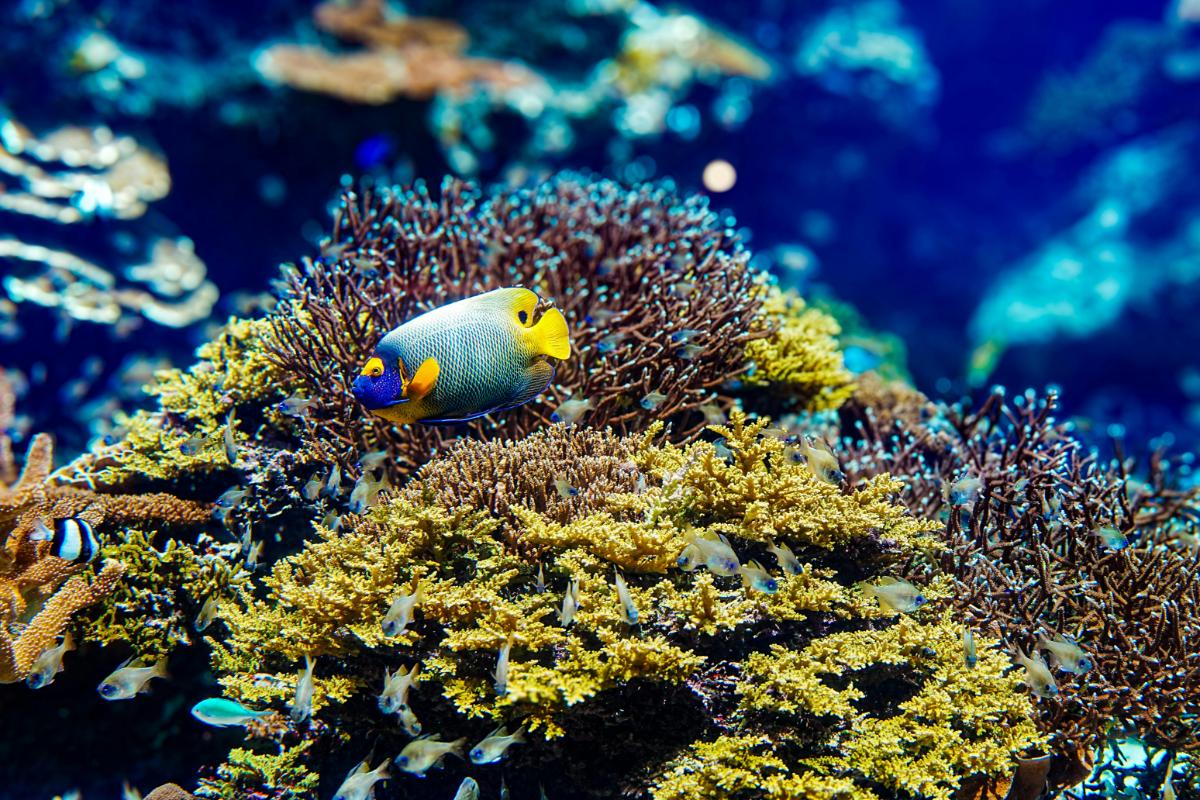
Marine conservation diving tourism is travel in which recreational divers support a defined conservation outcome, such as reef surveys, marine-debris reporting, wildlife photo-identification, protected-area funding, or supervised coral restoration. It can help when the work follows scientific protocols, protects wildlife, benefits coastal communities, and reports measurable results. A conservation label alone is not proof of impact.
The most credible programs explain the problem they are addressing, the method divers will follow, who reviews the data, which permits apply, and how local residents share in decisions and benefits. Divers should evaluate that evidence before choosing a destination or paying a volunteer fee.
Research note: Scientific claims and program information were checked against official and primary sources in July 2026. Fees, schedules, site access, wildlife rules, and certification requirements can change, so verify them with the operator and managing authority before booking.
Key Takeaways
- Conservation diving is useful when it contributes to a specific scientific, management, restoration, or community objective.
- Protected-area fees and tourism income can support conservation, but revenue alone does not prove ecological impact.
- Reef surveys, fish counts, debris reporting, and wildlife photo-identification are the most accessible forms of diver participation.
- Coral handling, animal tagging, sample collection, sensor deployment, and invasive-species removal require project-specific training and authorization.
- Responsible operators limit reef contact and wildlife disturbance, train staff, explain where fees go, and publish evidence of their work.
- Local monitoring and restoration remain valuable, but they cannot compensate for continued ocean warming and other large-scale pressures.
What Is Marine Conservation Diving Tourism?
Marine conservation diving tourism combines recreational scuba or snorkeling with an activity that supports marine conservation. It is one form of eco-tourism, but the environmental claim should be judged by the program’s methods and results rather than its name.
Programs generally fall into five categories:
- Monitoring fish, corals, invertebrates, seagrass, water conditions, or human impacts through a standardized survey.
- Recording and removing marine debris while submitting location, material, and quantity data.
- Photographing identifiable animals or habitats for research databases.
- Supporting protected areas through permits, entry fees, local employment, and conservation-oriented operators.
- Joining supervised restoration, invasive-species control, equipment maintenance, or sample collection when the project has the required expertise and authorization.
Some trips are primarily recreational dives that follow better environmental practices. Others are structured research or restoration expeditions. Both can be worthwhile, but they should not be described as equivalent forms of conservation work.
Why Conservation Diving Matters in 2026
NOAA Coral Reef Watch reports that bleaching-level heat stress affected approximately 84.4% of the world’s coral reef area between January 2023 and September 2025. Mass bleaching was documented in at least 83 countries and territories during that period.
That scale matters because local conservation programs operate inside a global climate problem. Better moorings, reduced pollution, fishing controls, visitor limits, restoration, and monitoring can improve local resilience. They do not remove the need to reduce greenhouse-gas emissions or address the broader pressures described in our guide to how to conserve coral reefs.
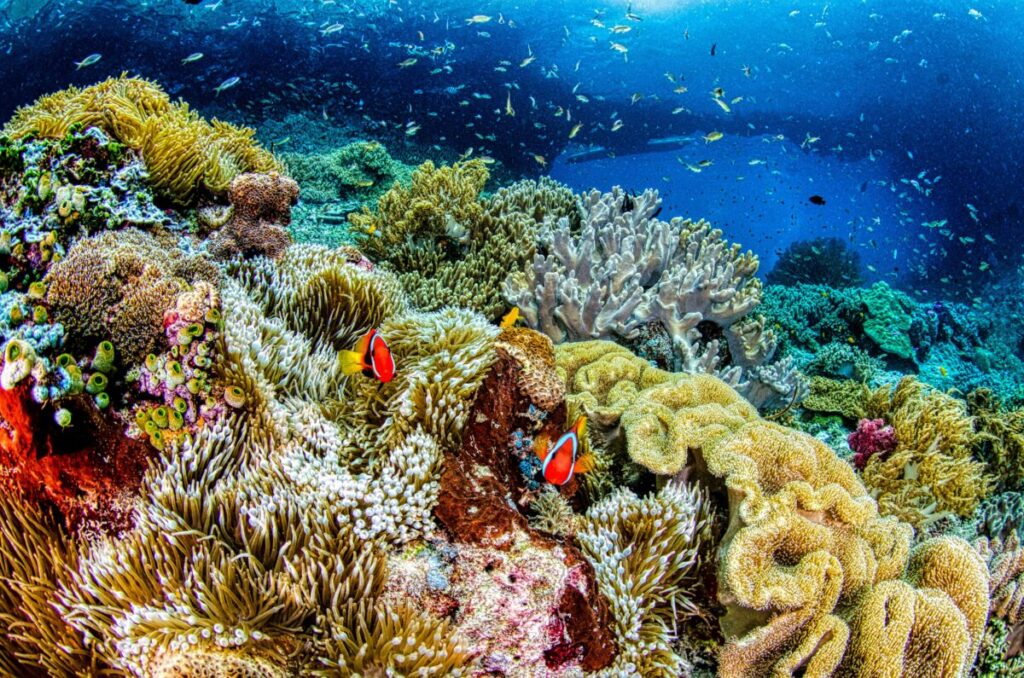
Divers can still contribute useful observations, funding, and labor at a local scale. The strongest programs are careful about the boundary between a useful contribution and a claim that exceeds the evidence.
How Diving Tourism Can Support Conservation
Funding Protected Areas and Local Management
Dive permits, park entry fees, mooring charges, operator concessions, and local taxes can help pay for rangers, patrols, visitor facilities, monitoring, education, and habitat management. The conservation value depends on whether the money is collected reliably, allocated transparently, and connected to an active management system.
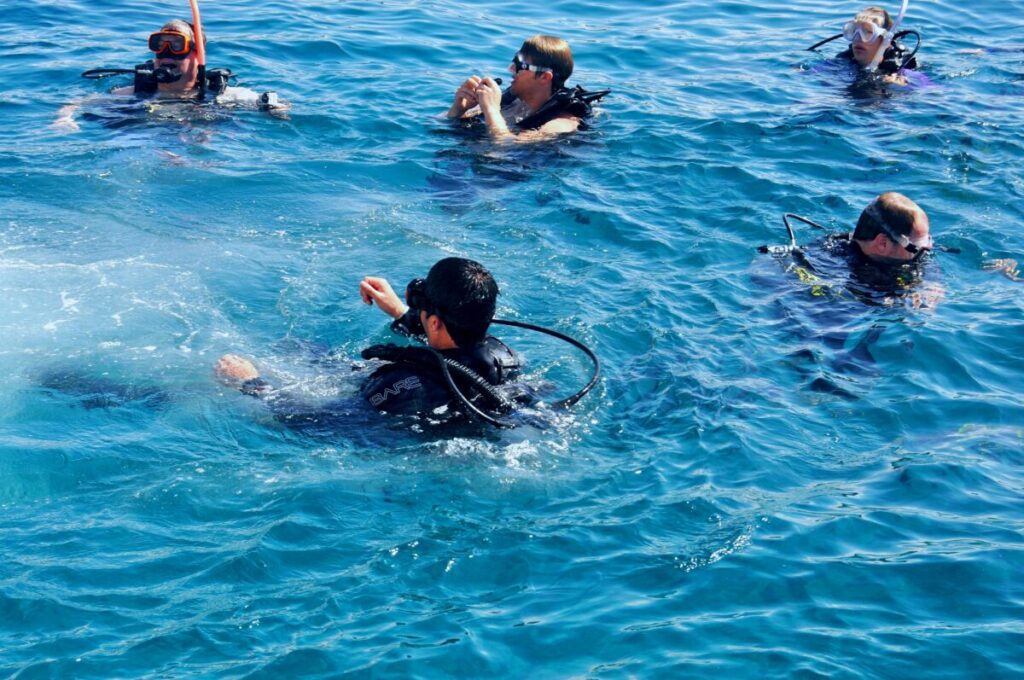
Before treating a fee as a conservation contribution, ask who receives it, what percentage reaches the project or protected area, and whether spending and outcomes are reported. A high program price does not necessarily mean a high conservation return.
Extending Scientific Monitoring
Researchers cannot visit every reef throughout the year. Trained recreational divers can extend geographic and seasonal coverage by recording species, abundance, habitat condition, temperature, visibility, debris, or photographs.
The value comes from the method rather than the number of volunteers. Useful programs define what to record, where to record it, how to identify species, which environmental conditions to note, and how submissions are checked. Reef Check and the REEF Volunteer Fish Survey Project are established examples of this approach.
Supporting Species Research
Some marine animals can be identified by stable natural markings. A correctly framed photograph, combined with date and location data, can help researchers study distribution, site use, movement, population structure, injuries, or individual histories.
This is a particularly accessible contribution because it may not require animal handling. It still requires discipline: the diver must follow the project’s photography protocol without chasing or crowding the animal.
Supporting Community-Led Conservation
Tourism can make a living reef economically valuable through guiding, boat operations, accommodation, food, research support, transport, park management, and other services. The benefits are stronger when local residents participate in governance, own or lead businesses, receive fair employment, and influence visitor limits and resource rules.
Employment alone is not enough. Travelers should ask whether the program has local leadership, uses locally owned suppliers, respects customary knowledge and access rights, and avoids presenting coastal residents only as beneficiaries of an outside project.
Where the Evidence Is Strongest
| Model or destination | What the evidence supports | What divers should not assume |
|---|---|---|
| Cabo Pulmo, Mexico | A peer-reviewed study measured major fish-biomass recovery inside a strongly supported and enforced no-take reserve. | The study does not show that recreational diving alone caused the recovery. |
| Mission: Iconic Reefs, Florida Keys | A NOAA-led partnership is undertaking large-scale, long-term restoration at seven Florida Keys reef sites. | Visitors cannot assume they may handle or outplant coral without partner training and permission. |
| Great Barrier Reef citizen science | Visitor photographs and observations can expand spatial coverage and identify sites requiring closer examination. | Crowd-sourced imagery does not replace professional monitoring or resolve climate-driven bleaching. |
| Apo Island, Philippines | The destination offers a useful community-management case study and illustrates the relationship between conservation and local livelihoods. | Historical reputation does not verify every current operator, activity, statistic, or access arrangement. |
| Global survey and photo-ID programs | Standardized programs can turn repeated recreational dives into long-term datasets. | Unstructured observations or photographs are not automatically research-grade data. |
Cabo Pulmo: Community Support and Enforcement
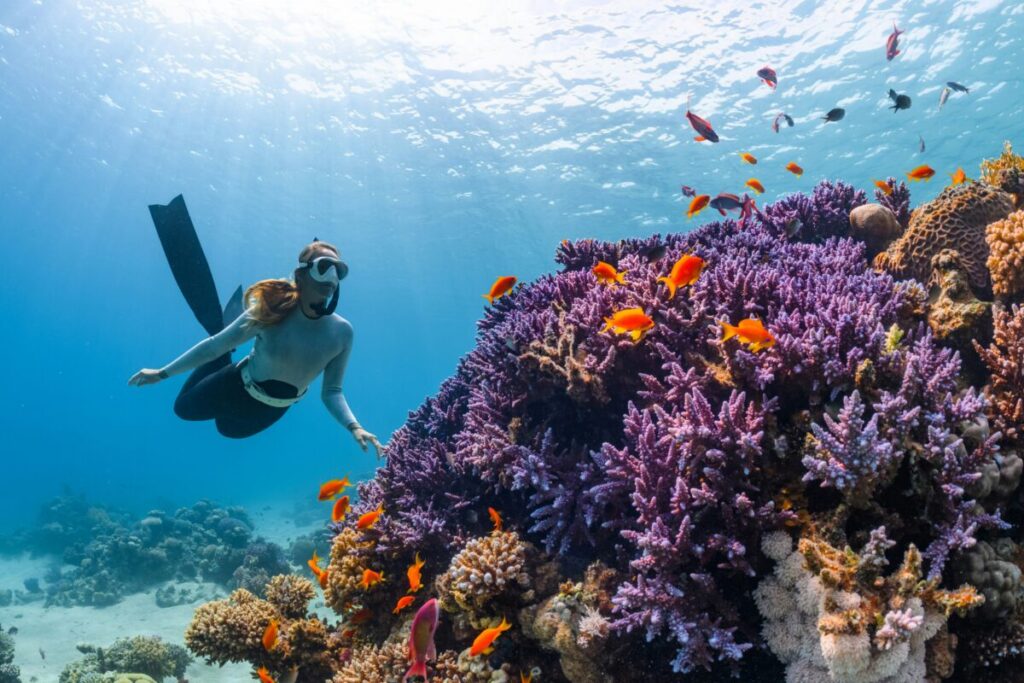
Cabo Pulmo National Park was established in 1995. A peer-reviewed comparison of surveys conducted in 1999 and 2009 found that total fish biomass rose by 463%, while top-predator biomass increased elevenfold.
The researchers linked the result to strong community leadership, social cohesion, effective enforcement, and ecological factors. They also reported economic benefits. This makes Cabo Pulmo a strong example of a community-supported reserve, but it would be misleading to convert the study into a claim that every dive directly produced the measured recovery.
Apo Island: Governance Before Marketing
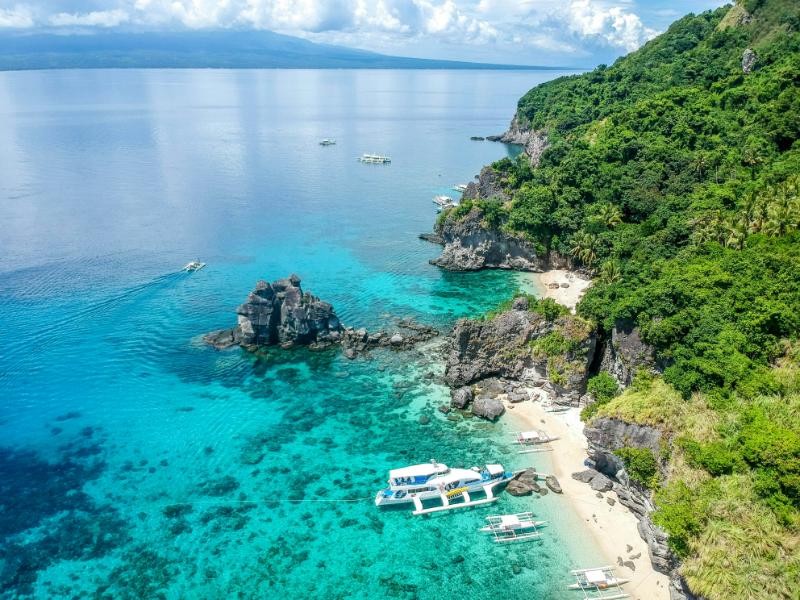
Apo Island is often reduced to a few dramatic historical percentages. Those figures can obscure the more useful lesson: conservation depends on local participation, enforceable rules, long-term relationships, and an economic model that residents consider legitimate.
Before booking, verify current sanctuary rules, seasonal restrictions, guide requirements, fees, and allowable activities. A respected destination can still contain operators with different standards.
Great Barrier Reef: Citizen Observations at Scale
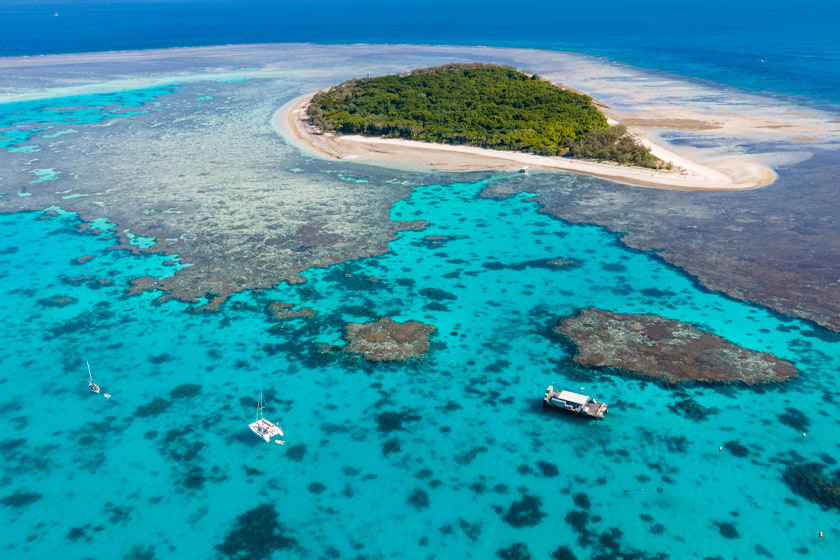
Citizen-science initiatives on the Great Barrier Reef use photographs, observations, and repeated site visits to increase coverage across an enormous reef system. In 2026, a Great Reef Census participant helped document an unusually large coral formation that was later mapped with photogrammetry.
The value of these programs lies in extending observation capacity and identifying places that warrant expert follow-up. They should not be described as substitutes for professional ecological surveys, laboratory analysis, long-term management, or climate action.
Mission: Iconic Reefs Is in the Florida Keys

Mission: Iconic Reefs is a NOAA-led, partner-driven effort launched in 2019 to restore structure, function, and resilience across nearly three million square feet of Florida’s Coral Reef over two decades. The initiative covers seven sites and anticipates producing approximately 500,000 stony coral colonies through millions of outplants.
Some project partners may offer education, nursery tours, monitoring, or trained volunteer opportunities. Availability and qualifications vary. Do not assume a recreational booking includes coral handling or outplanting unless an authorized partner explicitly provides the training and activity.
Conservation Activities Recreational Divers Can Join
Reef and Fish Surveys
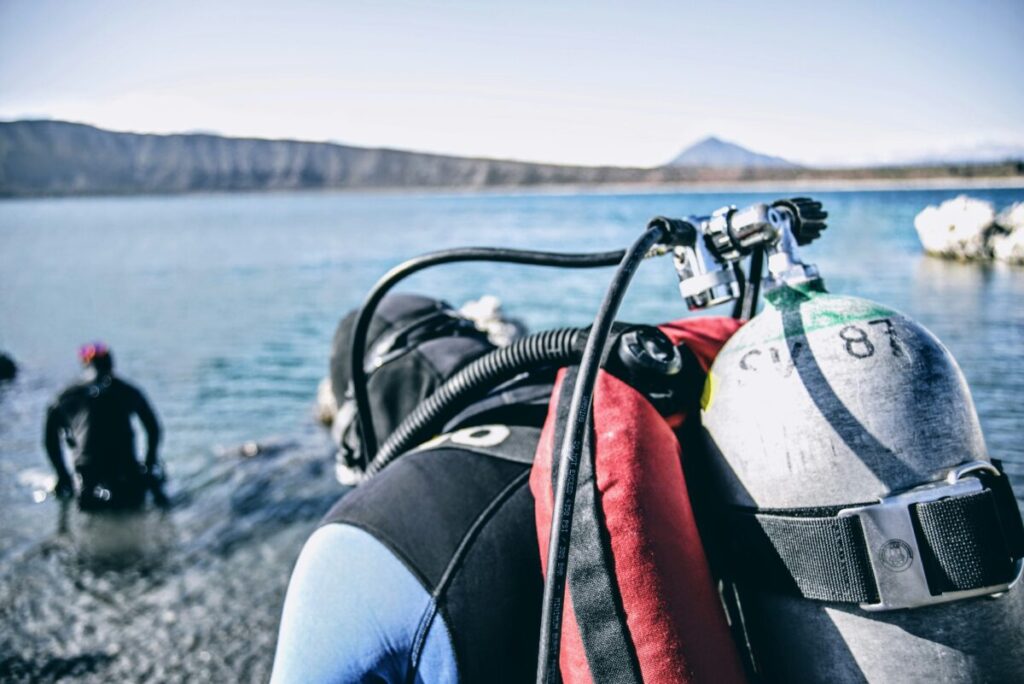
The Reef Check EcoDiver program trains participants to collect reef-health data using a standardized protocol. Reef Check reports more than 17,000 coral-reef surveys across 102 countries and territories.
The REEF Volunteer Fish Survey Project uses a standardized roving-diver method, training, experience ratings, and quality-control checks. Its database passed 300,000 surveys in 2024, covering almost 18,000 sites through contributions from more than 17,000 divers and snorkelers.
Those numbers are meaningful because the programs also define methods and data checks. A large volume of inconsistent observations would be much less useful.
Marine-Debris Surveys
Underwater cleanups can remove immediate hazards and improve a site’s appearance. Their longer-term value increases when participants classify debris, record quantities and location, and submit the information to a maintained database.
The PADI Dive Against Debris course teaches divers to conduct an instructor-guided debris survey and contribute to a global dataset. The broader sources, pathways, and impacts of marine waste are covered in our guide to plastic pollution.
Divers should not remove ammunition, hazardous containers, entangled animals, culturally significant objects, living material, or heavy items without the appropriate authorities and equipment. A cleanup should never create a new safety or habitat problem.
Wildlife Photo-Identification
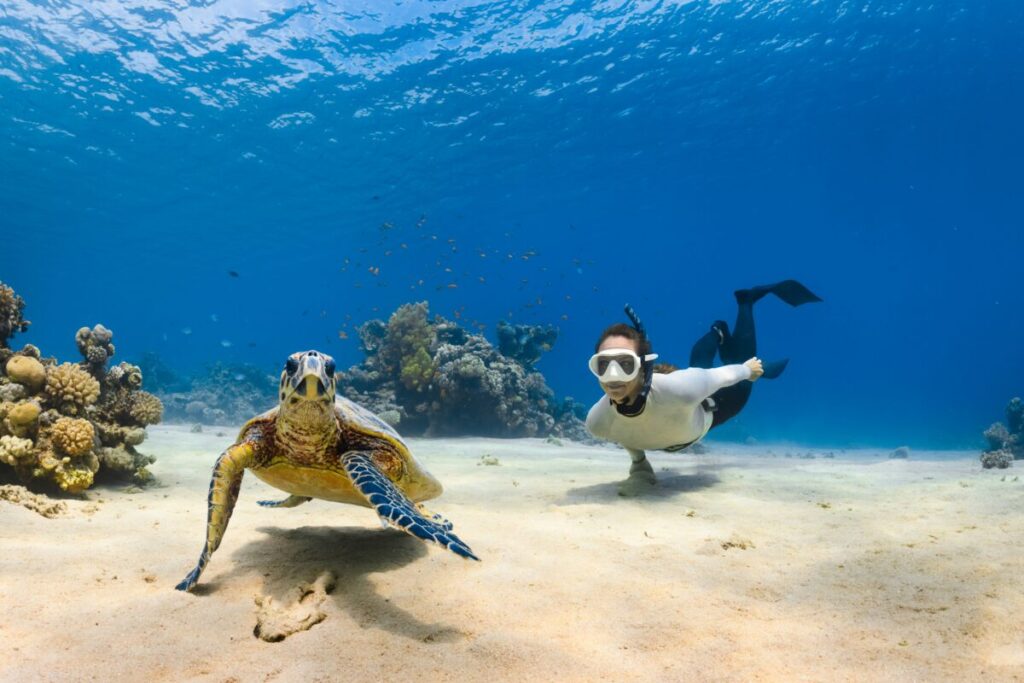
Manta Trust’s MantaBase shows how ordinary wildlife photographs can become structured records. Manta rays have distinctive spot patterns on their undersides, so the project asks contributors for a suitable ventral photograph plus the date, time, and location.
MantaBase reports more than 5,000 photo-ID submissions per year and records for over 10,000 individual manta rays from more than 70 countries. The scale is possible because the project tells divers exactly which image and supporting information researchers need.
Photography and Data Quality
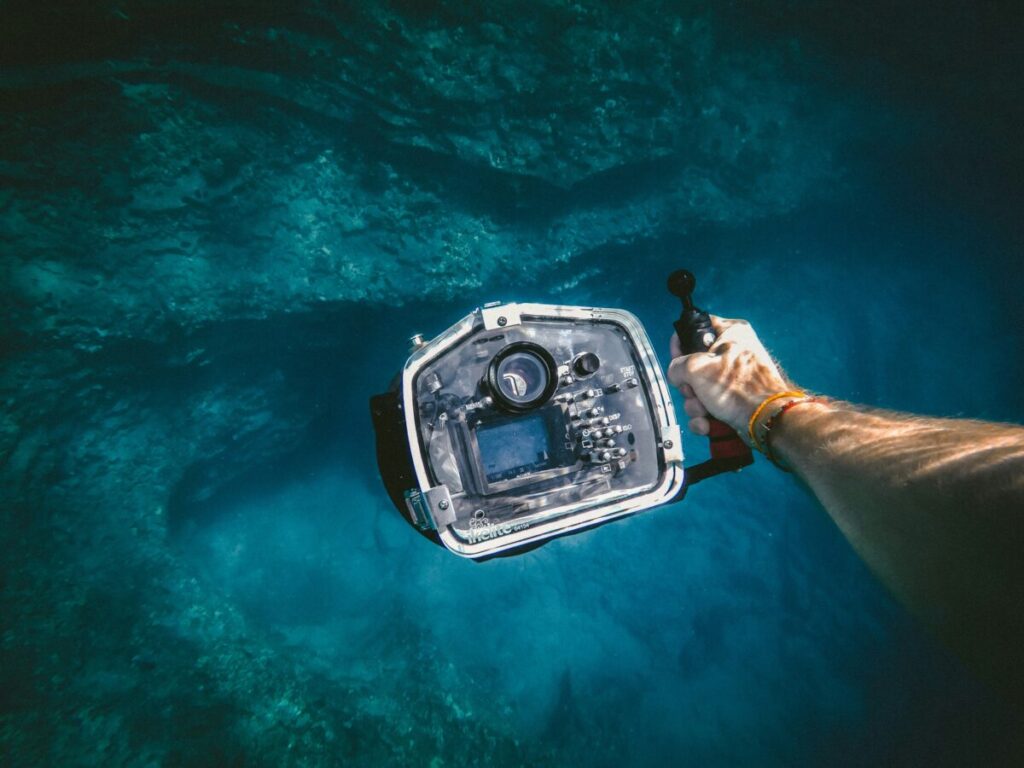
A sharp underwater photograph is not automatically useful scientific evidence. Projects may require a specific side of an animal, a scale reference, a sequence of images, an unedited original, GPS or site information, depth, time, water conditions, or notes about behavior.
Ask how the project stores images, protects sensitive location data, handles copyright, verifies identifications, and communicates corrections. Do not post precise locations for vulnerable species when a research team or protected-area manager asks contributors to keep them confidential.
Restoration, Sampling, and Monitoring Equipment
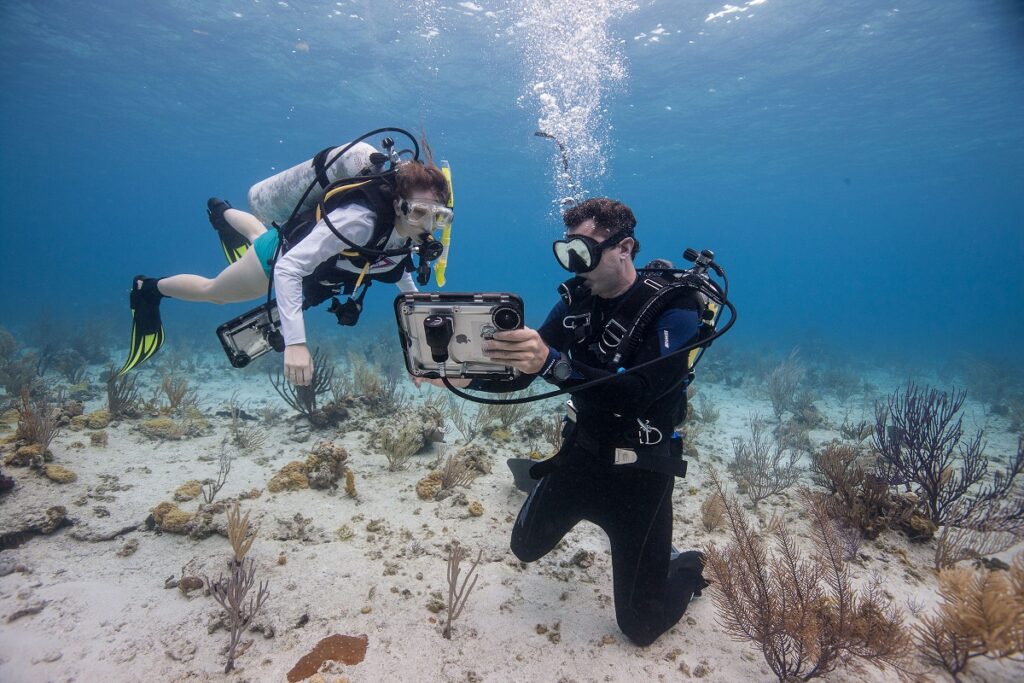
Coral nursery maintenance, outplanting, eDNA collection, sensor work, animal tagging, disease sampling, and invasive-species control can provide real value. They are not casual add-ons to an ordinary dive.
These activities may require permits, chain-of-custody procedures, sterile tools, species-specific handling, careful site selection, specialized insurance, and supervision by scientists or trained practitioners. Participation should begin with the project’s safety and scientific requirements, not with the traveler’s desire for a hands-on experience.
How to Evaluate a Conservation Diving Program
A credible program should be able to explain the full path between the diver’s activity and the intended conservation outcome.
| What to check | Strong evidence | Warning sign |
|---|---|---|
| Defined purpose | A specific species, habitat, management question, or restoration objective | General promises to “save the ocean” without a defined task |
| Scientific method | A written protocol, training materials, repeatable measurements, and named technical oversight | Volunteers improvise observations or activities during the dive |
| Data quality | Identification training, required metadata, validation, QA/QC, and a maintained database | The operator cannot explain who reviews or uses submissions |
| Permits and authorization | The responsible organization and applicable permits are identified | Visitors handle coral, wildlife, samples, or equipment without formal controls |
| Local participation | Local leadership, employment, purchasing, governance, and respect for access rights | Local residents appear only in promotional stories or low-paid support roles |
| Financial transparency | Fees, recipients, program costs, and conservation allocations are explained | A large “conservation fee” has no breakdown or reporting |
| Wildlife and reef safeguards | Briefings prohibit contact, harassment, feeding, crowding, and destructive anchoring | The operator promises guaranteed close encounters or staged animal behavior |
| Outcome reporting | Methods, limitations, annual results, datasets, management actions, or publications are available | Marketing focuses on volunteer hours and photographs rather than outcomes |
| Diver safety | The activity is matched to conditions, certification, experience, supervision, and emergency planning | Conservation branding is used to justify tasks beyond the diver’s training |
Green Fins provides an additional operator-screening signal. Certified members follow a code of conduct, receive staff training, make operational improvements, and undergo annual on-site assessments. Membership is useful evidence, but travelers should still evaluate the specific trip, guide, site, and activity.
Certification, Skills, and Safety
There is no universal certification requirement for conservation diving. The appropriate qualification depends on the activity, depth, current, visibility, task loading, equipment, local law, and project protocol.
| Activity | Typical preparation | Why requirements vary |
|---|---|---|
| Wildlife photo-ID | Certification appropriate for the site, stable buoyancy, and the project’s photography briefing | Some encounters are shallow; others involve current, depth, or blue-water conditions |
| Fish or reef survey | Species-identification and survey-method training; certification matched to the survey site | The diver must collect data without compromising position, air, or buddy awareness |
| Marine-debris survey | Safe object-handling instruction, appropriate gloves or tools, and a defined collection plan | Entanglement, sharp objects, unstable debris, and hazardous materials create additional risks |
| Coral nursery or restoration work | Excellent buoyancy, project training, close supervision, and any required permits | Task loading and accidental contact can damage both natural reefs and restoration structures |
| Sampling, tagging, invasive-species removal, or equipment deployment | Project-specific technical training and authorization | These tasks may involve legal restrictions, animal welfare, sterile procedures, tools, or higher-risk conditions |
Advanced Open Water may be required by a particular project, but the certification card does not prove that a diver has precise trim, controlled fin movement, strong situational awareness, or experience in the expected conditions. A check dive or buoyancy assessment can be more informative.
Do not let the conservation purpose create pressure to exceed personal limits. Data can be recollected and tasks can be reassigned. A diver’s safety, the buddy team, and the prevention of habitat damage come first.
Responsible Diving Practices That Reduce Harm
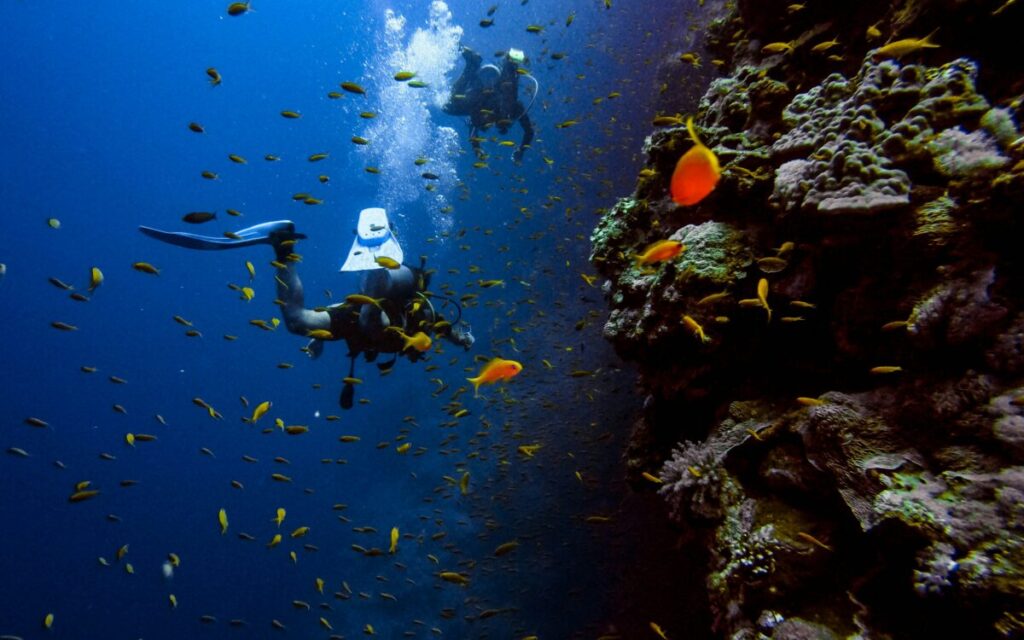
- Maintain enough clearance to avoid touching coral, stirring sediment, or striking the reef with fins, gauges, cameras, or alternate air sources.
- Secure hoses, gauges, lights, slates, and accessories before entering the water.
- Use propulsion techniques suited to the site and avoid rapid finning close to fragile substrate.
- Never stand, kneel, hold, collect, or reposition marine life unless an authorized protocol specifically requires trained handling.
- Do not feed wildlife or support operators that manufacture encounters through chasing, crowding, restraining, or inappropriate baiting.
- Allow animals an unobstructed route to leave and stop the encounter when behavior indicates avoidance or stress.
- Follow the managing authority’s site-specific distance, flash, lighting, seasonal, and access rules.
- Use moorings where provided and question operators that anchor on coral or other sensitive habitat.
- Report damage, entanglement, disease, illegal collection, or harassment through the appropriate local channel rather than intervening beyond your training.
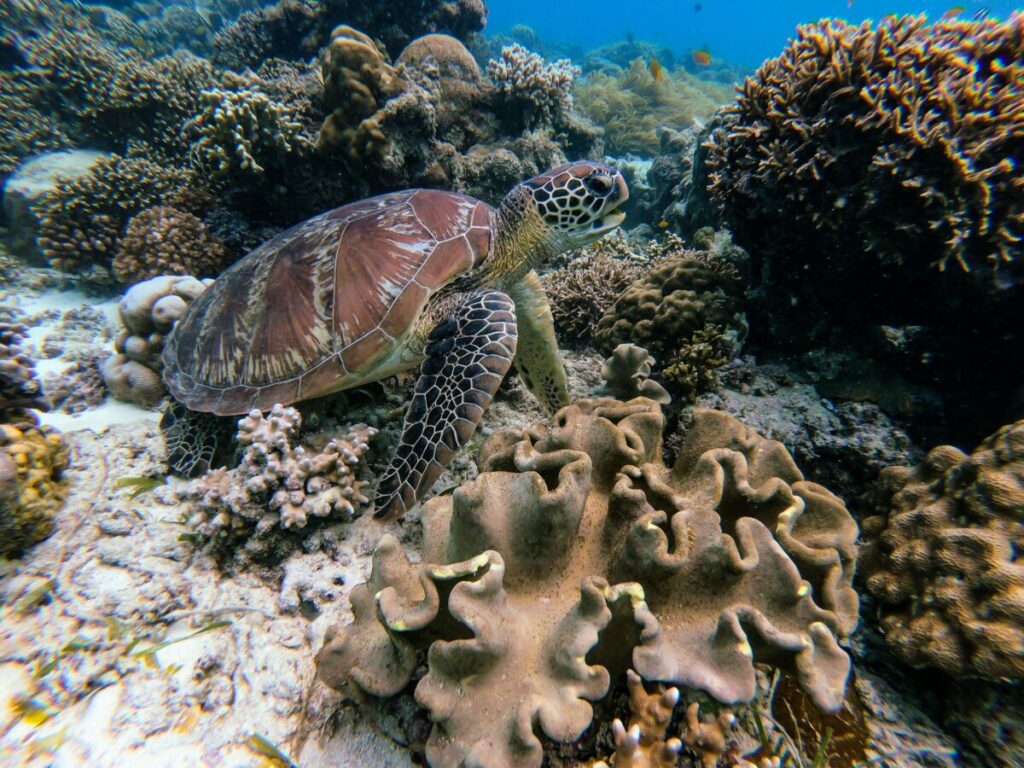
The correct encounter distance is not universal. Species, behavior, jurisdiction, breeding season, water conditions, and local management rules all matter. Follow the most protective applicable rule and the instructions of trained local guides.
Limits and Risks of Conservation Diving Tourism
Tourism Can Damage the Resource It Depends On
High diver density, poor buoyancy, anchoring, wildlife crowding, feeding, vessel traffic, wastewater, coastal construction, and repeated visits to sensitive sites can degrade habitat or disrupt animals. A conservation contribution does not cancel those impacts.
Volunteer Demand Can Distort Project Priorities
Hands-on activities are attractive to travelers, but the most useful work may be less photogenic: repeating a survey, entering data, cleaning equipment, maintaining a nursery, funding a ranger, or leaving a sensitive site undisturbed. A project that invents unnecessary animal or coral contact to satisfy visitors creates risk rather than value.
Tourism Income May Leave the Community
Revenue can leak to overseas booking platforms, non-local resorts, liveaboards, equipment suppliers, and outside owners. Examine local ownership, wages, purchasing, guide leadership, community consent, and the allocation of conservation fees.
Restoration Has Ecological Limits
Coral restoration can support research, recover priority sites, preserve genetic material, and rebuild some habitat. It cannot restore reefs indefinitely if severe heat stress, poor water quality, disease, destructive fishing, or unsuitable site conditions continue. Credible programs explain survival rates, monitoring periods, losses, and the conditions required for success.
Travel Has a Climate Cost
Long-haul flights and energy-intensive accommodation contribute to the warming that threatens coral reefs. A small conservation fee does not erase those emissions. Travelers can reduce unnecessary connections, stay longer, choose efficient operators and lodging, avoid repeated short-haul trips, and support credible climate and marine policy without presenting a trip as impact-free.
How to Plan a Conservation Diving Trip
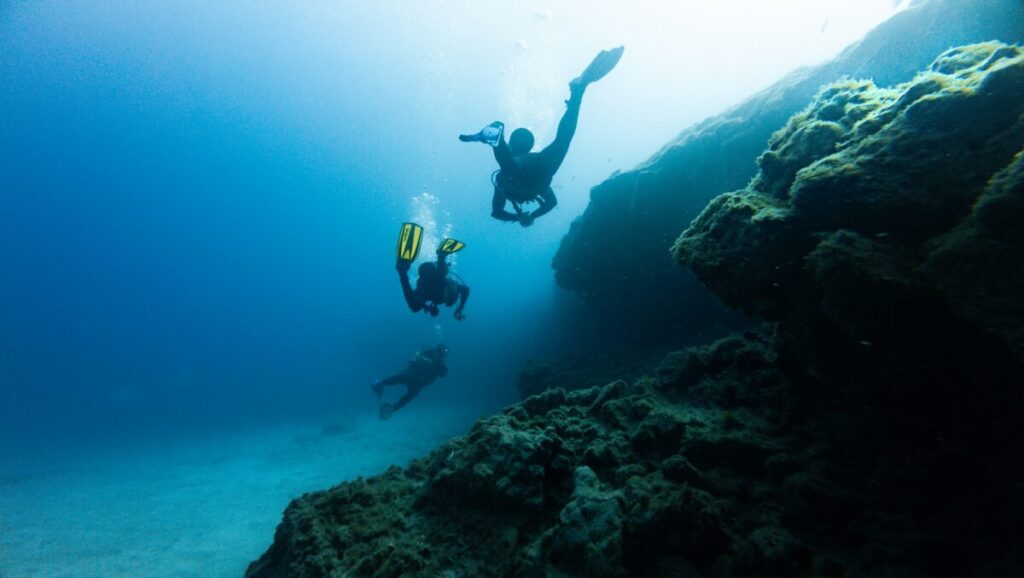
- Choose the type of contribution. Decide whether your priority is wildlife photo-ID, reef surveys, debris data, protected-area funding, restoration, or another defined activity.
- Find the project behind the trip. Identify the conservation organization, protected-area authority, university, research group, or community body responsible for the method and outcomes.
- Review the evidence. Look for protocols, named technical staff, reports, datasets, publications, permits, financial explanations, and acknowledged limitations.
- Check operator practices. Review group size, anchoring, wildlife rules, waste management, staff training, emergency planning, and independent environmental credentials.
- Match the activity to your ability. Ask about depth, current, visibility, task loading, minimum certification, required dives, buoyancy assessment, equipment, and physical demands.
- Verify current logistics. Confirm the season, site access, conservation fees, permits, travel insurance requirements, medical screening, cancellations, and what happens if conditions prevent the planned work.
- Ask how local people participate. Look beyond employment numbers to ownership, decision-making, procurement, customary rights, and long-term community priorities.
- Plan for useful follow-through. Submit data correctly, respond to identification questions, preserve original files, complete post-dive records, and read the project’s results after the trip.
A credible operator should answer these questions directly. Vague replies, pressure to book quickly, guaranteed wildlife proximity, or promises that an ordinary vacation will “save” an ecosystem are reasons to keep looking.
Marine Conservation Diving FAQ
What is marine conservation diving?
Marine conservation diving is scuba or snorkeling linked to a defined conservation task, such as reef monitoring, marine-debris surveys, wildlife photo-identification, protected-area support, or supervised restoration.
Does conservation diving actually help marine ecosystems?
It can. The strongest programs follow a repeatable method, control data quality, protect wildlife, involve local communities, and report how the work or funding supports research, management, enforcement, or restoration.
Do you need a special certification for conservation diving?
There is no universal requirement. Photo-ID or basic surveys may be available to divers certified for the site, while restoration, sampling, tagging, deep surveys, strong-current work, and equipment deployment may require advanced or project-specific training.
What conservation activities can recreational divers join?
Common options include fish counts, reef surveys, marine-debris reporting, wildlife photo-identification, habitat photography, protected-area fee support, and supervised nursery maintenance. Handling wildlife, coral, samples, tools, or invasive species requires authorization and training.
How can I tell whether a conservation diving program is credible?
Look for a defined objective, written protocol, named scientific or management partner, permits, diver training, data checks, local participation, transparent fees, wildlife safeguards, and publicly reported results or limitations.
Can diving tourism damage coral reefs and marine wildlife?
Yes. Reef contact, anchoring, sediment disturbance, crowding, feeding, wildlife pursuit, vessel traffic, coastal development, and excessive visitor numbers can cause harm. Responsible management must reduce those impacts rather than relying on a conservation label.
Choose the Conservation Task Before the Destination
A responsible dive can produce useful data, support protected-area management, fund local work, or build public understanding. The contribution is credible only when the program can connect the diver’s action or payment to a defined purpose and explain the limits of that contribution.
Start with the task, project, and evidence. Then evaluate the destination, operator, conditions, skills, and cost. This order reduces the risk of paying for a conservation label attached to an ordinary excursion or, worse, an activity that creates unnecessary contact with wildlife or habitat.
Marine recovery is possible when protection, enforcement, science, communities, and long-term policy align. Our collection of endangered species recovery stories offers further examples of what sustained, evidence-based conservation can achieve.
See Related: Ocean Conservation Heroes: Marine Wildlife Success Stories That Inspire Global Change