
Home compostable materials can break down in a standard backyard compost bin at lower temperatures, typically within 180 days. Industrial compostable (or commercially compostable) materials require the high heat, moisture, and controlled conditions of a commercial facility to break down properly, and will not decompose in a home pile.
Not all compostable packaging breaks down the same way. Home compostable products break down in backyard bins at lower temps (50-65°C). Industrial compostable items? They need the high heat (55-70°C) and controlled conditions of a facility to really decompose. Toss the wrong type in your backyard pile and it just sits there. Throw home compostable materials into industrial streams and—well, that’s not great either. It wastes facility capacity and can mess up the system.
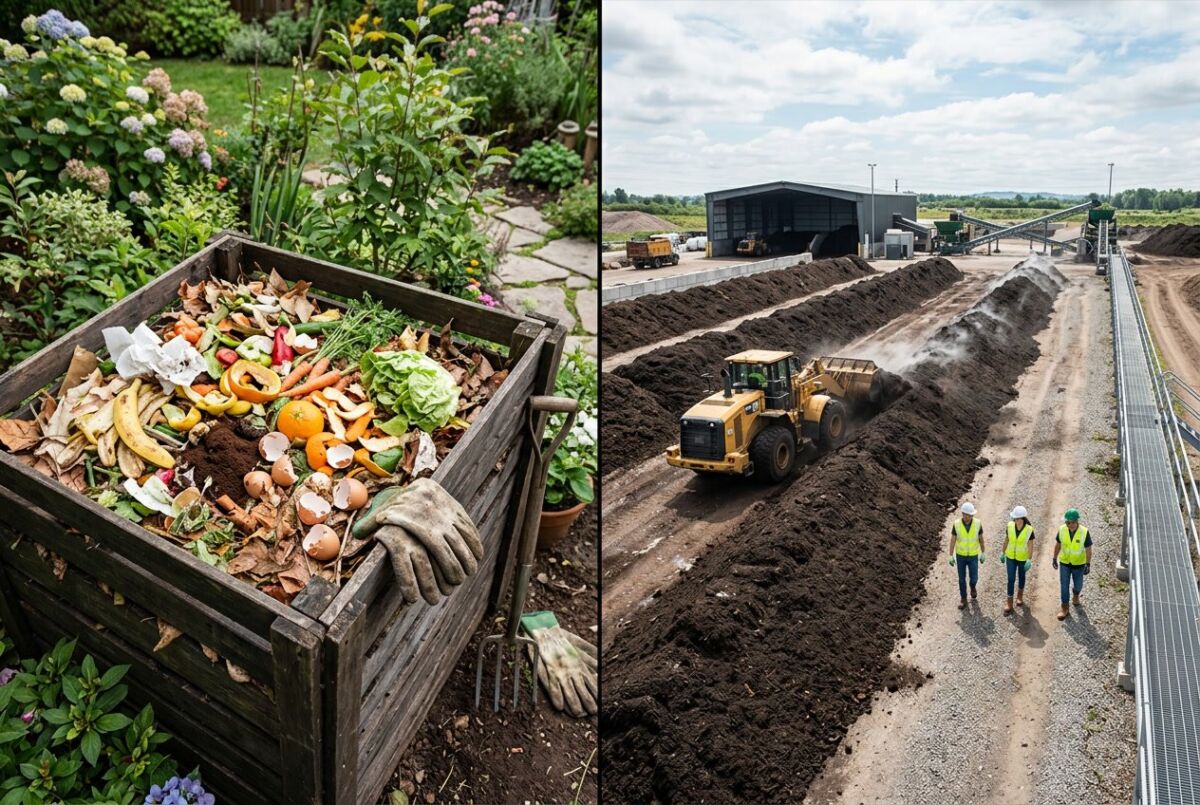
This difference really matters. Mislabeled or misunderstood compostable products can end up in landfills, or worse, contaminate compost batches.
Certifications like OK compost HOME or AS 5810 help you spot the real deal, but not every region has access to an industrial composting facility. So, knowing which standard fits your packaging can help you dodge greenwashing and pick products that actually work in your local system.
Key Takeaways
- Home compostable materials break down in backyard conditions in 6-12 months. Industrial compostable products need facility-level heat and aeration.
- Look for certifications like OK compost HOME or AS 5810 for home composting and check what your local facility actually accepts before buying.
- Industrial facilities handle tougher stuff like meat, dairy, and certified bioplastics—things that just won’t break down in home bins.
Defining Home Compostable and Industrial Compostable
Home compostable materials break down in backyard bins at lower temperatures. Industrial compostable products, on the other hand, need the high-heat, controlled conditions you’ll only find at a commercial facility.
This distinction decides what you can realistically compost at home and what needs to go to a dedicated site.
What Does Home Compostable Mean?
Home compostable products break down naturally in your backyard compost pile or tumbler. No fancy equipment required.
These materials decompose at 50-65°C (122-149°F), which is about what a typical home compost system can reach.
The process usually takes 6 to 12 months, but it depends on your pile’s conditions. Temperature, moisture, airflow—all of these impact how quickly things break down.
Your home pile won’t hold steady temps like an industrial facility, so home compostable items have to handle the ups and downs.
If you’re shopping for home compostable products in the US, look for the OK compost HOME certification from TÜV Austria. That one guarantees the product will fully break down in your home compost within 12 months—even at temps as low as 20-30°C (68-86°F).
Australia uses the AS 5810-2010 standard. In Europe, it’s DIN-Geprüft Home Compostable from DIN CERTCO.
These certifications make sure products don’t leave toxic residues and your compost stays safe for plants.
What Does Industrial Compostable Mean?
Industrial compostable materials need the special conditions you’ll only find at commercial composting facilities.
These facilities keep temperatures at 55-70°C (131-160°F), manage moisture carefully, and use plenty of aeration throughout the composting process.
The higher temps do two things: speed up decomposition and kill pathogens that would survive in your backyard pile.
Industrial facilities can break stuff down in just weeks or a few months. That’s way faster than home composting.
You’ll see industrial compostable products made from things like PLA bioplastics. These get certified under standards like ASTM D6400 (US) or EN 13432 (Europe).
Those certifications spell out temperature, time, and breakdown requirements.
Heads up: Not every area has an industrial composting facility. If these materials end up in a landfill or your home compost bin, they just sit there. Always check if your waste management system actually accepts industrially compostable items before you buy.
Compostable vs Biodegradable
“Compostable” and “biodegradable” aren’t the same thing, and knowing the difference saves you from falling for marketing fluff.
- Compostable means a material will turn into nutrient-rich compost within a set timeframe, under specific conditions, and won’t leave toxins behind.
- Biodegradable just means something will eventually break down by biological processes. No promises on how long it’ll take, or what gets left behind.
A so-called biodegradable product might take decades to decompose, or it could leave behind nasty residues. Sometimes, it only breaks down under lab conditions that don’t exist in real-world compost piles or landfills.
The term “biodegradable” is basically unregulated in most places.
What should you watch for?
- Certification (compostable has it; biodegradable usually doesn’t)
- Breakdown timeframe (compostable says “months”; biodegradable is vague)
- Environmental requirements (compostable specifies temp and moisture; biodegradable doesn’t)
- Residue safety (compostable gets tested; biodegradable usually not)
If you see “biodegradable” without a compostable certification, be skeptical. Ask for proof—where does it break down, how fast, and what’s left after?
How Composting Works in Different Environments
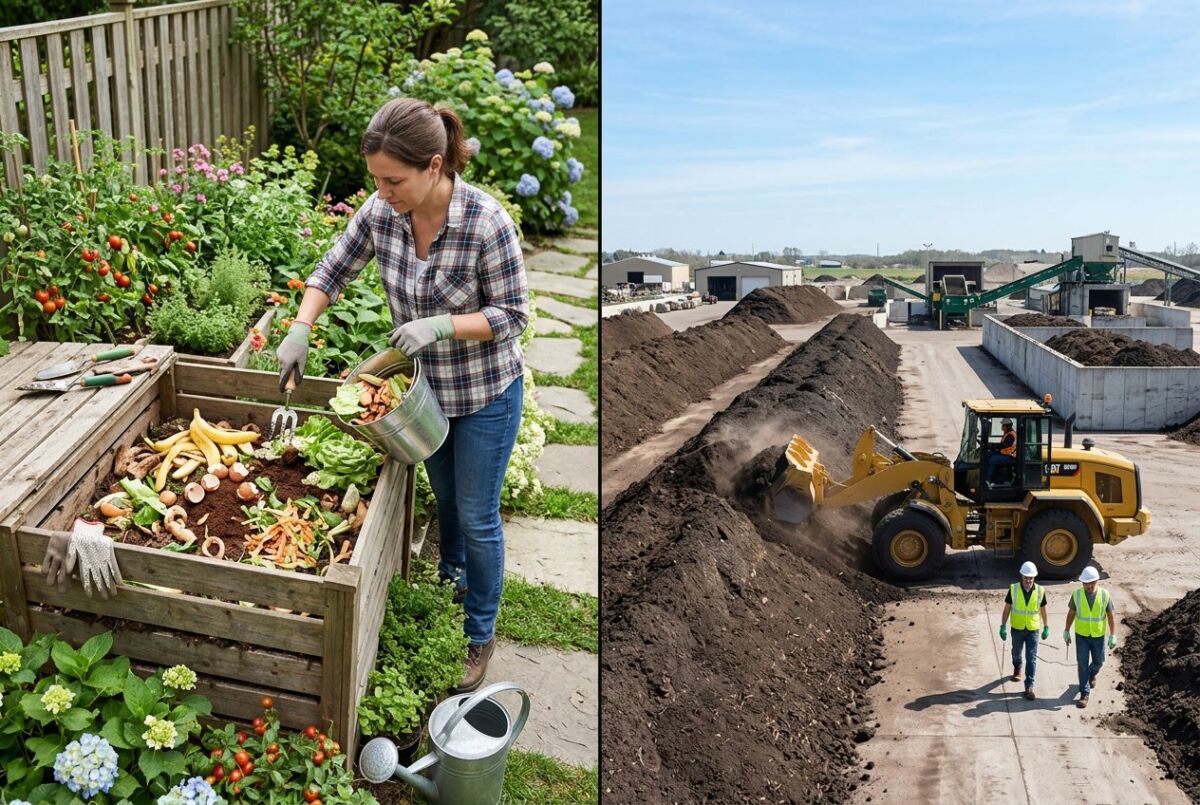
Composting needs the right environment to turn waste into something useful. But those conditions look very different at home versus in an industrial facility.
Speed and success depend on temperature, moisture, airflow, and the tiny microbes doing all the dirty work.
Key Elements of the Composting Process
You’ll need four basics for good compost: carbon-rich “browns,” nitrogen-rich “greens,” moisture, and oxygen.
The carbon-to-nitrogen ratio is key. A 1:1 mix of greens and browns usually works well at home.
Greens are fruit scraps, veggie peels, and grass clippings. Browns are dry leaves, cardboard, straw.
Moisture should be 40-60%—think “wrung-out sponge.” Too much water? You get stink and no air. Too little? Microbes slow down.
Aeration brings oxygen to your compost critters. Turn your home pile every week or two. Industrial places use machines or forced air to keep oxygen levels up.
Temperature is the big difference. Home systems usually hit 50-65°C (122-149°F). Industrial ones? They crank it up to 55-70°C (131-160°F) or even higher, which kills pathogens and breaks down tough stuff fast.
Role of Microorganisms and Conditions
Bacteria, fungi, and other microbes do the heavy lifting, breaking organic matter down into simpler stuff.
Bacteria start things off. They multiply fast when it’s warm and moist and create heat as they eat.
Different bacteria like different temps. Mesophilic bacteria work at 10-45°C and get things going. As they heat up the pile, thermophilic bacteria take over from 45-70°C. These high-temp bugs move faster and can handle stuff that the mesophilic guys can’t.
Fungi join in to tackle tough stuff like cellulose and lignin—think wood and paper.
Your backyard pile might not get hot enough for thermophilic bacteria to work all the time. Industrial facilities control everything to keep these high-heat microbes active, which really speeds things up and kills off pathogens.
Decomposition Speed and Outcomes
How fast things break down depends on your setup and what you toss in.
At home, you’ll get finished compost in 6-12 months. If you forget to turn the pile or it dries out, it’ll take longer. Some things—like wood chips or corn cobs—could take a year or more.
Industrial composting is way faster. With controlled heat and air, facilities break stuff down in weeks or a few months.
Industrial sites can handle things that just won’t work at home, like compostable plastics and greasy takeout containers.
Both systems give you humus at the end—a dark, crumbly, nutrient-rich material. Industrial compost is usually more consistent because they control everything. Home compost quality depends on what you put in and how you manage it.
Decomposition speed matters for what you can compost. Materials labeled “home compostable” have to break down at lower temps within 12 months. Industrial compostable products need the big-league heat and won’t break down in your backyard.
Home Composting: Process and Practicalities
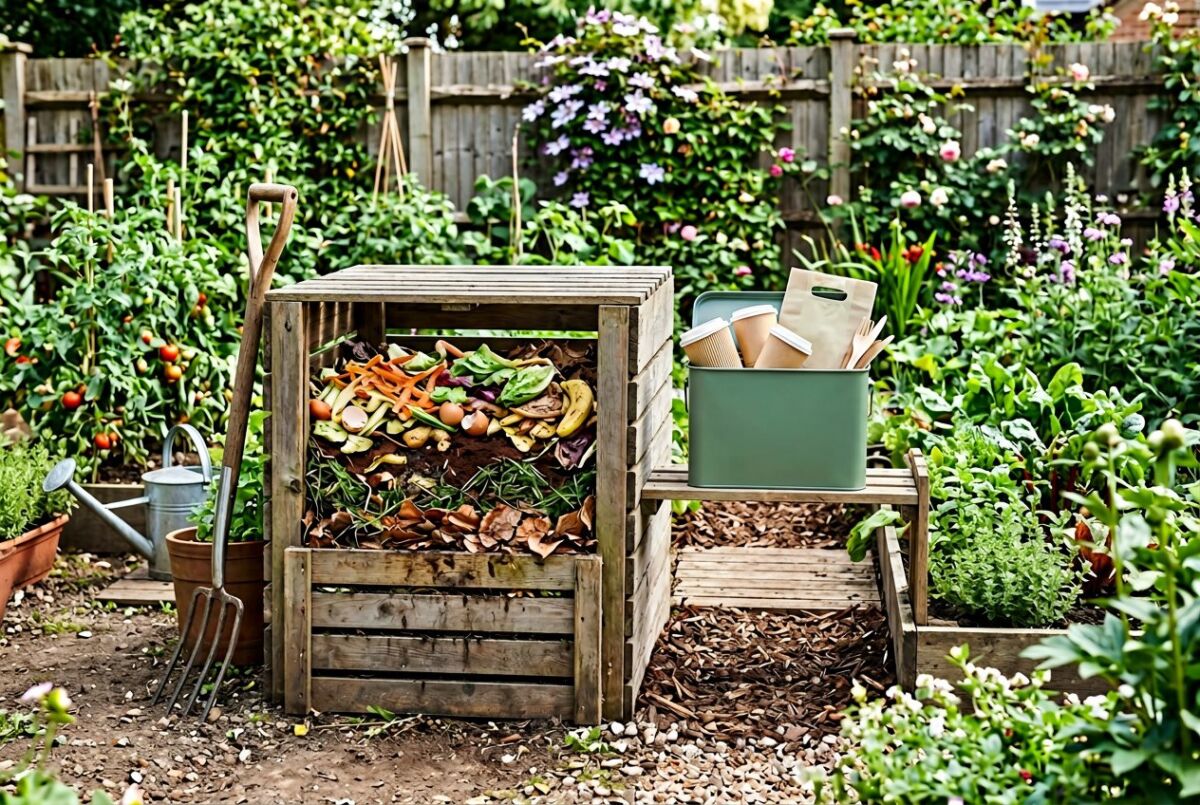
Home composting usually hits 50-65°C and takes 6 to 12 months to break down stuff. Home compostable products break down naturally in these conditions—no industrial help needed.
Your setup, your material choices, and knowing the limits all play into whether your backyard composting actually works.
Typical Home Composting Setups
You’ve got a few options for home compost bins, depending on your space and vibe. If you’ve got a yard, a classic backyard pile works. Compost bins come in two main flavors: stationary or tumbler.
- Stationary bins just sit there. You turn them with a pitchfork or shovel. They’re steady but require some elbow grease.
- Tumbler bins spin on an axis. You turn a handle or roll the barrel—way easier to mix and aerate.
No matter what you pick, you need three things: airflow, moisture, and a mix of materials. Place your bin somewhere with a bit of shade and good drainage. Keep it handy, but maybe not right under your bedroom window in case of smells.
Check the moisture often—aim for that wrung-out sponge feel. Mix things up every couple of weeks to get oxygen in there.
Suitable Materials for Home Composting
You can compost two main types of stuff at home: nitrogen-rich “greens” and carbon-rich “browns.” Aim for a 50/50 mix for the best results.
Greens include:
- Fruit and veggie scraps
- Coffee grounds and tea leaves
- Grass clippings
- Fresh plant trimmings
- Eggshells (crushed)
Browns include:
- Dry leaves
- Shredded cardboard and plain paper
- Wood chips and sawdust (as long as they’re untreated)
- Straw or hay
- Home compostable products with OK compost HOME certification
Home compostable products need to meet certain standards. Look for the OK compost HOME certification from TÜV Austria. That guarantees breakdown at 20-30°C within 12 months.
Certified compostable bags, takeout boxes, and packaging made from wheat straw fiber can go in your backyard compost. These should fully break down without leaving anything nasty behind.
Challenges and Limitations
Your home compost bin just can’t handle everything that industrial facilities process. You really have to skip meat, bones, fish scraps, dairy, and fats—they attract critters and make your bin smell awful.
Temperature control? That’s the trickiest part of backyard composting. Most piles just don’t get hot enough to kill off pathogens or break down the tough stuff. The weather messes with your compost too—downpours make it soggy, and dry spells turn it into a dust bowl.
Common problems you might run into:
- Decomposition slows down if your mix of materials is off
- Bad smells pop up when you add too many greens or don’t give it enough air
- Pests show up if you toss in the wrong things
- Some “commercially compostable” items just won’t break down
Anything marked “commercially compostable” or “industrially compostable” needs way more heat than your backyard can provide. Those materials break down only in commercial setups, not at home.
Space can be a pain, too. If you live in an apartment or have a tiny yard, home composting might not fit your lifestyle or waste volume.
Industrial Composting: Facilities and Capabilities
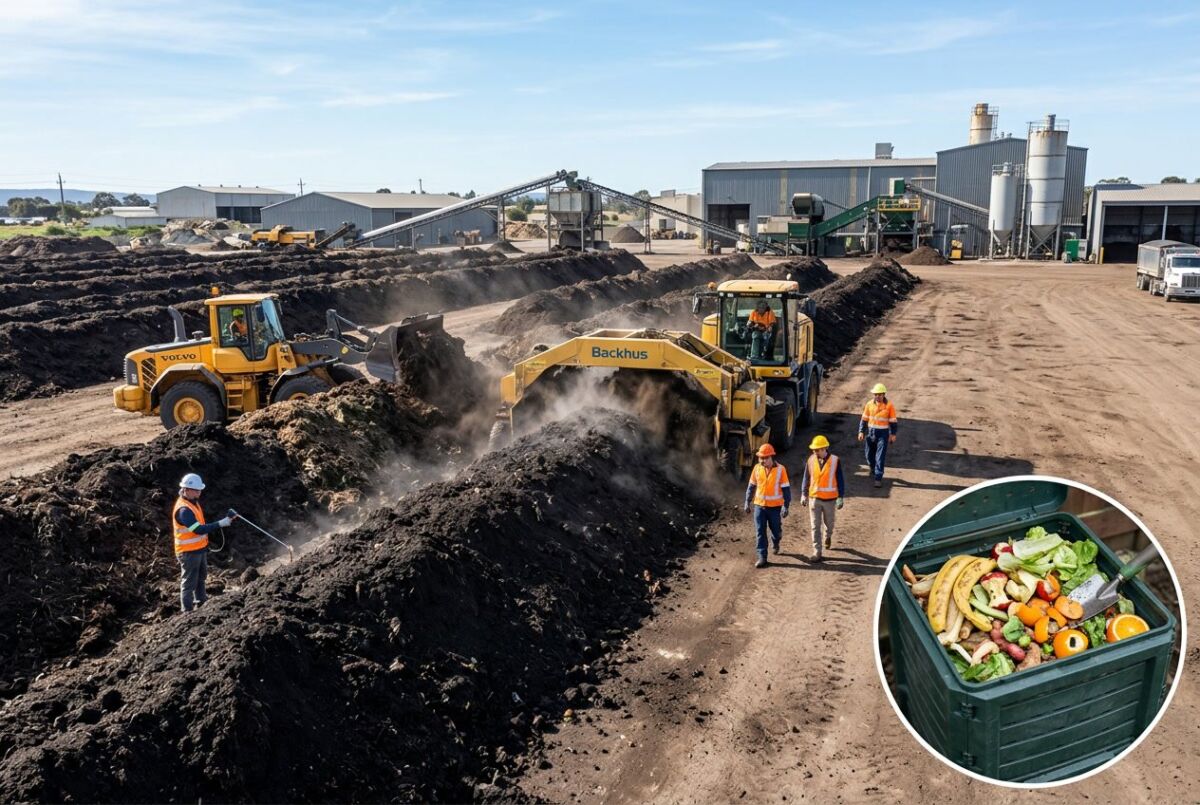
Industrial composting facilities crank up the heat and use heavy-duty equipment to break down organic waste on a massive scale. These places can handle stuff your backyard pile can’t touch, and they pump out finished compost in weeks—not months.
Types of Industrial Composting Facilities
Commercial composting facilities usually pick from three main methods, each with its own quirks and costs.
- Windrow composting lines up organic material in long outdoor rows. Machines turn these piles to pump in oxygen and keep temps around 55-65°C. It works great for yard clippings and food scraps, but you need a lot of land.
- Aerated static piles push air through stationary heaps using pipes. You’ll see this at mid-sized facilities since it doesn’t hog as much space as windrows. The airflow keeps things hot without needing big machines to turn the piles.
- In-vessel composting? That’s where the magic happens inside sealed drums or tunnels. Industrial operations using this method break stuff down the fastest. The closed setup gives operators total control over heat, moisture, and oxygen.
A bunch of cities now run FOGO (Food Organics and Garden Organics) programs that collect mixed organic waste for commercial composting.
Compostable Materials Accepted
Industrial facilities take way more materials than your home bin ever could.
Commercial composting facilities process all the classic kitchen scraps, yard waste, and most certified compostable packaging. They can even handle the tricky stuff, like:
- Meat, fish, dairy
- Bones and shells
- Certified compostable containers and utensils
- Compostable bioplastics (PLA)
- Greasy or oily paper
- Tons of mixed food waste
But, facilities still reject some things—pet waste, treated wood, and regular plastics are usually a no-go, even if the label says “biodegradable.” Always check your local composting rules before tossing stuff in.
Processing Advantages and Limitations
Industrial composting breaks things down faster and more thoroughly than home piles. High temps kill off pathogens and weed seeds that would survive in your backyard. You get clean, stable compost in just 8-12 weeks—home systems can take half a year or more.
Why industrial composting rocks:
- Handles stuff that’s unsafe at home
- Processes big volumes quickly
- Kills off nasty germs and weed seeds
- Cuts down on landfill methane
But there are downsides:
- You need access to a facility
- Sorting materials is a must
- Some regions don’t have composting at all
- Trucking waste adds to emissions
- Facilities might charge you to drop stuff off
Your results really depend on whether you have commercial composting nearby. Even the best compostable packaging won’t help if you can’t get it to the right place.
Materials and Products: What Breaks Down Where?
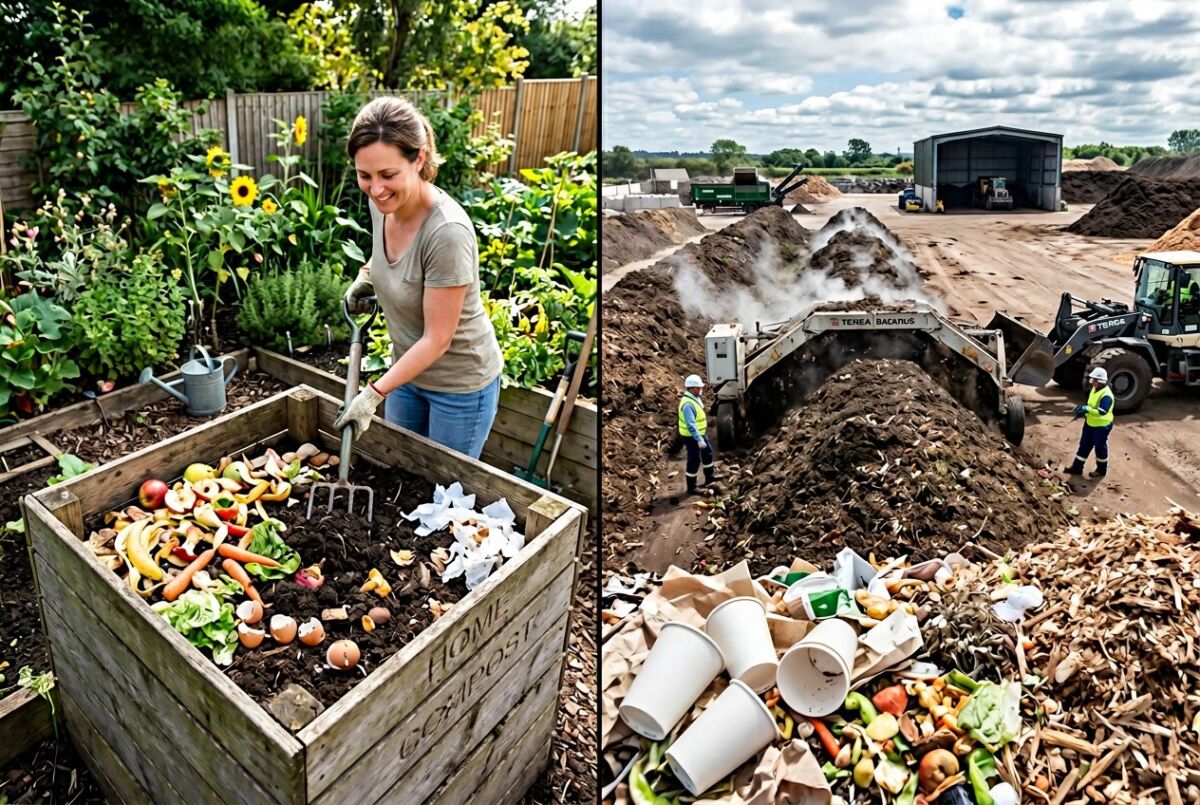
Not all compostable stuff is created equal. Certified compostable plastics and packaging often need the muscle of industrial facilities, but some things will break down in your backyard.
Compostable Packaging and Bioplastics
Bioplastics like polylactic acid (PLA) need industrial conditions to break down. PLA shows up in compostable cups, cutlery, and food containers. These need 55-70°C (131-160°F)—your backyard pile just can’t get that hot.
CPLA (crystallized PLA) and PBAT (polybutylene adipate terephthalate) are in the same boat—they need industrial composters. PHA (polyhydroxyalkanoates) is a bit different; some types break down at home, but you really need to check certifications.
Home compostable packaging is a thing, but it’s made differently. Think wheat straw fiber, plain paper, or special bioplastics. These guys break down at 20-30°C (68-86°F), so your backyard bin can handle them.
Certified Compostable Plastics and Bags
Always look for certifications before tossing compostable products. The OK compost HOME logo from TÜV Austria means a product will break down at home in under a year. Australia’s AS 5810-2010 and Europe’s DIN-Geprüft Home Compostable are similar.
Industrial compostable packaging has its own labels. In the U.S., BPI (Biodegradable Products Institute) sets the standard, while Europe uses EN 13432. Those labels mean the product will break down in commercial composters—not necessarily in your backyard.
Always check what certification a product has. If it just says “compostable” without saying home or industrial, it probably needs commercial processing. If you don’t have access to a facility, it won’t break down in your home pile or landfill.
Product Examples and Case Studies
Here’s how common compostable products stack up:
Needs Industrial Composting:
- PLA cups and lids from your favorite coffee shop
- CPLA cutlery
- Compostable take-out boxes
- Greasy pizza boxes
- Most compostable straws
Home Compostable:
- Plain cardboard and paper bags
- Wheat straw plates
- Some certified bioplastic bags
- Uncoated paper packaging
- Plant-based containers with OK compost HOME logo
Food-soiled paper products like napkins and paper towels can go to industrial facilities, but they’ll take longer at home. Always double-check with your local composter before adding new stuff. Many commercial composters actually turn down some certified compostable plastics because of processing issues or contamination.
Compostability Standards and Certifications
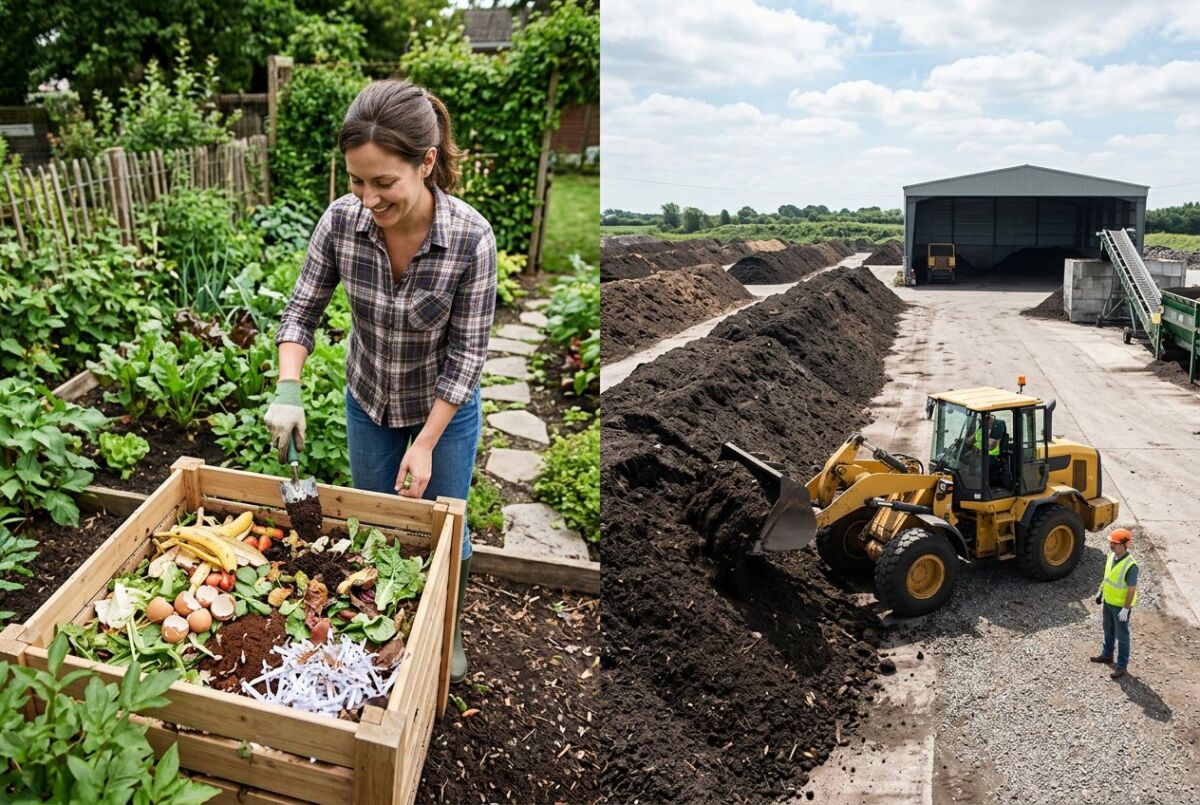
Certifications prove that products will break down safely within a certain time and under specific conditions. The standards change depending on whether you’re composting at home or sending stuff to an industrial facility. And, honestly, the rules aren’t the same everywhere.
Global Home Compostable Certifications
OK compost HOME from TÜV Austria is the big one in the U.S. and Europe. It guarantees that materials will break down in your backyard bin in under a year, at 20-30°C (68-86°F).
Australia uses AS 5810-2010. Products with this mark have to biodegrade at home and leave nothing nasty behind.
DIN CERTCO runs the DIN-Geprüft Home Compostable certification in Europe and a few other places. It checks that stuff breaks down at typical garden temperatures.
Right now, BPI (Biodegradable Products Institute) in North America doesn’t certify home compostables. ASTM home compostability standards aren’t a thing in the U.S. yet, but they’re working on it.
Industrial Compostable Standards
ASTM D6400 and EN 13432 are the main industrial standards. ASTM D6400 is for North America, EN 13432 is for Europe.
These standards say products have to:
- Disintegrate in 12 weeks at 55-70°C in a commercial composter
- Biodegrade at least 90% in 180 days
- Leave no toxic stuff behind
- Break down into bits smaller than 2mm
BPI certification in the U.S. means a product meets ASTM D6400. BPI lines up with OK compost INDUSTRIAL in Europe—they both mean industrial composting only.
Australia’s standard is AS 4736. The Australasian Bioplastics Association (ABA) guides businesses through the process there.
How to Identify Certified Compostable Products
Look for certification logos right on the packaging. OK compost HOME is a green seedling with “HOME” written on it. OK compost INDUSTRIAL uses a different seedling.
BPI-certified stuff has the BPI logo and a certification number. You can check that number on the BPI website to see if it’s legit and what type of composting it needs.
If a product just says “compostable” or “biodegradable” without a real certification, it’s not guaranteed to break down anywhere. Those words alone don’t mean much.
Always check your local facility’s accepted materials list. Some places just don’t take certain certified items, either because of their equipment or how long it takes to process them.
The Role of Certification Bodies
Certification bodies test products in labs that mimic real composting. TÜV Austria checks biodegradation speed, heavy metals, and whether the compost hurts plants.
DIN CERTCO does similar testing in Europe and keeps a public list of certified products. They charge for testing and yearly certification.
BPI doesn’t do the testing itself. Instead, they review lab results to make sure products meet ASTM D6400 before giving out certification. Manufacturers have to show proof for everything.
Certification bodies do annual audits and can yank certifications if companies change their formulas without retesting. Always double-check certification before you buy—expired or revoked means it might not break down as promised.
Environmental Impact and Sustainable Choices
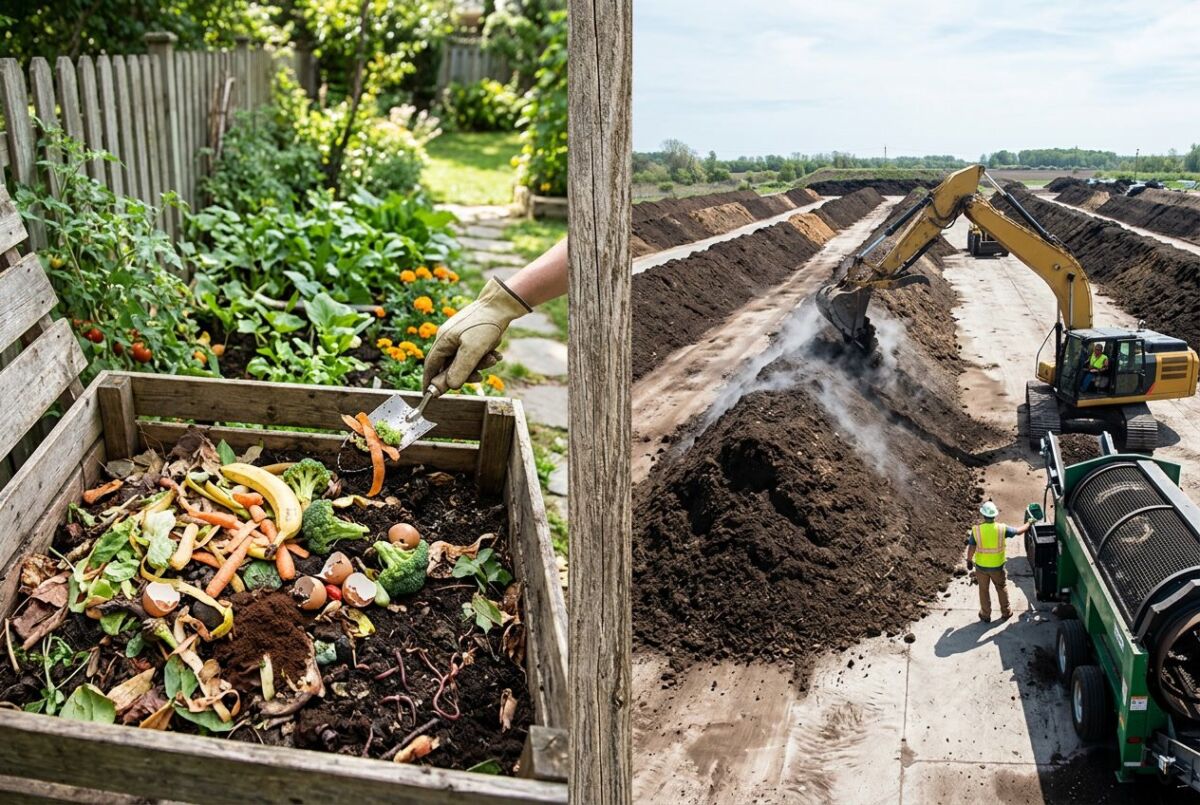
Compostable products can really cut landfill waste and put nutrients back in the soil, but the real environmental payoff depends on having the right disposal options and honest product claims. Whether you go for home or industrial compostable options changes the game for greenhouse gas emissions, soil health, and whether your sustainable packaging actually makes a difference.
End-of-Life and Soil Restoration
When compostable cups break down the right way, they turn into nutrient-rich compost. This stuff boosts soil structure and helps the ground hold onto water.
The process happens in two main stages. First, the cups break apart into little pieces. Then, microbes munch away and turn everything into carbon dioxide, water, and good old biomass.
Industrial composting facilities crank up the heat—usually between 50 and 70°C. That extra warmth speeds up both stages, so your cups usually disappear within 90 days in these controlled environments.
At home, your compost pile doesn’t get nearly as hot. It takes several extra months for things to break down, and you’ll need to keep an eye on the pile to make sure it all finishes composting.
If compostable products end up in a landfill, they miss out on the oxygen and microbes they need to decompose. That pretty much defeats the point of sustainable waste management. Worse, they might even create methane as they break down without air.
Greenwashing and Responsible Claims
Don’t just trust any label that says “compostable.” Make sure the product actually meets real certification standards. Look for BPI (Biodegradable Products Institute) for industrial composting, or TÜV Austria OK compost HOME if you want something for your backyard.
Key certification requirements:
- Industrial compostable: Needs to break down within 12 weeks and biodegrade 90% in 180 days at 58°C.
- Home compostable: Has to break down at regular outdoor temps (20–30°C), no fancy equipment needed.
Some companies toss around words like “eco-friendly” or “biodegradable” without backing it up. That’s classic greenwashing, and it can trick you into thinking you’re helping the planet when maybe you’re not.
Always ask your supplier for real certification documents and test results. If a company claims sustainability, they should tell you exactly how to dispose of their products and let you know if you actually have access to the right composting facilities.
Selecting the Right Compostable Solution
Your best choice really depends on what’s available in your area. If there’s no composting facility nearby, recyclable materials might actually be better than compostables that just end up in a landfill.
Consider these questions before you decide:
- Does your city actually collect compostable waste for industrial processing?
- Do you have a home compost system that you keep active?
- Can your customers get rid of compostable products the right way?
Industrial compostables make sense for big foodservice spots in cities with solid composting programs. Home compostable options work better for small businesses or folks who compost in their backyard.
Keep track of your disposal partners and facility certifications. If you say your products are compostable, you really should give clear instructions and make sure facilities exist close enough to your business.
Frequently Asked Questions
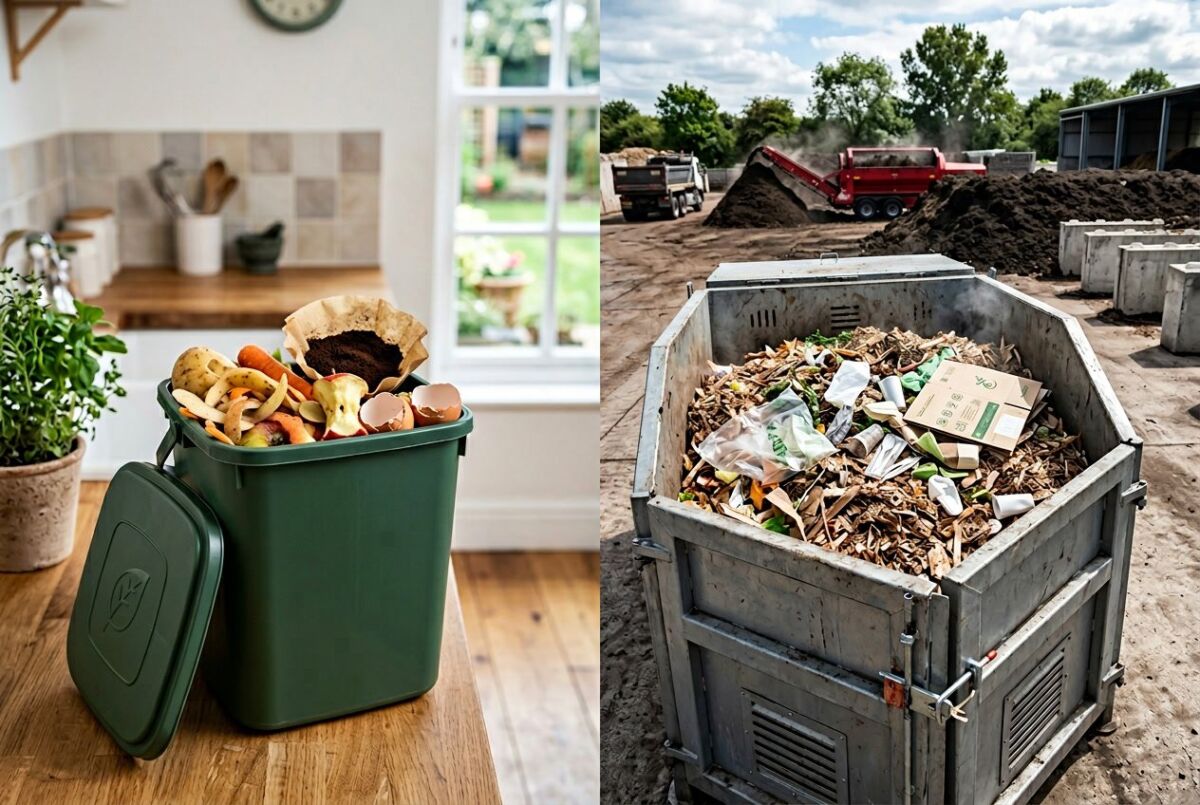
Home and industrial compostable materials need different conditions to break down. The costs, where you can toss them, and what’s on the label all change depending on which one you pick.
What are the key differences between home compostable and industrial compostable materials?
Home composting runs cooler than industrial setups. Backyard piles usually stay under 140°F, while industrial facilities can hit 130–160°F or even higher.
Industrial composting handles trickier stuff, like meat scraps, dairy, and some bioplastics that just won’t break down at home.
Timing’s another big difference. A home pile might take a year or more, while industrial sites can pump out finished compost in just a few months.
Industrial sites have to follow strict rules. They use special gear to control air, moisture, and temperature—stuff you probably don’t have in your backyard.
Can items labeled commercially compostable be composted at home, and what are the requirements?
Most “commercially compostable” products won’t break down in your backyard bin. Compostable packaging needs those hot industrial temps to really decompose. Look for a “Home Compostable” certification on the label. If it’s missing, you’ll need an industrial composting setup. Home compostable items have to break down within 12 months at much lower temperatures. They also can’t leave behind any toxic gunk or microplastics. If you try to compost industrial-grade stuff at home, it might just sit there for years. That can attract pests and make your pile smell pretty bad.
How does the cost compare when choosing between home compostable and industrial compostable options?
Home compostable products usually cost more to make. They have to meet tougher standards since they need to break down at lower temps. Industrial compostable items are generally cheaper. Manufacturers can use materials that only break down in high heat. Don’t forget about disposal costs. Once you’ve set up your home compost bin, it’s basically free. Industrial composting might mean paying for collection services. Some cities include commercial composting in their waste pickup. Others charge extra, or you might have to track down a private facility.
Where can one find facilities for industrial or commercial composting?
Start by calling your local waste management folks. Lots of cities now have curbside pickup for compostables. The Biodegradable Products Institute has a handy online tool to find certified industrial composting spots by zip code. Farmers markets and community gardens occasionally take compostable waste. Give them a call first to see what they accept and when you can drop stuff off. Private composting companies are popping up too. They might charge a monthly fee, but they often take more types of materials than city programs.
What does it mean when a product is labeled as 100% home compostable?
If something’s labeled 100% home compostable, every part of it—inks, glues, coatings—breaks down in a backyard pile. Certification bodies like TUV Austria or the Biodegradable Products Institute check that these products decompose within 12 months at normal outdoor temps. Still, pay attention to what you’re tossing in your pile. Some home compostables work better if you keep your pile active and turn it now and then. The label doesn’t mean it breaks down overnight. You’ll still need to keep things moist and mix in a good balance of green and brown materials.
Are commercially compostable products also recyclable, and how should they be properly disposed of?
Nope, you can’t recycle commercially compostable products in regular recycling bins. Industrial compostable plastics contaminate recycling streams, so you really have to keep them separate. You need to send these items off to an industrial composting facility. Tossing them in the recycling bin can mess up entire batches of recyclables, which nobody wants. If you don’t have access to industrial composting, you might have to throw these items in the trash. Not exactly the greenest move, but hey, it beats ruining recycling systems. Always check your local rules before you toss any compostable product. Some places get pretty specific about what goes in which bin.
Can I put industrial compostable items in my home bin?
No, they will not break down because home bins do not reach the required 130°F+ temperatures.
Are compostable plastics really eco-friendly?
Only if they are disposed of in the correct facility. If industrial compostable plastics end up in a landfill, they act like regular plastic and do not break down.