Hawaiian monk seals are some of the most endangered marine mammals on Earth. Their population sits at about 1,400 individuals, which is honestly not a lot. For decades, entanglement in marine debris—mostly old fishing gear and plastic trash swept in by North Pacific currents—has remained one of the most stubborn and preventable threats to their survival.

A landmark study in Science pulled together more than 40 years of entanglement records and showed that removing massive amounts of debris in the Papahānaumokuākea Marine National Monument dropped seal entanglement rates by up to 71 percent at the most thoroughly cleaned site. That’s not just wishful thinking—it’s solid proof that cleaning up plastic garbage in monk seal habitat actually saves lives.
Researchers documented 437 entanglement incidents involving Hawaiian monk seals in the Northwestern Hawaiian Islands between 1974 and 2022. Since 1999, NOAA Fisheries and partners have hauled away hundreds of metric tons of ocean plastics from beaches, reefs, and lagoons all across the archipelago. Still, every year more than 50 metric tons of plastic fishing gear wash up on these remote islands, so there’s a long way to go.
This article digs into what entanglement looks like, where the risks pile up, what the long-term data really say, and how cleanup efforts have changed things for this critically endangered species.
Key Takeaways
- Large-scale marine debris removal in the Northwestern Hawaiian Islands slashed Hawaiian monk seal entanglement rates at five of six monitored sites, with Pearl and Hermes Reef seeing a 71 percent drop.
- Seal pups and juveniles get tangled up the most, thanks to their curious nature and smaller size. Ongoing cleanup is crucial for their survival.
- Even with progress, over 50 metric tons of plastic fishing gear still pile up in monk seal habitat every year, so removal and prevention remain urgent.
What Entanglement Looks Like And Why It Is Dangerous

Entanglement happens when a seal gets wrapped, snagged, or looped in debris it finds on land or in the water. Almost every time, we’re talking about human-made stuff. Injuries can be minor scrapes or, in the worst cases, fatal constriction or drowning.
Common Materials That Trap Seals
Almost all Hawaiian monk seal entanglements involve old fishing gear. We’re talking abandoned or lost nets, monofilament line, and rope bits that float across the North Pacific until currents dump them in Hawaiian waters.
Researchers have also found eel cones (those little funnel-shaped traps), plastic packing bands, and synthetic loops or rings. These things don’t break down and can stick around in the ocean for years.
Papahānaumokuākea Marine National Monument sits right in a spot where ocean currents converge. So, plastic fishing gear piles up there way more than you’d expect for such a far-off place.
How Injuries, Drowning, And Girdling Scars Occur
When a seal swims through or messes with a loop of netting or line, the stuff can tighten around its neck, body, or flippers. In the water, this can trap the seal and cause it to drown.
On land, as the seal grows, the debris keeps tightening. Over weeks or months, it cuts into the flesh, leaving deep, ring-like wounds called girdling scars. These wounds damage tissue, cut off blood flow, and can get infected.
Even if a seal gets free, the long-term damage can make it harder to find food, escape predators, or even reproduce.
Why Seal Pups And Young Animals Are Especially Vulnerable
Pups and juveniles are super curious. They poke around at anything new, including tangled nets on the seafloor or loops of rope washed up on beaches.
Because they’re smaller, getting loose is much harder if they get caught. A net that an adult could wriggle out of might trap a pup completely.
NOAA’s records show that pups and young seals get tangled way more often, so cleaning up debris near pupping and resting spots is especially important.
Where The Risk Is Highest Across The Hawaiian Archipelago
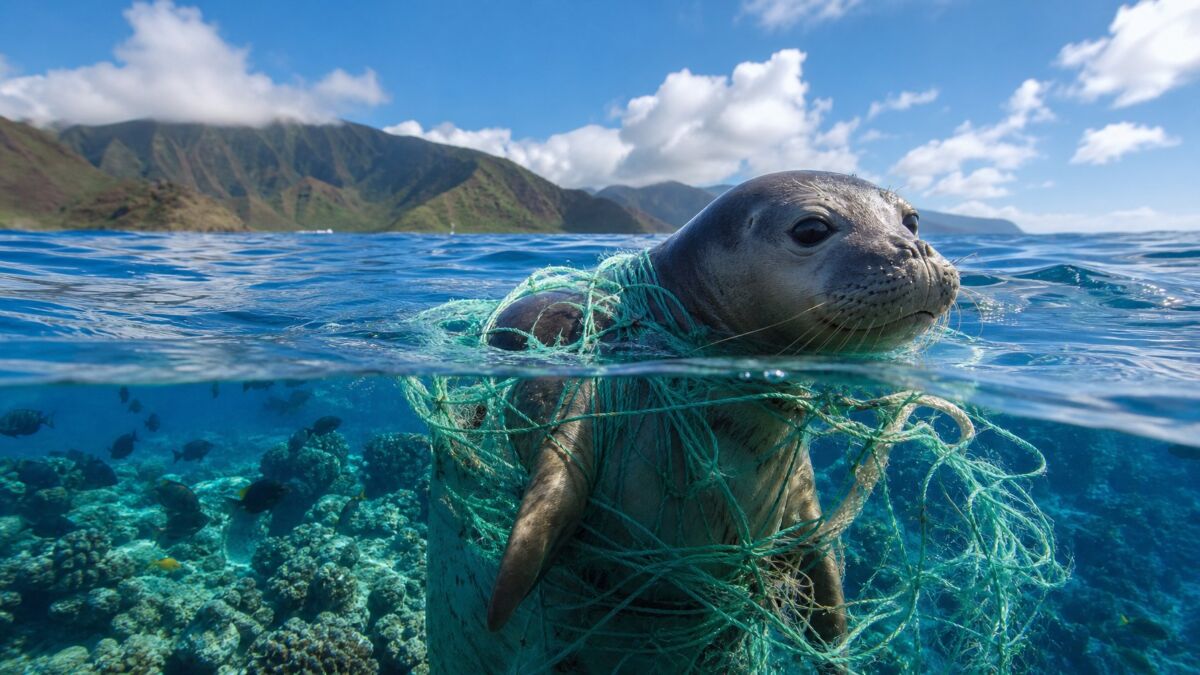
Entanglement risk isn’t spread out evenly. The Northwestern Hawaiian Islands get hit the hardest, while the main Hawaiian Islands have a different (but growing) set of problems tied to people and coastal activity.
Why The Northwestern Hawaiian Islands Are A Major Hotspot
The Northwestern Hawaiian Islands stretch over 1,200 miles of remote ocean northwest of Kauaʻi. This chain includes islands, atolls, and reefs inside the Papahānaumokuākea Marine National Monument—one of the world’s biggest marine protected areas.
Even though these islands are remote, they sit right in the path of North Pacific currents that carry huge amounts of marine debris from fishing fleets and coastal sources in Asia and North America. The result? A constant, relentless flow of plastic fishing gear onto beaches, lagoons, and reefs.
Since most of the monk seal population lives here too, the overlap between debris and seal habitat makes the risk of entanglement especially high.
Key Atolls And Islands In The Entanglement Record
After more than 40 years of monitoring, some spots pop up in the data over and over. Pearl and Hermes Reef (Manawai) stands out for both the highest debris buildup and, in the past, some of the most frequent entanglement incidents. Crews have pulled more debris from Manawai than from the other five main monitoring sites combined.
Other important sites include:
- Kure Atoll—the world’s northernmost coral atoll
- Midway Atoll, which also has big seabird colonies affected by debris
- Laysan Island
- Lisianski Island
- French Frigate Shoals, once home to one of the largest monk seal groups
NOAA has included all these places in its long-term monitoring and cleanup work. Entanglement rates at five of the six sites dropped after large-scale debris removal got underway.
How Risks Differ In The Main Hawaiian Islands
In the main Hawaiian Islands, the story is a bit different. Most debris comes from local sources—nearshore fishing gear, lost recreational equipment, and coastal trash—rather than stuff drifting in from across the ocean.
Monk seals have been showing up in the main islands more often in recent years, which means they’re running into people more. Places like Kaʻu on the Big Island see seals resting on beaches that are also used by locals and tourists.
Here, entanglement risk gets mixed up with other dangers, like boat strikes, swallowing hooks, and even intentional harassment. If you see an entangled or distressed seal in these areas, quick reporting is critical.
What The Long-Term Data Show

The real strength of the monk seal entanglement record is its depth. With more than 40 years of steady observation, researchers can track changes in entanglement risk, link those shifts to specific actions, and spot what’s still missing.
How NOAA And HMSRP Track Incidents
NOAA’s Pacific Islands Fisheries Science Center and the Hawaiian Monk Seal Research Program (HMSRP) have tracked seal populations in the Northwestern Hawaiian Islands since the early 1980s. Field biologists patrol shorelines during annual research camps, watching individual seals and noting any signs of entanglement.
They record the date, location, debris type, and seal’s identity, along with its size and sex. This level of detail lets researchers see trends over decades, not just count incidents.
Old observations from before the formal program started also add to the dataset, with some records going back to 1974.
What Counts As An Incident In The Records
They log an entanglement incident when they spot a seal with marine debris wrapped around any part of its body. This covers both active entanglements—where the debris is still attached—and cases where scars show a seal survived an earlier tangle.
The dataset sorts debris types (net, line, packing bands) and notes if field teams freed the seal. Not every entanglement gets seen as it happens; sometimes researchers only notice scarring patterns during later surveys.
That careful record-keeping makes the HMSRP monk seal entanglement dataset one of the most detailed long-term wildlife entanglement records anywhere.
Interpreting Entanglement Rates And Survival Trends
Raw entanglement counts can be misleading. If incidents drop, it might mean there are fewer seals—not necessarily that each seal is safer. To fix this, researchers created a more reliable way to calculate entanglement rates, adjusting for changes in population size and survey effort over time.
With this method, the Science study showed real drops in per-seal entanglement risk at five of six Northwestern Hawaiian Islands sites after big cleanup efforts started. The data also feed into a larger monk seal survival dataset, tracking how entanglement, predators, disease, and food shape population trends.
Keep in mind, though, the data aren’t perfect. Not every entanglement gets seen. Seals that drown offshore might never be found. So, the recorded numbers probably miss some of the true toll.
How Debris Removal Changed The Outlook
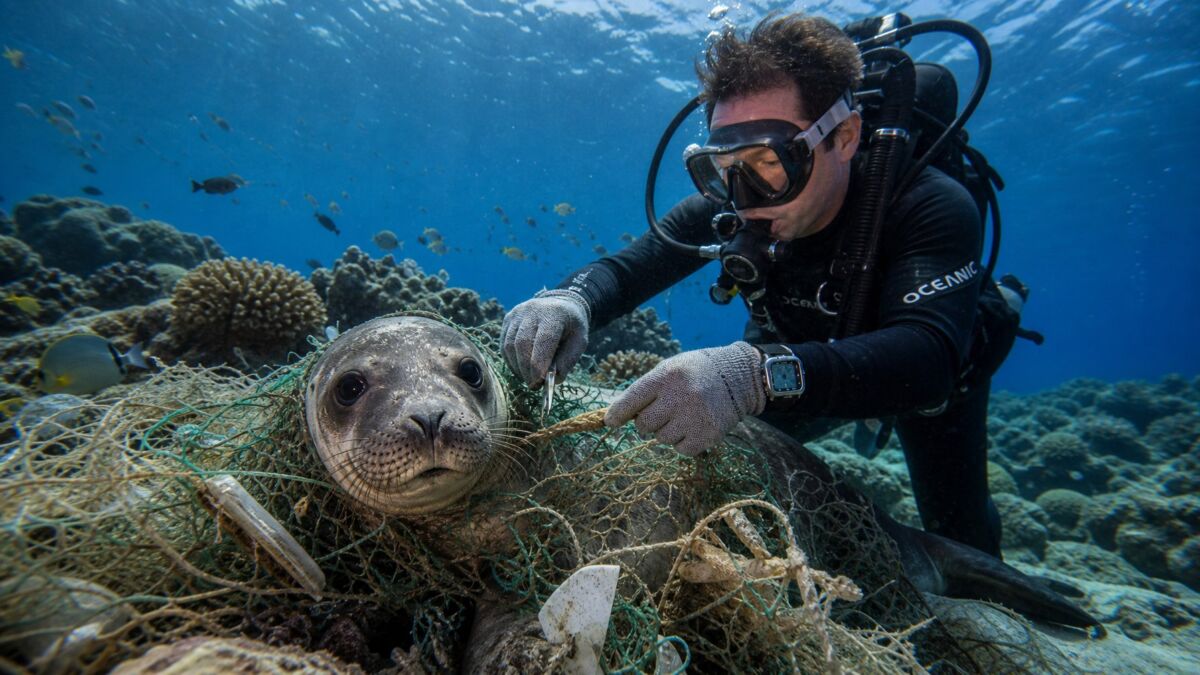
Debris removal in the Papahānaumokuākea Marine National Monument stands out as one of the clearest success stories in marine conservation. The data make it clear: consistent, large-scale cleanup has directly lowered the rate at which Hawaiian monk seals get tangled in plastic fishing gear.
From Beach Cleanups To Large-Scale Reef And Lagoon Work
Back in the 1980s, volunteers started cleaning up island beaches. They hauled away debris, which helped, but it didn’t solve the whole problem. Seals still ran into abandoned fishing gear underwater—especially on reefs and lagoon floors, where the nastiest stuff collects.
By the late 1990s, NOAA scientists wanted to take cleanup efforts deeper, literally. In 1999, they teamed up with other agencies and kicked off a big project to pull marine debris out of reefs and lagoons across the Northwestern Hawaiian Islands.
Over the next 25 years, this project yanked hundreds of metric tons of ocean plastics out of the water. NOAA led the way until the early 2020s, then the Papahānaumokuākea Marine Debris Project—a nonprofit—picked up the baton.
Why Pearl And Hermes Reef Saw A Major Decline
Pearl and Hermes Reef, or Manawai, got the most intense cleanup of all. Crews pulled more plastic from its waters and beaches than from the other five sites combined.
After large-scale removal kicked in, entanglement rates at Manawai dropped by 71 percent. That’s the biggest drop anywhere in the study. It’s pretty convincing proof that taking out enough debris in the right places really does cut seal entanglement.
It’s not just about feeling good—this kind of cleanup actually helps wildlife in a way you can measure.
Why Cleanup Must Continue Despite Progress
Every year, more than 50 metric tons of new plastic fishing gear ends up in the Northwestern Hawaiian Islands, even by conservative estimates. Ocean currents drag this stuff all the way from distant fishing operations and coastal sources across the North Pacific.
If teams stop removing debris, the progress highlighted in the Science study will slip away. Plastic piles up fast, and the danger to monk seals, sea turtles, corals, and fish just comes back.
Several ongoing efforts keep things moving:
- Papahānaumokuākea Marine Debris Project runs annual reef and lagoon cleanups
- NOAA Fisheries field teams disentangle seals during population surveys
- Research partners like the Pacific Islands Fisheries Science Center and Hawaiʻi Sea Grant pitch in
- Advocates push for international fishing gear tracking and less dumping
- Local communities report debris in the main Hawaiian Islands
Cleanup works. The real challenge? Keeping up with the endless flow of trash the ocean keeps tossing back.
Other Threats That Shape Recovery
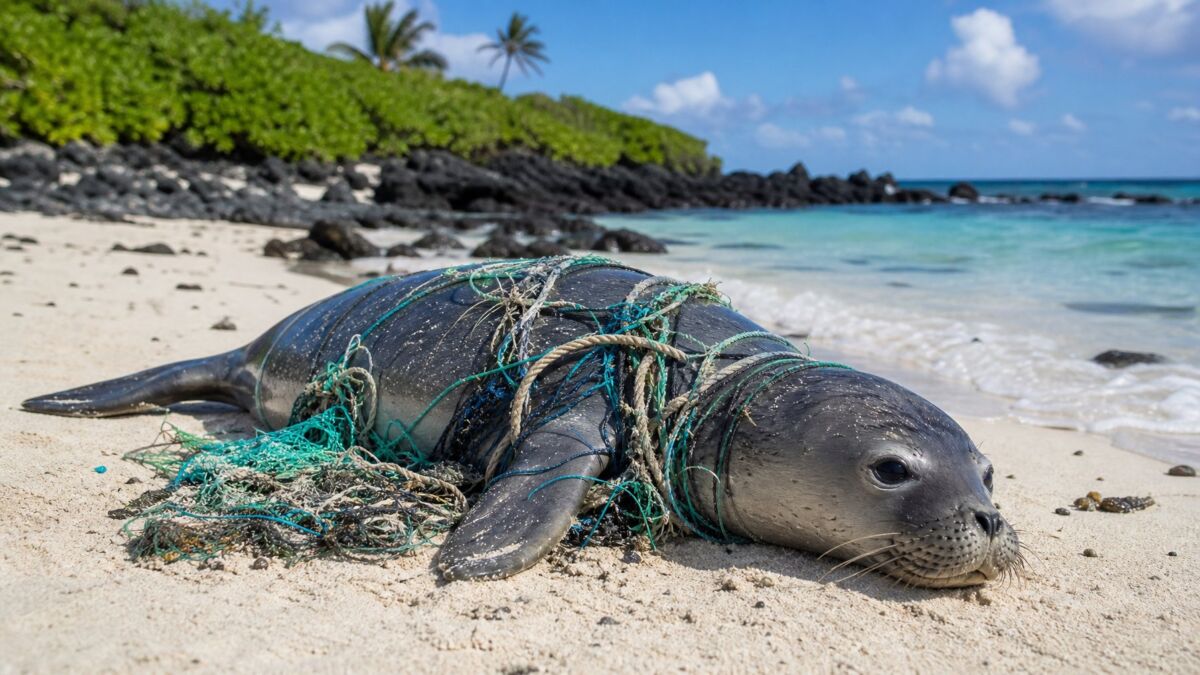
Entanglement is just one part of the threat. Monk seal recovery depends on managing multiple, sometimes overlapping risks that hit different parts of the population in different ways.
Fishery Interactions And Human Disturbance
In the main Hawaiian Islands, monk seals run into nearshore fishing gear more often. They sometimes swallow hooks when they check out baited lines or scavenge around boats.
People can also stress seals. When seals haul out on beaches to rest, nurse pups, or molt, humans who get too close can mess things up—sometimes mothers leave pups or seals move to worse spots. Federal law bans getting too near to Hawaiian monk seals, and breaking the rule comes with hefty penalties.
Disease Risks Including Toxoplasmosis
Toxoplasmosis, caused by the parasite Toxoplasma gondii, is now one of the top threats to monk seals in the main Hawaiian Islands. Cat feces wash into streams, then out to sea, and that’s how the parasite gets to the seals.
The infection moves fast and usually doesn’t show clear symptoms until it’s pretty far along. There aren’t many treatment options. NOAA Fisheries calls toxoplasmosis a priority because it can kill healthy seals and wipe out gains from other conservation work.
Other diseases and parasites hit the population too, but toxoplasmosis is the big one right now.
How Translocation And Rehabilitation Fit Into Conservation
If a young seal faces bad odds at its birth site—maybe not enough food, or too many aggressive males—NOAA and partners sometimes move it somewhere safer. They call this translocation, and it’s helped boost survival in struggling groups.
Rehabilitation matters too. The Marine Mammal Center and NOAA Fisheries rescue, treat, and release injured or starving seals. The U.S. Fish and Wildlife Service protects habitats on the remote islands where lots of seals are born.
These hands-on efforts work alongside debris removal to tackle the many pressures that keep the population small and at risk.
How This Species Fits Into The Wider Monk Seal Story
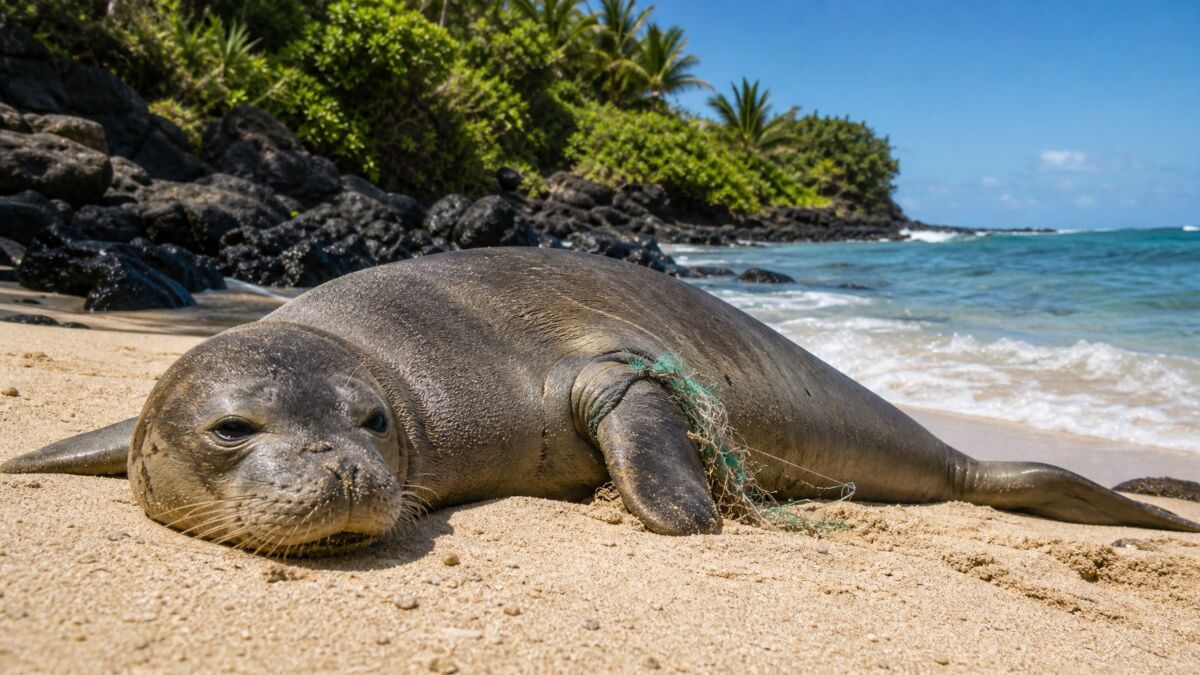
The Hawaiian monk seal belongs to a tiny family—just two living species, and one already gone. That context makes every win, like fewer entanglements, feel even more urgent for the species’ future.
How The Hawaiian Species Differs From The Mediterranean Monk Seal
The Mediterranean monk seal (Monachus monachus) is the Hawaiian monk seal’s closest relative. Both have very low population numbers, but their situations aren’t quite the same.
Mediterranean monk seals live along crowded coasts and have a long history of being hunted. Their comeback has relied a lot on protecting caves and cutting down fishery conflicts in the Mediterranean and eastern Atlantic.
The Hawaiian monk seal (Neomonachus schauinslandi) got reclassified into its own genus in 2014. It’s the world’s only tropical true seal, and it mostly lives in the remote Northwestern Hawaiian Islands, where marine debris and food shortages are bigger threats than direct human harm.
Both species have around 1,400 individuals or maybe fewer. That makes each one among the rarest pinnipeds anywhere.
What The Extinction Of The Caribbean Monk Seal Warns Us About
The Caribbean monk seal (Neomonachus tropicalis) went extinct in 2008. It’s the only seal species to vanish in recent history.
Overhunting, habitat loss, and slow reproduction did them in. The last confirmed sighting was way back in 1952.
That loss is a blunt warning to the two monk seal species left. Small populations with little genetic diversity and slow breeding just can’t handle constant threats. Every time we cut entanglement, disease, or human disturbance, we give these seals a chance the Caribbean monk seal never got.
For Hawaiian monk seals, the takeaway is painfully clear: real actions like debris removal aren’t optional. They’re the line between survival and disappearing for good.
Frequently Asked Questions

What types of marine debris most commonly trap these seals, and where does it usually come from?
Derelict fishing nets, monofilament line, and rope fragments trap most Hawaiian monk seals. Smaller bits like eel cones, plastic bands, and synthetic rings show up too. Most of this junk comes from commercial fishing all over the North Pacific and drifts to Hawaii on ocean currents.
How can I recognize an entanglement incident and report it quickly and safely?
Look for debris wrapped around a seal’s neck, body, or flippers. Sometimes you’ll notice deep grooves or wounds from tight lines. Don’t try to remove anything yourself. Call the NOAA Marine Wildlife Hotline at 1-888-256-9840 or alert local authorities with the seal’s location and what you saw.
What laws and penalties apply to harassing, approaching, or trying to free a seal yourself?
Hawaiian monk seals are protected by the Endangered Species Act and the Marine Mammal Protection Act. If you approach, touch, feed, or try to disentangle a seal without permission, you’re committing a federal crime. Fines can go up to $50,000, and you could face jail time depending on what you did.
Where can I find a live tracker map or recent sightings to avoid disturbing resting seals?
NOAA Fisheries runs a Hawaiian monk seal sighting and reporting system. Some community groups also share recent sightings on social media and local networks. Before you go to the beach, check with NOAA’s regional office or visit their Hawaiian monk seal page to avoid known haul-out spots.
How can I tell the difference between a male and a female and identify an individual from markings?
Researchers spot individual Hawaiian monk seals by looking at natural markings—like scars, body shape, and unique fur patterns. Sometimes, you’ll notice seals with ID tags or even bleach marks.
Males and females look almost the same, though honestly, adult females usually run a bit larger. It’s not easy to get it right, and you really need some training for accurate identification.
NOAA field teams keep detailed photo records so they can track each seal over the years. It’s a lot of work, but it helps them keep tabs on these amazing animals.