
Rainforest animals live in tropical forest ecosystems. These forests cover just 6–7% of land but somehow pack in more than half of Earth’s terrestrial species.
This list jumps between three major rainforest regions: the Amazon Basin in South America, the Congo Basin in Central Africa, and the island forests of Borneo, Sumatra, and Southeast Asia. Every region has its own wild cast of gliders, gluttons, and ambush hunters.
Each animal here gets one adaptation highlighted, plus its range and IUCN Red List status. Gliding mammals and two-foot tongues—none of it makes sense out of context.
Scientists think millions of rainforest species haven’t even been described yet. So, any rainforest animals list is just a sneak peek.
Start at 25 and count down. The last animal? The Americas’ top predator.
25. Sunda Colugo
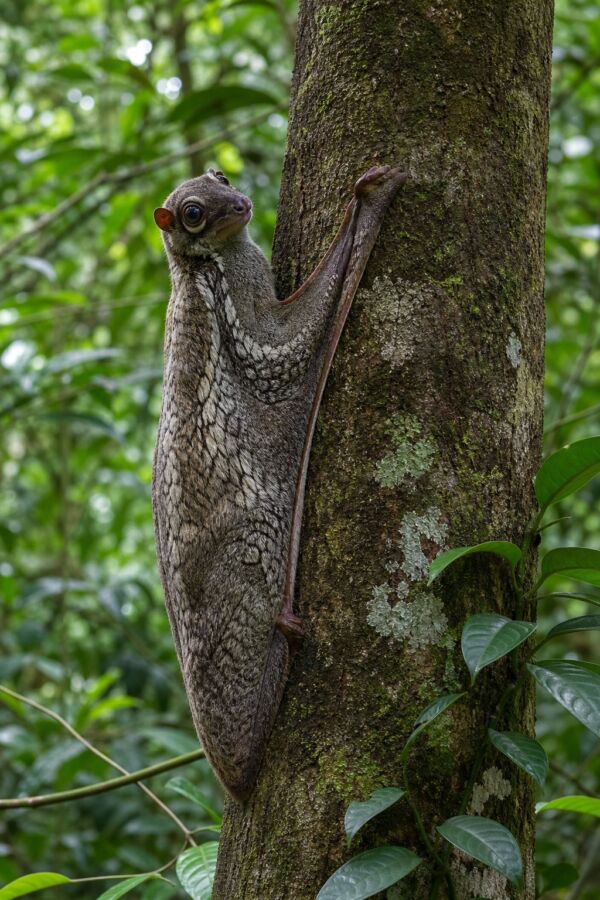
The Sunda colugo (Galeopterus variegatus) glides from tree to tree with a stretchy membrane called a patagium. This “cape” reaches from its neck all the way to its fingertips, toes, and tail tip.
No other mammal has a gliding surface this complete. Range: Borneo, Sumatra, Java, the Malay Peninsula, and Thailand.
IUCN Conservation Status: Least Concern.
One glide can carry a colugo over 100 feet with barely any drop. On the ground, they’re awkward, so they stick to trunks or hang under branches most of the time.
Colugos munch leaves, buds, flowers, and sap, using a long gut to handle tough plants. Moms carry a single baby on their belly, folding the patagium into a kind of hammock.
People call them “flying lemurs,” but that’s not accurate—they aren’t lemurs. Colugos belong to their own order, Dermoptera, and are actually closer to primates.
24. Rhinoceros Hornbill
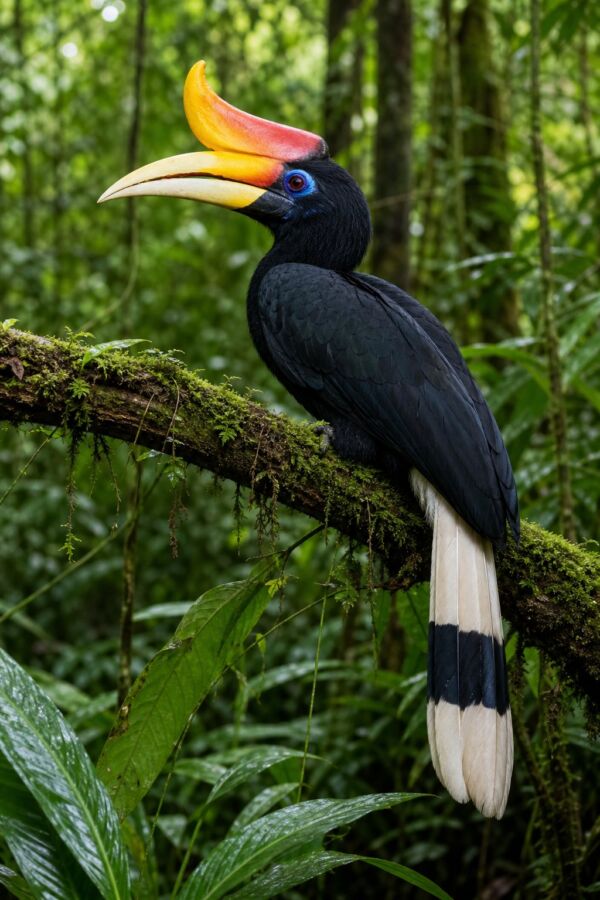
The rhinoceros hornbill (Buceros rhinoceros) sports a big, hollow casque on top of its bill. That odd structure works like a soundbox, blasting the bird’s barking calls across the forest canopy.
Range: Lowland and hill rainforests of Borneo, Sumatra, Java, and the Malay Peninsula.
IUCN Conservation Status: Vulnerable.
Their nesting routine is wild—the female seals herself inside a tree cavity with mud and food scraps, leaving just a slit. The male feeds her and their chick through that gap for about three months.
Hornbills mostly eat figs, so they end up spreading seeds far and wide. They also snack on big lizards, insects, and even small birds.
They rely on giant old-growth trees for nest holes. That’s why logging is such a threat for them.
23. Malayan Tapir
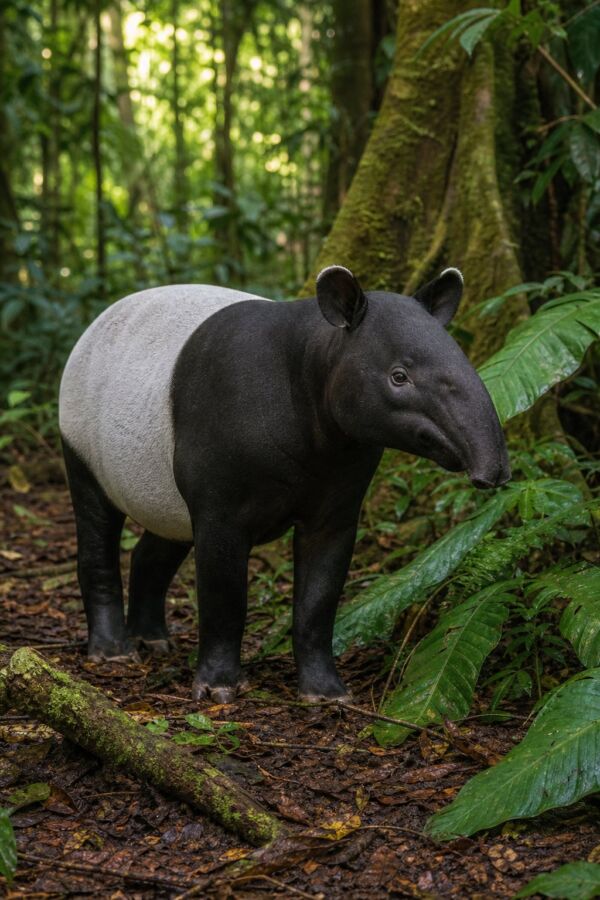
The Malayan tapir (Tapirus indicus) is the biggest tapir, tipping the scales at about 700 pounds. Its black-and-white pattern looks flashy, but under moonlight, it actually hides the animal’s outline.
Range: Peninsular Malaysia, southern Thailand, Myanmar, and Sumatra.
IUCN Conservation Status: Endangered.
With a short, flexible proboscis, tapirs grab leaves and shoots easily. They swim well and even use their snout as a snorkel, sometimes strolling along stream bottoms to dodge predators.
Tapirs chow down on over 100 plant species and pass seeds intact, so they’re basically forest gardeners. Tigers are their main threat in the wild.
Tapir calves show up with stripes and spots—think watermelon vibes—which fade away after six months or so.
22. Sunda Clouded Leopard
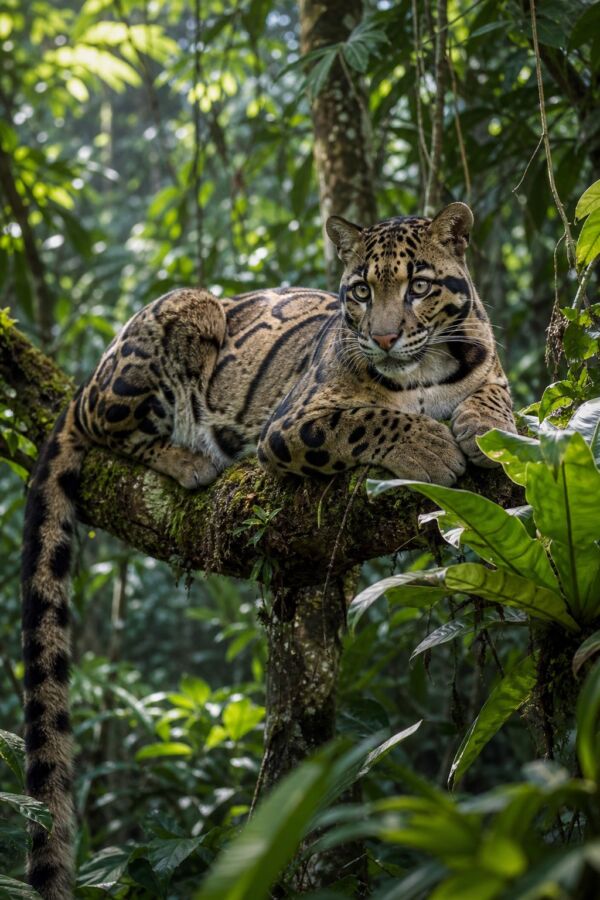
The Sunda clouded leopard (Neofelis diardi) is Borneo’s top predator, weighing in between 25 and 55 pounds. Scientists only recognized it as a separate species from the mainland clouded leopard in 2006, thanks to genetics and coat patterns.
Range: Borneo and Sumatra.
IUCN Conservation Status: Vulnerable.
This cat has the longest canine teeth compared to its skull size of any living feline. Flexible ankle joints and a tail nearly as long as its body help it climb down trees headfirst and even hang by its back feet.
It hunts bearded pigs, mouse deer, monkeys, porcupines, and birds. Camera traps usually catch it moving around at dawn and dusk.
Sunda clouded leopards have darker, smaller cloud-shaped rosettes than their mainland cousins, and no tiger-like neck stripes on Bornean animals.
21. Sumatran Orangutan
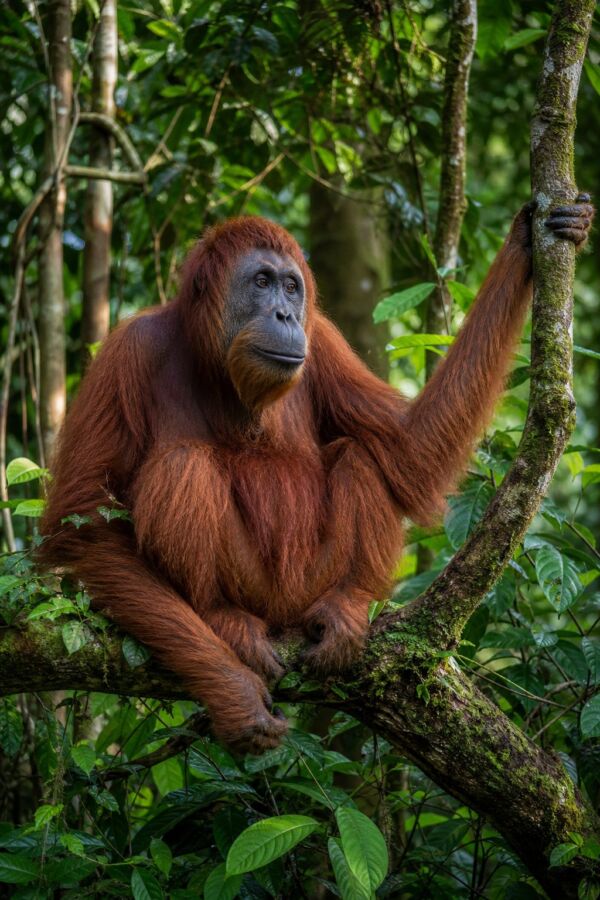
The Sumatran orangutan (Pongo abelii) is the most tree-loving great ape. It almost never comes down to the ground, and its arms can stretch out to 7 feet—longer than its body.
Range: Northern Sumatra, mostly in the Leuser Ecosystem of Aceh and North Sumatra.
IUCN Conservation Status: Critically Endangered.
Females give birth only once every eight or nine years, which is the slowest rate of any mammal. That means populations bounce back painfully slowly.
Sumatran orangutans use tools more than their Bornean relatives, poking sticks into spiky Neesia fruit to fish out seeds and insects. Some even use leaves as napkins or gloves.
Fruit, especially figs, is their main food. Since they swallow and spread big seeds, orangutans actually shape which trees grow where—they’re true “gardeners of the forest.”
20. Sumatran Tiger
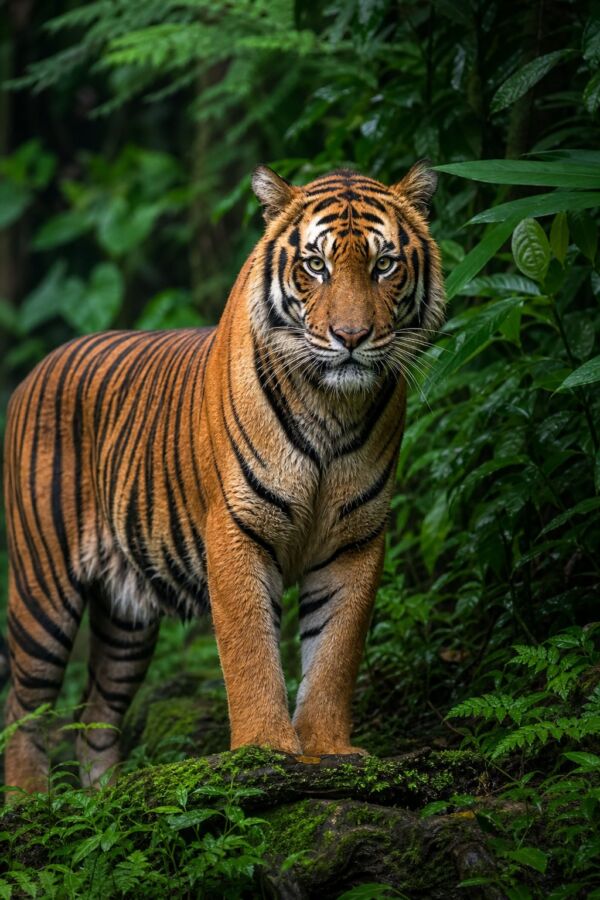
The Sumatran tiger (Panthera tigris sumatrae) is the smallest tiger left, with males weighing around 265 pounds. Its narrow, close stripes and dark orange coat blend into thick, shadowy forests.
Range: The island of Sumatra, Indonesia, from lowland to montane forest.
IUCN Conservation Status: Critically Endangered.
Webbing between its toes makes the Sumatran tiger a strong swimmer, and it’ll chase prey right into the water. It hunts alone, mostly at night, going after wild boar, sambar deer, muntjac, and tapir calves.
There are probably only 400 to 600 left in the wild, scattered in shrinking forest patches. Palm oil and pulpwood plantations have wiped out big chunks of their habitat, and snares are an everyday risk.
Males have a fuller neck ruff than other tiger subspecies. Genetic studies show Sumatran tigers have been cut off from the mainland for thousands of years.
19. African Grey Parrot

The African grey parrot (Psittacus erithacus) is the best-studied talking bird out there. One famous bird, Alex, learned to name over 100 objects, colors, and shapes.
Range: Lowland rainforest across the Congo Basin and West Africa, from Kenya to Côte d’Ivoire.
IUCN Conservation Status: Endangered.
They’re easy to spot with their grey feathers, white face mask, and bright scarlet tail. Huge flocks roost together but split into pairs to search for oil palm fruit, seeds, and nuts.
The pet trade hammered wild populations, so in 2016, the species landed on CITES Appendix I—no more commercial international trade in wild birds.
With powerful bills, they crack palm nuts most birds can’t touch. Parrots also nibble on clay and soil, probably for minerals.
18. Mandrill
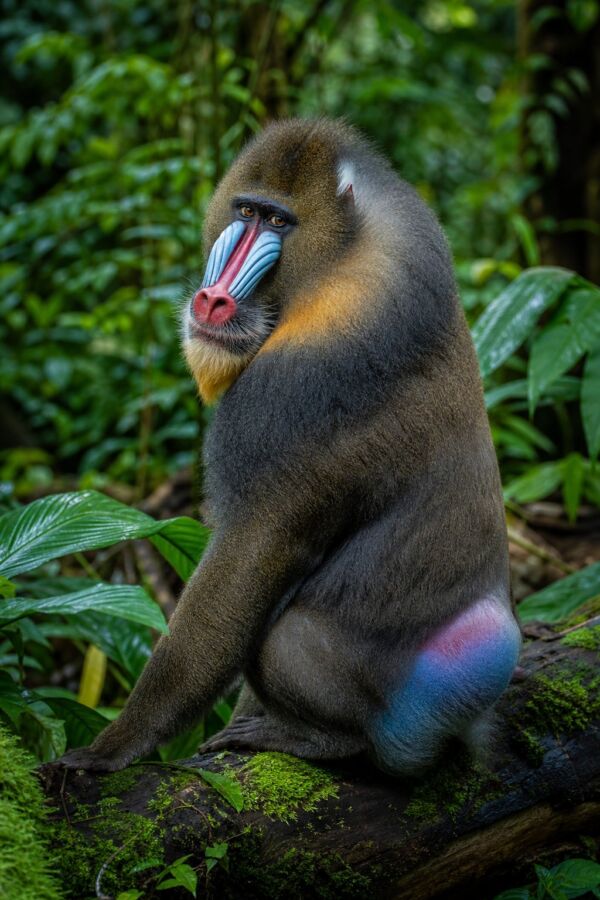
The mandrill (Mandrillus sphinx) is the world’s biggest monkey. Top males can hit 70 pounds, and their red-and-blue faces and rumps get brighter with higher rank and more testosterone.
Range: Rainforests of southern Cameroon, Gabon, Equatorial Guinea, and the Republic of the Congo.
IUCN Conservation Status: Vulnerable.
Mandrills form the largest groups of any primate—researchers have seen more than 1,000 moving together through Gabon’s forests. That’s just wild to imagine.
They mostly forage on the ground, stuffing fruit, seeds, insects, and small animals into cheek pouches while they keep searching. At night, they sleep up in the trees.
Males have long canine teeth, up to 2.5 inches, which they flash in big yawns to threaten rivals. Bushmeat hunting and new logging roads are their biggest threats now.
17. Okapi
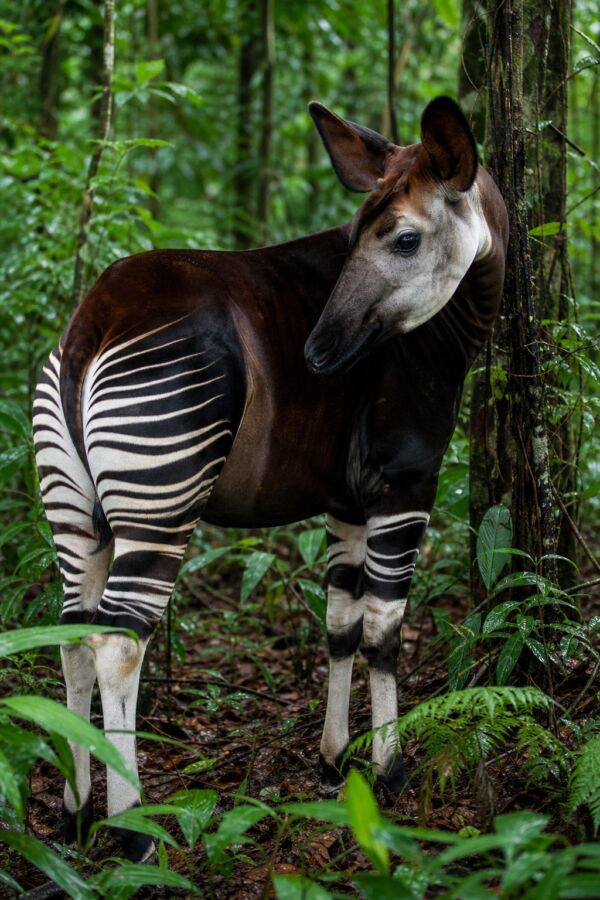
The okapi (Okapia johnstoni) is the giraffe’s only living relative. Males have ossicone-like horns and both sexes share those weird lobed canine teeth.
Scientists outside Africa didn’t even know about okapis until 1901. Wild, right?
Range: Endemic to the rainforests of the northern and eastern Democratic Republic of the Congo.
IUCN Conservation Status: Endangered.
Horizontal white stripes on their hindquarters and legs break up their shape in the dappled light of the understory. Calves actually follow those stripes to keep track of mom.
Their prehensile, blue-black tongue—about 14 inches long—strips leaves from branches. Okapis can even groom their own eyelids and ears with it, which is honestly impressive.
They browse more than 100 plant species, plus clay and charcoal for minerals. Okapis live solitary, secretive lives, so researchers mostly rely on camera traps and dung surveys to count them.
Armed conflict, mining, and snaring really threaten the Okapi Wildlife Reserve population.
16. Western Lowland Gorilla
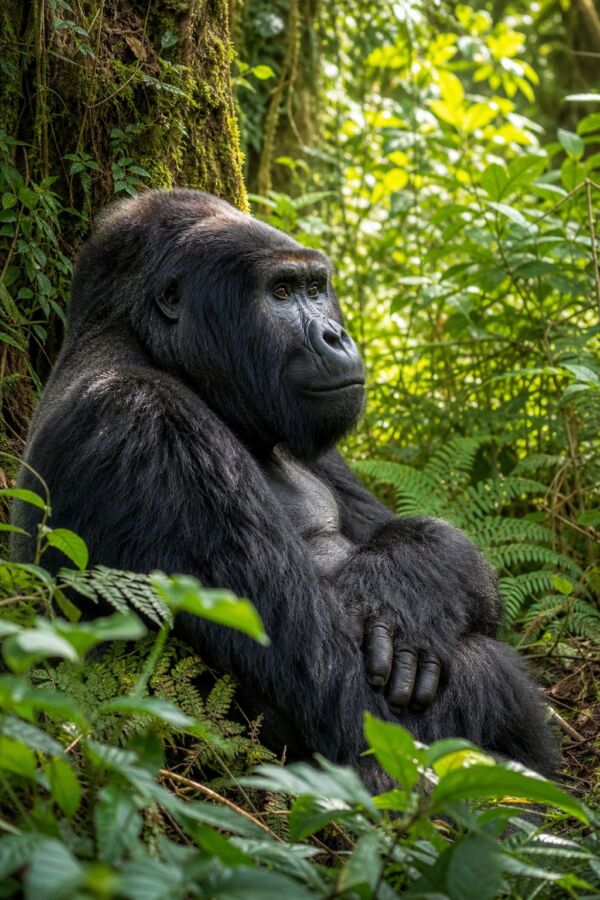
The western lowland gorilla (Gorilla gorilla gorilla) is the most common gorilla subspecies and the one you’ll see at most zoos. Silverback males stand about 5.5 feet tall and can weigh up to 400 pounds.
Range: Cameroon, Gabon, Equatorial Guinea, the Republic of the Congo, the Central African Republic, and Angola’s Cabinda.
IUCN Conservation Status: Critically Endangered.
Groups of 5 to 15 travel together, usually led by one silverback and several females with their young. Every gorilla over three years old builds a new nest from bent vegetation each night—no shortcuts.
They eat a lot of fruit, plus leaves, pith, and even termites sometimes. Gorillas swallow seeds and roam widely, so they help move plant genes all over the Congo Basin.
Ebola outbreaks have killed about a third of gorillas in some areas, adding to the toll from poaching. Some habituated groups now support tourism in Odzala and Dzanga-Sangha.
15. African Forest Elephant
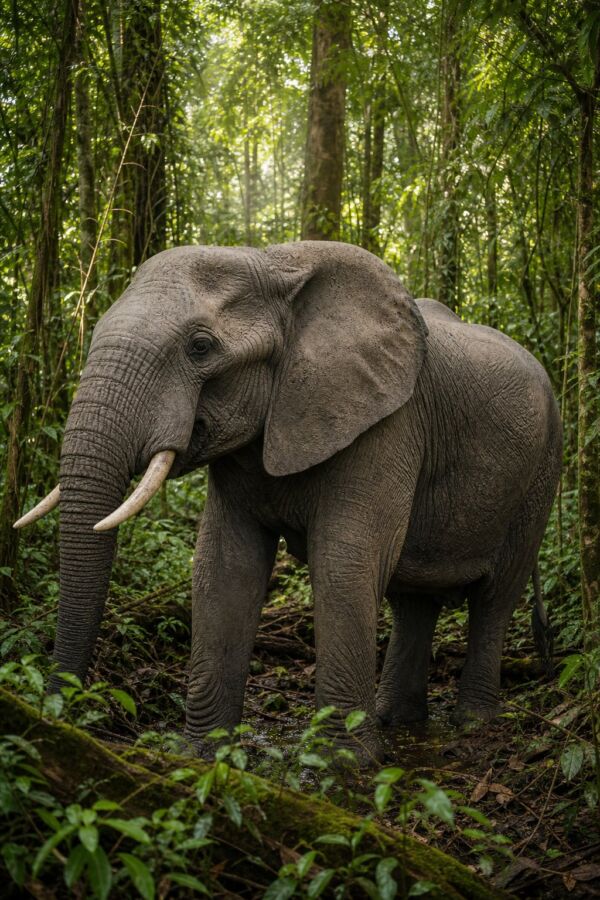
The African forest elephant (Loxodonta cyclotis) was finally recognized as its own species in 2021, separate from the savanna elephant. Forest elephants are shorter—about 8 feet tall—with rounded ears and straight tusks that point down, perfect for weaving through dense jungle.
Range: Congo Basin rainforests, especially Gabon and the Republic of the Congo.
IUCN Conservation Status: Critically Endangered.
These elephants move more large seeds than any other African animal. Forests they browse apparently store more carbon, since the elephants thin out fast-growing stems and help dense hardwoods thrive.
Their trampling creates clearings called bais, where families gather for mineral-rich water and a bit of socializing. Poaching for ivory slashed populations by more than 60% in just a decade.
With calving intervals of five to six years, they just can’t bounce back quickly.
14. Keel-Billed Toucan
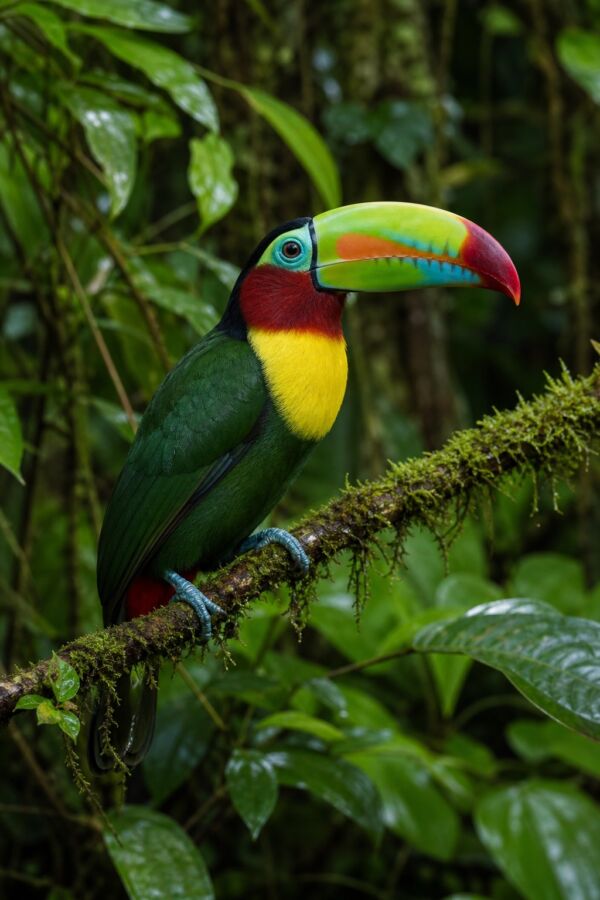
The keel-billed toucan (Ramphastos sulfuratus) sports a bill up to 7.5 inches long, but it barely weighs anything. It’s built from a honeycomb of keratin and hollow bone struts.
Range: Lowland rainforest from southern Mexico through Central America to Colombia and Venezuela.
IUCN Conservation Status: Least Concern, but numbers are dropping as forests disappear.
Their giant bill works like a radiator—toucans flush blood through it to shed heat, adjusting flow as needed. That reach also lets them snag fruit from branch tips too flimsy to perch on.
Toucans raid nests for eggs and nestlings too, and they’ll snap up insects and lizards when they get the chance. They nest in tree cavities, usually ones woodpeckers left behind, since they can’t carve out their own.
At night, toucans tuck their bill over their back and fold the tail forward—looks a bit awkward, honestly.
13. Scarlet Macaw
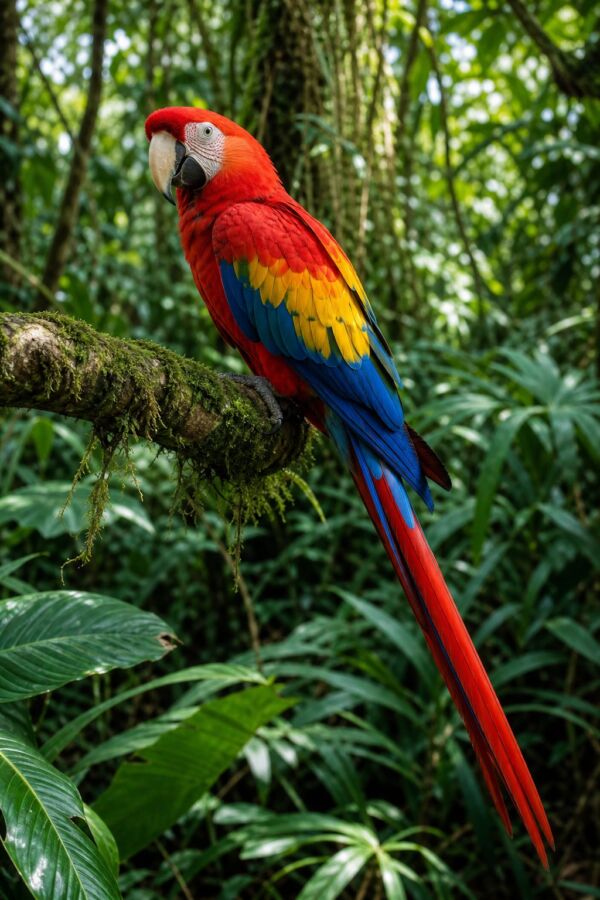
The scarlet macaw (Ara macao) stretches to 3 feet from head to tail tip, most of that in its long, streaming tail feathers. Its red, yellow, and blue plumage somehow blends into the sun-flecked canopy—a bit of a magic trick.
Range: Southern Mexico through Central America into Amazonian Brazil, Peru, and Bolivia.
IUCN Conservation Status: Least Concern globally, though Central American populations are fragmented and locally at risk.
Zygodactyl feet—two toes forward, two back—work like hands for climbing and holding food. Their bill is strong enough to crack Brazil nuts and hard palm seeds.
Pairs bond for life and fly side by side, calling out with harsh, unmistakable squawks. They nest in cavities high up in dead or dying trees.
Scarlet macaws eat unripe seeds that would poison most animals and visit clay licks along Amazonian rivers.
12. Black Howler Monkey
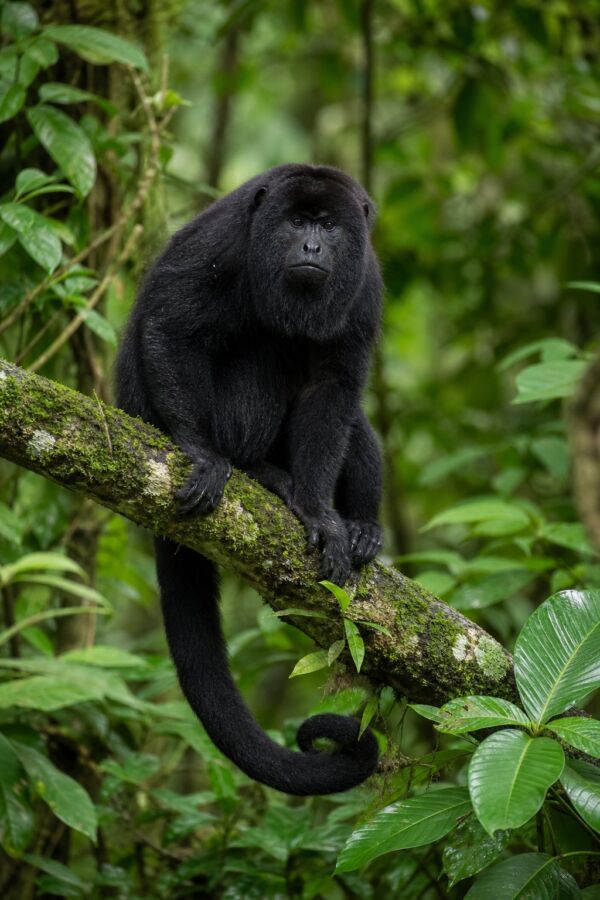
The black howler monkey (Alouatta caraya) can make one of the loudest calls of any land animal—up to 3 miles away. An enlarged, hollow hyoid bone in the throat acts like a natural amplifier.
Range: Northern Argentina, Paraguay, Bolivia, and southern Brazil, usually in gallery forest and rainforest edges.
IUCN Conservation Status: Near Threatened.
This species is strongly dimorphic: adult males turn black, while females and juveniles stay golden-brown. Both sexes use a prehensile tail as a fifth limb.
Leaves make up most of their diet, which is pretty unusual for New World monkeys. Fermenting all that low-energy food takes time, so howlers rest up to 15 hours a day.
Troops of 5 to 10 call at dawn to advertise their territory, not to pick fights. Yellow fever outbreaks have killed thousands of howlers in Brazil and Argentina.
11. Amazonian Manatee
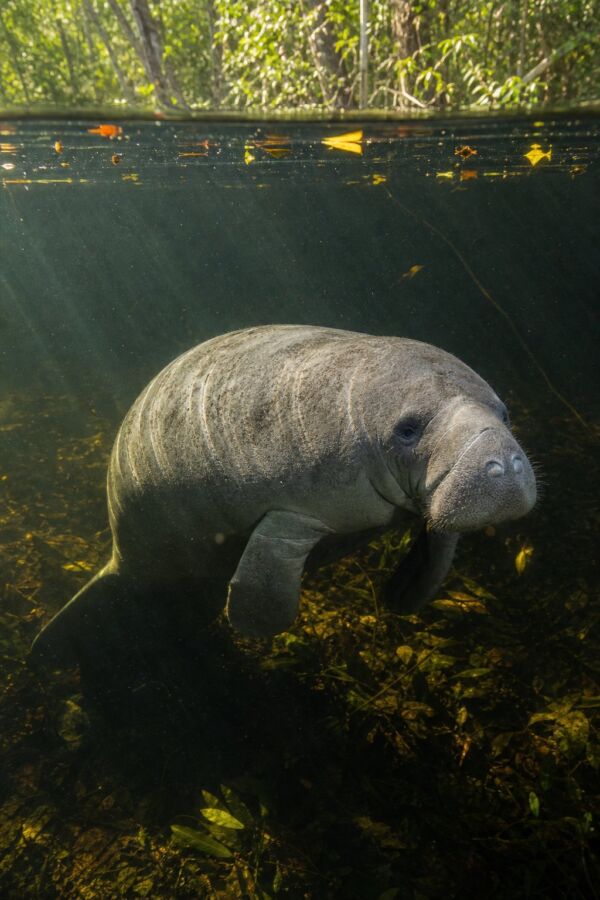
The Amazonian manatee (Trichechus inunguis) is the only sirenian that lives solely in fresh water. It’s also the smallest manatee, maxing out around 9 feet and 900 pounds.
Range: The Amazon River basin across Brazil, Peru, Colombia, and Ecuador.
IUCN Conservation Status: Vulnerable.
A white or pink belly patch and no nails on the flippers set it apart from other manatees. Its scientific name, inunguis, literally means “without nails.”
Adults graze about 8% of their body weight daily in floating grasses and water hyacinth during flood season. When waters drop, manatees crowd into deep lakes and can fast for months, living off their fat reserves.
They constantly replace their molars—so-called marching teeth—to handle abrasive plants. Hunting for meat and hide hit populations hard, and calves still get caught in fishing nets by accident.
10. Giant Anteater
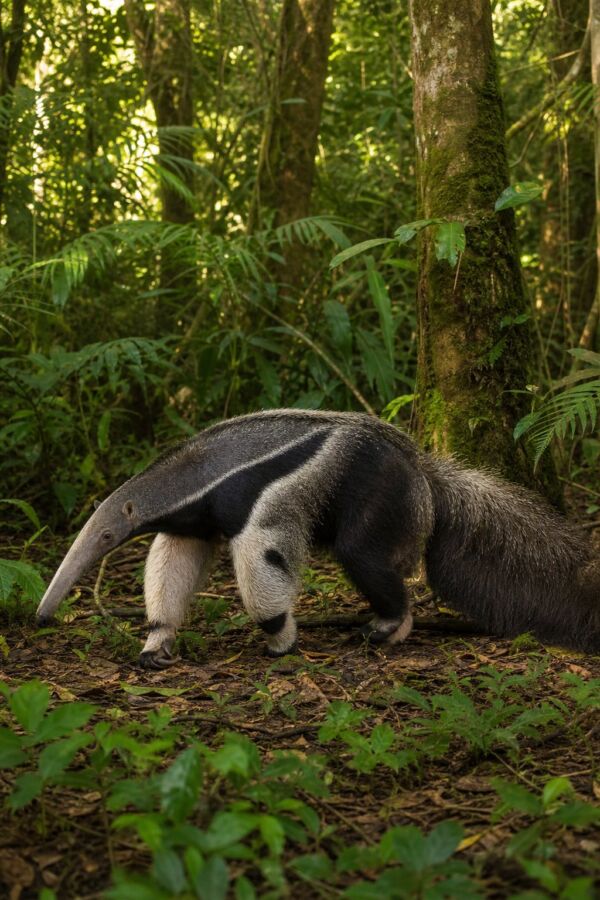
The giant anteater (Myrmecophaga tridactyla) has no teeth at all. Instead, it flicks a 2-foot, sticky tongue up to 150 times a minute, gobbling as many as 30,000 ants and termites in a day.
Range: Central America south through the Amazon to northern Argentina, in rainforest, savanna, and grassland.
IUCN Conservation Status: Vulnerable.
Front claws up to 4 inches long rip open termite mounds. Because those claws are so long, anteaters walk on their knuckles, curling the claws inward.
They raid a colony for about a minute, then move on before soldier ants put up a real fight. That habit means one anteater might visit 200 nests daily.
Body temperature sits near 91°F—pretty low for a mammal, but it suits their low-calorie diet. Mothers carry young on their backs for months, the pup’s stripe lining up with hers for camouflage.
9. Lowland Tapir
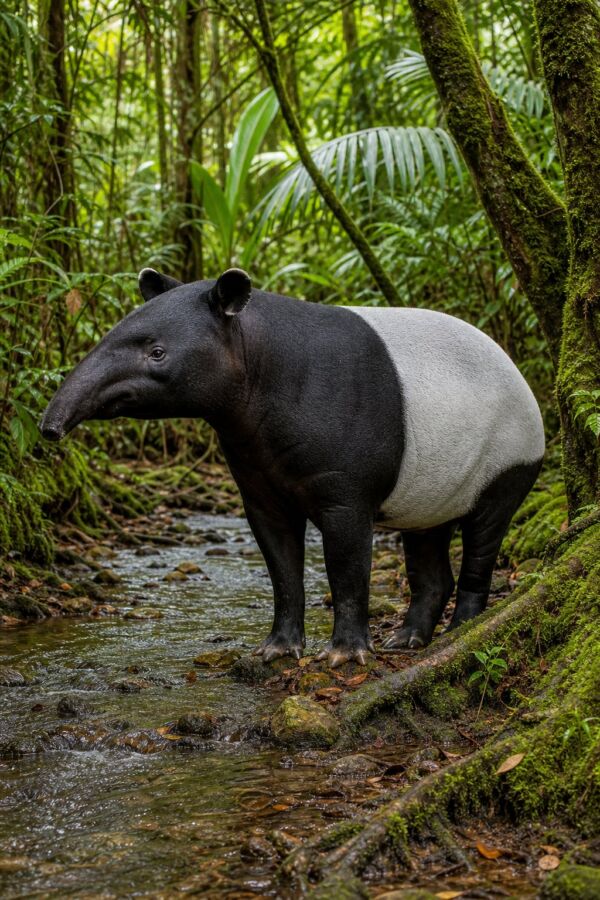
The lowland tapir (Tapirus terrestris) is South America’s largest native land mammal, weighing up to 550 pounds. A stiff mane along the neck might help blunt jaguar bites from above—at least that’s the theory.
Range: The Amazon Basin, Atlantic Forest, Cerrado, and Pantanal, across ten South American countries.
IUCN Conservation Status: Vulnerable.
Tapirs are actually relatives of horses and rhinos, not pigs. Their flexible snout grabs fruit and leaves, and they swim easily, often submerging to graze aquatic plants.
Researchers call them “gardeners of the forest” since they swallow large seeds and drop them in latrines, seeding gaps that other animals miss. A single dung pile can hold thousands of viable seeds.
Reintroduction projects in Brazil’s Atlantic Forest are bringing tapirs back to places they vanished from. Road collisions, hunting, and cattle diseases are still the biggest threats.
8. Giant Otter
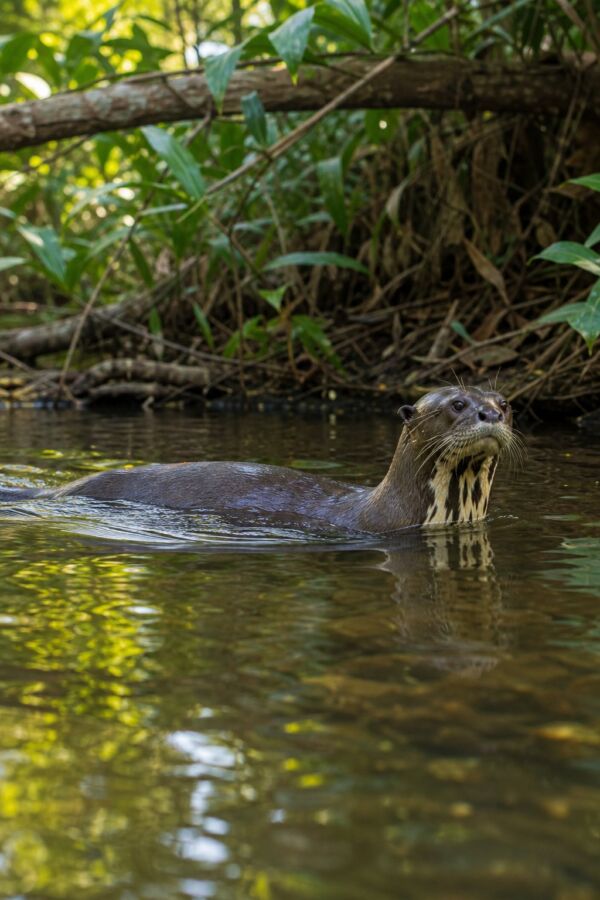
The giant otter (Pteronura brasiliensis) is the longest mustelid, stretching up to 5.6 feet if you count that flattened, paddle-like tail. Brazilians call it ariranha, while in Spanish it’s lobo del río—river wolf just sounds cooler, honestly.
Range: Rivers, oxbow lakes, and flooded forests of the Amazon, Orinoco, and Pantanal.
IUCN Conservation Status: Endangered.
Family groups, usually three to ten strong, hunt together and each adult devours 6 to 9 pounds of fish daily. Catfish, perch, and characins are favorites, but sometimes they take down caimans or even anacondas.
Each otter’s got a unique cream throat patch, so researchers can ID them from photos. Groups use at least nine different vocal calls, from soft hums to loud snorts when things get dicey.
Fur hunting nearly wiped them out by the 1970s—over 20,000 pelts traded in just ten years. Now, mercury from gold mining contaminates their fishy meals.
7. Red-Eyed Tree Frog

The red-eyed tree frog (Agalychnis callidryas) tucks its blue-and-orange sides and limbs under its green body to snooze. When it leaps, those colors flash out, confusing would-be predators—nature’s version of a magic trick.
Range: Lowland rainforest from southern Mexico through Costa Rica and Panama to northern Colombia.
IUCN Conservation Status: Least Concern.
Adults are tiny, just 2 to 3 inches, with females a bit bigger. Sticky toe pads let them cling to wet leaves, and they only hunt insects at night.
Females lay jelly-covered egg clutches on leaves overhanging ponds. If a snake or wasp shakes the leaf, the embryos sense the danger and hatch early, dropping into the water to escape—pretty wild, right?
Those famous red eyes have vertical pupils and a gold-patterned nictitating membrane. It’s a look you don’t forget.
6. Golden Poison Frog

The golden poison frog (Phyllobates terribilis) packs batrachotoxin, one of the deadliest natural poisons out there. One adult holds about a milligram—enough to kill several people, yet the frog itself is only two inches long.
Range: A tiny patch of lowland Pacific rainforest in Chocó, Colombia.
IUCN Conservation Status: Endangered.
The frog doesn’t make the poison itself. It stores alkaloids from mites, beetles, and other prey, so captive-bred frogs raised on fruit flies are actually harmless.
Its skin—bright yellow, orange, or mint green—warns off predators instead of hiding. Only one snake, Erythrolamprus epinephelus, can handle the toxin.
Males guard eggs in the leaf litter and then carry the tadpoles on their backs to water. Emberá hunters once used their toxins on blowgun darts, which is where the “dart frog” name comes from.
5. Green Anaconda
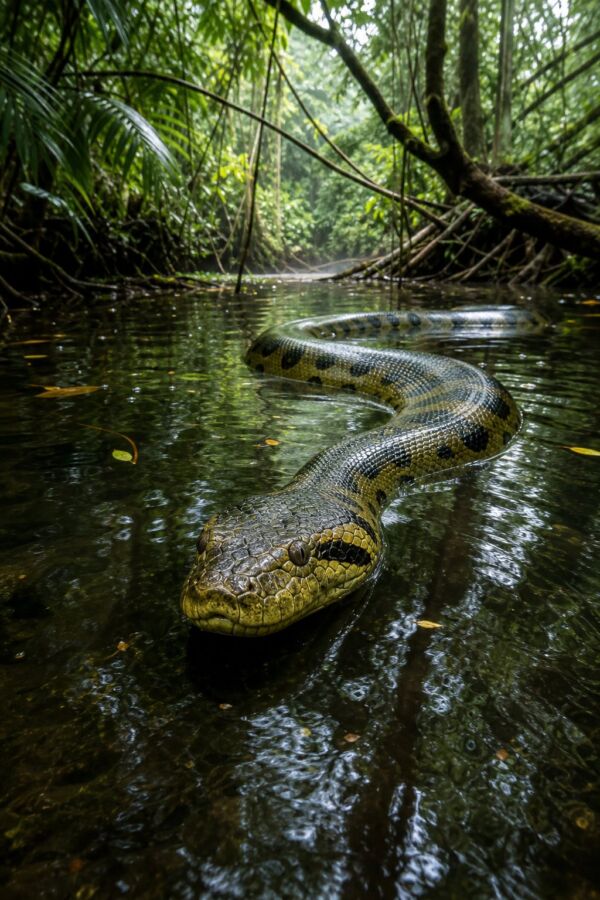
The green anaconda (Eunectes murinus) holds the title for heaviest snake on Earth. Verified females can top 15 feet and 200 pounds—reticulated pythons get longer, but anacondas are just massive.
Range: Swamps, slow rivers, and flooded forests of the Amazon and Orinoco basins.
IUCN Conservation Status: Least Concern.
Eyes and nostrils sit high on the head, letting the snake breathe and watch while almost totally underwater. The water supports their bulk, so they swim way better than they crawl.
They ambush prey and aren’t venomous. Anacondas grab with backward-curving teeth, then coil up and constrict, cutting off blood flow—capybaras, caimans, deer, even turtles end up on the menu.
Females can weigh five times as much as males and give birth to live young, sometimes 20 to 40 at once. Breeding balls—yeah, that’s really what they’re called—can have a dozen males all competing for one female.
4. Brown-Throated Three-Toed Sloth

The brown-throated three-toed sloth (Bradypus variegatus) is the most widespread sloth species. Its grooved hairs host green algae and specialized moths, turning the coat into a little ecosystem—and some pretty decent camouflage, honestly.
Range: Honduras south through Central America into the Amazon Basin and Atlantic Forest.
IUCN Conservation Status: Least Concern.
Leaves take up to a month to digest, so their metabolism runs at about half of what you’d expect for a mammal this size. They don’t have much muscle, but their tendon-locking claws let them hang for ages without much effort.
Most mammals have seven neck vertebrae, but these guys have eight or nine, so they can rotate their head about 270 degrees to look for food—no need to move the body.
About once a week, sloths climb down to the base of a tree to do their business. That’s when they’re most at risk from predators like harpy eagles and jaguars.
3. Harpy Eagle
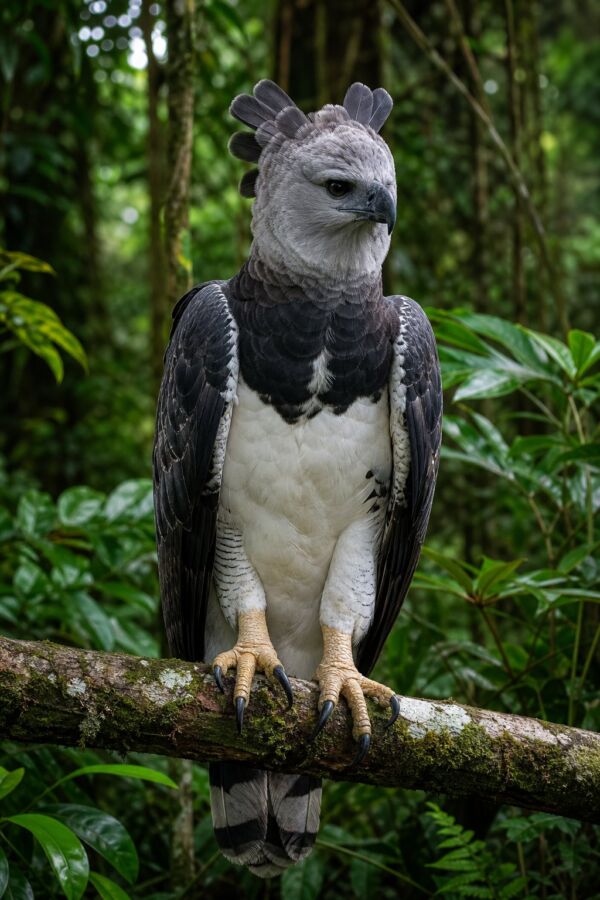
The harpy eagle (Harpia harpyja) is the most powerful raptor in the Americas. Its rear talons reach about five inches—basically grizzly bear claws—and females can weigh 20 pounds.
Range: Lowland rainforest from southern Mexico to northern Argentina, with most birds in the Amazon.
IUCN Conservation Status: Vulnerable.
Wingspan hits 6.5 feet, but the wings are short and broad for their weight, perfect for dodging between tree trunks instead of soaring. Sloths and monkeys make up most of their diet, snatched right off branches.
Their raised feather crest might help funnel sound, like an owl’s facial disk, though no one’s totally sure.
Breeding is slow—one chick every two or three years, raised in a massive stick nest way up in a kapok or other giant tree. Each pair needs thousands of acres, so harpy eagles disappear fast when forests get chopped up.
2. Bornean Orangutan
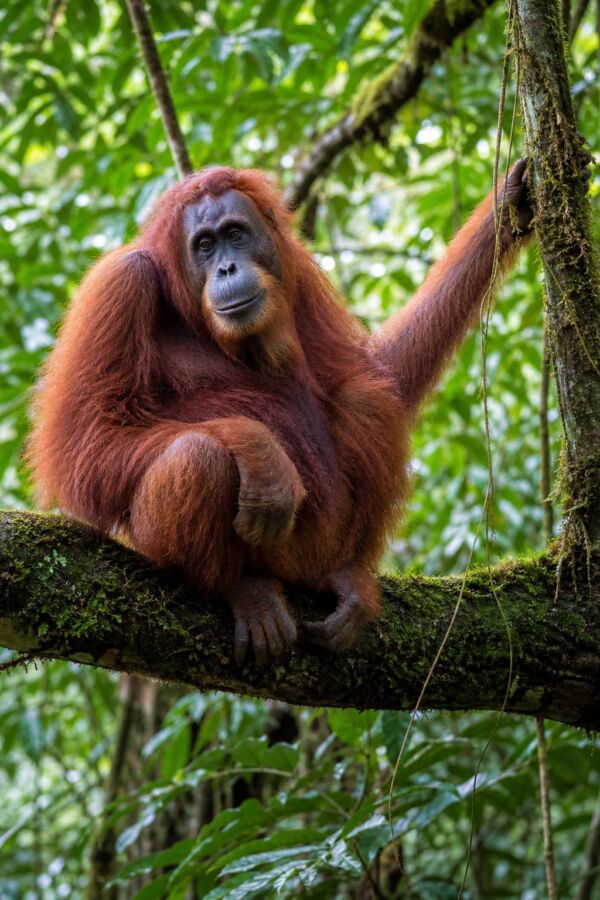
The Bornean orangutan (Pongo pygmaeus) is the heaviest tree-dwelling animal. Flanged males can hit 220 pounds, with those wide cheek pads and a throat sac that blasts long calls through the forest.
Range: The island of Borneo, across Indonesian Kalimantan and Malaysian Sabah and Sarawak.
IUCN Conservation Status: Critically Endangered.
Populations have dropped by at least 50% over the last 60 years, mostly because forests got cleared for oil palm and pulpwood, plus fires and killings during conflicts. There are maybe 100,000 left.
Bornean orangutans spend more time on the ground than Sumatran ones and eat more bark and leaves when fruit runs low. They build a new sleeping nest nearly every night—sometimes with a leafy roof, because why not?
Adult females and their young stick together, while adult males wander alone across overlapping territories.
1. Jaguar

The jaguar (Panthera onca) rules as the apex predator of the Americas and is the third-largest cat in the world. Pantanal males can top 300 pounds, and their bite force relative to size is just ridiculous—better than lions or tigers.
Range: From Mexico and Central America through the Amazon to northern Argentina.
IUCN Conservation Status: Near Threatened.
Jaguars hunt differently from most big cats. Instead of suffocating prey, they often bite straight through the skull or crush the neck vertebrae—works even on armored critters like caimans, turtles, and armadillos. They’ve been recorded eating over 85 species.
Rosettes with dark centers set jaguars apart from leopards. About 6% are melanistic, those so-called black panthers everyone’s always talking about.
Jaguars swim well, hunting along rivers and crossing wide channels. Conservation groups now try to protect a Jaguar Corridor from Mexico to Argentina, since roads and ranches keep splitting up their range.
What Makes Rainforests So Biodiverse

Tropical rainforests hug the equator, where it stays warm and wet all year. Since conditions never really change and evolution’s had ages to work, these forests pack in more species than anywhere else on land.
Canopy, Understory, Forest Floor, And River Habitats
A rainforest is basically a multi-story apartment building for wildlife. Each layer supports its own crew of specialists, as you’ll see in guides to the four layers of the rainforest.
| Layer | Conditions | Typical animals |
|---|---|---|
| Emergent trees | Full sun, high wind | Harpy eagle, macaws |
| Canopy | 60–130 ft, most fruit and leaves | Orangutans, hornbills, sloths, colugos |
| Understory | Dim, humid, still air | Tree frogs, ocelots, clouded leopards |
| Forest floor | About 2% of sunlight | Tapirs, anteaters, gorillas, forest elephants |
| Rivers and flooded forest | Seasonal water levels | Giant otters, Amazonian manatees, anacondas |
How Isolation And Climate Drive Speciation
Rivers, mountains, and sea channels split populations apart. Once separated, groups start evolving on their own paths.
That’s how Borneo and Sumatra ended up with two distinct orangutan and clouded leopard species.
Stable tropical climates let narrow specialists hang on. Picture a frog that only breeds in one stream valley—it can persist for millions of years, since there aren’t harsh winters to wipe it out.
Why Insects, Amphibians, And Plants Support Food Webs
Insects really drive the whole system. Leafcutter ants, termites, and beetles turn plant tissue into food for frogs, birds, anteaters, and monkeys.
Amphibians bridge water and land. As adults, they eat invertebrates, and as tadpoles, they munch on algae.
Plants set the ceiling. Fig trees, palms, and lianas feed fruit-eaters, whose droppings help replant the forest.
Threats And Conservation Of Rainforest Animals
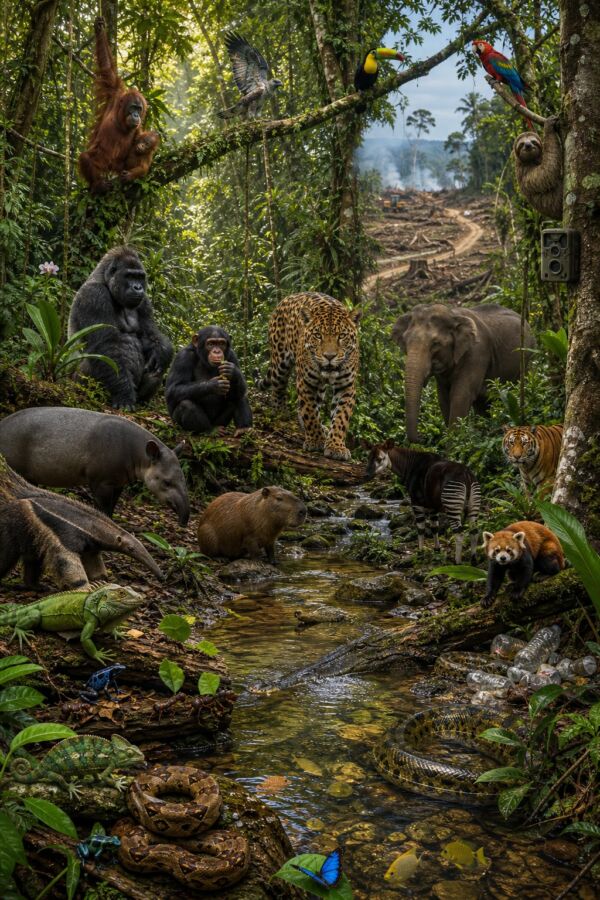
Nearly every animal here faces the same short list of pressures. Habitat loss comes first, then hunting and trade.
Deforestation And Forest Fragmentation
The Amazon has lost about 17% of its original forest cover. Borneo and Sumatra have lost even more lowland forest to oil palm, pulpwood, and mining.
Clearing doesn’t just remove trees—it chops what’s left into isolated patches. Fragmentation hits wide-ranging animals hardest.
Harpy eagles, jaguars, and tigers need thousands of acres per individual. A small patch just can’t support a breeding population.
Edges dry out and burn more easily. That pushes fire deeper into forests that never evolved to handle it.
Hunting, Wildlife Trade, And Human-Wildlife Conflict
Bushmeat hunting drives down numbers of mandrills, gorillas, and okapis, especially where new roads open up remote areas. Ivory poaching slashed forest elephant numbers by more than half in just ten years.
The pet trade targets parrots, macaws, and reptiles. Ranchers and farmers kill jaguars and tigers after livestock losses, though programs for compensation and better corrals can help reduce this conflict.
How Protected Areas And Local Communities Help
Protected areas actually work—when they’re funded and patrolled. Indigenous territories in the Amazon have much lower deforestation rates than the land around them.
Certification, community forestry, and ecotourism give people income that depends on keeping forests standing. Conservation groups like the Rainforest Alliance share species profiles tied to the working landscapes they help certify, connecting farm practices to wildlife outcomes.
Frequently Asked Questions
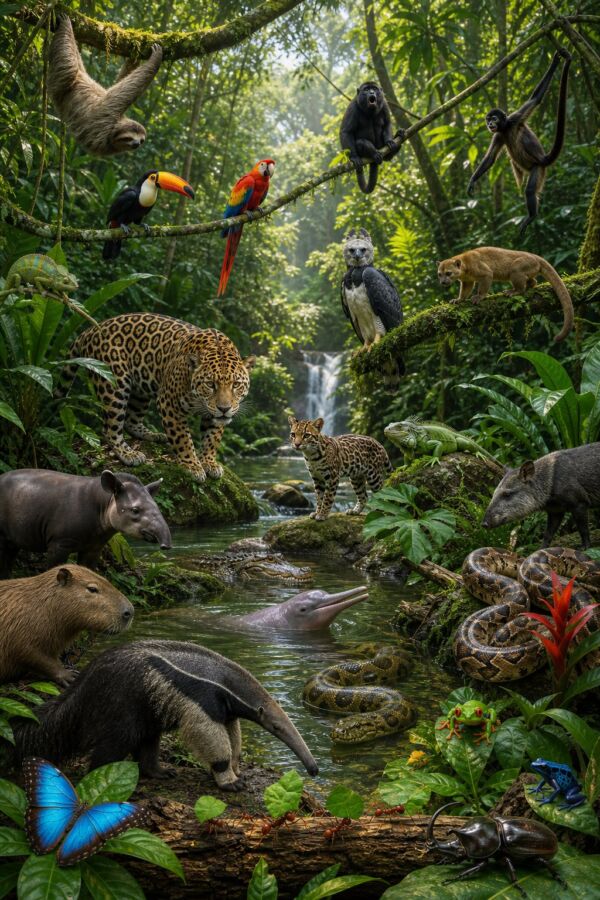
What animals live in the rainforest?
Rainforests are home to mammals like jaguars, tapirs, sloths, gorillas, and orangutans. There are birds like toucans, macaws, hornbills, and harpy eagles, plus reptiles like anacondas and caimans, and amphibians like poison dart frogs.
Aquatic species like giant otters and Amazonian manatees live there too. Insects outnumber everyone else by a mile. Top predators include the jaguar in the Amazon, Sumatran tiger and Sunda clouded leopard in Asia, and the harpy eagle up in the canopy.
What are the most common rainforest animals?
By sheer numbers, insects and other invertebrates totally dominate—especially ants, termites, and beetles. Among vertebrates, bats, rodents, small frogs, and lizards are way more abundant than the big, flashy mammals that get all the attention.
A single Amazon hectare can actually have more ant species than all of Europe. Wild, right?
Can I see pictures of rainforest animals?
Yes! Every species mentioned above is illustrated here, and you’ll find species-by-species photo galleries (with scientific names and ranges) in reference lists of interesting rainforest animals.
Photo comparisons are super helpful for tricky lookalikes—like jaguars versus leopards.
What are some rainforest animals for kids to learn about?
Sloths, toucans, tree frogs, and jaguars are the usual favorites for kids. Their adaptations are easy to show and explain.
Teachers can use rainforest animal worksheets made for ages 5 to 7. Pairing an animal with one quirky trait—like the sloth’s algae-filled fur—really helps facts stick.
What birds live in the rainforest?
Rainforest birds? Think scarlet macaws, keel-billed toucans, African grey parrots, rhinoceros hornbills, and harpy eagles. Plus, there are thousands of tanagers, antbirds, manakins, and hummingbirds.
Lots of them eat fruit and spread seeds. Cavity nesters like hornbills and toucans need big old trees, which is why logging hits them so hard.
What plants and animals are found in rainforests?
Rainforests are home to all sorts of plants—kapok and fig trees, palms, bromeliads, orchids, lianas, and those wild strangler figs. You’ll see fruit trees feeding monkeys, parrots, and tapirs.
Epiphytes hang out high up and trap little pools of water, which is just what frogs need to breed. Sadly, a lot of rainforest animals are endangered since people keep clearing, burning, and chopping up these plant communities way faster than most species can handle.