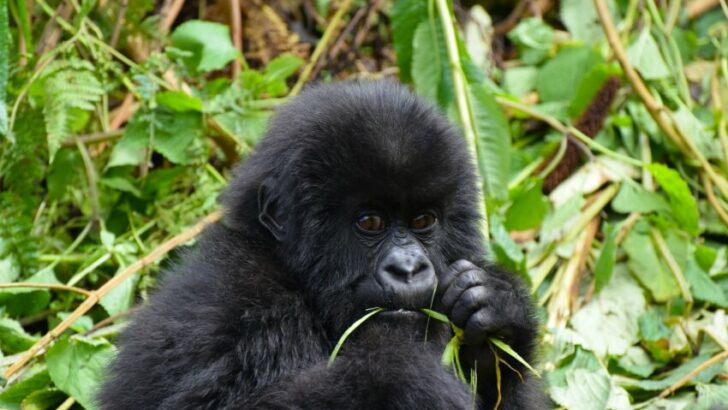
The Gorilla Organization is a UK-registered conservation charity that supports community-led projects to protect wild gorillas and their forest habitat. Its work includes ranger support, snare removal, tree planting, conservation education, sustainable farming, and other livelihood projects in Rwanda, Uganda, and the Democratic Republic of the Congo. It is a separate organization from Gorilla Doctors and the Dian Fossey Gorilla Fund.
Last fact-checked: August 7, 2026.

Key takeaways
- The organization says it was founded in 1989 to continue work inspired by primatologist Dian Fossey; it adopted its current name in 2002.
- Its current field footprint covers Rwanda, Uganda, and the Democratic Republic of the Congo.
- Its model combines direct protection, such as ranger support and snare removal, with community livelihoods, habitat restoration, and conservation education.
- It is registered in England and Wales as charity number 1117131. Registration is an important legitimacy check, but donors should still review current accounts, governance, and project reporting.
- The charity is not managed by Gorilla Doctors and should not be confused with the separate Dian Fossey Gorilla Fund.
What is The Gorilla Organization?
The Gorilla Organization is a London-headquartered nonprofit focused on keeping gorillas in the wild by addressing both immediate threats and the pressures experienced by people living near gorilla habitat. The organization traces its founding to 1989 and says it was established to continue the conservation work associated with Dian Fossey. The UK organization took its current name in 2002.
The distinction between similarly named groups matters. The Gorilla Organization, the Gorilla Doctors, and the Dian Fossey Gorilla Fund are separate organizations with different governance, programs, and fundraising operations. Gorilla Doctors specializes in veterinary medicine and health monitoring for eastern gorillas. The Dian Fossey Gorilla Fund emphasizes direct protection, long-term research, and community programs. The Gorilla Organization emphasizes community-led conservation, ranger support, habitat work, and sustainable livelihoods.
| Key fact | Verified detail |
|---|---|
| Founded | 1989, according to the organization’s current account of its history |
| Current name adopted | 2002 |
| Head office | London, United Kingdom |
| Field countries | Rwanda, Uganda, and the Democratic Republic of the Congo |
| Charity registration | England and Wales charity number 1117131 |
| Governance | Board of trustees, with staff in the United Kingdom and the three field countries |
| Primary approach | Community-led conservation, ranger support, habitat protection, education, and sustainable livelihoods |
How its conservation model works
The charity’s central premise is that gorilla conservation is more durable when nearby communities benefit from protecting forests rather than being forced to depend on extracting resources from them. Its current project portfolio combines several kinds of intervention instead of treating poaching, habitat loss, and poverty as unrelated problems.
Ranger support and snare removal
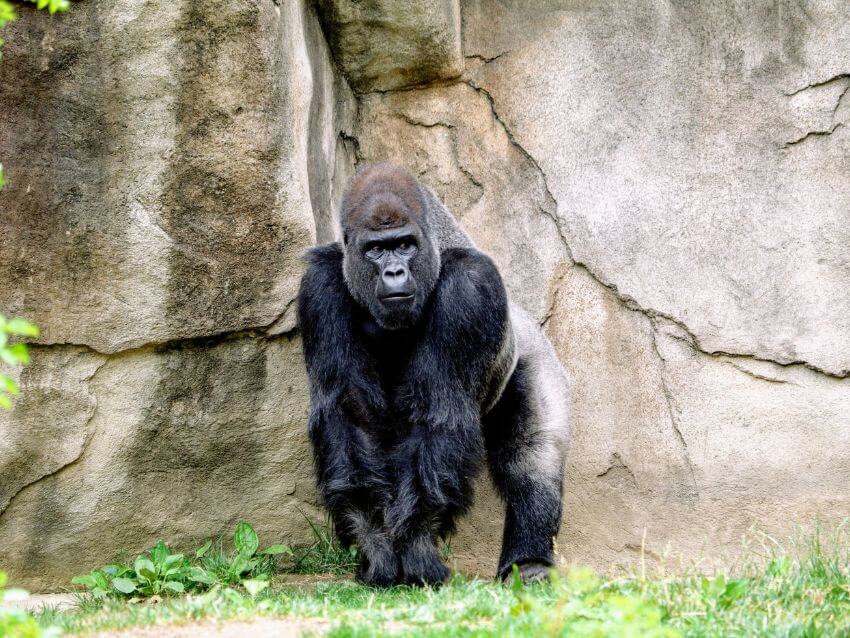
Rangers patrol forests, monitor wildlife, and remove snares set for bushmeat species that can also injure gorillas. The Gorilla Organization provides support for ranger operations and runs a Stop the Snares initiative near Bwindi Impenetrable National Park. Ranger work is direct protection, but it is most effective when paired with credible law enforcement, local knowledge, reliable equipment, and community support.
Habitat restoration and sustainable livelihoods
Tree planting, organic farming, and gorilla-friendly beekeeping can reduce pressure on protected forests when projects are locally appropriate and economically viable. These programs are designed to give households alternatives to collecting fuelwood, timber, honey, medicinal plants, or other resources inside national parks. They also connect gorilla protection with broader habitat loss solutions.
Education, local leadership, and community participation
The organization also supports conservation education, youth programs, women and girls, Indigenous communities, and early-career African conservationists. These programs matter because conservation imposed without meaningful local participation can create resentment, shift costs onto nearby communities, or fail once short-term funding ends. Strong projects give local institutions real decision-making power and track both ecological and social outcomes.
Where does The Gorilla Organization work?
The organization reports active work in three countries:
- Democratic Republic of the Congo: ranger and habitat initiatives in eastern DRC, including work associated with Maïko, Itombwe, Walikale, Virunga, and Kahuzi-Biega landscapes.
- Uganda: community projects and support near Bwindi Impenetrable and Mgahinga Gorilla national parks.
- Rwanda: community-led conservation within the wider mountain gorilla landscape.
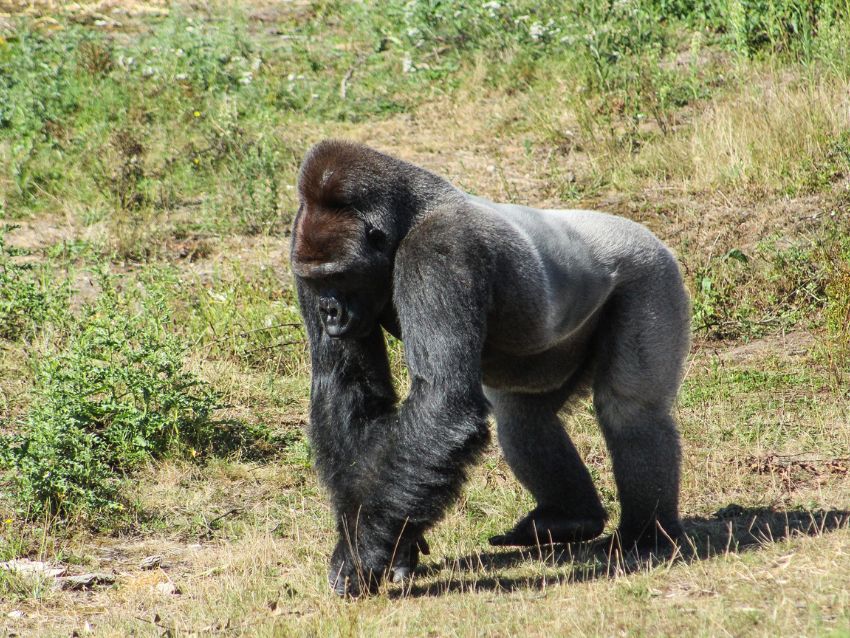
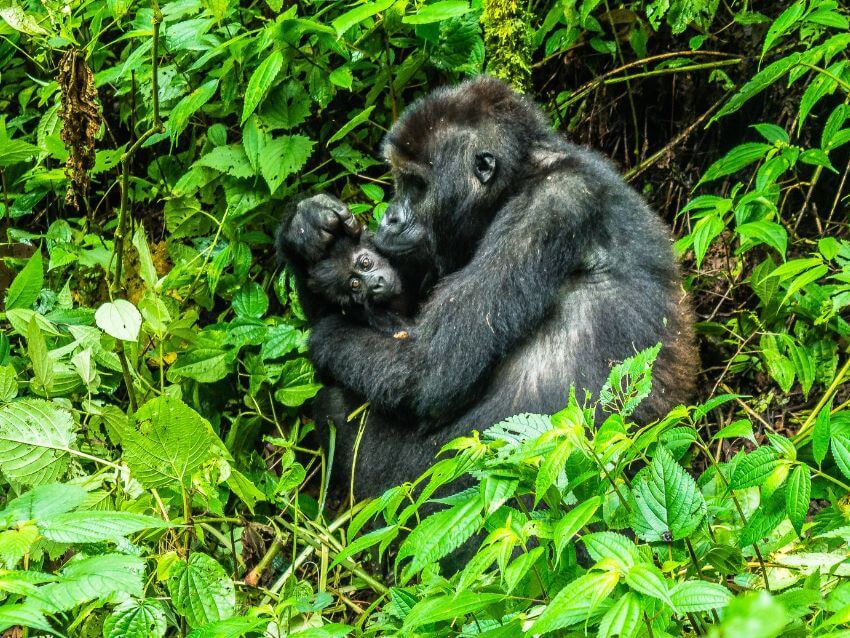
That geography is important. Gorillas comprise two species and four recognized subspecies. Because the charity’s present field countries are in the eastern gorilla range, its clearest direct overlap is with mountain gorillas and Grauer’s gorillas. Its stated vision covers all gorilla species and subspecies, but readers should not assume that every current project directly benefits all four.
| Gorilla subspecies | Species | Main range | IUCN status | Relationship to current field footprint |
|---|---|---|---|---|
| Mountain gorilla | Eastern gorilla | Rwanda, Uganda, and DRC | Endangered | Direct geographic overlap |
| Grauer’s gorilla, also called eastern lowland gorilla | Eastern gorilla | Eastern DRC | Critically Endangered | Direct geographic overlap |
| Cross River gorilla | Western gorilla | Cameroon and Nigeria | Critically Endangered | Outside the organization’s three-country field footprint |
| Western lowland gorilla | Western gorilla | West and Central Africa | Critically Endangered | Mostly outside the current field footprint |
Why gorilla conservation still matters
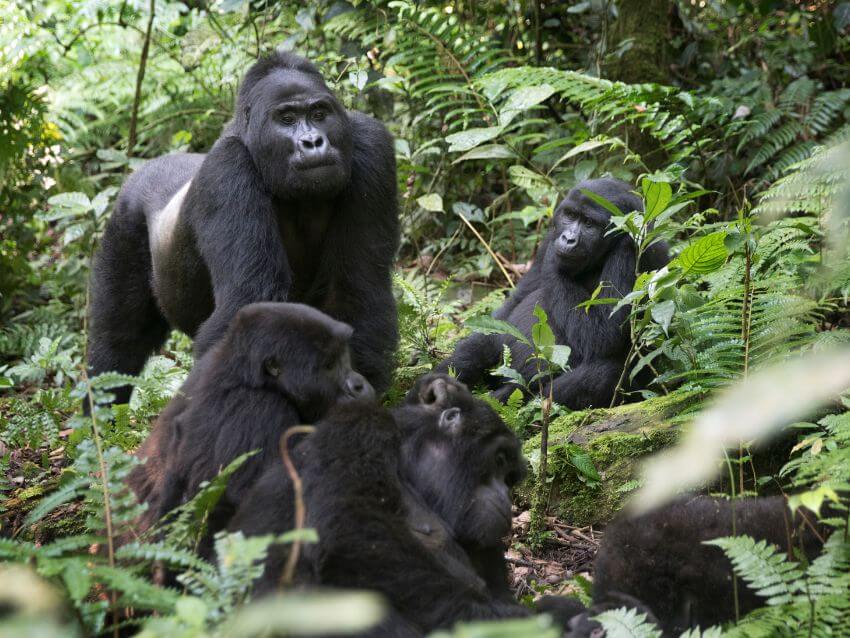
There is no accurate single figure for “how many gorillas are left” because population estimates, survey quality, and trends differ by subspecies. Mountain gorillas number more than 1,000 and are classified as Endangered, while the other three subspecies are Critically Endangered. Western lowland gorillas are more numerous than mountain gorillas, but their total population is uncertain and declining.
The main threats also vary across the gorilla range, but several pressures recur:
- Habitat loss and fragmentation: agriculture, settlements, roads, logging, mining, and fuel production can shrink or divide forests.
- Hunting and snares: gorillas may be targeted for bushmeat or harmed by traps set for other animals.
- Disease: Ebola has devastated some western gorilla populations, while respiratory and other human-borne infections are a serious concern where people and gorillas come into close contact.
- Conflict and weak governance: armed conflict can endanger rangers, displace communities, disrupt monitoring, and open protected areas to illegal extraction. Our overview of how armed conflict affects wildlife explains why conservation becomes harder in unstable regions.
- Slow reproduction: females raise one infant for years before reproducing again, so depleted populations recover slowly.
Protecting gorillas can also protect forests used by many other species and by people who depend on those ecosystems for water, food, materials, and livelihoods. That broader ecological and social value is central to the importance of wildlife conservation.
Is The Gorilla Organization legit?
Yes, The Gorilla Organization is a legitimate UK-registered charity based on verifiable regulatory records. The Charity Commission for England and Wales lists it under charity number 1117131. When this article was checked on August 7, 2026, the register showed its reporting as up to date and provided an annual return for the financial year ending December 31, 2024.
That answer needs one qualification: registration confirms a real legal entity subject to charity regulation, but it does not prove that every campaign is equally effective or that this is the best destination for every donor. A careful donor should review the latest accounts, trustees, program reports, geographic focus, and evidence of outcomes before giving.
A practical donor due-diligence checklist
- Confirm the official record. Match the charity number, address, website, and trustees against the Charity Commission register.
- Read the latest accounts and annual report. Look beyond a single overhead ratio. Review spending trends, reserves, fundraising costs, related-party disclosures, and explanations of program results.
- Check what your donation supports. Determine whether the appeal funds ranger work, community livelihoods, unrestricted operations, or another program.
- Look for outcome evidence. Strong reporting distinguishes activities, such as trees planted or training delivered, from outcomes, such as habitat restored, snares reduced, or household dependence on forest extraction lowered.
- Compare organizations by intervention. Veterinary care, field research, transboundary policy, sanctuary care, and community conservation solve different parts of the problem.
- Confirm tax treatment and payment terms. Donation deductibility and recurring-payment rules depend on the donor’s country and the payment method.
Is The Gorilla Organization the best gorilla charity?
There is no responsible way to name one universal “best” gorilla charity without first defining the donor’s goal. The strongest choice depends on the intervention, geography, species, evidence standard, and type of reporting you value.
| Organization | Best fit for donors prioritizing | Primary approach | Main geography |
|---|---|---|---|
| The Gorilla Organization | Community-led conservation and ranger support | Livelihoods, habitat restoration, education, ranger support, and snare removal | Rwanda, Uganda, and DRC |
| Gorilla Doctors | Veterinary care and One Health science | Health monitoring and treatment of wild mountain and Grauer’s gorillas | Rwanda, Uganda, and DRC |
| Dian Fossey Gorilla Fund | Direct protection, long-term research, and community programs | Daily protection, scientific research, and locally designed conservation | Rwanda and DRC |
| International Gorilla Conservation Programme | Transboundary mountain gorilla conservation | Government collaboration, habitat policy, monitoring, tourism standards, and livelihoods | Rwanda, Uganda, and DRC |
| GRACE | Rescue, rehabilitation, and rewilding of Grauer’s gorillas | Sanctuary care, rewilding, habitat protection, and community partnerships | Eastern DRC |
For a wider view of the regional conservation landscape, see our guide to environmental organizations in Africa.
How to help The Gorilla Organization
The official website currently offers several ways to participate:
- Make a one-time or recurring donation after reviewing the latest project and financial information.
- Adopt a gorilla symbolically through the charity’s adoption program.
- Fundraise through a community event or sponsored sporting event.
- Volunteer in an available role that matches your skills and location.
- Support a specific appeal only after checking what the funds are intended to cover.
Non-donors can still help by sharing accurate information, refusing wildlife products, supporting responsible forest supply chains, and learning about broader ways to help animals facing extinction. Avoid sharing outdated population numbers or implying that one organization alone is responsible for changes in a wild population.
Our Endangered World does not process donations. Review the charity’s current terms before contributing through its official website.
Frequently asked questions
Is The Gorilla Organization a registered charity?
Yes. It is registered in England and Wales as charity number 1117131. The Charity Commission record showed its reporting as up to date when checked on August 7, 2026.
Is The Gorilla Organization the same as the Dian Fossey Gorilla Fund?
No. They are separate organizations today. The UK organization adopted the name The Gorilla Organization in 2002, while the Dian Fossey Gorilla Fund operates as a separate nonprofit with its own governance and programs.
Is The Gorilla Organization managed by Gorilla Doctors?
No. The Gorilla Organization is governed by its own board of trustees. Gorilla Doctors is a separate veterinary nonprofit focused on the health of wild mountain and Grauer’s gorillas.
Where does The Gorilla Organization work?
It reports field work in Rwanda, Uganda, and the Democratic Republic of the Congo, supported by fundraising and administration in London.
Which gorillas benefit most directly from its current field work?
Its three-country field footprint overlaps most directly with mountain gorillas and Grauer’s gorillas. The organization states a wider vision of protecting all gorilla species and subspecies.
What is the best way to support gorilla conservation?
Choose a verified organization whose intervention matches your goal, then review its latest accounts, program evidence, governance, and donation terms. Community conservation, veterinary care, research, ranger protection, and sanctuary work address different needs.
The bottom line
The Gorilla Organization is a verifiable UK charity with a distinct community-led conservation model. Its strongest fit is for supporters who want to fund a mix of ranger support, habitat protection, education, and livelihoods in Rwanda, Uganda, and eastern DRC. The most trustworthy decision is not to rely on a “best charity” label, but to compare current evidence, accounts, governance, and intervention type before donating.