Yes, PETA euthanizes animals. People for the Ethical Treatment of Animals operates animal-service programs in Virginia, and animals euthanized through its shelter operations are reported to the Virginia Department of Agriculture and Consumer Services. The central dispute is not whether euthanasia occurs. It is whether PETA’s intake population, medical cases and end-of-life services adequately explain its high reported numbers—and whether more animals could instead be treated, transferred or adopted.
Annual shelter totals cannot answer every part of that dispute. They show how many animals entered and how they left, but they do not provide enough case-level medical and behavioral evidence to determine whether every euthanasia decision was justified.
Last fact-checked: July 19, 2026.
Key takeaways
- PETA does euthanize dogs, cats and other animals through its Virginia shelter operations.
- The official source for current intake and outcome totals is the Virginia Department of Agriculture and Consumer Services, not PETA or an anti-PETA campaign.
- PETA describes its operation as a shelter of last resort that handles owner-requested euthanasia and animals that are critically ill, injured, feral, aggressive or otherwise difficult to place.
- Aggregate reports do not identify the diagnosis, prognosis, behavior or treatment alternatives for every euthanized animal.
- Virginia law applies different holding rules to strays, owner-surrendered animals, critical cases and certain feral animals.
- The 2014 euthanasia of Maya, an owned Chihuahua, was a documented failure for which Virginia fined PETA.
- PETA also reports providing sterilization, veterinary assistance, food, shelter and field services to animals in underserved communities.
- A fair assessment requires more than dividing euthanasia totals by intake. Case mix, owner requests, transfers, medical records and legal compliance also matter.
1. PETA does euthanize animals
The direct answer to “Does PETA kill animals?” is yes. The more precise term in official shelter records is euthanized.
That wording matters. Euthanasia may be a humane response to irremediable suffering, but the same label can also appear in records when an animal’s death might have been prevented through treatment, rehabilitation, transfer or adoption. The annual total alone does not establish which description fits each case.
Best Friends Animal Society distinguishes between humane euthanasia and preventable killing. It also warns against using “kill shelter” as a blanket label because the term can obscure the role of resources, public policy, community support and the condition of animals entering a facility.
2. PETA is more than an animal shelter
People for the Ethical Treatment of Animals is an animal-rights organization founded in 1980. Shelter and community-animal services are only one part of its work.
PETA’s wider campaigns address animals used in laboratories, food production, clothing and entertainment. Its confrontational tactics and opposition to many common uses of animals have made it one of the most recognizable—and polarizing—organizations in animal-rights activism.
Those philosophical positions also explain its involvement in debates over the ethics of keeping animals in zoos and the arguments for and against veganism. They do not, however, prove that any particular shelter decision was ethical or unethical.
3. Virginia’s custody reports are the best source for the numbers
The strongest evidence comes from the Virginia Animal Custody Records portal. Virginia shelters submit annual intake and disposition information to the Virginia Department of Agriculture and Consumer Services.
As of this update, the state portal provides individual agency reports for 2021 through 2025. Because the figures change each year, readers should use the current state report rather than relying on a screenshot, campaign graphic or table copied years earlier.
For a dated example, a 2023 GQ report citing VDACS records stated that PETA euthanized 718 dogs in 2022, equal to 66% of the dogs it received that year. That figure covers dogs in 2022; it should not be presented as PETA’s current rate or as its total for every species.
How to check PETA’s current report
- Open the Virginia Animal Custody Records portal.
- Select the latest completed reporting year.
- Select “Individual Agency Reports.”
- Locate People for the Ethical Treatment of Animals.
- Compare intake, returned-to-owner, adoption, transfer, euthanasia and other disposition fields.
- Check whether the report separates dogs, cats and other animals before calculating a rate.
To calculate a basic annual euthanasia rate, divide the reported euthanasia count by the relevant intake total and multiply by 100. That percentage is useful, but it is not a clinical review of the individual cases.
| Reported measure | What it can show | What it cannot establish by itself |
|---|---|---|
| Animals received | The volume entering the organization | The condition or adoptability of each animal |
| Animals euthanized | The recorded outcome count | Whether every euthanasia was medically or behaviorally necessary |
| Animals transferred | Movement to another shelter or placement partner | The animal’s eventual outcome after transfer |
| Animals adopted | Direct placements completed by the reporting organization | All placements facilitated through outside partners |
| Live-release or save rate | A broad outcome benchmark | Differences in admission policies, owner-requested euthanasia or case severity |
4. PETA says it handles last-resort and end-of-life cases

PETA describes its operation as a shelter of last resort. The organization says it does not turn away animals because they are elderly, critically ill, severely injured, feral, aggressive or otherwise unlikely to be accepted by an adoption-focused facility.
It also says some animals are brought in by owners who cannot afford veterinary euthanasia for a suffering companion. According to PETA, these owner-requested end-of-life cases and other difficult intakes help explain why its euthanasia percentage cannot be compared directly with that of a shelter able to limit admissions.
This explanation is relevant, but it comes from PETA. It should be treated as the organization’s account of its work—not as independent verification that every euthanized animal was untreatable or unsafe to place.
5. Annual records cannot prove whether every animal was healthy
The available aggregate totals do not support a definitive claim that all animals euthanized by PETA were suffering. They also do not support the opposite claim that PETA routinely euthanizes healthy, readily adoptable animals.
Answering that question responsibly would require case-level evidence such as:
- The animal’s ownership and intake status
- Veterinary diagnoses and prognosis
- Documented pain or quality-of-life concerns
- Behavioral evaluations and bite history
- Treatment and rehabilitation options considered
- Attempts to locate an owner, adopter or transfer partner
- The time between intake and disposition
- Who authorized euthanasia and on what grounds
Without those records, an annual euthanasia rate is an important transparency metric, but it is not a diagnosis for every animal included in the total.
6. Virginia law treats different intake situations differently
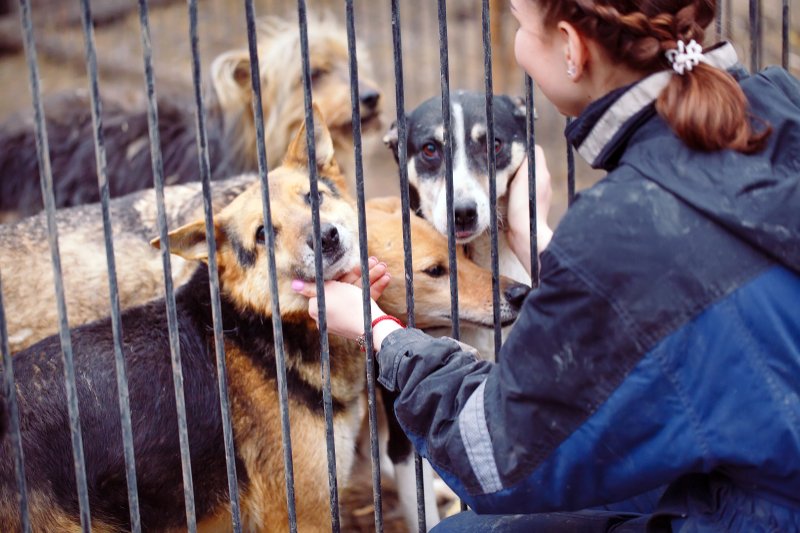
Virginia’s rules are more nuanced than a universal requirement to hold every animal for the same number of days. Under Virginia’s private animal shelter law, private shelters follow relevant disposition provisions applied to public shelters.
| Intake situation | General Virginia rule |
|---|---|
| Unidentified stray animal | Generally held for at least five days, beginning the day after confinement |
| Animal with identification | The shelter must make reasonable identification efforts, and an additional holding requirement may apply |
| Critically injured, critically ill or unweaned animal | May be euthanized immediately for humane purposes using an approved method |
| Animal surrendered by its rightful owner | May be euthanized immediately after the owner signs the required surrender and acknowledgment |
| Certain unidentified feral dogs or cats posing a physical-injury risk | May be euthanized after a shorter statutory holding period when the required conditions and documentation are met |
The complete rules appear in Code of Virginia § 3.2-6546. These exceptions help explain how some animals can legally be euthanized soon after intake. They do not excuse a shelter from determining ownership, documenting the applicable exception or following the required procedure.
7. The Maya case was a documented and serious failure
Criticism of PETA is not based only on annual percentages. In 2014, PETA workers took Maya, an owned Chihuahua, from a Virginia trailer park and euthanized her.
PETA said Maya had been taken accidentally during an operation involving abandoned dogs. Virginia subsequently fined PETA $500 because the organization failed to keep the dog alive for the legally required period, according to TIME’s account of the case.
The incident demonstrates that a severe, documented error occurred and that legal holding rules matter. It does not, by itself, establish that taking and euthanizing owned animals is PETA’s routine policy. The strongest conclusion should go no further than the evidence.
8. PETA also provides sterilization and community-animal services
A complete assessment should include PETA’s other animal-service work without allowing that work to erase legitimate scrutiny of its shelter outcomes.
Through its Community Animal Project, PETA says its teams provide food, bedding, doghouses, transportation, grooming assistance, veterinary help, rescue services and low- or no-cost sterilization in parts of Virginia and North Carolina.
In its 2025 annual review, PETA reported that its mobile clinics sterilized more than 11,200 cats and dogs during the year and more than 249,000 companion animals cumulatively. These are PETA’s self-reported program figures, not VDACS shelter-outcome totals.
Both facts can be true: PETA can provide meaningful services to many animals while its euthanasia practices remain a valid subject for public scrutiny.
How should PETA’s shelter be evaluated?
The ethical question should not be reduced to choosing between “PETA saves animals” and “PETA kills animals.” A serious evaluation should ask whether the organization can document humane, lawful and proportionate decisions in each category of case.
| Evaluation question | Evidence needed | Why it matters |
|---|---|---|
| What animals are being admitted? | Intake reasons, owner surrenders, transfers, strays and end-of-life requests | Different intake populations should not be compared as though they were identical |
| Were alternatives considered? | Treatment notes, rehabilitation attempts and transfer outreach | Shows whether euthanasia was the only reasonable option |
| Was the animal legally held? | Ownership checks, dates, identification scans and signed surrender forms | Protects owners and prevents premature disposition |
| Was the decision clinically justified? | Veterinary and behavioral documentation | Separates humane end-of-life care from potentially preventable death |
| Are outcomes reported transparently? | Consistent annual reporting and clear definitions | Allows the public to evaluate changes over time |
| Could more animals be placed? | Adoption, foster and transfer capacity | Identifies realistic opportunities for improved live outcomes |
The bottom line
PETA euthanizes animals, and its reported euthanasia numbers have at times been high. That is a documented fact. PETA says those outcomes reflect a last-resort intake population and free end-of-life services for animals who are suffering, dangerous, feral or otherwise difficult to place.
Official totals can confirm how many animals were euthanized, transferred, adopted or otherwise disposed of. They cannot establish the full medical and ethical justification for every decision. The fairest conclusion is therefore neither unconditional defense nor blanket condemnation: use the current VDACS report, distinguish different intake categories, examine documented incidents and demand enough case-level transparency to evaluate whether alternatives were reasonably available.
The controversy also reflects a deeper disagreement about humanity’s obligations to other species, including the broader question of whether humans should understand themselves as animals rather than as a separate category with unrestricted control over them.
Frequently asked questions
Does PETA kill dogs and cats?
Yes. PETA euthanizes dogs and cats through its Virginia shelter operations and reports those outcomes to the Virginia Department of Agriculture and Consumer Services. The dispute concerns the reasons for those decisions and whether treatment, transfer or adoption was possible in individual cases.
Why does PETA euthanize so many animals?
PETA says it accepts difficult and last-resort cases, including animals who are critically ill, severely injured, elderly, feral, aggressive, suffering or brought in for owner-requested end-of-life care. Annual outcome totals do not independently verify that explanation for every animal.
Does PETA kill healthy animals?
The public aggregate reports cannot answer that conclusively. They show intake and outcomes but do not provide complete veterinary, behavioral and placement records for every animal. The Maya case documents a serious wrongful intake and holding-period failure, but it does not prove a routine policy of euthanizing healthy owned pets.
Is PETA a no-kill shelter?
No. PETA does not follow the commonly used no-kill model or its 90% save-rate benchmark. PETA argues that the benchmark does not fairly account for its owner-requested euthanasia and last-resort cases.
How many animals does PETA euthanize per day?
There is no reliable evergreen daily number because annual totals change. Check the latest VDACS individual agency report and divide the applicable annual euthanasia total by the number of days in that year. As a dated example, 718 dogs euthanized in 2022 averaged about two dogs per day, excluding cats and other animals.