
Animal communication evolution is not a ladder leading toward human speech. It is a branching process in which natural selection shapes signals around a species’ senses, habitat, social relationships and conflicts of interest. Chemical trails, color displays, calls, substrate vibrations, touch and electric discharges can all become communication systems when they influence receivers in ways that affect survival or reproduction.
A communication system can become more complex through a larger repertoire, finer modulation, ordered signal combinations, multimodal displays, individual recognition, learning or cultural transmission. These forms of complexity are not interchangeable, and none should be treated as an automatic step toward human language.
Recent research has found compositional call order in birds, learned vocal labels in dolphins, name-like calls in elephants, culturally transmitted structure in humpback songs and rich combinatorial features in sperm whale codas. Those findings are substantial. They do not yet amount to evidence that another species has the open-ended, meaning-based generativity of human language, and artificial intelligence has not translated an animal language in the everyday sense of that word.
Key Takeaways
- Animal signals evolve through changes in both senders and receivers; an incidental cue can become a specialized signal through repeated selection.
- Ecology shapes the channel. Sound, scent, color, touch, vibration and electricity solve different communication problems.
- Complexity can arise through signal combinations, individual labels, multimodal integration, learning and culture without producing human-like language.
- Machine learning can detect structure and generate testable hypotheses, but meaning still requires behavioral context, experiments and replication.
- Communication research supports conservation by revealing species presence, movement, breeding activity, social structure and exposure to human-made noise.
What Is Animal Communication?

Animal communication occurs when one individual produces a signal that changes another individual’s behavior or physiology, and the signal and response have been shaped by evolution. This sender–receiver framework is central to animal behavior science because it separates communication from information that an observer merely happens to detect.
Signals, Cues and Language
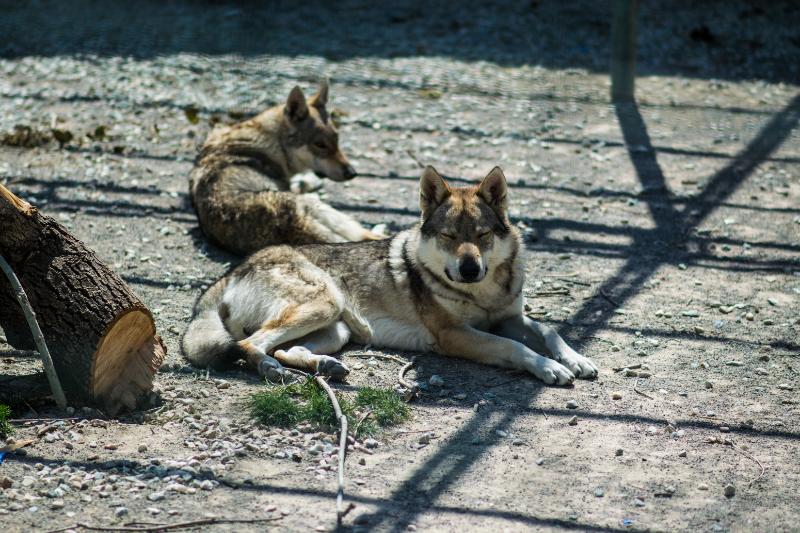
A signal evolved at least partly because of its effect on a receiver. A cue provides information but did not evolve for that communicative effect. Rustling vegetation may reveal a prey animal’s location, for example, but the sound is usually a cue rather than a message. An alarm call directed to group members is a signal. Researchers use this distinction because traits can begin as cues and later become ritualized signals with more stereotyped form and more predictable effects.
The word language sets a much higher evidentiary bar. Researchers look for properties such as stable meanings, flexible combinations, learned conventions, sensitivity to order and the capacity to generate many new messages. A 2026 comparative review concluded that, to date, only humans have demonstrated meaning-based generative communication, while emphasizing that recent animal findings make human uniqueness a question to test rather than assume.
This distinction avoids two opposite errors: treating every sophisticated signal as a sentence, or dismissing non-human systems because they do not work like speech. Animal communication should be evaluated on the problems it solves for the species using it.
How Animal Communication Evolves
From Incidental Cues to Specialized Signals
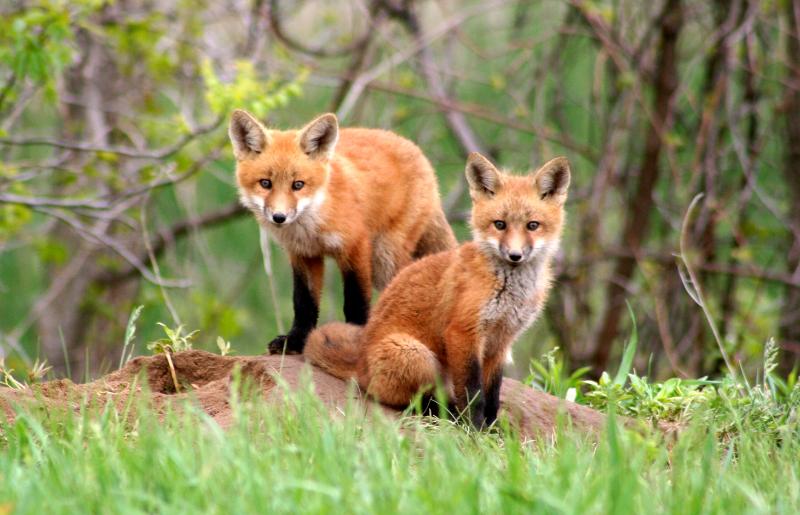
Communication can begin when receivers respond to an existing feature or behavior. If that response benefits senders, selection can favor clearer, more repeatable versions of the feature. Over generations, an ordinary movement, odor or sound may become exaggerated, simplified or timed for an audience. This process is often called ritualization.
Receivers evolve too. A signal is useful only when another animal can detect it, distinguish it from background noise and respond appropriately. Signal production and perception therefore coevolve. A change that makes a display more visible may favor better visual discrimination; improved discrimination may then favor new display variants.
Ecology Shapes the Communication Channel
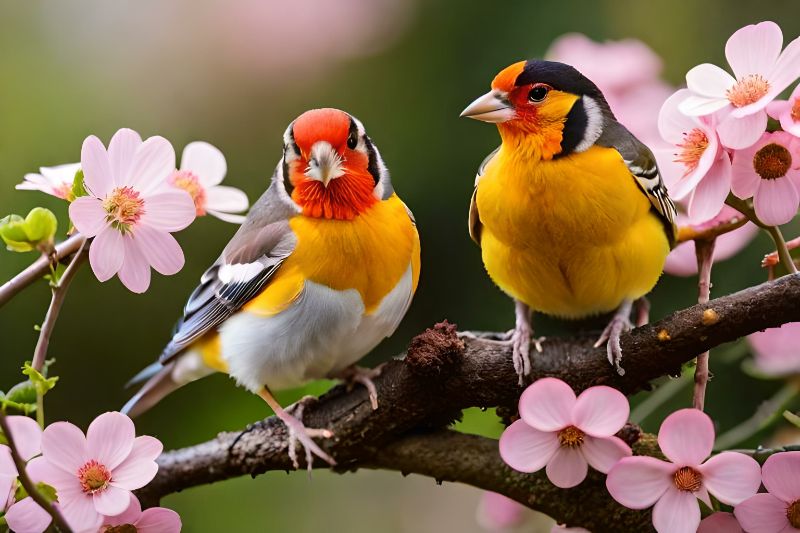
There is no universally best channel. Chemical signals can persist after a sender leaves and function in darkness, but they disperse slowly and are influenced by wind or water. Visual displays are fast and directional but require usable light and a clear line of sight. Sound can travel around obstacles and work at night, although habitat structure and competing noise change which frequencies transmit well. Tactile, vibrational and electrical signals can be effective at close range or in environments where sight performs poorly.
Even the deep history of acoustic communication remains sensitive to methods and taxon sampling. A 2020 vertebrate analysis reconstructed multiple ancient origins, while a 2022 study with broader sampling inferred a common origin among choanate vertebrates roughly 407 million years ago. The disagreement is useful: behavior leaves a poor fossil record, and evolutionary reconstructions can change when researchers include species previously described as silent.
Cooperation, Conflict and Signal Reliability
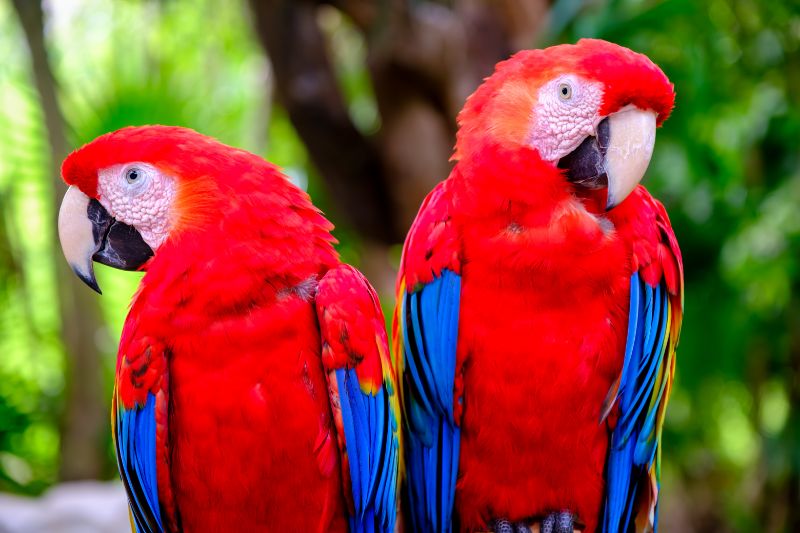
Communication does not require perfectly aligned interests. Parents and offspring, rivals, mates, predators and prey may benefit from different outcomes. Shared interests can support reliable coordination, while conflict favors exaggeration, concealment, mimicry or skepticism by receivers.
Signals remain reliable for several reasons. Some are physically constrained, some are costly to produce, some are easy to verify, and some occur between individuals whose repeated interactions make deception expensive. The result is an evolutionary negotiation rather than a guarantee of honesty.
Learning and Culture
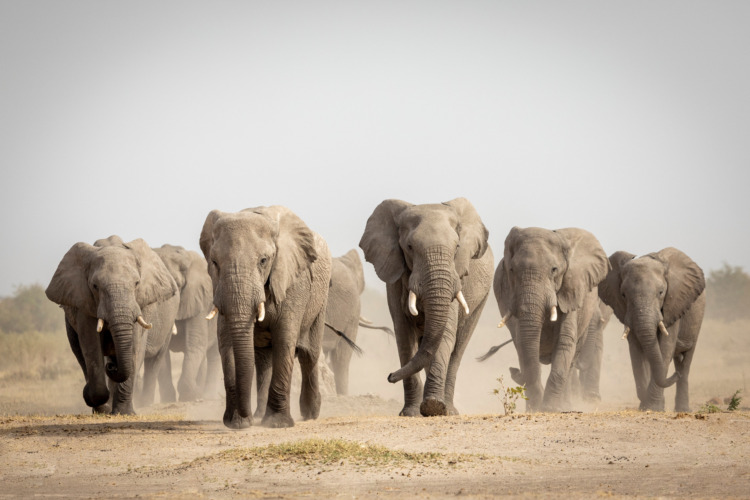
Not every signal is genetically fixed. Young animals may learn when to call, which variant to use, whom to copy or how to combine inherited components. When socially learned patterns persist within a population, communication becomes cultural as well as biological.
Culture can increase flexibility, but it also creates conservation risks. A population can lose socially transmitted call types, routes or group conventions even when some individuals survive. Protecting a communication system may therefore require preserving social networks and experienced animals, not only genetic diversity.
The Main Animal Communication Channels
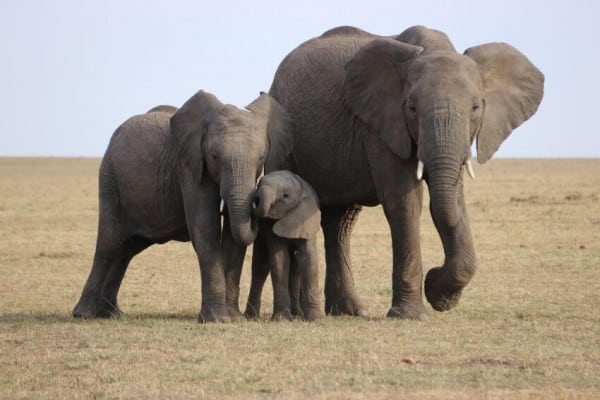
Many species use more than one channel. Insects are animals, and their pheromones, wing vibrations and visual displays illustrate how different modalities can operate together. Cephalopods such as octopuses and other animals without legs can alter posture, skin pattern and texture. Acoustic systems also extend far beyond human perception, as the hearing ranges of animals with exceptional hearing show.
| Channel | Examples | Main advantages | Main constraints |
|---|---|---|---|
| Chemical | Pheromones, scent marks and chemical trails | Can persist, work in darkness and move around obstacles | Often slower; direction and concentration change with air or water movement |
| Visual | Color, posture, facial movement and courtship displays | Rapid, directional and capable of fine spatial detail | Requires light, line of sight and a receiver facing the signal |
| Acoustic | Calls, songs, whistles, clicks and drumming | Works in darkness and can travel around obstacles or over long distances | Can be masked by noise and may reveal the sender’s location |
| Tactile and vibrational | Touch, web vibration, substrate drumming and ground-borne signals | Useful at close range or through a connected surface | Requires contact, proximity or a suitable substrate |
| Electrical | Electric organ discharges in weakly electric fish | Works in dark or turbid water and can support sensing and social signaling | Specialized and generally short-range |
| Multimodal | Combined calls, scent, posture, gesture and touch | Can add context, reinforce a message or provide redundancy | Receivers must integrate channels that may differ in range and timing |
Weakly electric fish are a useful example of evolutionary specialization. Their electric organ discharges support electrolocation and social communication, with signal features varying by sex, motivational state and social context. Electrical communication is not a primitive substitute for sound or sight; it is a channel adapted to particular aquatic environments.
From Simple Signals to Complex Combinations

A communication system can become complex in several independent ways. A species may have many signal types, vary a single signal continuously, combine discrete units, address particular individuals, coordinate several sensory channels or learn population-specific conventions.
- Modulation: changes in rate, pitch, duration, amplitude or repetition can alter urgency, identity or context.
- Combination: two or more units can be joined, and their order may affect the receiver’s response.
- Multimodal integration: a call, gesture, scent or touch can reinforce or modify another component.
- Learning and conventionalization: groups can develop shared variants that are not fully specified by genes.
Repertoire size alone is a weak measure of communicative power. A system with ten units that can be flexibly recombined may convey more distinctions than a system with dozens of fixed calls. Researchers must also study receivers: what differences they notice, what actions follow and whether those responses change with context.
Language-Like Features—and Their Limits
Several animal systems contain properties that also matter in human language. The strongest conclusions come from experiments that separate structure from interpretation and test what receivers actually do.
| Feature | Research example | What the evidence supports | What it does not establish |
|---|---|---|---|
| Meaning affected by order | Japanese great tit call combinations | Receivers respond differently to meaningful and reversed sequences | A human-equivalent grammar |
| Learned individual labels | Bottlenose dolphin signature whistles | Dolphins can copy a familiar individual’s learned whistle in an addressing context | That the whistle functions exactly like a human proper name |
| Name-like addressing | African elephant calls | Calls contain receiver-specific information and elicit stronger responses from the addressed elephant | A complete naming system shared identically by all callers |
| Cultural statistical structure | Humpback whale song | Socially learned song contains recurring, learnable structural units | Known word meanings or conversational syntax |
| Rich combinatorial form | Sperm whale codas | Click sequences vary systematically in rhythm, tempo and spectral structure | A translated alphabet or decoded semantics |
Order and Compositional Structure
Japanese great tits provide one of the clearest experimental examples. In a 2016 playback study, ABC notes prompted birds to scan for danger and D notes prompted them to approach. The natural ABC–D sequence produced both responses, while the reversed D–ABC sequence did not. The result supports compositional processing in this call system.
That is an important language-like property, but it is narrower than human syntax. The tested combination was short, context-specific and tied to a limited set of responses. Similar caution applies to alarm-call research across different monkey species: a receiver’s appropriate escape behavior supports functional meaning, but it does not by itself reveal the caller’s mental representation.
Individual Labels
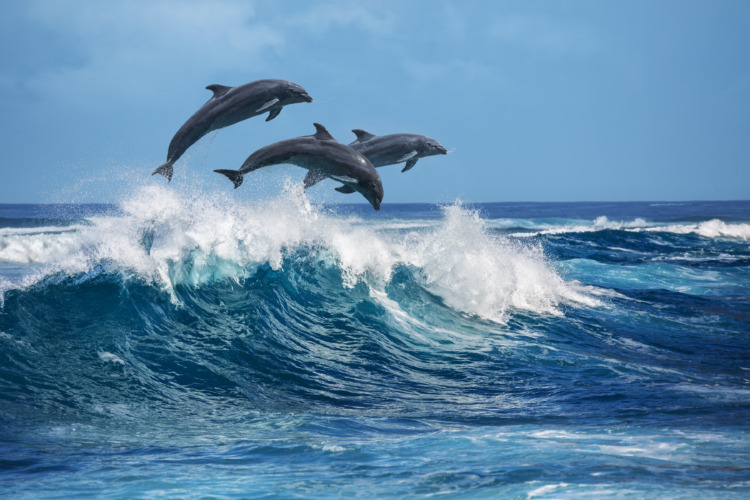
Bottlenose dolphins develop individually distinctive signature whistles. A 2013 study found that dolphins responded when researchers played a synthesized copy of their signature whistle, supporting the interpretation that familiar dolphins can use learned vocal labels to address one another. This is more precise than saying every whistle is a name.
Research on different types of dolphins also shows why labels are only one part of a communication system. Identity, alliance, activity and context can be distributed across the caller, whistle contour, sequence and surrounding behavior rather than encoded in one word-like unit.
A 2024 field study of African elephants used machine learning and playback experiments to show that calls addressed to particular elephants contained receiver-specific acoustic information. Elephants responded more strongly to calls originally directed at them than to control calls from the same caller. The authors described the signals as individually specific, name-like calls and found mixed evidence that different callers use the same label for a receiver.

Elephant communication is also multimodal. A 2024 study of elephant greetings found that elephants combine vocalizations with visual, audible and tactile gestures, adjusting some signals to the recipient’s visual attention. The name-like call finding should therefore be understood within a broader system of sound, scent, touch, posture and social knowledge—not as a standalone vocabulary.
Vocal Learning and Cultural Transmission
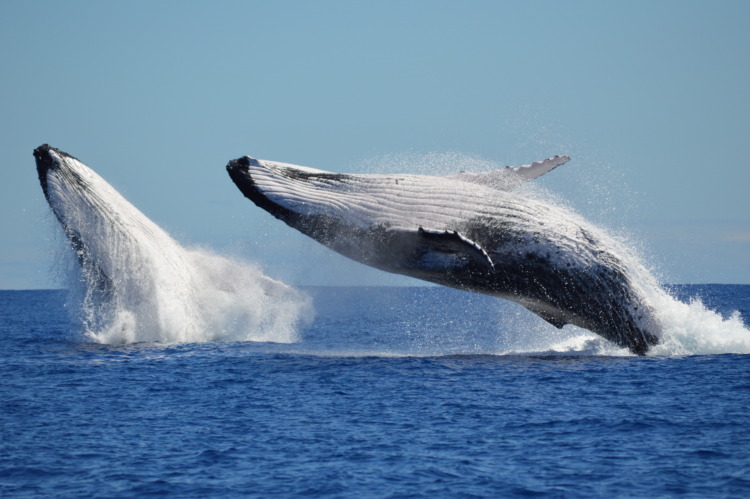
Humpback whale song changes through social learning. A 2025 Science study applied segmentation methods inspired by infant language learning to eight years of recordings and found recurring statistical structure in culturally transmitted songs. The finding suggests that learnability can shape complex sequences in distantly related species.
Statistical similarity is not semantic equivalence. The study did not show that song units function as words or that whales combine propositions. It showed that cultural transmission can produce structured, reusable units without human language.
What Recent Sperm Whale Research Actually Shows
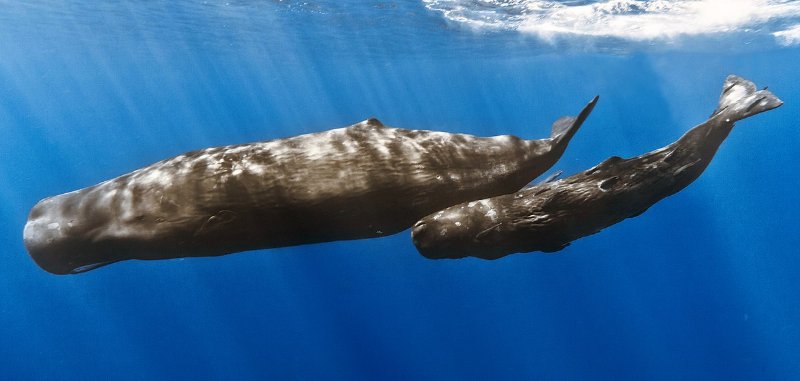
Sperm whales exchange short click sequences called codas. A 2024 analysis identified systematic variation in rhythm, tempo, rubato and ornamentation, showing that codas have richer contextual and combinatorial structure than a list of fixed call types would suggest.
A 2026 Proceedings B study reported vowel-like spectral categories, duration contrasts and patterns resembling coarticulation in human speech. These are structural and phonological parallels. The meanings carried by most codas and coda sequences remain unknown, so describing the findings as a translated sperm whale alphabet would go beyond the evidence.
Do These Findings Amount to Animal Language?
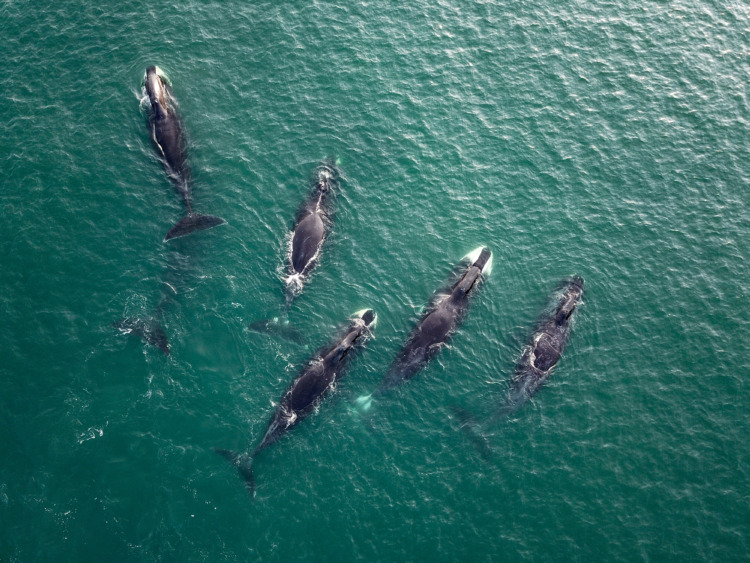
They establish that language-relevant components evolved outside humans: learned labels, compositional order, cultural transmission, flexible sequences and multimodal integration. They do not yet demonstrate a non-human system that freely combines meanings to describe open-ended relations, agents and events across daily life.
The most accurate position is neither “animals talk just like us” nor “animals only make reflexive noises.” Human language remains exceptional in demonstrated generativity, while the component abilities from which complex communication can evolve are distributed widely and deserve direct comparative testing.
How AI Is Changing Animal Communication Research
Modern bioacoustics produces more recordings than researchers can classify by hand. Autonomous microphones, hydrophones, camera traps, biologgers and synchronized behavioral observations create datasets in which machine learning can find recurring units, cluster signal variants, identify callers and map signals to contexts.
AI is strongest at pattern detection. A model may discover that one acoustic feature predicts a receiver, behavior or location, but correlation does not establish what a signal means to the animal. Meaning requires evidence from the whole interaction.
- Record signals with reliable information about caller, receiver, behavior and environment.
- Control for identity, recording equipment, distance, habitat and background noise so the model does not learn a shortcut.
- Form a biological hypothesis about the signal’s function or information content.
- Test the hypothesis through observation, playback or another ethically appropriate experiment.
- Replicate the result across individuals, groups, seasons or populations.
This sequence is slower than uploading audio to a model and asking for a translation, but it protects against confident false meanings. Researchers also need safeguards for experimental playback, location data and generative signals. Machine-generated animal signals raise ethical questions because a synthetic call could disturb an animal, alter a relationship or reveal a vulnerable population’s location even when the model producing it is technically accurate.
Why Communication Research Matters for Conservation
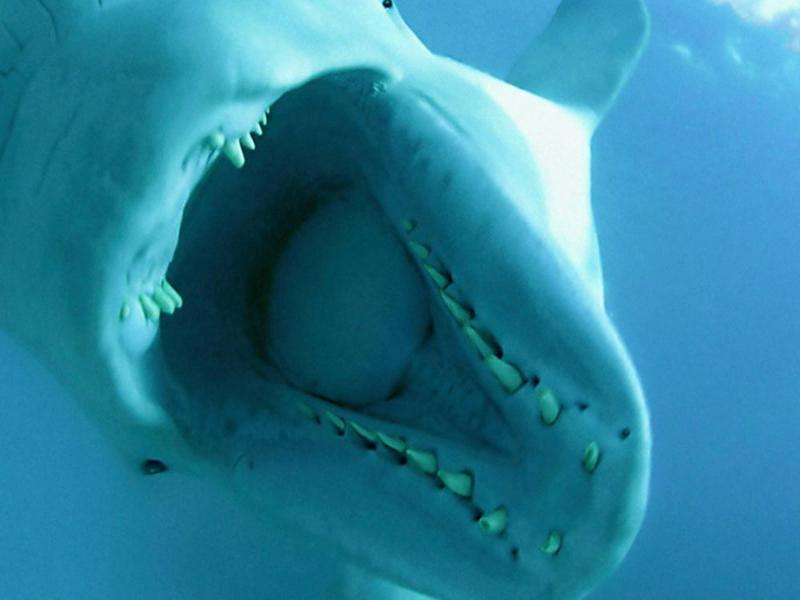
Communication is part of habitat. A breeding site may look intact while traffic, ships, construction or industrial noise masks the frequencies animals use to find mates, coordinate groups or detect danger. Light pollution can also disrupt visual displays, while habitat fragmentation can break chemical trails, vibration pathways or socially learned contact networks.
NOAA Fisheries’ passive-acoustics program uses underwater recordings to study marine-animal behavior, movement, distribution and exposure to human-made sound. Fixed recorders, gliders and buoys can sample day and night and cover periods when vessel or aerial surveys are impractical.
Passive acoustic monitoring is powerful but not a complete census. It detects animals only when they vocalize within the recorder’s effective range, and density estimates require information about call rates and detection probability. Combining acoustic, visual, environmental and movement data produces stronger conservation decisions.
The same principle applies beyond whales. Recording fish calls can help identify spawning activity and habitat use, adding behavioral context to broader questions about fish conservation and extinction risk. Communication data can also guide quieter shipping practices, seasonal restrictions, protected-area boundaries and real-time warnings when endangered animals enter hazardous areas.
What Scientists Still Do Not Know
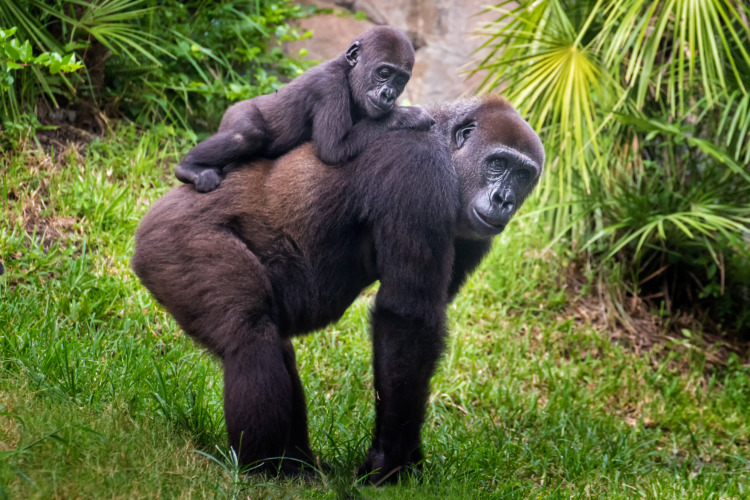
- Where meaning resides: in a single unit, a sequence, the caller’s identity, the social relationship, the surrounding behavior or a combination of these.
- How multimodal signals combine: whether one channel repeats, qualifies or changes the meaning of another.
- How intentional signaling is distributed: which species adjust messages to a receiver’s attention or knowledge, and under what conditions.
- How much complexity is being missed: sparse observations and human sensory limits can make a flexible system look simple.
- How communication changes under pressure: noise, climate shifts, habitat loss and altered social structure may change both signals and the ability to learn them.
- Where generativity begins: researchers still need comparable measures that distinguish occasional combinations from systems that productively create many new meanings.
Frequently Asked Questions

What is animal communication?
Animal communication occurs when a sender produces a signal that affects a receiver and the signal–response relationship has been shaped by evolution. Signals may be chemical, visual, acoustic, tactile, vibrational, electrical or multimodal.
How did animal communication evolve?
Animal communication evolved when receivers began responding to informative traits or behaviors and selection favored senders that produced clearer or more effective versions. Ecology, sensory systems, social life, learning and conflicts of interest then shaped different communication channels.
Do animals have language?
Many animals show language-like properties, including learned labels, ordered combinations, reference and cultural transmission. No non-human species has yet demonstrated the open-ended, meaning-based generativity of human language, so researchers usually describe specific capacities rather than declaring a complete language.
Which animals use name-like labels?
Bottlenose dolphins use learned signature whistles that familiar dolphins can copy when addressing them. African elephants also produce individually specific, name-like calls, although researchers found mixed evidence that different callers use an identical label for the same receiver.
Can AI translate animal communication?
AI can segment recordings, classify calls, identify individuals and detect patterns linked to context. It cannot establish meaning by pattern matching alone; translation claims require behavioral evidence, controlled experiments and replication.
Why does animal communication matter for conservation?
Calls and other signals reveal presence, movement, breeding activity, group structure and responses to disturbance. Monitoring communication can identify important habitat, measure noise impacts and support real-time protection, but acoustic surveys detect only animals that are vocalizing within range.
The Evolutionary Lesson

Animal communication evolved as many solutions to many problems, not as a single march toward speech. A pheromone trail, an elephant greeting, a bird’s ordered call sequence and a whale coda should be judged by how each system functions in its own sensory and social world.
The most important recent shift is methodological. Researchers can now record signals outside human perception, connect them to identified individuals and analyze patterns at a scale that was previously impossible. The responsible next step is not to declare that every pattern is language, but to test which structures carry information, how receivers interpret them and how those systems change across generations.
That evidence-based approach makes the study of animal communication more—not less—remarkable. It replaces unsupported claims with a clearer view of evolution’s many routes to coordination, recognition, persuasion, culture and shared information.