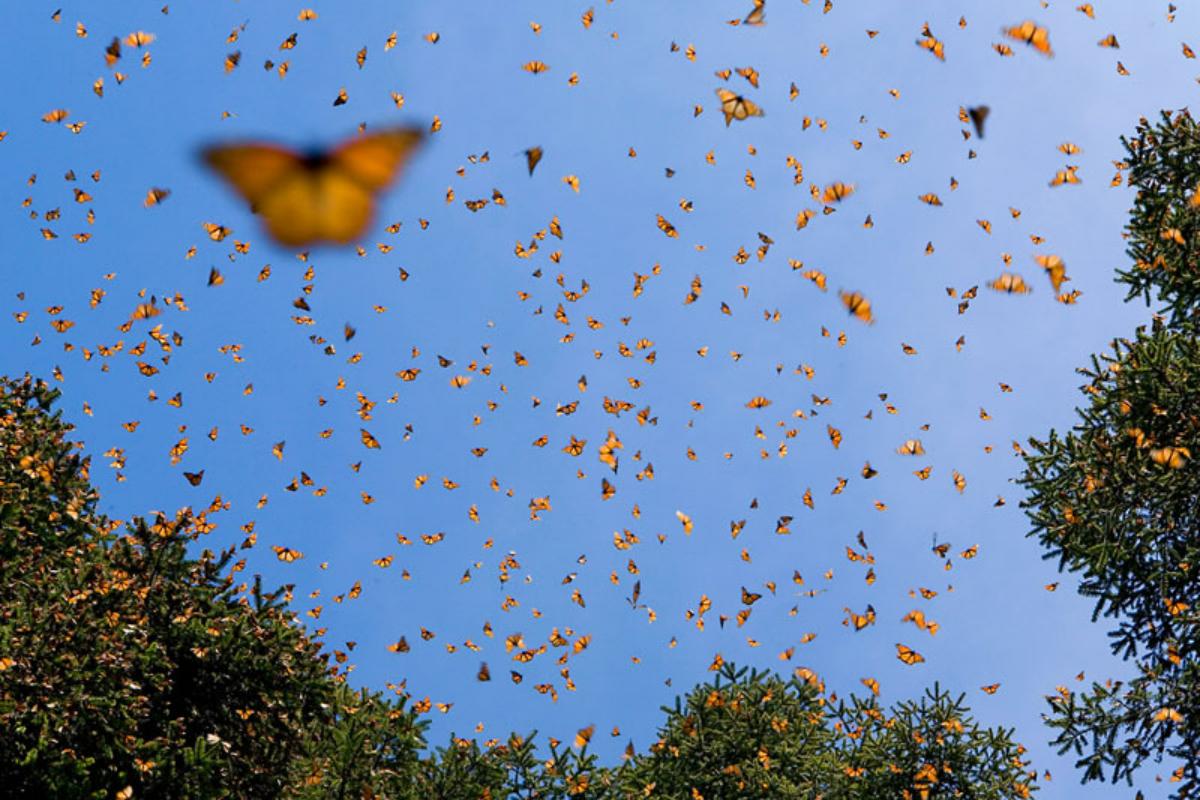
Animal migration is the repeated movement of animals between habitats so they can feed, breed, avoid harsh conditions, or complete a life cycle. It happens across land, sea, sky, rivers, mountains, and even the deep ocean.
Birds cross continents at night. Monarch butterflies travel between North America and overwintering forests in Mexico or coastal California. Pacific salmon leave rivers for the ocean, then return to freshwater spawning habitat. Wildebeest track rain-fed grass across the Serengeti-Mara ecosystem.
Direct answer: animals migrate when moving gives them a better chance to survive or reproduce than staying in one place. They do not rely on one simple “animal GPS.” Most migrants combine several cues, including daylight, stars, Earth’s magnetic field, smell, sound, memory, wind, currents, and social learning.
Key Takeaways About Animal Migration
- Animal migration is purposeful movement, not random wandering. Migrants move between habitats because different places solve different survival problems.
- Routes matter as much as destinations. A bird, fish, insect, or mammal may need safe stopover habitat, river access, feeding grounds, and breeding sites across an entire annual cycle.
- Navigation usually uses multiple cues. Sun position, stars, magnetic fields, odor, landmarks, wind, water currents, and learned routes can all contribute.
- Migration connects ecosystems. Migrants move nutrients, energy, pollen, seeds, and prey across landscapes and ocean basins.
- The biggest threats are human-driven. Habitat loss, barriers, overexploitation, climate change, artificial light, glass collisions, pollution, and noise can interrupt ancient routes.
What Is Animal Migration?
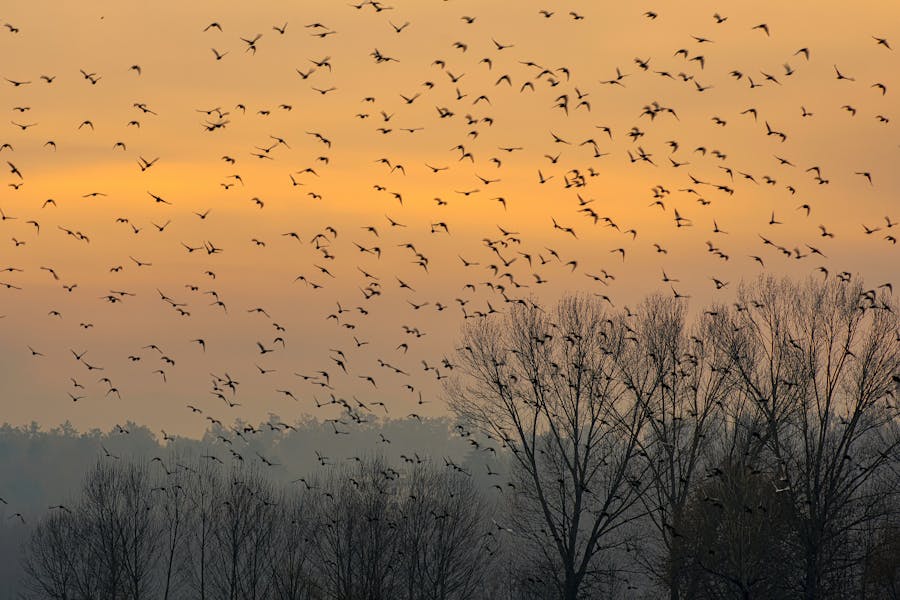
Animal migration is a regular or recurring movement between habitats. It is usually tied to food, breeding, seasonality, weather, life stage, or survival. A migration can cover thousands of miles, but distance alone is not the point. A short vertical movement from a mountain slope to a valley can be migration if it is repeated and tied to seasonal conditions.
Migration is different from ordinary daily movement. A deer walking to a stream is not necessarily migrating. A shorebird moving between Arctic breeding grounds and tropical wintering areas is. A salmon returning from the ocean to its natal river is. A monarch butterfly moving south in fall as part of a multi-generational cycle is.
The Convention on Migratory Species treats migratory species as animals that cyclically and predictably cross national boundaries. That definition matters because many migrations can only be protected through international cooperation.
Why Animals Migrate
Animals migrate because different habitats are useful at different times. A place that is excellent for breeding may be poor for winter survival. A feeding ground may be rich for adults but unsafe for young. Migration lets animals use the best available habitat at each stage of life.
| Migration driver | What it solves | Examples | Main risk |
|---|---|---|---|
| Food availability | Follows prey, plants, plankton, nectar, or grazing conditions | Whales, wildebeest, caribou, shorebirds | Loss of feeding grounds or stopover sites |
| Breeding | Moves animals to safer or more suitable places to reproduce | Pacific salmon, sea turtles, seabirds, amphibians | Blocked access to spawning or nesting habitat |
| Seasonal weather | Avoids freezing conditions, drought, heat, or storms | Songbirds, waterfowl, bats, elk | Climate-driven timing mismatches |
| Life stage | Moves young animals from nursery habitat to adult habitat | Salmon, eels, sea turtles, many marine fish | Barriers, bycatch, pollution, and altered currents |
| Predator or parasite pressure | Reduces exposure during vulnerable life stages | Ungulates, seabirds, some fish | Fragmented routes can remove the safety benefit |
Main Types of Animal Migration
Animal migration is not one behavior. It includes several movement strategies, and many species combine more than one.
Seasonal Migration
Seasonal migration follows predictable changes in temperature, daylight, rainfall, food, and breeding conditions. Many beautiful birds migrate between breeding grounds and wintering areas because insects, seeds, open water, or nesting conditions change with the seasons.
In North America, BirdCast estimates that 3 to 5 billion birds may migrate depending on the season, and more than a billion birds can be aloft on a major migration night. Most North American migratory bird species move at night, which makes artificial light and glass especially important threats.
Altitudinal Migration
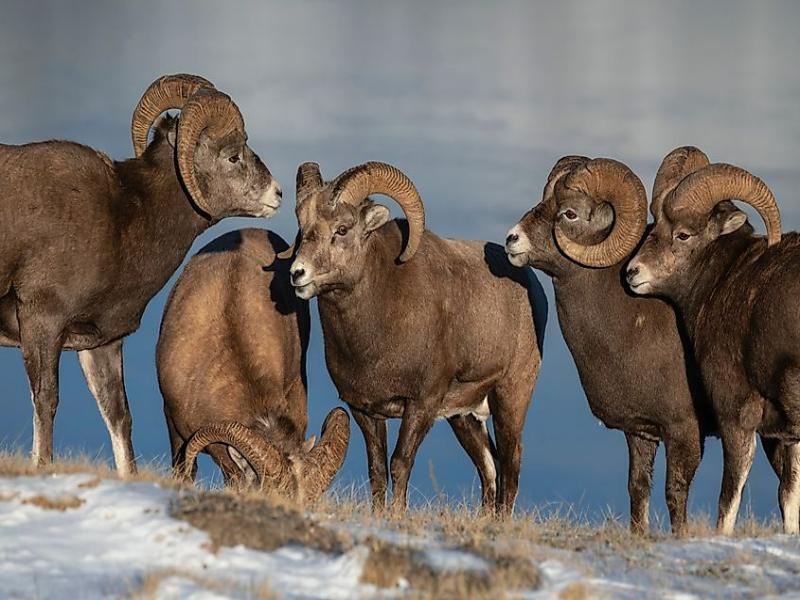
Altitudinal migration is vertical movement between elevation zones. Mountain goats, sheep, deer, birds, and insects may move upslope or downslope as snow, heat, plants, or insects shift. The distance may be short compared with a transoceanic flight, but the survival stakes can be just as high.
In tropical mountains, these movements may follow fruiting trees or flowering plants rather than cold weather. In alpine regions, animals often move lower when snow blocks access to forage.
Reproductive Migration
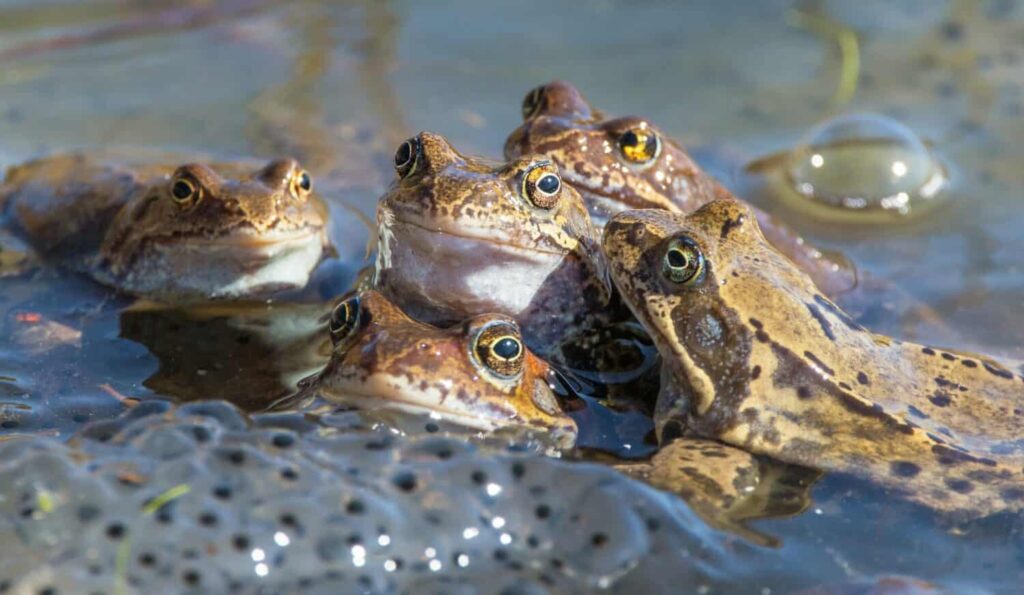
Reproductive migration moves animals to specific places where they mate, nest, spawn, or give birth. Pacific salmon are a clear example. NOAA Fisheries describes Chinook salmon as anadromous: they hatch in freshwater, migrate to the ocean, and return to freshwater streams and rivers to spawn.
Many amphibians also make reproductive migrations from upland habitat to seasonal ponds or streams. These journeys may be short, but roads, drainage, and habitat fragmentation can make them dangerous.
Nomadic and Irruptive Movements
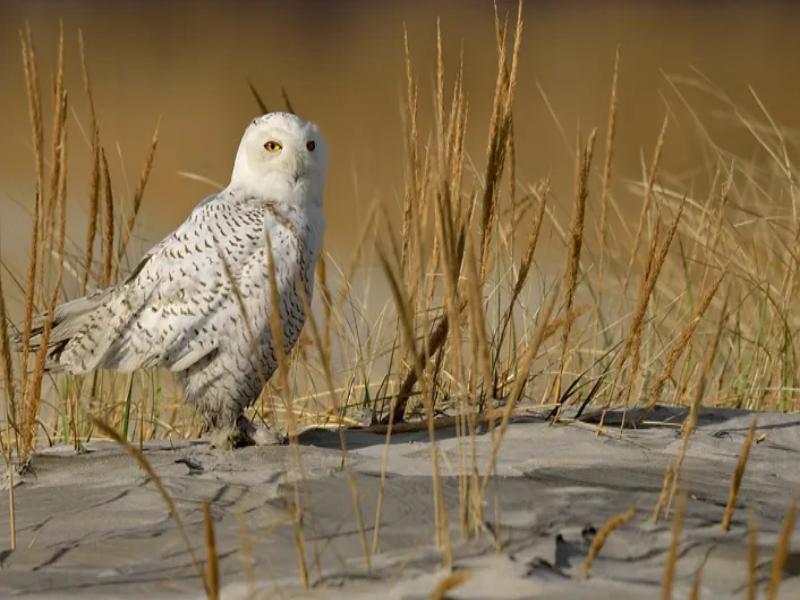
Nomadic movements are less predictable than seasonal migration. Animals move in response to scattered or unstable resources such as rainfall, grass growth, seeds, fish, or prey. Snowy owls, for example, can move south in unusually large numbers during some winters when prey conditions change in the Arctic. Readers interested in owl diversity can compare this behavior with other types of owls.
Irruptions are sudden, irregular movements of many individuals outside their usual range. They are often linked to food shortages, population booms, or weather conditions.
Diel Vertical Migration
Diel vertical migration happens daily, usually in aquatic environments. Tiny animals such as zooplankton rise toward the surface at night to feed and sink deeper during the day to avoid predators. This movement is easy to miss, but it is one of the largest recurring animal movements on Earth by biomass.
Famous Animal Migration Examples
The best-known migrations are not impressive only because of distance. They also show how animals solve navigation, timing, energy, and survival problems in different ways.
| Animal | Migration pattern | How it navigates | Why it matters |
|---|---|---|---|
| Arctic tern | Moves between Arctic or sub-Arctic breeding areas and southern ocean feeding areas | Uses multiple orientation cues and follows productive marine conditions | Shows how long-distance bird migration links polar marine ecosystems |
| Monarch butterfly | Moves between North America and overwintering sites in Mexico or coastal California | Uses a time-compensated sun compass and other directional cues | Depends on milkweed, nectar, and protected overwintering forests |
| Pacific salmon | Moves from freshwater to ocean feeding grounds, then back to freshwater spawning habitat | Uses ocean-scale cues and strong olfactory imprinting near home streams | Transfers marine nutrients into rivers and forests |
| Wildebeest | Moves through the Serengeti-Mara ecosystem following rain and fresh grass | Uses rainfall, grazing conditions, social movement, and landscape memory | Maintains grazing dynamics, supports predators, and shapes grassland ecology |
Arctic Tern: One of the Longest Bird Migrations
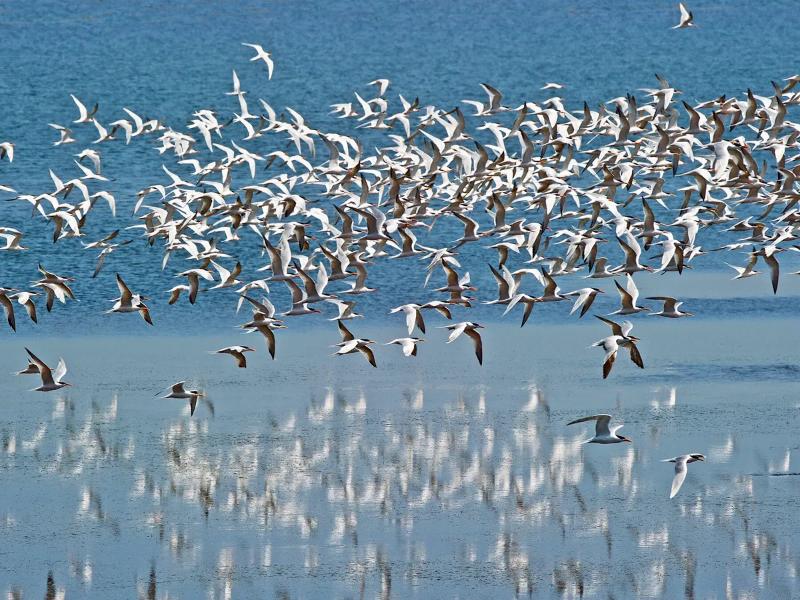
The Arctic tern is one of the most famous long-distance migrants. The British Trust for Ornithology describes it as a bird with one of the longest migrations of any species, moving from Arctic breeding areas toward the Antarctic region and experiencing more daylight than almost any other animal.
This migration is not a simple straight line. Arctic terns use wind, ocean productivity, and seasonal timing to move between feeding and breeding opportunities. For readers building broader bird knowledge, this is a useful example to compare with other types of birds.
Monarch Butterfly: A Multi-Generational Migration
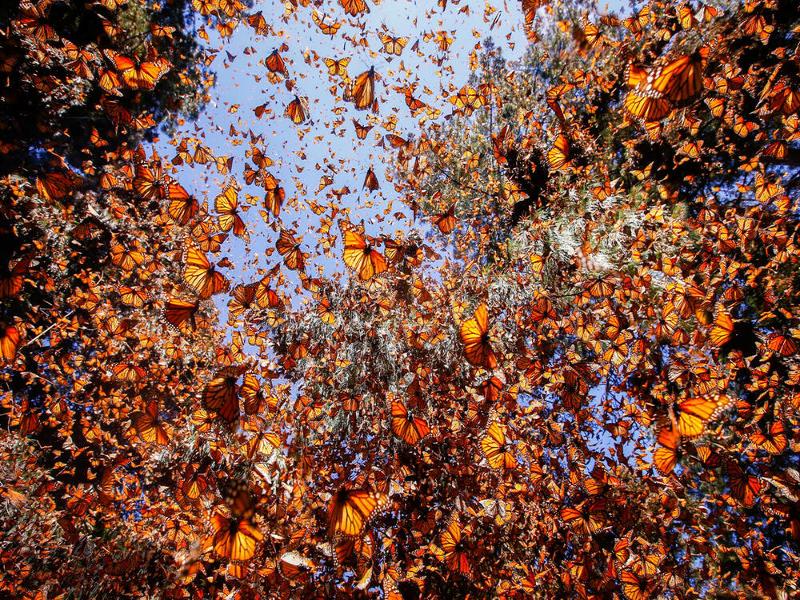
Monarch butterflies are among the best-known migratory insects. The USDA Forest Service notes that some monarchs travel as far as 3,000 miles and that the northward migration can take several generations.
Eastern monarchs overwinter in mountain forests in central Mexico, while western monarchs overwinter mainly along coastal California. Their migration depends on milkweed for caterpillars, nectar for adults, and protected overwintering habitat. Monarchs are also a helpful reminder that butterflies are insects, and insects can be major migratory animals.
The U.S. Fish & Wildlife Service identifies habitat loss, insecticide exposure, and climate-related stress as key threats to monarchs. Because legal protections can change, readers should check the agency’s current status page for the latest regulatory details.
Wildebeest: Large-Scale Land Migration
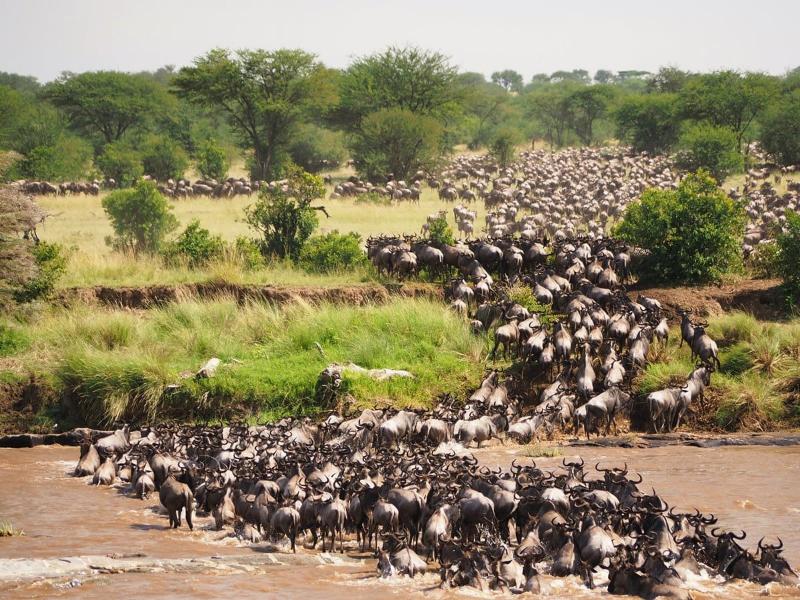
The Serengeti-Mara wildebeest migration is the best-known large land migration. More than a million wildebeest move with large numbers of zebras and gazelles through an ecosystem shaped by rain, grass growth, predators, and river crossings.
This migration is not just a wildlife spectacle. Grazing patterns help maintain open grassland. Predator-prey relationships depend on the herds. Dung returns nutrients to the soil. If routes are blocked by fences, roads, settlements, or incompatible land use, the ecological effect can extend far beyond the animals moving that season.
Pacific Salmon: Returning From Ocean to River
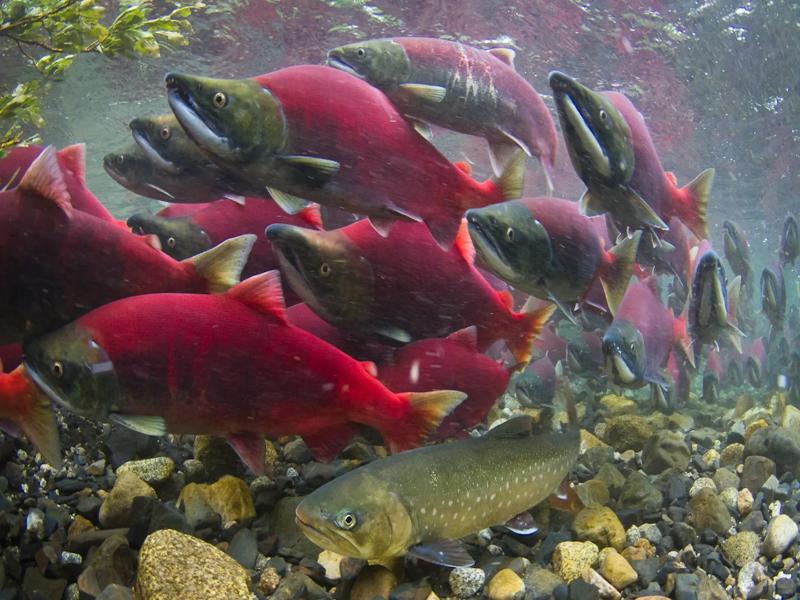
Pacific salmon migrations connect rivers, oceans, and forests. NOAA Fisheries explains that Chinook salmon hatch in freshwater, migrate to the ocean, and return to freshwater streams or rivers to spawn. Many Pacific salmon die after spawning, and their bodies bring marine nutrients back into freshwater and nearby land ecosystems.
Salmon navigation works in stages. Ocean movement may involve large-scale environmental cues. Near rivers, smell becomes especially important because young salmon imprint on the chemical signature of their home water. Dams, degraded streams, low flows, warming water, and blocked passage can all interrupt this cycle.
How Animals Navigate Without GPS
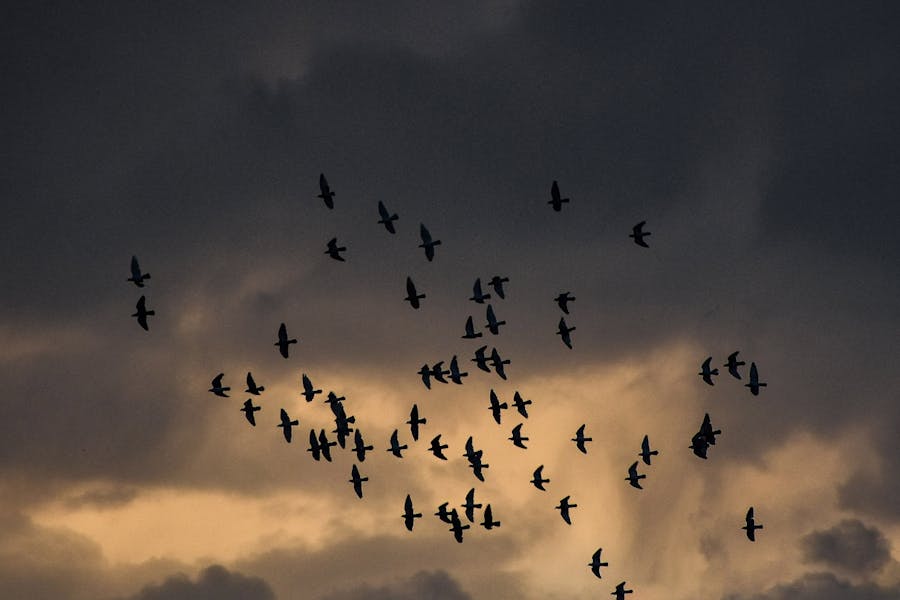
Animal navigation is best understood as redundancy. A migrant that relies on only one cue is vulnerable when clouds hide the stars, currents shift, smells disperse, or human structures alter the landscape. Successful migrants often combine several systems.
Magnetic Fields
Many migratory animals appear to detect information from Earth’s magnetic field. Researchers continue to study the exact biological mechanisms, and the answer may differ among birds, fish, turtles, and insects. Magnetic information can help with direction, but it is rarely the only cue involved.
For monarch butterflies, the USDA Forest Service notes that directional aids may include the sun and magnetic cues. For salmon, magnetic and ocean-scale cues may help with broad movement, while smell becomes especially important near home rivers.
Sun, Stars, and Polarized Light
Many animals use the sun as a compass, but that requires an internal clock because the sun’s position changes throughout the day. Some night-migrating birds also orient using star patterns. Polarized light can provide directional information even when the sun is low or partly obscured.
Smell and Chemical Cues
Smell can be critical at the end of a migration. Salmon are the classic example: juveniles imprint on the chemical character of their natal streams, then use olfactory cues years later as adults returning to spawn.
Landmarks, Memory, and Social Learning
Not all migration is purely instinctive. Many animals learn routes from parents, experienced group members, or repeated travel. Mammals such as elephants, caribou, whales, and ungulates can rely on memory, landscape features, social leadership, and traditional movement corridors.
Wind, Currents, and Weather
Migration is also energy management. Birds wait for favorable winds. Marine animals use currents. Soaring birds use thermals. Even small insects can move long distances when they time movement with wind systems. Efficient migrants do not simply fight the environment; they read it.
Why Animal Migration Matters
Animal migration keeps ecosystems connected. When migrants move, they also move nutrients, energy, genes, prey, seeds, pollen, and ecological pressure.
- Salmon move nutrients from ocean to forest. Their carcasses feed animals and fertilize freshwater and streamside ecosystems.
- Birds connect breeding, stopover, and wintering habitat. A population may depend on several countries and habitats during one year.
- Ungulates shape grasslands. Grazing, trampling, dung, and predator-prey movement affect vegetation and nutrient cycling.
- Insects support pollination and food webs. Migratory insects can feed birds, bats, fish, and other animals while also moving pollen and energy across regions.
- Marine migrants link ocean basins. Whales, turtles, fish, and seabirds move through feeding grounds, breeding areas, and migratory corridors that may cross many jurisdictions.
The ecological value of migration is one reason the 2024 State of the World’s Migratory Species report matters. It found that many listed migratory species face declining populations, with major pressures including habitat loss, overexploitation, pollution, and climate change.
Threats Facing Migrating Animals
Migratory animals are vulnerable because they need several places to remain usable at the right time. A species can lose a migration even if its breeding area survives, because a stopover site, river passage, wintering ground, or feeding area disappears.
Habitat Loss and Stopover Failure
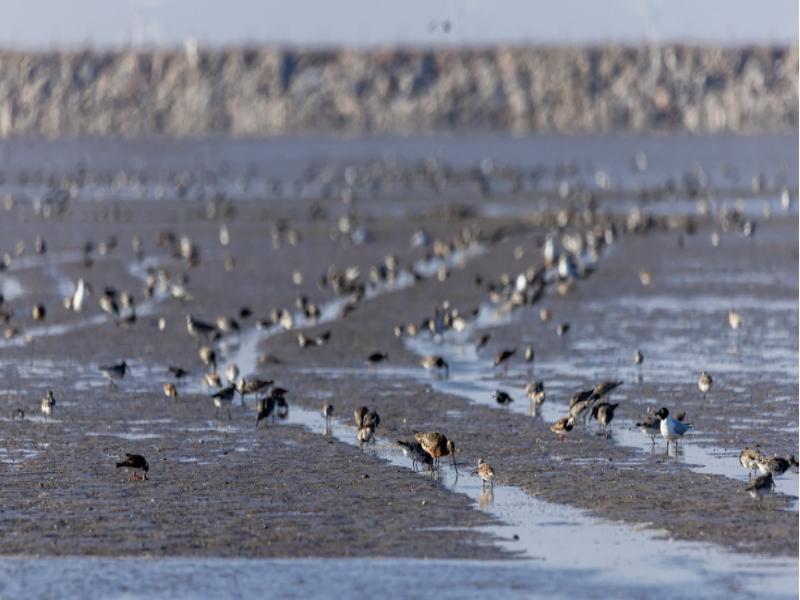
Stopover sites are refueling stations. Shorebirds may need mudflats rich in invertebrates. Songbirds need forests, shrublands, and safe resting places. Waterfowl need wetlands. Pollinators need nectar plants. If one critical stopover site is lost, migrants may not have enough energy to finish the journey.
Barriers: Dams, Roads, Fences, and Fragmentation
Barriers can turn a historic route into a dead end. Dams block fish. Roads kill amphibians and mammals. Fences can interrupt ungulate movement. Poorly placed infrastructure can create collision risk for birds and bats. Fragmentation is especially damaging because migration depends on connection.
Artificial Light and Glass Collisions
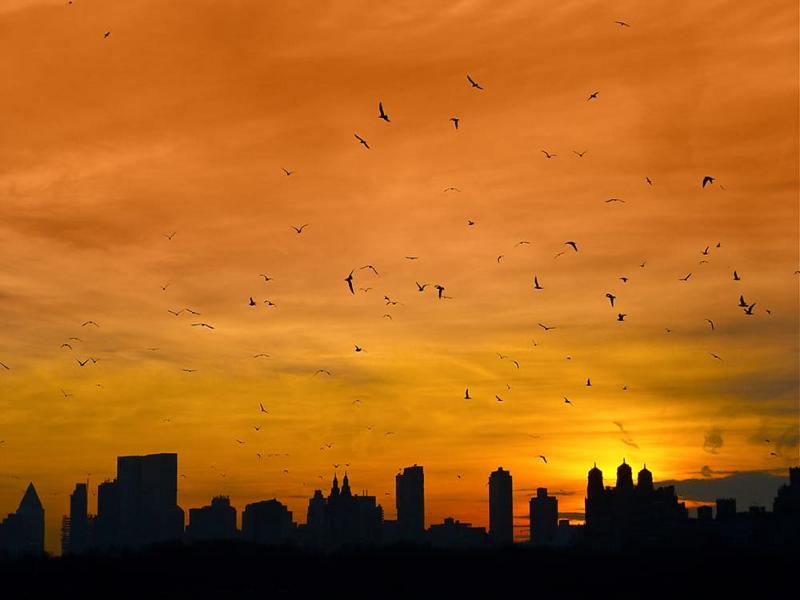
Artificial light can attract and disorient night-migrating birds, especially around cities, towers, stadiums, and brightly lit buildings. Glass is another major hazard because birds often cannot recognize reflections as barriers. BirdCast’s Treat Glass guidance recommends exterior patterns or films that make windows visible to birds.
BirdCast’s Lights Out guidance also recommends turning off non-essential lights from dusk to dawn during migration periods, especially from March 1 to June 15 and August 15 to November 30 in the United States.
Climate Change and Timing Mismatches
Migration depends on timing. If insects emerge earlier, snow melts sooner, drought dries wetlands, or ocean prey shifts, migrants may arrive after the best feeding window has passed. These mismatches can reduce survival and reproduction even when animals still complete the route.
Pollution, Noise, Bycatch, and Overexploitation
Pollution can contaminate stopover sites, rivers, wetlands, and ocean feeding grounds. Noise can interfere with communication and orientation. Fishing bycatch can kill marine migrants. Hunting, trapping, and illegal wildlife trade can add pressure when species are already stressed by habitat and climate change.
How Conservation Protects Migration Routes
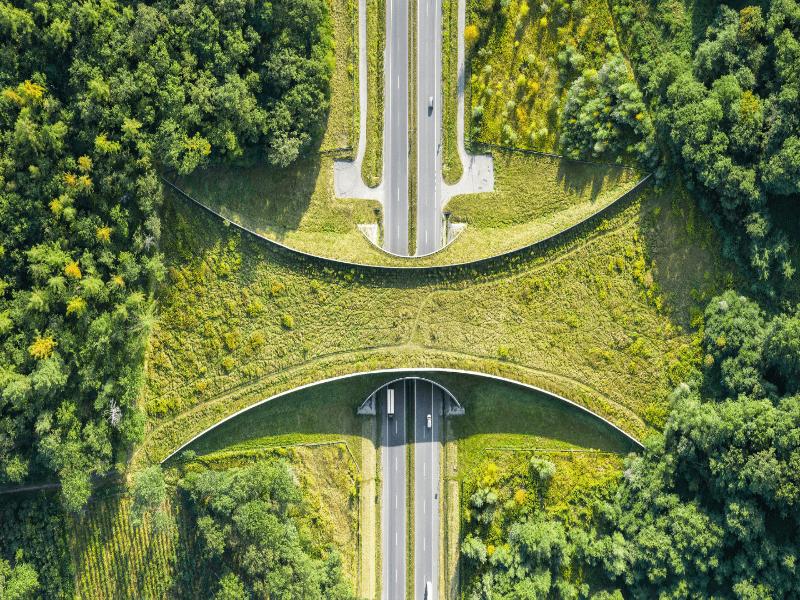
Migration conservation works best when it protects the full route, not just one attractive destination. A protected breeding area is not enough if the wintering habitat is gone. A restored river is not enough if fish cannot pass a dam. A monarch overwintering forest is not enough if milkweed and nectar disappear along the route.
Protect Complete Annual Cycles
Conservation planning should identify breeding areas, migration corridors, stopover sites, wintering areas, and feeding grounds. For international migrants, that requires cooperation across borders. For local migrations, it requires land-use planning that keeps movement pathways open.
Restore Corridors and Remove Barriers
Wildlife overpasses, underpasses, dam removals, fish ladders, fence modifications, wetland restoration, and river reconnection can help animals move through human-altered landscapes. These projects are most effective when they are placed where animals already try to move.
Use Better Monitoring
Tracking tags, radar, acoustic monitoring, genetic tools, and community science now reveal migrations that were previously invisible. BirdCast, for example, uses weather radar to estimate bird migration in near real time and forecast nights when reducing light can make the biggest difference.
Make Everyday Places Safer
Migration protection is not only for national parks and reserves. Homes, farms, schools, office buildings, shorelines, and city parks can either help or harm migrants.
- Turn off unnecessary outdoor lights during peak migration nights.
- Treat dangerous windows with exterior patterns, film, screens, or other bird-visible markers.
- Plant native nectar plants and host plants where appropriate for your region.
- Create or support a wildlife-friendly garden with layered habitat, pesticide reduction, and seasonal food sources.
- Support wetland, grassland, river, and coastal habitat restoration.
- Use community science tools to report sightings and help researchers track migration timing.
Animal Migration FAQ
What is animal migration?
Animal migration is the repeated movement of animals between habitats so they can feed, breed, avoid harsh conditions, or complete a life cycle. It can happen across continents, oceans, rivers, mountains, or short local routes.
Why do animals migrate?
Animals migrate because different places meet different needs at different times. Migration can help animals find food, reproduce, avoid harsh weather, reduce predation risk, or move between juvenile and adult habitats.
How do animals know where to go?
Migratory animals use multiple navigation cues, including the sun, stars, Earth’s magnetic field, smell, sound, landmarks, wind, currents, memory, and social learning. Most species do not rely on just one cue.
What animal has the longest migration?
The Arctic tern is one of the best-known record holders for long-distance migration. It travels between northern breeding regions and southern ocean feeding areas, following seasonal productivity and long daylight periods.
How far do monarch butterflies migrate?
Some monarch butterflies travel as far as 3,000 miles. Eastern monarchs move between Canada or the United States and overwintering forests in central Mexico, while western monarchs mainly overwinter along coastal California.
How do salmon find their home river?
Salmon use different cues at different stages. Broad ocean movement may involve environmental and magnetic cues, while the final return to a natal stream depends strongly on smell because young salmon imprint on the chemical signature of home waters.
What are the biggest threats to animal migration?
Major threats include habitat loss, stopover habitat destruction, dams, roads, fences, artificial light, glass collisions, climate change, pollution, noise, bycatch, and overexploitation.
How can people help migrating animals?
People can help by reducing unnecessary night lighting during migration, treating windows to prevent bird collisions, planting native habitat, reducing pesticide use, supporting wildlife corridors, and protecting wetlands, rivers, grasslands, and coastal stopover sites.
Conclusion
Animal migration is more than movement. It is ecological connection. Migrants link rivers to oceans, forests to skies, grasslands to predators, and breeding grounds to wintering habitat. When migration routes remain open, ecosystems can keep exchanging energy, nutrients, genes, and life.
The challenge is that migration depends on continuity. A route can fail when one wetland is drained, one river is blocked, one city glows too brightly, or one key feeding ground disappears. Protecting animal migration means protecting the full chain of places that animals need across a year, a lifetime, or several generations.
The good news is practical action exists. Safer windows, darker nights, restored rivers, protected stopover sites, wildlife corridors, native plants, better monitoring, and international cooperation all reduce pressure on migratory animals. The more we keep routes connected, the more room wildlife has to keep moving with the seasons.