Water conservation at home means using less water to accomplish the same tasks – repairing leaks, installing efficient fixtures, and irrigating a landscape only when the plants actually need it. It matters because the average American family uses more than 300 gallons of water per day at home, and the U.S. Environmental Protection Agency estimates that households can cut that by at least 20% through efficient fixtures alone.
Water conservation is the practice of using water efficiently to reduce unnecessary water usage. It is not just about saving water for its own sake, but about managing water sustainably to protect natural ecosystems, ensure a steady water supply for future generations, and maintain the quality of freshwater sources.
The scale is easy to underestimate. According to EPA WaterSense, roughly 70% of household water use happens indoors and 30% outdoors – though outdoor use runs far higher in the drier parts of the country. Per person, the average American uses about 82 gallons a day, which means a family of four moves close to 10,000 gallons in a single month.

Your everyday habits can have a big impact on water conservation efforts. Simple measures like fixing leaks, using water-efficient appliances, and being mindful of your water consumption can significantly reduce the amount of water that goes to waste.
Beyond personal habits, embracing conservation measures can also lead to energy savings, as the treatment and distribution of water are energy-intensive. Efficient water use helps lessen the energy required to process and deliver it to homes, businesses, and communities, reducing the greenhouse gas emissions that contribute to climate change.
The Seven Highest-Impact Water Savings at Home
Not every water-saving tip is worth the same. These seven deliver the largest measured savings for the least effort, ordered by impact.
- Find and fix leaks. The average household loses about 9,400 gallons a year – roughly 180 gallons a week – to leaks it never notices.
- Replace a pre-1994 toilet. Toilets are the single largest indoor use at about 28% of indoor water, and older models flush 3.5 to 7 gallons versus 1.28 for a WaterSense model.
- Fix the irrigation system before adding plants. As much as 50% of outdoor water is lost to wind, evaporation and runoff from poorly designed or scheduled systems.
- Swap the showerhead. A WaterSense showerhead saves the average family about 2,700 gallons per year.
- Upgrade the clothes washer. An ENERGY STAR full-size washer uses about 14 gallons per load against 20 for a standard machine – more than 2,000 gallons a year.
- Add mulch and group plants by water need. Free, and it cuts irrigation demand for the whole growing season.
- Capture rainwater for the garden. One inch of rain on a 1,000-square-foot roof yields roughly 620 gallons.
Where Your Household Water Actually Goes
Conservation advice tends to focus on the visible – a running tap, a long shower. The measured data tells a different story. EPA’s water conservation planning benchmarks break down a typical home’s indoor use, before any efficiency measures, roughly as follows.
- Toilets – about 28% of indoor use, the largest single category.
- Clothes washers – about 23%.
- Showers – about 19%. EPA’s showerhead guidance puts showering at close to 17% of residential indoor use, or nearly 40 gallons a day for an average family.
- Faucets – about 16%.
- Leaks – about 10%, and this is the share that efficiency measures cut hardest.
- Baths and dishwashers – under 2% each.
Two things fall out of that table immediately. First, the dishwasher is close to irrelevant to your water footprint, despite being the fixture people most often feel guilty about. Second, leaks alone account for roughly as much water as every bath in the house – and unlike a bath, nobody enjoys them.
Outdoor use is the bigger lever in dry regions
Residential outdoor water use in the United States runs to nearly 9 billion gallons every day, overwhelmingly for landscape irrigation. EPA estimates as much as half of it is wasted through evaporation, wind drift and runoff caused by irrigation systems that were badly designed, badly installed, or simply left on the wrong schedule.
If you live in the arid West, outdoor use can dwarf the 30% national average. That makes the irrigation audit described below the highest-value hour you will spend on water conservation all year.
Fixing Leaks

Leaks are the cheapest water you will ever save, because you are already paying for it. EPA WaterSense estimates that household leaks waste nearly 1 trillion gallons nationwide every year, and that the average home loses about 9,400 gallons annually – roughly 180 gallons a week. Ten percent of homes have leaks bad enough to waste 90 gallons or more per day.
The individual numbers are just as stark. A faucet dripping once per second wastes more than 3,000 gallons a year – enough for about 180 showers. Most of these repairs cost a few dollars in parts.
Check for Leaks:
- Use Your Water Meter: Examine the meter before and after a 2-hour period when no water is used. If the reading changes, you likely have a leak.
- Monitor Your Bills: A sudden increase in your water bill may indicate a leak in your system.
Common Leak Sources:
- Toilets: A worn flapper is the most common cause of silent water loss, and a leaking toilet can waste 200 gallons a day on its own. Put a few drops of food coloring in the tank and wait 10 minutes without flushing. If color appears in the bowl, the flapper is leaking – a part that typically costs under $10.
- Faucets/Taps: Replacing washers or adding faucet aerators can fix drips and enhance water efficiency.
- Home Infrastructure: Periodically inspect pipes, valves, and the septic system for signs of leaks.
Adopt Water Efficient Practices:
- Retrofit your home with WaterSense labeled fixtures and ENERGY STAR appliances, starting with the toilet.
- Insulate hot water pipes so you waste less water waiting for the tap to run warm.
- Where a septic system is under strain, a composting toilet removes the largest indoor water use entirely – a niche option, but the most complete one.
By taking these proactive steps, you save water, protect water quality, and contribute to the longevity of your home’s water system and infrastructure while keeping your utility bills in check.
See Related: Is Water a Renewable Resource?
What the WaterSense Label Actually Means
WaterSense is a labeling program run by the U.S. Environmental Protection Agency, the water equivalent of ENERGY STAR. A labeled product is independently certified to use at least 20% less water than the federal standard while performing as well or better. That last clause matters: the program exists because the low-flow fixtures of the 1990s worked badly and taught a generation of homeowners to distrust efficiency.
Since the program launched in 2006, WaterSense products have saved American consumers more than 1.5 trillion gallons of water and over $32.6 billion in utility bills.
The specifications, in plain numbers
- Toilets: WaterSense models flush a maximum of 1.28 gallons per flush against a federal standard of 1.6. Toilets manufactured before the 1994 standard took 3.5 to 7 gallons, which is why replacing one is the single largest fixture upgrade available.
- Showerheads: a maximum of 2.0 gallons per minute against the 2.5 gpm federal cap – about 2,700 gallons saved per year for an average family.
- Bathroom faucets: a maximum of 1.5 gallons per minute against a 2.2 gpm typical flow. On an existing faucet, a screw-in aerator achieves most of this for a few dollars.
- Irrigation controllers: WaterSense also labels weather-based controllers, which adjust the schedule to actual conditions instead of running a fixed timer through a rainstorm.
Appliances: the clothes washer is the one that counts
Clothes washers are close to a quarter of indoor water use, so the appliance upgrade with real leverage is the washing machine, not the dishwasher. A full-size ENERGY STAR certified washer uses about 14 gallons per load against 20 gallons for a standard machine – more than 2,000 gallons a year for a typical household. Front-loading models use roughly 50% less water than a top-load agitator machine.
Modern dishwashers, by contrast, already use less water than washing the same dishes by hand. Running one only when full is worth doing, but it will not transform your bill.
The same logic applies to the building envelope: heating water is one of the largest energy loads in a home, so choosing more energy-efficient doors and glazing reduces the heating demand that your hot water use sits alongside.
Efficient Water Use in Gardening
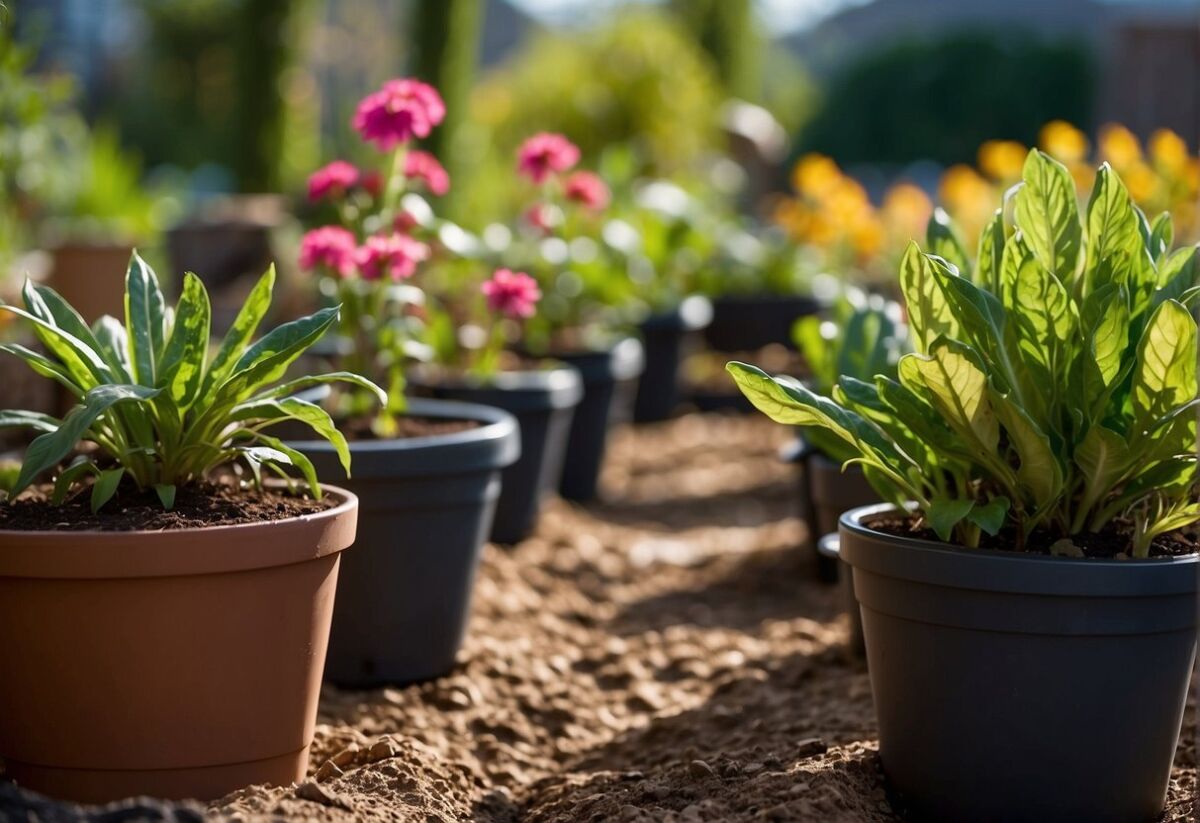
Outdoor irrigation is where the largest volumes are won and lost. Residential outdoor use in the U.S. is nearly 9 billion gallons a day, and EPA estimates as much as 50% of it never reaches a plant root – it evaporates, blows sideways, or runs down the driveway. Fixing how you water usually saves more than changing what you plant.
Here is how to manage that water efficiently and still keep a healthy landscape:
Irrigation Timing and Techniques:
- Morning Glory: Water your garden early, ideally between 6:00 and 8:00 a.m. This minimizes evaporation and ensures more water reaches the plant roots.
- Drip It: Employ drip irrigation systems or soaker hoses, which deliver water directly to the soil, reducing waste and evaporation compared to traditional sprinklers.
Soil Management:
- Organic Matters: Enhance your garden’s soil by regularly incorporating organic matter. This will improve its ability to retain moisture and reduce your garden’s overall water needs.
- Mulch Magic: Apply a two- to three-inch layer of mulch around your plants. It keeps soil moist by cutting evaporation and suppresses the weeds that compete for water – which is also the least chemical-dependent way to manage them, worth weighing if you have considered whether pre-emergent weed preventers are bad for the environment.
Thoughtful Landscaping:
- Go Native: Choose native plants that are well-adapted to your region’s climate. They usually require less water and are more resistant to local pests and diseases.
- Zonal Thinking: Organize plants into hydrozones, grouping them by similar water requirements. This avoids over- or under-watering whole sections of the garden.
- Scale to the space: containers dry out far faster than beds, so if you are working with a balcony or apartment garden, prioritize self-watering planters and larger pots over frequent hand-watering.
By integrating these strategies into your routine, you’ll conserve a vital resource and cultivate a thriving and sustainable garden. Remember, managing your outdoor water use isn’t just good for the environment—it’s also practical for maintaining a beautiful space around your home.
Rainwater Harvesting
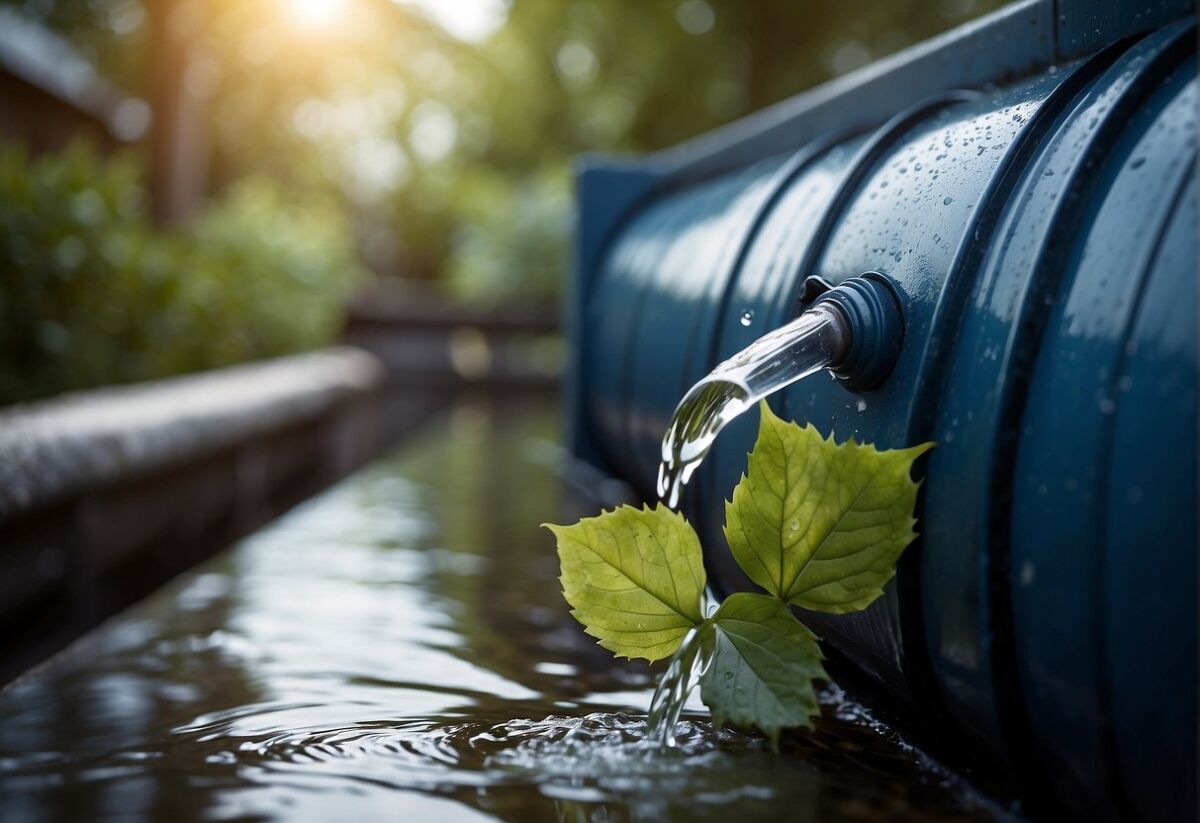
Rainwater harvesting is a practical method of conserving water by collecting and storing rain for reuse. This process helps you alleviate the demand for municipal water supplies, promoting sustainable management of this precious resource.
When rainwater is captured, it reduces the strain on infrastructure such as water treatment and wastewater treatment facilities.
How much water can your roof actually collect?
This is the number most rainwater guides leave out, and it is simple arithmetic. One inch of rain falling on one square foot of roof produces 0.623 gallons. So:
Gallons = rainfall in inches x roof area in square feet x 0.62 x system efficiency
One inch of rain on a 1,000-square-foot roof yields roughly 620 gallons before losses. A typical 55-gallon rain barrel therefore fills from less than a tenth of an inch of rain, which is why a single barrel empties fast in summer and why serious systems use several barrels or a cistern. Allow for 10-20% loss to first-flush diversion, splash and evaporation.
Benefits of Rainwater Harvesting:
- Conservation of Water Resources: It directly supports water efficiency by using rainwater instead of potable water for non-drinking purposes.
- Lower Water Rates: Using harvested rain properly can significantly save water bills.
- Energy Savings: Less demand for water utilities reduces the energy footprint associated with treating and pumping water.
Ways to Use Harvested Rainwater:
- Gardening: Water your plants with natural rainwater.
- Flushing Toilets: Use stored rainwater for flushing to save treated water.
- Laundry: Connect your washing machine to a rainwater storage system.
Getting Started:
- Set up a catchment area, usually a rooftop, to collect rainwater.
- Channel the water through gutters into a storage system. Sizing matters more than most guides admit – compare rainwater collection system options before buying a single barrel you will empty in a week.
- Implement a basic filtration system to remove debris.
- Do not drink untreated roof runoff. Rainwater picks up bird droppings, roofing particles and atmospheric deposition, so potable use requires filtration and disinfection – and in most jurisdictions a permit and an inspected backflow-prevention assembly before any rainwater is plumbed indoors.
Implementing a rainwater harvesting system is a practical step toward water efficiency, and it prepares a household for drought or restriction periods when outdoor watering is limited.
Check your state’s rules first. Residential rainwater collection is legal across the United States, but it is regulated rather than unrestricted – Colorado, for example, caps most households at two barrels totalling 110 gallons and restricts the water to non-potable outdoor use. Several states run the opposite way and offer rebates or tax credits for installing a system.
See Related: Breaking Down the Best Off-Grid Water Systems
Greywater Recycling
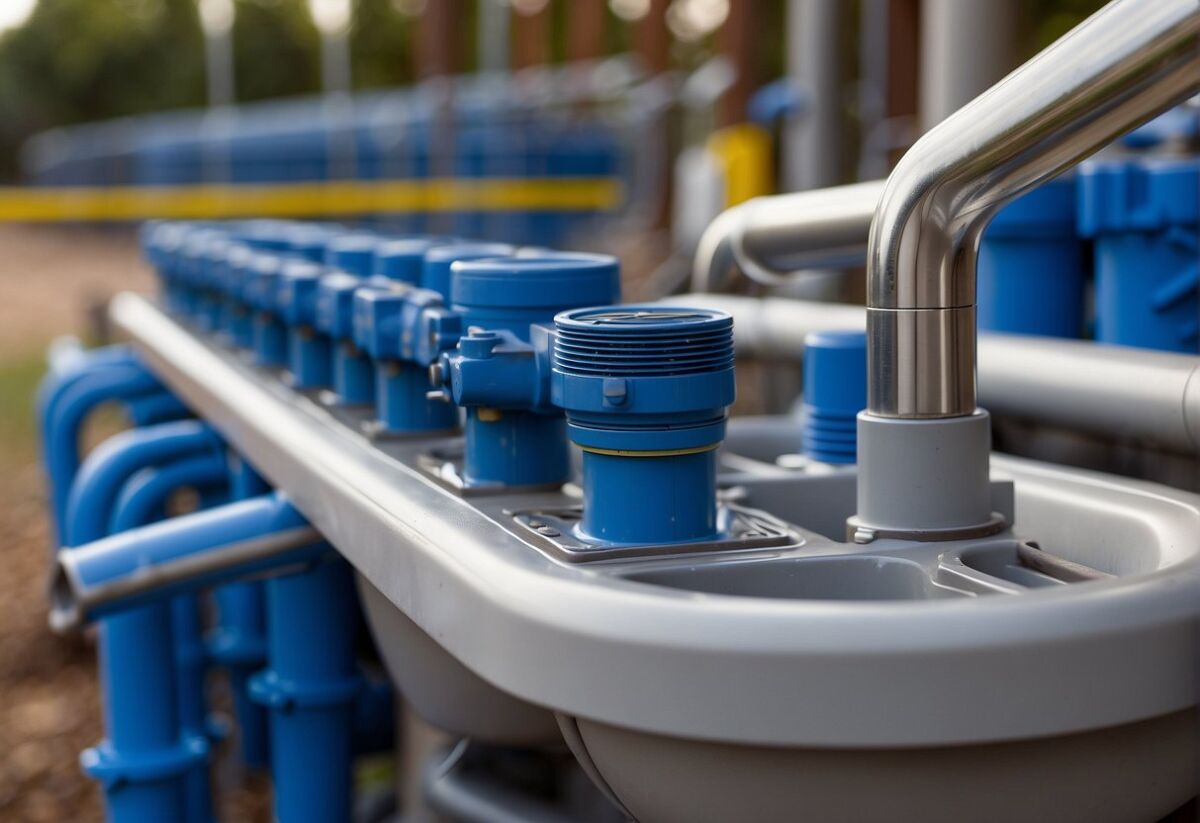
One practical approach you might consider when addressing water conservation is greywater recycling. This underutilized method helps you reuse household water from bathroom sinks, showers, and laundry, contributing to a more sustainable living environment.
Understanding Greywater
- What is it? Greywater constitutes a significant portion of domestic wastewater, excluding toilet water.
- Sources: Showers, bathroom sinks, clothes washers, and laundry systems.
- Exclusion: Kitchen and dishwasher due to their potential for greasy and food-laden water, affecting water quality.
Advantages of Greywater Recycling:
- Conservation: Saves potable water by substituting it for non-potable uses.
- Water Efficiency: Increases overall water use efficiency.
- Energy-Efficient: Less energy is needed compared to treating and transporting fresh water.
How to Recycle Greywater:
- Collection: Water from showers, sinks, and laundry needs to be separated from sewage water.
- Use it quickly: plumbing codes generally cap greywater retention at 24 hours. Stored longer, the nutrients and bacteria in greywater multiply and it turns septic – which is why most residential systems are designed to distribute, not store.
- Reuse: subsurface landscape irrigation is the standard permitted use and generally requires no disinfection. Toilet flushing with greywater is allowed in some jurisdictions but usually demands treatment, dedicated plumbing and a permit.
Implementing Your System:
An innovation in water systems, many modern homes include greywater recycling in their design; however, retrofitting older homes is also feasible.
- Plumbing: New homes may have a dual plumbing system separating greywater from blackwater (sewage).
- Retrofitting: Changes to your existing plumbing to divert greywater to a treatment and storage system.
Incorporating greywater recycling into your routine conserves water and can substantially reduce a household’s freshwater footprint – but the rules are genuinely local, and worth checking before you buy anything.
The legal picture, briefly
Greywater law varies by state rather than nationally. California allows a simple laundry-to-landscape system with no permit at all, provided only the clothes washer is connected, a three-way valve can divert flow back to the sewer, and the water discharges beneath at least two inches of mulch with no pooling or runoff. Arizona has long permitted household greywater for irrigation. If your wash water is going onto planting beds, detergent chemistry matters more than usual — see our guide to eco-friendly laundry detergents, since phosphate builders and optical brighteners end up in the soil. Colorado’s HB24-362 removed the local opt-in requirement as of January 2026, making greywater reuse available statewide rather than only in jurisdictions that had passed their own ordinance.
Other states still require a permit for any greywater plumbing, and a handful effectively prohibit it. Your county health department is the authority, not the manufacturer’s brochure.
One consistent rule everywhere: kitchen sink and dishwasher water is not greywater. Food solids and grease put it in the blackwater category under almost every code.
Room by Room: Where the Everyday Savings Are
Bathroom
The bathroom accounts for well over half of indoor water use once toilets, showers and faucets are added together, so it is the room where habits compound fastest.
- Shorten showers. At the 2.5 gpm federal maximum, cutting four minutes saves about 10 gallons per shower.
- Turn the tap off while brushing or shaving – EPA puts this at more than 200 gallons a month for a family.
- Never use the toilet as a wastebasket. Every tissue costs a 1.28-gallon flush at best.
Kitchen
- Scrape plates instead of pre-rinsing, and run the dishwasher only when full.
- Keep a jug of drinking water in the fridge so you are not running the tap until it turns cold.
- Catch the water you run while waiting for it to heat, and use it on houseplants.
- Thaw food in the refrigerator rather than under a running tap.
Laundry room
- Wash full loads. If the machine has a load-size selector, match it honestly.
- Use cold water where the fabric allows. Because water heating is one of the largest energy uses in a home, this saves energy as well as water.
- Check the supply hoses annually – a failed washing machine hose is one of the most common and most expensive household water losses.
The 5 R’s of Water Conservation
The waste-hierarchy framing has been adapted to water, and it is a useful order of operations because it puts the cheapest actions first.
- Reduce – use less in the first place: shorter showers, efficient fixtures, smarter irrigation schedules.
- Reuse – put water to a second job before it leaves the property, as with greywater irrigation or pasta water on the garden.
- Recycle – treat and return water to use, from household greywater systems up to municipal water reuse.
- Recharge – let rain soak back into the ground with permeable surfaces and rain gardens instead of shedding it to the storm drain.
- Respect – protect water quality, since a contaminated source is worse than a depleted one.
Rebates: Check Before You Buy
Many water utilities will pay part of the cost of the upgrades above, because supplying a gallon costs them more than rebating one. Rebates commonly cover high-efficiency toilets, weather-based irrigation controllers, rain barrels, turf replacement and ENERGY STAR clothes washers.
Two practical points. Rebates are almost always pre-approval based – buying first can disqualify you. And they are administered by your local water provider rather than by EPA, so the place to look is your own utility’s website, not a national program page.
FAQs
What are some simple tips for water conservation at home?
Start with leaks: the average household wastes about 9,400 gallons a year on them, and a faucet dripping once per second alone wastes more than 3,000 gallons annually. After that, install WaterSense labeled fixtures (toilets at 1.28 gallons per flush, showerheads at 2.0 gallons per minute), run dishwashers and washing machines only with full loads, and turn off the tap while brushing your teeth, which EPA estimates saves more than 200 gallons a month.
How can I save water in my garden?
Water early in the morning, ideally between 6:00 and 8:00 a.m., to reduce evaporation. Use drip irrigation or soaker hoses rather than sprinklers, apply mulch to hold soil moisture, and choose native species adapted to your rainfall. This matters more than most indoor measures: EPA estimates that as much as 50% of outdoor water is lost to wind, evaporation and runoff from inefficient irrigation.
What is greywater recycling?
Greywater recycling reuses household wastewater from bathroom sinks, showers and clothes washers – never toilets, kitchen sinks or dishwashers – for non-potable purposes such as subsurface landscape irrigation. Plumbing codes generally require greywater to be used within 24 hours, because stored greywater turns septic. Rules vary by state: California permits a laundry-to-landscape system with no permit, and Colorado made greywater reuse available statewide in January 2026.
Sources
- U.S. Environmental Protection Agency, WaterSense – Statistics and Facts (household use, leak volumes, outdoor waste)
- U.S. EPA WaterSense – Fix a Leak Week (1 trillion gallons, 10% of homes, dye test)
- U.S. EPA WaterSense – Showerheads (17% of indoor use, 2,700 gallons saved)
- U.S. EPA WaterSense – Outdoors (9 billion gallons per day, 50% irrigation loss)
- ENERGY STAR – Clothes Washers (14 vs 20 gallons per load)
- U.S. EPA – Summary of California’s Water Reuse Regulation (greywater definitions and permitted uses)