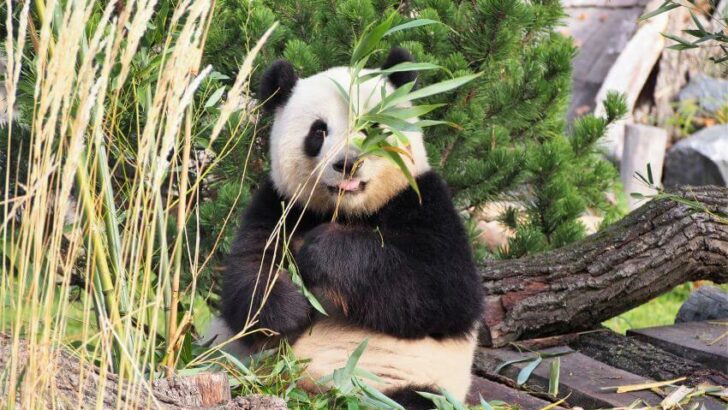
Giant pandas are no longer officially classified as endangered. The IUCN Red List moved the giant panda from Endangered to Vulnerable in 2016 after decades of conservation work. That does not mean pandas are safe. Wild pandas still depend on scattered mountain forests in China, need large amounts of bamboo species, and reproduce slowly.
Direct answer: Pandas were endangered mainly because people cleared and fragmented their forest habitat, leaving small panda groups isolated from one another. Their bamboo-heavy diet, low reproductive rate, tiny cubs, past poaching, accidental snaring, and climate pressure on bamboo forests also made recovery difficult.
Conservation status checked: July 2026. Population estimates vary by source and survey method, so numbers should be updated when new official census data is published.
Key Takeaways
- Giant pandas are currently listed as Vulnerable, not Endangered, but they remain a threatened species.
- The biggest long-term problem is habitat loss and fragmentation in China’s mountain forests.
- Wild pandas live only in China, mainly in Sichuan, Shaanxi, and Gansu provinces.
- Pandas eat mostly bamboo, which makes them highly dependent on healthy bamboo forests.
- Conservation has worked: protected areas, habitat restoration, stronger anti-poaching laws, research, and captive breeding helped pandas recover enough to be downlisted.
- Vulnerable still means at risk. Climate change, infrastructure, small isolated groups, disease, and habitat gaps can reverse progress.
Giant Panda Quick Facts
| Category | Giant panda information |
|---|---|
| Common names | Giant panda, panda bear, panda |
| Scientific name | Ailuropoda melanoleuca |
| Animal family | Ursidae, the bear family |
| Current conservation status | Vulnerable on the IUCN Red List |
| Wild population | Commonly cited estimates range from 1,864 to about 1,900 wild pandas, depending on source and survey date |
| Native range | Mountain ranges in south-central China, especially Sichuan, Shaanxi, and Gansu provinces |
| Habitat | Cool, moist broadleaf and coniferous mountain forests with dense bamboo understory |
| Diet | Mostly bamboo, with occasional other plant material or animal food |
| Daily activity | Much of the day is spent eating, resting, and moving between feeding areas |
| Young | Usually one cub survives in the wild; twins are more manageable in human care |
| Main threats | Habitat fragmentation, limited breeding opportunities, bamboo dependence, climate pressure, disease risk, and accidental snaring |
Are Pandas Endangered Today?
No. Giant pandas are not currently listed as Endangered by the IUCN. They are listed as Vulnerable, which means they still face a high risk of extinction in the wild if conservation pressure weakens.
The distinction matters. “Endangered” and “Vulnerable” are both threatened categories, but Endangered signals a higher risk level. Giant pandas improved because their wild population increased and China expanded protection for panda habitat. The World Wildlife Fund still lists severe human-driven threats, including habitat fragmentation from infrastructure and forest loss.
If you are comparing conservation labels, this guide to endangered, vulnerable and extinct explains how threat categories differ.
Why Were Pandas Endangered?
Giant pandas were endangered because their survival depends on a narrow set of conditions: connected bamboo forests, enough space to find mates, low human disturbance, and a stable food supply. When those conditions broke down, panda numbers fell.
| Threat | Why it matters | What helps |
|---|---|---|
| Habitat loss | Farming, logging, roads, railways, dams, and settlement reduced or split bamboo forests. | Protected areas, habitat corridors, reforestation, and land-use planning. |
| Habitat fragmentation | Small isolated panda groups have fewer mating options and higher genetic risk. | Connecting reserves and reducing barriers between panda populations. |
| Low reproductive rate | Females are fertile for only a short period each year, and cubs are extremely vulnerable. | Better wild habitat, careful breeding programs, and long-term genetic management. |
| Bamboo dependence | Pandas need reliable access to multiple bamboo species and must eat large amounts. | Protecting diverse bamboo forests across elevation ranges. |
| Climate pressure | Changing temperature and rainfall patterns can shift or reduce suitable bamboo habitat. | Large connected habitats that allow pandas and bamboo to shift over time. |
| Past poaching and snares | Poaching has declined, but pandas can still be injured in snares set for other animals. | Law enforcement, local monitoring, and reduced illegal wildlife trade. |
Habitat Loss and Fragmentation
Habitat loss is the central reason giant pandas became endangered. Pandas once lived across a larger area of China, but forest clearing and development pushed them into mountain forests. Today, wild pandas survive in separated habitat patches, which makes it harder for them to find mates and maintain genetic diversity.
Fragmentation is not just a land-area problem. A road, railway, dam, village, or farmland corridor can split a panda population even when forest remains nearby. For a species that already lives at low density, those barriers matter.
Low Reproductive Rate
Giant pandas reproduce slowly. Females come into estrus for only a short window each year, and a mother usually raises one cub. Twins are more common than many people think, but in the wild it is difficult for a mother to care for both cubs without human help.
This slow reproductive cycle means panda populations do not rebound quickly after habitat loss, disease, food shortages, or human disturbance. It also makes small isolated groups more fragile.
Bamboo Dependence
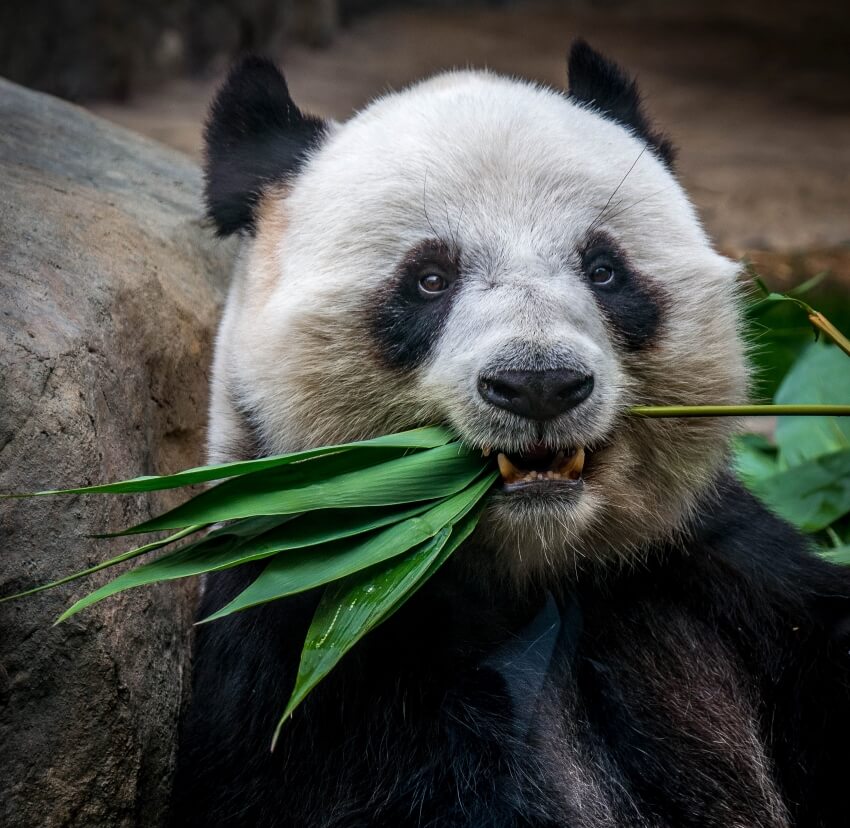
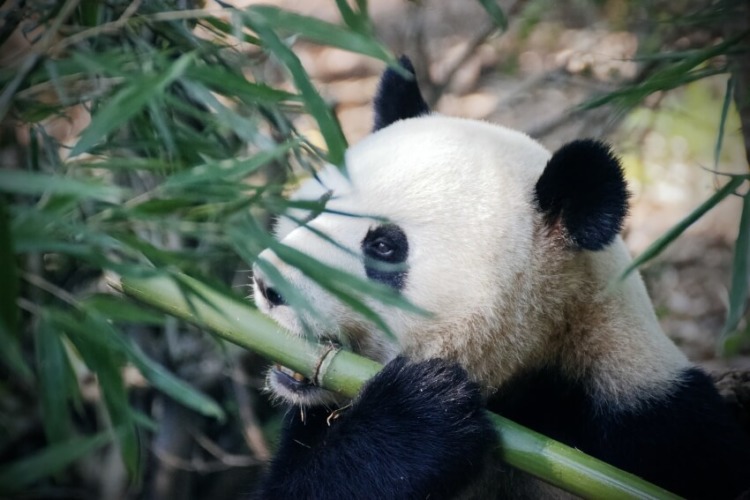
Although giant pandas are bears in the order Carnivora, they eat mostly bamboo. Their “pseudo-thumb,” an enlarged wrist bone, helps them grip bamboo stems while feeding. Their strong jaws and large molars help crush tough, fibrous bamboo.
Bamboo is abundant in good panda habitat, but it is not a rich food source. Pandas compensate by eating for many hours and consuming large quantities. They also need access to more than one bamboo type because some bamboo species flower, seed, and die back at the same time. When that happens, pandas must move to another area with usable bamboo.
Climate Change and Bamboo Forests
Climate change adds another layer of risk. Bamboo ranges can shift as temperature and rainfall patterns change. Pandas can move only if suitable forest remains connected across the landscape. If habitat patches are isolated, pandas may not be able to follow bamboo into better conditions.
This is why conservation cannot stop at protecting a few isolated reserves. Pandas need connected habitat, multiple bamboo species, and forest corridors that remain usable over time.
Poaching and Accidental Snaring
Poaching was historically a serious threat. Stronger laws and enforcement have reduced direct panda poaching, but pandas can still be caught in snares set for other animals such as musk deer. For a low-number species, even accidental losses matter.
Where Do Giant Pandas Live?
Wild giant pandas live only in China. They are not native to Siberia. Today, they are found in a few mountain ranges in Sichuan, Shaanxi, and Gansu provinces, where cool, moist forest habitat supports dense bamboo understory.
According to the Smithsonian’s National Zoo and Conservation Biology Institute, giant pandas live in broadleaf and coniferous forests with bamboo at elevations between about 5,000 and 10,000 feet. These forests are often rainy, misty, and cool.
What Do Giant Pandas Eat?
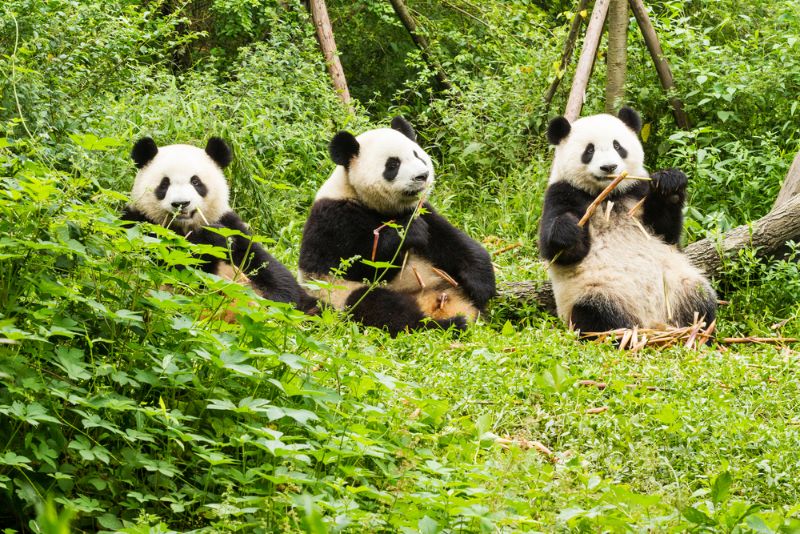
Giant pandas eat mostly bamboo, including shoots, leaves, and stems. The World Wildlife Fund notes that pandas may eat dozens of pounds of bamboo each day, depending on which part of the plant they are eating.
Pandas are sometimes described as herbivores because bamboo dominates their diet. Biologically, they are still bears with a carnivore-like digestive system. When available, they may occasionally eat other plants, eggs, fish, or small animals, but these are minor parts of the diet.
Their bamboo dependence explains several panda traits: long feeding periods, a low-energy lifestyle, powerful jaw muscles, and the false thumb that helps them hold bamboo. It also explains why protecting bamboo species across panda habitat is not optional—it is the foundation of panda conservation.
Giant Panda Reproduction and Cubs
Reproduction is one reason panda recovery takes time. Female giant pandas are fertile for only a brief period each year, usually during spring. After mating, gestation length can vary because implantation may be delayed.
Cubs are born tiny, blind, and helpless. A newborn panda can weigh only a few ounces. The mother provides intense care, and in the wild she usually raises one cub. In breeding centers and zoos, keepers can sometimes help twin cubs survive by rotating them between their mother and nursery care.
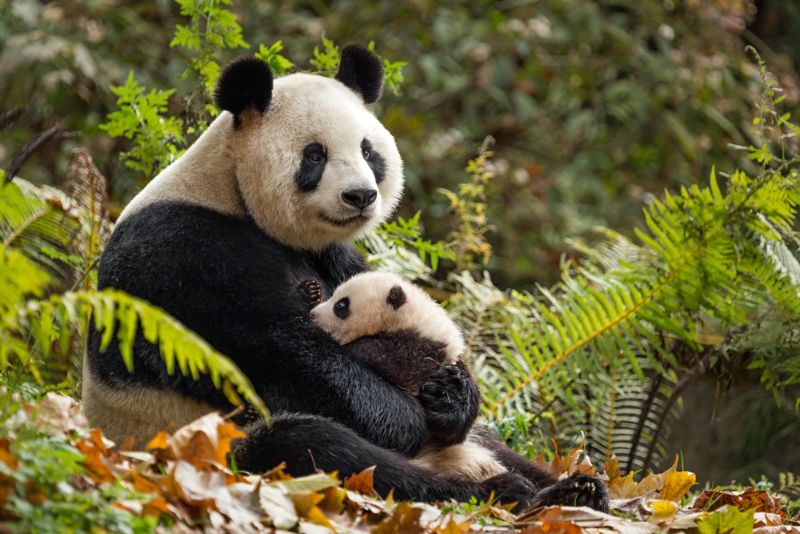
Well-run breeding programs can support the managed global population, but they are not a substitute for wild habitat. The strongest conservation outcome is still a connected landscape where wild pandas can find food, mates, and safe denning areas.
Current Conservation Status
The giant panda is a conservation success story, but not a finished one. Years of forest protection, stronger wildlife laws, scientific breeding, reserve expansion, and local conservation programs helped increase panda numbers enough for the species to move from Endangered to Vulnerable.
China has created dozens of panda reserves and expanded protected habitat. The San Diego Zoo Wildlife Alliance notes that reserves, forest protection programs, and international research partnerships have played major roles in panda recovery.
Still, vulnerable does not mean secure. Many panda groups remain small or separated. Some protected areas do not fully solve the problem if roads, settlements, livestock, or other barriers still limit movement. Conservation now depends on quality, connected habitat—not just total acreage on a map.
This is where the difference between conservation vs preservation matters. Pandas need protected land, but they also need active management: habitat corridors, bamboo monitoring, anti-snare patrols, community support, genetic planning, and climate-aware reserve design.
Why Giant Pandas Matter to Ecosystems
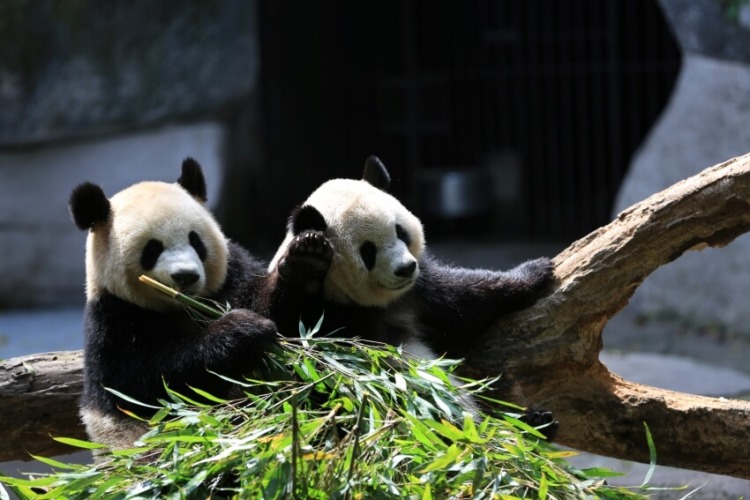
Giant pandas are often called an umbrella species. Protecting panda habitat also protects other plants and animals that share the same mountain forests, including golden snub-nosed monkeys, takins, pheasants, and many forest plants.
Panda conservation also protects water, soil, and forest structure in regions where people and wildlife both depend on healthy landscapes. That makes panda habitat more than a refuge for one famous animal. It is part of a larger conservation network.
Giant Panda vs Red Panda vs Qinling Panda
Panda names can be confusing. Giant pandas, red pandas, and Qinling pandas are related by name and bamboo-heavy diets, but they are not the same animal.
| Animal | What it is | Main difference |
|---|---|---|
| Giant panda | A bear species, Ailuropoda melanoleuca | Large black-and-white bear native to China’s bamboo forests. |
| Red panda | A smaller mammal in its own family, Ailuridae | Reddish, mostly tree-dwelling, and not a bear. |
| Qinling panda | A subspecies or regional form of giant panda associated with the Qinling Mountains | Some individuals have brown-and-white coloring, but they are still giant pandas. |
For a broader look at bear diversity, see these types of bears from around the world.
Interesting Giant Panda Facts
- Giant pandas are true bears, even though their diet is mostly bamboo.
- They do not hibernate like many other bear species.
- Their false thumb is an enlarged wrist bone that helps them hold bamboo.
- Their large jaw muscles give them a rounded face and help crush tough bamboo.
- They can climb trees and swim.
- Cubs are born tiny, blind, and almost helpless.
- Scientists still debate the exact purpose of the panda’s black-and-white pattern.
- The WWF logo was inspired by Chi-Chi, a giant panda that lived at the London Zoo.
For more reader-friendly panda trivia, see these interesting facts about giant pandas.
How to Help Giant Pandas
The most useful actions support habitat protection, responsible forestry, climate resilience, and credible conservation work. Pandas do not need vague awareness as much as they need connected bamboo forests and long-term protection.
- Support habitat-focused conservation groups. Look for organizations that protect panda habitat, fund research, or support local communities living near panda reserves.
- Choose responsibly sourced wood and bamboo products. Forest certification can help reduce pressure on wildlife habitat.
- Do not buy wildlife products. Illegal wildlife trade harms many threatened animals, even when pandas are not the direct target.
- Share accurate status information. Saying pandas are “saved” weakens public understanding. Saying they are “Vulnerable and still dependent on conservation” is more accurate.
- Support broader climate and forest protection efforts. Bamboo forests need stable, connected habitat over time.
Final Thoughts
Giant pandas are not officially endangered anymore, but that status change should be read carefully. Their recovery shows that conservation can work. It also shows that recovery can be fragile when a species depends on limited habitat, slow reproduction, and a narrow food base.
The best answer to “why are pandas endangered?” is this: they were pushed toward extinction by habitat loss, fragmentation, and human pressure. They are now Vulnerable because protection helped—but their future still depends on connected forests, healthy bamboo, careful science, and public support that stays accurate after the good news fades.
FAQ
Are giant pandas still endangered?
No. Giant pandas are currently listed as Vulnerable by the IUCN Red List. They were moved from Endangered to Vulnerable in 2016 after population gains and expanded conservation work.
Why were giant pandas endangered?
Giant pandas were endangered because of habitat loss, forest fragmentation, low reproduction, bamboo dependence, past poaching, and small isolated populations.
How many giant pandas are left?
Widely cited estimates place the wild population at about 1,864 to around 1,900 giant pandas. Exact numbers vary by survey year, counting method, and whether sources include only mature wild pandas or broader population estimates.
Where do giant pandas live?
Wild giant pandas live only in China, mainly in mountain forests in Sichuan, Shaanxi, and Gansu provinces. They are not native to Siberia.
What do giant pandas eat?
Giant pandas eat mostly bamboo, including shoots, leaves, and stems. They may occasionally eat other plants, eggs, fish, or small animals, but bamboo is their main food.
What is the biggest threat to giant pandas?
The biggest long-term threat is habitat loss and fragmentation. Pandas need large, connected bamboo forests so they can find food, mates, and safe places to raise cubs.
Are giant pandas dangerous?
Giant pandas are usually solitary and avoid conflict, but they are still bears with strong jaws, claws, and teeth. They should never be treated like pets or approached in the wild.
How can people help giant pandas?
People can help by supporting habitat-focused conservation, choosing responsibly sourced wood and bamboo products, avoiding wildlife products, reducing climate impact, and sharing accurate information about panda conservation.
See Related: Galápagos Giant Tortoise: Endangered Status, Species & Facts
See Related: Giant Armadillo: Is This Species Endangered?