The Jaguar Conservation Fund is the English-language name associated with Instituto Onça-Pintada (IOP), a Brazilian nonprofit founded in 2002 by biologists Anah Tereza de Almeida Jácomo and Leandro Silveira. Based in Mineiros, Goiás, the organization combines wild-jaguar research, population monitoring, habitat-connectivity work, human-jaguar coexistence programs, and ex situ care and conservation breeding.
This profile concerns the Brazil-based Instituto Onça-Pintada. Its current official project pages describe work across Brazilian biomes rather than the unsupported multi-country scope stated in older descriptions of the fund.
Jaguar Conservation Fund key facts
| Fact | Current information |
|---|---|
| Legal name | Instituto Onça-Pintada |
| English and trade name | Trade name includes Projeto Onça-Pintada–Jaguar Conservation Fund |
| Founded | 2002 |
| Founders | Anah Tereza de Almeida Jácomo and Leandro Silveira |
| Legal status | Brazilian private nonprofit association; CNPJ 05.092.106/0001-86 |
| Base | GO-341, km 81, rural Mineiros, Goiás, Brazil |
| Main focus | Jaguar research, habitat connectivity, conflict reduction, rural-land stewardship, and ex situ care |
| Regular public access | No. The facility is not open for routine walk-in visits. |
The legal identity, opening date, nonprofit status, trade name, and address are recorded in Brazil’s Portal da Transparência. The institute’s current site supplies the founders, operating model, project descriptions, and visitor policy.
What does the Jaguar Conservation Fund do?
The organization’s current model has two main branches: conservation in the wild, known as in situ work, and care, research, rehabilitation, and controlled breeding outside the wild, known as ex situ work. The strongest conservation value comes when these activities produce usable evidence, protect habitat, reduce preventable killing, and improve long-term outcomes for wild populations.
Wild-jaguar research and monitoring
IOP describes the use of GPS collars, camera traps, field surveys, genetic analysis, geographic information systems, and records from partner institutions and trained volunteers. These tools can answer different questions:
- GPS collars document movement, habitat use, dispersal routes, and locations where jaguars may encounter roads, ranches, or other risks.
- Camera traps confirm presence and can identify individuals from their rosette patterns when image quality and survey design are adequate.
- Genetic and spatial analysis can help researchers assess connectivity, population structure, and priority areas for further study or protection.
- Community and citizen-science records can expand coverage, but observations still need verification and consistent data standards.
Habitat connectivity and private-land conservation
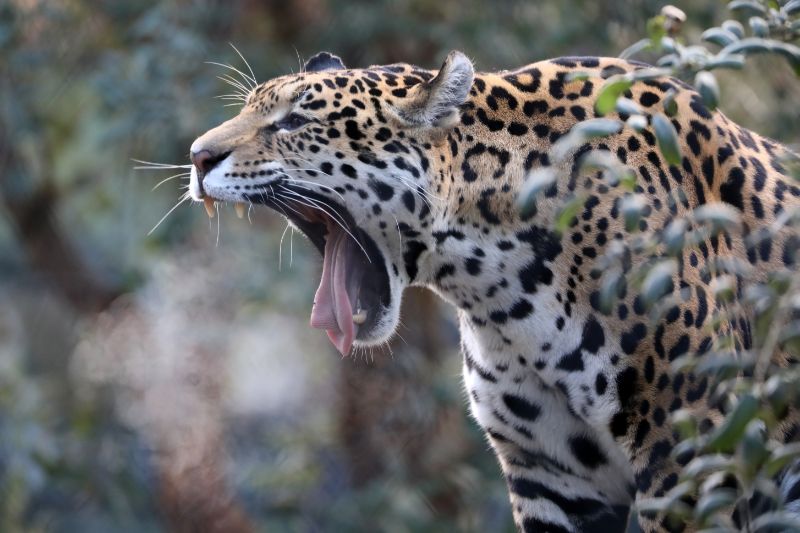
Jaguars need large, connected landscapes with sufficient prey. Roads, dams, deforestation, agricultural expansion, and other land-use changes can divide populations into smaller units. The fund’s corridor work therefore focuses on movement routes, biodiversity mapping, rural properties, and cooperation with communities and public institutions.
The institute also operates the Certificado Onça-Pintada, a voluntary annual certification for rural properties in jaguar range. Its published process includes document review, a technical visit, an accreditation decision, and four certification levels. Because IOP operates the program, readers should distinguish its certification from a government license or fully independent regulatory approval.
Protecting connected habitat can benefit more than one predator. It can also support prey species and other wildlife, including the giant armadillo, tapirs, peccaries, caimans, birds, and plants that share these landscapes.
Human-jaguar conflict reduction
Where cattle ranching overlaps with jaguar habitat, livestock losses or perceived risk can trigger retaliation. Monitoring can identify where and when conflict is most likely, allowing researchers and producers to test adjustments to cattle management, fencing, pasture use, and herd routines. The goal is not to dismiss the costs borne by rural communities, but to reduce losses without killing jaguars.
Ex situ care and conservation breeding
IOP maintains a conservation breeding and care facility for jaguars outside their natural habitat. The organization describes work involving animals that cannot return to the wild, rescued or orphaned individuals, controlled breeding, rehabilitation, research, veterinary care, and professional education.
Ex situ conservation is not a substitute for intact habitat and viable wild populations. Its value depends on animal welfare, genetic management, legal authorization, transparent outcomes, and a clear link to conservation objectives. Claims about breeding success, facility scale, or future releases should be treated as organization-reported unless independently documented.
Current Jaguar Conservation Fund projects
The following projects were listed on IOP’s official website when this article was verified. Project scope, funding, and field activity can change, so check the linked project pages before relying on operational details.
| Project | Scope | Main purpose |
|---|---|---|
| Corredor da Onça | Rio Araguaia; Amazon–Cerrado connection | Monitor jaguars and prey, map biodiversity and barriers, work with rural properties and communities, and maintain ecological connectivity. IOP describes the corridor as roughly 3,000 kilometers long. |
| Ilha das Onças | Maracá-Jipioca, Amapá | Study how island jaguars use limited space and resources. IOP reports 6.7 jaguars per 100 square kilometers and sea crossings of up to 6 kilometers; these figures are organization-reported. |
| No Rastro da Onça | Brazil-wide | Update national occurrence maps, estimate populations, validate ecological corridors, and combine camera-trap, GPS, genetic, institutional, and trained citizen-science records. |
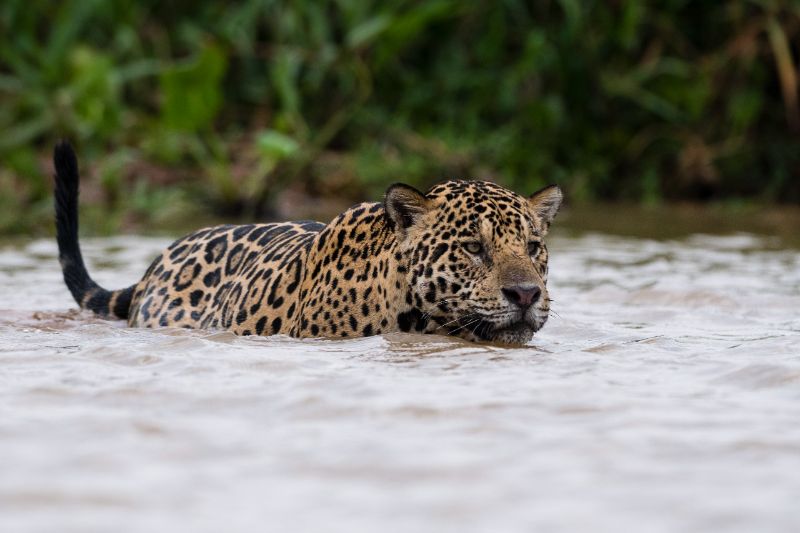
| Pantanal | Brazilian Pantanal | Use GPS-collar data to study movement, hunting, habitat use, and livestock-conflict risk, then translate findings into practical coexistence measures. |
| Força-Tarefa Onças do Cerrado | Cerrado | Map jaguar presence through citizen science and camera traps while building a broader evidence base for conservation decisions. |
| Certificado Onça-Pintada | Rural properties in jaguar range | Recognize participating properties that meet the institute’s legal, environmental, coexistence, education, and conservation criteria, subject to annual renewal. |
Current public record: Brazil’s Mapa das OSC lists an in-progress partnership running from December 19, 2024, to August 6, 2026, to inventory terrestrial vertebrates—with a focus on mammals—in areas near the Rio Araguaia. The record shows R$400,000 as both the total value and the amount received.
Mapa das OSC: Instituto Onça-Pintada
Why do jaguars need conservation?
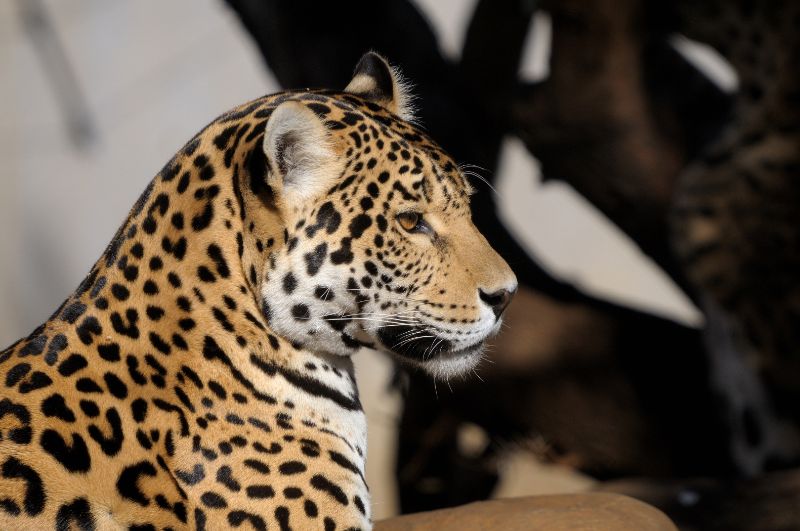
Our jaguar species profile explains the animal’s identification, range, diet, and behavior. The IUCN Red List classifies the jaguar (Panthera onca) as Near Threatened globally and reports a decreasing population trend. Near Threatened is not the same category as Endangered, but it also does not mean every regional population is secure. Risk varies across the species’ range and can be much higher where habitat is fragmented or populations are isolated.
Jaguars have also been listed in CITES Appendix I since July 1, 1975. Major threats identified by wild-cat conservation specialists include habitat loss and fragmentation, direct retaliation after real or perceived livestock losses, and overhunting of natural prey.
These pressures are connected. Habitat loss can reduce prey, restrict movement, and push jaguars closer to farms or roads. Effective conservation therefore requires more than protecting individual animals. It also requires connected habitat, workable coexistence measures, enforcement against illegal killing and trade, and credible long-term monitoring. Our guides to habitat loss solutions and the goal of wildlife conservation explain the broader principles.
How to support the Jaguar Conservation Fund responsibly
The institute’s current donation page lets supporters choose between wild-jaguar projects and the ex situ facility, and it offers one-time or recurring contributions. Other official support routes may include authorized immersion or ecovolunteer events, merchandise, institutional partnerships, and the rural-property certification program.
Choose the route that matches the outcome you want to support:
- Wild populations and habitat: prioritize in situ research, corridor protection, prey monitoring, and coexistence work.
- Animal care and conservation breeding: review the ex situ program’s current welfare, veterinary, genetic-management, and reporting information.
- Rural land stewardship: landowners can review the Certificado Onça-Pintada criteria and audit process.
- Skills or time: use only current, authorized programs and check the role, supervision, animal-contact rules, costs, and conservation purpose before committing.
Donor due-diligence checklist
- Confirm the exact recipient. For the Brazilian organization profiled here, verify the legal name Instituto Onça-Pintada and CNPJ 05.092.106/0001-86.
- Use the official domain and payment channel. Check the final recipient name, country, currency, fees, and receipt before completing a transaction.
- Review current evidence. Look for recent project updates, methods, partnerships, permits, published outputs, and outcomes—not only follower counts or promotional claims.
- Separate in situ and ex situ goals. Ask what the contribution funds and how success is measured for that specific program.
- Check tax treatment. The institute’s current donation FAQ says contributions are not deductible from Brazilian income tax. Rules may differ for donors using another legal entity or filing in another country.
- Reassess recurring gifts. Review annual updates, financial records, regulatory information, and whether the work still matches your intended impact.
Name-check before donating: the phrase “Jaguar Conservation Fund” also appears in U.S. nonprofit records and in an older Woodland Park Zoo conservation program. Do not assume that every payment page or fund with the same English name routes money to the same legal entity.
Regulatory history and animal-welfare context
Independent reporting should be part of any review of an organization that keeps wild animals. Folha de S.Paulo reported that IBAMA issued three fines totaling R$452,500 in June 2022 over alleged animal-care failures, animal deaths, and online exposure of wildlife. In December 2022, IBAMA annulled those fines after review. Folha reported that Goiás state regulator Semad had inspected the facility, considered it regular, and disputed the federal findings. The report also noted a separate R$1,500 fine from 2020 concerning the use of pepper spray on a jaguar.
An annulled administrative case is not proof that every original allegation was established, and it is not a substitute for current due diligence. A fair assessment should examine up-to-date licenses, inspection records, welfare protocols, independent oversight, financial reporting, and documented conservation outcomes.
Can you visit or volunteer?
The institute’s official site says its conservation facility is not open for regular public visitation. Authorized educational, professional, or immersion events may be offered on specific dates, but availability and conditions can change. Do not travel to the rural Mineiros site expecting walk-in access; verify the event and authorization directly with the organization first.
Before joining any wildlife program, check the work you will perform, staff supervision, safety procedures, animal-contact policy, fee allocation, and measurable conservation purpose. Our overview of conservation volunteer opportunities can help you compare ethical program formats.
Is the Jaguar Conservation Fund worth supporting?
Instituto Onça-Pintada has a documented legal identity, more than two decades of operating history, named field projects, and a current public-sector partnership record. Its model addresses several real conservation needs: reliable population data, habitat connectivity, conflict reduction, work with rural landowners, and care for jaguars outside the wild.
Support should still be evidence-led. Treat project scale and impact figures from the organization as self-reported unless independently verified, review the ex situ program with particular attention to animal welfare and oversight, and confirm exactly which legal entity receives a donation. That balanced approach protects both the donor’s intent and the jaguars the contribution is meant to help.
For a wider view of regional conservation groups, see our directory of environmental organizations in South America.
FAQs
Is the Jaguar Conservation Fund the same as Instituto Onça-Pintada?
Yes. This article covers the Brazil-based Instituto Onça-Pintada, which uses Jaguar Conservation Fund as an English-language and trade name. Confirm the exact legal recipient before donating because similar names are used by other entities and programs.
Where is the Jaguar Conservation Fund based?
The Brazilian organization is based on GO-341 at kilometer 81 in the rural area of Mineiros, Goiás, Brazil.
What projects does the Jaguar Conservation Fund run?
Current official pages list Corredor da Onça, Ilha das Onças, No Rastro da Onça, Pantanal research, Força-Tarefa Onças do Cerrado, Certificado Onça-Pintada, and an ex situ conservation facility.
Is the jaguar endangered?
Globally, the IUCN classifies the jaguar as Near Threatened and reports a decreasing population trend. Regional populations can face higher risk, and the species has been listed in CITES Appendix I since 1975.
Can the public visit the Jaguar Conservation Fund?
Not as a regular walk-in attraction. The official site says the facility is closed to routine public visitation, although authorized educational or immersion events may occur on specific dates.
How can people help the Jaguar Conservation Fund?
People can review official one-time or recurring donation options, support in situ or ex situ work, join authorized programs when available, purchase official merchandise, or help rural properties assess the certification program. Verify the recipient and tax treatment first.
See Related: The Peregrine Fund