
Yes, you can freeze food in glass mason jars, provided the jar is made for freezer use and has straight or tapered sides. Inspect the glass first, leave enough headspace for expansion, freeze the jar upright, and thaw it slowly in the refrigerator. Jars with shoulders, repurposed commercial food jars, and any jar with chips or cracks have a higher risk of breaking.
Mason jars work well for soups, broth, sauces, beans, fruit, and portioned leftovers. Reusing jars you already own can also reduce disposable food-storage packaging, although glass is not automatically the lowest-impact choice in every situation. The practical goal is repeated use, less plastic packaging waste, and less spoiled food.
Key Takeaways
- Use a freezer-safe canning jar with straight or tapered sides. A wide-mouth, straight-sided jar is the safest default for liquids.
- Follow the jar’s freeze-fill line or the headspace specified by the manufacturer or tested recipe. Liquid needs room to expand.
- A compatible lid can go on before freezing. Freezer-safe plastic lids are acceptable, and some two-piece metal closures are applied loosely until the contents freeze.
- Keep the freezer at 0°F (-18°C). Thaw the jar in the refrigerator, not on the counter, in hot water, or directly in a microwave.
Which Mason Jars Are Freezer-Safe?
Jar shape matters more than the brand name. Ball’s current use-and-care guidance says straight or tapered jars can be used for freezing, while jars with shoulders should not be used. The National Center for Home Food Preservation also recommends wide-mouth jars made for both freezing and canning. Always follow the instructions for the exact jar in your hand.
| Jar type | Freezer suitability | Best use |
|---|---|---|
| Freezer-safe, straight-sided or tapered canning jar | Best choice | Soups, sauces, cooked beans, fruit, vegetables, and leftovers |
| Wide-mouth, straight-sided jar | Preferred for liquids | Easy filling, expansion, and removal of partially thawed food |
| Narrow-mouth canning jar | Use only when the manufacturer permits it | Requires extra headspace; liquid can stress the neck as it expands |
| Commercial pickle, pasta-sauce, or jam jar | Avoid unless explicitly labeled freezer-safe | Refrigerator or dry pantry storage instead |
| Jar with a chip, crack, deep scratch, or damaged rim | Do not use | Recycle or repurpose for non-food storage where locally accepted |
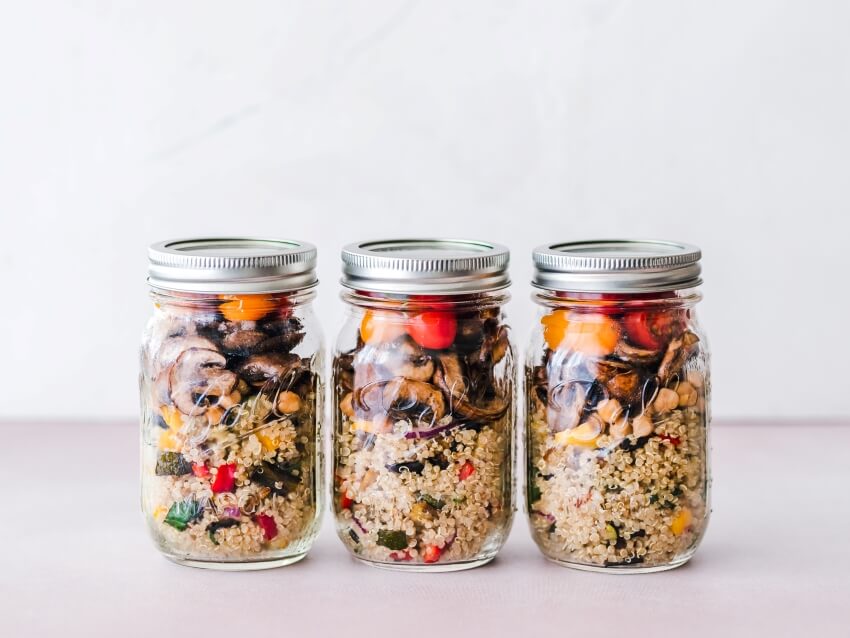
Safest default: For soup, broth, juice, or sauce, choose a wide-mouth jar that remains straight from the base to the threads and is sold as freezer-safe.
How to Freeze Food in Mason Jars Safely
- Inspect the jar in bright light. Do not use it if the rim is nicked or the glass is cracked, deeply scratched, or chipped.
- Wash and dry the jar, lid, and gasket. Match the jar size to the portion you expect to thaw so you do not need to refreeze a large batch.
- Cool cooked food safely. Do not pour boiling food into a cool jar or move a hot jar directly into the freezer. Divide perishable food into shallow containers, refrigerate it promptly, and fill the mason jar once the food and jar are both cold.
- Pack the food without compressing it against the glass. Loose berries or chopped vegetables can be frozen on a tray first, then transferred to a jar so the pieces remain separate.
- Leave the required headspace. Use the molded freeze-fill line when present, or follow the jar maker or tested recipe.
- Add a clean, compatible lid and keep the jar upright. If a tested recipe says to apply a two-piece band loosely until the food is frozen, follow that instruction rather than tightening it immediately.
- Freeze jars in a single layer near the coldest part of the freezer. Leave enough room for cold air to circulate, then stack the jars only after their contents are fully frozen. Label each jar with the food and date.
How Much Headspace Should You Leave?
Headspace is the empty area between the food and the lid. It prevents expanding liquid from pressing against the glass. The National Center for Home Food Preservation provides the following guidance for fruit and vegetable packs. For soup, broth, sauce, and other prepared foods, use the jar’s freeze-fill line or a tested recipe when available.
| Pack and container | Pint | Quart |
|---|---|---|
| Liquid pack, wide-top container | 1/2 inch | 1 inch |
| Dry pack, wide- or narrow-top container | 1/2 inch | 1/2 inch |
| Liquid pack, narrow-top container | 3/4 inch | 1 1/2 inches |
| Juice, narrow-top container | 1 1/2 inches | 1 1/2 inches |
Do not assume that every jar needs exactly one inch. Jar shape, size, food type, and the manufacturer’s fill line all affect the correct amount.
Can You Freeze Mason Jars With Lids?
Yes. The lid should fit the jar and be suitable for freezer storage. Leaving every jar uncovered until it freezes is not a universal safety rule and can expose food to spills, odors, and freezer burn.
Freezer-Safe Plastic Lids
Plastic lids are acceptable when the manufacturer labels them freezer-safe. Ball, for example, lists its leakproof plastic storage lids as freezer-safe and states that they are not intended for canning. A plastic lid does not make an unsuitable jar freezer-safe, and it does not replace proper headspace.
Metal Lids and Bands
Two-piece metal lids can be used for many freezer applications when the jar or recipe instructions allow them. Keep bands clean and dry to reduce rust. Some freezer-jam recipes call for applying the band loosely and tightening it after the contents have frozen.
Stainless-Steel Storage Lids
Reusable stainless-steel lids with removable silicone gaskets can work for freezer storage when their manufacturer permits it. Check the mouth size, gasket fit, care instructions, and freezer rating. Storage lids are not substitutes for tested canning lids and should not be used for shelf-stable home canning unless specifically approved for that purpose.
Foods That Freeze Well in Mason Jars
Mason jars are most useful for foods that can be portioned, packed without large air gaps, and thawed before removal. Good options include:
- Soup, broth, chili, and stew
- Tomato sauce, curry sauce, pesto, and fruit puree
- Cooked beans and lentils
- Berries, sliced fruit, and blanched vegetables
- Freezer jam made from a tested recipe
- Portioned cooked leftovers that are suitable for freezing
Most vegetables keep better color, flavor, and texture when blanched for the correct time before freezing. Follow a tested freezing guide for the specific produce rather than using one blanching time for every vegetable.
Foods That Often Lose Quality After Freezing
The container does not change how a food responds to freezing. The National Center for Home Food Preservation notes that the following foods may remain safe when handled correctly, but their texture or consistency often deteriorates:
| Food | Likely result after thawing |
|---|---|
| Raw lettuce, cucumber, celery, and similar salad vegetables | Limp and waterlogged |
| Cooked pasta or rice frozen by itself | Mushy or stale-tasting |
| Cream, custard, or milk-based sauces | May separate, curdle, or become lumpy |
| Sour cream | Watery and separated |
| Mayonnaise and some salad dressings | May separate |
| Gelatin desserts | May weep |
| Fried foods | Usually lose crispness |
Why Mason Jars Break in the Freezer
- The jar has shoulders or a narrow neck that restricts upward expansion.
- There is too little headspace for the food or liquid.
- A hot jar or hot food is exposed to rapid cooling, causing thermal shock.
- The glass already has a chip, crack, scratch, or damaged rim.
- The jar is knocked against another frozen object or falls from an overcrowded shelf.
If a jar cracks or shatters, discard the food. Small glass fragments can be difficult to see and are not worth the risk. Carefully remove the broken jar, then clean the shelf and nearby containers before returning food to the freezer.
How to Thaw Food in Mason Jars
- Move the jar from the freezer to the refrigerator and place it on a plate or in a bowl to catch condensation or leaks.
- Allow it to thaw slowly, usually overnight for a small jar and longer for a dense or larger portion.
- Once the food loosens, transfer it to a saucepan or a container specifically labeled microwave-safe before reheating.
- Do not thaw a mason jar on the counter, in hot water, or by moving it directly from the freezer into a microwave or hot oven.
Ball states that its canning jars should not be used in a microwave or oven. Even with another brand, check the manufacturer’s instructions rather than assuming a canning jar is heat-safe.
Can You Refreeze Food After Thawing?
According to USDA food-safety guidance, food thawed safely in the refrigerator can generally be refrozen without cooking, although moisture loss can reduce its quality. The FDA advises that food thawed in cold water or a microwave should be cooked immediately before it is frozen again. Discard perishable food that has remained at room temperature for more than two hours, or more than one hour when the surrounding temperature is above 90°F (32°C).
Portioning food before freezing remains the better habit. It reduces repeated thawing, protects texture, and makes it easier to use only what you need.
How Long Does Food Last in the Freezer?
At a constant 0°F (-18°C), properly handled frozen food can remain safe for a very long time, but quality gradually declines. The dates below are quality guidelines rather than automatic discard dates.
| Food | Best-quality freezer time |
|---|---|
| Soups and stews | 2 to 3 months |
| Cooked meat or poultry leftovers | 2 to 6 months |
| Pizza | 1 to 2 months |
| Ground meat | 3 to 4 months |
| Whole chicken or turkey | 1 year |
| Chicken or turkey pieces | 9 months |
| Fatty fish | 2 to 3 months |
| Lean fish | 4 to 8 months, depending on species |
For fruit, vegetables, dairy products, baked goods, and other foods not listed here, consult the current FoodSafety.gov cold storage chart or the USDA FoodKeeper guidance for that specific food.
Reusable Mason Jar Lid Options
Disclosure: This section contains affiliate links. We may earn a commission if you buy through a link, at no extra cost to you. These are storage-lid examples, not hands-on product tests. Prices, availability, pack sizes, and specifications can change.
The jar’s shape, condition, and headspace determine freezer safety more than the lid material. Before buying a replacement lid, confirm the jar mouth size, gasket fit, freezer rating, and care instructions. None of the storage lids below should be used for shelf-stable canning.
EcoPeaceful Regular-Mouth Stainless-Steel Storage Lids
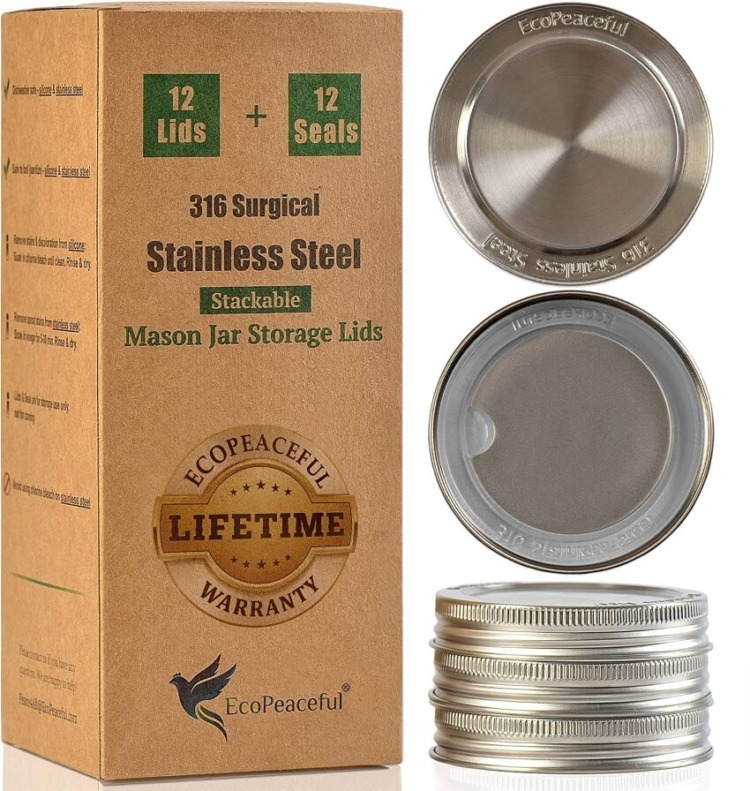
This listing is designed for regular-mouth jars and uses removable silicone gaskets. Check the current diameter and care instructions against your jars before ordering.
County Line Kitchen Wide-Mouth Stainless-Steel Storage Lids
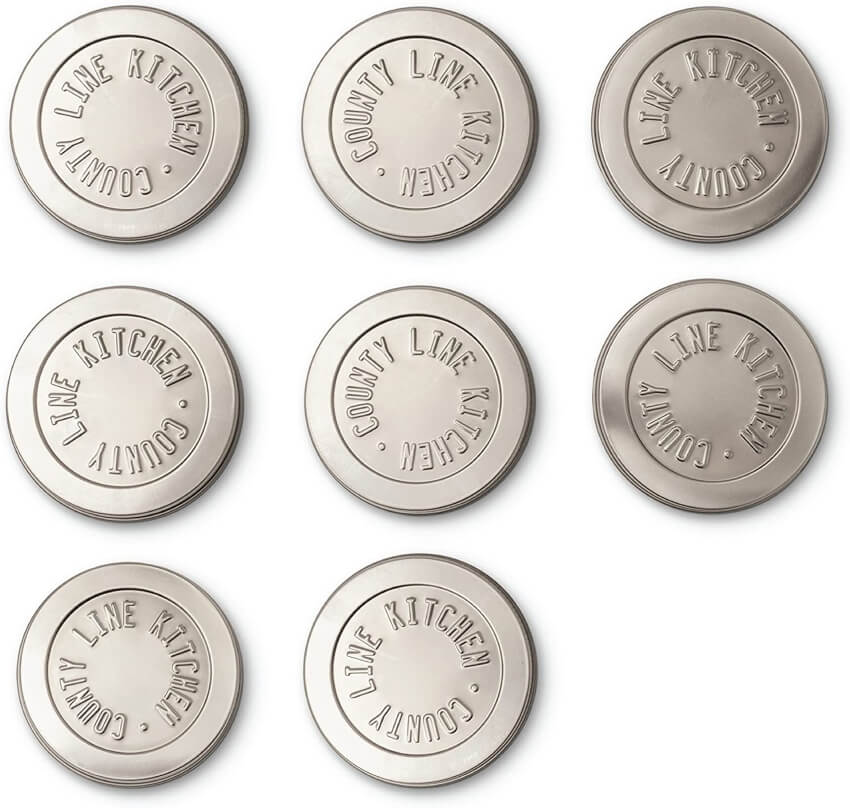
This wide-mouth option uses separate seals and is intended for storage. Confirm fit and freezer suitability on the current product page because seller specifications can change.
EcoPeaceful Wide-Mouth Stainless-Steel Storage Lids
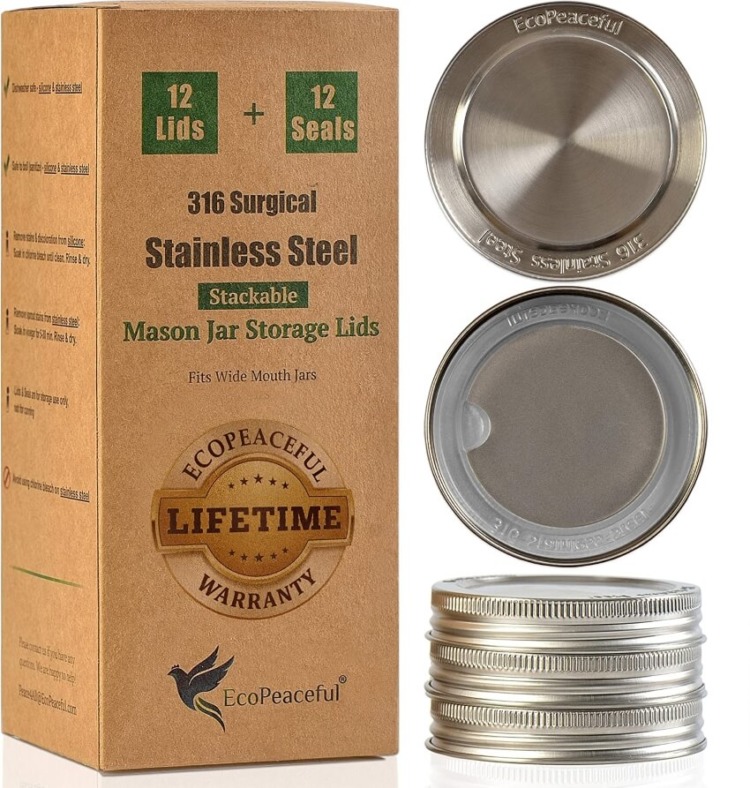
This version is listed for wide-mouth Ball and Kerr-style jars. Treat it as a reusable storage lid, not a canning lid, and verify the current fit and temperature guidance.
What to Check in Any Reusable Storage Lid
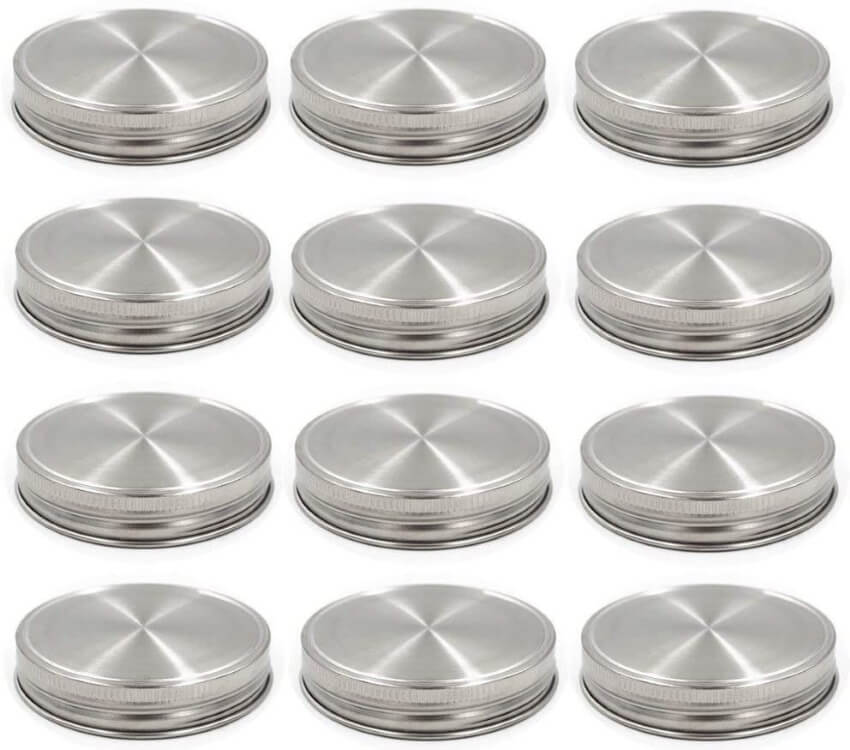
Look for a smooth rim, a food-contact-safe gasket, an exact mouth-size match, clear cleaning instructions, and an explicit freezer rating. This design illustrates the features to compare without endorsing a specific current listing.
A Lower-Waste Freezer Habit
Buying new glass for every storage task is not automatically more sustainable than using durable containers you already own. The lower-waste approach is to reuse suitable jars many times, prevent breakage, label food clearly, freeze realistic portions, and eat older food before it develops freezer burn. These habits reduce packaging and food waste at the same time.
For more practical household changes, see these ways to help the environment in everyday life.
Frequently Asked Questions
Can you freeze glass mason jars?
Yes. Use a freezer-safe mason jar with straight or tapered sides, inspect it for damage, leave the required headspace, freeze it upright, and thaw it in the refrigerator. Avoid shouldered jars for liquids unless the manufacturer specifically approves them for freezing.
How much headspace should you leave in a mason jar for freezing?
Follow the jar’s freeze-fill line or tested recipe. For wide-top fruit or vegetable liquid packs, the National Center for Home Food Preservation recommends 1/2 inch for a pint and 1 inch for a quart. Narrow-top jars require more space and are not the safest default for liquids.
Can you freeze mason jars with plastic lids?
Yes, when the lid is labeled freezer-safe and fits the jar correctly. Ball lists its leakproof plastic storage lids as freezer-safe. The jar itself must still be freezer-safe, and you must leave adequate headspace.
Can you freeze mason jars with metal lids?
Yes, if the jar or recipe instructions allow the closure. Keep metal bands clean and dry, and follow any direction to leave a two-piece band loose until the contents freeze. Storage lids are not automatically suitable for shelf-stable canning.
Why do mason jars crack in the freezer?
Common causes are a shouldered or damaged jar, too little headspace, rapid temperature change, or impact from another frozen item. If a jar cracks, discard the food because small glass fragments may be difficult to see.
Can you microwave a frozen mason jar?
Do not move a frozen mason jar directly into a microwave. Ball states that its canning jars should not be used in a microwave or oven. Thaw the jar in the refrigerator, then transfer the food to a microwave-safe container or saucepan.
Can you refreeze food thawed from a mason jar?
Food thawed in the refrigerator can generally be refrozen, although quality may decline. Food thawed in cold water or a microwave should be cooked immediately before refreezing. Discard perishable food left at room temperature beyond safe time limits.
Use a straight-sided freezer-safe jar, respect the fill line, keep temperatures stable, and thaw slowly. Those four habits prevent most mason-jar freezer failures.