
Ethical dog food should meet your dog’s nutritional needs before it makes any environmental claim. After that, the most useful sustainability signals are traceable ingredients, product-specific animal-welfare or seafood standards, lower-impact protein choices, transparent manufacturing, and packaging that can actually be recovered where you live.
Open Farm provides the strongest ingredient-traceability tools in this comparison. Petaluma offers a clearly documented plant-based and B Corp option. The Honest Kitchen stands out for human-grade, dehydrated foods, while Beco and Benevo provide useful UK and European alternatives. No brand or diet type is right for every dog.
Veterinary note: This article is educational and does not replace individual veterinary advice. Ask your veterinarian before changing food for a puppy, a pregnant or nursing dog, or a dog with heart, kidney, liver, digestive, allergy, or other medical concerns.
How this guide was prepared: We compared current product labels, official sourcing and manufacturing information, third-party certification records, veterinary and regulatory guidance, and published environmental research. We did not conduct feeding trials or hands-on product tests, and brand inclusion was not purchased.
Product details and availability last verified July 29, 2026. Always confirm the nutritional adequacy statement and feeding instructions on the package you are buying.
Key takeaways

- A sustainable food still needs to be complete and balanced for the dog’s species and life stage.
- AAFCO does not approve or certify individual pet foods. Check the nutritional adequacy statement instead.
- Ingredient source, protein type, food format, and portion size can affect environmental impact more than packaging claims alone.
- “Natural,” “premium,” “human grade,” “grain-free,” and “organic” do not independently prove that a product is nutritionally superior or environmentally preferable.
- Plant-based and insect-protein foods can be formulated to meet adult-maintenance nutrient profiles, but the current label and the manufacturer’s formulation and quality-control practices still matter.
- Check current recalls, product lot information, regional availability, and your dog’s response rather than relying on a brand’s reputation alone.
Quick comparison of ethical and sustainable dog food brands
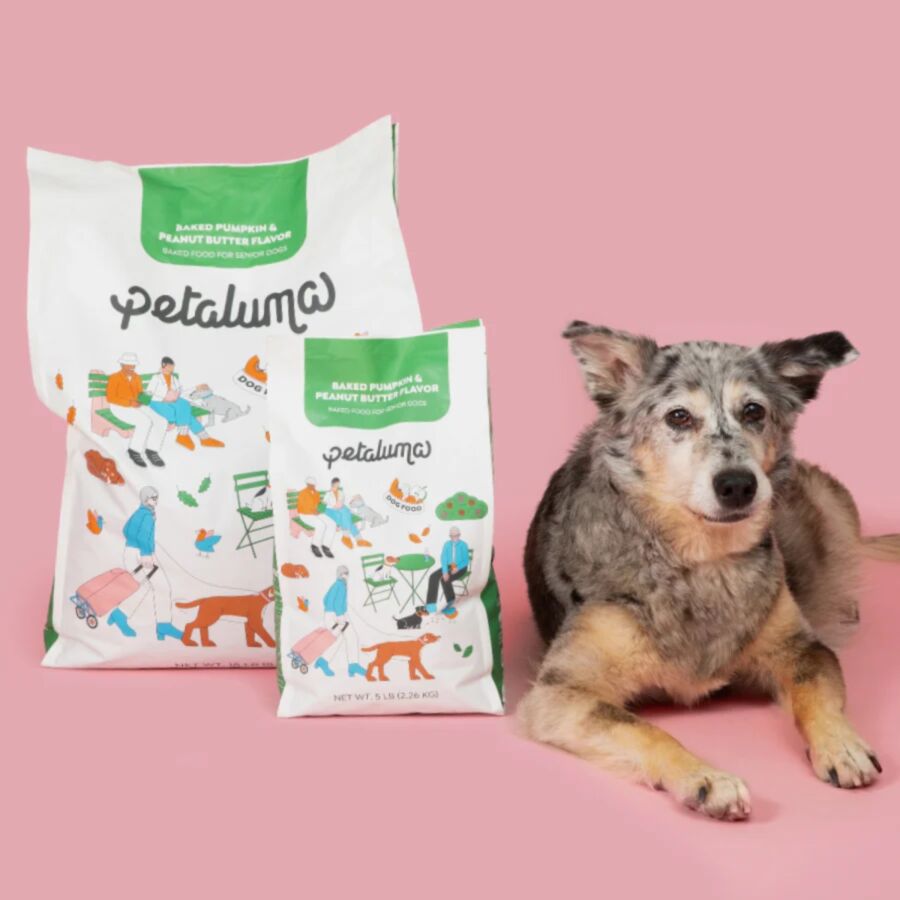
| Brand | Best for | Nutrition status to verify | Strongest evidence | Main caution |
|---|---|---|---|---|
| Open Farm | Traceable animal and seafood ingredients | Complete diets are available; check the exact recipe and life stage | Ingredient origins, safety information, product footprints, and third-party sourcing standards | Certifications and carbon information vary by recipe |
| Petaluma | Plant-based adult or senior food with corporate-impact verification | Check the formula’s adult-maintenance statement | B Corp certification, veterinary formulation, laboratory testing, and published impact information | Plant-based food is not automatically appropriate for every dog |
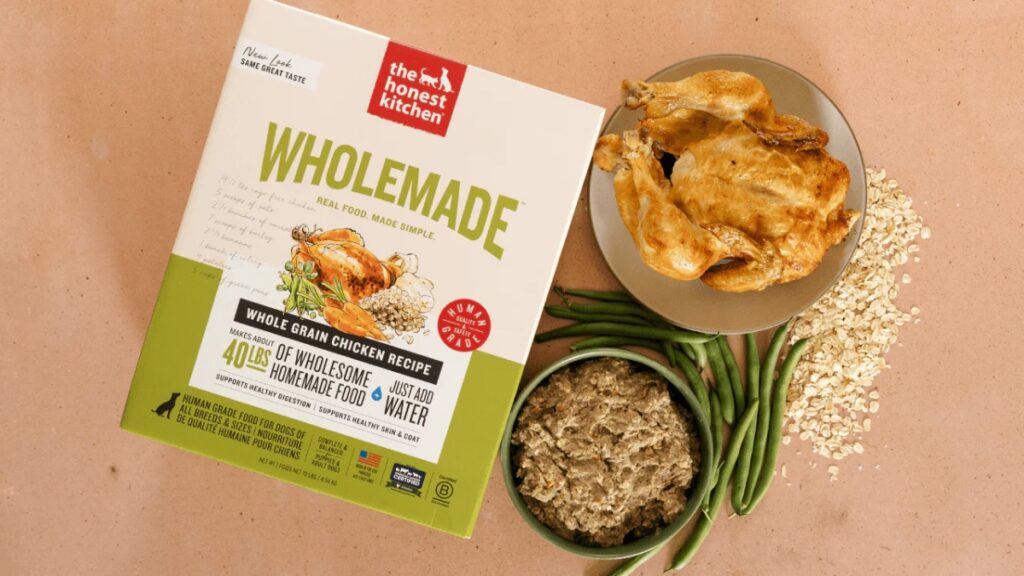
| The Honest Kitchen | Human-grade and dehydrated options | Complete foods and base mixes are different; read the preparation directions | Human-grade production, B Corp certification, and specified animal-welfare sourcing | The pictured base mix requires added protein |
| Wild Earth | US plant-based dry food for adult dogs | Adult maintenance | Current adequacy statement and finished-product testing described by the manufacturer | Not intended for growth or reproduction unless a specific label says otherwise |
| Chippin | Dehydrated cricket or alternative-protein food | Adult maintenance for the complete Daily Food recipes | Veterinary formulation and a visible adult-maintenance statement | Treats and toppers are not interchangeable with complete food |
| Jiminy’s | Insect-protein dry food | Adult maintenance on the current food FAQ and label | Veterinary and animal-nutrition formulation | Insect protein is not automatically the lowest-impact option |
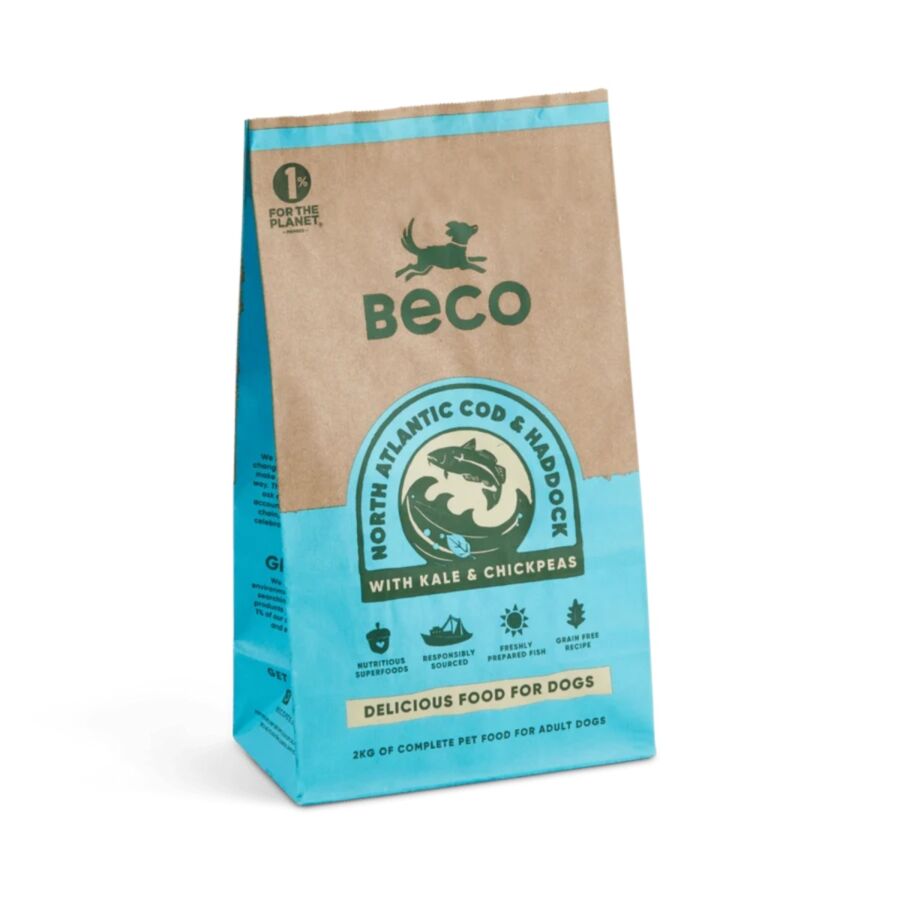
| Beco | UK fish or traceable animal-protein recipes | Complete dry foods; verify the recipe and intended dog | Traceable sourcing and MSC-certified fish in specified recipes | Stock and recipe availability vary; grain-free is not an automatic advantage |
| Benevo | UK and EU vegan adult dog food | Complete adult formula under FEDIAF standards | Long-running plant-based formula with a visible FEDIAF adequacy claim | Availability and applicable label standards differ by market |
How the brands were evaluated
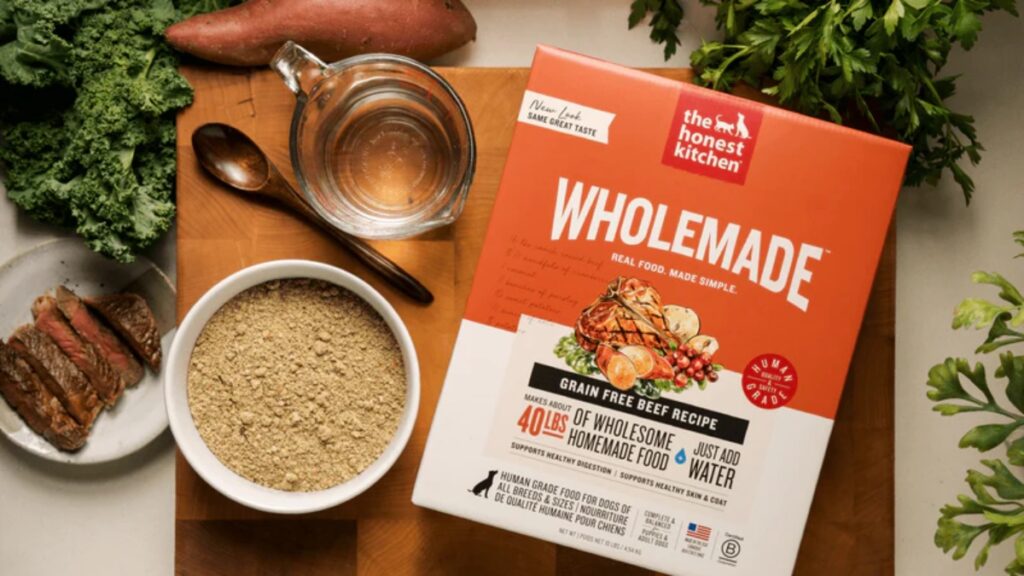
A brand was included only when it had a current dog-food product, accessible nutrition information, and at least one concrete ethical or environmental differentiator. Bowls, toys, treats, and supplements were excluded from the main comparison because they cannot replace a complete diet.
The evaluation considered six areas:
- Whether a complete food identifies its intended life stage and nutritional standard.
- Whether the manufacturer discloses qualified formulation expertise and meaningful quality-control information.
- Whether ingredient origins and animal-welfare, seafood, organic, or other standards are independently audited or clearly documented.
- Whether environmental claims are product-specific, measured, or supported by more than general marketing language.
- Whether the product is currently available in a defined market.
- Whether important limitations, preparation requirements, and life-stage restrictions are disclosed.
Brand sustainability pages are useful for understanding a company’s programs, but they remain company sources. Third-party certifications and comparative research receive more weight than an unsupported “eco-friendly” claim.
Eight ethical and sustainable dog food brands to compare
1. Open Farm: strongest sourcing transparency
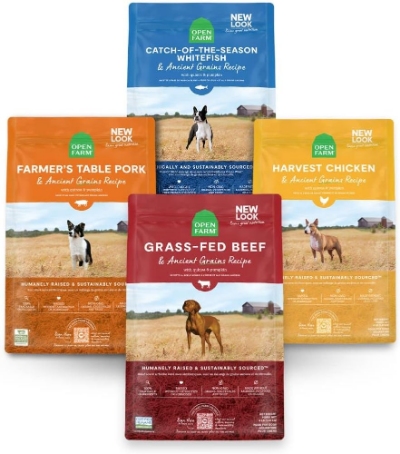
Best for: Dog owners who want animal-protein or seafood recipes with unusually detailed sourcing information.
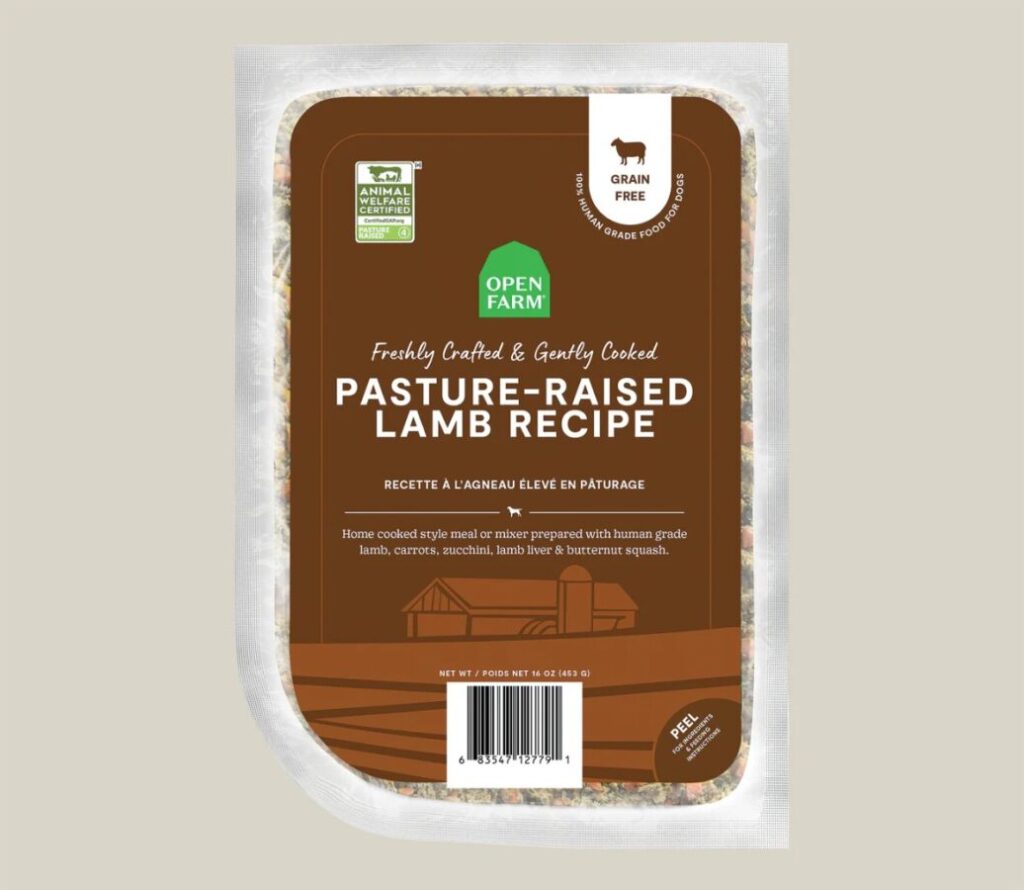
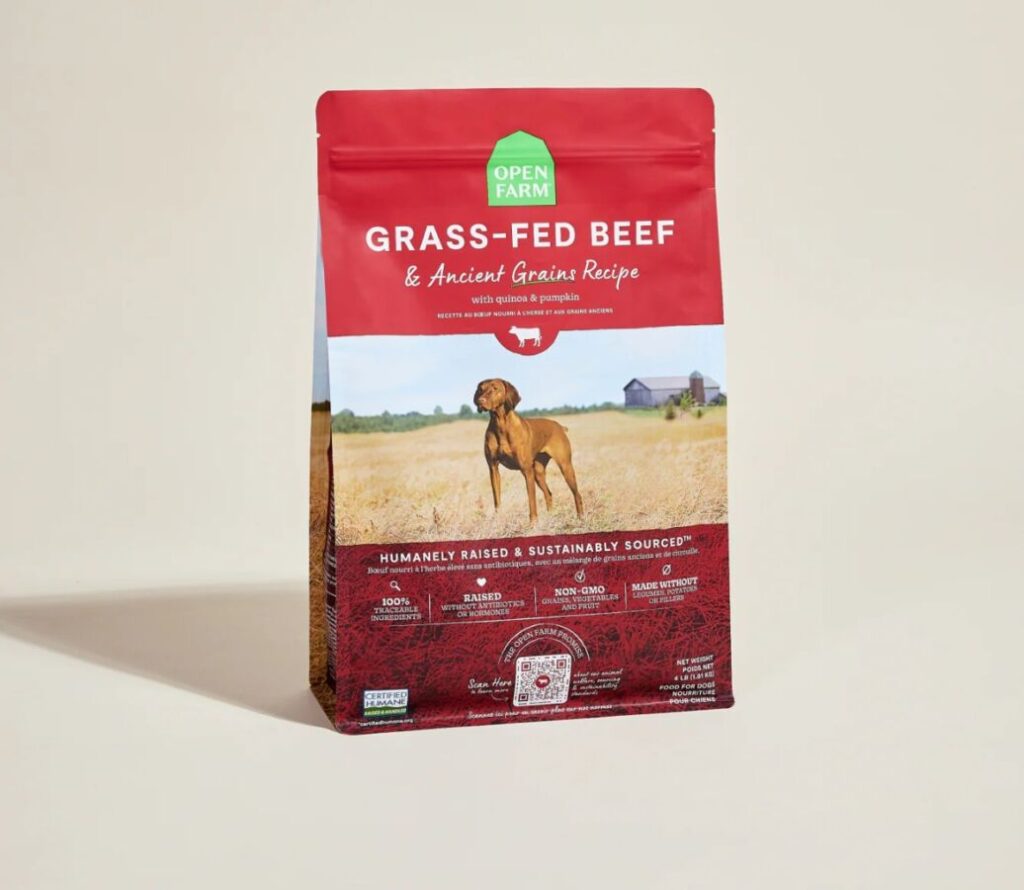
Open Farm’s current transparency system lets customers trace ingredient origins and review safety information, third-party certification details, and carbon information associated with individual products. That product-level approach is more useful than a company making one broad sustainability claim for its entire catalog.
Depending on the recipe, its sourcing programs can involve Certified Humane, Global Animal Partnership, Ocean Wise, Marine Stewardship Council, or other standards. The important qualification is depending on the recipe. A certification attached to one chicken, beef, or fish supply does not automatically apply to every food the company sells.
Main limitation: Traceability does not make a meat-heavy formula low-impact by default. Compare the footprint and certification details for the exact recipe, then confirm that it is complete for your dog’s life stage.
Review Open Farm’s current traceability information.
2. Petaluma: clearest plant-based and B Corp option

Best for: Healthy adult or senior dogs whose owners want a plant-based food with veterinary formulation and third-party corporate-impact verification.
Petaluma produces plant-based baked and dehydrated dog foods in the United States. The company states that its complete formulas are developed by veterinary nutrition experts and formulated for adult maintenance. It also publishes product-testing and environmental information rather than relying entirely on broad plant-based claims.
Petaluma is independently listed as a Certified B Corporation. B Corp certification evaluates company practices; it does not certify that a particular food is medically appropriate for an individual dog. That distinction should remain clear.
Main limitation: A nutritionally complete plant-based food can be suitable for some adult dogs, but it is not a universal prescription. Discuss the change with a veterinarian when the dog has a medical condition, unusual energy needs, a history of diet-related problems, or is still growing.
Check Petaluma’s current formulas and nutrition information.
3. The Honest Kitchen: human-grade and dehydrated choices
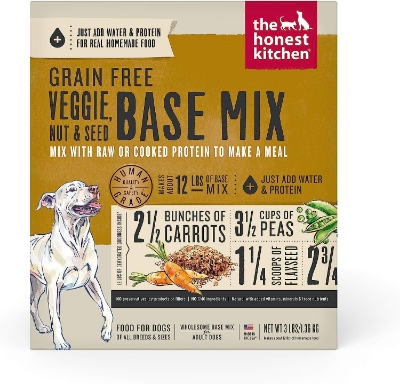
Best for: Owners who value human-grade production standards, shelf-stable dehydrated food, and the ability to choose either complete recipes or a properly prepared base mix.
The Honest Kitchen describes its foods as human grade, meaning the ingredients and production process meet applicable human-food handling requirements throughout production. The company is also a Certified B Corporation, and specified chicken recipes use Global Animal Partnership-certified sourcing.
The product previously called “Kindly” is now presented as a Wholemade grain-free fruit and vegetable base mix. A base mix is not the same as a complete scoop-and-serve food. The owner must add water and the amount and type of protein directed on the current package.
Main limitation: “Human grade” describes sourcing and production conditions. It is not, by itself, evidence that a product has a lower environmental footprint or is a better medical choice than another complete food.
Review The Honest Kitchen’s human-grade standard.
4. Wild Earth: established US plant-based dry food
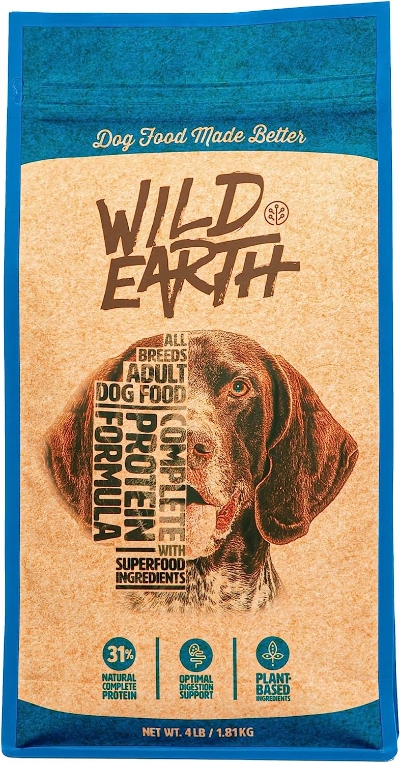
Best for: Owners looking for a widely available US plant-based dry food formulated for adult dogs.
Wild Earth’s current maintenance and performance materials state that the formulas are developed to meet AAFCO nutrient profiles for adult maintenance. The company also describes finished-product testing against those requirements.
This is more useful than treating the word “vegan” as proof of adequacy. A plant-based product still needs the correct amino acids, vitamins, minerals, fatty acids, calorie information, quality controls, and an adequacy statement for the dog being fed.
Main limitation: An adult-maintenance statement does not cover growth or reproduction. Do not assume an adult formula is suitable for puppies or pregnant and nursing dogs.
Check Wild Earth’s current maintenance formula.
5. Chippin: dehydrated cricket and alternative proteins
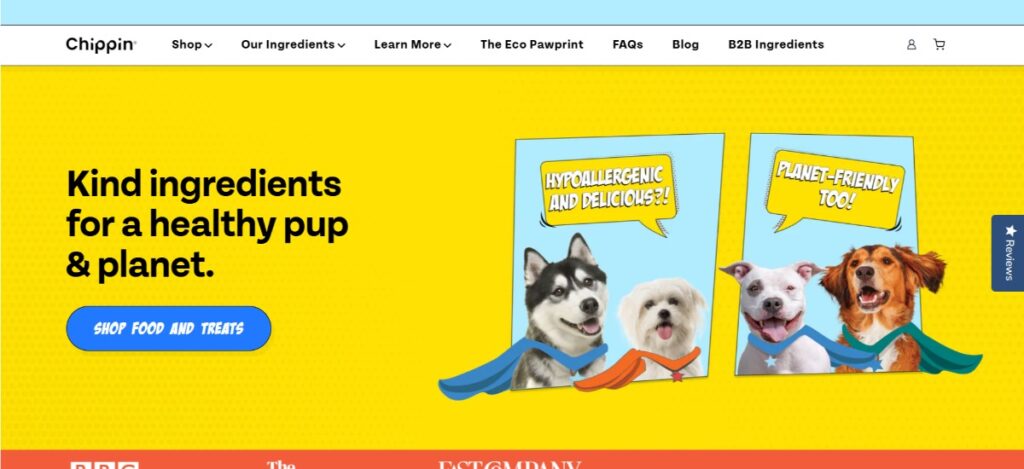
Best for: Adult dogs whose owners want a shelf-stable alternative to conventional beef or poultry protein.
Chippin’s complete Daily Food recipes use alternative proteins such as cricket or silver carp. Its current cricket-food page states that the recipe is formulated to meet AAFCO Dog Food Nutrient Profiles for adult maintenance. The company also identifies veterinary nutrition expertise in its formulation process.
The dehydrated format reduces the water shipped in the package and can be convenient for storage. That does not prove that every ingredient or production stage has a lower footprint than every conventional food, but it gives readers another protein and format to compare.
Main limitation: Chippin also sells treats and supplemental products. Confirm that the specific item says it is complete for adult maintenance rather than assuming every product can be fed as the sole diet.
Review Chippin’s current cricket food.
6. Jiminy’s: insect-protein dry food
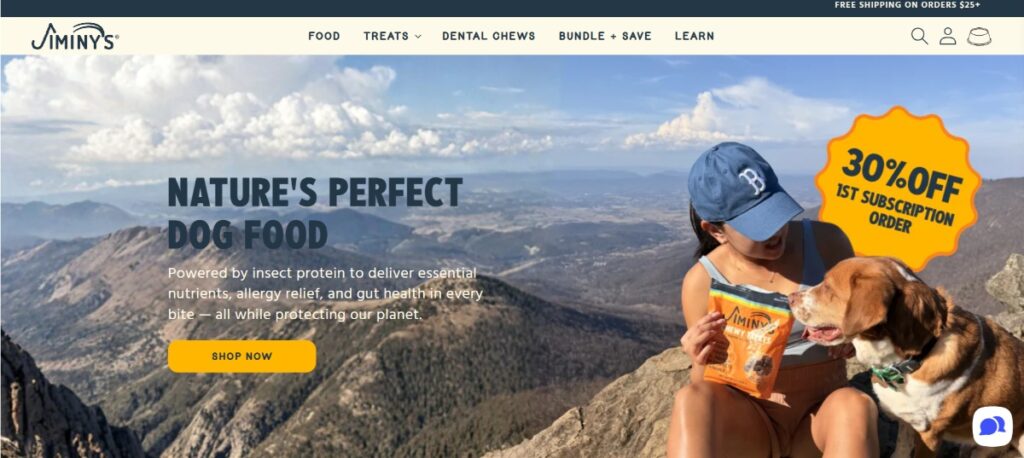
Best for: Owners comparing an insect-based dry food with conventional animal-protein kibble.
Jiminy’s sells cricket- and grub-based foods. Its current FAQ describes Cravin’ Cricket and Good Grub as formulated to meet AAFCO standards for adult maintenance and identifies veterinary and animal-nutrition input in development.
Insect farming can use less land than some livestock systems, but “insect protein” is not a universal environmental score. Feed substrate, energy source, heating, processing efficiency, and the conventional protein used for comparison can materially change the result. A recent review of insect-farming life-cycle research found that many environmental claims remain dependent on production conditions.
Main limitation: Treat brand impact estimates as company-reported unless they are accompanied by a transparent, independent life-cycle assessment with a clear comparison baseline.
Review Jiminy’s current nutrition FAQ.
7. Beco: a practical UK fish and animal-protein option
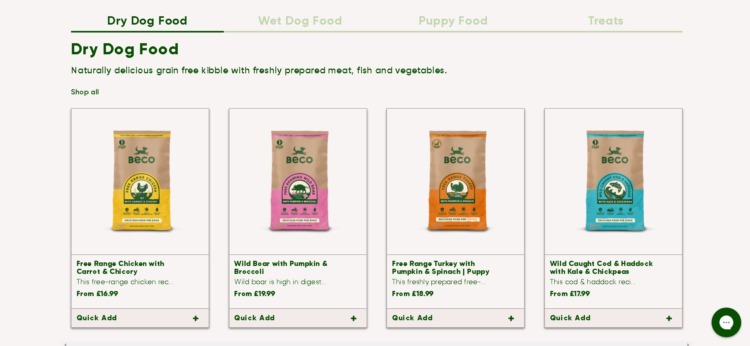
Best for: UK shoppers comparing complete dry foods with traceable animal proteins or specified seafood standards.
Beco’s current UK range includes complete dry foods such as cod and haddock, free-range chicken, wild boar, and formulas for puppies or small breeds. Its fish sourcing claims should be evaluated recipe by recipe. Beco identifies Marine Stewardship Council-certified fish in specified products rather than applying one fish claim to every formula.
The brand’s current foods are primarily grain-free. That is a formulation characteristic, not an ethical or health certification. The FDA says reports of non-hereditary dilated cardiomyopathy have involved both grain-free and grain-containing diets, and the precise dietary relationships remain unresolved.
Main limitation: Availability is regional and can change quickly. Check whether the exact bag is in stock, complete for the intended life stage, and appropriate for the dog rather than selecting it solely because it is grain-free.
Check Beco’s current UK food range.
8. Benevo: established UK and EU vegan adult food
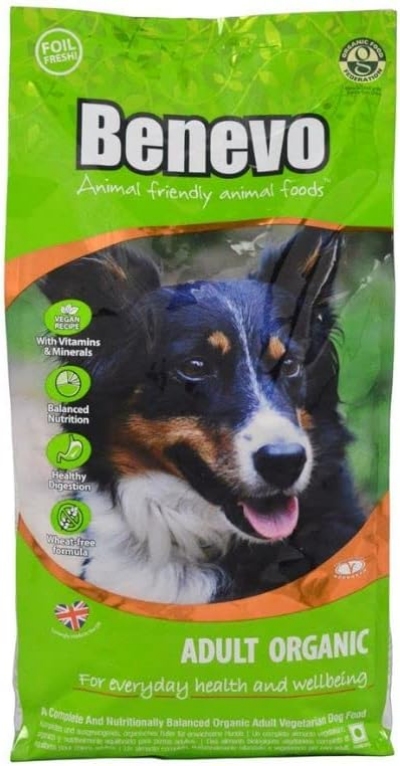
Best for: UK and European owners seeking a long-running plant-based adult formula.
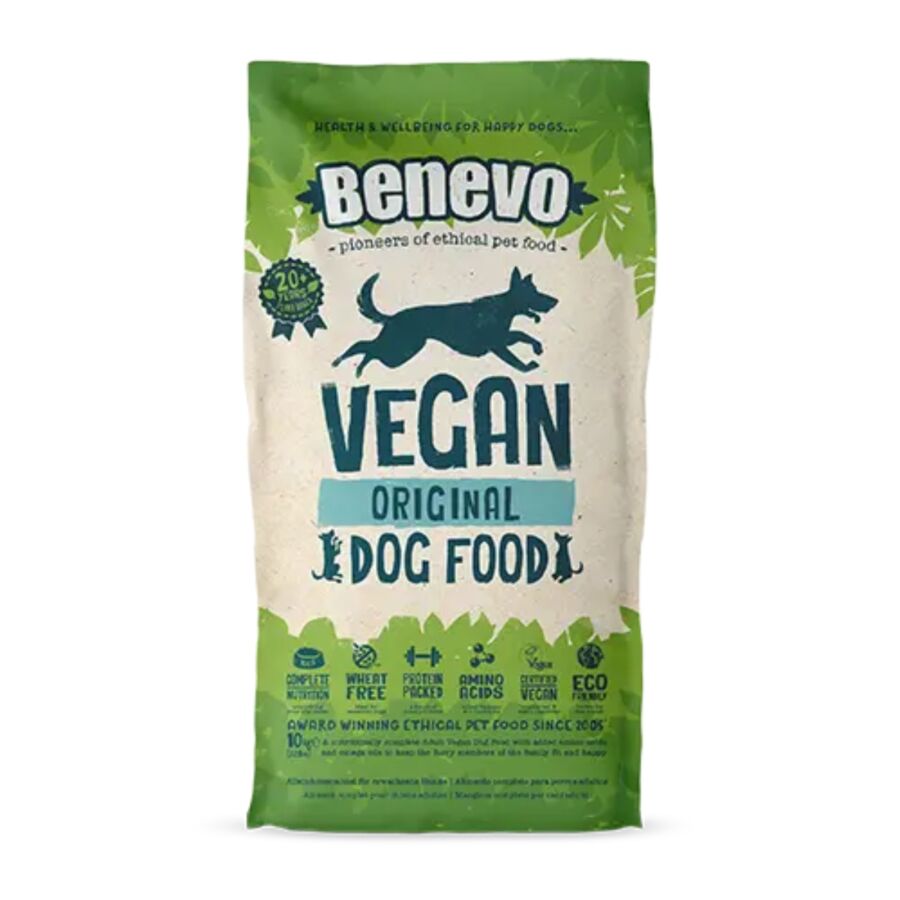
Benevo Original is a meat-free dry food marketed as nutritionally complete for adult dogs under FEDIAF European standards. It is fortified to provide nutrients that cannot be assumed from the front-of-package plant ingredients alone.
The product’s clearest ethical differentiator is its avoidance of animal-derived ingredients. That may align with an owner’s animal-welfare priorities, but nutrition must still be assessed through the complete formula, life-stage statement, manufacturer practices, and the dog’s individual needs.
Main limitation: Benevo is easiest to source in the UK and parts of Europe. Import availability, package wording, and applicable regulatory standards can differ in other markets.
Review Benevo Original’s current product details.
What ethical and sustainable dog food actually means
Nutrition comes before environmental marketing

The Association of American Feed Control Officials does not approve or certify individual pet foods. In the United States, look for a nutritional adequacy statement explaining whether a product is formulated to meet an AAFCO nutrient profile or has substantiated adequacy through an applicable feeding protocol.
The statement should also identify the intended life stage. The FDA’s complete-and-balanced guidance explains that treats, snacks, mixers, and supplements are often not intended to be fed as the sole diet.
Sourcing claims should be specific and auditable
“Responsibly sourced” is most useful when a company identifies the ingredient, country or region, supplier standard, certifying organization, and products covered. Product-level standards such as GAP, Certified Humane, MSC, ASC, or organic certification answer narrower questions than a general corporate sustainability pledge.
Terms such as organic and natural can describe different production or ingredient characteristics. Our explanation of organic and natural food labels provides broader context, but neither term replaces a dog-food adequacy statement.
Protein source and food format affect environmental impact

A 2026 analysis of nearly 1,000 UK dog foods found more than a 65-fold difference in estimated greenhouse-gas intensity. Prime meat was a major driver of higher impact, while wet, raw, and grain-free products had higher average impacts than conventional dry foods in that dataset.
That does not prove that every dry food is better than every wet food. Recipe composition, calorie density, portion size, sourcing, waste allocation, and the dog’s needs all matter. The study is also based on products marketed in the UK and should not be treated as a product certification for every formula worldwide.
Animal by-products are not automatically low quality or unethical. They can include nutrient-rich parts of an animal that are less demanded for human food. Rejecting all by-products while favoring human-edible prime cuts can increase competition for higher-impact ingredients.
Packaging is important, but recyclability must be real
“Recyclable” can mean technically recyclable rather than accepted by a local collection program. Check whether the bag can enter curbside recycling, requires a retailer or mail-back program, or is unlikely to be recovered in practice.
Packaging deserves attention, but changing a pouch without addressing a high-impact recipe does not necessarily produce the largest environmental benefit. Ingredient production and food waste often account for more of the footprint.
How to choose an ethical dog food

1. Find the nutritional adequacy statement

Confirm that a main food is complete for the dog’s species and life stage. Do not substitute a topper, treat, broth, mixer, or vegetable base for a complete diet unless the preparation directions explain how to make the finished meal complete.
2. Match the food to the dog

Consider age, expected adult size, activity, body condition, reproductive status, medical history, allergies confirmed by a veterinarian, and the calories supplied per serving. Sustainability does not justify feeding an inappropriate formula.
3. Investigate the manufacturer
The WSAVA pet-food selection guide recommends asking who formulates the food, what qualifications that person has, where the food is made, what quality-control procedures are used, whether finished products are analyzed, and whether the company can provide complete nutrient information.
The ingredient list can help identify ingredients a dog must avoid, but it does not rank digestibility, bioavailability, formulation expertise, or manufacturing quality.
4. Verify sourcing at the product level
Look for traceable origins and certification details tied to the exact chicken, beef, fish, plant, or other protein in the chosen recipe. Confirm who audits the standard and what it covers. A logo on a corporate page may not apply to every bag.
5. Compare environmental trade-offs

Compare protein source, use of prime meat or by-products, food format, calorie density, portion size, manufacturing information, packaging, and food waste. Avoid assuming that fresh, raw, grain-free, human-grade, insect-based, or plant-based automatically means “best.”
6. Check recalls and retain the lot number
Review the FDA’s current animal-food recalls in the United States or the applicable regulator in your country. Keep the package or photograph the lot number, best-by date, manufacturer contact information, and adequacy statement until the food has been used.
Is plant-based dog food safe?

A commercially produced plant-based food can be formulated to meet an adult dog’s established nutrient profile. Its adequacy comes from the finished formulation and quality controls, not from the absence of meat alone.
Check the current adequacy statement, life stage, calorie content, amino-acid and nutrient formulation, manufacturer expertise, and finished-product testing. Puppies, pregnant or nursing dogs, and dogs with medical conditions need more individualized guidance.
Plant-based formulations often have lower land and climate impacts than meat-heavy alternatives, but life-cycle results depend on ingredients, energy, processing, and the comparison baseline. Ethical choices also involve personal views on animal use, which are discussed more broadly in our pros and cons of veganism. Human dietary arguments should not be substituted for canine nutrition advice.
Do not choose a food solely because it is grain-free. The FDA’s current DCM guidance says reports have involved both grain-free and grain-containing foods. Many reported diets placed non-soy pulses high in their ingredient lists, but the agency has not established a single definitive dietary cause.
Can homemade dog food be sustainable and complete?

Homemade food can reduce some packaging, give the owner more control over sourcing, and use ingredients that fit a household’s priorities. It can also be nutritionally incomplete even when the recipe appears varied and wholesome.
Recent Dog Aging Project findings and earlier veterinary studies have found that many home-prepared recipes fail to provide all required nutrients in appropriate amounts. Calcium, phosphorus, trace minerals, vitamins, fatty acids, amino acids, and calorie density are difficult to balance by intuition.
Use a recipe formulated for the individual dog by a veterinarian with appropriate nutrition expertise or through a referral to a board-certified veterinary nutritionist. Follow the ingredients, supplement, preparation, and quantity instructions exactly. Casual substitutions can change the nutrient balance.
Homemade treats can be prepared separately, but treats should not displace the dog’s complete food or be presented as a nutritionally complete meal without evidence.
Practical ways to reduce the impact of feeding a dog

- Feed an appropriate number of calories and monitor body condition with veterinary guidance. Avoiding chronic overfeeding also avoids unnecessary food production.
- Compare lower-impact proteins and plant-based or alternative-protein complete foods when they fit the dog’s nutritional needs.
- Do not assume that human-edible prime cuts are more sustainable than responsibly used animal by-products.
- Consider dry or dehydrated formats when they are nutritionally appropriate and practical for the dog.
- Store food correctly, seal the package, and buy quantities that can be used before quality declines.
- Use recycling or take-back programs only when they are accessible and provide a credible recovery route.
- Extend the same scrutiny to other pet purchases, including biodegradable dog poop bags and other practical zero-waste products.
Choose a food your dog can thrive on and you can verify

The strongest ethical choice is not necessarily the product with the greenest package or the longest ingredient list. Start with nutritional adequacy and the dog’s individual needs. Then compare the evidence behind ingredient sourcing, animal welfare, protein choice, environmental impact, manufacturing, and packaging.
Open Farm currently provides the strongest sourcing transparency in this group. Petaluma is the clearest plant-based and B Corp choice. The Honest Kitchen offers a useful human-grade, dehydrated format, while Beco and Benevo expand the comparison for UK and European readers. The final decision should be based on the exact formula, current label, veterinary context, availability, and how the dog responds.
Frequently asked questions

What makes dog food ethical and sustainable?
Ethical and sustainable dog food is nutritionally complete for its intended life stage and transparent about sourcing, manufacturing, animal welfare, environmental impact, and packaging. No single certification covers every factor.
Is AAFCO certification for dog food real?
No. AAFCO does not approve or certify individual pet foods. Look for a nutritional adequacy statement saying the food is formulated to meet an applicable AAFCO nutrient profile or has substantiated adequacy through an applicable feeding protocol, and confirm the intended life stage.
Is plant-based dog food safe for dogs?
A properly formulated commercial plant-based food can meet established nutrient profiles for many adult dogs. Check the current adequacy statement, manufacturer expertise, testing, calories, and life stage. Puppies, pregnant or nursing dogs, and dogs with medical conditions need veterinary guidance.
Is dry dog food more sustainable than wet or raw food?
Dry food often has a lower average environmental impact than wet or raw food, but there is no universal rule. Protein source, use of prime meat, calorie density, portion size, manufacturing, food waste, and packaging can change the result.
Can homemade dog food be sustainable and nutritionally complete?
It can be, but many unsupervised recipes are deficient or unbalanced. Use a recipe formulated for the individual dog by an appropriately qualified veterinary nutrition professional and follow it exactly, including the specified supplements.
Sources and verification
- AAFCO consumer pet-food FAQs
- FDA guidance on complete and balanced pet food
- WSAVA guidelines on selecting pet food
- FDA animal-food recalls and withdrawals
- Environmental-impact analysis of dog foods in the Journal of Cleaner Production
- Dog Aging Project findings on home-prepared diets
Related resources
- Organic vs. natural food labels
- Biodegradable dog poop bags
- Practical zero-waste products
- Pros and cons of veganism
See Related: Wildlife Photography Guide: Ethical Camera Settings, Gear, and Fieldcraft
See Related: The Science of Frog Starvation: How Long Can They Go Without Eating

