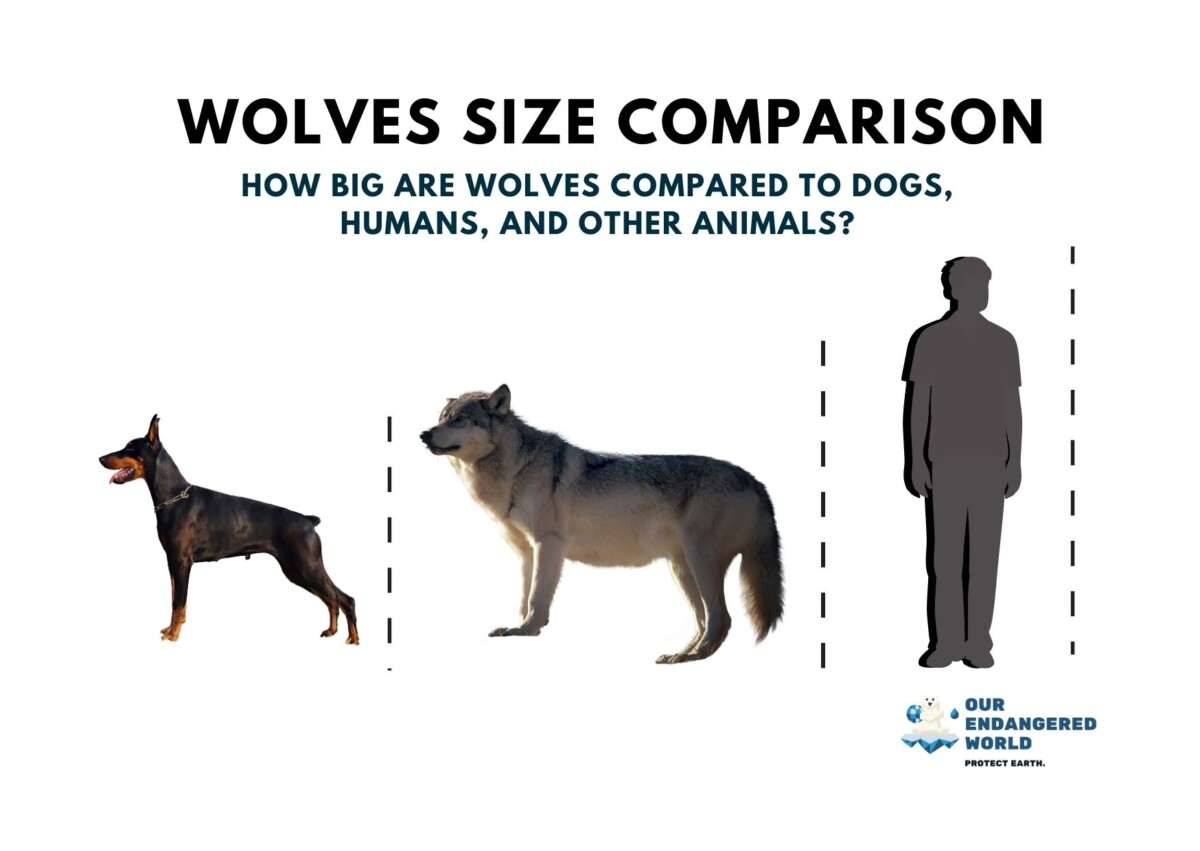
Quick answer: A typical adult gray wolf (Canis lupus) stands about 26 to 34 inches (66 to 86 cm) at the shoulder, measures 4.5 to 6.5 feet (1.4 to 2.0 m) from nose to tail tip, and weighs between 60 and 135 pounds (27 to 61 kg) on average. Adult females generally weigh 60 to 100 pounds (27 to 45 kg), while adult males average 85 to 135 pounds (38 to 61 kg), with exceptional northern males in Alaska and the Yukon documented up to 145 to 175 pounds (66 to 79 kg).
That biological frame makes a gray wolf taller and longer than a Siberian Husky, usually larger and heavier-boned than a German Shepherd, similar in shoulder height to a Great Dane, 3x to 5x larger than a coyote, but substantially smaller than an adult black bear (200 to 400 lbs), grizzly bear (400 to 700+ lbs), lion, or tiger.
Key Takeaways
- Largest Wild Canid: Gray wolves are the largest extant wild canids, with adult males averaging 85 to 135 lbs (38 to 61 kg) and standing 26 to 34 inches at the shoulder.
- Domestic Dog Comparison: Wolves are substantially larger than Siberian Huskies (35-60 lbs) and German Shepherds (50-90 lbs), while Great Danes can be taller and English Mastiffs (160-230 lbs) much heavier.
- Wolf vs Human: A standing wolf reaches knee-to-hip height on an adult human, but its nose-to-tail length (4.5 to 6.5 ft) matches or exceeds the height of an average person.
- Wolf vs Bear & Big Cats: Adult grizzly bears (400-700+ lbs) and black bears (200-400 lbs) outweigh wolves 2x to 8x; cougars (120-180 lbs) and lions (330-570 lbs) are also heavier.
- Subspecies Variation (Bergmann’s Rule): Northwestern wolves (Canis lupus occidentalis) average 100 to 140+ lbs, whereas desert Arabian wolves (Canis lupus arabs) weigh only 40 to 45 lbs.
- Dire Wolf Reality: Aenocyon dirus was roughly 20% to 25% heavier than modern gray wolves (averaging 130 to 154 lbs) with 20-30% greater bite force, but was not an oversized fantasy monster.
Wolf Size at a Glance
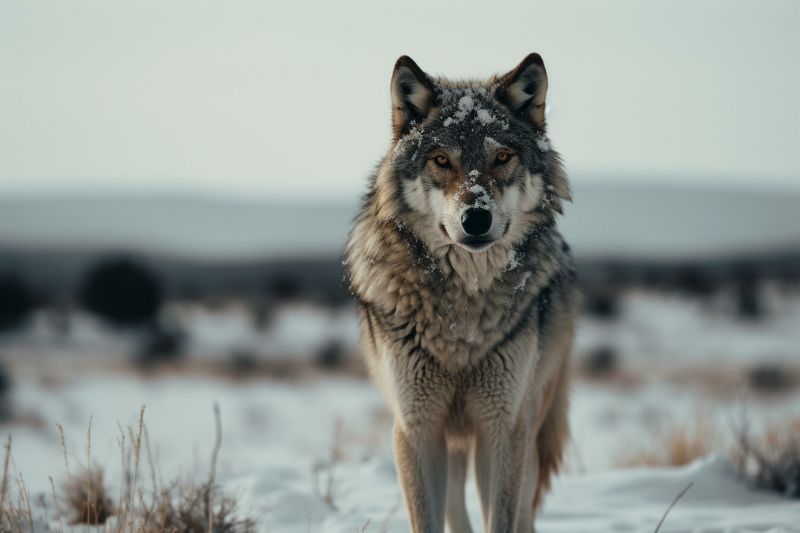
The biological baseline for wild canid size is the gray wolf, known scientifically as Canis lupus. According to the International Wolf Center and long-term data from the Yellowstone Wolf Project, adult gray wolves stand about 26 to 34 inches (66 to 86 cm) at the shoulder and measure 4.5 to 6.5 feet (1.4 to 2.0 m) from nose to tail tip.
Wolf mass varies substantially across latitudes. In northern Canada, Alaska, and Siberia, adult males routinely weigh 100 to 140 pounds (45 to 64 kg), while wolves in southern or arid climates average closer to 50 to 80 pounds (23 to 36 kg). Below is a comprehensive comparison of wolf dimensions against humans, dogs, wild canids, bears, and big cats.
| Animal / Species | Shoulder Height | Adult Weight (lbs & kg) | Total Length | Key Comparison to Gray Wolf |
|---|---|---|---|---|
| Gray wolf (Canis lupus) | 26–34 in (66–86 cm) | 60–135 lbs (27–61 kg) | 4.5–6.5 ft (1.4–2.0 m) | Baseline: largest living wild canid |
| Red wolf (Canis rufus) | 24–26 in (61–66 cm) | 45–80 lbs (20–36 kg) | 4.5–5.5 ft (1.4–1.7 m) | Intermediate in size between coyote and gray wolf |
| Adult human (Homo sapiens) | Standing: 5 ft 4 in – 5 ft 10 in | 130–200 lbs (59–91 kg) | Upright bipedal posture | Human is taller standing; wolf is longer horizontally |
| Siberian Husky | 20–23.5 in (51–60 cm) | 35–60 lbs (16–27 kg) | Compact spitz body | Wolf is 1.5x to 2.5x heavier and much taller |
| German Shepherd | 22–26 in (56–66 cm) | 50–90 lbs (23–41 kg) | Longer than tall | Wolf has longer legs, larger paws, and broader head |
| Great Dane | 30–34 in (76–86 cm) | 110–175 lbs (50–79 kg) | Massive domestic frame | Great Dane is often taller at shoulder and heavier |
| English Mastiff | 27.5–32+ in (70–81+ cm) | 130–230 lbs (59–104 kg) | Heavy, muscular build | Mastiff outweighs wolves 1.5x to 2x; wolf is rangier |
| Tibetan Mastiff / Kangal | 26–32 in (66–81 cm) | 100–160 lbs (45–73 kg) | Heavy protective coat | Bred specifically to match and deter wolf packs |
| Coyote (Canis latrans) | 21–24 in (53–61 cm) | 20–35 lbs (9–16 kg) | 3.5–4.5 ft (1.1–1.4 m) | Wolf is 3x to 5x heavier with 2x larger paw tracks |
| Red fox (Vulpes vulpes) | 14–16 in (36–41 cm) | 8–15 lbs (3.6–6.8 kg) | 2.5–3.5 ft (0.8–1.1 m) | Wolf is 7x to 12x heavier with completely different diet |
| African wild dog (Lycaon pictus) | 24–30 in (60–75 cm) | 40–75 lbs (18–34 kg) | 3.0–4.6 ft (0.9–1.4 m) | Lighter, cursorial pursuit predator; not a true wolf |
| American Black Bear | 30–36 in (76–91 cm) | 150–400+ lbs (68–181+ kg) | 4.5–6.0 ft (1.4–1.8 m) | Black bear outweighs single wolves 2x to 3x |
| Grizzly Bear | 40–48 in (102–122 cm) | 400–700+ lbs (181–318+ kg) | 6.5–8.0 ft (2.0–2.4 m) | Grizzly outweighs wolves 4x to 8x; dominates 1-on-1 |
| Cougar / Mountain Lion | 24–30 in (61–76 cm) | 75–180 lbs (34–82 kg) | 5.0–7.5 ft (1.5–2.3 m) | Cougars have denser muscle; wolves have pack stamina |
| African Lion | 40–48 in (102–122 cm) | 270–570 lbs (122–259 kg) | 5.5–8.5 ft (1.7–2.6 m) | Lion is 3x to 5x heavier than an adult gray wolf |
| Tiger (Panthera tigris) | 36–48 in (91–122 cm) | 200–600+ lbs (91–272+ kg) | 6.0–10.5 ft (1.8–3.2 m) | Amur and Bengal tigers are 3x to 6x heavier than wolves |
| Spotted Hyena | 30–34 in (76–86 cm) | 90–190 lbs (41–86 kg) | 4.0–5.9 ft (1.2–1.8 m) | Similar shoulder height but heavier forequarters |
| Dire wolf (Aenocyon dirus) | 31–34 in (79–86 cm) | 130–154 lbs (60–70 kg) | 5.5–6.5 ft (1.7–2.0 m) | Extinct: ~20% heavier with 25% stronger bite force |
How Big Is a Wolf?
When people ask how big wolves are, they usually mean gray wolves. Gray wolves are the largest living wild members of the dog family, but they are not all the same size. Wolves in northern regions with large prey tend to be larger than wolves from warmer or more marginal habitats.
Wolf classification also matters. The International Wolf Center notes that gray wolves and red wolves are widely recognized wolf species, while some other “wolf” labels involve debated taxonomy or common names. For a deeper breakdown, see our guide to the types of wolves.
For quick comparison, use these gray wolf numbers:
- Shoulder height: about 26 to 32 inches
- Length: about 4.5 to 6.5 feet from nose to tail
- Weight: often about 50 to 130 pounds, with males usually heavier than females
- Build: long-legged, deep-chested, narrow through the body, and built for distance travel
Wolves vs Humans: How Big Is a Wolf Next to a Person?
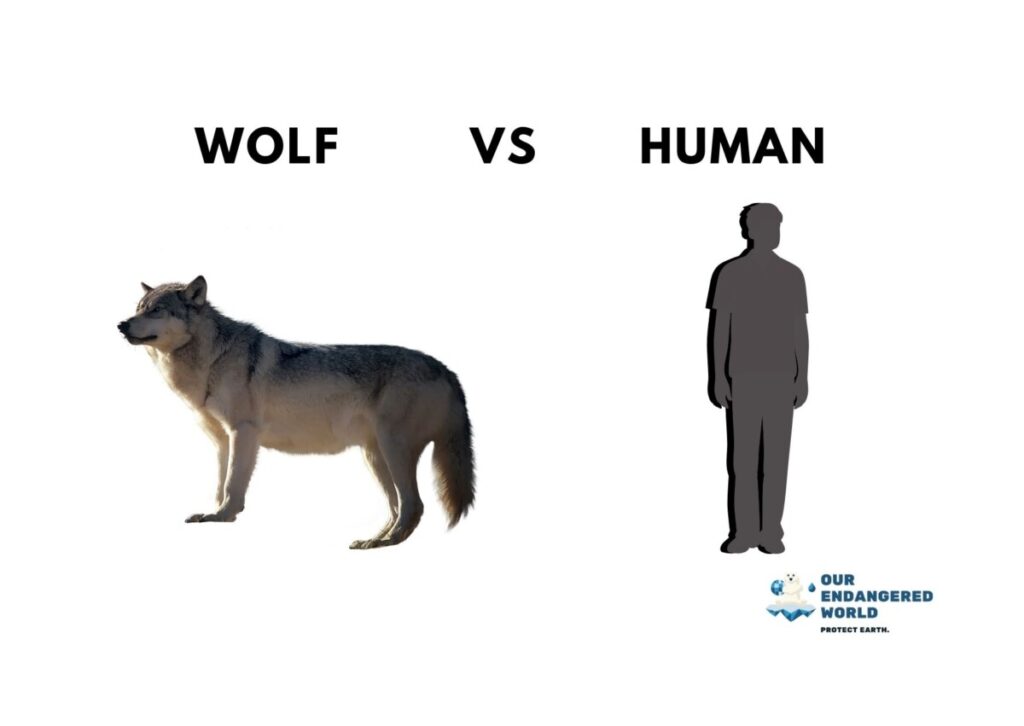
A wolf is much shorter than an adult human when measured at the shoulder. A gray wolf standing on all fours is usually around knee-to-hip height on many adults, not eye level. The wolf still ranks among the most majestic animals on Earth, but for reasons of bearing rather than bulk.
The comparison changes when you measure length. A large male gray wolf can measure 5 to 6.5 feet from nose to tail, which overlaps the standing height of many people. That is why wolves look so large in side-view photos even though their shoulder height is far below human head height.
Wolves can appear even larger when they raise their heads, climb, jump, or stand briefly on their hind legs, but hind-leg height is not the standard way biologists measure them.
Wolves are powerful wild predators, but they are not looking for conflict with people. In areas where wolves and humans share space, the safest rule is simple: never feed wolves, never approach them for photos, and give any wild wolf a wide escape route.
Wolves vs Dogs: Are Wolves Bigger Than Domestic Dogs?
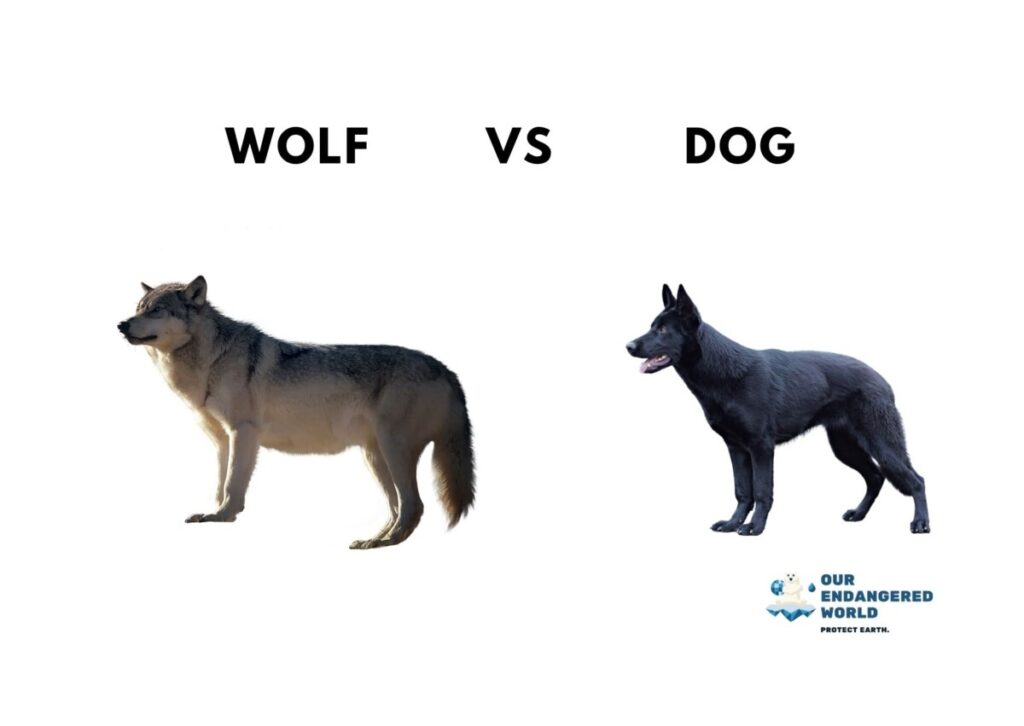
Wolves are bigger than most domestic dogs, but not bigger than every dog. Domestic dogs have been selectively bred into an extreme size range, from tiny companion breeds to giant working breeds. Wolves have less size variation because natural selection shapes them for survival, travel, hunting, and reproduction.
| Comparison | Wolf | Dog | Bottom Line |
|---|---|---|---|
| Wolf vs Siberian Husky | 26-32 inches at shoulder; often 50-130 pounds | 20-23.5 inches; 35-60 pounds by AKC standard | Wolves are much larger than Huskies. |
| Wolf vs German Shepherd | Taller at the upper end and longer overall | 22-26 inches by AKC standard | Wolves are usually larger, especially in length and wild build. |
| Wolf vs Great Dane | Usually 26-32 inches at shoulder | Males at least 30 inches; 32+ preferred by AKC standard | Great Danes can be taller at the shoulder. |
| Wolf vs Mastiff | Lean, long-legged wild canid | Minimum 30 inches for males and 27.5 inches for females by AKC standard | Mastiffs can be heavier, while wolves are more athletic and rangy. |
Wolf vs Great Dane

Great Danes are one of the clearest examples of a dog breed that can stand taller than a wolf. The AKC Great Dane standard says males should be at least 30 inches at the shoulder, with 32 inches or more preferred when the dog is well proportioned. That puts many male Great Danes at or above the upper shoulder-height range of gray wolves.
The wolf may still look more rugged because of its long legs, thick winter coat, large head, and wild canid posture. The Great Dane wins many height comparisons; the wolf wins on wild endurance and natural hunting design.
Wolf vs Siberian Husky
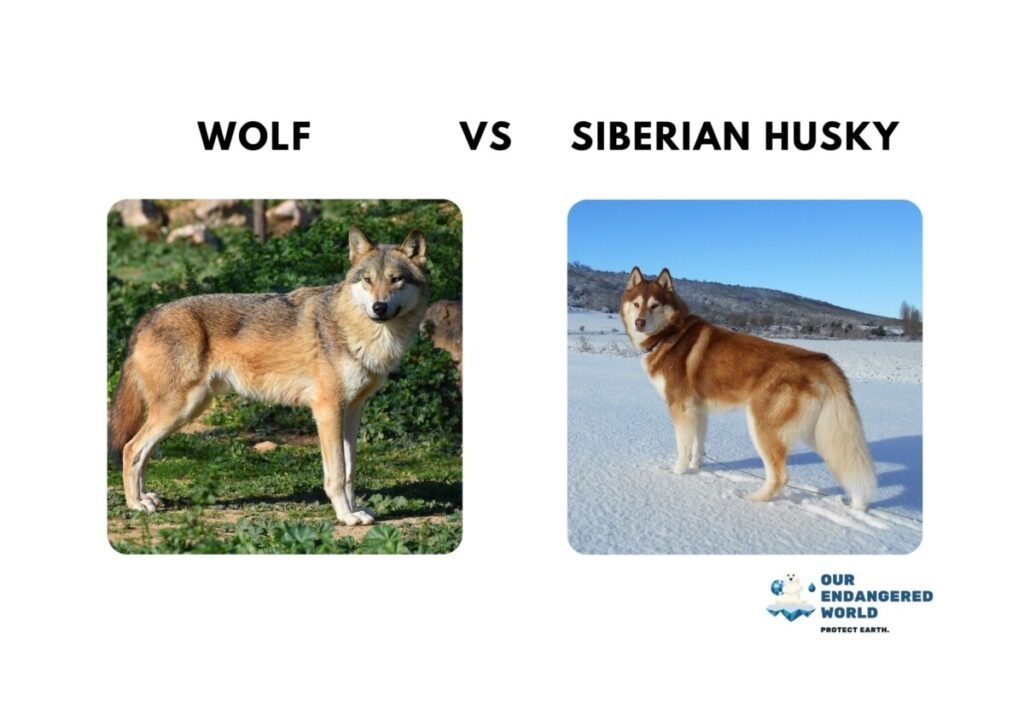
Siberian Huskies are often mistaken for wolf-like dogs because of their coat, ears, and facial markings. Size tells a different story. The AKC Siberian Husky standard lists adult males at 21 to 23.5 inches and 45 to 60 pounds, while females are 20 to 22 inches and 35 to 50 pounds.
That makes most Huskies shorter and lighter than adult gray wolves. A Husky may resemble a wolf at a glance, but a side-by-side comparison shows a smaller dog with a more compact domestic build.
Wolf vs German Shepherd
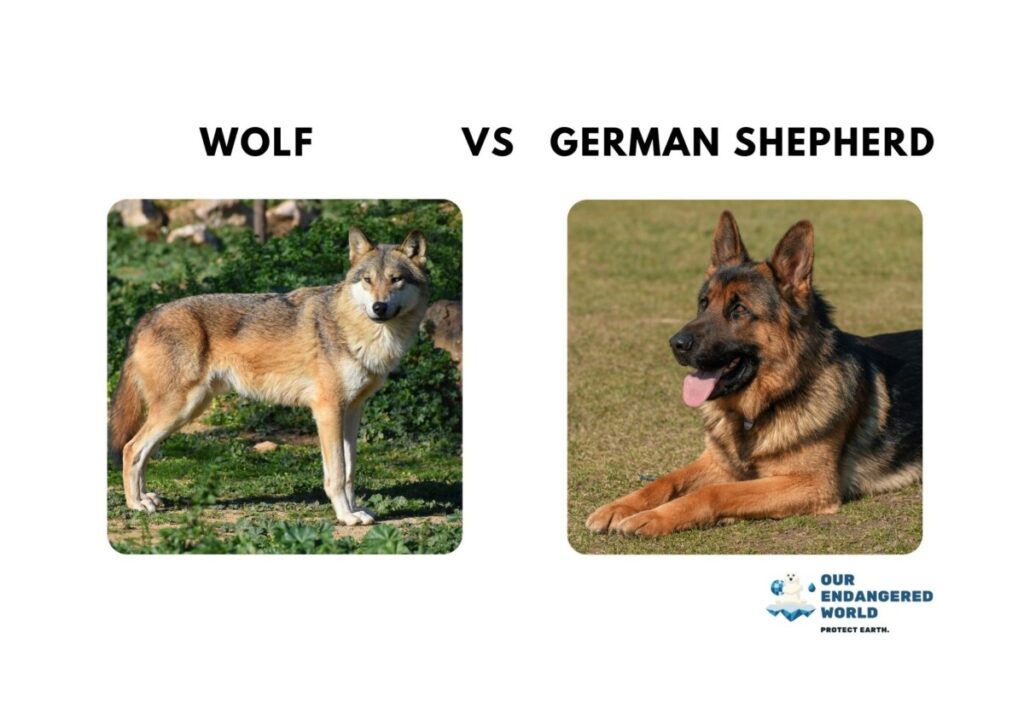
German Shepherds are large domestic dogs, but they are usually smaller than gray wolves. The AKC German Shepherd Dog standard lists males at 24 to 26 inches and females at 22 to 24 inches at the shoulder. Gray wolves commonly reach 26 to 32 inches at the shoulder and have a longer, more distance-built frame.
The overlap matters: a large German Shepherd and a smaller wolf may appear close in height. In most comparisons, though, a mature gray wolf is longer, leggier, and heavier through the head, neck, and chest.
Wolf vs Livestock Guardian Dogs (LGDs)
Centuries of selective breeding produced giant Livestock Guardian Dogs (LGDs) specifically engineered to deter or engage gray wolves to protect sheep and cattle herds. Breeds such as the Tibetan Mastiff (100 to 160 lbs / 45 to 73 kg), Caucasian Shepherd Dog (110 to 170+ lbs / 50 to 77+ kg), and Turkish Kangal (100 to 145 lbs / 45 to 66 kg) match or exceed the shoulder height and body mass of mature gray wolves.
These guardian breeds feature heavy neck ruffs, thick loose skin to withstand bites, and bone-crushing jaw pressure. While a wild wolf possesses superior cardiovascular endurance and speed, a 140-pound guardian dog presents a formidable defensive barrier that deters predatory pack incursions. For more on canine working traits, see our articles on hardworking animals and canine communication.
Wolf vs Mastiff
Mastiffs can outweigh wolves. The AKC Mastiff standard describes a massive, heavy-boned dog, with males at least 30 inches at the shoulder and females at least 27.5 inches. A large Mastiff may be taller than many wolves and much heavier.
The better comparison is not “which animal is stronger?” but “what was each body built to do?” Mastiffs were shaped by human breeding for size, guarding, and mass. Wolves were shaped by natural selection for travel, pack hunting, winter survival, and energy efficiency.
Wolves vs Other Wild Canids
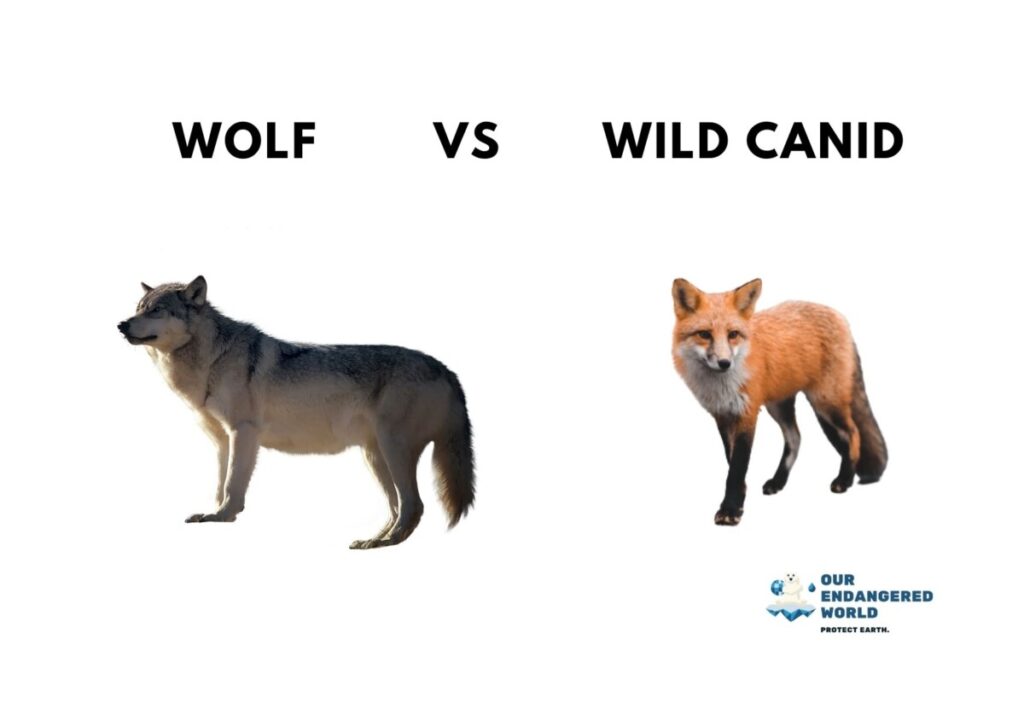
Wolves belong to the dog family, Canidae. So do coyotes, foxes, jackals, dholes, African wild dogs, and domestic dogs. That family connection does not mean they are close in size. Gray wolves sit at the large end of the living canid range.
Wolf vs Coyote
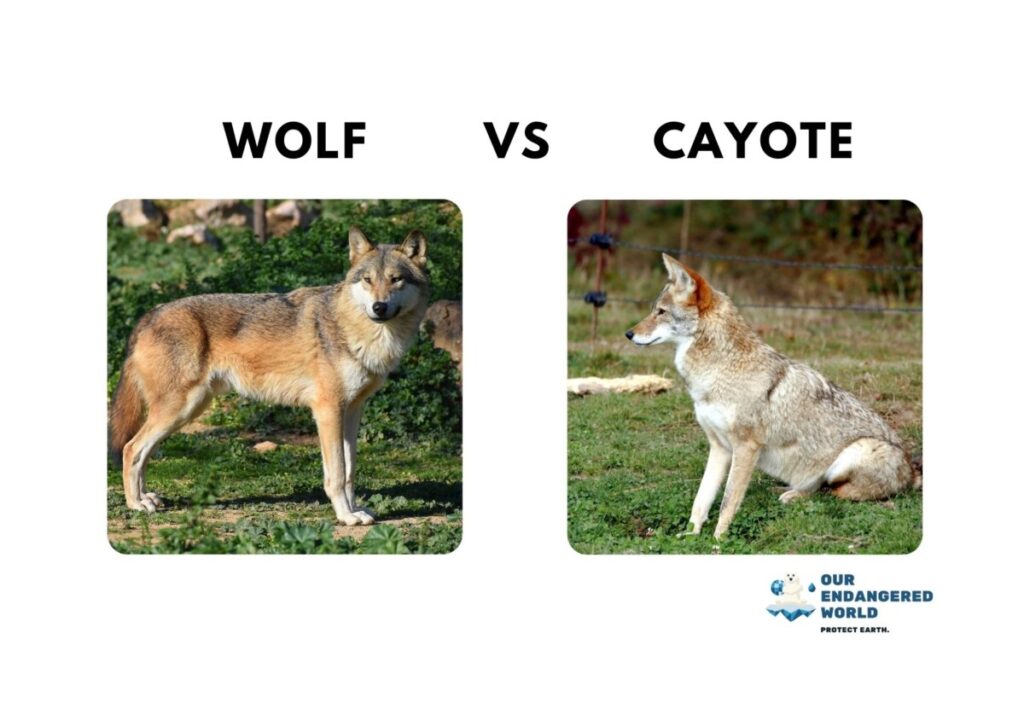
Coyotes are much smaller than wolves. The Alaska Department of Fish and Game describes coyotes as averaging about 22 to 33 pounds, standing about 2 feet at the shoulder, and measuring about 4 feet long including the tail. That is roughly one-third the size of many wolves.
Tracks are another clue. Wolf tracks are usually much larger and broader than coyote tracks. In the field, though, never rely on one clue alone. Mud, snow, stride length, animal age, and substrate can all distort track size.
Wolf vs Fox
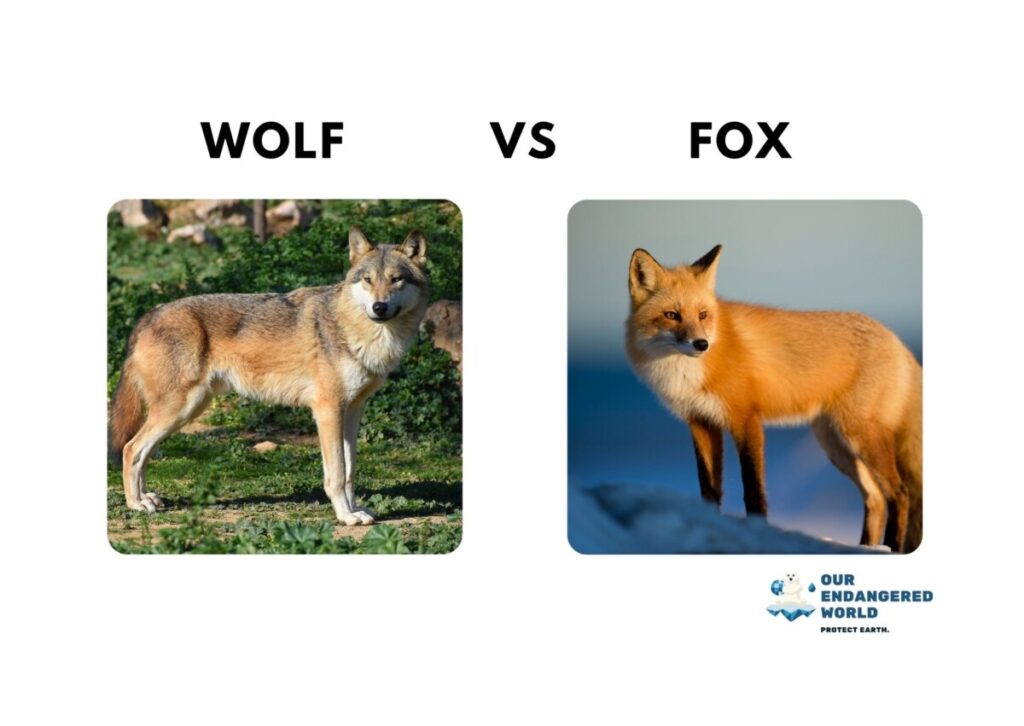
A red fox is not close to a wolf in size. The Alaska Department of Fish and Game lists red foxes at about 6 to 15 pounds, with a body length of about 22 to 32 inches and a tail of about 14 to 16 inches.
Foxes are built for different prey, different movement, and different survival strategies. They may look long because of their tails, but their body mass is only a fraction of a wolf’s.
Wolf vs African Wild Dog

African wild dogs, also called painted dogs, are canids but not true wolves. The African Wildlife Foundation lists African wild dogs at about 40 to 79 pounds and about 30 to 43 inches long. That makes them smaller than many adult gray wolves, though still impressive pack predators.
This comparison is useful because both animals hunt cooperatively, but size is only part of the story. African wild dogs rely on speed, stamina, and group coordination in open habitats; wolves rely on similar social coordination but are built for colder regions, long travel, and larger prey in many parts of their range.
What About Red Wolves?
The red wolf is smaller than many gray wolves. International Wolf Center figures put adult red wolves at about 4.5 to 5.5 feet long, around 26 inches at the shoulder, with females often about 40 to 75 pounds and males about 50 to 85 pounds. For more conservation context, see our profile of the red wolf.
Wolves vs Bears: How Big Are Wolves Compared to Grizzly and Black Bears?
One of the most common wildlife size questions is how wolves compare to North American bears. While gray wolves are apex pack hunters, both black bears and grizzly bears hold a massive size and strength advantage in individual physical encounters.
Wolf vs Grizzly Bear (Brown Bear)
Grizzly bears (Ursus arctos horribilis) dwarf gray wolves in every dimension. In the Greater Yellowstone Ecosystem, adult female grizzlies average 300 to 450 pounds (136 to 204 kg), while adult males weigh between 400 and 700+ pounds (181 to 318 kg). Coastal brown bears in Alaska can exceed 1,000 pounds (454 kg). An adult grizzly is 4x to 8x heavier than an adult wolf and stands 40 to 48 inches at the shoulder with a massive muscular hump over its forelimbs.
Research by the Yellowstone Wolf Project documents extensive interactions between wolves and grizzly bears at carcass sites. A single adult grizzly reliably displaces 1 to 4 wolves from a kill due to its sheer mass, thick hide, and devastating paw strikes. However, when a full wolf pack (6 to 12+ wolves) mobilizes, wolves utilize cooperative mobbing tactics—flanking and biting the bear’s rear while it turns—to harass the bear and reclaim meat. To learn more about bear species and morphology, see our guide to types of bears and our breakdown of grizzly bear vs black bear differences.
Wolf vs American Black Bear
American black bears (Ursus americanus) are smaller than grizzlies but still outweigh most gray wolves. Adult female black bears typically weigh 100 to 200 pounds (45 to 91 kg), while adult male black bears range from 200 to 400+ pounds (91 to 181 kg). A large 120-pound male wolf can overlap in weight with a small female black bear, but mature male black bears are roughly double the weight of a typical wolf.
Unlike grizzlies, black bears are agile tree climbers. When confronted by a territorial wolf pack in forest habitats, solitary black bears frequently retreat up trees to avoid pack harassment.
Wolves vs Large Predators
Wolves are apex predators in many ecosystems, but they are not among the heaviest land predators. Compared with big cats and hyenas, wolves tend to be lighter, longer-legged, and built for endurance rather than raw mass.
Wolf vs Lion
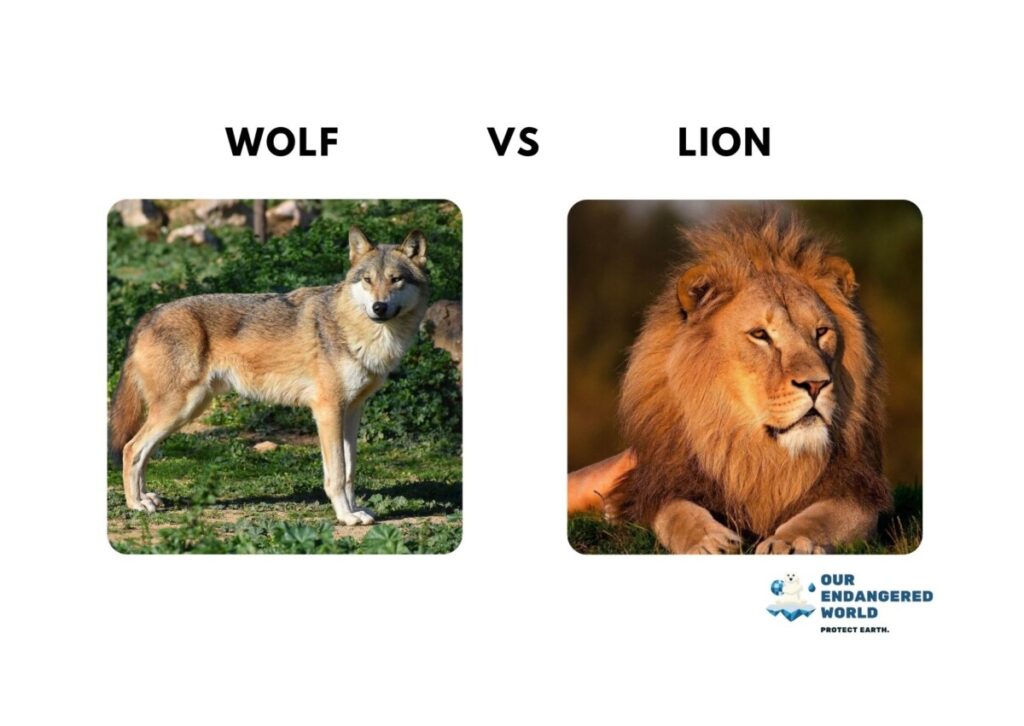
Lions are substantially larger than wolves. The San Diego Zoo Wildlife Alliance lists female lions at about 270 to 400 pounds and males at about 330 to 570 pounds. Even a large gray wolf is much lighter than an adult lion.
The two animals also evolved for different hunting systems. Wolves often rely on pack movement, endurance, and coordinated pursuit. Lions rely heavily on power, ambush, and pride structure. For more context on lion ecology, see our article on lion size and behavior.
Wolf vs Tiger
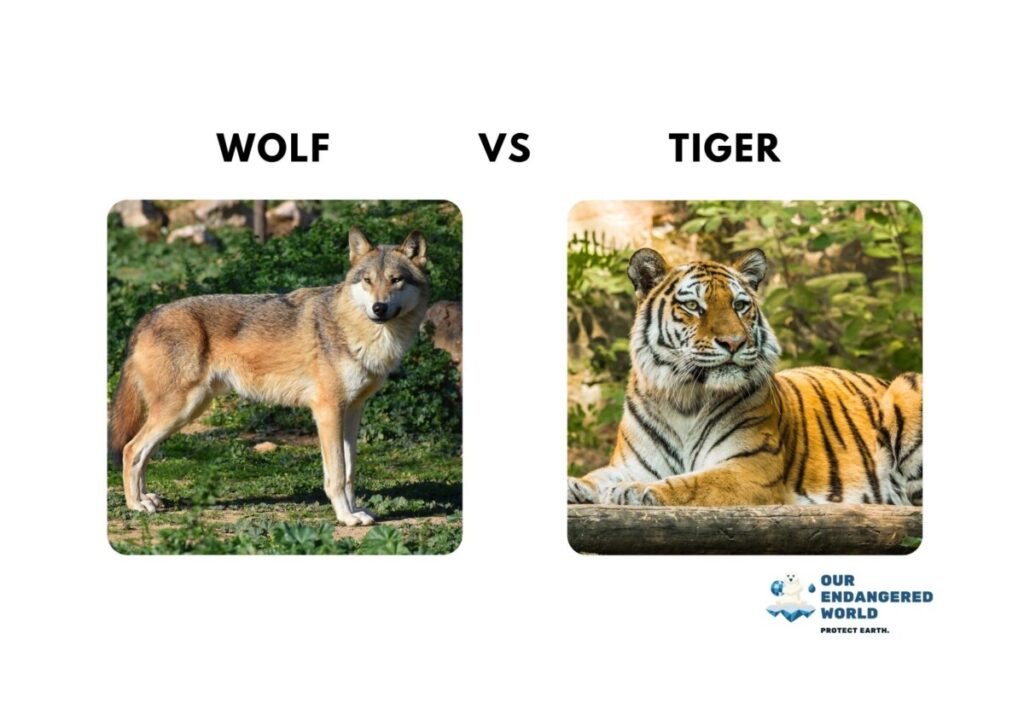
Tigers are much bigger than wolves. The San Diego Zoo Wildlife Alliance gives tiger length at about 4.8 to 9.5 feet and weight at about 165 to 716 pounds, depending on sex and population. Large tiger subspecies, including the Amur tiger, can be several times heavier than a wolf. You can read more about the endangered Amur tiger in our species profile.
Wolf vs Spotted Hyena
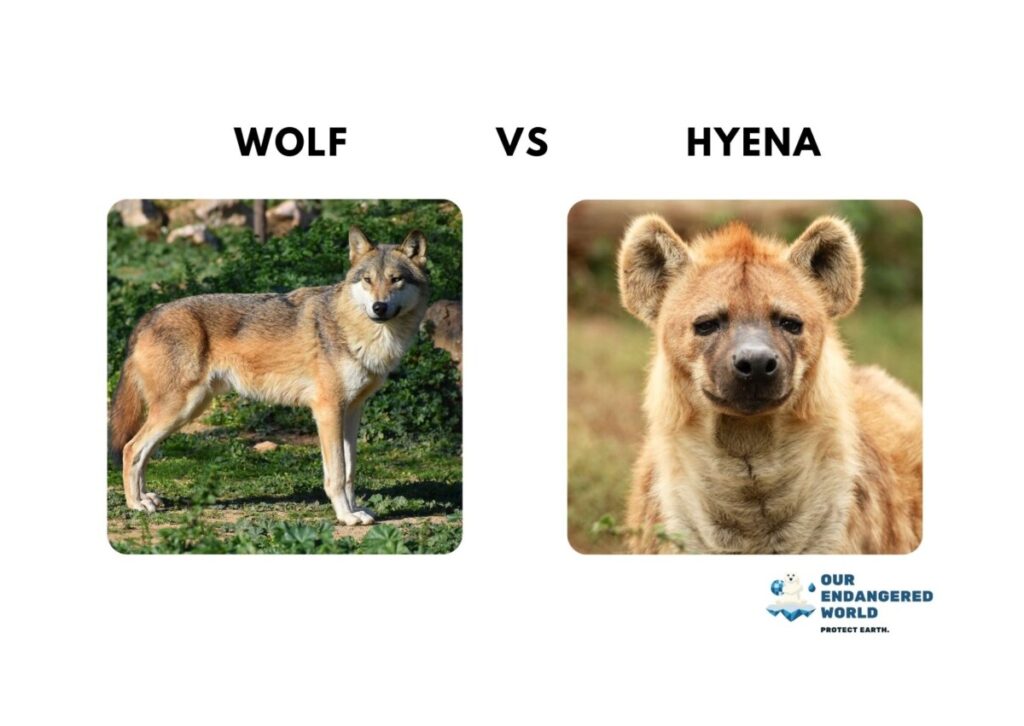
Spotted hyenas can be similar to wolves in shoulder height but heavier in body mass. The San Diego Zoo Wildlife Alliance lists spotted hyenas at about 30 to 31 inches at the shoulder, 4 to 5.9 feet long, and 88 to 190 pounds.
That means a spotted hyena may stand about as high as a gray wolf but carry more weight through the neck, shoulders, and front half of the body. This is one reason side-by-side height alone can be misleading.
Wolf vs Cougar
Cougars (Puma concolor), also known as mountain lions or pumas, overlap gray wolves in weight but have an entirely different anatomical build. Adult male cougars generally weigh 120 to 180 pounds (54 to 82 kg), while females weigh 75 to 120 pounds (34 to 54 kg). Compared to a rangy, long-legged wolf, a cougar is lower-slung, possesses immense forelimb musculature, and uses curved retractile claws designed for grappling large prey.
Long-term predator research in Yellowstone and the Rocky Mountains (Ruth et al., Elbroch et al.) shows that in direct 1-on-1 carcass disputes, adult male cougars often hold their own or kill solitary wolves due to explosive ambush power. However, wolf packs consistently dominate cougars on a landscape scale, driving cougars off ungulate kills, killing cougar kittens, and pushing cougars into steeper, rockier terrain.
Wolf Paw Size and Track Comparison
A wolf’s paw size is one of its most striking physical adaptations. An adult gray wolf paw print typically measures 4.0 to 5.0 inches (10 to 13 cm) wide by 4.5 to 5.5 inches (11 to 14 cm) long from the rear heel pad to the tips of the heavy, non-retractile claws. That makes a single wolf track roughly the size of an adult human hand.
By comparison, domestic dogs of similar weight (such as Rottweilers or Mastiffs) produce tracks that are noticeably rounder, measuring about 3.0 to 4.0 inches, with more splayed outer toes. Coyote tracks are much smaller, measuring only 2.0 to 2.5 inches wide by 2.2 to 2.7 inches long.
Wolves possess slight interdigital webbing between their toes and large, tough weight-bearing pads that function like biological snowshoes. In deep winter snowpack, this broad surface area distributes an 80 to 120-pound wolf’s weight, allowing it to stay on top of crusty snow where heavy ungulate prey (like elk and moose) break through and flounder. Wolves also practice direct-register trotting, placing their hind feet precisely into the impressions left by their front feet to minimize energy expenditure across long-distance migrations.
Dire Wolf vs Gray Wolf: Was the Dire Wolf Bigger?
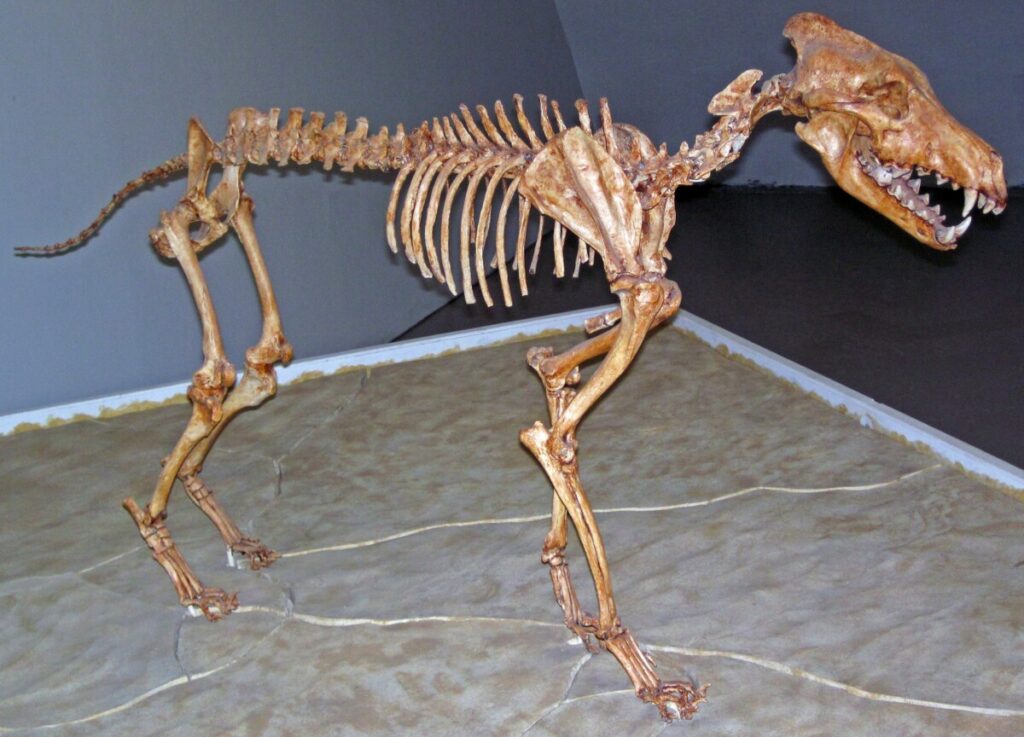
The dire wolf was not a giant fantasy wolf. Fossil and genetic evidence points to an animal that was broadly wolf-like in shape, but more robust in some features and genetically distinct from modern gray wolves.
A landmark 2021 genetic study published in Nature (Perri et al.) sequenced ancient dire wolf genomes and confirmed that dire wolves belong to a distinct genus: Aenocyon dirus. The dire wolf lineage diverged from the common ancestor of gray wolves, coyotes, and jackals approximately 5.7 million years ago, making their physical resemblance a classic example of convergent evolution rather than close kinship.
In physical size, paleontological mass estimates indicate adult dire wolves averaged 130 to 154 pounds (60 to 70 kg)—roughly 20% to 25% heavier than typical modern gray wolves. Dire wolves possessed broader skulls, more robust limb bones, and approximately 20% to 30% greater bite force at the carnassial molars, adaptations evolved to crush the bones of Pleistocene megafauna like western horses, ancient bison, and ground sloths.
Recent news stories regarding “dire wolf de-extinction” or gene-editing projects involve domestic dogs or gray wolves modified to express certain phenotypic traits; these living animals should not be confused with the authentic Ice Age predator.
Geographic Size Variation: Bergmann’s Rule Across Wolf Subspecies
Wolf body size follows Bergmann’s rule—an ecological principle stating that populations of warm-blooded species living in colder high-latitude climates evolve larger body mass to minimize surface-area-to-volume heat loss. As a result, wolves in the far north are significantly larger than wolves inhabiting desert or Mediterranean biomes.
- Northwestern Wolf (Canis lupus occidentalis): Native to Alaska, western Canada, and reintroduced to the northern Rocky Mountains. Adult males average 100 to 140 pounds (45 to 64 kg) and 28 to 36 inches at the shoulder, with recorded wild specimens up to 175 pounds (79.4 kg).
- Eurasian Wolf (Canis lupus lupus): Found across northern Europe, Russia, and Central Asia. Adult males average 75 to 120 pounds (34 to 55 kg), with large specimens in Russia, Belarus, and Ukraine documented at 140 to 160+ pounds.
- Arctic Wolf (Canis lupus arctos): Inhabits the Canadian High Arctic and Greenland. Weighs 70 to 125 pounds (32 to 57 kg). They have shorter legs, shorter snouts, and smaller rounded ears (conforming to Allen’s rule) to prevent frostbite, enveloped in dense white winter fur.
- Mexican Wolf (Canis lupus baileyi): The smallest North American gray wolf subspecies. Adult males weigh 50 to 80 pounds (23 to 36 kg) and stand about 26 to 32 inches at the shoulder, adapted to the arid mountain woodlands of the American Southwest and northern Mexico.
- Arabian Wolf (Canis lupus arabs): The smallest living gray wolf subspecies. Adapted to the harsh desert climates of the Arabian Peninsula, adult Arabian wolves weigh only 40 to 45 pounds (18 to 20 kg) and stand about 24 to 26 inches tall with a short, thin coat.
For a complete breakdown of global canid diversity, explore our comprehensive guide to types of wolves and our ranking of the largest wolves in the world.
Why Wolf Size Claims Vary So Much
Different sources give different wolf size numbers because they may be measuring different things. Before comparing animals, check what the number actually describes.
- The Winter Coat Illusion: In winter, wolves grow a dense double coat consisting of 2.0 to 2.5-inch crimped underfur and 4.0 to 5.0-inch guard hairs along the mane and back. This insulating air barrier adds up to 25% to 30% visual volume, making an 85-pound wolf in winter look as large as a 140-pound domestic dog.
- Measurement Standards: Shoulder height measures from the ground to the top of the withers. Total length includes the 12 to 20-inch tail, whereas head-and-body length excludes it.
- Recent Feeding & Gorging: A hungry wolf can consume up to 20 pounds (9 kg) of meat in a single feeding session, causing temporary scale-weight fluctuations of 15% to 20%.
- Subspecies Geography: As noted under Bergmann’s rule, high-latitude wolves in Alaska/Yukon average 30% to 50% heavier than wolves from southern latitudes.
- Captive vs Wild Body Condition: Overfed captive wolves with limited exercise can reach 160+ pounds, but wild wolves maintain a lean, athletic body condition suited for 30-mile daily territorial patrols.
This is also why “wolf species” and “wolf subspecies” can be confusing. Taxonomy changes as researchers review genetics, geography, and historical records. For more background, see our explainer on species and subspecies and our article on the largest wolves.
So, How Big Are Wolves Really?
Wolves are large wild canids, but they are not as huge as many online comparisons make them look. A gray wolf is usually bigger than a Husky, often larger than a German Shepherd, and far larger than a coyote or fox. It is much lighter than a lion, tiger, or many adult cougars.
The best short answer is this: a full-grown gray wolf is roughly the size of a very large dog in height, longer than many dogs from nose to tail, and built with the lean endurance of a wild predator. That combination makes wolves look imposing without needing exaggerated numbers.
Frequently Asked Questions
How big is a full-grown wolf?
A full-grown gray wolf stands 26 to 34 inches (66 to 86 cm) at the shoulder, measures 4.5 to 6.5 feet (1.4 to 2.0 m) from nose to tail tip, and weighs 60 to 135 pounds (27 to 61 kg) on average. Males average 85 to 135 pounds, while females average 60 to 100 pounds.
Is a wolf bigger than a German Shepherd?
Yes, in most cases. While German Shepherds stand 22 to 26 inches at the shoulder and weigh 50 to 90 pounds, adult gray wolves stand 26 to 34 inches, weigh 85 to 135 pounds, and have longer legs, larger paws, and a more robust wild skull.
Is a wolf bigger than a Great Dane?
Not in height. Great Danes stand 30 to 34+ inches at the shoulder and weigh 110 to 175 pounds, making them taller and heavier than most wolves. Wolves are leaner and built for stamina rather than giant domestic mass.
How big is a wolf compared to a human?
On all fours, a gray wolf reaches knee-to-hip height (26 to 34 inches) on an adult human. However, a large wolf measuring 5.5 to 6.5 feet from nose to tail equals or exceeds the standing height of an adult person.
Are wolves bigger than coyotes?
Yes, substantially. Coyotes weigh only 20 to 35 pounds and stand about 21 to 24 inches tall. Gray wolves are 3x to 5x heavier and have tracks more than double the size of coyote tracks.
Was the dire wolf bigger than today’s gray wolf?
Yes. Paleontological estimates place the extinct dire wolf (Aenocyon dirus) at 130 to 154 pounds (60 to 70 kg)—about 20% to 25% heavier than modern gray wolves, with 20% to 30% greater bone-crushing bite force.
Is a wolf bigger than a black bear or grizzly bear?
No. An adult grizzly bear (400 to 700+ lbs) is 4x to 8x heavier than a gray wolf, while an adult male black bear (200 to 400 lbs) is double to triple a wolf’s weight. Solitary bears easily displace single wolves at kill sites.
How big is a wolf paw compared to a human hand?
An adult gray wolf paw print measures 4.0 to 5.0 inches wide by 4.5 to 5.5 inches long, roughly matching the dimensions of an outstretched adult human hand.
What is the largest wolf subspecies in the world?
The Northwestern wolf (Canis lupus occidentalis), native to Alaska, western Canada, and the northern Rockies, is the largest subspecies, with adult males averaging 100 to 140+ pounds and rare wild records up to 175 pounds.
Why do wolves look so much bigger in winter?
Wolves grow a thick dual-layer winter coat featuring 2.5-inch dense underfur and 4.0 to 5.0-inch guard hairs on the neck and back, adding up to 25% to 30% visual volume to their silhouette.
Related Reading
- 22 Types of Wolves: Species, Subspecies & Extinct Lineages
- The 10 Largest Wolves in the World
- Grizzly Bear vs Black Bear: 8 Key Differences Explained
- 12 Different Types of Bears From Around the World
- Red Wolf: Why Is It Critically Endangered?
- Amur Tiger: Why Is This Apex Predator Endangered?
- African Wild Dog: Why Is It Endangered?
- 13 Animals With the Best Hearing in the World
- 18 Hardworking Animals: Nature’s Best Workers
- Albino Monkeys: Facts, Genetics & Rare Primate Cases
- Do Dogs Smile? Understanding Canine Body Language
- 15 Strongest Animals in the World