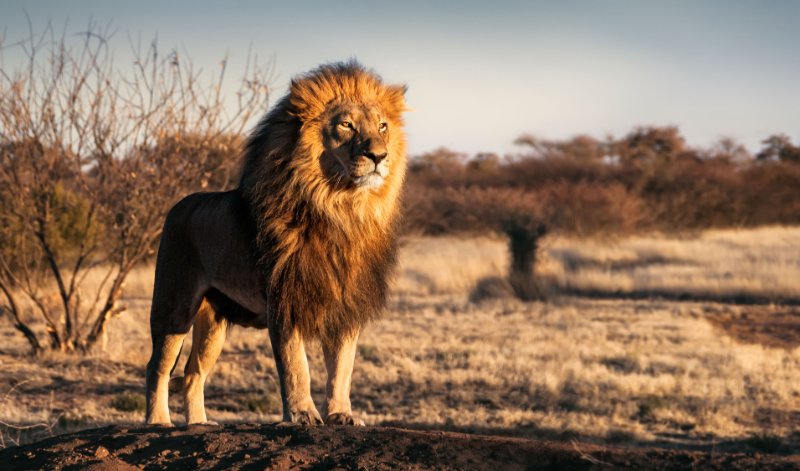
Lions are called the king of the jungle because people have long associated them with power, courage, royalty, and dominance. The title is not literal. Lions rarely live in dense tropical jungles. They are mainly animals of open grasslands, savannas, scrublands, dry forests, and open woodlands.
The nickname stuck because lions look and sound regal: males have crown-like manes, their roars carry across open habitat, and their social groups, called prides, give them a visible hierarchy that humans easily compare to royalty. Biologically, lions are apex predators with an important role in their ecosystems. Culturally, they became symbols of strength in stories, emblems, flags, coats of arms, religion, sports, and popular media.
Key Takeaways
- “King of the jungle” is a metaphor, not a scientific title. No animal is officially ranked as king of any ecosystem.
- Lions usually do not live in jungles. Their prime habitat is open woodland, grassland, brush, savanna, and dry forest.
- The title comes from symbolism and behavior. A male lion’s mane, roar, territorial role, and pride structure all support the royal image.
- Tigers may be larger, but the phrase is not about size alone. Tigers are mostly solitary forest cats, while lions are social predators with a highly visible group structure.
- The real conservation story matters more than the nickname. Wild lions face habitat loss, prey decline, human-wildlife conflict, and fragmented populations.
Why Are Lions Called King of the Jungle?
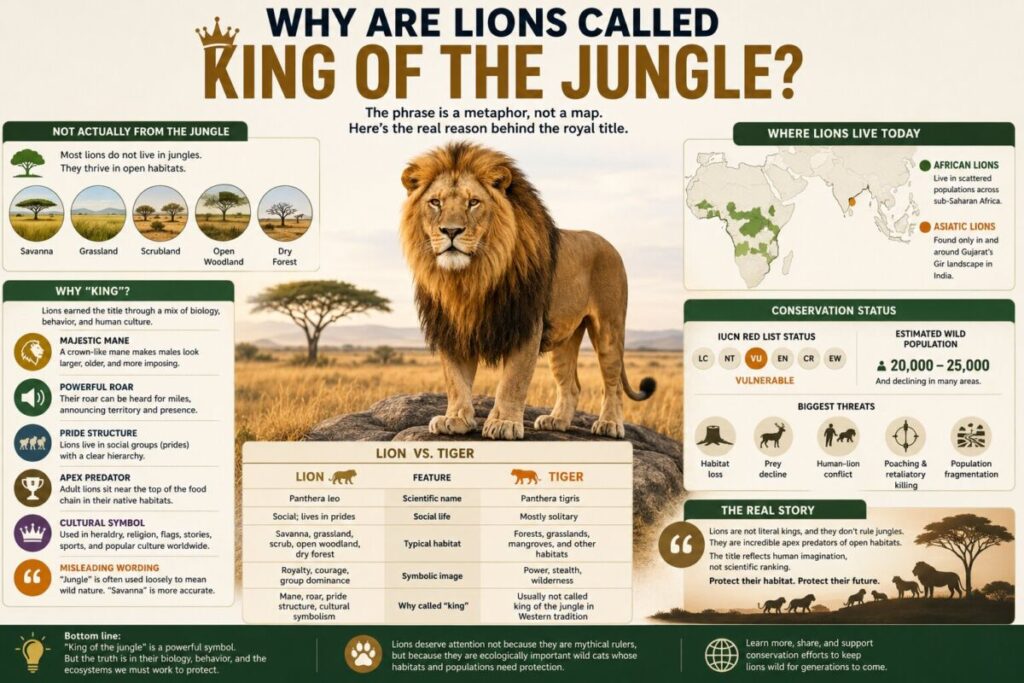
Lions earned the “king” label because they combine several traits humans read as royal: a mane that resembles a crown, a deep roar that announces territory, a social hierarchy inside the pride, and the ability to dominate many other predators in open habitats.
That does not mean lions are unbeatable. It also does not mean they rule every habitat. The phrase survives because it is simple, memorable, and culturally powerful. It turns a real animal into a symbol.
| Reason | What it means | Why it shaped the “king” image |
|---|---|---|
| Mane | Adult male lions often have thick hair around the head and neck. | It looks crown-like and makes males appear larger and more imposing. |
| Roar | Lions use roaring to communicate, advertise presence, and mark territory. | A roar that carries for miles makes the animal feel commanding. |
| Pride structure | Lions live in social groups with related females, cubs, and a few adult males. | The group structure resembles a visible “court” or territory-based rule. |
| Apex predator role | Adult lions sit near the top of the food chain in their native habitats. | They influence prey behavior and compete strongly with other carnivores. |
| Cultural symbolism | Lions appear in heraldry, literature, religion, flags, and sports emblems. | Repeated human use turned the lion into a shorthand for courage and authority. |
| Misleading wording | “Jungle” is often used loosely to mean wild nature. | The phrase sounds better than “king of the savanna,” even though savanna is more accurate. |
The mane makes male lions look royal
The male lion’s mane is one of the clearest reasons people associate lions with royalty. It frames the head like a crown or ceremonial collar. In real lion behavior, the mane can also make a male look larger and more intimidating to rival males.
Manes vary by age, genetics, health, climate, and individual condition. Some males have dark, full manes. Others have lighter or thinner ones. Not all male lions look like the oversized, dark-maned lions used in logos and cartoons.
The roar sounds like authority
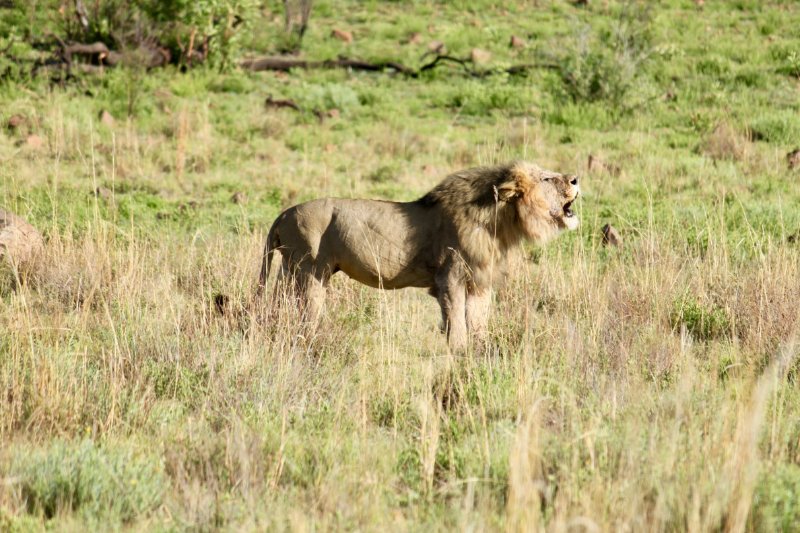
A lion’s roar is one of the most recognizable sounds in the animal kingdom. Lions use roaring to communicate with pride members, signal their presence, and warn rivals. In open habitat, that sound can travel a long distance, which helps explain why people hear it as a symbol of command.
The roar also gives the lion an advantage in human imagination. Many predators are powerful, but few announce themselves with such a dramatic sound.
Lions live in prides, unlike most big cats

Lions are unusual among big cats because they are highly social. A pride usually includes related lionesses, their cubs, and one or more adult males. The San Diego Zoo notes that prides can range from small groups to as many as 30 lions, depending on habitat and food availability.
That social life matters. Lionesses often cooperate while hunting and rearing cubs. Adult males help defend territory and cubs from rival males and other threats. This does not make a male lion a human-style monarch, but it does create a visible social system that people easily interpret as “kingly.”
Lions are apex predators in their habitats
Lions are apex predators in much of their native range. They hunt large herbivores such as zebras, wildebeest, buffalo, antelope, and sometimes giraffes. They also compete with hyenas, leopards, cheetahs, and African wild dogs.
Adult lions have few natural predators, although cubs can be vulnerable to hyenas, leopards, rival males, and other dangers. Humans are now the greatest threat to lion populations through habitat loss, prey decline, conflict, and direct killing.
Do Lions Actually Live in Jungles?
Most lions do not live in jungles. The better question is not “Why are lions king of the jungle?” but “Why did people use the word jungle for an animal of open country?”
In everyday speech, “jungle” is often used loosely to mean wild, dangerous, or untamed land. Scientifically, lions are much more associated with open habitats such as savannas, grasslands, scrub, dry forests, and open woodlands. The World Wildlife Fund lists lion habitats as savannas, shrublands, and semi-arid deserts.
African lions are mostly found in fragmented parts of sub-Saharan Africa. Asiatic lions survive in and around the Gir landscape in Gujarat, India. Both populations need space, prey, and connected habitat more than dense jungle vegetation.
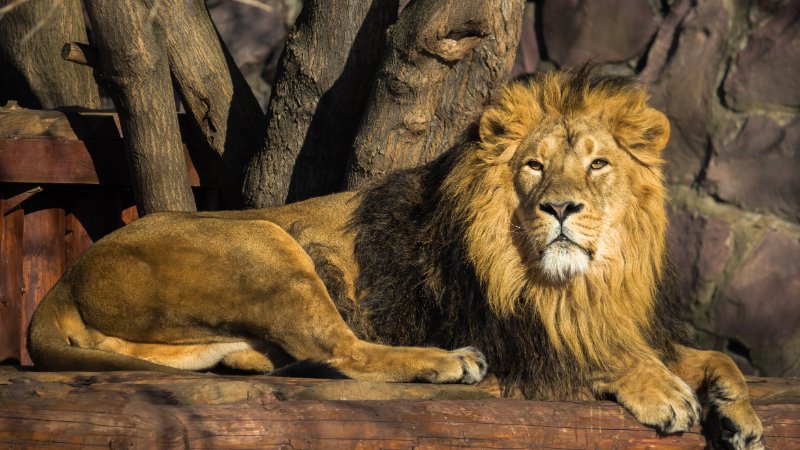
There are rare records of lions using forested habitats, including parts of Ethiopia. Those cases are exceptions. They do not change the main rule: lions are not typical jungle animals.
For a deeper habitat-focused answer, see our guide to where lions live.
What Animal Is the True King of the Jungle?
No animal is scientifically the “true king of the jungle.” Ecosystems do not have monarchs. They have food webs, competition, adaptations, territories, and ecological roles.
If someone means dense tropical forest, the top predator depends on the region. A tiger may dominate parts of Asian forest ecosystems. A jaguar may sit near the top of many Neotropical rainforest food webs. In some forests, large snakes, crocodilians, leopards, or birds of prey can be major predators.
The lion’s title is therefore cultural, not literal. It says more about how humans symbolize animals than how ecosystems actually work.
Why Is the Lion Called King and Not the Tiger?
Tigers are often larger and heavier than lions, and a tiger may be the better answer if the question is only about individual size. But the “king of the jungle” phrase is not based on a formal contest between big cats.
The lion became the stronger symbol of kingship because it is social, loud, visually dramatic, and historically tied to power in human culture. A male lion with a mane standing over an open plain is easier for people to turn into a royal emblem than a solitary tiger moving through cover.
That does not make lions “better” than tigers. It means lions and tigers evolved for different habitats and hunting strategies. Tigers are mostly solitary ambush hunters. Lions are social predators that often defend group territories. Both are powerful species facing serious conservation pressure.
| Comparison | Lion | Tiger |
|---|---|---|
| Scientific name | Panthera leo | Panthera tigris |
| Typical social life | Social; lives in prides | Mostly solitary |
| Common habitat association | Savanna, grassland, scrub, open woodland, dry forest | Forests, grasslands, mangroves, and other habitats depending on subspecies |
| Symbolic image | Royalty, courage, group dominance, heraldry | Power, stealth, wilderness, solitary strength |
| Why people call it “king” | Mane, roar, pride structure, cultural symbolism | Usually not called king of the jungle in Western tradition, despite being strongly tied to forest habitats |
For more big-cat comparisons, see our profiles of the Bengal tiger, cheetahs, and snow leopards.
How Lions Became Symbols of Power
Lions appear in human symbolism across Africa, Europe, the Middle East, and Asia. They have been used in coats of arms, national emblems, religious language, royal imagery, military symbols, sports teams, literature, and film.
The reason is not hard to understand. Lions are large carnivores with dramatic visual features. They live in groups, defend territories, and announce themselves with a roar. For ancient societies, that combination made the lion a natural symbol of courage, protection, conquest, and authority.
This symbolism can be useful, but it can also flatten the animal into a cartoon. Real lions are not noble rulers. They are complex wild cats that rest for long hours, hunt when conditions are favorable, compete with other predators, raise cubs cooperatively, and struggle to survive in shrinking habitats.
What Is a Lion?
A lion is a large wild cat in the genus Panthera. Its scientific name is Panthera leo. Lions are muscular carnivores with short tawny coats, rounded ears, black tail tufts, and strong sexual dimorphism. Adult males are usually larger than females and often grow manes.
Male lions are commonly called lions, females are lionesses, and young are cubs. Lions are carnivores, meaning they eat meat. Their prey varies by region but often includes antelope, zebra, wildebeest, buffalo, and other ungulates.
Lions are best understood through their habitat and social behavior. They are not just “strong animals.” They are social predators whose survival depends on prey availability, territory, pride dynamics, and coexistence with nearby human communities.
Where Lions Live Today
Wild lions once ranged across much of Africa and parts of Europe and Asia. Today, their range is much smaller and more fragmented.
- African lions live mostly in scattered populations across sub-Saharan Africa. Learn more in our African lion profile.
- Asiatic lions survive in and around the Gir landscape in Gujarat, India. Learn more in our Asiatic lion profile.
- Typical lion habitat includes savannas, grasslands, open woodlands, dry forests, and scrublands rather than dense jungle. See our guide to habitat examples for more context.
According to the San Diego Zoo, prime lion habitat includes open woodlands, thick grassland, and brush habitat that gives lions cover for hunting and denning. WWF also describes lions as adaptable cats that usually prefer open savannas where stalking prey is easier.
Are Lions Endangered?
Lions are listed as Vulnerable at the species level, but that broad label can hide serious regional pressure. Some lion populations are much more threatened than others. WWF estimates about 20,000 to 25,000 lions remain, while also noting that many populations are declining.
In India, the latest reported Gujarat count put the Asiatic lion population at 891 in 2025, up from 674 in 2020. Population counts are periodic, so current numbers should always be treated as date-stamped rather than permanent.
The main threats to lions include habitat loss, prey decline, retaliatory killing after livestock conflict, poaching, fragmented populations, and pressure from expanding human land use. Protecting lions means protecting connected ecosystems, wild prey, and community-based coexistence strategies.
The “king” label can make lions sound secure. They are not. Their future depends on practical conservation, not mythology. For more context, see our guide to animals that have become extinct and why prevention matters.
So, Are Lions Really King of the Jungle?
Lions are not literally king of the jungle. They are not monarchs, and they usually do not live in jungles. The title is a human metaphor built from their mane, roar, social pride structure, territorial behavior, and long cultural history as symbols of strength.
A more accurate title would be “one of the great apex predators of open African and Indian habitats.” That is less catchy, but more honest.
The real lesson is simple: lions deserve attention not because they are mythical rulers, but because they are ecologically important wild cats whose habitats and populations need protection.
Related Reading
- African lion facts, habitat, and conservation status
- Asiatic lion facts and why Gir matters
- Do lions live in the jungle?
- Types of habitats explained
- Types of ecosystems and why predators matter
FAQs
Why are lions called king of the jungle?
Lions are called king of the jungle because people associate them with power, courage, royalty, and dominance. The title comes from their mane, roar, social pride structure, territorial behavior, and long history as symbols in human culture. It is not a literal scientific title.
Do lions actually live in jungles?
Most lions do not live in jungles. They are mainly found in savannas, grasslands, scrublands, dry forests, and open woodlands. Asiatic lions live in and around the Gir landscape in Gujarat, India, while most African lions live in fragmented parts of sub-Saharan Africa.
What animal is the true king of the jungle?
No animal is scientifically the true king of the jungle. Ecosystems do not have monarchs. If you mean dense tropical forest, the top predator depends on the region. Tigers, jaguars, leopards, crocodilians, snakes, and birds of prey can all be major predators in different forest ecosystems.
Why is the lion called king of the jungle and not the tiger?
The lion title is based more on symbolism than size. Tigers are often larger and are strongly associated with forest habitats, but lions became symbols of royalty because of their crown-like mane, roar, social pride structure, and visible territorial behavior.
Are lions endangered?
Lions are listed as Vulnerable at the species level, but some regional populations are under greater pressure than others. Major threats include habitat loss, prey decline, human-lion conflict, poaching, and population fragmentation.
Where do lions live today?
Most wild lions live in fragmented areas of sub-Saharan Africa. A smaller population of Asiatic lions lives in and around Gujarat’s Gir landscape in India. Lions usually prefer open habitats such as savannas, grasslands, dry forests, scrublands, and open woodlands.
See Related: King Cobra: Is This Animal Endangered?
See Related: Do Lions Eat Elephants? Here’s What to Know

