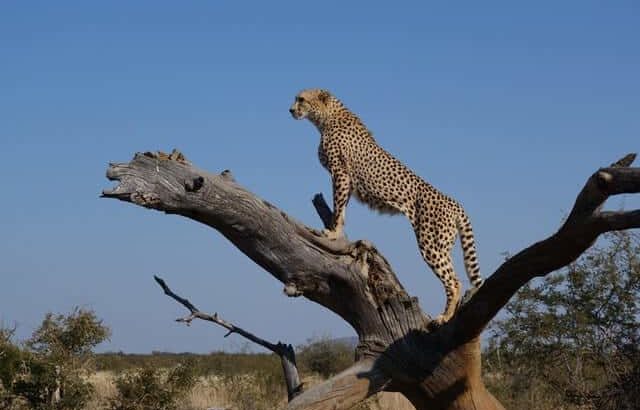
Cheetahs (Acinonyx jubatus) are the fastest land animal on earth, reaching speeds up to 75 miles per hour (120 km/h) in short bursts. These cats live across sub-Saharan Africa, with a tiny, Critically Endangered population also surviving in Iran. The species overall is listed as Vulnerable by the IUCN, with roughly 6,500 mature individuals left in the wild and numbers still declining.
- Status: Vulnerable
- Known As: Cheetah.
- Estimated numbers left in the wild: ~6,500 mature individuals
It has a long tail that it uses for balance while running at high speed. The cheetah’s spotted coat provides camouflage when hunting prey on African open grasslands.
It also protects them from sunburn and skin cancer under its harsh rays. These big cat’s can purr and make other sounds, but they can’t roar like lions.
Cheetahs have an amazing sense of sight which helps them watch out for other predators, but they can’t see well close up or far away so they hunt during the day when prey is more active.
Description
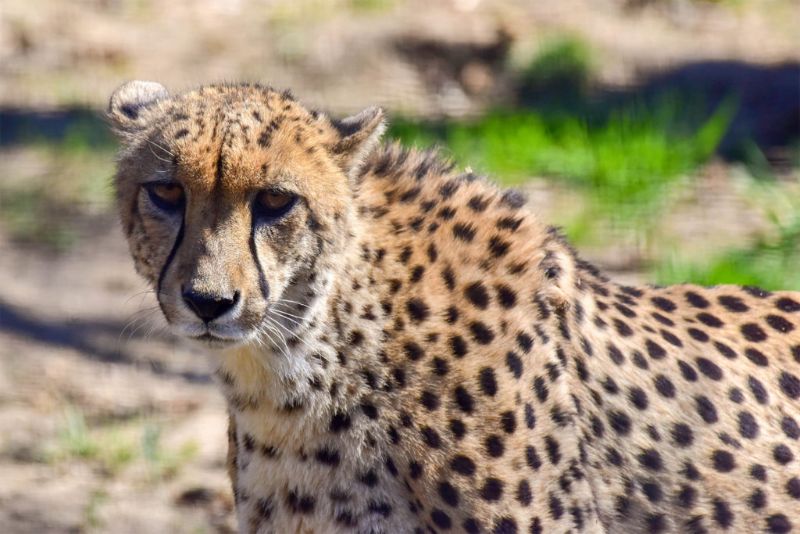
Cheetahs have been on earth for a long time and part of carnivora family. Wild Cheetahs were around during the ice age as well as many other ice-ages. Cheetahs usually hunt at night because there is less heat and they can hide better.
They are known as the fastest land mammal and can reach a top speed of 120 km/h accelerating from 0 – 100 km/h in three seconds.
These species have keen eyesight and the ability to spot prey at great distances.
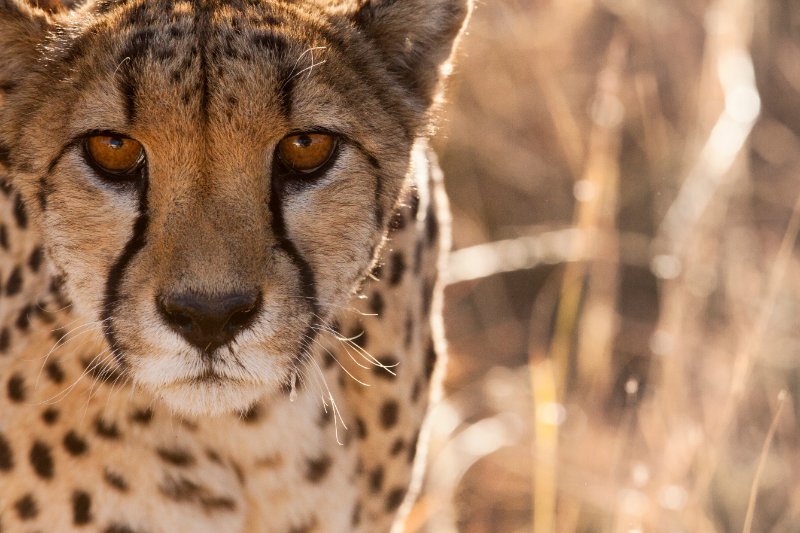
They have a spotted coat that assists them to blend into high, dry grass and hunt during daylight.
Etymology
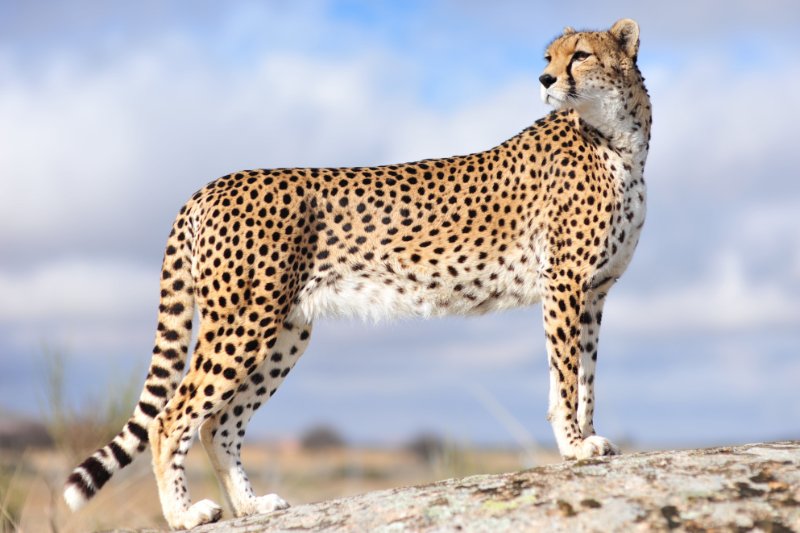
Historically, tamed cheetahs were trained by nobility across Africa, the Middle East, and South Asia to help course game, which is why the species is still sometimes called the “hunting leopard” in older texts — even though cheetahs and leopards are not closely related.
The genus name Acinonyx comes from the Greek akinetos (“motionless” or “unmoving”) and onyx (“claw” or “nail”) — a reference to the cheetah’s semi-retractable, blunt claws, which stay partly exposed for grip during a chase, unlike the fully retractable claws of most other cats. The species name jubatus is Latin for “maned” or “crested,” describing the mane of longer fur cheetah cubs have on their neck and shoulders.
The English word “cheetah” itself comes from the Hindi chita, rooted in the Sanskrit citraka, meaning “speckled” or “variegated” — a reference to the animal’s spotted coat.
See Related: These Are 16 of the Strongest Animals in the World
Anatomy and Appearance
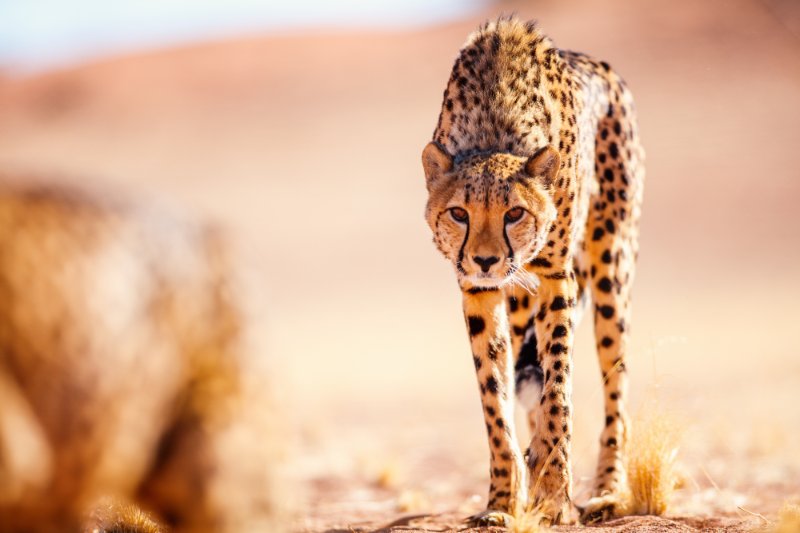
Cheetahs have a distinctive narrow waist, a deep chest, and a small head. Their short fur is tan with black spots measuring about 2 – 3 cm in diameter and their bellies are white with no spots.
Their tails usually have 4 – 6 dark rings on them which end in a bushy white tuft.
This large cat can weigh up to 72 kg, grow up to 150 cm long and 94 cm tall and their tails can measure an average of 70 cm in length. They can live between 10 – 12 years in the wild.
The beast’s anatomy is covered with spotted fur, except for under the neck and on the belly. It’s apperance is colored black, brown, gray, white, yellow, red, or a blend of these colors.
They are covered with black spots on their skin, some have stripes too.
They can purr like a housecat when they are content or chirp/shriek when in distress.
These creatures are the only cats that cannot roar. They also have an extremely flexible spine which allows running fast. These huge felines are very mobile, they can rotate their head to the full extent of all Cheetahs people. Their Spines are also uniquely ridged along the Cheetah’s spine.
Location
Cheetahs can be found mainly in eastern and south-western Africa in countries such as Namibia, Botswana, Kenya, and Tanzania. Smaller populations can also be found in North Africa and one population can be found isolated in Iran.
The species thrive in areas with open grassland or savannah, mountains, and in areas with dense vegetation.
Cheetah Habitat
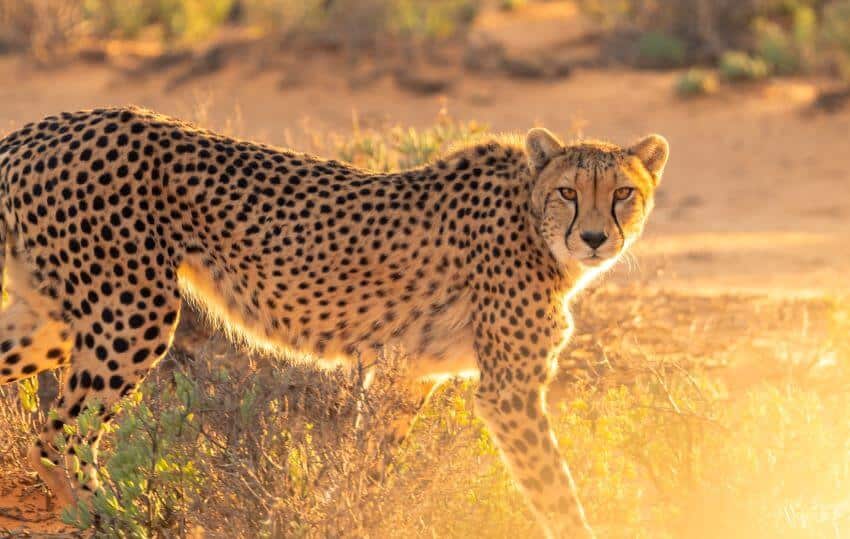
These cheetahs inhabit Africa and Asia. The species are endangered because there are not enough of them left to reproduce.
They also avoid humans, they go to more remote areas, and they stay hidden or keep their distance from humans. They live in dry savannas, deserts, scrublands, and tropical forests.
Cheetahs will spend all day looking for prey. The wildcats can be found high up on a hill or a tree as well as deep down in the grasses of a meadow. They are also found living in Sub-Saharan Africa.
See Related: Best Books on Endangered Species
Cheetah Diet and Nutrition
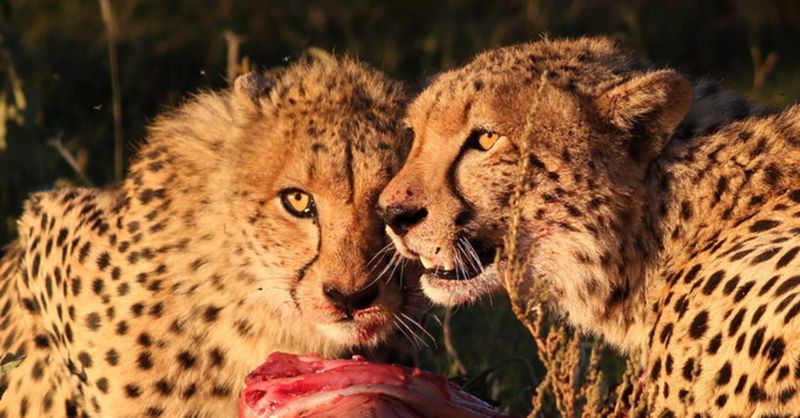
Cheetahs are carnivores, mostly eating prey such as gerbils, hares, and birds.
They hunt their prey mainly at midday or during the night. Cheetah hunting is very successful because it can run 70 miles per hour (112 km/h).
Cheetah cubs cannot hunt on their own but Cheetah parents will teach them how to hunt when they are ready. These wildcats will also eat plants like berries and grasses. They also like to lick the sweat off the rocks that floods in flood in water holes.
Cheetah Hunting Habits
Cheetahs are carnivores and eat mainly gazelle, but also wildebeest, impala, and other antelopes.
Cheetahs tend to usually hunt by stalking their prey until they are within 30 m (98 ft), then they sprint to catch up to the prey and kill quickly by biting the neck. Cheetahs can eat up to 20 kg (44 lb) of meat at a time.
See Related: Do Lions Eat Cheetahs? Here’s What to Know
Social Structure
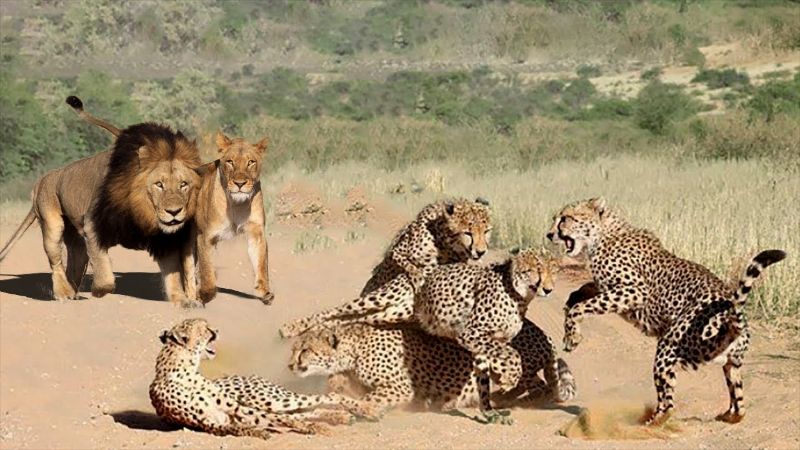
The social structure of the Cheetah is fascinating. These threatened species live in groups called “gangs.”
A coalition usually consists of two to six Cheetahs but can be as large as fifteen. Cheetahs communicate with each other through vocalizations and scent marking. Cheetahs are very territorial and will defend their territory against other Cheetahs.
Cheetahs will also chase Cheetahs from other coalitions that venture into their territory. Cheetahs in a coalition are usually related to each other and a female Cheetahs is the only one who reproduces in coalitions.
See Related: Fastest Animals in the World
Cheetah Mating Habits
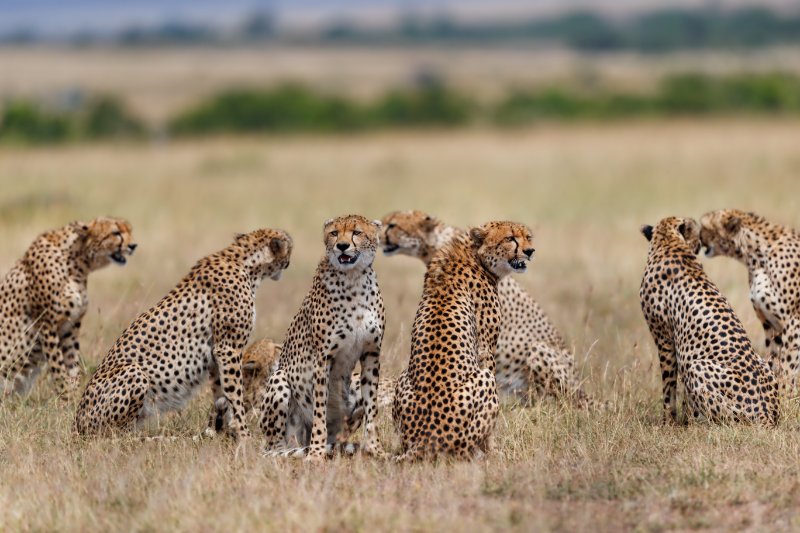
The Cheetah mating habits are very interesting.
Cheetahs are one of the only big cats that have been observed mating in a group. Cheetahs will form a “lek” where they will all mate.
The male cheetahs will mark their territory with urine and then attempt to attract the adult females by vocalizing and chasing after them. The females will then choose and attract males that they want to mate with.
Cheetahs have a gestation period of 90-95 days and will usually have one to eight cubs. Cheetah young cubs are born blind and weigh only about 1 pound (0.45 kg).
See Related: These 13 Animals Have the Best Hearing in the World
Cheetah Cubs
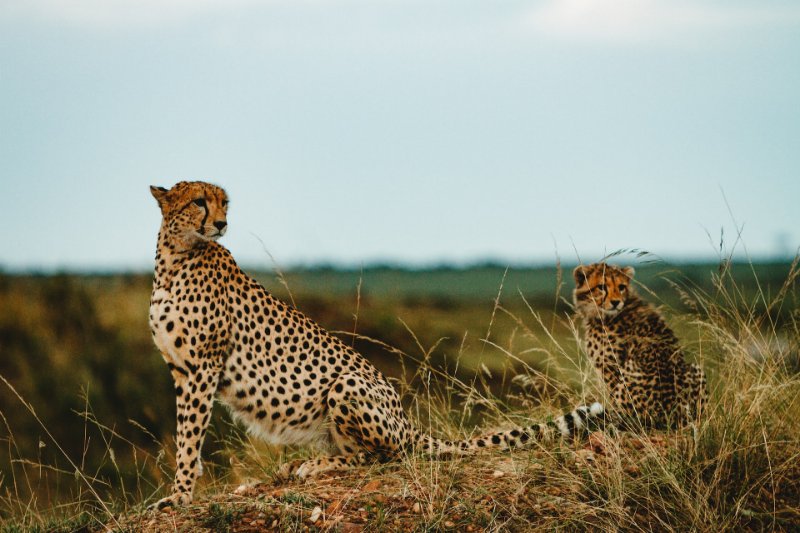
The Cheetah cub is born in the spring and weighs between two and three pounds.
Cheetahs are born without any spots or stripes. Their markings will develop as they age and grow. Cheetahs live in Asia and Africa and there are not enough of them to reproduce so they are considered endangered.
Cheetahs can reach speeds up to 75 miles per hour (120 km/h). Cheetah cubs will stay with their mother until they are 18 months old. Cheetah cubs will stay with their mother for about 18 months before they go off on their own to find food, mates, and territory of their own.
Cheetahs live up to 13 years in the wild and up to 20 years in captivity. Cheetah cubs born usually stand at about 30 cm (12 inches) when they are born. There are also cubs born in captivity.
Cheetah vs Leopard
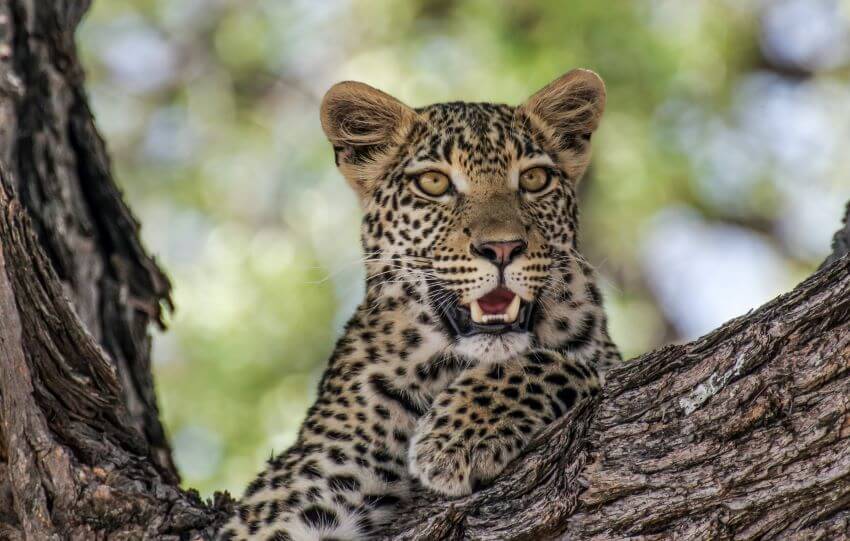
Here are the differences and similarities between cheetahs and leopards.
- Leopards are a type of big cat that is found in Africa, Asia, and the Americas.
- Cheetahs, on the other hand, are found exclusively in Africa and Asia.
- They look similar but Cheetahs can move faster than leopards.
- Cheetahs live in the savannah region whereas leopards live in the mountainous regions.
- Cheetahs and leopards both live alone and hunt during the day, Cheetahs are known for their speed while leopards use their ability to climb trees.
- Cheetahs also have spots that leopards do not, which makes them easy to tell apart.
- Cheetah is the fastest animal on earth, they can run up to 75 miles per hour.
- Cheetahs are also endangered because there aren’t enough left to reproduce.
- Cheetahs are known for their speed, but Cheetah is actually endangered, due to the fact that these wild beasts and other carnivores do not have enough Cheetahs around to reproduce.
- Cheetahs and leopards have a lot in common including their beautiful spotted coat, sleek body, and long tail.
- Cheetahs also have a great sense of balance that helps them to get away from predators.
- Cheetahs can do this by leaping into the air at a speed of 50 miles per hour, then landing with their feet firmly planted on the ground.
- Cheetahs also have excellent hearing which helps them hunt prey animals down when they hear them rustling through the leaves or grasses.
- Cheetahs are also very large with about 10% of their body weight being pure muscle tissue.
- Cheetahs have blunt semi-retractable claws that look more like dog claws than cat claws, but these help Cheetahs to run fast on the ground for short periods of time because Cheetah’s legs are not made for high speed running long distances.
- Cheetahs also have a long flexible spine that gives Cheetahs the ability to make very sharp turns when they are running at top speeds.
- Cheetahs are becoming endangered because people are killing Cheetah’s food supply of gazelles, antelopes, small deer, and other mammals.
See Related: Most Comfortable Animals in The World
Cheetah vs Other Wild Cats
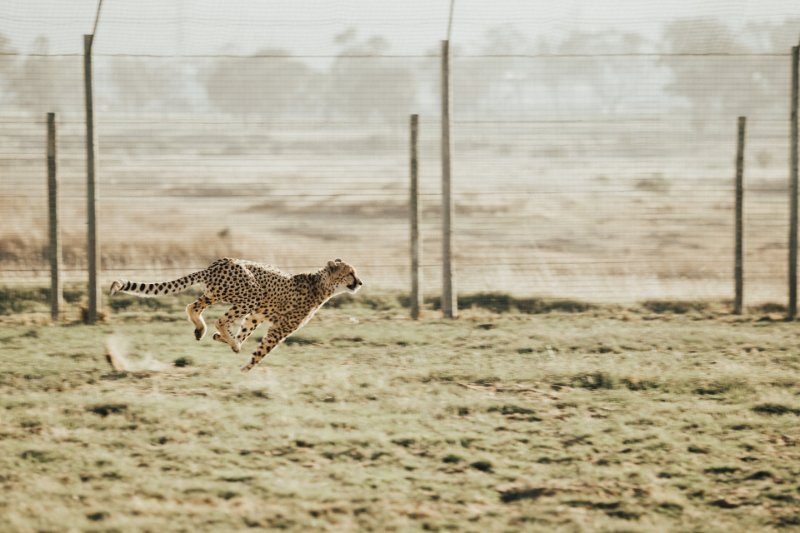
Cheetahs are different from other wild cats because Cheetah is the fastest animal on land which means Cheetah is the fastest land animal.
Cheetahs are endangered because there are not enough Cheetahs left in the world. The Cheetah’s habitat is also being taken over by humans which makes Cheetahs even less likely to be seen. Cheetahs live across eastern and southern Africa and Asia.
Cheetahs are one of the big cats and they are carnivores which means they only eat meat. Cheetahs have been on this earth for around six million years.
Cheetahs are highly adaptable and can live in savanna, grassland, and semi-arid environments. Unlike leopards, cheetahs are poor climbers — their blunt, semi-retractable claws are built for grip and traction during a high-speed chase, not for gripping tree bark, so they rarely climb higher than low, sloped trunks or termite mounds used as lookout points. Cheetahs typically live 10 to 12 years in the wild and up to 17 years in captivity.
See Related: Different Animals That Can’t Jump
Cheetah Subspecies
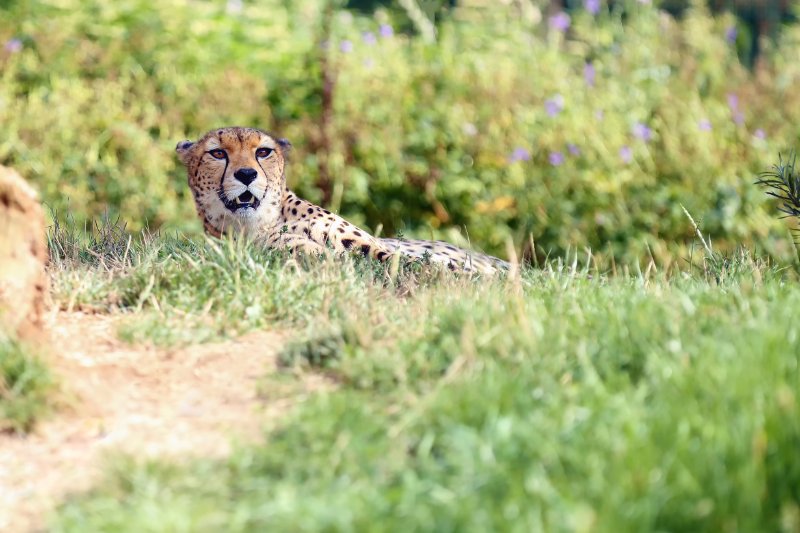
Scientists currently recognize four cheetah subspecies: the Southern/Southeast African cheetah (Acinonyx jubatus jubatus), the Northeast African cheetah (A. j. soemmeringii, Endangered), the Northwest African or Saharan cheetah (A. j. hecki, Critically Endangered), and the Asiatic or Iranian cheetah (A. j. venaticus, also Critically Endangered).
The Asiatic cheetah is the rarest of all: recent monitoring puts the population at fewer than 30 individuals, all confined to Iran, with some 2025-2026 reports citing figures as low as 17 to 27.
The Southern African cheetah remains the most numerous subspecies, but the global population across all four subspecies is now estimated at only around 6,500 mature individuals — and cheetahs are considered vulnerable to extinction because their remaining numbers are small and increasingly fragmented into isolated groups.
Cheetah Populations
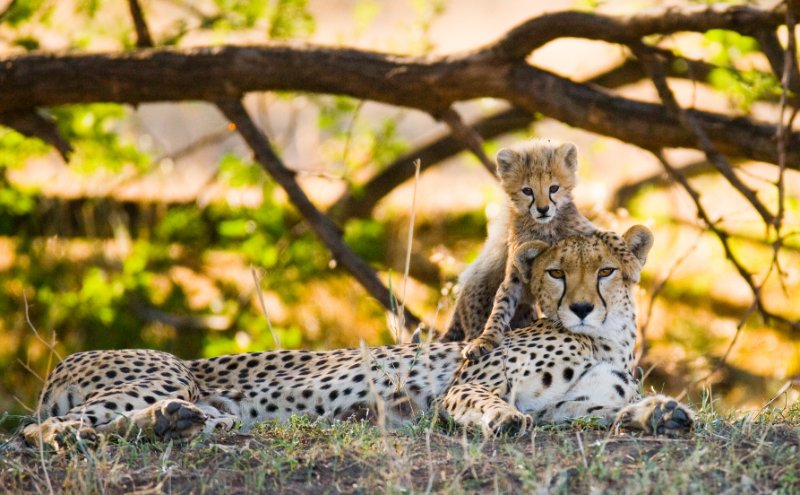
Cheetahs are endangered because there are not enough of them left to reproduce.
Cheetah wild populations have declined by about 40% in the past twenty years. Cheetahs typically live 10-12 years in the wild, but less than half survive that long.
Cheetahs can be found at zoos around the world, including Cheyenne Mountain Zoo, Smithsonian National Zoological Park, Houston Zoo, and WMZS Cheeta Wild cat Sanctuary.
Role in Ecosystem
Ecologically, Cheetahs are important as they control the population of herbivores through predation.
Cheetahs consume only mammals that weigh up to 40 kilograms (88 pounds). Cheetahs can help maintain a healthy ecosystem because they keep the wild populations of herbivores in check by hunting cheetahs and preventing overgrazing.
Despite Cheetahs’ ecological importance, they are listed as vulnerable on the IUCN Red List. This means that Cheetahs are at risk of becoming endangered in the wild in the near future.
The biggest threat to Cheetah populations is poaching. Cheetahs are killed for their fur and skin, and their bones and organs are sold on the black market as Cheetah body parts are thought to have medicinal value.
Cheetahs’ Predators
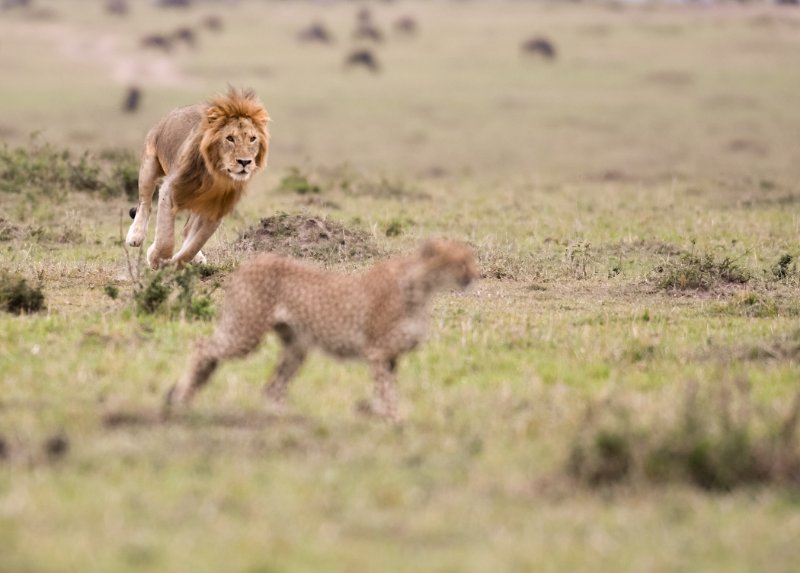
There are many Cheetah predators, which is why Cheetahs are endangered. Cheetahs’ predators include lions, leopards, crocodiles, one or more species of eagles, and human beings.
Cheetahs must fight against their Cheetah predators in order to survive. Cheetahs are killed by people who hunt Cheetahs for Cheetah fur and Cheetah skin, and Cheetah cubs can be sold illegally in the Cheetah illegal trade.
Cheetahs and Human Interaction
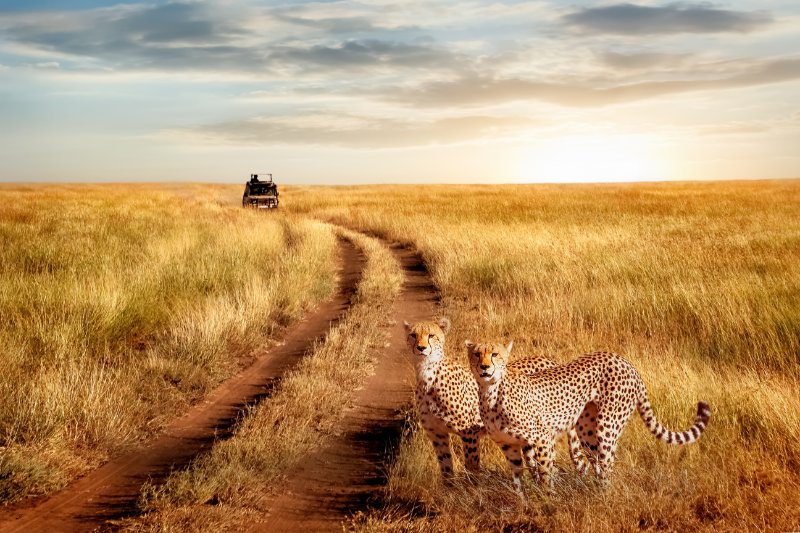
Cheetahs used to be found in most parts of Africa, but now they are only found in the eastern and southern parts of the continent.
These wild beasts lost a lot of their habitats due to human interaction. They were killed because they were seen as a threat to livestock and crops. These threatened species were also killed because they were seen as competition for hunters.
Cheetahs are also hunted for their fur. Today, they are now listed as an endangered species by the IUCN.
Cheetah Facts
Here are the interesting facts about Cheetahs.
- They are the fastest land animal on earth
- They live in Africa and Asia
- They are endangered because there are not enough of them left to reproduce
- They hunt antelopes, deer, gazelles, hares, small prey, and other mammals.
- They are endangered because there are not enough of them left to reproduce.
- They have a lifespan of around 10-12 years in the wild.
- They have very poor eyesight, so they use their sense of smell to track live prey.
- They are really good swimmers too.
See Related: Best Wildlife Conservation Books
Conservation Status
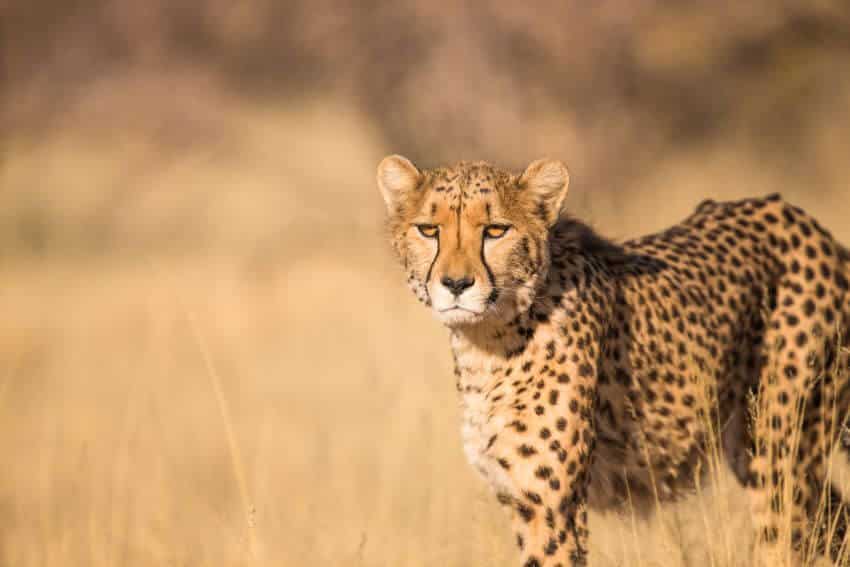
The cheetah is listed as Vulnerable on the IUCN Red List, with roughly 6,500 mature individuals remaining and a population decline of 21–51% projected over three generations (2017–2032). Some subspecies are in far worse shape: the Asiatic cheetah of Iran and the Northwest African cheetah are both Critically Endangered.
Cheetahs are native to Africa, with a small population also surviving in Iran, and their numbers have fallen sharply due to habitat loss and fragmentation, conflict with farmers, depletion of their prey base, and the illegal wildlife trade — especially the trafficking of wild-caught cubs into the exotic pet market.
Cheetahs are easily threatened due to the small population size; therefore, this animal needs conservation efforts in order to allow it to continue reproducing.
Threats
The biggest threat to cheetahs is habitat loss due to farming and their poor ability to live in nature reserves.
Due to their speed, they have to rest for up to 20 minutes after a kill and as a result run the risk of losing their prey to other predators such as leopards, lions, and hyenas.
The mortality rate in cubs is also high due to cubs often being killed by predators when the mother is out hunting in the early morning.
Another challenge faced by these big cats is a low genetic variation which leads to reproductive issues, high infant mortality, and susceptibility to diseases.
This is caused by inbreeding and makes these species vulnerable to climate change.
Conservation efforts
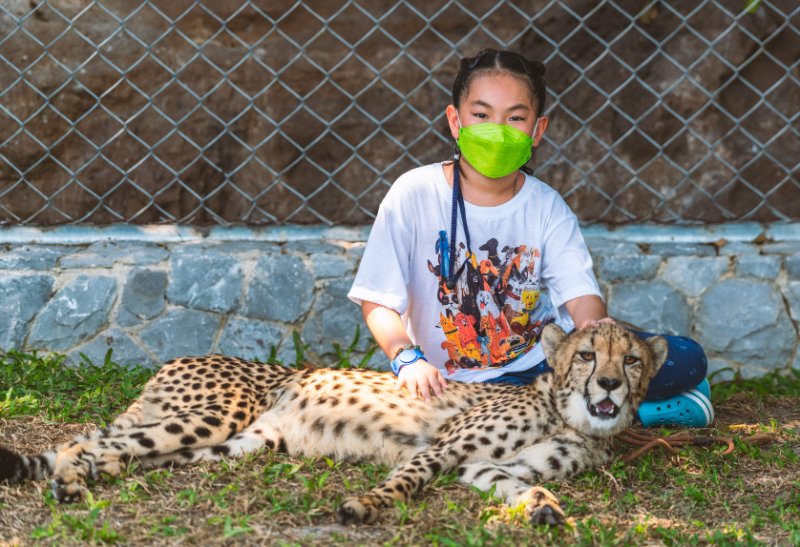
Conservationists around Africa work to educate farmers on reducing contact between theis wild beast and livestock and using guard dogs to protect their livestock and maintain balanced biodiversity instead of shooting the predators or using snares or poison.
Captive Breeding
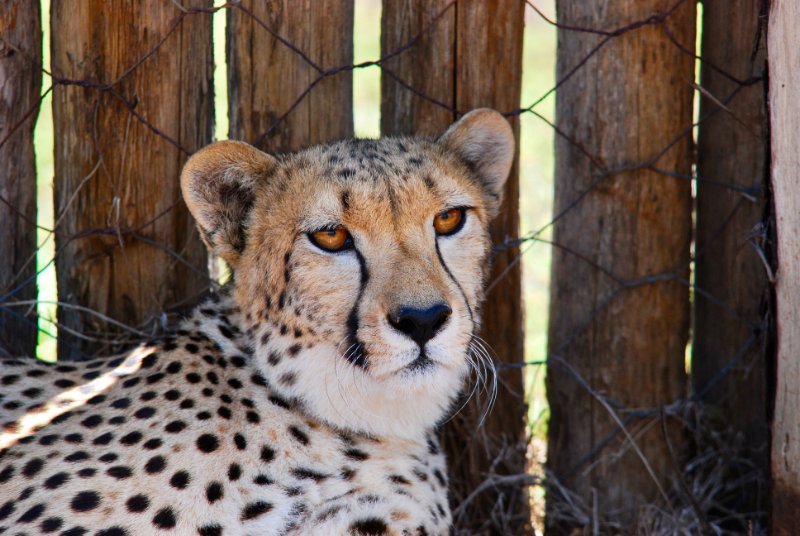
Cheetah conservationists have turned to captive breeding as a way to save the species. Captive breeding is the process of breeding animals in controlled, human-made environments. This is different from wild animal conservation, which focuses on protecting animals in their natural habitats. There are several reasons why captive breeding is an important tool for cheetah conservation.
First, captive breeding can help increase the population of this species. When these big felines are bred in captivity, they are able to mate with other Cheetahs and produce offspring. This helps to increase the population size and ensures that the Cheetah gene pool is not being depleted. The species have a very small gene pool because there are so few of its population left.
Cheetah Research
Research has helped Cheetah conservation in two ways. First, it is helping to predict the Cheetah population.
Researchers are using data on Cheetahs living in captivity to predict Cheetah wild populations. Second, researchers are finding out what these species eat and where they live so that the Cheetah habitat can be protected. These big cats are endangered, but with research, Cheetah conservation will hopefully be successful.
Organizations
The Ann van Dyk Cheetah Centre
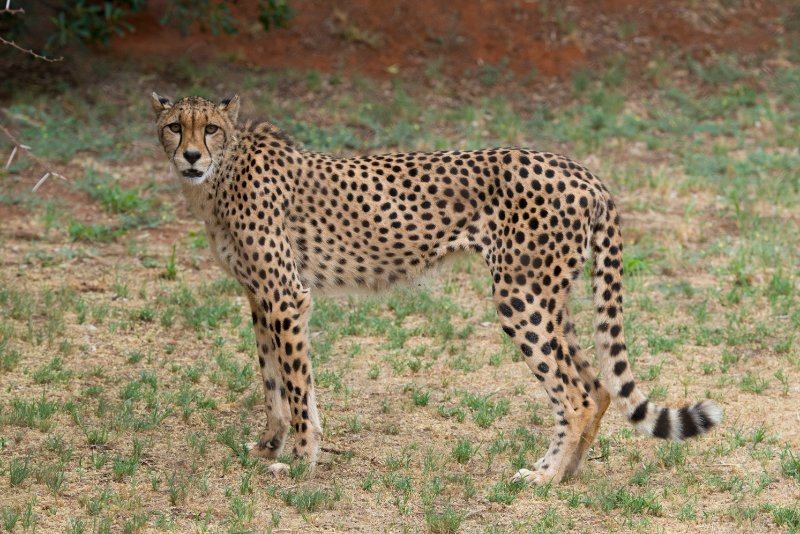
The Ann van Dyk Cheetah Centre is a 40-acre Cheetah preservation and educational facility in Southern Africa. The center is located just north of the Northern Cape Province and has been working to conserve these cats since 1993.
The Ann van Dyk Cheetah Centre runs a breeding program to ensure the survival of cheetahs by maintaining the gene pool.
They are a partner of the Cheetah Outreach Anatolian Guarding Dog Project to reduce conflicts between the predators, local people, and their livestock.
Botswana Predator Conservation Trust
The Botswana Predator Conservation Trust is a non-profit, conservation organization that was founded in 1992.
The trust’s goal is to ensure the long-term survival of predators in Botswana by working with the local communities to create a culture of coexistence between people and predators.
The trust does this by providing education and training in predator conservation, conducting research on predator ecology and behavior, and working with local communities to reduce conflict.
Botswana Predator Conservation Trust is studying these cats to understand how they survive in the presence of larger competitors and how their population dynamic functions in habitats with other predators.
Call from the Wild
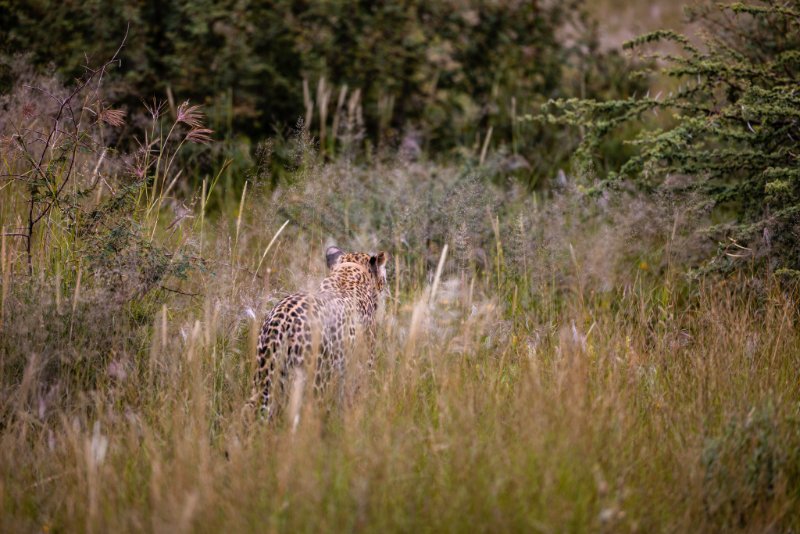
Call from the Wild is an organization started by the Frankfurt Zoological Society which supports a variety of national parks throughout Africa to protect different endangered species including African wild dogs and these predators.
Dambari Wildlife Trust
Dambari Wildlife Trust is a non-governmental wildlife conservation organization. It is an NGO that is dedicated to the conservation of threatened and endangered wildlife species in Zimbabwe and the region.
The trust was founded in 2001 by a group of concerned individuals who were passionate about wildlife and conservation. The trust’s initial focus was on working with communities living adjacent to protected areas to help them understand the importance of wildlife and how they could benefit from conservation.
The trust has since expanded its operations to include other areas such as anti-poaching, research, and education. Dambari Wildlife Trust started a cheetah program in Zimbabwe to educate local children and farmers. They conduct collaring for research purposes to understand its behavior and ecology.
Panthera
Panthera is a global organization devoted to the conservation of the world’s 36 species of wild cats. Panthera’s mission is to ensure the future of wild cats and their habitats through science-based conservation initiatives.
Some of Panthera’s notable achievements include the creation of the world’s first jaguar sanctuary in Belize, the establishment of camera traps in tiger habitats throughout Asia, and the funding of more than 190 Cheetah Conservation Projects in 23 countries.
Panthera is an American-based organization. Their main focus is to conserve the world’s largest wild cats including Cheetahs by supporting research and education programs in different countries.
Wildlife Conservation Society
The Wildlife Conservation Society is an international conservation organization that engages in the preservation of wildlife and their habitats.
The society was founded in 1895 as the New York Zoological Society by a group of men including Madison Grant and Andrew Carnegie, who were intent on building a zoo for the public.
The WCS has a number of notable achievements, including the development of the Bronx Zoo, which is now one of the largest zoos in the United States; the founding of the Wildlife Field Station, which is now the world’s largest field research station; and the creation of “Conservation International”, which is now one of the world’s leading environmental organizations.
Wildlife Conservation Society was formed in 1895 with the aim of protecting 25% of the world’s biodiversity by promoting the importance of protecting wildlife, endangered wildlife, and their habitats. WCS has five zoos in New York.
See Related: Best Wildlife Conservation Jobs
Final Thoughts
Cheetahs are the fastest animal on earth, but they’re also endangered.
Cheetah is listed as an animal that is endangered by the IUCN Red List due to their sharp decline in population size due to hunting for fur, poaching of prey base, and connected habitat fragmentation.
This makes these species vulnerable to climate change because they have a low genetic variation which leads to high infant mortality and susceptibility to diseases caused by inbreeding. These species need conservation efforts if we want them to survive so you can continue reproducing.
FAQ
What is Cheetah?
Cheetahs are endangered because there is not enough Cheetah to reproduce. These creatures live in Africa and Asia. They are renowned to be the fastest land animal on earth with speeds up to 75 miles per hour (120 km/h).
Cheetahs were once spotted in the United States but are now extinct in this area. Cheetahs can be found at Cheetah Conservation Fund Cheetah Conservation Foundation and Cheetah Outreach.
The Cheetah is a south-north cat with distinctive black spots mixed evenly on a golden background. The underside of their yellowish fur is white, but the fur of Cheetahs is not as fluffy and thick as other cats. A cheetah is a larger cat with long legs and a long body. Cheetahs must eat meat every four hours and sleep near their supply of food.
Why are Cheetahs endangered?
Cheetahs are vulnerable to extinction mainly because of habitat loss and fragmentation, as farmland and human development shrink the open grasslands they need to hunt.
Conflict with farmers who kill cheetahs to protect livestock, depletion of their natural prey, and the illegal wildlife trade — especially the trafficking of wild-caught cubs for the exotic pet trade — are also major threats.
Because cheetah populations are small and genetically similar, they also have low genetic diversity, which makes them more vulnerable to disease and reduces reproductive success.
What is Cheetah’s habitat?
Cheetahs live in Africa and Asia. Cheetahs are endangered because there are not enough of them left to reproduce. Cheetah is the fastest animal in the world, reaching speeds up to 75 miles per hour (120 km/h).
Cheeta lives mostly in East and Southern African savannah habitats such as open grasslands but may also be found in scrublands, dry forests, and even mountainous areas. They prefer habitats with some cover but also open spaces where they can run fast.
Are Cheetahs threatened in the wild?
Yes. Cheetahs are classified as Vulnerable by the IUCN, with roughly 6,500 mature individuals remaining across Africa and Iran, and their numbers are projected to keep declining as habitat is lost and fragmented.
The situation is far more severe for the Asiatic (Iranian) cheetah subspecies, which is Critically Endangered with fewer than 30 individuals left, confined almost entirely to central Iran.
The North African and Northeast African cheetah subspecies are also Critically Endangered and Endangered respectively, while the Southern African cheetah remains the most numerous of the four recognized subspecies.
What allows cheetahs to run so quickly?
These big cats can run quickly because they are born with an unusually long tail, which acts as the Cheetah’s primary balancing organ.
Cheetahs have great stamina and burn energy very efficiently. They are built for speed, not endurance- they can reach speeds of 75 miles per hour.
The species have the biggest hind legs in the cat world. These wide pawed feet are perfect for traction when they are on downhill slopes making it possible to achieve high speeds while moving on flat land.
They have semi-retractable claws. It is also a species that is tall and slim but it is their long, muscular tail that provides the most power when they run. They are built for speed, not for endurance. It is a species that is smaller than lions but they are lithe and weigh less.
It is a species that does not have much of a mane to help regulate their body temperature as lions do. They only run fast for 20 seconds before they have to rest because of the build-up of lactic acid in their muscles. These species are built for speed, not endurance.
Why cheetah is not a true cat?
Cheetahs actually ARE true cats — they belong to the cat family Felidae, in the subfamily Felinae alongside cougars, lynxes, and domestic cats. What people usually mean is that cheetahs aren’t one of the “big cats” (lions, tigers, leopards, jaguars, and snow leopards), which make up the separate subfamily Pantherinae.
Felinae cats like the cheetah can’t roar because they lack the specialized larynx and elastic hyoid bone structure that lets Pantherinae cats roar — instead, cheetahs purr, much like a house cat.
Cheetahs also have distinctive traits that set them apart from the big cats: a small, rounded head built for aerodynamics, semi-retractable claws that provide grip during a high-speed chase, and a body built for short bursts of extreme speed rather than raw ambush power.
How to save cheetahs?
To save the Cheetah from endangerment, there needs to be strict enforcement so that nothing can happen to these animals.
The Cheetah should be legally protected so it cannot be hunted or killed for any reason other than for food. These wildcats have been known to be killed by farmers because they are seen as a threat to their livestock.
The Cheetah Conservation Fund is currently working on programs that protect the Cheetah, their habitat, and raise awareness about these animals. You can help too by donating to this organization or adopting a cheetah.
When you adopt a cheetah, you are helping to support the Cheetah Conservation Fund and its efforts to save this beautiful animal. So, if you want to help prevent the Cheetah from becoming extinct, donate or adopt!
Other Species Profiles
Related Resources