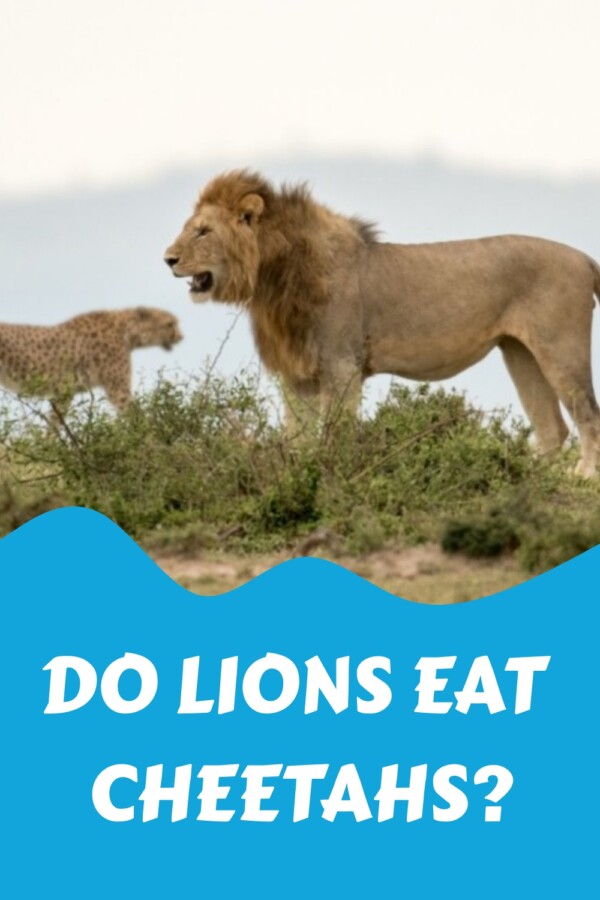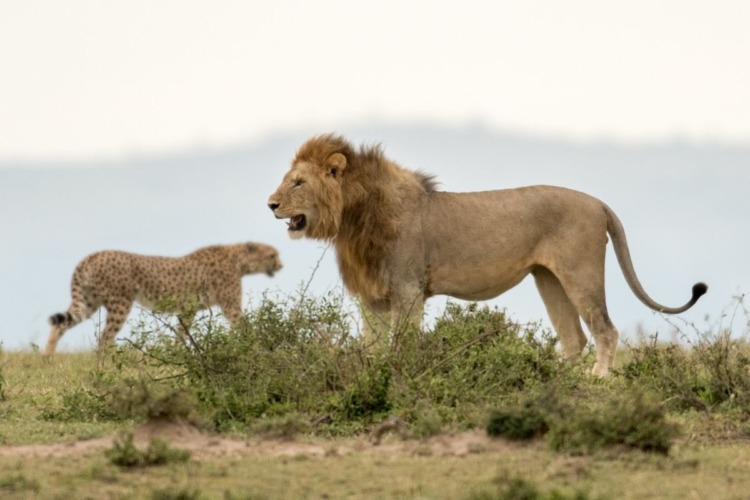
Yes, a lion can eat a cheetah, but it is uncommon. Cheetahs are not a normal part of a lion’s diet. Lions are more often documented killing cheetahs—especially cubs—during encounters between competing carnivores, and the carcass may be left uneaten. Ecologists describe this type of interaction as intraguild killing or intraguild predation.
The key distinction is killing versus eating. A lion is physically capable of consuming a cheetah, but research does not support the simple claim that lions hunt cheetahs as regular prey or eat them only when starving. Competition over food, danger around carcasses, and opportunistic encounters explain the relationship better.
Key Takeaways
- Lions can eat cheetahs, but consumption is rare and cheetahs are not a normal prey species.
- Lions are more likely to kill cheetahs during competition between carnivores than to hunt them for food.
- Cheetah cubs are more vulnerable than healthy adults, although cub mortality rates vary greatly by ecosystem.
- Cheetahs usually survive near lions by detecting them early, creating distance, and abandoning contested kills.
- Lion–cheetah conflict is not evidence of hatred, envy, or revenge.
Do Lions Eat Cheetahs?
Yes, but only rarely. Saying that lions never eat cheetahs would be too absolute, yet the ecological literature treats consumption as uncommon. The better-supported conclusion is that, when the species interact, cheetahs function as competitors rather than preferred food.
A peer-reviewed paper on carnivore interactions uses lions and cheetahs as an example of a top predator that kills but “rarely or never” consumes the smaller predator. By contrast, the Smithsonian’s lion profile describes a normal diet centered on large herbivores such as zebras and wildebeest, with smaller animals taken when food is scarce.
Hunger may influence a lion's feeding decisions, but research does not establish an “only when starving” rule. The location, the individual animals, the presence of other prey, and the intensity of competition can all affect what happens.
Why Do Lions Kill Cheetahs?
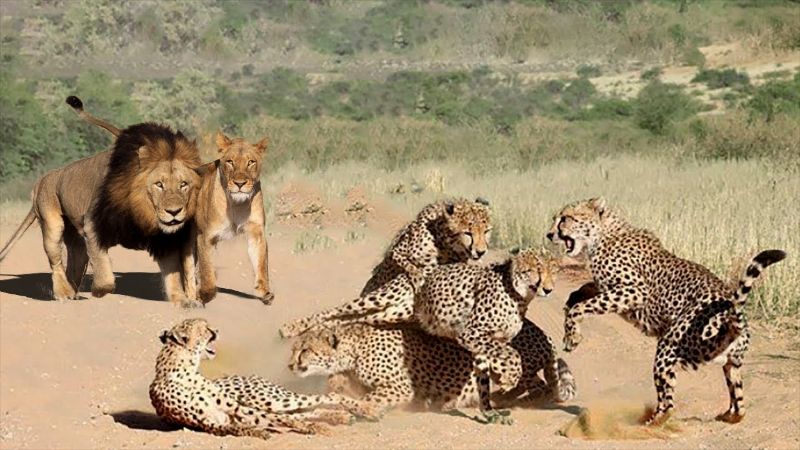
Lions kill cheetahs primarily because both species belong to the same carnivore community and use some of the same resources. Ecologists call this intraguild killing: one predator kills another predator that overlaps with it ecologically. The immediate encounter may occur near prey, a carcass, cubs, or a frequently used area.
Competition Over Prey and Kills
Lions and cheetahs do not have identical diets, but they overlap on some antelope and young ungulates. Lions also take food from other carnivores. Cheetahs are physically poorly equipped to defend a carcass against a lion, so surrendering the meal is usually safer than fighting.
A long-term Serengeti study of cheetahs at kill sites described cheetahs as frequent victims of kleptoparasitism—the theft of food by another animal—and noted that lions and spotted hyenas can kill cubs and, sometimes, adults.
The Ecological Effect of Removing a Competitor
When a dominant predator kills a smaller competitor, the ecological effect may be less competition for shared prey or a change in how the surviving animals move and hunt. This does not mean a lion consciously calculates a future food benefit. It means aggressive behavior toward competing carnivores can have consequences beyond the immediate encounter.
Do Lions Hate Cheetahs?
No evidence shows that lions attack cheetahs because of hatred, jealousy, or envy. Those labels project human motives onto animal behavior. A Panthera conservation scientist explains that revenge is an anthropomorphic interpretation; competition is a more credible explanation for predators killing other predators.
Why Are Cheetah Cubs Especially Vulnerable?
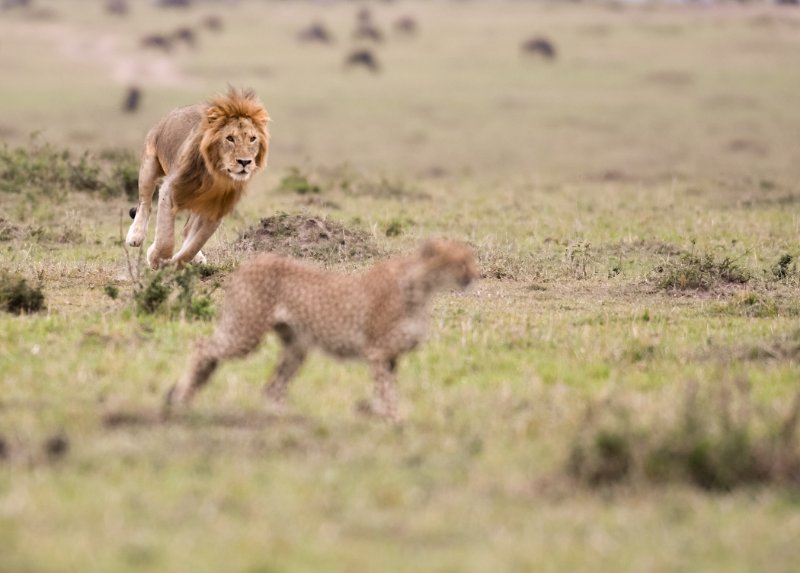
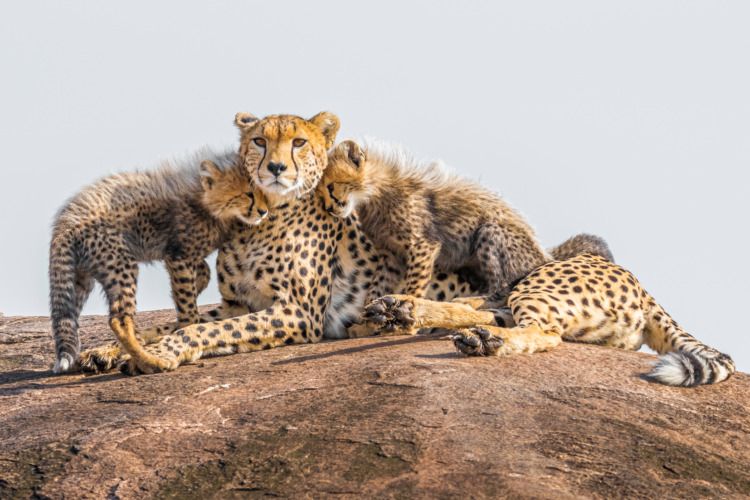
Cheetah mothers raise cubs without help from an adult male. Young cubs cannot outrun a lion, and their mother must periodically leave them concealed while she hunts. Once the cubs begin following her, the family becomes more visible and cannot move as quickly as a lone adult cheetah.
The often-repeated claim that nearly all cheetah cubs die comes largely from specific field studies and should not be treated as a universal rate. In a 1994 Serengeti study, predation accounted for 73.2% of recorded cub deaths, and 78.2% of those predation deaths were attributed to lions. The same study estimated that only 4.8% of cubs survived to independence.
Later research showed why location matters. A 2013 comparison with the Kgalagadi Transfrontier Park found cheetah cub survival there was seven times higher than on the Serengeti Plains, and lions were not implicated in the observed predation. The practical conclusion is that lions can be a major threat to cubs, but the scale of that threat changes with habitat, predator density, prey, and study conditions.
Lion vs. Cheetah: Why the Lion Has the Advantage
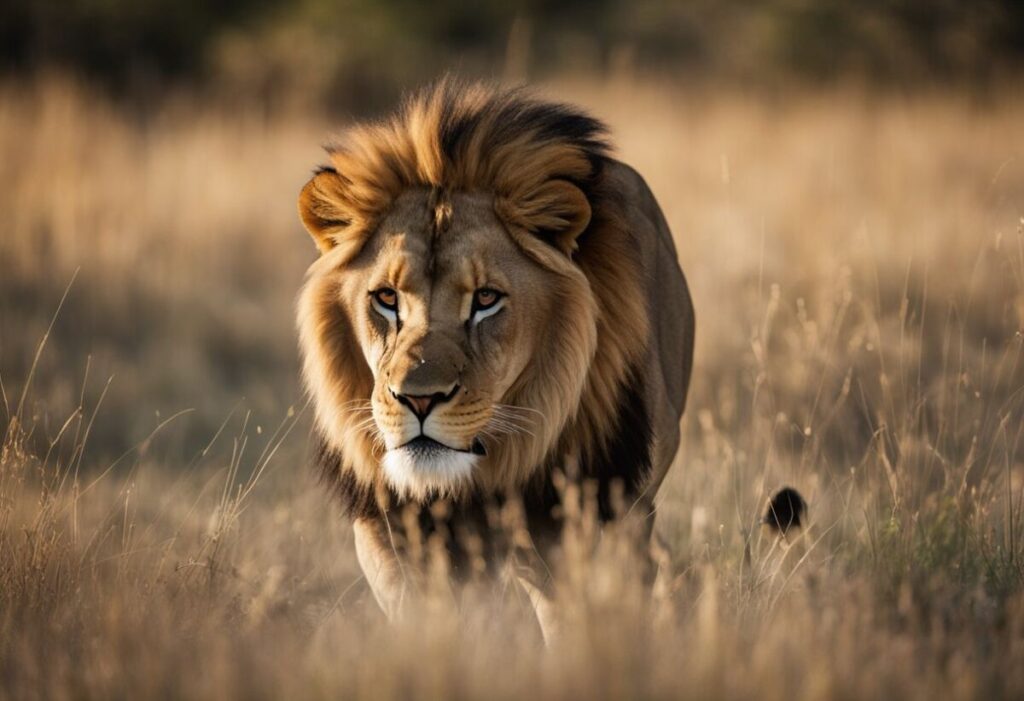
A lion is built for close-range power; a cheetah is built for acceleration and maneuverability. The Smithsonian lists adult male lions at about 330–550 pounds (150–250 kilograms) and females at 265–395 pounds (about 120–179 kilograms). The Cheetah Conservation Fund lists adult cheetahs at about 75–125 pounds (34–57 kilograms).
| Feature | Lion | Cheetah | What It Means in an Encounter |
|---|---|---|---|
| Body design | Compact, muscular, and power-oriented | Light, slender, and speed-oriented | The lion has the advantage if it gets within striking distance. |
| Adult body mass | Roughly 120–250 kilograms, depending on sex | Roughly 34–57 kilograms | The size difference makes a prolonged fight extremely dangerous for the cheetah. |
| Social structure | Females often live in prides; males may form coalitions | Females are usually solitary; males may form small coalitions | A cheetah may face more than one lion and has little ability to defend a kill. |
| Primary adaptation | Strength, grappling, and cooperative hunting | Rapid acceleration, turning, and short sprints | The cheetah’s best defense is early detection and escape. |
| Typical prey | Often medium-to-large ungulates | Usually smaller antelope, young ungulates, hares, and birds | Their diets overlap, but each species has a different hunting niche. |
Speed only helps when the cheetah has enough warning and open space to accelerate. At close range, a healthy adult lion has the decisive physical advantage. For more context on lion variation and behavior, see our guide to the types of lions.
Do Cheetahs Eat Lions?
No. Cheetahs do not hunt lions and lions are not part of their normal diet. Cheetahs specialize in catching smaller, fast-moving prey that they can overpower after a short chase. Approaching a lion carcass would also expose a cheetah to other lions, hyenas, and scavengers, so it would be an unusually risky feeding opportunity.
Can a Cheetah Kill a Lion?
A cheetah is extremely unlikely to kill a healthy adult lion. It may bite or scratch defensively if cornered or if a mother is protecting cubs, but its survival strategy is escape rather than combat. A cub, injured lion, or other exceptional situation could change the immediate risk, yet cheetahs do not seek out lions as prey or rivals to fight.
What Do Lions and Cheetahs Normally Eat?
A Lion’s Typical Diet
Lions primarily hunt large herbivores. Depending on location and opportunity, their prey can include wildebeest, zebra, antelope, buffalo, and the young of larger mammals. They also scavenge and steal kills from other predators. During shortages, lions can switch to smaller animals, but that flexibility does not make cheetahs a regular menu item.
A Cheetah’s Typical Diet
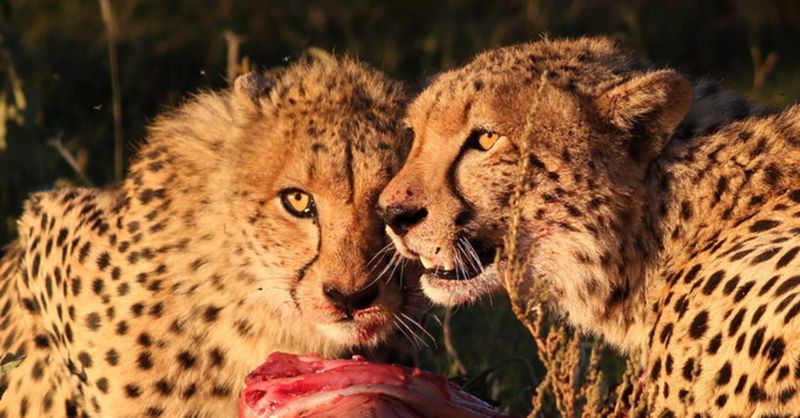
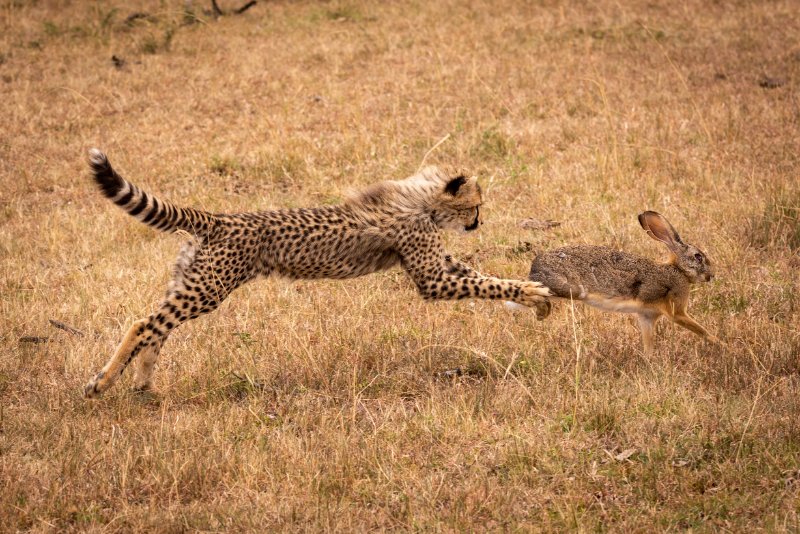
Cheetahs usually hunt small-to-medium antelope, including gazelles, springbok, impala, steenbok, and duikers, as well as hares, game birds, and the young of larger animals. The Smithsonian’s cheetah profile notes that cheetahs eat quickly because lions, hyenas, and even groups of vultures can displace them from a fresh kill.
What Animals Kill or Eat Cheetahs?
Lions and spotted hyenas can kill cheetahs, although healthy adults are harder to catch than cubs. Young cheetahs are also vulnerable to other predators, including eagles in some regions. A predator that kills a cheetah may or may not eat it, while scavengers may feed later on a carcass they did not kill.
That distinction matters: predation, competitive killing, scavenging, and food theft are different behaviors. Describing all of them as “animals eating cheetahs” hides the ecological relationship the reader is trying to understand.
Human-caused mortality and habitat pressures are separate conservation issues rather than natural predation. Our broader cheetah species guide covers the animal’s biology, range, and conservation challenges.
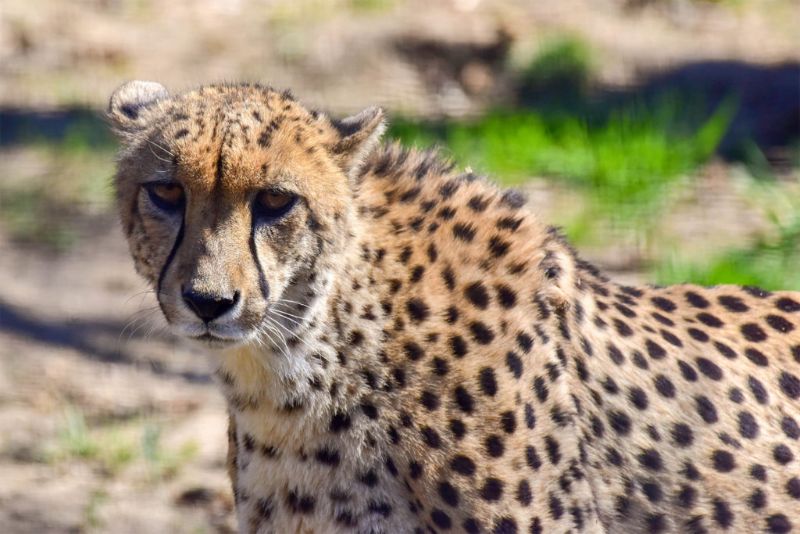
How Do Cheetahs Survive Near Lions?
Cheetahs reduce risk through behavior rather than strength. In a Serengeti playback experiment, cheetahs moved away after hearing lion or hyena sounds and were less likely to hunt afterward. The response was strongest in several measures after lion playbacks, suggesting that cheetahs perceived lions as the greater threat.
- Reacting to nearby danger: Cheetahs change direction or leave when they detect a lion.
- Giving up contested food: Abandoning a carcass is safer than defending it against a larger carnivore.
- Feeding efficiently: Less time at a kill can reduce exposure to animals attracted by the carcass.
- Using fine-scale separation: Cheetahs can avoid an immediate encounter without abandoning an entire landscape.
The danger to individual cheetahs is real, but coexistence is more nuanced than a simple predator-versus-prey story. A 30-year Serengeti analysis found that the lion population nearly tripled between 1966 and 1998 while cheetah numbers remained largely unchanged. The authors concluded that fine-scale avoidance can help cheetahs coexist with lions without being excluded from the broader landscape.
The Bottom Line
Lions can eat cheetahs, but they rarely hunt them as food. A lion is more likely to kill a cheetah because of an immediate competitive encounter than because cheetah meat is a preferred meal. Cubs face greater danger than healthy adults, yet mortality varies substantially between ecosystems. Cheetahs persist alongside lions by detecting threats, yielding kills, and avoiding close contact.
Frequently Asked Questions
Do lions eat cheetahs?
Lions can eat cheetahs, but cheetahs are not normal lion prey and consumption is uncommon. Lions more often kill cheetahs during competitive encounters and may leave the carcass uneaten.
Why do lions kill cheetahs if they do not eat them?
Lions and cheetahs share parts of the same habitat and prey base, and encounters can occur around kills or cubs. Ecologists describe this as intraguild killing or interference competition, not hatred or revenge.
Do lions eat cheetah cubs?
Lions can kill cheetah cubs and may sometimes consume them, but a killed cub is not necessarily eaten. Cub mortality varies sharply by ecosystem, so figures from one Serengeti study should not be treated as a global rate.
Can a cheetah kill a lion?
A cheetah is extremely unlikely to kill a healthy adult lion. Cheetahs may defend themselves when cornered, but their main survival strategy is to detect lions early and escape.
What animals kill cheetahs?
Lions and spotted hyenas can kill cheetahs, particularly cubs. Young cheetahs may also be killed by other predators, including eagles in some regions, while healthy adults rely on speed and vigilance to avoid danger.
Do cheetahs eat lions?
No. Cheetahs hunt smaller animals such as gazelles, impala, hares, and game birds. They do not hunt lions or treat them as a normal food source.
Related Wildlife Guides
- Where lions actually live—and why “jungle” is misleading
- Do lions eat elephants?
- Why lions are called the king of the jungle
- Cheetah biology, behavior, and conservation