Alaska is home to at least ten federally protected endangered or threatened species, including the Steller sea lion, Cook Inlet beluga whale, northern sea otter, spectacled eider, short-tailed albatross, and North Pacific right whale. Most are marine mammals or seabirds protected under the U.S. Endangered Species Act and the Marine Mammal Protection Act. Alaska is home to a variety of endangered and threatened wildlife. From the iconic polar bear to the majestic bald eagle, these animals are an essential part of Alaska’s ecosystem.
However, their populations are declining due to climate change and other human activities. Here are some of the most endangered species in Alaska and what you can do to help protect them.
Most Endangered Animals in Alaska
Alaska is home to a wide variety of wildlife, including many threatened and endangered species. Here are some of the most endangered animals in Alaska and what is being done to protect them.
1. Steller Sea Lion
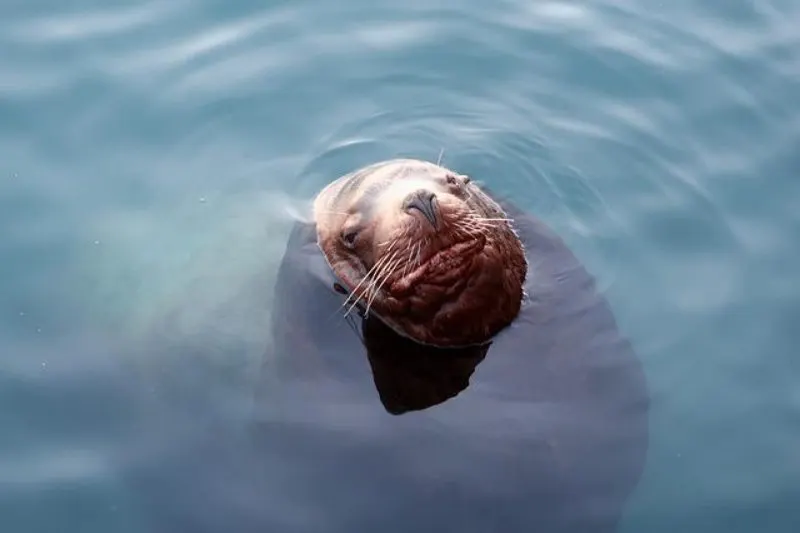
The Steller Sea Lion is one of Alaska’s most significant animals considered endangered. Steller Sea Lions are protected under the Marine Mammal Protection Act and the Endangered Species Act. These social animals live in large colonies along the Alaskan coast and feed on fish, squid, and crustaceans.
The primary threats to their populations are commercial fishing, climate change, existing regulatory mechanisms, disease, and natural or manmade factors affecting the species‘ population.
Steller Sea Lions were historically hunted for their meat, skin, and oil. Hunting them became a huge business in the 1800s and early 1900s.
Consequently, their populations declined sharply during this time. By the 1950s, they had recovered somewhat, but then their numbers began to fall again in the 1970s. This decline was largely due to the increased fishing by commercial fisheries.
Steller Sea Lions starve when competing with commercial fisheries for food. They are also frequently killed as bycatch.
Climate change is another threat to their populations. Steller sea lions haul out on rocky shores, beaches, and reefs – not sea ice – to rest and to breed at traditional rookeries.
Warming seas and shifting fish stocks can reduce the prey Steller sea lions depend on, putting their habitats and food supply at risk. Alaska’s western population, west of Cape Suckling, remains endangered, while the eastern population recovered enough to be removed from the U.S. endangered species list in 2013.
Protection measures for Steller Sea Lions are implemented throughout the Fisheries of the Exclusive Economic Zone off Alaska laws at 50 CFR 679. The current Steller Sea Lion Protection Measures in the Alaska Groundfish Fisheries were adopted in both the Bering Sea and the Gulf of Alaska in 2003 and in the Aleutian Islands in 2015.
2. Northern Sea Otter
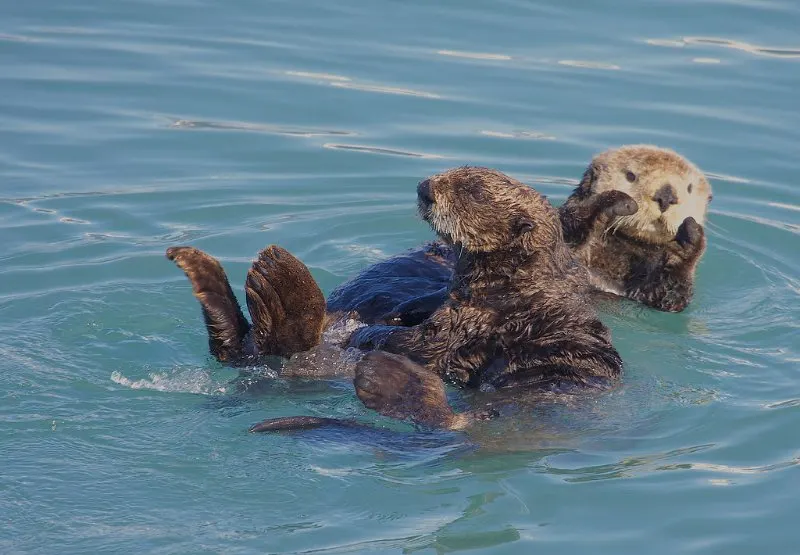
The Northern Sea Otter is a species of otter that is found in the northern hemisphere. They are principally found in the coastal waters of Alaska and Canada.
The Northern Sea Otter is a marine mammal protected under the Marine Mammal Protection Act. Its southwest Alaska population was listed as a threatened species under the Endangered Species Act in 2005, after declining by more than half since the mid-1980s.
Their populations are threatened by oil spills, commercial fishing, and climate change.
Oil spills can cause contamination of the sea otters’ food supply and lead to skin lesions and organ damage. Commercial fishing can result in entanglement and drowning.
Sea otters do not depend on sea ice; they rest and forage in coastal kelp forests, where they keep sea-urchin numbers in check and help the kelp thrive. Warming waters, oil spills, and orca predation all threaten these otters, so their populations need to be protected.
The species is protected thanks to the International Fur Seal Treaty, which helps to ensure its survival in the wild.
This international agreement between the United States of America, Russia, Japan, and the United Kingdom prevents the commercial hunting of sea otters and fur seals on a large scale and permits the populations of these animals to recover.
See Related: Encouraging Endangered Species Success Stories
3. Spectacled Eider
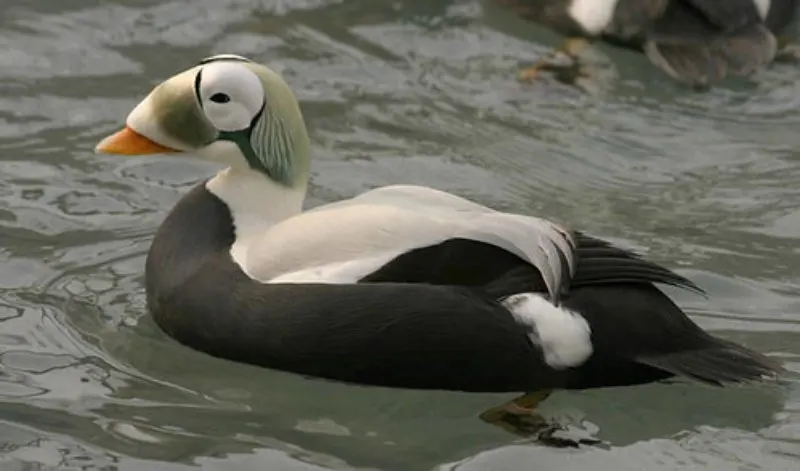
The Spectacled Eider (Somateria fischeri) is a large sea duck found in coastal Alaska. It is one of three eider species in the genus Somateria, alongside the common and king eiders. Its main breeding grounds are the Yukon-Kuskokwim Delta and Alaska’s Arctic Coastal Plain (North Slope), plus Arctic Russia.
The Spectacled Eider was listed as a threatened species under the Endangered Species Act in 1993, after its western-Alaska population fell by as much as 96%; the IUCN currently rates it Near Threatened. It is also protected under the Migratory Bird Treaty Act of 1918, and habitat loss remains a key concern.
The Spectacled Eider is a fascinating bird, and it is hoped that this beautiful bird will be saved from extinction through education and awareness.
The spectacled eider is vulnerable to a number of dangers, the most significant of which is drilling for oil and gas. In 2007, the Center for Biological Diversity was successful in preventing Shell Oil from moving forward with its plans to commence exploration close to the Arctic National Wildlife Refuge.
Before the project could move forward, a judge said that there needed to be a more in-depth look at how it might affect the environment and how it might affect several endangered animals, including the spectacled eider.
4. Cook Inlet Beluga Whale
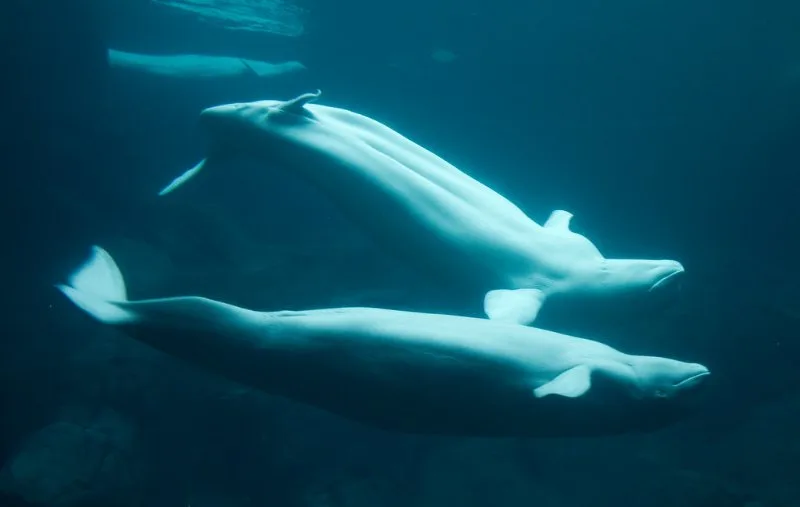
The Cook Inlet Beluga Whale is one of the most endangered species in Alaska. These whales are endangered due to several factors, including hunting, pollution, and habitat loss.
In addition to being listed as an endangered species, the Cook Inlet Beluga Whale is also designated as a marine mammal protected under the Marine Mammal Protection Act.
As a result, it is illegal to hunt, capture, or kill these whales. Despite these protections, the Cook Inlet beluga whale population has declined sharply.
NOAA’s most recent aerial survey, in June 2022, counted about 331 individuals, down from roughly 1,300 in the 1970s. The sharp 1990s decline was driven mainly by unregulated subsistence hunting, which has since been halted; today’s threats include underwater noise, pollution, and their habitat being increasingly degraded by pollution and coastal development.
NOAA listed the Cook Inlet beluga as endangered under the Endangered Species Act in 2008, and it is now the focus of an active recovery program rather than being written off. It remains one of the most endangered marine mammals in U.S. waters.
Each and every species of a beluga whale is provided protection under the Marine Mammal Protection Act (MMPA). The act places a ban on the hunting of marine mammals as well as the importation of any parts or products derived from marine mammals.
See Related: Sperm Whale: Is This Animal Engendered?
5. Blue Whale
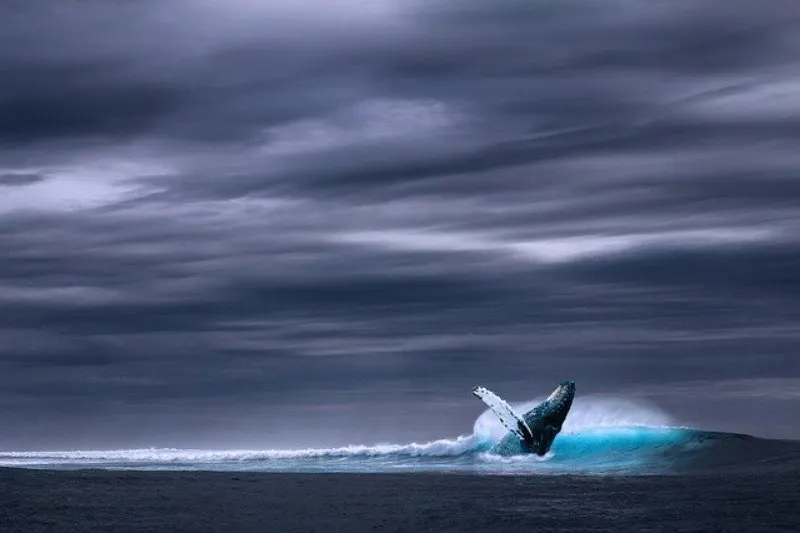
The endangered Blue Whale is the largest animal known to have lived. It can grow up to about 98 feet long and weigh as much as 165 tons. These gentle giants migrate along the Alaskan coastline and feed on krill, tiny crustaceans.
The Blue Whale population has declined due to hunting and accidental entanglement in fishing gear. Thanks to international protection, their numbers have begun to rebound in recent years.
Blue whales feed almost entirely on krill, eating several tons a day during the summer feeding season. Hunted to near-extinction in the 20th century, they have been protected from commercial whaling worldwide since 1966 but are still recovering.
The Marine Mammal Protection Act (MMPA) and the Endangered Species Act both provide legal protection for blue whales in their entirety (ESA). They aim to safeguard blue whales by lowering the number of times vessels collide with them.
See Related: Cruel Animals Around the World
6. North Pacific Right Whale
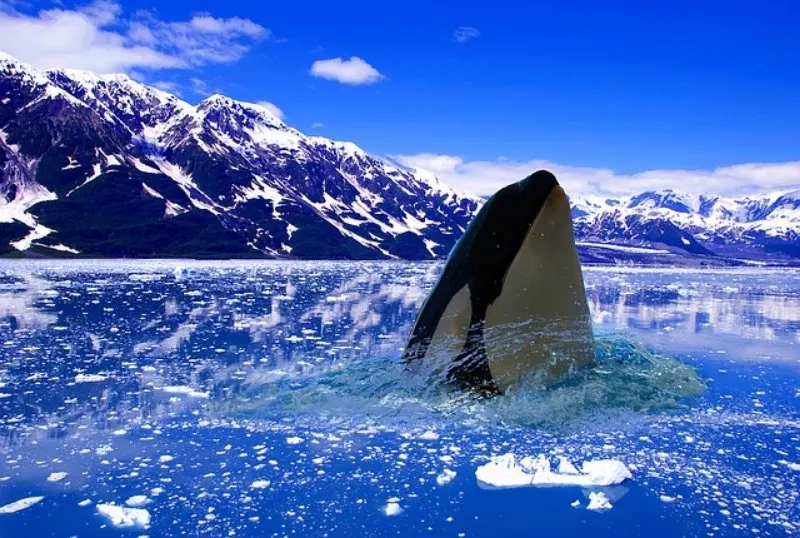
The endangered North Pacific right whale is one of the rarest whales in the world. These massive creatures can grow up to 60 feet long and weigh 80 tons. They migrate along the Alaskan coastline and feed on krill and small fish.
These whales were driven to the brink by commercial whaling, including illegal Soviet hunting in the 1960s, and their numbers have NOT rebounded. The eastern North Pacific population that visits Alaska’s Bering Sea and Gulf of Alaska is estimated at only about 30 individuals – the most endangered population of large whale in the world.
These are just a few of the endangered species that call Alaska home. With proper protection and conservation, and recovery efforts, we can ensure that these magnificent creatures will continue to thrive for generations to come.
The Endangered Species Act is used to save the whales’ essential habitat, which is overseen by the National Marine Fisheries Service.
See Related: Killer Whale: Is This Animal Endangered?
7. Short-tailed Albatross
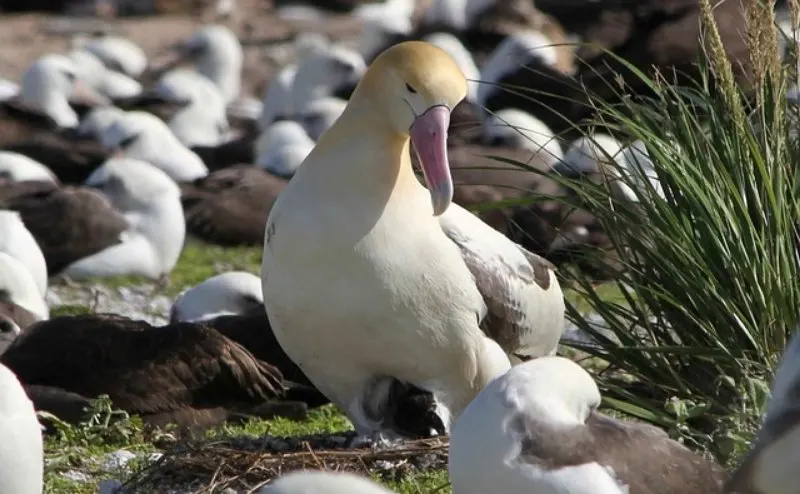
The Short-tailed Albatross is one of the most endangered species in Alaska. These birds are endangered due to several factors, including habitat loss, climate change, and human activity.
The Short-tailed Albatross is a vital part of the ecosystem in Alaska, and their loss would be devastating to the environment.
According to the Endangered Species Act, as well as the responsible National Marine Fisheries Service (NMFS) and the U.S. Fish and Wildlife Service (USFWS), it is listed as endangered throughout its entire range under the U.S. Endangered Species Act (ESA). Once hunted to near-extinction for its feathers, it has since recovered to roughly 7,300 birds and continues to increase.
Additionally, the state of Alaska has included it on its list of endangered species.
The Short-tailed Albatross and other seabirds are the focus of the Seabirds Program at ABC Birds, which employs a variety of conservation strategies, including direct action, awareness, and policy work, to further their cause.
The organizations are in favor of passing legislation to join the Agreement on the Conservation of Albatrosses and Petrels (ACAP) to minimize the risk of unintentionally capturing seabirds in their nets.
8. Eskimo Curlew
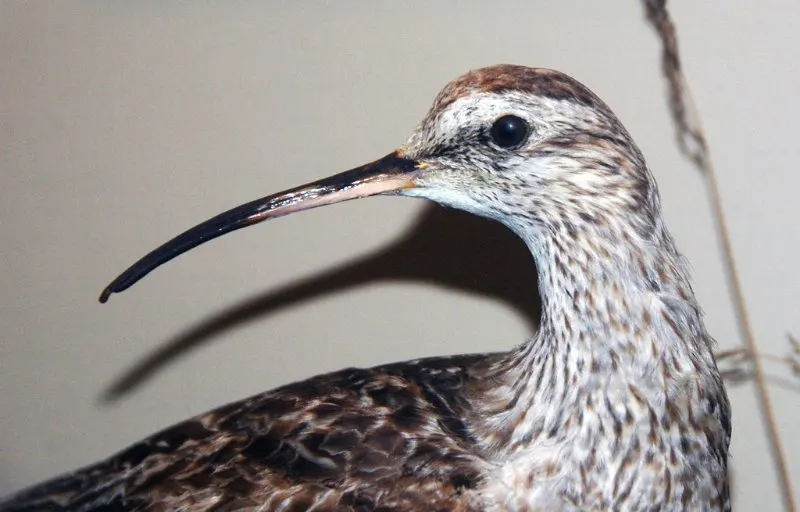
The Eskimo Curlew is part of the Alaska endangered species list. It is a small, migratory bird that was once common across the tundra and prairies of North America. However, its number has declined sharply due to habitat loss and hunting.
The IUCN lists the Eskimo Curlew as Critically Endangered (Possibly Extinct). There has been no confirmed sighting since 1963, and the bird is now widely believed to be extinct – a stark fall from the once-abundant flocks that filled North American skies in the 1800s before market hunting and prairie loss destroyed them.
Despite its decline, the Eskimo Curlew still holds an important place in the culture of many Indigenous peoples in North America, who have traditionally hunted the bird for food. Today, there is a growing effort to protect the Eskimo Curlew and its habitat to prevent this species from becoming extinct.
The Migratory Bird Treaty Act of the United States provides legal protection for the Eskimo curlew.
It is an act that makes it illegal to hunt, shoot, catch, sell, trade, or transfer protected species of migratory birds in the United States without first receiving permission from the Department of the Interior’s Fish and Wildlife Service.
See Related: Animals That Have Gone Extinct Due to Deforestation
9. Arctic Fox
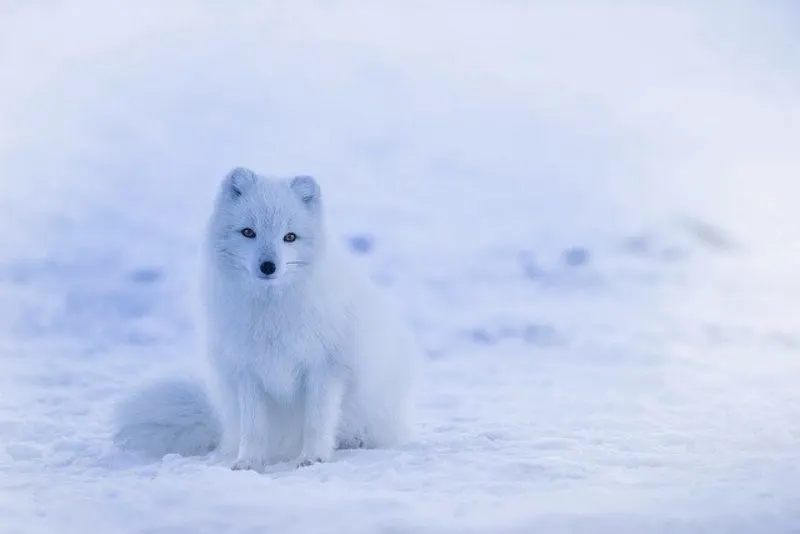
The Arctic Fox is not actually endangered in Alaska – the IUCN rates it Least Concern globally, and Alaska’s population is common and generally stable, rising and falling with prey. Its main emerging threat is climate change: as the Arctic warms, larger red foxes are expanding north and outcompeting – and sometimes killing – Arctic foxes.
Climate change is causing the Arctic to warm nearly four times as fast as the rest of the planet, reducing the sea ice that coastal Arctic foxes use to reach seal carcasses and travel between denning areas.
In addition, human activity such as oil and gas development disturbs the Arctic Fox habitat and increases the chances of contact with diseases from other animals. Arctic Foxes are a vital part of their ecosystem, and we must work to protect them from extinction.
The World Wide Fund (WWF) is dedicated to ensuring that fragile ecosystems receive the help and protection they need. In order to secure the survival of the Arctic fox and other species, the organization takes measures to reduce the consequences of climate change.
See Related: Most Endangered Animals of Europe
10. Mountain Caribou
The critically imperiled “mountain caribou” – the southern mountain population of woodland caribou – live mainly in British Columbia and the Lower 48, not Alaska, where most caribou herds remain relatively healthy. Even so, some northern herds face pressure from habitat loss and degradation, and climate change can disrupt their food sources and make their range less hospitable.
Mountain Caribou are an essential part of the state’s ecosystem, and their decline could have severe consequences for other threatened species in Alaska.
The Alaska Department of Fish and Game is working to protect Mountain Caribou populations through various conservation measures. These include habitat protection and restoration, research into the effects of climate change, and management of predator populations.
With the help of these efforts, it is hoped that Mountain Caribou will be able to recover and thrive in Alaska for many years to come.
How to know if a species is an endangered or threatened species?
Some factors that are considered when determining if a species is endangered or threatened include:
- The population size of the species
- The rate of decline in the population
- The size and location of the species’ breeding habitat
- The amount of available food
- Predation rates
- Climate change
How climate change is affecting their populations
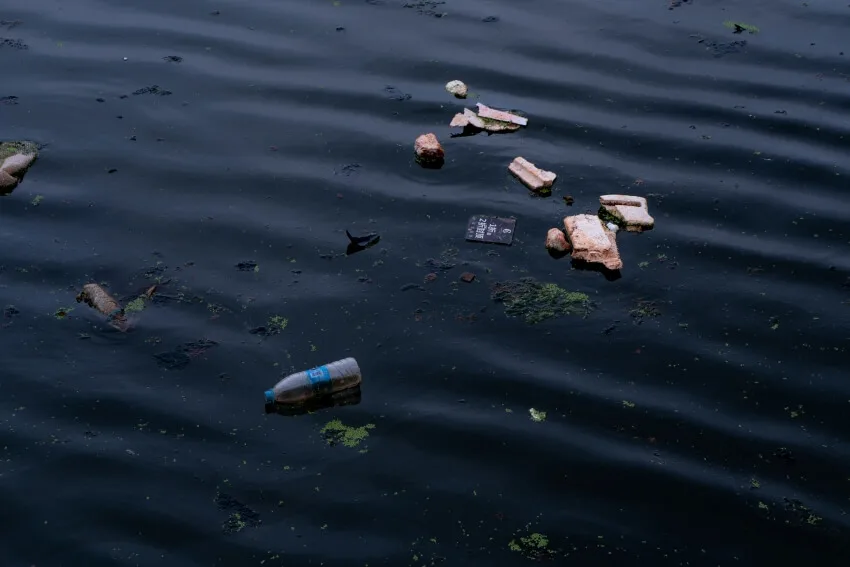
The Alaskan climate is changing faster than anywhere else in the United States, having a profound effect on its animal population.
Some species are struggling to adapt, while others are being forced into new territory where they may not be able to survive. Here are some of the most endangered animals in Alaska and how climate change is affecting their populations.
Why it’s important to preserve these species
One of the most important reasons it’s important to preserve wildlife species is that they play a significant role in the food web.
Another reason is that they are integral in maintaining the ecological balance.
Finally, it’s simply crucial to protect them from becoming extinct and solve the declining number of endangered species in Alaska.
How you can get involved in endangered species conservation!
There are many ways to get involved in threatened and endangered species conservation. You can volunteer with a local organization, donate to a conservation fund, support a refuge like the Arctic National Wildlife Refuge, or even purchase endangered species merchandise to help support the cause.
By becoming more educated about the plight of endangered species and taking action to help protect them, we can all make a difference in preserving our natural world for future generations.
Related Resources:
- Are Fish Endangered? What You Need to Know
- Most Endangered Species in Canada
- Ways to Save Animals Facing Extinction