No — climate change is not fake. A review of 88,125 peer-reviewed climate papers published since 2012 found that more than 99% agree humans are causing it, and the Intergovernmental Panel on Climate Change (IPCC) says human influence on the climate has “evolved from theory to established fact.” So why does the hoax claim persist? Here are the seven reasons people give — and the measured evidence that answers each one.
While there’s more than enough evidence to support the change in global climates, many people still have a hard time believing that this is something to worry about. Many believe that climate change is fake — propaganda orchestrated by governments for their own gain. Survey data shows how widespread that doubt still is: in 2025 the Yale Program on Climate Change Communication found that 15% of Americans say global warming is not happening at all, and 28% believe it is caused mostly by natural changes rather than human activity.
But is that true? Is climate change a hoax designed to control people, or is it the real deal? The evidence says the latter — and it is exactly why every one of us has reason to care about it.
For decades, climate scientists have had to answer the same recycled claims from climate change deniers. That is not a live scientific debate: in the peer-reviewed literature, the question of whether humans are warming the planet was settled years ago. What remains is a public argument fed by politics, identity and a documented misinformation campaign.
Below we cover both halves of the question: the seven reasons people still call climate change a hoax, and the measured evidence — temperatures, ocean heat, ice loss and sea level — that shows it is not.
The Evidence in Numbers
- More than 99% of peer-reviewed climate papers published since 2012 conclude that humans are causing climate change (Lynas et al., Environmental Research Letters, 2021); an earlier review of ~12,000 abstracts from 1991–2011 put it at 97% (Cook et al., 2013).
- 1.47°C (2.65°F) — how much warmer 2024 was than the 1850–1900 pre-industrial average, according to NASA. The World Meteorological Organization put it at about 1.55°C, the first calendar year above 1.5°C.
- The ten warmest years on record are the ten most recent — 2015 through 2024.
- The ocean has absorbed roughly 90% of the excess heat, and the top 700 metres has warmed about 0.3°C since 1969.
- Antarctica is losing about 136 billion tonnes of ice a year and Greenland about 267 billion tonnes a year (NASA GRACE satellites).
- Global sea level has risen about 102 mm since 1993, and the rate has more than doubled, from ~2.1 mm/year to ~4.5 mm/year.
- Surface ocean acidity is up about 30% since the Industrial Revolution, because the ocean absorbs close to 30% of human CO2 emissions.
- Glaciers lost 450 billion tonnes of mass in the 2024 hydrological year, and 2022–2024 was the largest three-year loss ever recorded.
Every figure above comes from an agency that publishes its raw data, and each is checked by independent teams using different instruments.
So, first things first:
Why Do People Think Climate Change is Fake?
While some people dispute the existence of climate change and its effects on the planet, others believe it’s there, although not as serious as it’s made to seem. In fact, even some of the most respected figures around the world dispute its existence.
So what are the reasons behind this? Here are the main reasons that climate change deniers put forward for their stand:
1. Lack of Tangible Proof or Evidence
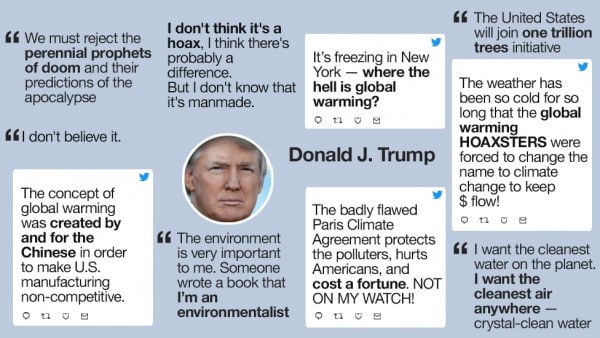
Despite all the scientific evidence that various scientists have presented, climate change opponents still argue that there is not enough proof. Prominent political figures — Donald Trump among them — have publicly dismissed climate science as unproven, which gives the “not enough evidence” argument a very large audience.
And, he is not alone. Numerous other comments like these have been made by various people around the globe. The United States has now left the Paris Agreement twice — first in 2020, and again with a withdrawal that took effect on 27 January 2026 — stepping away from the treaty under which countries set their own emissions-cutting targets. Domestically, state-level carbon markets and public environmental campaigns have carried on regardless.
Some people even say that the existing scientific evidence is not real, but fake. They claim that this evidence is from corrupt scientists to help alter public opinion.
2. Personal Reasons
While some people have experienced the effects of climate change first-hand, others haven’t. That is one major reason some people think the whole thing is a hoax: the signal is uneven from place to place, even though the global average is unambiguous. Long-lived species register it even where people do not — see how coniferous forests are responding to a warming climate.
In a place where winters still arrive on time and still feel cold, a global average rise of about 1.5°C can feel abstract. But climate is a long-run statistic, not a single season: it takes decades of data from thousands of land stations, ships, buoys and satellites to see a trend that no one winter can show.
If you have not experienced it yourself, it is easier to assume it is not happening. However, people living in places where rains have become scarce over the years might be quick to believe.
3. Lack of Trust in Science
Since science tells us that climate change is real, some people who don’t believe in science also don’t accept the evidence it offers.
Despite the extensive research done and facts provided, some people still believe that science has no place in the creation and control of the universe. The most recent numbers show the gap clearly: in 2025 the Yale Program on Climate Change Communication found that 69% of Americans think global warming is happening while 15% think it is not, and only 60% understand it is mostly human-caused — 28% still attribute it to natural changes.
This is highly influenced by various high-profile climate change skeptics whose views are like the only truth for their followers. For instance, when politicians and high-profile figures go denying climate change publicly, it gives their audiences permission to believe it is not real.
4. The Myth That Scientists Don’t Agree
This is the most repeated reason of all — and it is simply false. There is a scientific consensus, and it is one of the strongest in modern science. A review of 88,125 climate-related peer-reviewed papers published since 2012 found that more than 99% agree that humans are causing climate change (Lynas et al., Environmental Research Letters, 2021). The earlier Cook et al. (2013) review of nearly 12,000 abstracts published between 1991 and 2011 found 97% agreement among the papers that took a position.
The claim that scientists cannot identify the cause is equally wrong. The IPCC states that it is “unequivocal” that the industrial-era rise in carbon dioxide, methane and nitrous oxide is the result of human activities, and that human influence on the warming climate has “evolved from theory to established fact.” Close to 200 scientific organisations worldwide hold the same position, including the US National Academy of Sciences, the American Geophysical Union, the American Meteorological Society and the American Association for the Advancement of Science. And the popular counter-argument that past extinction events such as the dinosaurs’ prove humans cannot be responsible now is a non-sequitur: forests burned before matches existed, which tells you nothing about who started today’s fire. Scientists identify the human fingerprint by measuring it — including the distinct isotopic signature of fossil-fuel carbon in the atmosphere.
Climate scientists do speak with one voice on this. The genuinely open questions are about how fast, how much and where — not whether. For the current numbers on how much warming is still avoidable, see whether it is too late to stop climate change.
See Related: Ways Climate Change is Affecting Animals
5. Rigid Ideologies and Faiths
Having rigid ideological views is another reason that might lead people to believe that climate change is fake. This is because they have their own beliefs and principles explaining the existence of every living and non-living thing, as well as every activity under the sun.
Making people with such beliefs believe in climate change or global warming might not be that easy. This is especially when they have a network of other believers reinforcing their faith. Climate psychologists describe denial as a social phenomenon rather than a purely individual one.
Sustained denial generally needs a community that reinforces it, which is why arguing with facts alone so often fails — and why a trusted messenger inside a group changes more minds than another chart.
6. It’s a Big Conspiracy
Right from corrupt scientists looking for huge grants, the governments trying to inflict fear on the public, or organized groups like Illuminati, the deniers present so many conspiracy theories to prove that climate change is fake.
However, these are just claims, backed by no real evidence. The idea that all these scientists and research conducted over the years are meant to mislead the public, is even ridiculous. If climate change was indeed fake, wouldn’t we be seeing big oil corporations, who are the main producers of fossil fuels, offering huge grants for scientific research to prove the same?
The documented record actually runs the other way. In 2023, researchers publishing in Science assessed ExxonMobil’s own internal climate projections from 1977 to 2003 and found they had accurately forecast the warming that followed — roughly 0.20°C per decade — and were at least as skilful as independent academic and government models, even as the company publicly cast doubt on that same science. The organised, funded effort to confuse the public is a matter of record. A worldwide conspiracy of scientists is not.
7. Misinformation
Just as the availability of correct information informs various decisions, so does incorrect information or the lack of it. There’s no doubt that misinformation is a major catalyst for climate change denial.
Climate scientist Katharine Hayhoe has long argued that people accept claims largely on the basis of who is making them rather than what the evidence shows. When trusted figures repeat inaccurate claims, a share of the public adopts them — which is precisely the pattern seen with climate change.
People have been given false information and led to believe that climate change is fake.
How Do We Know Climate Change is Real?
The case does not rest on argument — it rests on measurement. Independent teams using different instruments and different methods, among them NASA, NOAA, the UK Met Office, Berkeley Earth, the Japan Meteorological Agency and the World Meteorological Organization, track the climate separately, and their records agree. Here is what those scientists and environmental leaders actually measure.
Let’s take a look at some of these facts and evidence of climate change:
The Rise in Global Temperatures
Ever since 1880, scientists have been measuring the earth’s surface temperatures. This is usually conducted on different sites, both on the ground and the ocean.
Earth’s average surface temperature in 2024 was about 1.47°C (2.65°F) warmer than the 1850–1900 pre-industrial average, according to NASA — the warmest year in the 145-year record. The World Meteorological Organization put the same year at roughly 1.55°C and confirmed it as the first calendar year measured above 1.5°C.
The pattern matters more than any single year: the ten warmest years ever recorded are the ten most recent, 2015 through 2024. A run like that does not happen by chance in a stable climate — and it is why an entire generation of careers now exists around measuring and slowing climate change.
Warmer Oceans
The ocean has absorbed roughly 90% of the excess heat trapped by greenhouse gases, which makes it the clearest single record of warming we have. NASA measurements show the top 700 metres (about 2,300 feet) of ocean has warmed by around 0.3°C (0.6°F) since 1969, and 2024 was the warmest year ever recorded for the ocean. That heat reaches down toward the deepest ocean trenches, and the expansion of warming water alone accounts for between a third and a half of global sea level rise. Everyday low-carbon choices at home chip away at the emissions driving it.
As the oceans absorb excess heat from the atmosphere and become warmer, many negative changes take place. For instance, it affects the marine ecosystem and species living there. Things like coral bleaching lead to the destruction of natural breeding grounds for various fish and mammal species, as well as destroying their source of food.
Warmer oceans also mean less reliable seafood harvests, more frequent marine heatwaves, and stronger tropical storms — hurricanes and cyclones draw their energy from warm surface water. Tsunamis are not on that list: they are caused by earthquakes and undersea landslides, not by climate.
Shrinking Ice Sheets
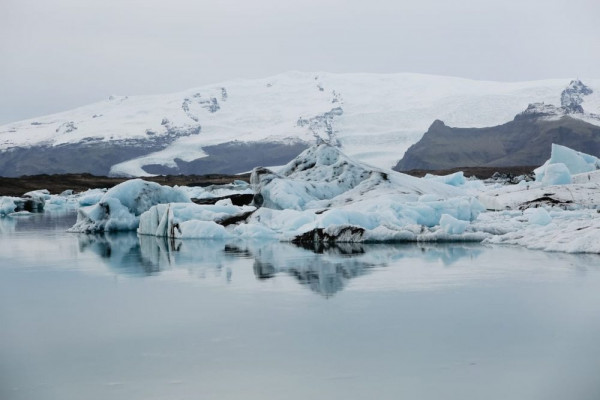
Over the past few decades the Antarctic and Greenland ice sheets have lost mass continuously. NASA’s GRACE and GRACE-FO satellites weigh the ice sheets from orbit by detecting tiny changes in Earth’s gravity field, and they show Antarctica losing about 136 billion tonnes of ice a year and Greenland about 267 billion tonnes a year. Meltwater from the two ice sheets is responsible for roughly a third of all global sea level rise since 1993.
All this is brought about by increased temperatures, making the ice sheets less stable. As these ice sheets become unstable, they move towards the oceans, which in return raises the sea levels. Satellite altimetry shows global mean sea level has risen about 102 millimetres — roughly 10 centimetres — since 1993, and the rate has more than doubled, from about 2.1 mm a year in 1993 to about 4.5 mm a year today. Melting land ice supplies about two-thirds of that rise; the thermal expansion of warming water supplies the rest.
See related: What Is the Goal of Wildlife Conservation?
Ocean Acidification
Ocean acidification is the steady decline in seawater pH caused by the ocean absorbing CO2 from the atmosphere. Excess use of fossil fuels is the main cause of high levels of carbon dioxide in the air, which is then absorbed by the oceans leading to acidification.
Since the start of the Industrial Revolution the pH of surface seawater has fallen by about 0.1 units — and because the pH scale is logarithmic, that is a rise in surface ocean acidity of roughly 30%. The driver is straightforward: the ocean absorbs close to 30% of the carbon dioxide humans emit. This is measurable chemistry, not a matter of opinion, and it makes it harder for corals, oysters and plankton to build their shells and skeletons.
Extreme Events
Over the past few decades, the world has experienced numerous extreme weather events. These include heat waves, floods, drought, heavy downpours, etc.
For instance, the US has in the last 50 years, seen a rise in these climate extremes such as extremely high temperature, droughts, and floods. In addition, the number of extremely low temperatures has seen a significant drop over the same period.
The IPCC’s Sixth Assessment Report concluded that human-induced climate change is already affecting many weather and climate extremes in every region of the globe, and that the evidence for stronger heatwaves, heavy rainfall, droughts and tropical cyclones has strengthened since its previous assessment. The cost is counted in lives: after Hurricane Maria struck Puerto Rico in September 2017, a George Washington University study commissioned by the territory’s own government estimated 2,975 excess deaths in the six months that followed — a figure Puerto Rico then adopted as the official toll.
Glacier Retreat
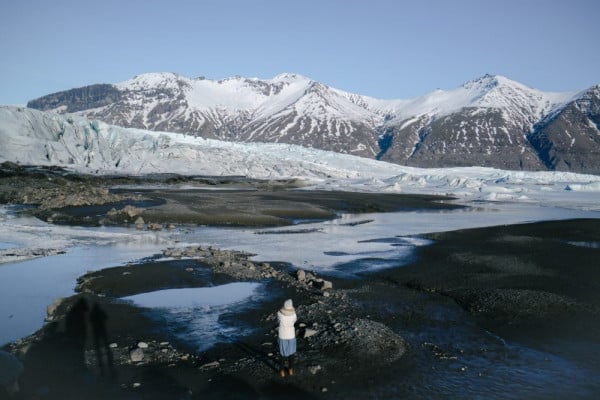
Glacial retreat has been evident in various places around the world since the 1850s. Retreating of glaciers means that its terminus extends less down the valley than it previously used to. Effects of glacier retreats can be seen globally right from the Himalayas, Alps, Africa, Alaska, and all the way to Andes Rockies.
More ice melt and less snowfall are the direct causes, and rising global temperatures are the reason. The scale is now measured precisely: the World Glacier Monitoring Service recorded a loss of 450 billion tonnes of glacier mass in the 2024 hydrological year, and 2022–2024 was the largest three-year loss on record, with all 19 of the world’s glacier regions losing mass three years running.
Glacier retreat, in many ways, affects the natural habitats in these mountains, mountain recreation activities, availability of fresh water, and plant growth. And this is never a positive thing.
See Related: Is It too Late to Stop Climate Change? Fast Facts to Know
Are the Climate Change Deniers Wrong?
Yes. On the two central questions — is the planet warming, and are humans the cause — the deniers are wrong, and have been for decades. Climate scientists still debate regional detail, feedback strengths and timelines, but not the basics. If you want the argument in short, memorable form, these climate change quotes make the case better than most explainers.
It’s pretty clear how climate change is affecting the planet, putting different ecosystems at risk, and making the future of our children so uncertain.
Humans are the main cause of modern climate change — that is the settled finding, not an open question — and it is also the hopeful half of the answer. A problem we created is a problem we can act on, through the energy systems we build, the policies we vote for and the emissions we cut.
Every year of delay narrows the options and raises the cost. The useful question is no longer whether climate change is fake, but how fast we can cut emissions — and how much we can protect while we do it.
Related Resources
- 13 Celebrity Environmentalists You Need to Know
- 13 Top Environmental Organizations in India
- 13 Top Environmental Organizations in Europe
See Related: Sarah Ott’s Climate Change Conversion: From Skeptic to Science Educator
See Related: Guardians of the Globe: The Incredible Animals That Are Helping Fight Climate Change