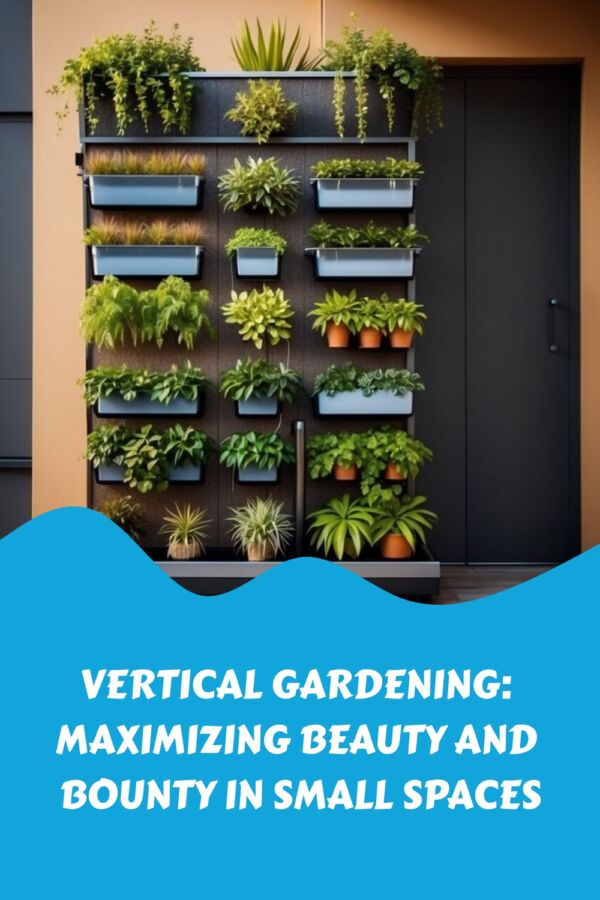
Vertical gardening uses trellises, shelves, hanging containers, stacked planters, or planted wall systems to grow upward instead of spreading across valuable floor or ground space. It can support vegetables, herbs, fruit, flowers, and foliage on a balcony, patio, fence, wall, or compact yard.
For most beginners, the most reliable setup is a large container paired with a freestanding trellis or a sturdy shelf holding individual pots. Both approaches keep roots accessible, simplify watering, and avoid fastening a heavy, wet planting system directly to a building.
Vertical Gardening at a Glance
- Choose a system according to sunlight, root volume, mature plant weight, wind, water access, drainage, and maintenance access.
- Use trellises or cages for climbing crops, shelves for separate containers, and modular wall planters only where irrigation and waterproofing can be managed.
- Warm-season vegetables usually need six to eight hours of direct sun. Many cool-season leafy crops can produce with three to five hours.
- Containers dry faster than garden soil and may need daily checks during hot or windy weather.
- Account for the weight of wet soil, secure every support, and route drainage away from walls, doors, neighbors, and walkways.
What Is Vertical Gardening?
Vertical gardening is the practice of arranging plants and their supports so that growth occupies height rather than relying entirely on horizontal space. The term covers three distinct approaches:
- Climbing or trained plants: Roots remain in the ground or in a conventional container while stems grow on a trellis, cage, arch, net, or wire system.
- Vertically arranged containers: Individual pots, wall pockets, hanging baskets, shelves, railing planters, or stacked modules place several root zones above one another.
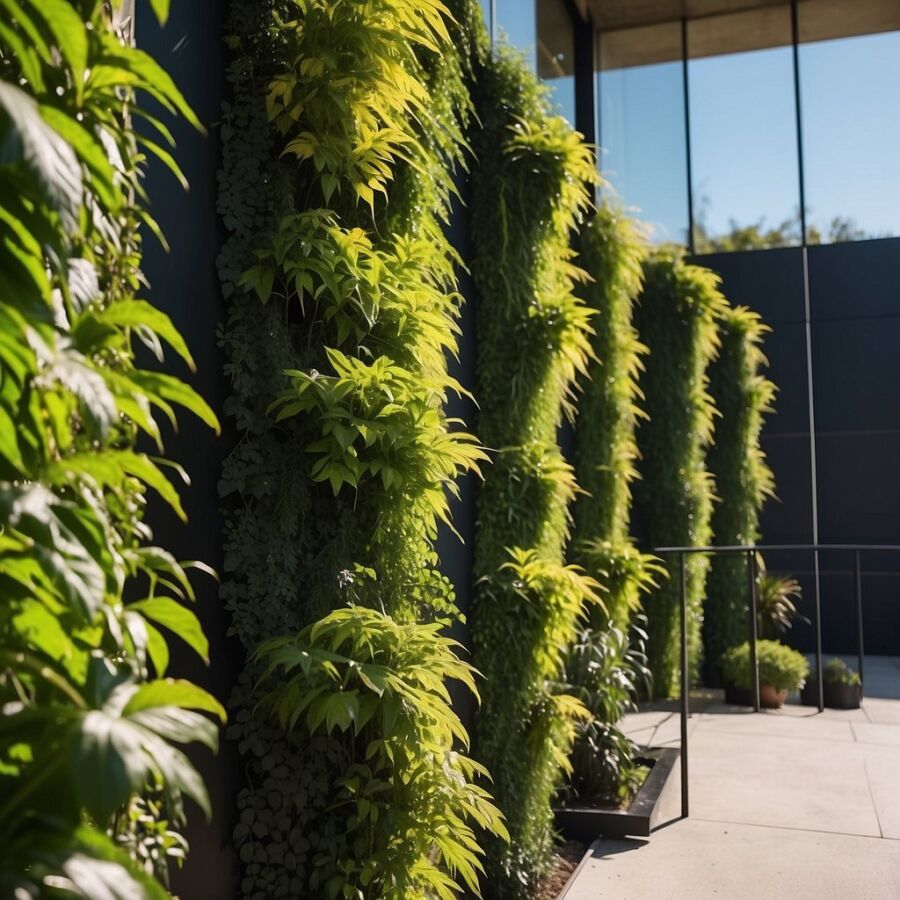
- Living walls: Plants grow from modules, troughs, felt pockets, or other systems attached to a vertical surface, usually with integrated irrigation and drainage.
These approaches have different structural and maintenance requirements. A pea vine trained up netting is simple and light. A fully planted modular wall holds wet growing medium, irrigation tubing, and numerous plants, making it much heavier and harder to service.
Choose the Right Vertical Garden System
The best system is not necessarily the one that holds the most plants. It is the one that fits the site and remains easy to water, inspect, prune, and repair.
| System | Best uses | Complexity | Main tradeoff |
|---|---|---|---|
| Freestanding trellis or cage | Beans, peas, cucumbers, indeterminate tomatoes, flowering climbers | Low | The support must handle the mature crop, wet foliage, and wind without tipping. |
| Wall trellis, cables, or netting | Lightweight vines and trained ornamentals | Low to medium | Fasteners and wall clearances must suit the building material and plant. |
| Shelves with individual pots | Herbs, leafy greens, strawberries, flowers, small houseplants | Low | Upper shelves can shade lower plants, and the frame must be secured against tipping. |
| Hanging or railing planters | Strawberries, herbs, trailing flowers, compact greens | Low | Small containers dry quickly and must be secured against wind or falling. |
| Stacked pots or tower planters | Herbs, lettuce, strawberries, compact flowers | Medium | Water distribution may be uneven, and crowded pockets restrict root volume. |
| Modular living wall | Decorative foliage, compact herbs, selected greens | High | Requires reliable irrigation, controlled drainage, waterproofing, and service access. |
For food production, a container-and-trellis setup usually provides more root space and fewer irrigation problems than a shallow wall-pocket system. For ornamental planting, shelves and modular panels offer more design flexibility, provided every plant remains reachable.

How to Start a Vertical Garden
- Decide what you want to grow. Start with a short crop list. A herb shelf, cucumber trellis, strawberry tower, and decorative living wall need different containers, light levels, and supports.
- Measure direct sunlight. Observe the location over a normal day rather than estimating from brightness. The University of Maryland Extension recommends roughly six to eight hours of direct sun for warm-season crops and three to five hours for many cool-season vegetables.
- Check structure, wind, permissions, and drainage. Confirm that the wall, railing, floor, or freestanding frame can carry the wet system. Renters and apartment residents should review building rules and the broader considerations in this apartment gardening guide.
- Select the simplest suitable system. Use a trellis for plants that naturally climb, shelves for flexible container arrangements, and wall pockets for compact plants with modest root systems.
- Provide enough root volume. Tomatoes and cucumbers generally need much larger containers than herbs or lettuce. As a starting point, the University of Maryland Extension’s container guidance places large vegetable crops in containers of roughly eight to ten gallons and 12 to 16 inches deep.
- Use containers with drainage and a suitable potting mix. Avoid dense garden soil in wall pockets and pots. Use a container mix that drains while retaining enough moisture, and confirm that every level has an unobstructed drainage path. Readers assembling a multi-pot system may also find these inexpensive nursery pots useful.
- Install supports before plants become large. Set trellises, cages, anchors, and irrigation lines before transplanting whenever possible. Use stronger mesh or framing for vigorous crops and heavy fruit.
- Plant, water, and test the complete system. Water every container thoroughly, watch where runoff travels, check for leaning or movement, and confirm that each plant can be reached without climbing or removing other pots.
Weight warning: Wet containers are much heavier than empty pots. University of Maryland Extension notes that a moist 20-inch container may weigh about 100 pounds. On balconies and roof terraces, place heavy containers only where the structure can support them and obtain property-specific guidance when the load is uncertain.
Best Plants for Vertical Gardening
Choose plants according to growth habit and root needs, not simply because they fit into a planting pocket. Natural climbers make efficient use of trellises, while compact herbs, greens, strawberries, and flowers work well in shelves, towers, and hanging containers.
| Plant or group | Best setup | Typical light | Practical note |
|---|---|---|---|
| Pole beans | Teepee, net, arch, or tall trellis | Six to eight hours | Install the support before sowing and anchor it for wind. |
| Peas | Netting, twig support, or lightweight trellis | Three to five hours or more | A good cool-season choice for a moderately sunny wall. |
| Cucumbers | Sturdy trellis with a large container | Six to eight hours | Choose a compact or vining cultivar suited to containers and train stems regularly. |
| Indeterminate tomatoes | Strong cage, string system, or trellis | Six to eight hours | Use a large container and support both vines and heavy fruit clusters. |
| Strawberries | Tower, hanging basket, shelf, or broad wall pocket | Six or more hours for strong fruiting | Keep moisture even and replace poorly performing plants as needed. |
| Lettuce and other leafy greens | Shelves, wall pockets, railing planters, or towers | Three to five hours or more | Useful where afternoon shade reduces heat stress. |
| Herbs | Separate pots on shelves or in broad pockets | Species-dependent | Group plants with similar water needs; keep spreading mint in its own pot. |
| Flowering climbers and trailing flowers | Trellis, arch, hanging basket, or railing planter | Species-dependent | Select non-invasive species suited to the local climate and exposure. |
Plants to Avoid or Use Carefully
- Regionally invasive vines: Check local invasive-species lists before planting fast-spreading ornamentals. English ivy, for example, is invasive in parts of the United States and can spread into natural areas or climb trees.
- Large squash and melons on light supports: Mature vines and fruit can overwhelm thin netting. Use a purpose-built structure and fruit slings when growing heavy crops above ground.
- Large-rooted crops in shallow pockets: Tomatoes, cucumbers, and similarly demanding plants perform poorly when their roots are confined to small wall cells.
- Woody vines directly against vulnerable walls: Some vines enter gaps, hold moisture, or become too heavy for lightweight cladding and gutters.
- Plants with incompatible water needs: Drought-tolerant herbs and moisture-loving greens are difficult to manage on the same irrigation line.
DIY Vertical Garden Ideas
A useful DIY project begins with the plants and site constraints. Build only as much structure as you can secure, water, and reach comfortably.
Trellises, Teepees, and A-Frames
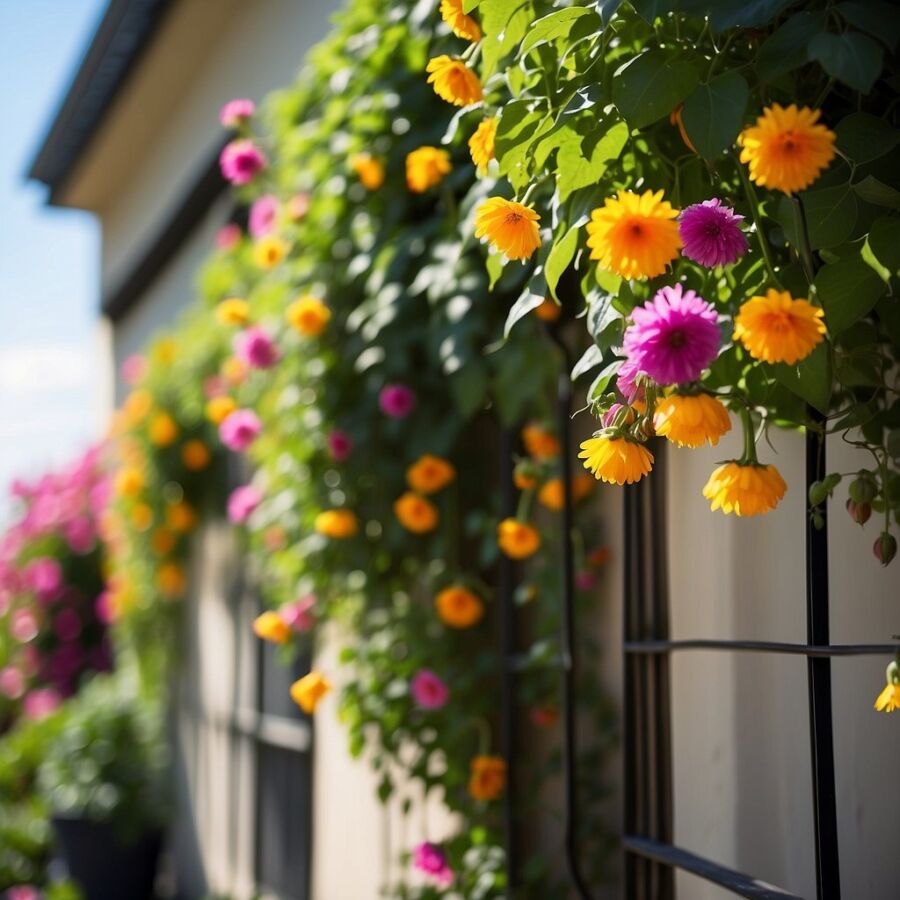
For climbing vegetables, arrange bamboo canes into a teepee, stretch garden netting between posts, or build an A-frame from rot-resistant lumber. The base should be wide enough to resist tipping, and every connection should tolerate the weight of wet foliage and moving vines.
A trellis can also create a narrow shaded area for lettuce or other cool-season greens. Avoid blocking all light from lower containers, and position the structure so mature vines remain accessible from both sides.
Shelves, Railing Planters, and Hanging Baskets
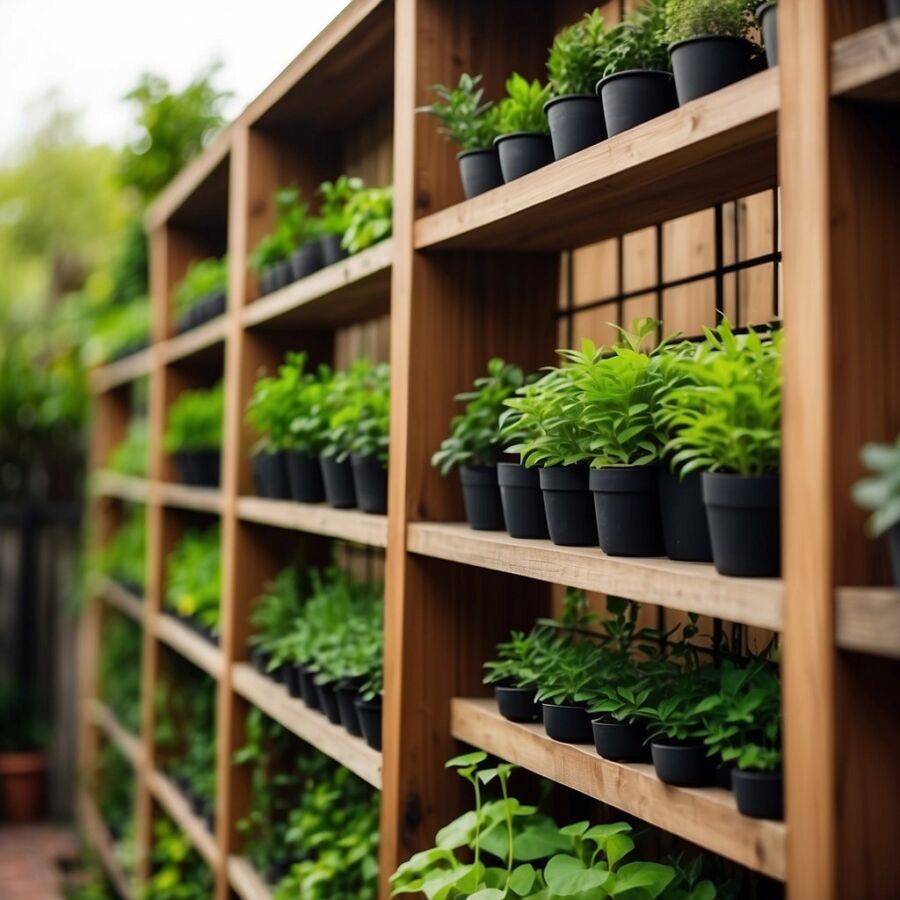
Shelving keeps plants in separate containers, making it easier to change their positions, replace potting mix, isolate pests, and group species by water demand. Use lower shelves for heavier pots and secure tall units to prevent tipping.
Railing planters and hanging baskets preserve floor space but are exposed to wind and rapid drying. Use hardware designed for the railing or overhead structure, add a secondary safety attachment where appropriate, and keep runoff away from areas below.
Stacked Pots and Tower Planters
Stacked systems work well for lettuce, compact herbs, strawberries, and small flowers. Place the largest, heaviest section at the base, keep the tower level, and rotate a freestanding unit when one side receives substantially more light.
Test the watering pattern before planting. Water may bypass some pockets or leave the lower levels saturated. Separate emitters or slower watering often provides more even moisture than pouring a large volume into the top.
Pallet Gardens, With Material Safeguards
A pallet can act as a frame for separate pots or planting pockets, but reclaimed wood has an uncertain history. Use only a clean pallet from a traceable source. An ISPM 15 treatment mark may include HT for heat treatment or MB for methyl bromide fumigation. Avoid MB-marked, painted, stained, oily, odorous, visibly contaminated, or unknown pallets.
An HT mark describes the pest-treatment method; it does not prove that the wood remained free of chemicals or spills during use. For edible plants, the more cautious design is to attach food-safe pots or liners rather than placing roots directly against reclaimed boards.
Living Walls and Modular Planter Systems
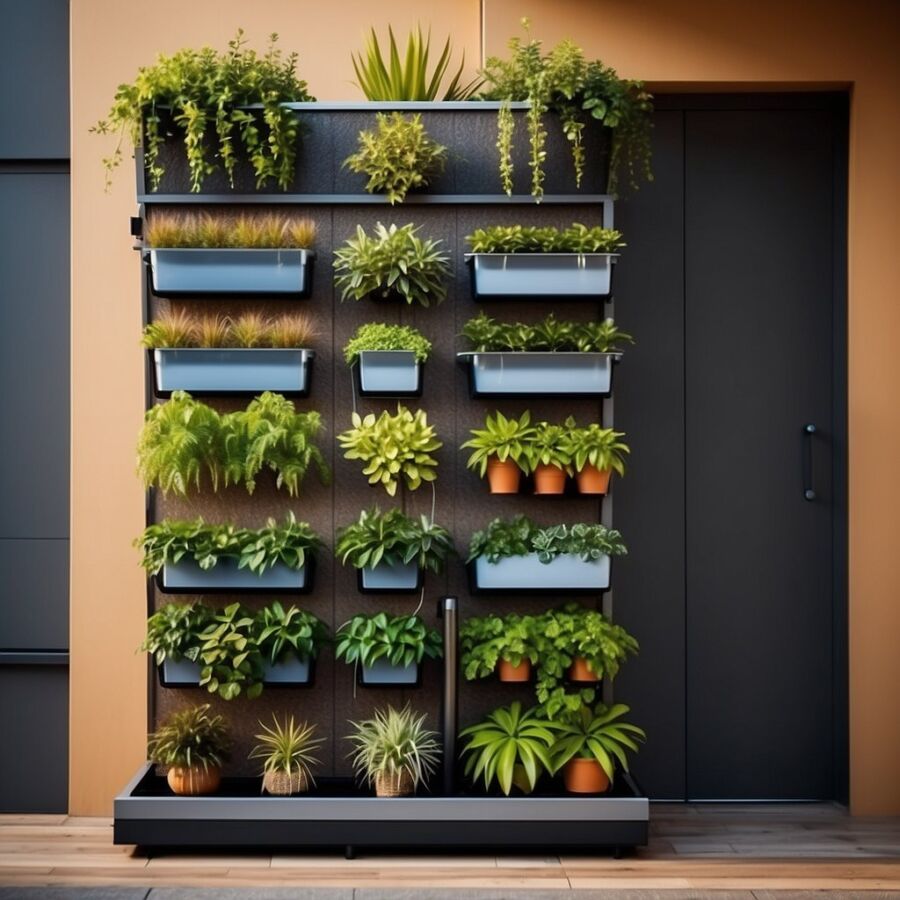
A vine-covered façade and a living wall are not the same system. In a green façade, roots grow in soil or a conventional container and stems climb a separate support. In a living wall, many plants and their growing medium are held in modules attached to the vertical surface.
The Royal Horticultural Society describes living-wall systems as planted panels, boxes, or pockets that commonly depend on irrigation. Before installing one, plan for:
- A waterproof backing or sufficient air gap between wet components and the building.
- A drainage route that does not stain cladding, create slippery surfaces, or affect neighboring properties.
- Accessible emitters, filters, pumps, reservoirs, and shutoff points.
- Plants with compatible light, temperature, and moisture requirements.
- A safe way to reach every module for pruning, replacement, and pest inspection.
- A support and fastening system rated for the saturated installation, not merely its empty weight.
Can a Living Wall Work Indoors?
An indoor system can work when the location provides adequate window light or suitable grow lights, waterproof trays, controlled drainage, airflow, and convenient access. Check humidity around windows and walls, especially in cool climates where condensation already occurs.
Use indoor plants for greenery and enjoyment, not as a substitute for ventilation or air filtration. A peer-reviewed analysis published in the Journal of Exposure Science & Environmental Epidemiology found that chamber-based plant studies do not translate into meaningful air cleaning in typical buildings.
How to Maintain a Vertical Garden

Check Moisture at More Than One Level
Do not assume the top and bottom containers dry at the same rate. Test several pockets with a finger, wooden skewer, or moisture meter, then water thoroughly enough to moisten the root zone without leaving containers in standing water.
During hot, dry, or windy weather, small containers may need daily or even more frequent attention. A timer-fed line can reduce routine work, but it does not replace inspections for blocked emitters, leaks, and uneven flow. See this overview of drip irrigation systems when planning a multi-container installation.
Feed According to the Crop and Product Label
Frequent watering can move nutrients out of container mix. Use a fertilizer formulated for container plants and follow its label rather than applying a fixed schedule to every species. Overfeeding can damage roots and produce weak, excessive foliage.
Train, Prune, and Harvest Regularly
Guide young stems before they tangle. Use soft ties that do not cut into growth, reposition vines as they lengthen, and add slings beneath heavy fruit. Harvest edible crops promptly so the structure does not carry avoidable weight.
Inspect Plants and Hardware Together
- Look beneath leaves and around growing tips for pests or disease symptoms.
- Remove dead or diseased material and preserve airflow between plants.
- Check anchors, ties, shelving joints, hooks, and railing attachments after storms or strong wind.
- Clear drainage holes and flush irrigation lines when flow becomes uneven.
- Replace compacted potting mix and damaged containers before the next growing season.
Common Vertical Gardening Mistakes
- Choosing a planter before choosing plants: The system may not provide enough light, root space, or support for the eventual crop.
- Underestimating wet weight: Soil, water, foliage, and fruit can turn a light-looking installation into a substantial structural load.
- Ignoring wind: Tall trellises, hanging pots, and broad foliage can behave like sails.
- Allowing runoff against a wall: Repeated moisture may stain surfaces, damage finishes, or create conditions for rot and mold.
- Using small pockets for demanding crops: Restricted roots make watering less forgiving and limit productive growth.
- Combining plants with conflicting needs: A single irrigation schedule rarely suits drought-tolerant herbs and moisture-loving greens equally well.
- Building beyond reach: An impressive upper tier is not useful when it cannot be watered, harvested, or repaired safely.
- Using reclaimed materials without checking them: Unknown pallets, painted metal, and brittle containers may introduce contamination or failure risks.
- Expecting houseplants to solve indoor air quality: Plants can improve the appearance of a room, but ventilation and filtration do the meaningful air-cleaning work.
Frequently Asked Questions
What is the easiest vertical garden for beginners?
A large container with a freestanding trellis, or a sturdy shelf holding separate pots, is usually easiest. Both systems provide accessible roots, straightforward drainage, and fewer waterproofing problems than a planted wall.
Which vegetables grow best vertically?
Pole beans, peas, cucumbers, and indeterminate tomatoes naturally benefit from trellises or cages. Lettuce, compact greens, herbs, and strawberries work well in shelves, towers, railing planters, and broad wall pockets.
How often should a vertical garden be watered?
There is no universal schedule. Check moisture at several levels and water when the root zone begins to dry. Small containers may need daily or more frequent attention during hot, dry, or windy weather.
Can I create a vertical garden on a balcony?
Yes, provided the balcony can support the wet weight and the system is secured against wind. Confirm building rules, protect surfaces, and route drainage so water does not fall onto neighboring property or public areas.
Can a vertical garden grow indoors?
Yes. It needs adequate daylight or suitable grow lights, waterproof drainage, airflow, and access for maintenance. Decorative plants should not be treated as a substitute for mechanical ventilation or air filtration.
Can a vertical garden damage a wall?
It can if wet growing medium, runoff, invasive roots, or unsuitable fasteners remain in direct contact with the structure. Use an air gap or waterproof backing, control drainage, choose compatible plants, and attach supports according to the wall material.
Start With a System You Can Maintain
A small, serviceable setup will usually outperform an elaborate wall that is difficult to water or repair. Begin with one suitable location, one support type, and a few plants with similar light and moisture needs. Test the structure and drainage, learn how quickly the containers dry, and expand only after the first section is working reliably.
The practical goal is not to fill every available inch. It is to use height without creating avoidable problems below it.