Short answer: The available evidence does not support describing Bath & Body Works candles as acutely toxic to most people when they are used occasionally and according to the label. They are still a scented combustion product. Many current formulas use a soy-based wax blend that includes paraffin and hydrogenated palm oil, and burning them adds particles and fragrance-related compounds to indoor air.
For most households, the sensible approach is exposure control rather than panic: ventilate the room, trim the wicks, limit each burn to four hours, keep the flame away from children and pets, and stop using the candle if it causes coughing, wheezing, eye or throat irritation, headache, or nausea.
Fact-checked July 29, 2026. This article evaluates current manufacturer disclosures, peer-reviewed studies, government safety guidance, and veterinary poison-control information. It is not a substitute for personal medical or veterinary advice.
Key takeaways
- Bath & Body Works calls its candle wax a soy blend, but current product ingredient lists can include hydrogenated soybean oil, paraffin, and hydrogenated palm oil.
- Burning a scented candle can increase indoor particulate matter and expose occupants to fragrance compounds. The amount depends on the product, flame, wick, room size, ventilation, burn duration, and number of candles.
- The reviewed evidence does not establish that occasional household candle use causes infertility, diabetes, attention-deficit disorders, breast cancer, or liver cancer. Those claims in the previous version of this article were not adequately supported.
- People with asthma, rhinitis, or fragrance sensitivity may experience symptoms even when another person in the same room does not.
- Strong fragrance can irritate some pets, and birds are particularly sensitive to airborne contaminants. No fragranced candle can be assumed safe for every animal.
- The most immediate, well-established candle hazard is fire. A stable holder, supervision, clearance from combustible materials, and proper wick care matter regardless of wax type.
What are Bath & Body Works candles made of?
Bath & Body Works states that its candles use a soy-blend wax and directs customers to the bottom label or the product-specific web page for a complete ingredient list. Current three-wick product pages identify a combination of hydrogenated soybean oil, paraffin, hydrogenated palm oil, fragrance ingredients, and lead-free wicks.
| Component | Current disclosure | What it means for the reader |
|---|---|---|
| Wax base | Hydrogenated soybean oil, paraffin, and hydrogenated palm oil appear in current product ingredient lists. | The phrase “soy blend” does not mean 100% soy or paraffin-free. |
| Fragrance | Bath & Body Works describes a high concentration of fragrance oils, with ingredients varying by scent. | A fragrance-free conclusion cannot be drawn from the wax description. Check the exact product label. |
| Wicks | Current product pages describe premium lead-free wicks. | The historical lead-wick issue is not a reason to claim that current Bath & Body Works candles contain lead. |
| Container | Most three-wick products use a glass vessel with a decorative lid. | Inspect the glass for cracks or damage and place it on a heat-resistant, level surface. |
Do Bath & Body Works candles contain paraffin?
Yes, current ingredient lists for multiple three-wick candles include paraffin. Calling the product a soy-blend candle is therefore accurate, but describing it as a 100% soy candle would not be. The same distinction applies to many mass-market candles: “soy blend” usually tells you that soy-derived wax is present, not that it is the only wax.
Our separate guide to paraffin wax explains its petroleum origin and the difference between the wax itself, combustion emissions, and the exposure level a person actually receives.
Do they contain formaldehyde or phthalates?
The current product pages reviewed for this update do not justify a blanket claim that every Bath & Body Works candle contains formaldehyde or phthalates as listed ingredients. Fragrance formulations vary, and the product-specific ingredient list is more reliable than a brand-wide assumption.
Formaldehyde can also enter indoor air as a secondary reaction product rather than as an ingredient poured into the candle. The U.S. Environmental Protection Agency notes that compounds released by some fragranced household products can react with indoor ozone and form particulate matter and formaldehyde. That is a reason to ventilate and reduce exposure, but it is not evidence that every scented candle creates a dangerous formaldehyde concentration.
What research says about scented candles and indoor air
A candle can release measurable particles and gases without automatically causing poisoning or chronic disease. “Emits pollutants,” “can trigger symptoms,” and “has been shown to cause a specific illness” are different claims and require different evidence.
| Research | What it found | Important limitation |
|---|---|---|
| Scientific Reports residential air study, 2025 | PM10 at the candle location peaked at 1.52 times the baseline after five minutes. Smaller particles remained elevated at monitoring points farther from the candle over time. | The study measured indoor-air changes and airborne biological material. It did not measure cancer, cardiovascular disease, or other long-term clinical outcomes. |
| Randomized crossover study in mild asthmatics, 2023 | Thirty-six young adults with mild asthma underwent five-hour controlled exposures. Some airway and inflammatory biomarkers shifted after candle exposure, while several systemic measures showed weak or no associations. | This was a short, controlled exposure in a sensitive population at a specified particle concentration. It does not establish the effect of occasional use in every home. |
| Danish cohort study, 2022 | Among 6,757 participants, researchers found no statistically significant association between reported candle-use frequency and hospital cardiovascular or respiratory events. | Candle use was self-reported, the study was observational, and it did not measure individual brands, wax formulas, ventilation, or personal particle exposure. |
Taken together, the evidence supports a measured conclusion. Burning scented candles can worsen measured indoor air and may cause short-term symptoms or biological responses in susceptible people. The available human evidence does not support the previous article’s claim that ordinary candle use has been shown to cause infertility, diabetes, attention-deficit disorders, breast cancer, or liver cancer.
Is paraffin the main concern?
Wax type matters, but it is only one part of the exposure profile. A poorly trimmed wick, an unstable flame, heavy fragrance, several candles burning together, a small room, and limited ventilation can matter as much as the word printed on the wax label.
- Fragrance load: A 100% soy or beeswax candle can still contain a strong fragrance formulation.
- Combustion quality: A long wick, draft, debris in the wax, or unstable flame can produce visible soot.
- Room conditions: Pollutants accumulate more readily in a small, closed room than in a well-ventilated space.
- Duration and quantity: A short burn from one candle is a different exposure from several fragranced candles burning for hours every day.
- Individual susceptibility: A scent that causes no noticeable effect in one person may trigger coughing, rhinitis, headache, or nausea in another.
No burning candle is emission-free. If your main goal is to reduce fragrance exposure, choosing an unscented product with a specific ingredient disclosure is more meaningful than relying on broad labels such as “natural,” “clean,” or “eco-friendly.”
Who should be more cautious?
People with asthma, rhinitis, or fragrance sensitivity
The American Academy of Allergy, Asthma & Immunology notes that strong odors, perfumes, and scented candles can trigger asthma or rhinitis symptoms. This does not mean every reaction is an allergy to a specific ingredient. Smoke, fragrance intensity, and other irritants can also provoke symptoms.
If a candle causes wheezing, chest tightness, persistent coughing, burning eyes, throat irritation, headache, dizziness, or nausea, extinguish it and move to fresh air. People with diagnosed respiratory conditions should follow the exposure guidance supplied by their healthcare professional.
Homes with cats, dogs, or birds
A Bath & Body Works candle is not automatically poisonous to a cat or dog merely because it is in the room. The open flame, hot wax, broken glass, ingestion, smoke, and strong fragrance are all separate hazards, however.
Pet Poison Helpline reports that strong odors and fragrances can cause watery eyes or nose, throat irritation, drooling, vomiting, coughing, wheezing, or breathing difficulty in some animals. Birds require greater caution because their respiratory systems are highly sensitive; the ASPCA advises avoiding essential-oil diffusion around birds.
Keep every candle where an animal cannot reach or knock it over. Give pets access to an unscented area, ventilate the room, and discontinue use if an animal develops symptoms. Labored breathing, panting in a cat, persistent coughing, collapse, or suspected ingestion warrants prompt veterinary advice.
How to burn a Bath & Body Works candle more safely
- Inspect the vessel. Do not use a candle with cracked, chipped, or otherwise damaged glass.
- Ventilate the room. Open a window or use mechanical ventilation when conditions allow, especially in smaller rooms.
- Trim each wick to one-quarter inch. Bath & Body Works recommends trimming before lighting and keeping matches, wick fragments, and other debris out of the wax pool.
- Limit each burn to four hours. Extinguish the candle at four hours and let the wax cool and solidify before relighting, touching, or moving the vessel.
- Use a stable, heat-resistant surface. Avoid drafts and keep the candle at least 12 inches from curtains, bedding, paper, decorations, and other combustible materials.
- Keep the flame in sight. Extinguish the candle before leaving the room, leaving the home, or going to sleep. Keep it away from children and pets.
- Do not extinguish it with water. Use a candle snuffer or blow it out carefully, following the manufacturer’s instructions.
- Respond to symptoms. Visible soot, persistent smoke, coughing, wheezing, headache, eye irritation, nausea, or pet discomfort are reasons to stop using that candle.
The U.S. Fire Administration recommends flameless candles for households that want candle-like light without an open flame. A flameless product also eliminates combustion emissions, although fragranced flameless products can still release scent compounds.
How to choose a lower-exposure candle alternative
“Non-toxic candle” has no single, universally applied consumer standard. Compare products by the specific outcome you care about instead of treating one marketing phrase as a complete safety assessment.
| Your priority | What to look for | What not to assume |
|---|---|---|
| Reduce fragrance exposure | Unscented product; full ingredient disclosure; no added fragrance or essential oil | “Natural fragrance” is not automatically non-irritating. |
| Avoid paraffin | An explicit paraffin-free statement and a named wax such as 100% beeswax or a specified plant wax | “Soy blend” does not mean paraffin-free. |
| Reduce packaging waste | Refillable vessel, reusable tea-light holder, recyclable packaging, or replaceable wax | An “eco-friendly” label does not explain the complete lifecycle. |
| Evaluate palm-derived wax | Specific sourcing information, such as RSPO certification | Plant-derived does not automatically mean responsibly sourced. |
| Protect sensitive pets | Unscented product, good ventilation, secure placement, and close observation | “Pet-friendly” does not guarantee tolerance for every species or animal. |
| Remove flame and combustion risk | Battery-operated flameless candle | A self-extinguishing design still requires supervision while lit. |
For a broader sustainability comparison, see our guide to eco-friendly candles. Readers assessing plant-derived ingredients may also want to review the tradeoffs around palm oil sourcing.
Existing alternatives from the original guide: 2026 verification
The original article recommended the following 12 products. All existing images have been retained, but the list is no longer presented as a ranking of universally “non-toxic” candles. Each entry now reports only what a current manufacturer or retailer listing supports and clearly identifies gaps in availability or composition data.
Affiliate disclosure: Some links below are affiliate links. Our Endangered World may earn a commission from qualifying purchases at no added cost to you. Product formulas, sellers, and availability can change; check the current listing and package before purchasing.
1. Candle-by-the-Hour 80-Hour Horizontal Candle
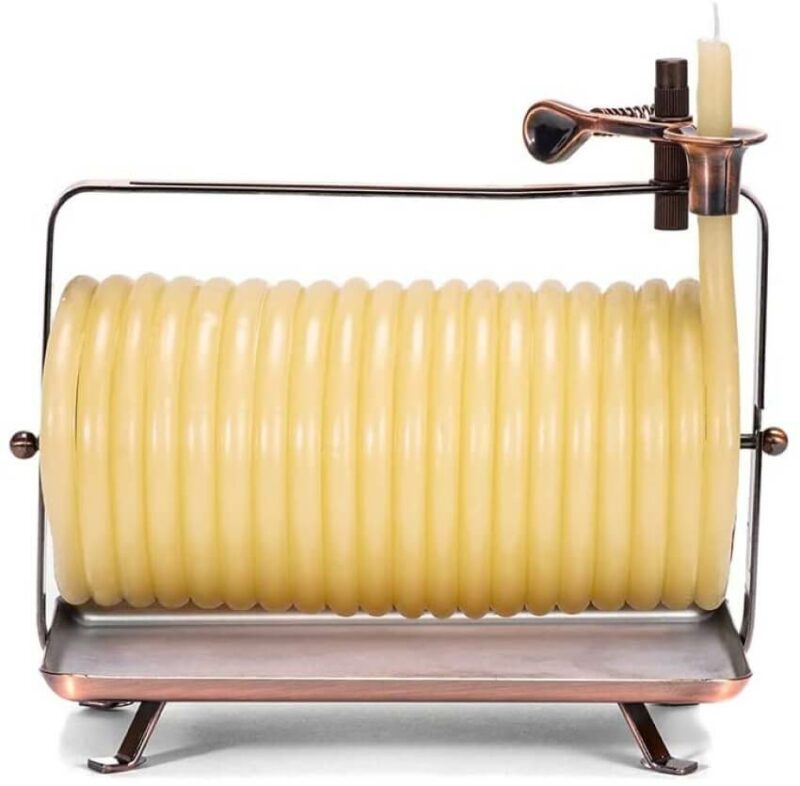
The current listing describes this coil candle as 100% beeswax, with up to 80 hours of total burn time. The user feeds a limited length of the coil through a metal clip, and the listing says the flame extinguishes when it reaches that clip.
This is a useful option for readers who want an explicitly disclosed beeswax product and an adjustable burn interval. The clip does not replace supervision or normal fire precautions. Check the current Candle-by-the-Hour 80-hour listing.
2. Papyrus Tie-Dye Eco-Friendly Birthday Candles
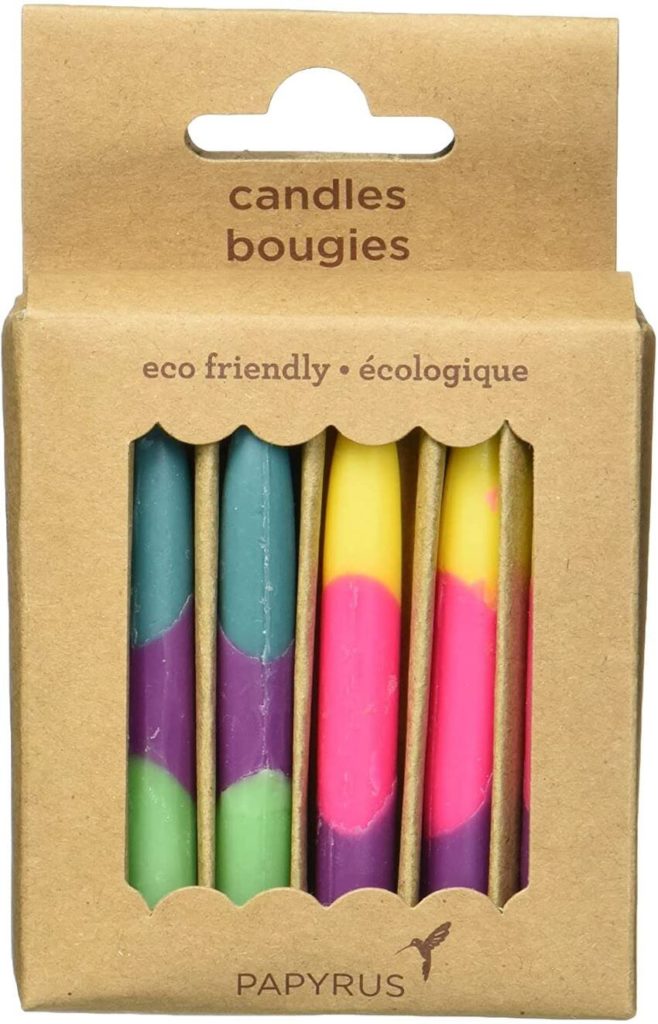
The current product listing is unusually specific: 12 candles made from a blend of 60% beeswax and 40% sustainably sourced, RSPO-certified palm oil, with cotton lead-free wicks. It also describes packaging made from 70% recycled paper and printed with soy inks.
These are short-use birthday candles rather than a room-fragrance substitute. Adult supervision is still required. Check the current Papyrus tie-dye candle listing.
3. Kawthary Aromatherapy Candle Gift Set
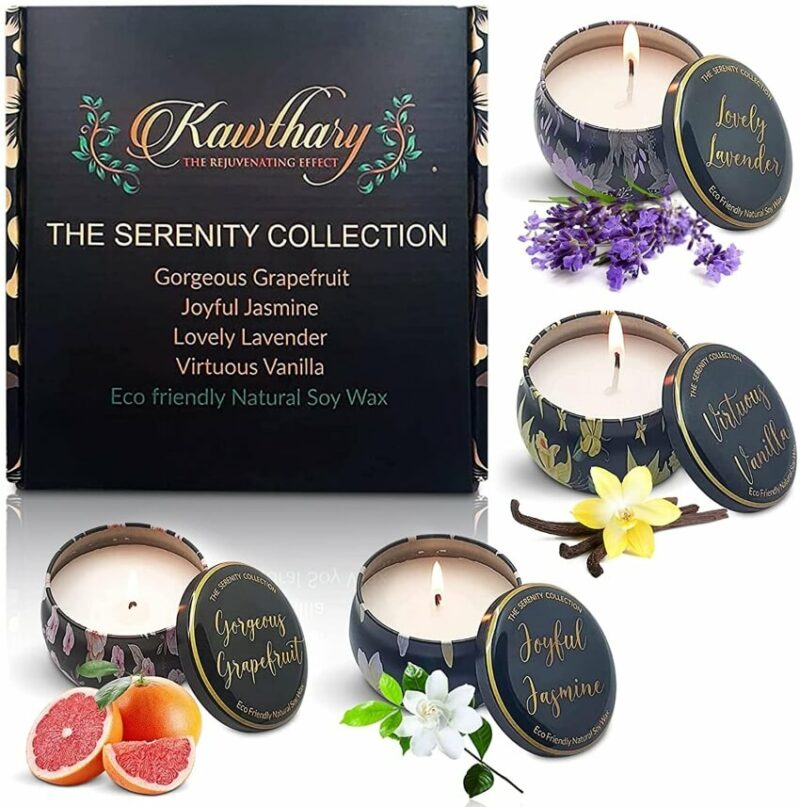
Regional listings for this four-tin gift set describe soy wax and several fragrances, but the exact U.S. listing and current formula could not be reliably confirmed during this update. The previous statements that the ingredients were formally tested for people and pets, contained no formaldehyde, and were universally safe have therefore been removed.
Keep this item on the page only as a legacy product reference. Verify the current package, seller, wax description, fragrance disclosure, and return policy before buying. Check whether the Kawthary set is currently available.
4. Bisenghy Scented Candle Set
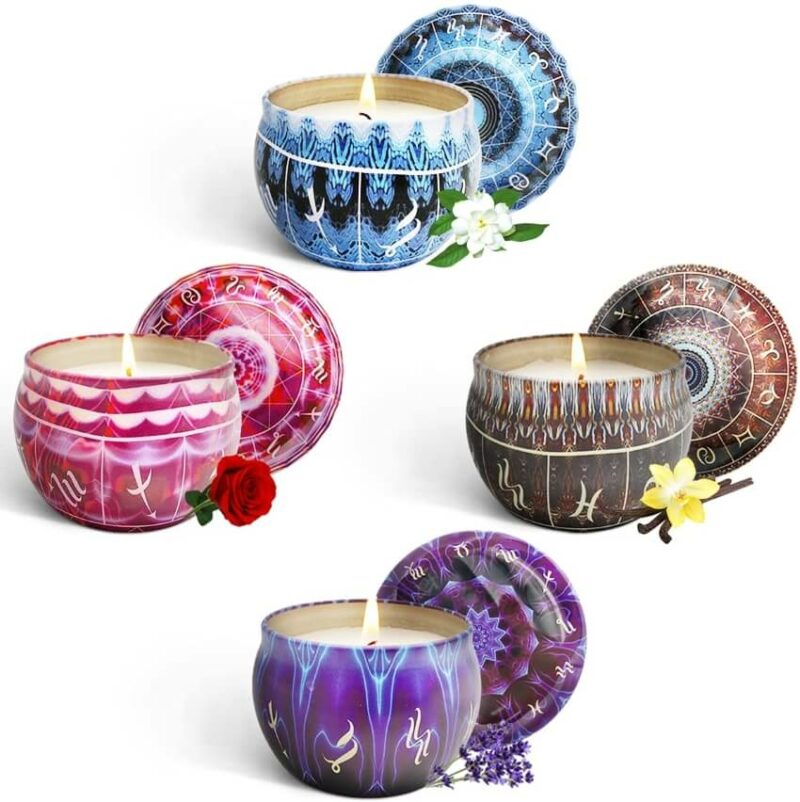
Current regional listings describe this as a set of scented soy-wax candles. That disclosure does not support the old promises that the scents cannot aggravate respiratory symptoms, cannot affect the environment, or are guaranteed safe for every pet.
This may suit someone seeking a small scented gift set, but people with fragrance sensitivity and pet owners should apply the same ventilation and symptom-monitoring precautions used with any scented candle. Check the current Bisenghy listing.
5. One Fur All Pet House Candle
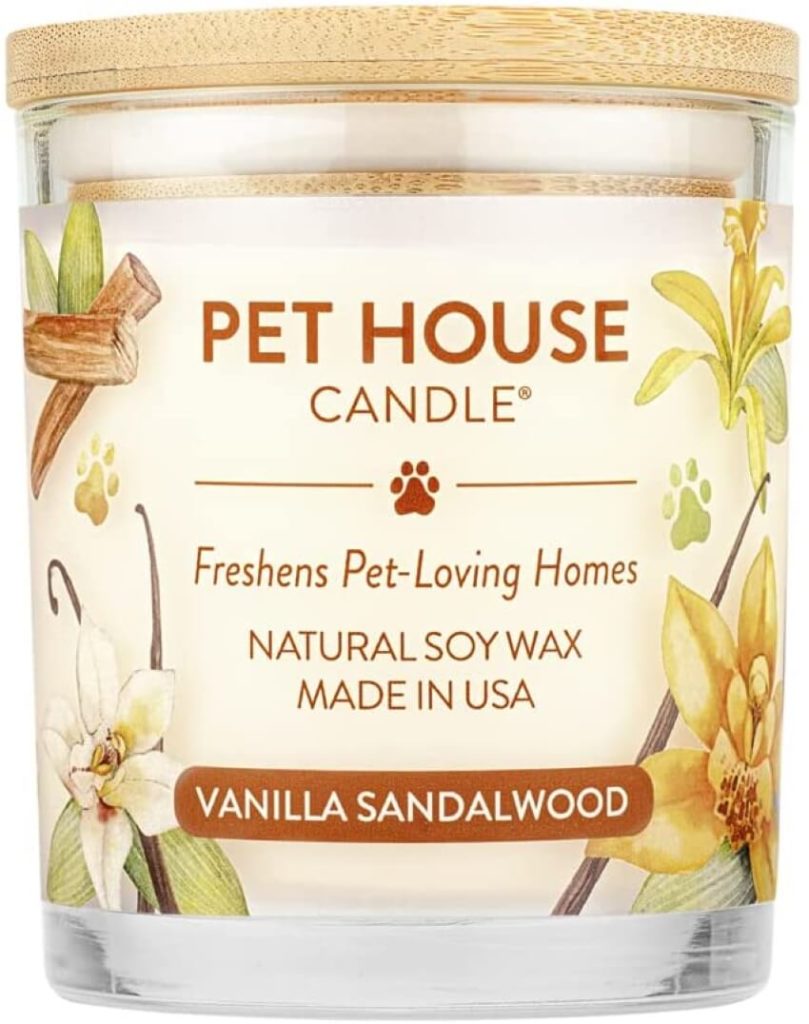
One Fur All currently states that its Pet House candles use plant-based wax and are made without dyes, phthalates, or parabens. The products are marketed to neutralize pet odors and are available in several fragrances.
Those are useful formulation disclosures, but “Pet House” branding does not prove that every cat, dog, bird, or other animal will tolerate the fragrance. Keep the candle out of reach and stop using it if a pet develops eye, nose, stomach, or breathing symptoms. Check the current One Fur All candle listing.
6. Serenibee Beeswax Tea Lights
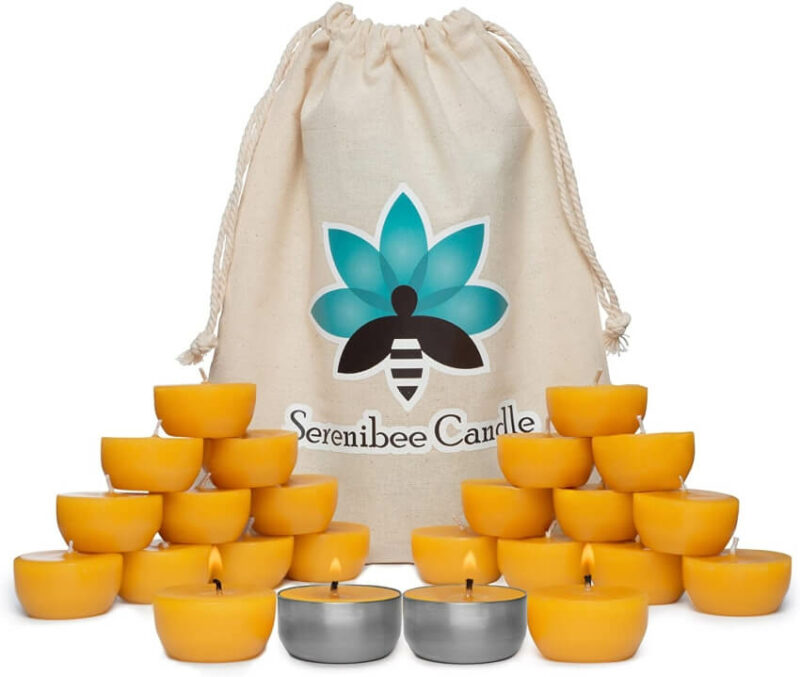
The current Serenibee listing describes 100% Montana beeswax, natural cotton wicks without lead or zinc, no added fragrance, reusable steel holders, and a reusable cotton storage bag.
Among the products retained from the original article, this has one of the clearest disclosures for a reader trying to avoid added fragrance. Beeswax has a mild natural honey odor and still produces combustion emissions when lit. Check the current Serenibee tea-light listing.
7. Foton Pearled Candle
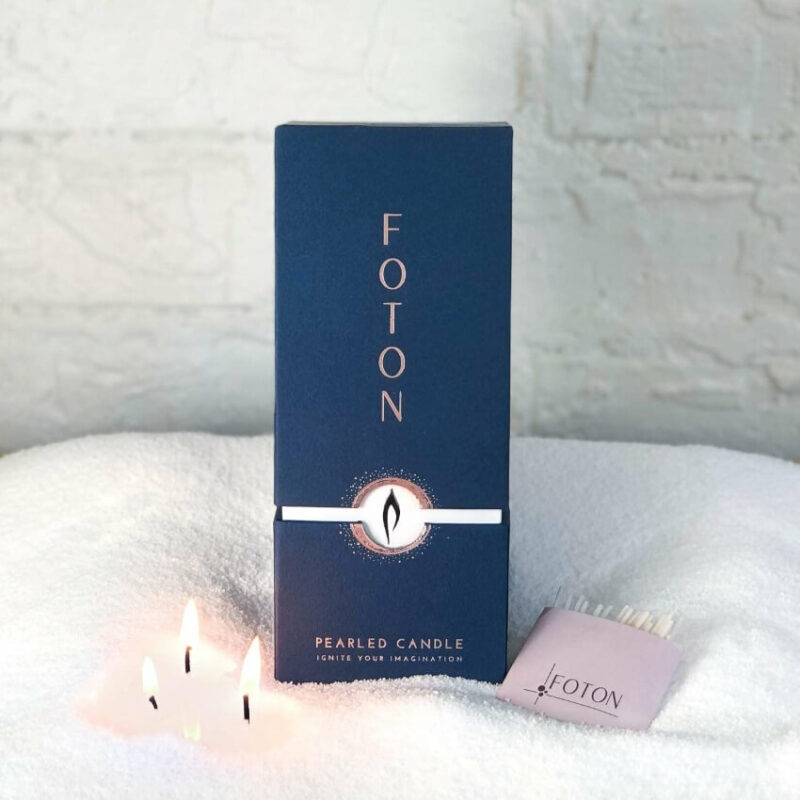
Foton currently describes its pearled candle wax as plant-based, paraffin-free, soy-free, and free of known allergens. The beads can be poured into a suitable heat-resistant container and used with the supplied wicks. Unscented versions are available, while scented versions contain fragrance ingredients.
The refillable format may reduce discarded candle jars. Choose the unscented version when fragrance reduction is the main goal, use only a container approved for candle use, and do not improvise with fragrance additions. Check the current Foton Pearled Candle listing.
8. Purple, Blue, and White Handcrafted Carved Candle
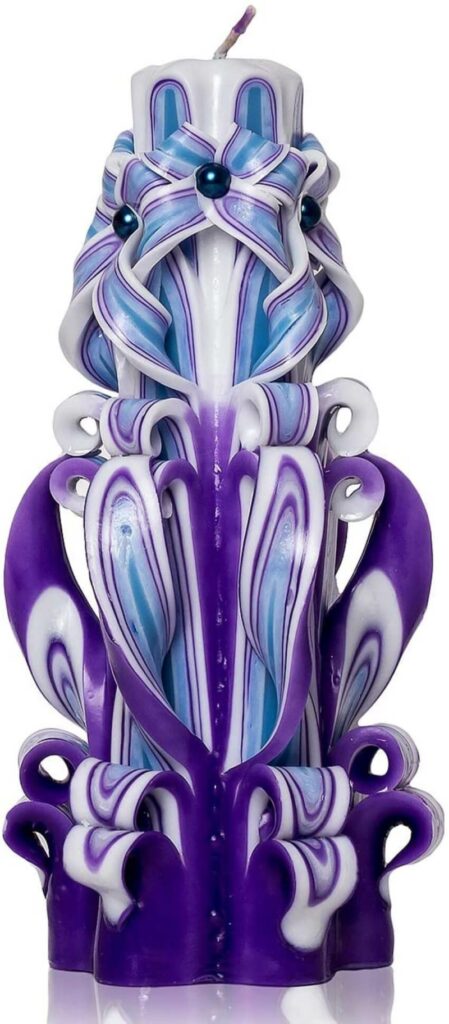
The previous article described this carved candle as containing no paraffin. That claim cannot be retained. The exact original ASIN is no longer reliably verifiable, and a current matching item from the same product line identifies food-grade paraffin wax among its main materials.
This may still appeal as a decorative carved candle, but it should not be recommended to someone specifically avoiding paraffin. Check the original carved-candle listing and current materials.
9. Sundazze Friendship Candle
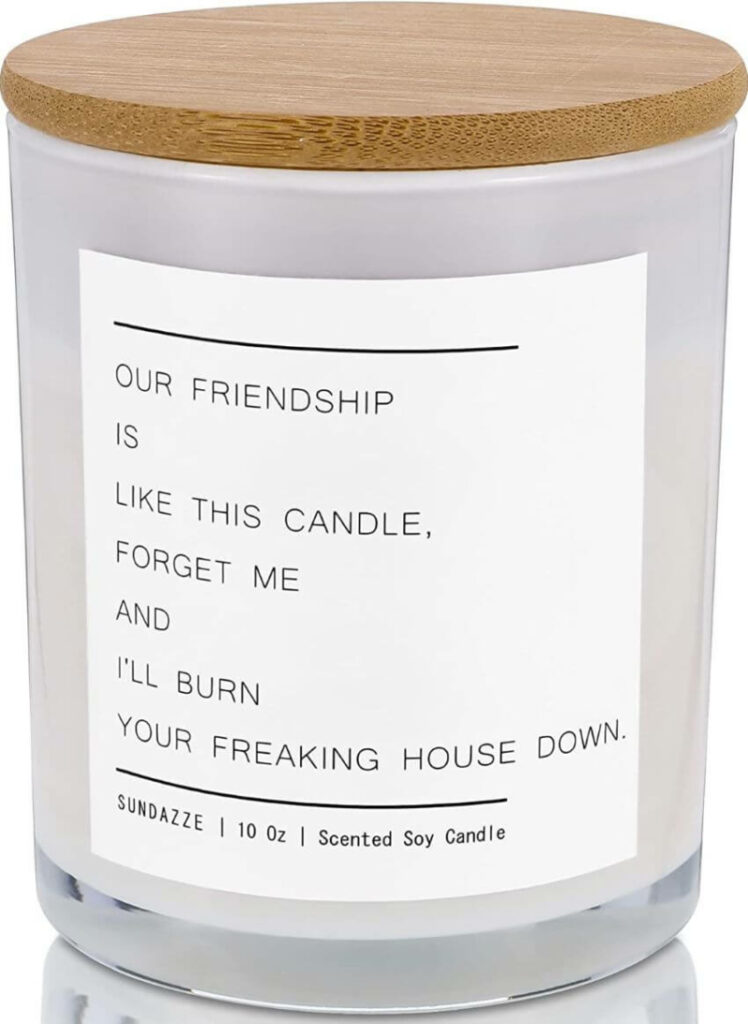
Current regional listings describe the legacy Sundazze product as a large, vanilla-scented soy candle with novelty friendship text. The exact U.S. listing and formulation were not consistently available during this update.
Consider it a novelty gift rather than a verified health-focused recommendation. Confirm the current wax, fragrance, weight, burn instructions, seller, and return terms before purchasing. Check the current Sundazze listing.
10. Candle-by-the-Hour 120-Hour Beehive Candle
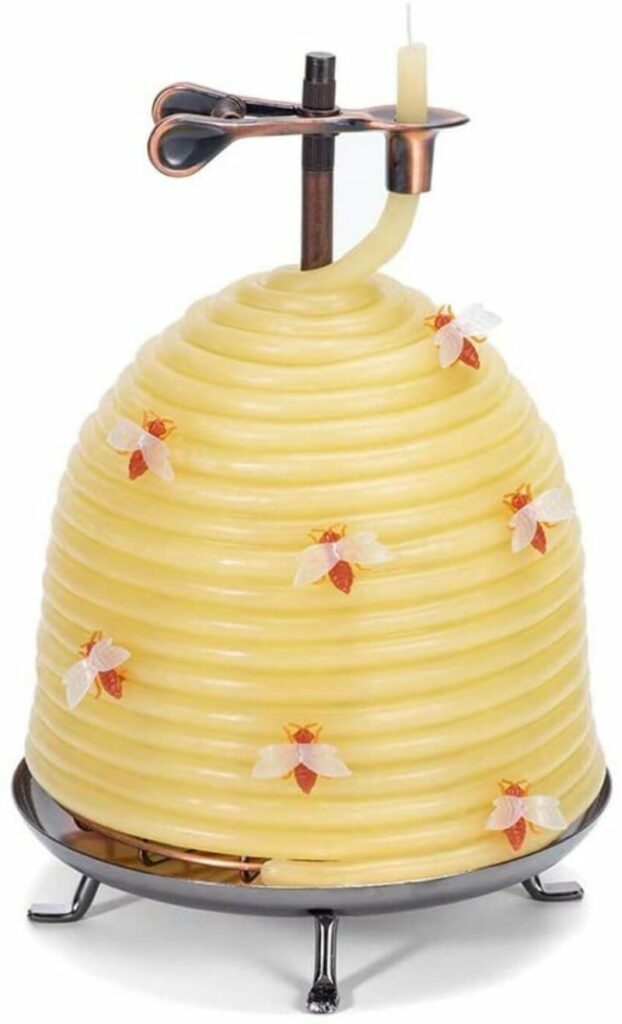
This larger Candle-by-the-Hour model uses a beeswax-coated coil arranged in a beehive shape. Current listings describe approximately 120 hours of total burn time, with a limited length of coil fed through the clip for each session.
The design provides more total wax than the horizontal model and offers a clear beeswax disclosure. Its self-extinguishing clip is a secondary safeguard, not permission to leave the flame unattended. Check the current 120-hour beehive candle listing.
11. Papyrus Black and White Birthday Candles
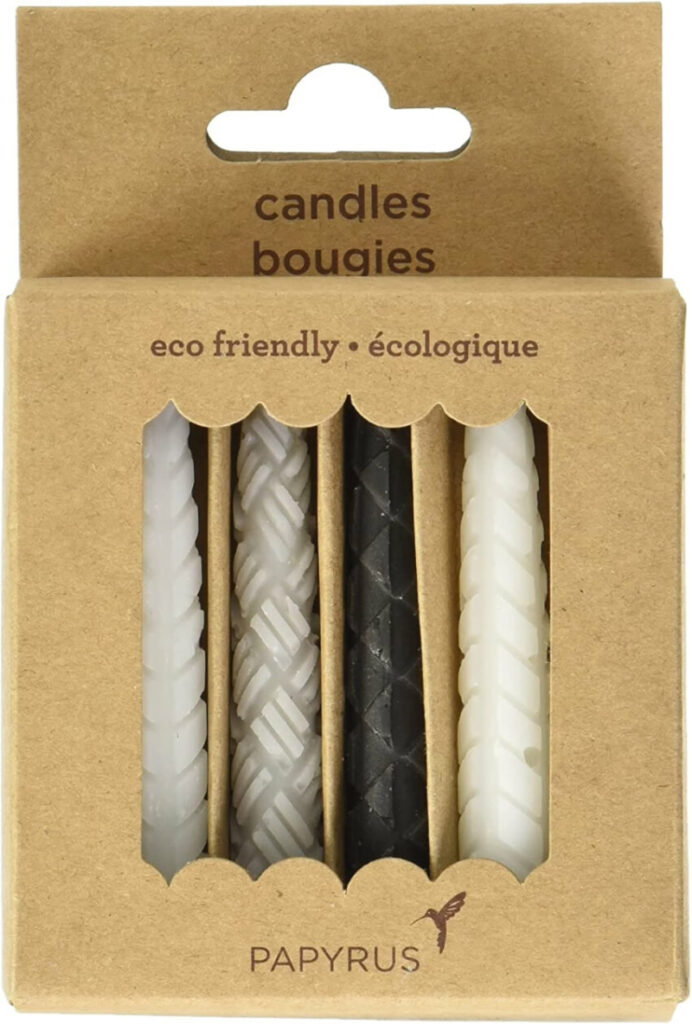
Papyrus currently lists this as a 12-pack containing black, white, and light-brown patterned birthday candles. Unlike the current tie-dye listing, the product page reviewed for this update does not specify the wax percentages.
The old article applied a beeswax-and-palm-oil description to this SKU without adequate current support. Check the package before assuming it uses the same formulation as another Papyrus candle set. Check the current Papyrus black-and-white candle listing.
12. BCMOT Scented Candle Set
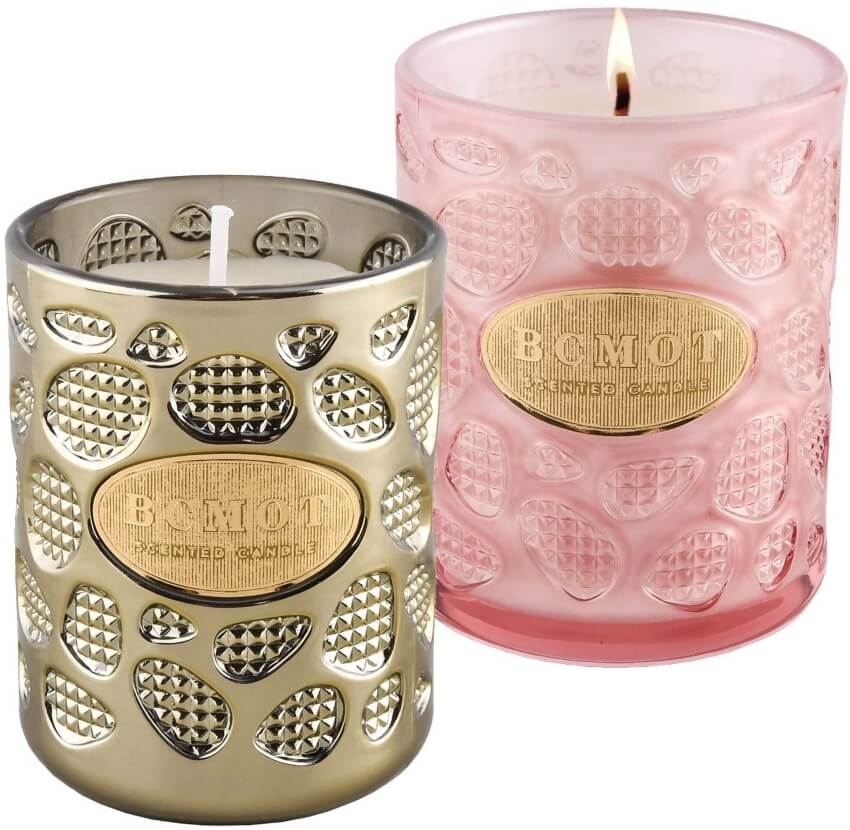
The current listing for the original BCMOT ASIN describes colored soy-blend wax and an approximate burn time of 20 to 30 hours. That is materially different from describing the candle as verified 100% soy or paraffin-free.
This remains a scented product, so the wax description does not remove fragrance or sensitivity considerations. Verify the current ingredients and seller before purchasing. Check the current BCMOT listing.
How this article was researched
No candle in this article was hands-on tested by the author for emissions, burn performance, scent throw, or pet tolerance. Product descriptions are attributed to current manufacturer or retailer listings, which can change without notice.
The health and safety assessment relies on current Bath & Body Works disclosures, peer-reviewed indoor-air and human studies, U.S. government fire and consumer-safety guidance, the EPA, the American Academy of Allergy, Asthma & Immunology, Pet Poison Helpline, and the ASPCA. Seller phrases such as “clean-burning,” “non-toxic,” and “pet-friendly” were not treated as independent proof of zero emissions or universal safety.
Frequently asked questions
Are Bath & Body Works candles toxic?
The available evidence does not support calling Bath & Body Works candles acutely toxic to most people when used occasionally and as directed. They do emit particles and fragrance compounds, however, and can cause symptoms in people with asthma, rhinitis or fragrance sensitivity. Ventilation and shorter burn periods reduce exposure.
What are Bath & Body Works candles made of?
Bath & Body Works describes its candles as using soy-blend wax. Current product ingredient lists can include hydrogenated soybean oil, paraffin, hydrogenated palm oil, fragrance ingredients and lead-free wicks. The exact formula varies by product and should be checked on the label.
Do Bath & Body Works candles contain paraffin?
Yes. Multiple current three-wick candle ingredient lists include paraffin alongside hydrogenated soybean oil and hydrogenated palm oil. Soy blend does not mean 100% soy or paraffin-free.
Do Bath & Body Works candles have lead wicks?
Current Bath & Body Works product pages describe their candle wicks as lead-free. The U.S. Consumer Product Safety Commission also banned the manufacture and sale of candles with lead-cored wicks in 2003.
Are Bath & Body Works candles safe around cats and dogs?
No fragranced candle can be guaranteed safe for every pet. Strong odors can irritate some cats and dogs, while the flame, hot wax and glass vessel create physical hazards. Ventilate the room, keep the candle out of reach and stop using it if a pet coughs, wheezes, vomits, drools or has breathing difficulty.
Are soy or beeswax candles safer than paraffin candles?
Wax type alone does not determine the complete exposure. Soy and beeswax candles still produce combustion emissions, and scented versions still contain fragrance. For reducing fragrance exposure, an unscented candle with a specific ingredient disclosure is a more useful choice than a vague natural or soy-blend label.
How long should a Bath & Body Works candle burn at one time?
Bath & Body Works instructs users not to burn a candle for longer than four hours at a time. Trim each wick to one-quarter inch before lighting, keep the wax free of debris and let the candle cool completely before relighting or moving it.
The bottom line
Bath & Body Works candles are fragranced soy-blend candles that can contain paraffin and palm-derived wax. Burning them affects indoor air, but the available evidence does not justify telling every reader that occasional use will cause severe chronic disease.
If you enjoy a candle and it causes no symptoms, occasional label-directed use with ventilation, a trimmed wick, and proper fire precautions is a reasonable exposure-reduction approach. If the fragrance triggers respiratory or neurological symptoms, a pet appears uncomfortable, or the room cannot be ventilated, choose an unscented candle or a flameless alternative instead.
When comparing replacements, prioritize exact ingredient disclosure over broad “natural” or “non-toxic” language. Our guide to eco-friendly candles can help you assess wax, fragrance, packaging, sourcing, and reuse options without assuming that any burning candle is emission-free.