
In a solar vs wind energy comparison for home use, solar is the more practical choice for most properties. Rooftop and ground-mounted solar systems are modular, quiet, widely supported by installers, and workable in far more locations. A small wind turbine can produce substantial electricity at the right rural property, but it needs a strong wind resource, clean airflow at tower height, adequate land, local approval, and ongoing mechanical maintenance.
The best comparison is based on annual electricity production, total installed cost, maintenance, and site suitability. Rated capacity alone does not tell you how much power either system will deliver.
Solar and wind energy compared at a glance
| Decision factor | Solar energy | Wind energy |
|---|---|---|
| Best residential setting | Most urban, suburban, and rural homes with an unshaded roof or usable ground area | Open rural properties with a verified wind resource and room for a tall tower |
| Resource needed | Useful sunlight; panels still generate on cloudy days at reduced output | Consistent wind at the planned turbine’s hub height, with limited turbulence |
| Installation | Roof-mounted or ground-mounted panels, inverter, electrical work, and optional battery | Turbine, tower, foundation, controls, electrical work, access for installation equipment, and sometimes guy wires |
| When it generates | During daylight hours | Whenever wind speed is within the turbine’s operating range, including at night |
| Output profile | More predictable by season and easier to model from solar data | Potentially high at a good site, but highly sensitive to wind speed, tower height, and turbulence |
| Maintenance | Generally low; monitor output and inspect electrical and mounting components | Higher; rotating equipment, tower hardware, brakes, bearings, and electrical components require inspection and service |
| Noise and visual effects | Silent in operation, with visual changes to the roof or property | Moving blades and a tower create sound, shadow, and a larger visual presence |
| Wildlife considerations | Manufacturing, land use, and end-of-life management matter; rooftop systems use existing built space | Poorly sited turbines can affect birds and bats; local habitat and migration patterns matter |
| Typical homeowner verdict | Usually the first option to evaluate | A specialist option for properties that pass a serious wind and permitting assessment |
Key takeaways
- Choose solar first when you have a suitable roof or sunny ground area and want the simplest residential installation.
- Consider small wind only after assessing wind at the proposed hub height, not at ground level or from a general regional map alone.
- Compare estimated annual kilowatt-hours, not turbine rotations, panel efficiency percentages, or nameplate capacity by themselves.
- Include permits, utility interconnection, maintenance, insurance, storage, and replacement components in the financial comparison.
- A solar-and-wind hybrid can help an off-grid property when the two resources complement each other, but two generation systems also add cost and maintenance.
How solar and wind systems generate electricity
How solar panels work
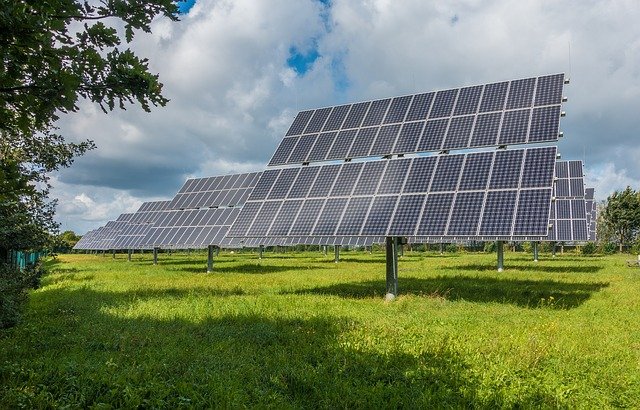
Photovoltaic cells absorb light and release electrons, creating direct-current electricity. An inverter converts that direct current into alternating current for household circuits. The home uses the available solar electricity first; depending on the system and local utility rules, surplus power can charge a battery or flow to the grid.
Solar panels work in every climate, although shade, roof condition, orientation, weather, and seasonal daylight affect output. The U.S. Department of Energy’s homeowner solar guide recommends evaluating tree cover, roof age, roof size, shape, and slope before installation. Renters and homeowners with unsuitable roofs may have access to community solar or an off-site subscription, depending on the local market.
How wind turbines work

Wind pushes the blades, turning a rotor connected to a generator. Some turbines use a gearbox to increase rotational speed, while direct-drive designs do not. Power electronics condition the electricity before it supplies a building, charges storage, or enters the grid.
Wind speed has an unusually large effect on production because the power available in wind rises roughly with the cube of wind speed. Small differences in average wind, tower height, and turbulence can therefore create large differences in annual output. The Department of Energy’s Small Wind Guidebook advises buyers to use an expected annual energy output estimate based on the proposed turbine and local wind conditions.
Which produces more electricity?
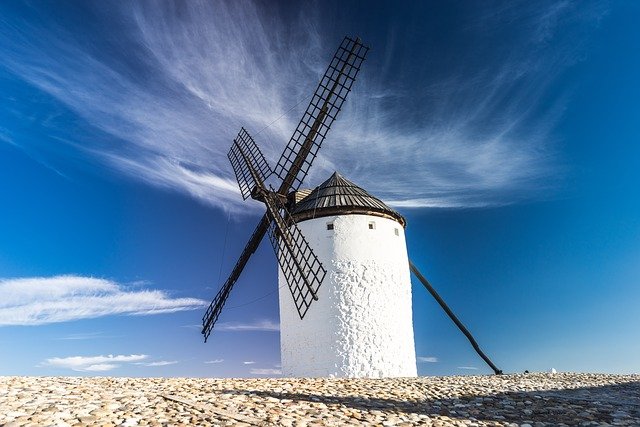
A wind turbine can generate more electricity per unit of rated capacity than solar panels at an excellent wind site. That does not make wind the better residential system automatically. A poorly sited turbine can underperform a modest solar array, while a well-designed turbine on a tall tower in strong, clean wind can produce day and night.
The useful comparison is annual energy output, measured in kilowatt-hours. Nameplate capacity, measured in kilowatts, is the maximum power rating under specified conditions. Capacity factor describes how much energy a system actually produces over time compared with running at full rating continuously.
Estimated annual output = rated capacity × 8,760 hours × expected capacity factor
A 10-kilowatt system operating at a 20% capacity factor would produce about 17,520 kilowatt-hours per year. At 30%, it would produce about 26,280 kilowatt-hours.
U.S. Energy Information Administration data show that utility-scale wind has generally achieved a higher average capacity factor than utility-scale solar photovoltaic systems. Those national power-plant averages are useful context, but they are not a forecast for a particular roof or home turbine. Use a property-specific solar model and a professional wind assessment. The EIA’s capacity-factor table also makes clear why a rated kilowatt is not the same as an annual kilowatt-hour.
Energy per turbine rotation is not a useful purchasing metric. It changes with rotor size, generator design, control settings, and wind speed. Ask for the turbine’s certified power curve and estimated annual kilowatt-hours at your site instead. For solar, review modeled annual production, expected degradation, shading losses, and the assumptions behind the estimate. Our guides to solar panel efficiency and solar panel direction explain two of the factors that shape output.
Installation costs, permits, and incentives
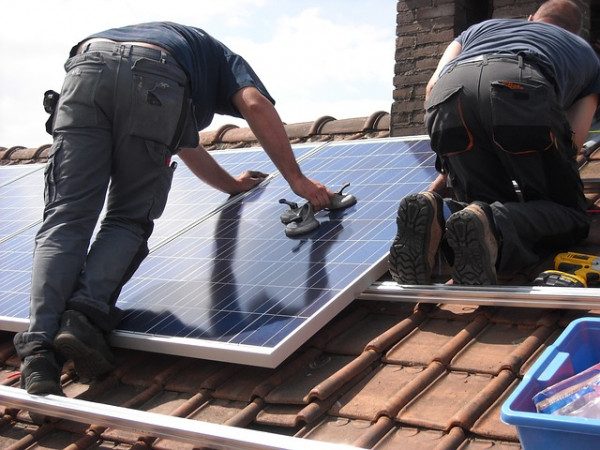
Residential solar is usually easier to price because installers can size a modular array from electricity use, roof measurements, and local solar data. The quote may include panels, racking, one or more inverters, wiring, permitting, utility interconnection, monitoring, and optional battery storage. Roof replacement, structural work, trenching, or a service-panel upgrade can add cost.
A small wind project has more site-specific components. The budget may include the turbine, tower, foundation, guy wires, controller, inverter, electrical work, access for lifting equipment, permitting, interconnection, inspections, and a long-term service plan. A shorter tower can reduce the upfront price but may place the rotor in turbulent, slower air and weaken the economics.
Federal incentive update, last verified July 2026: the IRS states that the Residential Clean Energy Credit is not available for property placed in service after December 31, 2025. State, local, utility, and nonprofit programs may still be available. Check the current IRS guidance and search the DSIRE incentive database before using any incentive in a payback calculation.
Utility export compensation also varies. Some utilities credit exported electricity near the retail rate, while others use a lower avoided-cost or time-based rate. Compare the value of electricity used in the home with the value of electricity exported to the grid. A battery may increase self-consumption or provide backup power, but it also adds cost and eventual replacement. See our overview of solar battery types before adding storage to a quote.
Site requirements: when each option makes sense
Solar is a strong fit when
- Your roof has useful sun exposure and limited shade, or you have room for a ground-mounted array.
- The roof has enough remaining life to avoid removing and reinstalling panels soon.
- You want a quiet system with few moving parts and predictable seasonal production.
- Local permitting and utility interconnection are straightforward.
- You want to start with a smaller array and expand later, subject to electrical and utility limits.
Small wind is a strong fit when
- The property has a professionally assessed wind resource at the proposed hub height.
- Open terrain provides clean airflow without major turbulence from trees, buildings, ridges, or nearby structures.
- There is enough space for the tower, required setbacks, installation access, and safe maintenance.
- Zoning, height limits, aviation rules, homeowner-association restrictions, and utility requirements allow the project.
- You accept mechanical maintenance and have access to qualified service and replacement parts.
- Nighttime or winter wind complements your solar production or off-grid load profile.
Regional wind maps are useful for screening, but they do not settle the decision for a home turbine. Wind can change sharply over short distances because of terrain and obstacles. Review the DOE guide, obtain a site assessment, and compare the projected annual output with the turbine’s complete installed and maintenance cost. Our guide to home wind turbines can help you understand common system sizes and components, but product availability and specifications should be rechecked before purchase.
Environmental benefits and trade-offs
Solar and wind generate electricity without burning fuel at the point of use. Replacing fossil-fuel generation can reduce greenhouse-gas emissions and air pollution. Neither technology is impact-free: materials must be mined and processed, equipment must be manufactured and transported, and components need responsible management at the end of service.
Solar considerations
- Rooftop panels use an existing built surface, while large ground-mounted arrays can alter land use and habitat.
- Panel, inverter, racking, and battery manufacturing require energy and raw materials.
- Responsible reuse and recycling matter as equipment reaches the end of service.
- Good system design avoids unnecessary oversizing and places equipment where it can operate safely for decades.
Wind considerations
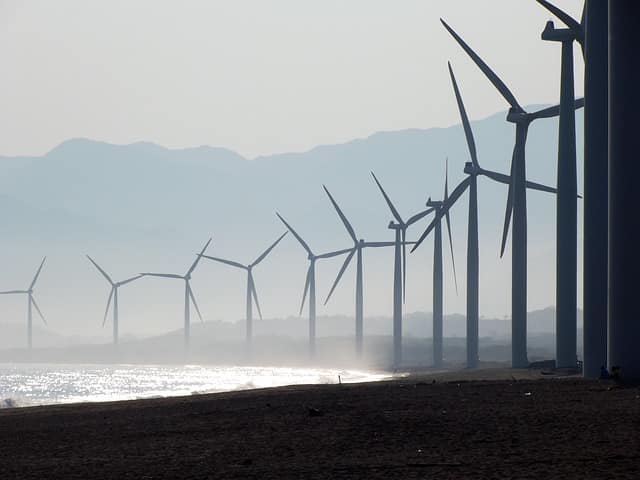
The U.S. Fish and Wildlife Service reports that wind facilities can kill birds and bats, with mortality varying by project and region. Siting, pre-construction wildlife review, monitoring, and operational measures can reduce risk. This issue deserves more than a generic claim that all turbines are equally harmful or harmless. Read our broader review of the pros and cons of wind energy for additional context.
Most turbine mass consists of recyclable metals and other established material streams, while composite blades remain harder and more expensive to process. The Department of Energy’s Wind Energy End-of-Service Guide explains current recycling, repurposing, and disposal options. For a household project, buyers should also ask who will service and eventually remove the turbine and tower.
Solar and wind pros and cons for homeowners
Solar energy advantages
- Works at far more residential properties than small wind.
- Modular design makes sizing and future expansion easier.
- Quiet operation and limited routine maintenance.
- Production is easier to model from established solar data.
- Can use roofs and other existing structures instead of a new tower.
Solar energy disadvantages
- Produces only when sufficient daylight is available.
- Shade, roof condition, snow cover, orientation, and local weather reduce output.
- Backup power requires compatible equipment and usually a battery; ordinary grid-tied solar shuts down during an outage for safety.
- Batteries increase cost and add another component with a finite service life.
- Manufacturing and end-of-life management create material and environmental impacts.
Wind energy advantages
- Can generate after sunset and during cloudy weather.
- A strong site can deliver high annual output from a relatively small ground footprint.
- The surrounding land can often remain in agricultural or other compatible use.
- Can complement solar production in some off-grid and rural systems.
- Does not require purchased fuel during operation.
Wind energy disadvantages
- Few residential sites have both the wind resource and physical space needed for good performance.
- Towers, foundations, permitting, setbacks, and installation access add complexity.
- Moving parts and tower hardware require more maintenance than solar panels.
- Noise, shadow, visual effects, and neighbor concerns can limit approval.
- Poor siting can increase wildlife impacts and produce disappointing electricity output.
Common uses of solar and wind energy
Solar photovoltaic systems supply homes, businesses, remote equipment, lighting, electronics, and utility grids. Solar thermal systems can heat water or air. For more examples, see these uses for solar panels.
Modern wind turbines generate electricity for individual properties, farms, businesses, communities, and utility grids. Wind has also powered mechanical work for centuries, including grain milling and water pumping.

Can solar and wind power a home together?
Yes. A hybrid system can be useful where daytime solar and nighttime or seasonal wind complement each other. Both sources can feed a shared battery system when the charge controllers, inverter, protection equipment, and controls are designed for the combined installation.
Hybrid systems are most persuasive for remote, off-grid, agricultural, or resilience-focused properties with verified resources. Adding wind to a marginal site usually creates more equipment without enough extra generation. Compare the hybrid design with alternatives such as additional solar capacity, a larger battery, load reduction, or a backup generator.
A seven-step decision checklist
- Collect at least 12 months of electricity use and identify seasonal peaks, critical loads, and future changes such as an electric vehicle or heat pump.
- Assess solar access, roof condition, available ground area, structural limits, and likely annual solar production.
- Screen the wind resource, then obtain a hub-height site assessment before requesting final turbine economics.
- Check zoning, tower-height rules, setbacks, homeowner-association restrictions, building and electrical permits, insurance, and utility interconnection.
- Compare complete installed cost, annual kilowatt-hours, maintenance, warranties, component replacement, financing, and decommissioning.
- Verify current export compensation and incentives. Do not use an expired federal credit or a promotional estimate without confirming eligibility.
- Model at least three choices: solar alone, wind alone if the site qualifies, and the best hybrid or storage alternative. Choose the option that meets your cost, emissions, and resilience goals with the fewest weak assumptions.
The better choice for most homes
Solar wins the residential comparison in most cases because it has fewer site constraints, lower mechanical complexity, broader installer support, and a scalable design. Small wind deserves serious consideration on open rural land with a measured wind resource, permission for a tall tower, and a realistic maintenance plan.
Start with the property’s resource, not a product listing. A high-quality solar quote should state modeled annual production and all major assumptions. A high-quality wind proposal should include the turbine power curve, hub-height wind estimate, projected annual output, tower and foundation design, permits, service plan, and decommissioning responsibility.
Frequently asked questions
Is solar or wind energy better for a house?
Solar is better for most houses because it works in more locations, is easier to permit and install, and needs less maintenance. Wind can be better at an open rural property with a verified wind resource and room for a tall tower.
Is wind energy more efficient than solar energy?
Wind often produces more annual electricity per rated kilowatt at a strong site, but efficiency alone does not determine the best home system. Compare property-specific annual kilowatt-hours, installed cost, maintenance, and usable space.
How much wind does a home turbine need?
There is no single wind-speed threshold that guarantees a good project. Output depends on the turbine, tower height, turbulence, terrain, and wind-speed distribution. Use a professional hub-height assessment and the manufacturer’s annual-output estimate.
Do solar panels work on cloudy days?
Yes. Solar panels generate electricity in diffuse daylight, but output drops when cloud cover reduces the sunlight reaching the cells. A production model should account for local weather and seasonal conditions.
Can solar panels and a wind turbine share a battery?
Yes, when the system uses compatible charge controllers, protection equipment, an inverter, and controls designed for both sources. A qualified designer should size the battery and electrical components for the combined output and loads.
Is there a federal residential solar or wind tax credit in 2026?
The IRS says the Residential Clean Energy Credit is not available for property placed in service after December 31, 2025. State, local, utility, and nonprofit incentives may still apply, so verify current programs before calculating payback.
What is the best way to compare solar and wind quotes?
Compare complete installed cost, estimated annual kilowatt-hours, assumptions, warranties, maintenance, storage, utility compensation, permits, insurance, and decommissioning. Do not compare systems only by rated kilowatts or headline price.