Three-letter animals are animal names spelled with exactly three letters — elk, fox, cat, ape, yak, bat, emu, owl, koi, eel, jay, gnu and kea among them. English has roughly 40 such names in common use, but only some are true species names; the rest are sex, age or group terms such as doe, ewe, hen and ram.
A correction to an earlier version of this article. We previously said there are “over 8.7 million animal species” on Earth. That is the wrong figure. The widely cited 8.7 million estimate — from Mora and colleagues in PLoS Biology (2011) — covers all eukaryotic life, including plants, fungi and protists. The animal share of that estimate is about 7.77 million species, and the same paper concluded that roughly 86% of species on land and 91% in the ocean have never been formally described.
So the honest framing for a page like this is that we are picking three-letter names out of a pool nobody has finished counting. Below are 15 three-letter animals profiled in full, followed by a longer A–Z list of every three-letter animal name in common English use — and an explanation of why that list has no single correct length.
Three-Letter Animals at a Glance
Conservation statuses below are IUCN Red List assessments. Four of these fifteen names belong to animals that are formally threatened, which is the part most word-game lists leave out.
| Name | What it actually is | Group | IUCN status |
|---|---|---|---|
| Elk | Cervus canadensis, one of the largest deer | Mammal | Least Concern |
| Fox | Usually the red fox, Vulpes vulpes | Mammal | Least Concern |
| Goa | Tibetan gazelle, Procapra picticaudata | Mammal | Near Threatened |
| Cat | Domestic cat and 40 wild relatives | Mammal | Family has 41 species |
| Ape | Great apes and gibbons (Hominoidea) | Mammal | All 8 great apes are Endangered or Critically Endangered |
| Yak | Domestic yak; wild yak is Bos mutus | Mammal | Wild yak Vulnerable |
| Bat | Order Chiroptera, 1,400+ species | Mammal | Varies by species |
| Emu | Dromaius novaehollandiae | Bird | Least Concern |
| Owl | Order Strigiformes, 254 species | Bird | Varies by species |
| Koi | Ornamental variety of common carp — not a species | Fish | Domesticated |
| Eel | Order Anguilliformes, about 820 species | Fish | European eel Critically Endangered |
| Jay | Blue jay and ~40 other jay species | Bird | Blue jay Least Concern |
| Gnu | Wildebeest — blue and black species | Mammal | Both Least Concern |
| Ewt / Eft | Archaic and modern words for a newt | Amphibian | Varies by species |
| Kea | Nestor notabilis, alpine parrot | Bird | Endangered |
Three-Letter Mammals
The first seven entries are all mammals. Each profile below gives the current population picture and, where one exists, the species’ conservation status.
Elk
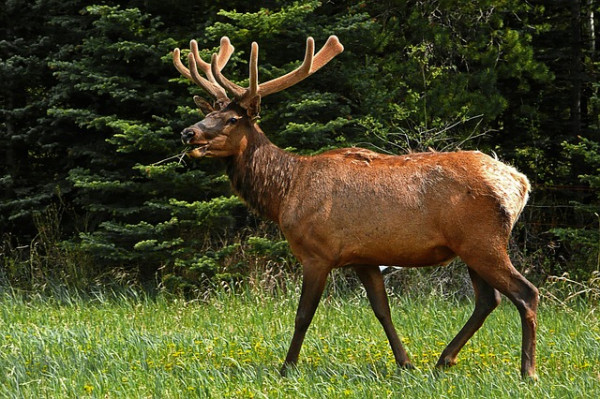
In North America, deer species are widespread. Among the largest is the elk (Cervus canadensis), with more than a million living across the continent. Related populations survive in parts of Central and East Asia. If you want the wider family picture, see our guide to what makes an animal a deer.
Mostly, you find elk living near the edge or deep in a forest. Due to urbanization, some tend to wander into neighborhoods and towns. Still, they live in social groups and raise their calves together, unlike other deer species that enjoy isolation.
In terms of food, Elk enjoy bark from trees, grasses, leaves, and other plants. Being a deer species, elk are prey to some animals. Out in the wild, wolves, bears, and mountain lions hunt them.
Additionally, people seek them out during hunting season. Nonetheless, these three-letter animals aren’t on the endangered list.
See Related: Most Interesting Birds in the World
Fox
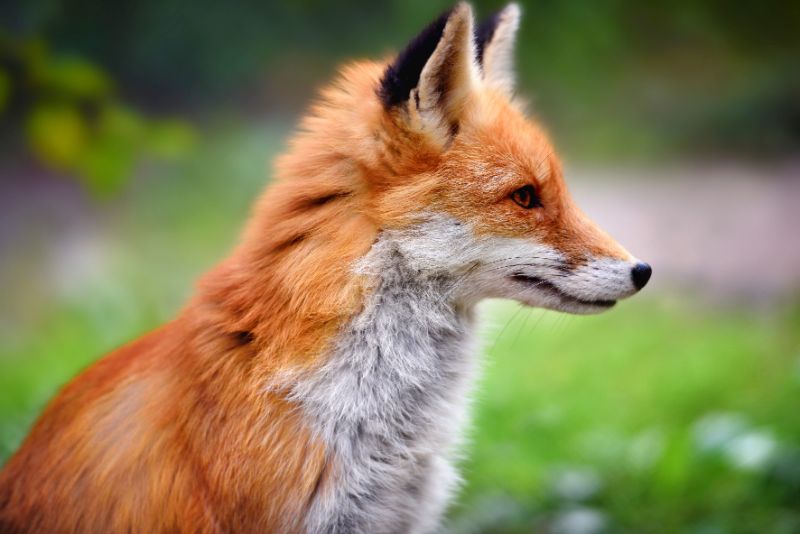
Probably you’ve heard the simile ‘as cunning as a fox.’ Be precise about the count, though: there are 12 living species in the genus Vulpes — the “true foxes” — but roughly 23 species are called foxes once you include the grey fox, the bat-eared fox and the South American zorros, which sit in other genera. All are members of the Canidae, the dog family.
A second correction. An earlier version of this article said “more than 19,000” red foxes live in the world. That is wrong by several orders of magnitude. The red fox (Vulpes vulpes) is the most widely distributed member of the order Carnivora on Earth, ranging across North America, Europe, Asia and North Africa and introduced to Australia. The IUCN lists it as Least Concern and puts the global population in the tens to hundreds of millions. It occupies grassland, desert, mountain, forest and urban habitats alike.
Usually, fox enjoys eating a wide range of food. These are omnivorous creatures that hunt rodents, and rabbits and also enjoy delicacies of wild berries and fruits. Their populations across the world remain strong, although their cunning nature causes friction with humans.
Today, fox hunting is still a recreational activity for many people. Though originally from the UK, it’s spread as far as Canada.
See Related: Is a Fish an Animal? Here’s What You Need to Know
Goa
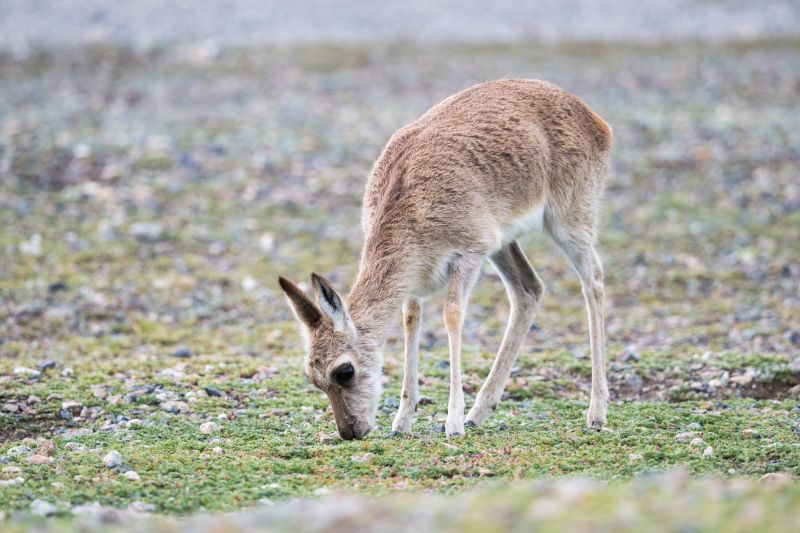
The goa is the Tibetan gazelle (Procapra picticaudata) — and note that “Goa” is also an Indian state, so the name is easy to misread. These shy antelope relatives are small, with adults standing only about 65 centimetres (26 inches) at the shoulder.
A third correction, and this one is an altitude error. We previously said the goa lives “almost 6,000 feet above sea level.” The Tibetan Plateau averages more than 4,500 metres (14,800 feet) — nearly three times that figure. The Tibetan gazelle is a high-elevation specialist recorded between roughly 3,000 and 5,750 metres (9,800–18,860 feet) on alpine meadow and steppe, with smaller groups in Ladakh in India. It feeds on forbs, grasses and low shrubs. The IUCN lists it as Near Threatened.
Usually, they enjoy living in smaller family groups of 10 individuals. However, the majority of males prefer living alone. The only time they gather is during the mating season which starts in December.
Primarily, the main predators for Goa are the snow leopard and the Himalayan wolf. Human beings also hunt them for food and skin. Due to small numbers in the wild, these three-letter animals are ranked as near threatened.
Cat
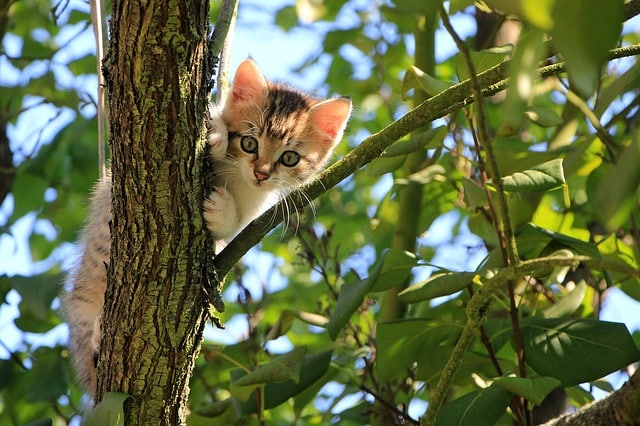
Did you know most cat species live in the wild? The domestic cat is one member of the family Felidae, and the 2017 revision by the IUCN Cat Specialist Group’s Cat Classification Task Force recognises 41 species in 14 genera — not the 38 an earlier version of this page gave.
Out in the wild, cats inhabit almost every part of the world. Most have names according to where they live. For instance, there’s the European wild cat, African wild cat, Asiatic wild cat, and Arabian wild cat. Most live in isolation and come together to reproduce.
Usually, wild cats feed on rodents, frogs, birds, and other small creatures. Humans hunt some like the Scottish wild cat for their fur. But, overall, they have few predators.
See Related: Animals that Start with X
Ape
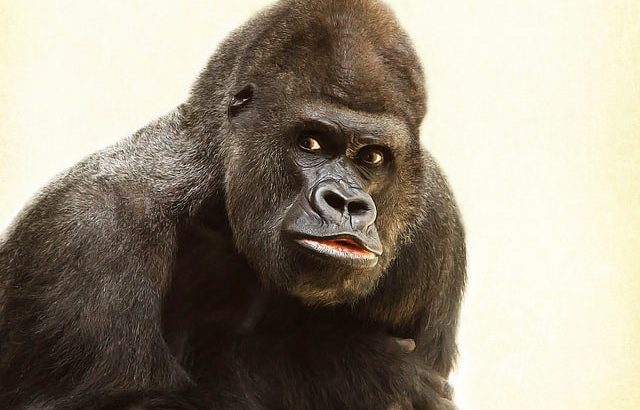
Apes are three-letter animals from the primate order, superfamily Hominoidea. There are roughly 24 to 28 living ape species depending on the authority — eight great apes (two gorillas, three orangutans, chimpanzee, bonobo and human) plus 16 to 20 gibbons, the lesser apes. Every non-human great ape is listed by the IUCN as Endangered or Critically Endangered, including the western lowland gorilla.
For the most part, you can find apes deep in the jungle or up in the mountains. They prefer these areas for ample food and protection. Mostly, they live in groups known as tribes led by one alpha male. Family groups can have 30 or more members.
Commonly, they feed on plants, fruits, and the bark of trees. However, as omnivores, they also hunt animals depending on their size. Also added to their diet are insects and birds.
Their populations are not stable. An earlier version of this article said they were, and that is the opposite of the current assessment: every non-human great ape species is declining, driven by habitat loss, hunting and disease — the same causes of extinction seen across the primates. Gibbons are in a similar position, with most species threatened.
Yak
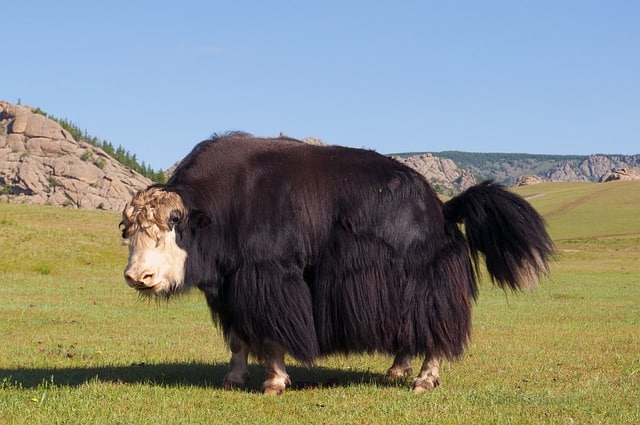
Yaks are domesticated three-letter animals. Mostly, they enjoy living in the Himalayan regions. On the northern part of the Indian subcontinent, these creatures play a crucial role in human survival.
At first glance, these creatures can be shocking due to their large frame. They’re built to withstand the harsh conditions in that part of the world. They eat grass and wild herbs in the region.
Be careful which yak that figure describes. The domestic yak population is about 14.2 million, roughly 13.3 million of them in China. The wild yak (Bos mutus) is a different story and a different species: the IUCN lists it as Vulnerable, with only about 7,000–10,000 mature individuals left on the Tibetan Plateau. Most lists of three-letter animals skip that distinction entirely.
See Related: Facts About Bears
Bat
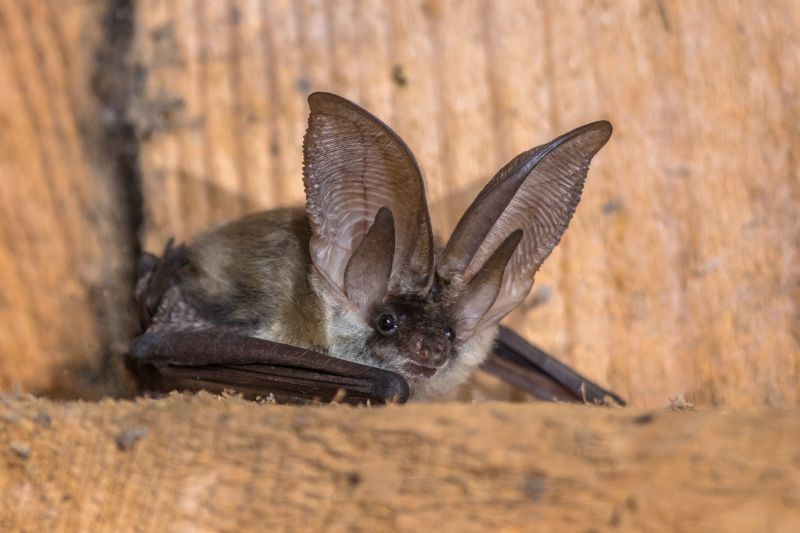
Not many people know that bats are mammals — and they make up about 20% of all mammal species. There are now more than 1,400 described bat species (about 1,445 across 21 families), not the 1,200 an earlier version of this page gave. Many roost colonially: Bracken Cave in Texas holds more than 15 million Mexican free-tailed bats (Tadarida brasiliensis), the largest known bat colony on Earth. North American species such as the Indiana bat have been hit hard by white-nose syndrome.
However, it’s worth noting that some species prefer living solitary lives. For the most part, these three-letter animals eat fruit, nectar, small animals, insects, and even pollen.
Calling bats omnivores as a group is too loose. Most of the 1,400-plus species are insectivores or fruit- and nectar-feeders; only three species — all vampire bats in Central and South America — feed on blood. Their numbers are not uniformly stable either: many species are declining from habitat loss, wind-turbine collisions and disease. Snakes, owls and hawks take bats where they can catch them.
Three-Letter Birds, Fish and One Amphibian
The remaining eight names cover four birds, two fish, an amphibian and a second bird — and two of them are not species at all, which is where most three-letter animal lists quietly go wrong. See also our guides to types of birds and types of owls.
Emu
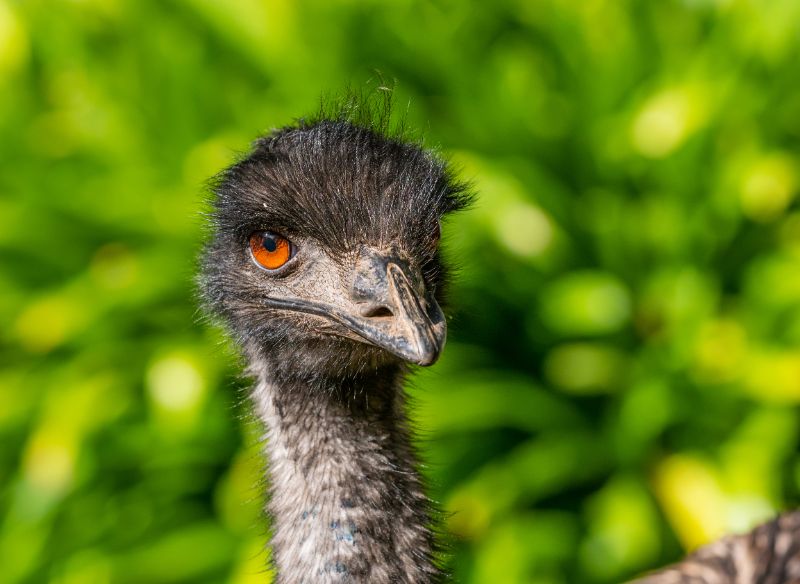
Among animals with cool three-letter words is the emu. Emus come second after ostrich in terms of large bird species in the world.
The IUCN puts the wild emu population at 630,000 to 725,000 mature individuals and lists the species as Least Concern. An earlier version of this page quoted “more than 725,000” — that is the top of the published range presented as a floor, a small but common way for a number to drift.
Emus are flightless birds that can walk long distances in search of food and water. They enjoy eating insects and plants.
One interesting trait is that they can live for some time without drinking water. Also, it’s good to note that the males incubate the eggs.
With vast numbers living in the wild, they don’t feature on the endangered animal list. However, they have some predators. The top ones are eagles and dingoes.
Owl
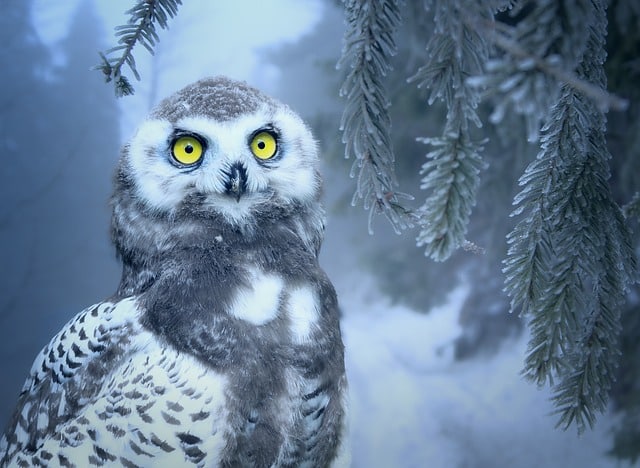
The owl is a three-letter bird of prey — and a large order. The International Ornithological Committee recognises 254 owl species in 25 genera across two families, the barn owls (Tytonidae) and the true owls (Strigidae), rather than the 200 given here previously. Our full breakdown is in types of owls.
Like most vast species, they are spread across the world. You can find owls in deserts, mountains, forests, and grasslands.
Usually, like other birds of prey, they eat small animals and insects. Preferences are mice, fish, other birds, and giant insects, among others. As for living arrangements, owls are solo creatures.
Usually, they enjoy a solitary life out in the wild, only coming together for mating purposes. The rest of the time, they defend their territories fiercely from one another.
These three-letter animals aren’t in immediate danger of extinction though some species no longer exist. Some people hunt them for feathers and sport.
Koi
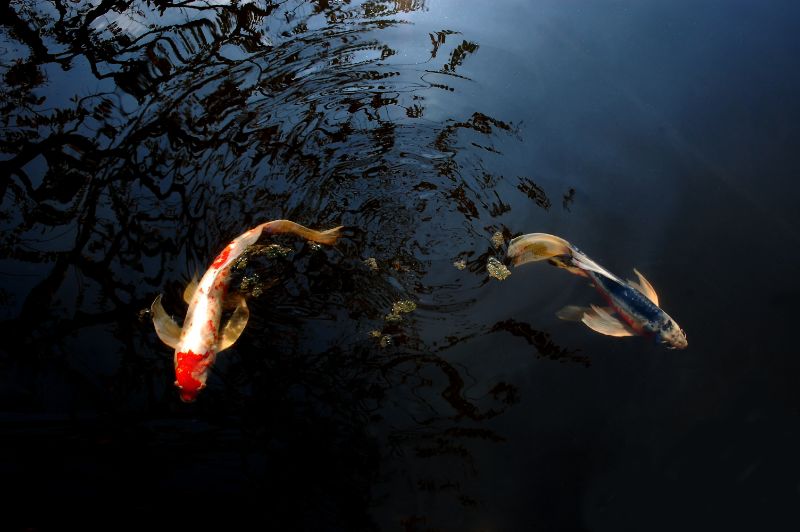
Koi are beautiful three-letter animals that live in water. These fish types are common in most home aquariums. People keep them for ornamental purposes thanks to their bright colors.
Koi are not a species, and this is the biggest category error on the page as it previously stood. Koi are ornamental varieties of the common carp, selectively bred in Japan from the early nineteenth century onward. So the right sentence is “more than 100 recognised varieties”, not “about 100 known species” — Japanese breeders classify them by colour, pattern, and scale type, giving names such as Kohaku, Sanke and Showa.
In terms of food, wild Koi live on an omnivorous diet. They feed on algae, dead animals, insects, and plants. They prefer to live in schools, finding safety in numbers.
Common predators include larger fish, wild dogs, wild cats, birds, and snakes, among others.
About reproduction, females spawn, and males fertilize the eggs they lay. There’s no telling how many Koi are in the world, but numbers are enormous.
Eel
Eels are the order Anguilliformes — roughly 820 species in about 20 families. And here is the catch most lists miss: the electric eel is not an eel. Electrophorus belongs to the order Gymnotiformes, the knifefishes, and is more closely related to catfish and carp than to any true eel. The European eel (Anguilla anguilla), which is a true eel, is listed by the IUCN as Critically Endangered. More detail in our guide to types of eel.
Eels are longer than regular fish and look more like snakes. They can swim well and often even move back when they need to. While some species are found in shallow waters like rivers, some prefer the deep blue sea.
Regarding feeding habits, eels are categorized as carnivores. They feed on animals such as smaller fish, worms, mussels, lizards, and frogs.
However, even as carnivores, they can become prey to others. Large birds and fish enjoy feeding on eels. Also, some mammals head to the water to hunt them like raccoons.
And, while even people enjoy eating eel, their populations remain high across the world.
Jay
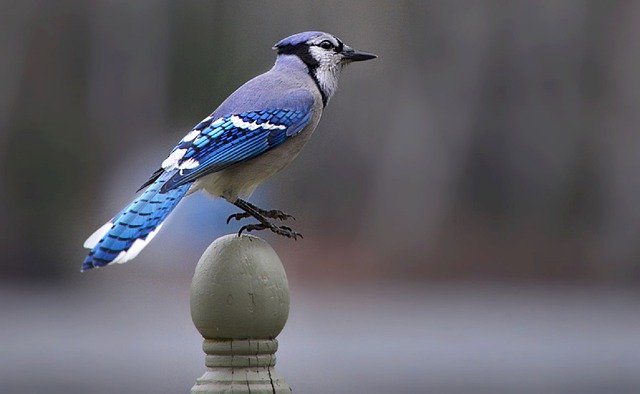
Bird lovers know all about the Jay. It’s among the most beautiful three-letter animals you can check out. Popularly known as the Blue Jay, this bird lives in eastern parts of North America.
Usually, jays enjoy living in smaller flocks. They build their nests in high places and are known to defend themselves fiercely. Often in the wild, they eat fruits, nuts, and small insects. However, they also enjoy eating out of bird feeders.
Regarding their popularity, many people love Blue Jays because they are naturally curious. Chicks are known to play with different items. Also, they don’t fear living next to human beings.
Owls, crows, snakes, raccoons, falcons, hawks and eagles all take jays. The blue jay itself is in no trouble: Partners in Flight puts the global breeding population at about 17 million, and the IUCN lists it as Least Concern. One clarification worth making — “jay” is not one bird. It covers roughly 40 species across Eurasia and the Americas, from the Eurasian jay to the Steller’s jay, all in the crow family. If you want the family context, read crow vs raven.
See Related: Are Humans Animals?
Gnu
Gnu is the other name for the wildebeest — an earlier version of this article rendered it as “wild beasts,” which is a find-and-replace artefact, not a spelling. There are two species: the blue wildebeest (Connochaetes taurinus) and the black wildebeest (C. gnou), both listed as Least Concern. Blue wildebeest drive the Serengeti–Masai Mara migration, in which well over a million animals move in an annual circuit — one of the largest terrestrial migrations on Earth.
Gnus are social creatures that live together in large herds. They enjoy the grassland habitats of East Africa, where they feed on green grass. The most common predators in this region include cheetahs, lions, wild dogs, hyenas, and leopards.
Ewt (and Eft): The Three-Letter Newt Problem
“Ewt” deserves an explanation rather than a straight listing, because almost nobody uses the word today. It is the original English name for the animal: Middle English ewte. The modern word “newt” came from mis-splitting the phrase an ewt into a newt in the fifteenth century — the same rebracketing that turned a napron into an apron. If you want a three-letter newt word that is still in current use, the answer is eft, the standard term for the juvenile land stage — the bright “red eft” phase of the eastern newt is the familiar example.
The geography here was also wrong. This page previously said newts populate “all continents apart from Antarctica.” They do not. Newts belong to the family Salamandridae, which is confined to the Northern Hemisphere — North America, Europe, Asia and the northern fringe of Africa. There are no native newts in South America, sub-Saharan Africa, Australia or Antarctica, so the claim was wrong on three continents. Around 100 or more newt species are recognised.
Adult newts often live on land but return to water to breed, and they eat slugs, worms and insects. The last sentence of this section used to run backwards. Newts do not “prey on fish, herons, snakes and foxes” — a 10-centimetre amphibian does not hunt a heron. Those animals prey on newts. The newts’ defence is chemical rather than physical: Pacific newts of the genus Taricha carry tetrodotoxin, the same nerve poison found in pufferfish. For more on amphibian biology, see how amphibians experience their world.
Species vary in population, but they remain pretty standard in the world.
Kea
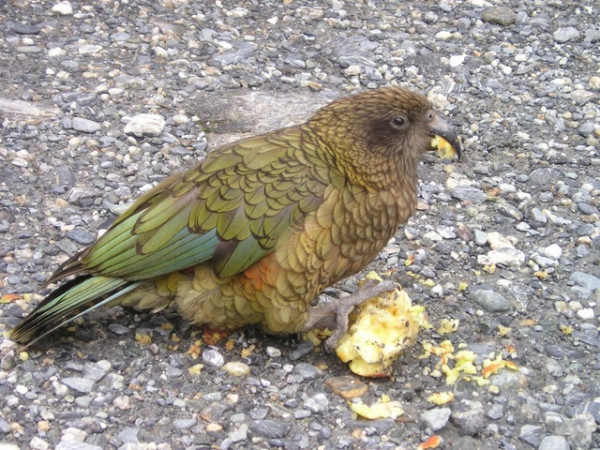
Bird species that make up three-letter animals include the Kea. They fall in the category of animals with three-letter words ending with a.
It’s a more prominent parrot family member residing in forested parts of New Zealand. Usually, one male lives with several females in the wild.
Like many other birds, Kea enjoys an omnivorous lifestyle. It can eat berries, insects, small fish, nuts, and other foods.
Introduced cats, stoats and possums are the kea’s main predators today. The history is worse than this page previously implied. A government bounty on kea, paid because the birds were blamed for attacking sheep, ran until 1971, and the species did not receive full protection under New Zealand’s Wildlife Act until 1986. A conservative estimate is that more than 150,000 kea were killed.
The kea is the most threatened animal on this list, and the original article never said so. The IUCN lists it as Endangered, with roughly 4,000 mature individuals remaining — commonly reported as a wild population of about 3,000 to 7,000 — and the trend is still downward. It is the world’s only alpine parrot, found on the South Island of New Zealand.
How Many Three-Letter Animal Names Are There?
There is no single correct answer, and the reason is worth understanding. English has about 41 three-letter animal words in common use, but they are not all the same kind of word, which is why published lists range from roughly 15 to over 60 entries.
Sort them into three groups and the disagreement disappears:
- Species or group names — ape, auk, bat, boa, cat, cod, dab, dog, eel, elk, emu, fox, gar, gnu, ide, jay, kea, koi, moa, owl, pig, rat, ray, tit, tui, yak, asp, ant, bee, fly, bug. These are what most people mean.
- Sex or age terms, not species — cow, doe, ewe, hen, ram, sow, roe, cub, kit, fry. A “doe” is a female deer, rabbit or goat; a “sow” is a female pig or bear. Lists that include these get much longer.
- Words that are archaic or misfiled — ewt (the obsolete form of newt) and koi (a variety, not a species). Both appear on this page for exactly that reason.
The full A–Z of three-letter animal names in common English use: ant, ape, asp, ass, auk, bat, bee, boa, bug, cat, cod, cow, dab, doe, dog, eel, eft, elk, emu, ewe, fly, fox, gar, gnu, hen, hog, ide, jay, kea, koi, moa, owl, pig, ram, rat, ray, roe, sow, tit, tui, yak.
Prefer longer words? We have the same treatment for five-letter animals and for animals that start with M.
FAQs
What is an animal with 3 letters?
Fifteen well-known examples are elk, fox, goa, cat, ape, yak, bat, emu, owl, koi, eel, jay, gnu, ewt and kea. English has roughly 41 three-letter animal words in common use. They are not all species names: cow, doe, ewe, hen, ram and sow are sex or age terms, and koi is an ornamental variety of the common carp rather than a species of its own.
What is an animal with 3 letters in its name Family Feud?
The answers that score on Family Feud are the everyday ones: cat, dog, cow, pig, rat, bat, hen, ape, owl, elk and fox. Less common but still valid are emu, jay, gnu, eel, koi, yak, kea, auk, asp, boa, cod and ray.
What is a three-letter name for a bird?
There are several. Jay, owl, emu, kea, auk, hen, tit and tui are all three-letter bird names, and moa is the extinct New Zealand ratite. Jays are members of the crow family, Corvidae, and the name covers roughly 40 species worldwide – not only the blue jay of North America.
What are some 3 letter animal names?
In alphabetical order: ant, ape, asp, ass, auk, bat, bee, boa, bug, cat, cod, cow, dab, doe, dog, eel, eft, elk, emu, ewe, fly, fox, gar, gnu, hen, hog, ide, jay, kea, koi, moa, owl, pig, ram, rat, ray, roe, sow, tit, tui, yak. Some of these are species or group names, while cow, doe, ewe, hen, ram, roe and sow describe the sex or age of an animal rather than a species.
Related Resources
See Related: 21 Five-Letter Animals to Know Around the World
See Related: 20 Animals That Start With The Letter M