
The Call of the Wild (2020) is an adventure drama based on Jack London’s 1903 novel. It follows Buck, a powerful dog stolen from his California home and sold into sled-dog service in the Yukon during the Klondike Gold Rush. Harrison Ford plays John Thornton, the grieving outdoorsman who becomes Buck’s closest human companion.
The official title is The Call of the Wild, not Call from the Wild. This article covers the 2020 film directed by Chris Sanders and written by Michael Green, rather than earlier adaptations or similarly titled documentaries.
The Call of the Wild: quick facts
| Official title | The Call of the Wild |
|---|---|
| Release date | February 21, 2020 |
| Director | Chris Sanders |
| Screenwriter | Michael Green |
| Source material | Jack London’s 1903 novel The Call of the Wild |
| Genre | Adventure drama |
| Rating | PG |
| Runtime | About 100 minutes; official platform listings vary slightly |
| Story setting | California, Alaska, and the Yukon during the 1890s Klondike Gold Rush |
| Production location | California, including Sable Ranch in Santa Clarita |
| Buck | A digitally created dog supported by Terry Notary’s physical performance reference |
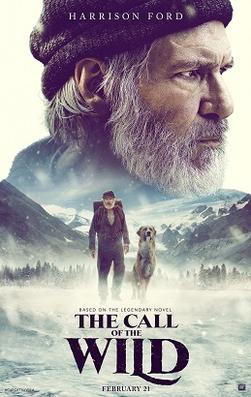
What is The Call of the Wild about?
The Call of the Wild tells Buck’s story. At the beginning of the film, he lives comfortably on Judge Miller’s California estate. After Buck is stolen and shipped north, he is forced to adapt to harsh treatment, cold weather, scarce food, and the demands of a mail-delivery sled team.
Mail runners Perrault and Françoise recognize Buck’s strength and intelligence. He learns how a sled team works, challenges the lead dog Spitz, and eventually becomes the team’s leader. The film then contrasts those capable handlers with Hal, Mercedes, and Charles, an inexperienced group that overloads the sled and drives the dogs beyond their limits.
John Thornton intervenes when Hal threatens Buck. As Buck recovers, the dog and the outdoorsman form a bond that gives both of them a new direction. Their journey beyond the mapped routes brings Buck closer to a wolf pack and forces him to choose between domestic companionship and the life drawing him deeper into the wild.
The Call of the Wild cast and characters

Harrison Ford and Buck carry most of the film’s emotional weight, but the supporting cast establishes the different ways people treat working animals. Perrault and Françoise are demanding but competent. Hal treats the dogs as equipment and ignores physical limits.
| Performer | Character or contribution |
|---|---|
| Harrison Ford | John Thornton |
| Omar Sy | Perrault, a mail runner |
| Cara Gee | Françoise, Perrault’s partner |
| Dan Stevens | Hal |
| Karen Gillan | Mercedes |
| Colin Woodell | Charles |
| Bradley Whitford | Judge Miller |
| Terry Notary | Physical performance reference for Buck |
Buck is not a talking animal, and Terry Notary is not simply his “voice.” Notary performed Buck’s posture, movement, and interactions on set so the human cast had a physical scene partner before visual-effects artists completed the digital dog.
Is The Call of the Wild based on a true story?

No. Buck, John Thornton, and the central plot are fictional. The historical setting is real, however. The Klondike Gold Rush of 1897–1898 drew thousands of people toward Alaska and Canada’s Yukon Territory, where winter travel depended heavily on sled dogs, snowshoes, and river routes.
What came from real Klondike history?
The National Park Service’s Klondike Gold Rush history documents the rush north and the trails and boomtowns it created. Dog teams were practical transportation, not just an adventure-story device. In parts of Alaska, they carried mail well into the 20th century.
Jack London traveled to the Yukon during the gold rush. The Library of Congress notes that he observed sled teams and the ways owners treated—and mistreated—their dogs. Those experiences helped shape Buck’s fictional journey. Snow, ice, rivers, and mountain passes also show how different types of terrain controlled movement in the far north.
Who was Jack London?
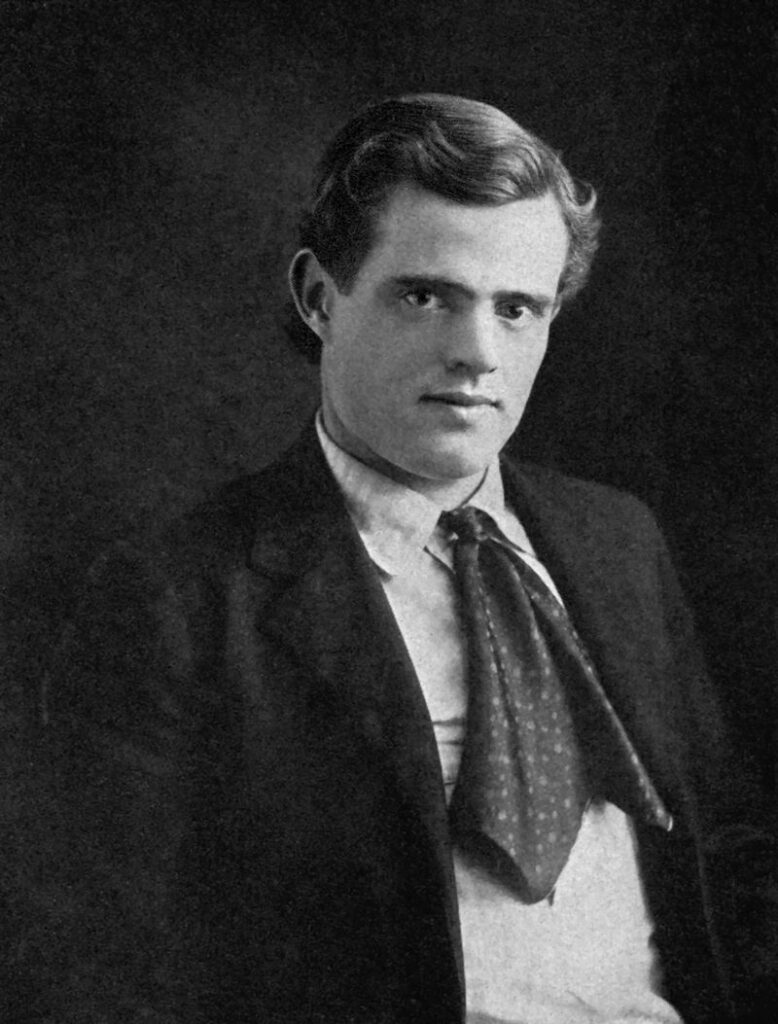
Jack London was born in San Francisco on January 12, 1876. His fiction often examined survival, labor, power, nature, and the pressure that extreme conditions place on people and animals. The Call of the Wild, published in 1903, became one of his best-known works.
London’s 150th birthday is being commemorated throughout 2026 by Jack London State Historic Park. The anniversary gives the book renewed relevance, but modern readers should still approach it in historical context: some descriptions of Indigenous people and race reflect stereotypes and language from London’s era.
The novel is in the public domain in the United States and can be read free through Project Gutenberg.
Is Buck a real dog or CGI?
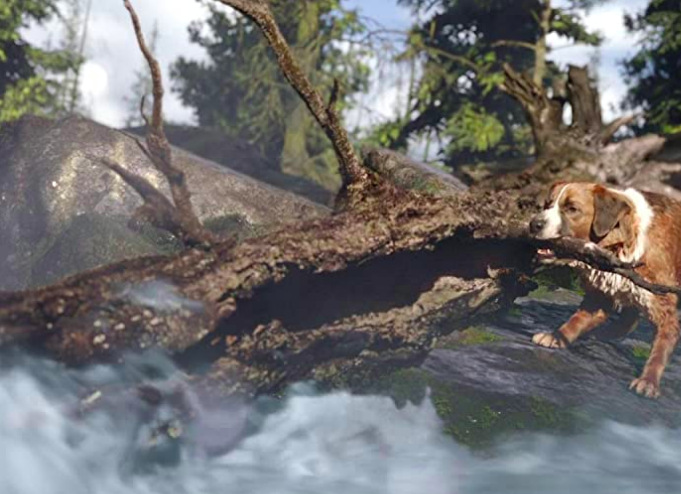
Buck is a digital character rather than a live dog actor. Terry Notary performed the role on set, using his body and carbon-fiber arm extensions to establish Buck’s height, rhythm, and eye line. A real dog was sometimes brought in as a lighting and fur reference, but the Buck seen in the finished film was created by visual-effects teams.
MPC’s visual-effects team was among the studios responsible for building Buck and the film’s remote environments. In a direct interview, Notary explained that director Chris Sanders wanted Buck’s expressions to extend slightly beyond ordinary canine behavior. Buck’s appearance was also informed by Buckley, a rescue dog Sanders adopted during production.
The result is intentionally expressive rather than strictly naturalistic. That choice makes Buck’s thoughts readable without dialogue, although viewers who prefer fully realistic animal behavior may notice the stylization.
Where was The Call of the Wild filmed?
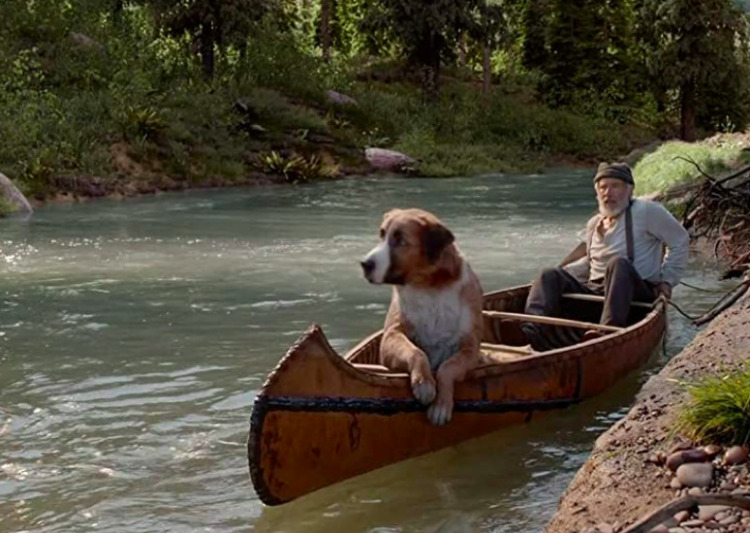
The story is set in Alaska and the Yukon, but the 2020 movie was produced in California. The California Film Commission described the production as entirely California-based, and its approved-project records list 60 production days in the state.
Disney’s production report states that the crew filmed for more than a month at Sable Ranch in Santa Clarita. Large period sets, artificial snow, California exteriors, and extensive visual effects created the Yukon towns, frozen routes, rivers, and mountain landscapes. The film was not shot across Northern Canada, Alaska, or Greenland as some online summaries claim.
What is the message of The Call of the Wild?
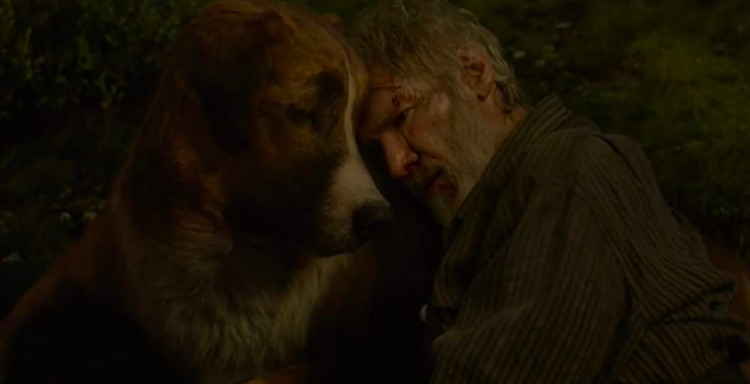
The film’s central message is that identity is shaped by both instinct and relationship. Buck becomes stronger as he adapts to the north, but his growth does not come from isolation alone. Trustworthy people help him survive long enough to choose his own life.
Instinct and identity
Buck begins as a protected household dog and gradually recovers abilities that comfort had never required. The “call” is not a voice giving instructions. It represents the pull of instinct, physical capability, freedom, and a life that fits Buck more fully.
Trust, loyalty, and humane treatment
The story repeatedly compares leadership based on competence and care with control based on fear. Perrault, Françoise, and Thornton set limits and earn Buck’s trust. Hal ignores warning signs, abuses the dogs, and treats endurance as unlimited. The contrast makes animal welfare part of the plot rather than a decorative moral.
Grief and renewal
The 2020 adaptation gives Thornton a personal history of loss that is not central to London’s novel. Buck does not erase that grief. Their companionship gives Thornton a reason to re-enter the world, make decisions, and care for another living being.
Freedom, belonging, and wild places
The wilderness is both dangerous and liberating. Its rivers, forests, ice, and mountain valleys are distinct habitats, not an empty backdrop. Buck’s final choice suggests that belonging depends on where an animal can live according to its nature—not simply where a person wants it to remain.
How does the 2020 movie differ from Jack London’s book?
Spoilers follow. The film preserves Buck’s movement from domestic life to the wolf pack, but it substantially changes John Thornton, Hal, the ending, and the story’s tone.
| Story element | Jack London’s novel | 2020 film |
|---|---|---|
| Narrative focus | Stays closely centered on Buck’s physical and instinctive transformation | Expands Thornton into a co-protagonist with a parallel emotional arc |
| Thornton’s backstory | Does not include the film’s storyline about a dead son and estranged wife | Uses family loss to explain Thornton’s withdrawal and grief |
| Hal | His party disappears from Buck’s story after ignoring Thornton’s warning about unsafe ice | Returns as the final human antagonist and pursues Thornton and Buck |
| Thornton’s death | He is killed during an attack on his camp | Hal shoots him during the final confrontation |
| Indigenous portrayal | The climax includes a fictional Indigenous group described through language now widely regarded as dated and stereotyped | Removes that group and transfers the final violence to Hal |
| Tone and violence | Harsher, more naturalistic, and more explicit about cruelty and death | Softens or restructures violence for a PG family-adventure tone |
| Buck’s ending | Buck joins wolves and becomes a legendary presence in the region | Shows Buck with a wolf mate, offspring, and a pack he leads |
These changes make the film more accessible to families and give Harrison Ford a larger role. They also move the adaptation away from the novel’s tougher naturalism and toward a story about grief, friendship, and emotional recovery.
How environmentally responsible was the production?
The Call of the Wild is not an environmental documentary, and its plot is not about pipelines, dams, polar bears, or global habitat loss. Its strongest verified environmental story is behind the camera: the production tracked waste, reduced single-use materials, donated food, reused set components, and tested renewable-energy equipment.
According to The Walt Disney Company’s production report, the film diverted more than 82% of its waste from landfill. The crew also worked with Earth’s Oceans Foundation to recover difficult-to-recycle plastics from the set.
| Reported production measure | Result |
|---|---|
| Overall waste diversion | More than 82% diverted from landfill |
| Used plastics recovered | 4.75 tons through Earth’s Oceans Foundation |
| Single-use water bottles | More than 200,000 bottles avoided |
| Food and serviceware composted | More than 30,000 pounds |
| Surplus food donated | 1,515 pounds, reported as more than 1,250 meals |
| Construction foam | 17 of 21 tons bought back for reuse or recycling |
| Sable Ranch energy measures | Solar-powered generators, work lights, trailers, and electric-vehicle charging |
These are production-reported figures, not an independent life-cycle assessment. They document meaningful reductions in on-set waste and resource use, but they do not prove that the film had a net-positive environmental impact. For broader context, see our overview of conservation principles and facts.
Is The Call of the Wild suitable for children?
The film is rated PG and is structured as a family adventure, but it includes dog theft, rough treatment of animals, dog fights, dangerous ice and river scenes, weapons, fire, grief, and character deaths. The violence is not highly graphic, yet the repeated danger to Buck and the sled team may upset younger or animal-sensitive viewers.
Families may find the film useful for discussing responsible animal care, leadership, resilience, and the difference between freedom and neglect. A child’s sensitivity to animal peril is a better guide than the rating alone.
Frequently asked questions
What is the correct title: Call from the Wild or The Call of the Wild?
The official title is The Call of the Wild. “Call from the Wild” is a common search variant, but it is not the title of the 2020 Harrison Ford film.
Is The Call of the Wild based on a true story?
No. Buck, John Thornton, and the main plot are fictional. The story is set against the real Klondike Gold Rush, and Jack London’s experiences in the Yukon helped inspire his 1903 novel.
Is Buck a real dog in The Call of the Wild?
Buck is a digitally created character. Performance artist Terry Notary provided physical reference for the role, while visual-effects teams created Buck’s final on-screen body, face, and movement.
Where was The Call of the Wild filmed?
Although the story takes place in Alaska and the Yukon, the 2020 film was produced in California. Sets, artificial snow, California exteriors, and visual effects created the northern landscapes.
What breed is Buck?
In Jack London’s novel, Buck is a large Saint Bernard–Scotch shepherd mix. The 2020 film presents him as a digital mixed-breed dog whose appearance was informed by a real rescue dog named Buckley.
Does Buck become a wolf?
No. Buck remains a dog. By the end of the story, he answers the call of the wild and joins a wolf pack, but the film does not turn him into a wolf.
Where can you watch The Call of the Wild?
Disney+ lists the film in supported regions as of July 2026. Streaming catalogs vary by country and can change, so check your local Disney+ listing or digital rental services.
Final thoughts
The Call of the Wild works best as a family-oriented interpretation of Buck’s transformation rather than a faithful scene-by-scene adaptation. The 2020 film changes major events and gives John Thornton a larger emotional story, but it retains the novel’s central tension between domestic safety and an animal’s pull toward a wilder life.
Its credible environmental significance lies mainly in the production practices documented by Disney, not in claims that the movie directly examines modern habitat destruction. That distinction makes the film easier to understand—and prevents its real sustainability work from being buried under unsupported claims.