
Earth Day is observed every April 22, but the most useful way to celebrate is to choose actions you can repeat after the date has passed. This Earth Day checklist includes 21 practical ideas for your home, daily travel, food, neighborhood, and local environment. You do not need to complete all of them. Pick three that fit your time, budget, and living situation.
For a balanced plan, choose one action that reduces your household impact, one that helps nature or your community, and one habit to continue for the next 30 days. Earth Day began in 1970 as a public movement for environmental action, and it is still marked every year on April 22. You can read the official history of Earth Day for more context.
Earth Day checklist at a glance
Use this as a printable or phone-friendly checklist. Start with the actions that solve a real problem in your life instead of buying products simply because they are marketed as “green.”
- Choose one environmental habit to keep for 30 days.
- Replace one car trip with walking, biking, public transit, or carpooling.
- Make one plant-rich meal.
- Prevent food waste before composting scraps.
- Run a 15-minute home energy check.
- Explore cleaner electricity or rooftop solar.
- Ask for one practical policy or community change.
- Turn off the tap and check for leaks.
- Use a reusable item you already own.
- Repair, borrow, rent, or buy secondhand.
- Do a 15-minute household waste audit.
- Learn your local recycling rules.
- Start composting or find a food-scrap drop-off.
- Set aside batteries and e-waste for proper disposal.
- Join or organize a safe cleanup.
- Plant a native species or a well-sited tree.
- Make your home safer for birds and pollinators.
- Take a nature walk and record what you find.
- Volunteer with a local environmental group.
- Donate to a vetted environmental cause.
- Share one specific commitment and schedule a check-in.
Choose an Earth Day action by time and effort
| Time available | Good place to start | Useful result |
|---|---|---|
| 5 minutes | Turn off the tap, switch off unused devices, or set aside a battery for proper recycling | Stops a specific source of waste or risk |
| 30 minutes | Plan a plant-rich meal, audit one trash bin, or take a nature walk | Shows where a repeatable habit can fit |
| 1–2 hours | Join a cleanup, visit a recycling drop-off, plant a native species, or volunteer | Creates a visible local benefit |
| Ongoing | Change a commute, reduce food waste, improve home efficiency, or support a policy | Builds impact beyond a single day |
High-impact Earth Day actions
1. Choose one habit to keep for 30 days
The lowest-effort action that matters is usually the one you will repeat. Choose a specific behavior, define when you will do it, and set a reminder for one month from now. “Bring my bottle to work on weekdays” is easier to track than “use less plastic.”
Make the habit small enough to survive a busy week. After 30 days, keep it, improve it, or replace it with a more useful action. For a broader list of realistic habits, see these ways to help the environment in everyday life.
2. Replace one car trip
For one trip that is safe and practical, walk, bike, take public transportation, or carpool instead of driving alone. Transportation is a major source of U.S. greenhouse gas emissions, so reducing vehicle miles can be more consequential than many symbolic Earth Day purchases. The best option depends on your route, mobility, weather, and local infrastructure.
If you still need a car, combine errands, avoid unnecessary idling, keep tires properly inflated, and compare lower-emission vehicle options when it is genuinely time to replace your current vehicle.

3. Make one plant-rich meal
Build one meal around beans, lentils, whole grains, vegetables, nuts, seeds, or fruit. This does not require an all-or-nothing dietary change. A repeatable breakfast, lunch, or dinner can be a practical starting point for people who want to reduce the environmental impact of food.
Use ingredients you already enjoy and can find locally. Oatmeal with fruit, lentil soup, bean tacos, vegetable curry, and pasta with beans and greens are inexpensive places to start. Our overview of why everyday choices matter for climate change explains the wider context.

4. Prevent food waste before composting
Check your refrigerator before shopping, plan a meal around food that needs to be used soon, freeze leftovers, and label containers with a date. The U.S. Environmental Protection Agency’s Wasted Food Scale puts prevention ahead of composting because keeping edible food in use avoids the resources spent producing, transporting, and storing it.
Compost unavoidable scraps such as peels only after you have reduced preventable waste. This order—prevent, donate when appropriate, then compost—makes the action more useful and can save money.
5. Run a 15-minute home energy check
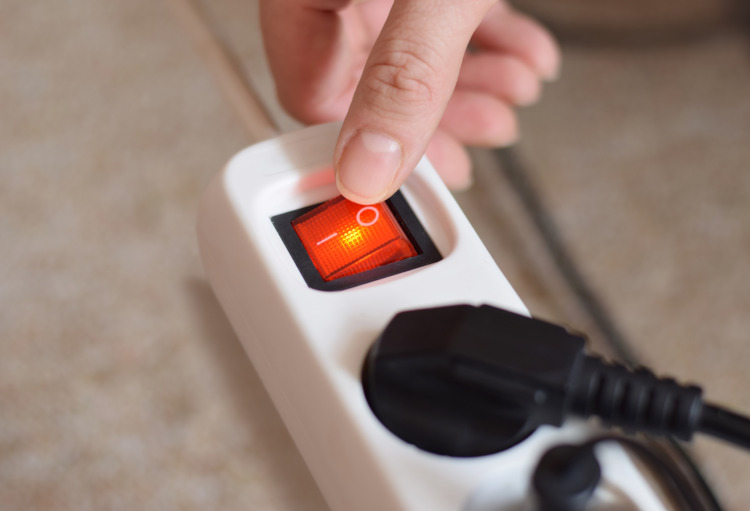
Walk through your home and look for lights left on, electronics drawing standby power, dirty heating or cooling filters, drafts, and thermostat settings that do not match your schedule. Turn off what is not needed and place related electronics on a switchable power strip when appropriate.
Renters can still make meaningful improvements with LED bulbs, window coverings, smart power strips, and maintenance requests. Homeowners can use the U.S. Department of Energy’s energy-saving checklist for renters and households as a starting point.
6. Explore cleaner electricity or rooftop solar
Check whether your utility offers a renewable electricity plan, community solar, or a home energy audit. If you own a suitable home, compare rooftop solar based on roof condition, shade, electricity use, local rates, financing terms, warranties, and installer credentials—not a generic promise of savings.
The U.S. Department of Energy notes that there is no universal home-solar solution. Its Homeowner’s Guide to Solar explains the questions to ask before signing a contract. For portable or emergency power rather than a rooftop system, compare the tradeoffs among solar-powered generators for home use.

7. Ask for one practical policy or community change
Individual choices matter, but they work best alongside changes in schools, workplaces, apartment buildings, businesses, and government. Send one concise request to a person who can act: add secure bike parking, repair a leaking fixture, improve waste sorting signs, purchase renewable electricity, protect a local habitat, or make a public meeting easier to attend.
Describe the problem, propose a realistic next step, and ask when it can be reviewed. Learn from these environmental leaders and organizers, but keep your own request local and specific.
Earth Day actions at home
8. Turn off the tap and check for leaks
Turn off the faucet while brushing your teeth, run full loads in the dishwasher and washing machine, and check toilets, faucets, and outdoor connections for leaks. EPA WaterSense estimates that turning off the tap while brushing can save as much as 3,000 gallons per year.
If you are replacing a fixture anyway, look for a WaterSense-labeled model rather than discarding a working product prematurely. Read more about the water and energy costs of long showers.

9. Use a reusable item you already own
Bring the bottle, mug, food container, utensils, cloth napkin, or shopping bag you already have. Reusable products only help when they are used enough to replace disposable items, so avoid buying a new “eco” version of something that already works.
Put the item where you will remember it: a bag by the door, a mug beside the coffee maker, or a container in your work bag. Convenience is often the difference between an intention and a habit.
10. Repair, borrow, rent, or buy secondhand
Before buying something new, ask whether you can repair what you own, borrow it from a friend, rent it for occasional use, or find it secondhand. This can reduce demand for new materials and manufacturing while keeping usable goods out of the waste stream.
Start with one pending purchase. Compare condition, expected lifespan, repairability, and total cost rather than assuming that every used item is automatically the better choice.

11. Do a 15-minute household waste audit
Look at one day’s trash and recycling without emptying bags onto an unsafe surface. Note the three most common items. Then choose one realistic change: buy a refill size, use a durable alternative, decline an unwanted extra, repair an item, or change how you store food.
A waste audit is useful because it replaces generic guilt with evidence from your own household. Our guide to the main types of waste disposal explains what happens after materials leave your home.
12. Learn your local recycling rules
Check the website or printed guide from your local recycling provider. Accepted materials vary by community, and the resin number on a plastic item does not guarantee that your local program can recycle it. Plastic bags and films usually require a store or specialty drop-off rather than a curbside bin.
Keep recyclables empty and reasonably clean, flatten cardboard if your program requests it, and do not “wish-cycle” uncertain items. The EPA’s current guide to recycling common materials is a useful reference, but local instructions take priority.
13. Start composting—or find a food-scrap drop-off
If you have already reduced edible food waste, collect unavoidable fruit and vegetable scraps for a home compost system, municipal organics service, or community drop-off. Confirm what the program accepts before adding meat, dairy, compostable packaging, or certified compostable plastics.
Home-compostable and industrially compostable products are not interchangeable. Review the difference between home-compostable and industrially compostable materials, then choose a system that matches your space and local rules.
14. Set aside batteries and e-waste for proper disposal
Do not place lithium-ion batteries or devices containing them in household trash or curbside recycling. They can be damaged during collection and sorting, creating a fire hazard. Tape exposed battery terminals with nonconductive tape or place each battery in a separate bag, then take them to an approved battery, electronics, or household hazardous waste collection point.
Before donating or recycling a phone, tablet, or computer, back up needed files and erase personal data. Use the EPA’s current lithium-ion battery guidance and your local authority’s instructions.
Earth Day activities outdoors and in your community
15. Join or organize a safe cleanup
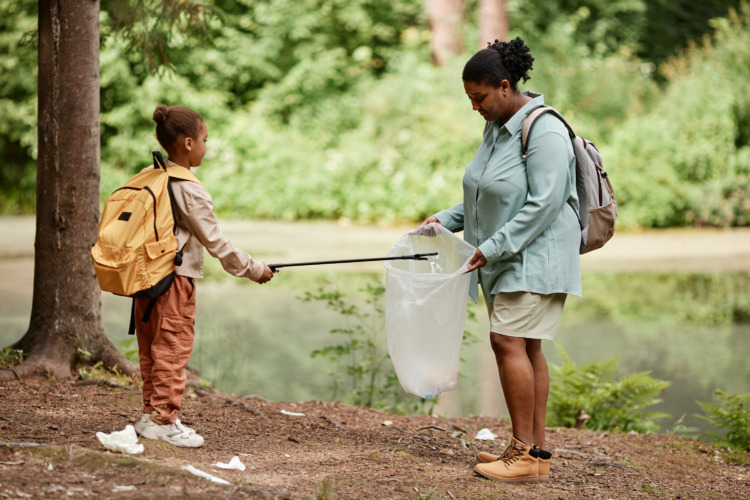
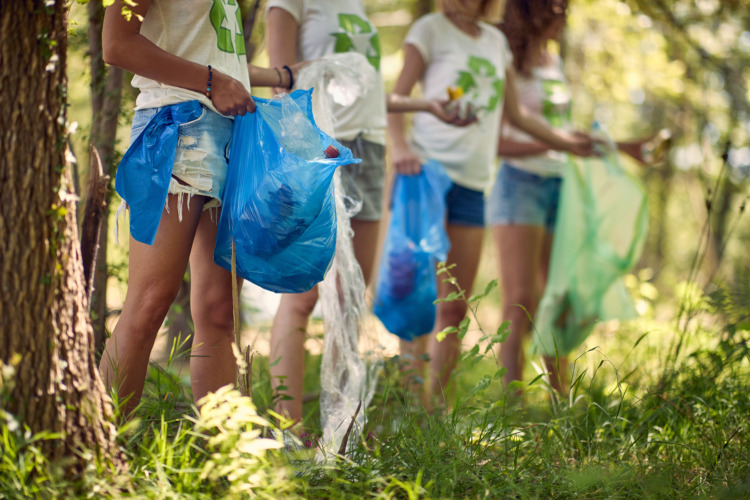
Choose a defined public area, confirm whether permission is required, check the weather, and arrange waste disposal before you begin. Bring sturdy gloves, grabbers, visible clothing, bags, hand sanitizer, water, and a basic first-aid kit. Sort materials only when your local program can accept them.
Do not touch discarded needles or other sharps, unknown chemicals, containers with unidentified liquids, or other hazardous materials. Keep children away from sharp objects and traffic, and report hazards to the property owner or local authority. EARTHDAY.ORG provides a practical community cleanup checklist.
16. Plant a native species or a well-sited tree
Choose a plant native to your region and suited to the site’s light, soil, water, and mature size. Native plants can provide food and shelter for local insects, birds, and other wildlife. Avoid invasive species, and check utility lines and planting rules before adding a tree.
A small container garden can still help where outdoor space is limited. The goal is not to plant the greatest number of seedlings on one day; it is to choose plants that can survive and be cared for. See why habitat is central to wildlife conservation.

17. Make your home safer for birds and pollinators
Add native plants, reduce unnecessary pesticide use, keep cats safely indoors or supervised, and turn off unneeded exterior lights at night. If birds strike a window, use an exterior window pattern or approved treatment that makes the glass visible to them; one isolated decal is usually not enough.
A healthy habitat is often more valuable than adding another feeder. If you do maintain feeders, clean them regularly and remove spoiled food. Audubon explains why native plants matter for birds and other wildlife.
18. Take a nature walk and record what you find
Turn a normal walk into a simple Earth Day nature walk checklist. Record five observations without disturbing wildlife:
- One bird or animal you can identify
- One plant or tree you can identify
- One pollinator or other insect
- One sign of seasonal change
- One place where litter, erosion, invasive plants, or habitat loss may need attention
A BioBlitz is a short, focused effort to document as many species as possible in a defined place. National Park Service citizen-science programs show how photos and observations can contribute to biodiversity records. Follow park rules, stay on marked routes, and never handle an unknown plant or animal.

19. Volunteer with a local environmental group
Look for a park, watershed group, land trust, wildlife rehabilitation organization, community garden, repair café, or neighborhood association with a defined volunteer need. Ask what work is most useful, what training is required, and whether the organization can accommodate children or people with mobility needs.
A recurring two-hour shift can be more useful than a one-time event if the group needs continuity. Choose work that fits your skills and capacity rather than treating exhaustion as proof of commitment.
20. Donate to a vetted environmental cause
Choose a nonprofit or community project whose mission matches the issue you care about. Review its recent reports, leadership, financial transparency, geographic focus, and explanation of how donations are used. A local organization may offer clearer opportunities to see the work, while a larger organization may have more capacity for research, policy, or habitat protection.
Examples from the original checklist include Rainforest Foundation US and the World Wildlife Fund. These are examples, not blanket endorsements; compare them with organizations working on your chosen issue and location.
21. Share one commitment and schedule a check-in
Tell a friend, family member, class, or coworker exactly what you plan to do and when you will review it. A useful commitment includes a behavior, frequency, and date: “For the next four weeks, I will take the bus on Tuesdays and review the cost and time on May 22.”
Sharing should support accountability, not replace the action. Invite others without shaming them, and make room for different budgets, abilities, housing situations, and access to transportation.
Earth Day activities for kids, families, and classrooms
Choose hands-on activities with a clear purpose and age-appropriate supervision. Good options include:
- Nature scavenger hunt: Find colors, textures, leaves, birds, or signs of the season without collecting living things.
- Mini BioBlitz: Photograph or draw several species and look up their names later.
- Waste-sorting practice: Use clean sample items and your local recycling guide to decide where each belongs.
- Supervised cleanup: Give children grabbers and gloves, keep them away from roads, and have an adult handle questionable items.
- Earth science activity: NASA’s Earth Day Toolkit includes printable activities, demonstrations, posters, videos, and citizen-science resources for different ages.
For younger children, keep the activity short and concrete. “Find three kinds of leaves” is more engaging than a lecture about abstract environmental problems. End by asking what they noticed and what one action they want to repeat.
How to make Earth Day last beyond April 22
- Choose one priority. Do not turn a 21-item list into a test of personal virtue.
- Remove friction. Put the reusable item where you need it, add the transit route to your phone, or place a food-scrap container near the prep area.
- Track a useful measure. Count trips changed, meals planned, repair requests completed, volunteer hours, or weeks the habit continued.
- Pair personal and collective action. Improve one household behavior and support one change at work, school, in your building, or in local government.
Progress is rarely perfect or linear. Keep the actions that fit your life, be honest about tradeoffs, and revise the plan when new information shows a better path.
Frequently asked questions about Earth Day
When is Earth Day, and why is it celebrated?
Earth Day is observed every year on April 22. The first Earth Day took place in the United States in 1970 and helped turn public concern about pollution and environmental damage into a broad civic movement. Today, people mark the date through education, community projects, advocacy, and changes they can continue year-round.
What are five useful things to do for Earth Day?
Five practical choices are replacing one solo car trip, making a plant-rich meal, preventing food waste, reducing unnecessary home energy or water use, and joining a community cleanup or civic action. Choose options that fit your circumstances and repeat at least one after April 22.
What are the three R’s of Earth Day?
The three R’s are reduce, reuse, and recycle. The order matters: first reduce unnecessary consumption and waste, then reuse or repair products, and recycle accepted materials correctly. Recycling is useful, but it cannot compensate for every disposable product or unnecessary purchase.
What are the five R’s of Earth Day?
There is no single official five-R list. A commonly used version is refuse, reduce, reuse, repair or repurpose, and recycle. Other versions substitute rot, meaning compost, for repair. The shared idea is to prevent waste before relying on disposal or recycling.
Can individual Earth Day actions really make a difference?
Yes, especially when an action reduces a measurable source of waste, becomes a lasting habit, influences people around you, or supports a wider policy or community change. Individual choices do not replace action by governments and businesses, so the strongest plan combines personal and collective steps.
What are easy Earth Day activities for kids?
Try a nature scavenger hunt, a supervised litter cleanup, a local wildlife observation walk, a recycling-sorting activity, or a native planting project. Match the task to the child’s age, avoid roads and hazardous objects, and focus on curiosity rather than guilt.
Pick three actions and put them on your calendar
A useful Earth Day checklist is not a demand to do everything at once. Pick one action you can finish today, one community or nature activity, and one habit to review in 30 days. Put the dates on your calendar now, then use what you learn to make the next decision better.
Related resources
- Ways to help the environment in everyday life
- Types of waste disposal and how they work
- Home-compostable vs. industrially compostable materials
- The ocean plastic crisis and solutions that work
- Why wildlife conservation matters
See Related: 5 Best Sustainable Valentine’s Day Gift Ideas