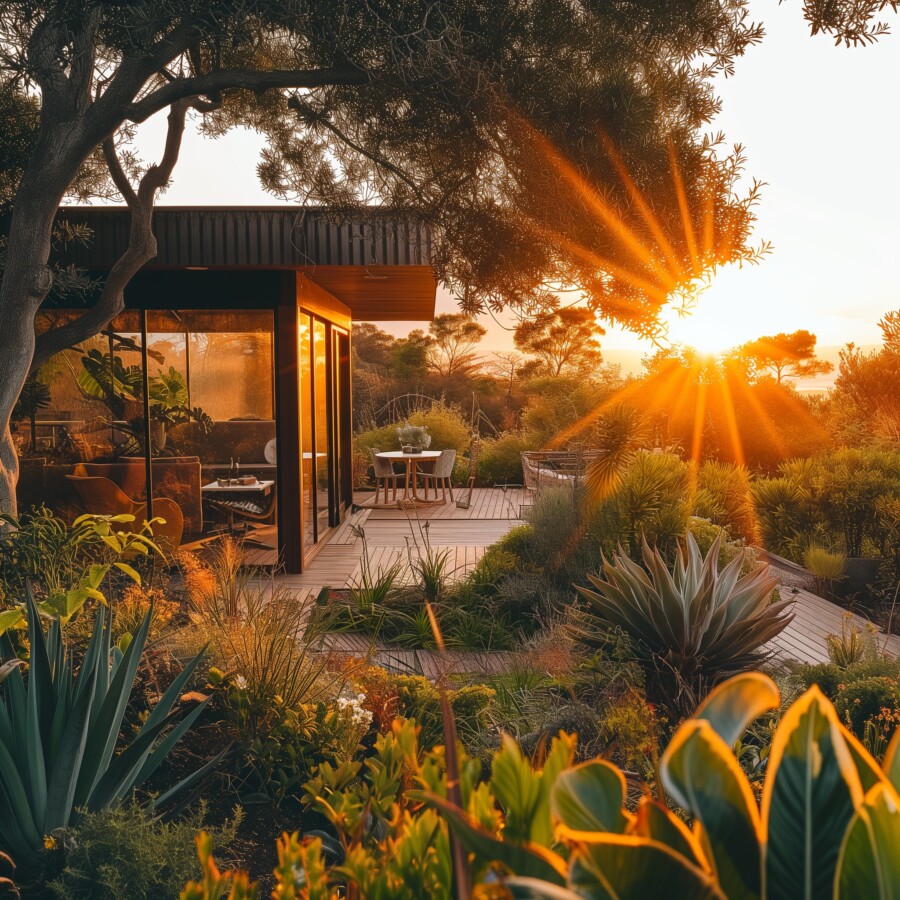
These 45 sustainable garden ideas combine visual inspiration with practical choices you can adapt to your climate, soil, budget, and available space. Start by identifying the garden’s biggest constraint—water loss, poor soil, limited room, low habitat value, or excessive maintenance—then choose the idea that solves that problem first.
A sustainable garden is designed to work with local conditions, keep rain and useful organic matter on site, protect soil, limit unnecessary inputs, and provide food or habitat where appropriate. It can look formal, modern, naturalistic, or compact; sustainability is a set of design decisions, not a single aesthetic.
What makes a garden sustainable?
The strongest designs do six things well: they match plants to the site, manage water deliberately, keep soil covered and biologically active, support useful ecological relationships, choose safe and durable materials, and remain realistic to maintain. Not every garden needs every feature. A well-placed shade planting or covered rain barrel can be more useful than adding several “green” products without a plan.
- Start with observation: map sun, drainage, wind, soil, existing plants, and how people move through the space.
- Choose plants by conditions: native and locally adapted plants are valuable only when they fit the actual site.
- Keep water on site safely: capture, slow, infiltrate, or recirculate it without creating foundation, mosquito, or drainage problems.
- Protect soil: test before amending, keep beds covered, and avoid repeated compaction.
- Build habitat in layers: combine food, water, shelter, and nesting or overwintering places.
- Plan the upkeep: select features the household or community can maintain for years.
Choose the best first project for your garden
| Primary goal | Good first project | Main caveat |
|---|---|---|
| Use less irrigation water | Group plants by water need, improve soil cover, and replace one poorly suited plant | New plants still need establishment watering |
| Manage roof or path runoff | Add a covered rain barrel, redirect a downspout, or investigate a rain garden | Plan overflow, foundation clearance, soil drainage, and local rules |
| Improve poor soil | Get a soil test, stop walking in beds, and add suitable mulch | Do not add fertilizer or compost automatically |
| Support pollinators | Plant pesticide-free flowers across multiple seasons and retain nesting habitat | Flowers alone do not create complete habitat |
| Grow some food | Start with herbs, a small raised bed, or an edible border | Check sun, soil safety, water access, and crop-specific needs |
| Use a small space better | Add a trellis, compact herb containers, or a multipurpose bench | Vertical systems need secure support, drainage, and frequent watering |
| Reduce material waste | Repair existing features or reuse known-clean containers | Avoid tires, unknown chemical containers, and deteriorating treated materials |
| Create a shared garden | Improve paths, seating, storage, water access, and maintenance rules | Long-term ownership matters more than the opening-day design |
Sustainable garden ideas in this gallery
- Start with the site: plants, shade, wind, and maintenance
- Capture rain and use water carefully
- Build soil and grow food
- Use small spaces efficiently and create restorative areas
- Create habitat for wildlife and pollinators
- Choose lower-impact materials, energy, lighting, and decor
- Design gardens for people, learning, and shared use
Start with the site: plants, shade, wind, and maintenance
The lowest-impact design usually begins with what is already present. Map sun, shade, drainage, wind, soil, mature plants, and maintenance constraints before adding new features.
1. Match native plants to the site
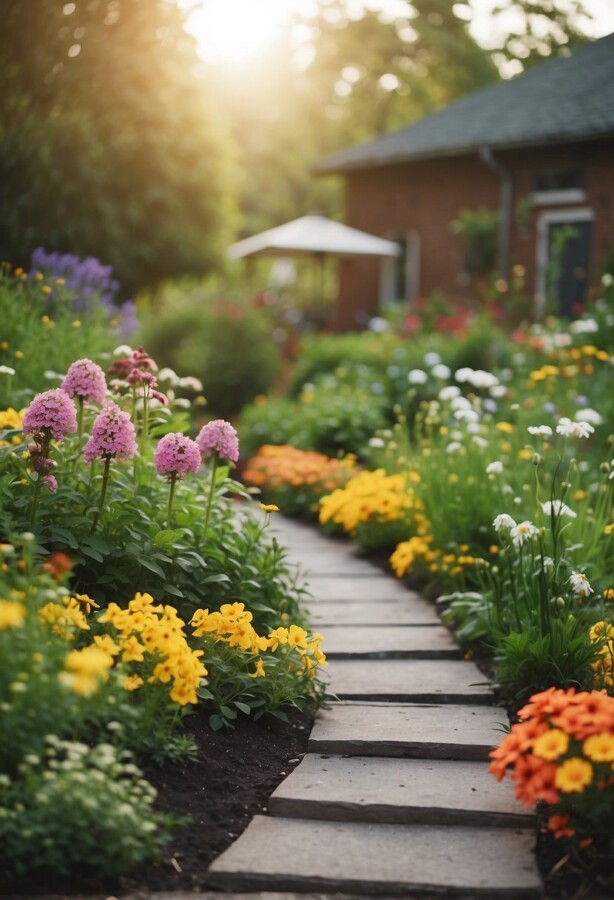
Begin with plants that fit the garden’s actual sun, soil texture, drainage, exposure, and winter conditions. Native species can support relationships with local insects and birds, but “native” does not automatically mean drought-proof; even well-matched plants usually need dependable watering while their roots establish. Use regional extension or conservation plant lists, and buy nursery-propagated stock rather than collecting plants from the wild. The U.S. Fish and Wildlife Service recommends choosing pesticide-free plants that suit the site. Before sourcing uncommon species, review why endangered plants need protection.
2. Use drought-tolerant plants where conditions are dry
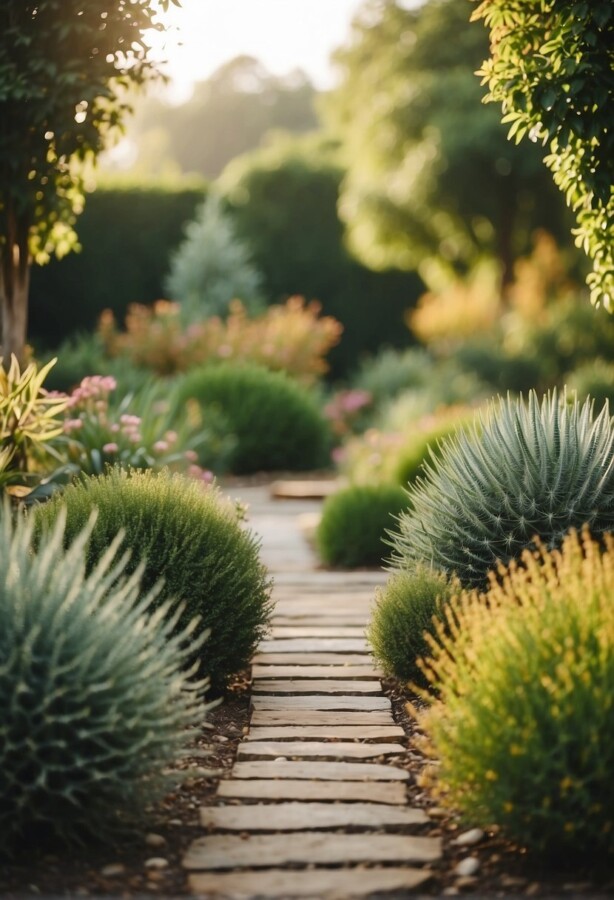
Map the driest parts of the property before choosing low-water plants. Sunny slopes, reflected heat near walls, and fast-draining soil may suit drought-tolerant species, while a low or compacted area may not. Group plants with similar water needs, use drip irrigation where practical, and reduce watering gradually after establishment rather than withholding water from new plants.
3. Build structure with suitable shrubs

Shrubs can provide privacy, seasonal flowers, fruit, nesting cover, and winter structure in one planting layer. Select species by mature width and height so they do not require constant shearing, and place fruiting shrubs where fallen berries will not create a problem on paths. A locally native shrub is useful only when its moisture, light, and space requirements match the site.
4. Plant for shade instead of fighting it
Replace thin turf beneath trees or beside shaded buildings with plants suited to the specific kind of shade: dry shade, moist shade, dappled light, or deep shade. Avoid cutting major roots or piling deep soil around tree trunks. A restrained layer of fallen leaves can protect soil and overwintering insects, while suitable groundcovers reduce bare soil without demanding the light required by lawn.
5. Slow wind with layered planting

A windbreak works best as a permeable planting rather than a solid green wall. Combine shrubs, small trees, and tough perennials, allowing some air to pass through while reducing wind speed around seating and vulnerable crops. Keep mature size, local fire-safety guidance, sightlines, and neighboring properties in mind before planting a dense boundary.
6. Plan for four-season interest

Build the planting plan around more than peak summer flowers. Spring bulbs and early bloomers, summer foliage, autumn fruit and seedheads, and winter bark or evergreen form can keep a garden legible all year. Leaving selected seedheads and stems through winter also preserves habitat; cut them back when new growth begins rather than clearing every bed in autumn.
7. Stagger seasonal flower beds

Choose a sequence of plants that flower at different times instead of relying on one brief peak. Repeat a few species through the bed for visual continuity, then add annuals only where they solve a specific gap. This approach can reduce seasonal replacement while extending food availability for pollinators.
8. Design maintenance before planting
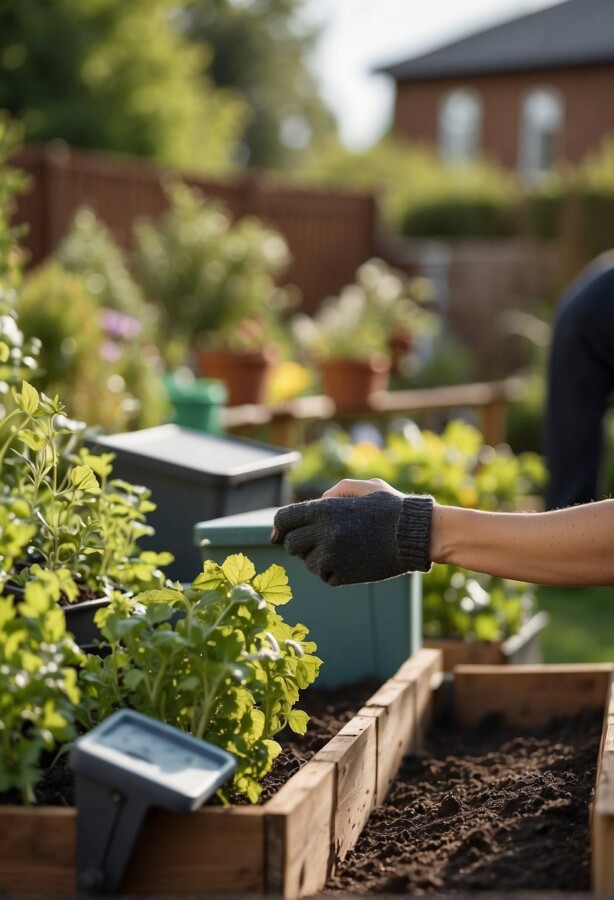
A garden is not sustainable if its upkeep exceeds the time, water, money, or skill available. Before planting, decide how beds will be reached, where leaves and prunings will go, which plants need irrigation, and who will handle pruning or replacement. Favor durable paths, accessible shutoff valves, clear bed edges, and plants that fit their allotted space.
Capture rain and use water carefully
Keep rain on the property where it can be used or absorbed safely. Storage, infiltration, recirculation, and permeable surfaces solve different problems, so choose the method that fits the site.
9. Capture and slow runoff
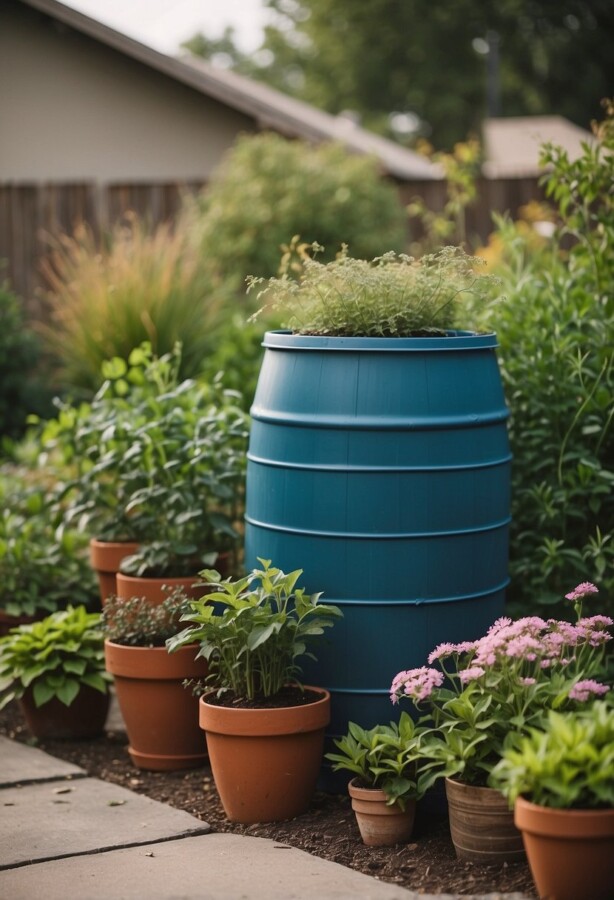
Treat rainfall as a site-design problem before buying irrigation equipment. Redirect suitable downspouts toward planted areas, contour beds to slow water, or consider a correctly sited rain garden. The U.S. Environmental Protection Agency explains that rain gardens are shallow planted depressions that collect runoff and let it soak into the ground. Keep infiltration features away from foundations, septic systems, and unsuitable soils, and locate underground utilities before digging.
10. Make water features recirculating or rain-fed

Use a closed-loop pump, a small basin, shade, and a controllable top-up line instead of a feature that constantly draws fresh water. Place splash-prone fountains where water can return to the basin rather than evaporate onto paving. If wildlife will drink from the feature, avoid treatments that could harm animals and provide shallow, stable access.
11. Add a covered rain barrel
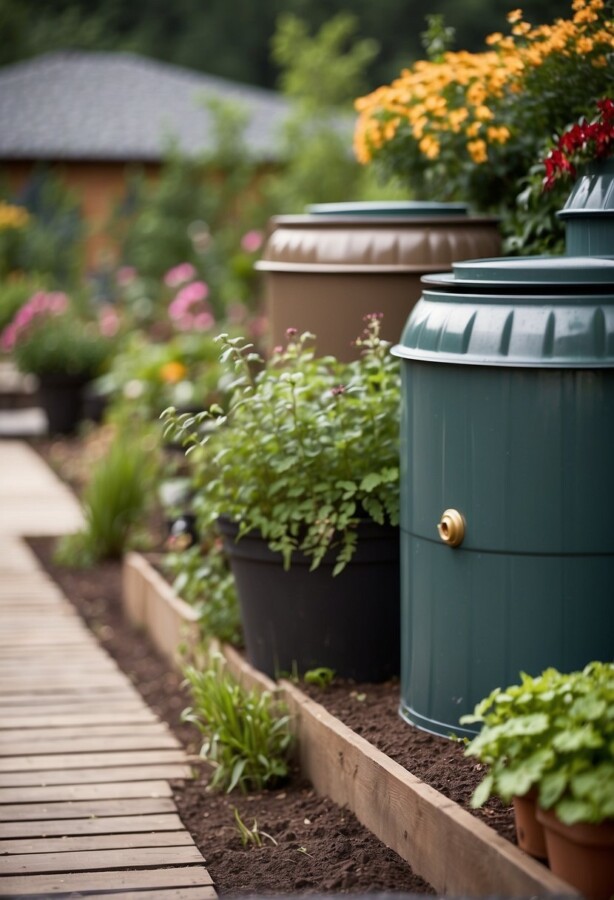
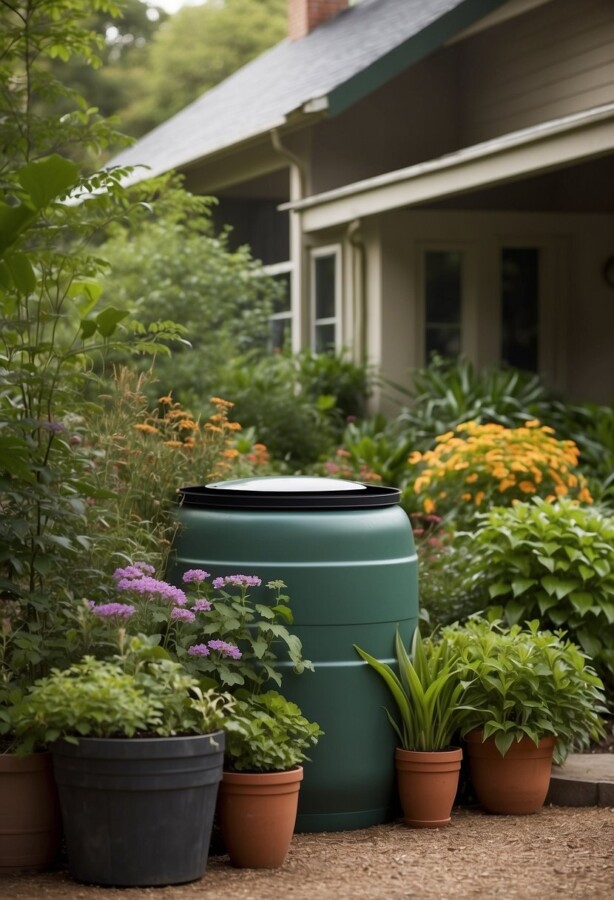
A rain barrel can supplement garden irrigation, but the result depends on local rainfall, roof area, storage volume, and garden demand. Use a tight cover or fine screen, secure the barrel on a stable base, and direct overflow away from the building. The CDC advises tightly covering rain barrels so mosquitoes cannot enter; also check local rainwater-harvesting rules and winterize the system where freezing is likely.
12. Build a wildlife-safe natural pond

Give a pond varied depths, gently sloping access, and an escape route for small animals. Plant the edges densely enough to provide cover, but avoid invasive aquatic species that can spread beyond the garden. Site the pond where leaf fall and runoff will be manageable, and include child-safety measures appropriate to the household and local requirements.
13. Choose permeable garden paths
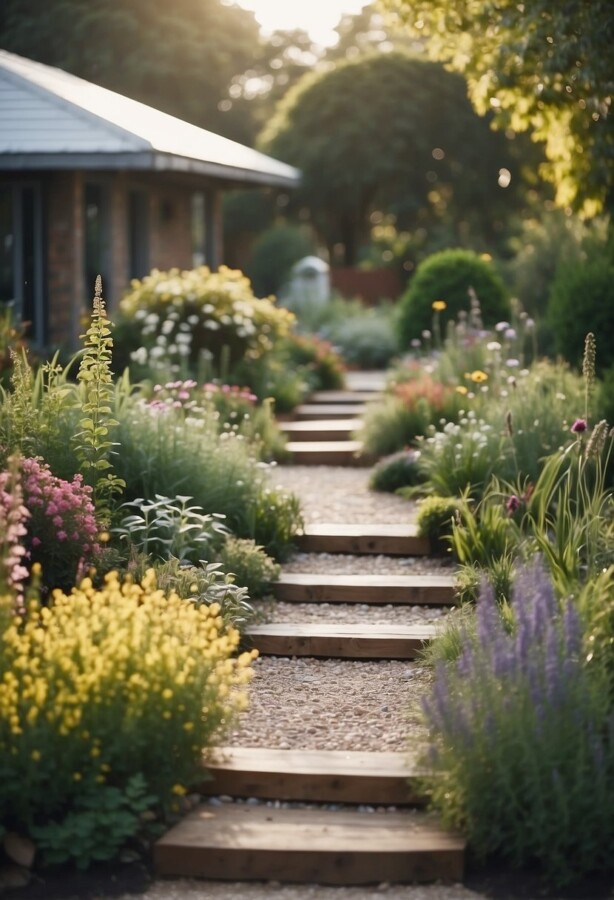
Use wood chips, compacted permeable aggregate, spaced pavers, or stone set with draining joints where the site and accessibility needs allow. The EPA describes permeable surfaces and planted systems as ways to store or infiltrate stormwater rather than sending it straight to drains. Reclaimed wood can work for edging, but it may rot or become slippery; do not use chemically treated or unknown timber around edible beds.
Build soil and grow food
Healthy soil, suitable amendments, and well-planned edible beds can reduce waste and improve productivity. The useful question is not whether a practice sounds natural, but whether it solves a measured need.
14. Turn food scraps into compost
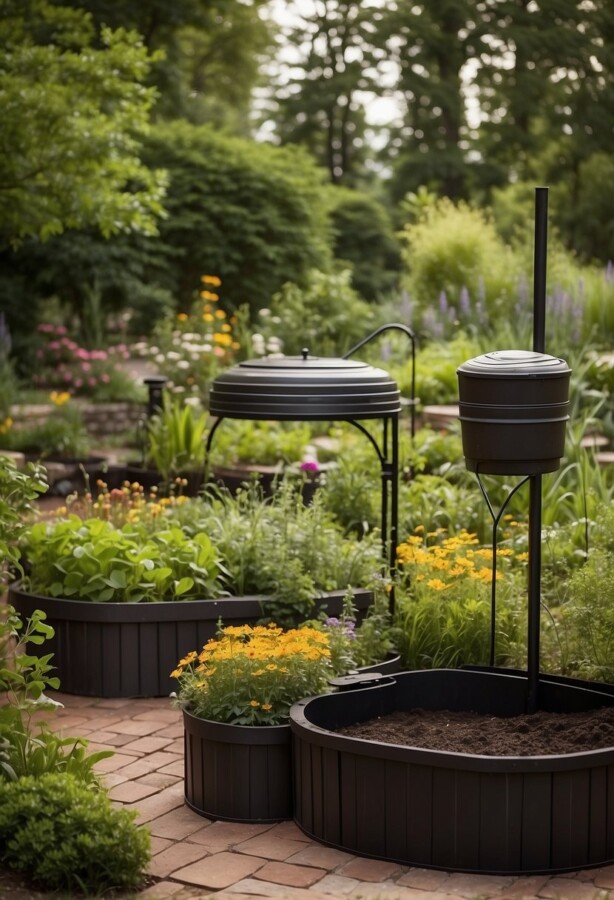
Build a backyard pile with roughly two to three volumes of carbon-rich “browns” for each volume of nitrogen-rich “greens,” then keep it about as damp as a wrung-out sponge and turn it when the center becomes compacted or odorous. Follow the EPA’s backyard composting guidance for suitable materials; meat, dairy, fats, pet waste, treated wood, and diseased plants do not belong in a typical home pile. Composting is also one practical part of broader ways to reduce waste.
15. Test and protect garden soil
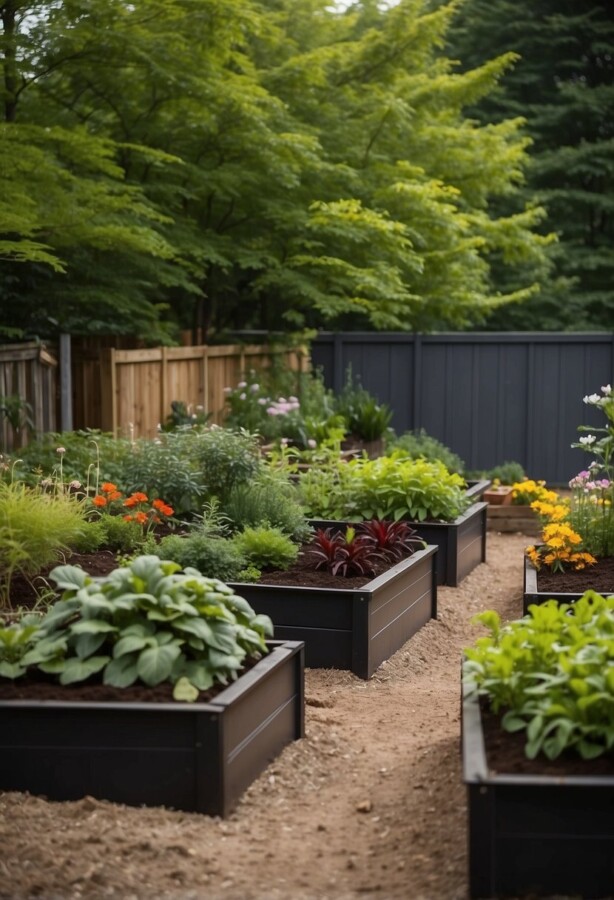
Start with a soil test rather than a generic amendment schedule. Results can identify pH and nutrient needs, while a site history may reveal whether urban soil should be tested for contaminants before growing food. Protect structure by avoiding foot traffic in beds, keeping soil covered, and adding mature compost only where it serves a defined need.
16. Fertilize according to need
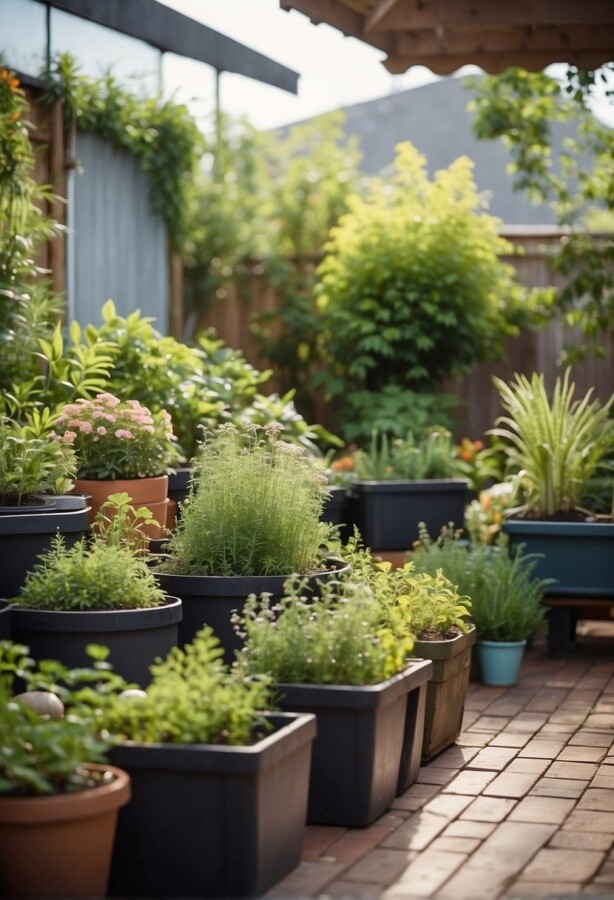
Use test results, crop requirements, and visible plant performance to decide whether fertilizer is needed. Compost can improve soil properties, but it is not a precise cure for every deficiency, and repeated heavy applications can add more nutrients than plants use. “Organic” describes a source or production method; it does not make overapplication harmless.
17. Plan a longer vegetable harvest

A longer harvest comes from climate-appropriate crop choices, staggered sowing dates, and season-extension tools such as row covers or cold frames—not from crop rotation alone. Use separate beds to make rotation and recordkeeping easier, but plan planting dates around local frost, heat, and daylight patterns. Leave enough access for harvesting without compacting the soil.
18. Blend edible plants into ornamental beds
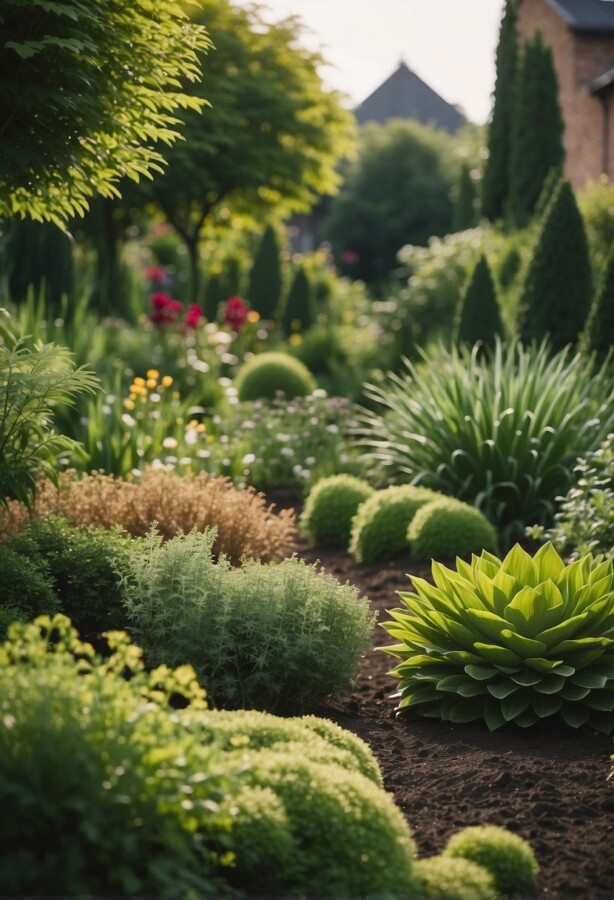
Use herbs, salad greens, compact vegetables, and berry plants as part of the planting composition rather than isolating every edible crop. Keep food plants in clean soil with suitable sun and convenient access for watering and harvest. Place frequently used herbs near the kitchen, and avoid planting edible groundcovers where pets, road runoff, or foot traffic make harvesting impractical.
19. Layer fruit trees and berry shrubs
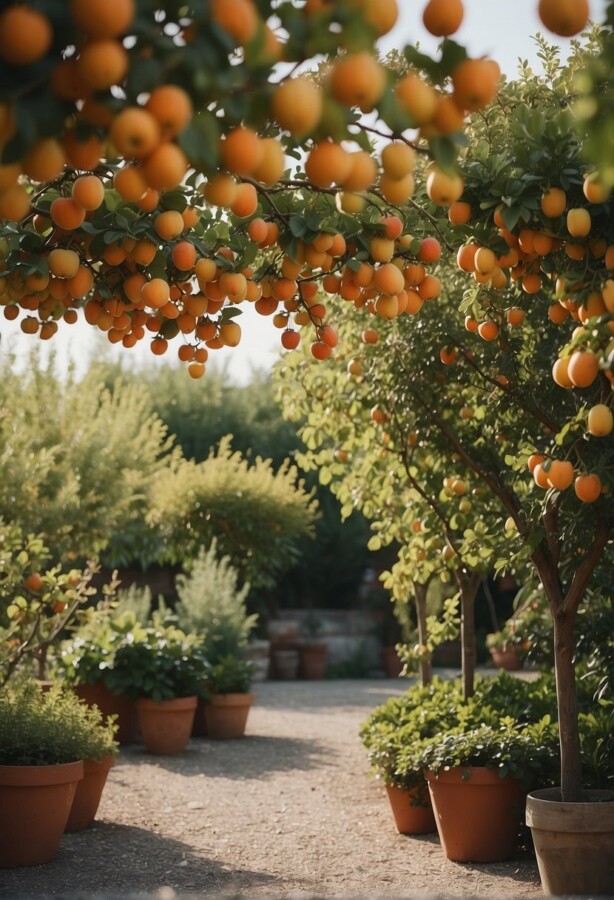
A dwarf or semi-dwarf fruit tree can form the upper layer of a compact edible garden, with smaller fruiting shrubs below or nearby. Check rootstock size, pollination needs, disease pressure, winter hardiness, and required soil conditions before combining crops. For example, blueberries require acidic soil and may need a separate bed or container rather than sharing the root zone of an apple tree.
20. Build reachable raised beds
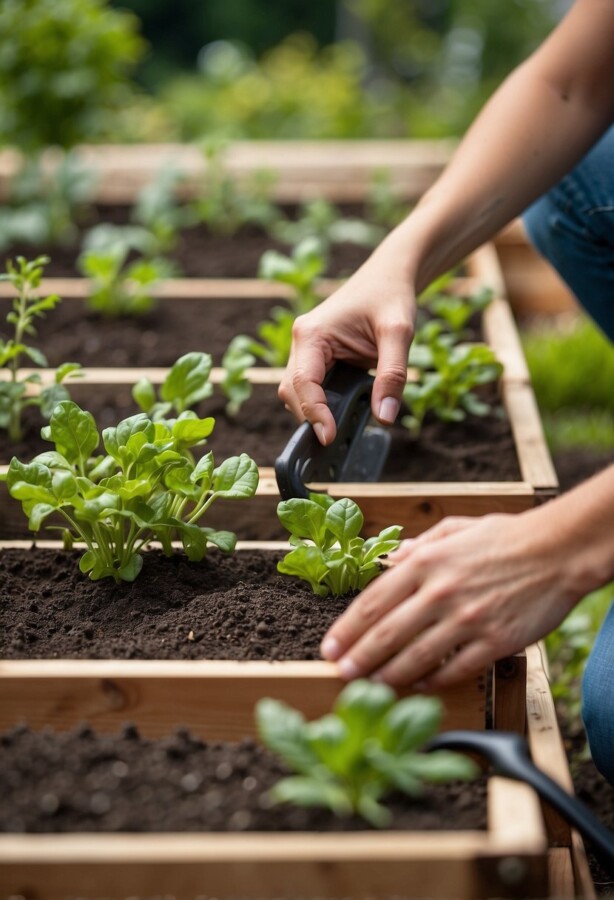
Size each bed from the gardener’s reach, not a standard kit dimension. The center should be accessible from the sides so nobody needs to step into the growing area; heights can also be adjusted for children or wheelchair users. The University of Minnesota Extension’s raised-bed guidance advises avoiding old lumber because earlier treatments may contain arsenic. Remember that elevated beds can dry faster than in-ground soil.
21. Treat companion planting as a targeted tool
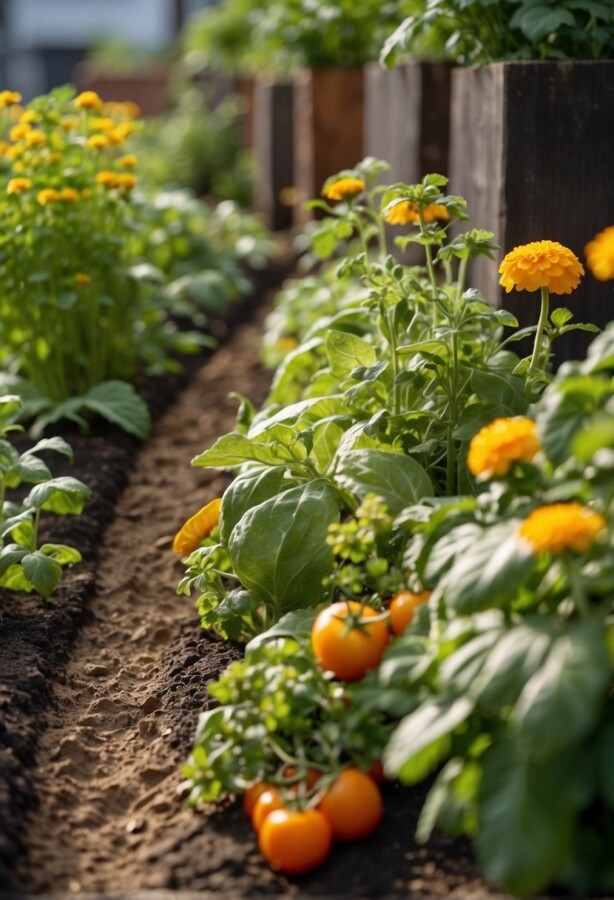
Use companion planting to solve a defined problem, such as attracting natural enemies, confusing a particular pest, or using space at different heights. Do not treat long online compatibility charts as universal rules. University of Minnesota Extension notes that many popular pairings lack research or have contradictory evidence. Tomatoes and basil can share a bed, but the pairing is not guaranteed to control every tomato pest.
22. Attract beneficial insects instead of buying them

Plant small, accessible flowers such as dill, coriander, or alyssum, leave some leaf litter or brush in safe places, and tolerate a small amount of prey so resident predators have food. Purchased lady beetles may fly away after release; habitat is the more durable investment. The University of Minnesota’s lady beetle guidance recommends continuous flowering plants, overwintering cover, and limited pesticide use.
23. Apply permaculture as site-based design
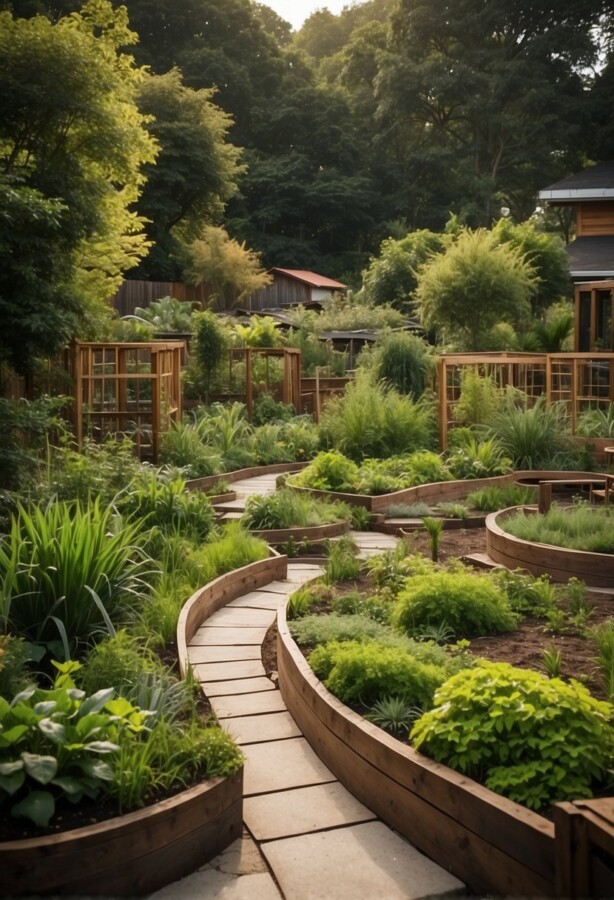
Start with observation: where water moves, where wind arrives, which areas are visited daily, and where organic materials accumulate. Then place high-use herbs, compost, water, tools, and paths so the system requires fewer unnecessary trips and inputs. Layered perennial planting can be useful, but the label “permaculture” does not excuse poor plant selection, unsafe materials, or unrealistic maintenance.
24. Cover bare soil with appropriate mulch
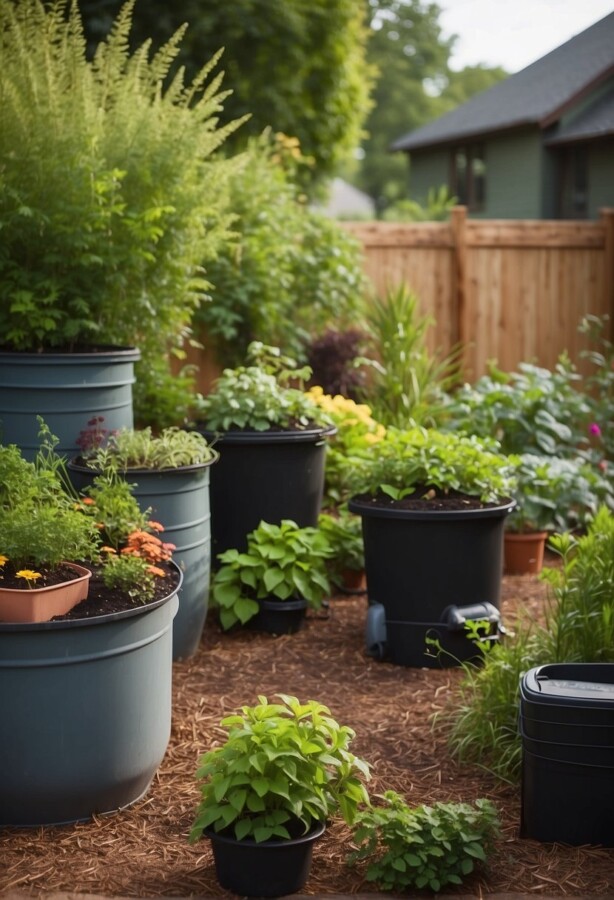
Mulch reduces evaporation, suppresses weeds, moderates soil temperature, and can add organic matter as it breaks down. Choose material and depth for the planting: coarse wood chips often suit paths and perennial beds, while clean straw may suit vegetables. Keep mulch away from trunks and crowns, and avoid piling it into a “volcano.” See the University of Minnesota’s mulch guidance for material-specific considerations.
Use small spaces efficiently and create restorative areas
A balcony, courtyard, or narrow yard can still grow food, hold rain, support insects, and provide a place to rest. Compact design works best when every element has a clear function.
25. Stack functions in a small garden
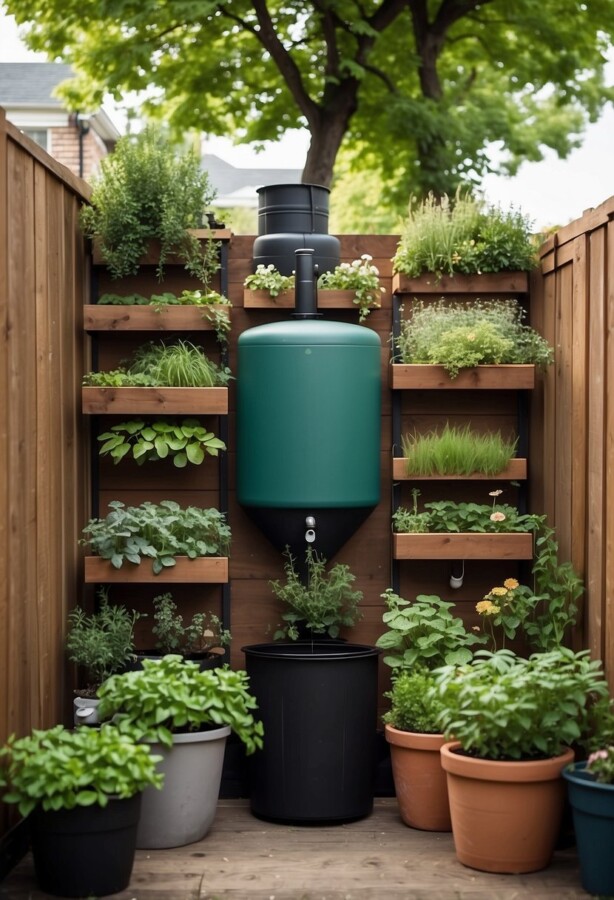
Give every feature more than one job. A narrow trellis can support beans and screen a view; a bench can contain tool storage; a dwarf shrub can provide structure, flowers, and cover. Preserve enough open circulation for pruning and watering, because an overcrowded small garden quickly becomes harder—not easier—to maintain.
26. Grow herbs in compact urban containers
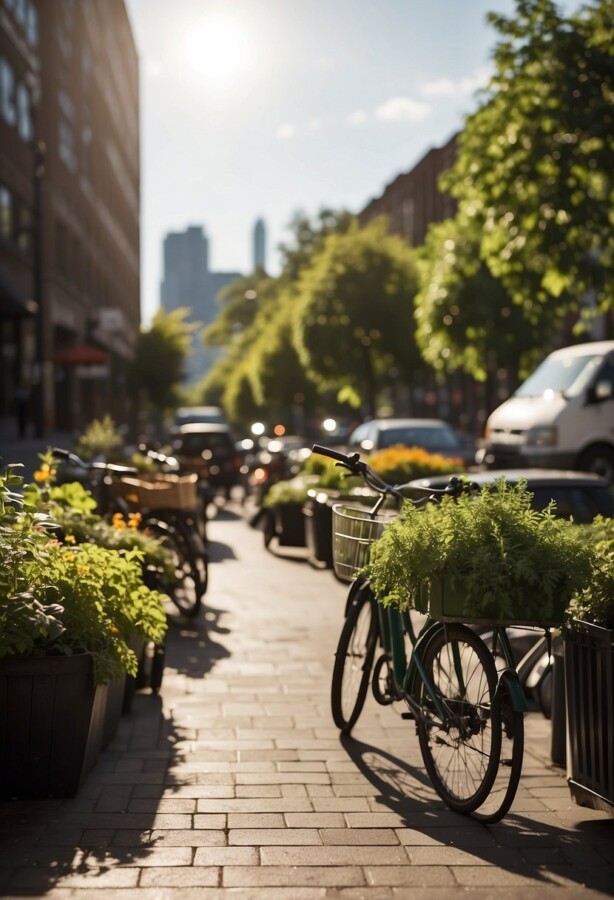
Place herbs where they will actually be harvested: near a kitchen door, balcony entrance, or outdoor cooking area. Group containers by light and water needs rather than appearance alone; rosemary and thyme generally prefer different moisture conditions from basil or parsley. Give mint its own container if spreading roots would be difficult to control.
27. Use walls and overhead supports carefully

Vertical systems free ground area, but they also expose plants to faster drying and can place significant weight on walls, roofs, or railings. Check load capacity, waterproofing, drainage, wind, and access before installation. Choose containers with enough root volume, and keep fire escapes, windows, utility equipment, and neighboring space clear.
28. Reuse safe containers with drainage
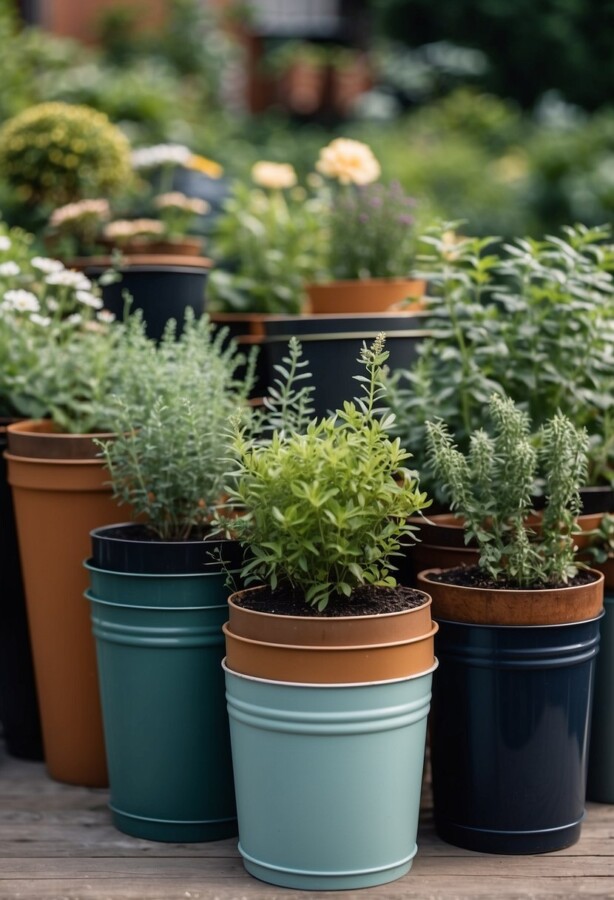
Buckets, metal tubs, and drawers can become planters when their previous use is known, the material is safe, and drainage can be added without weakening the container. Avoid vessels that held fuel, pesticides, industrial chemicals, or unknown substances. For food crops, use food-safe containers with enough soil volume and protect heat-sensitive roots from dark metal that becomes excessively hot.
29. Keep a minimalist garden biologically useful
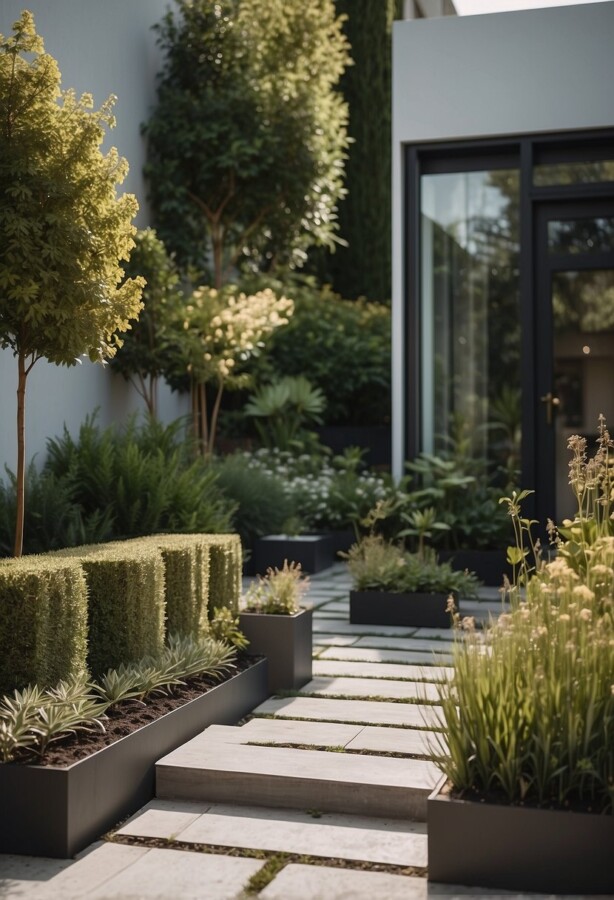
A sustainable garden does not need to look informal. Repeat a limited plant palette, keep the layout legible, and use a few durable materials—but avoid turning the space into sealed paving and sterile gravel. Even a minimalist plan can include permeable surfaces, layered plants, seasonal flowers, and places for insects to shelter.
30. Create a sheltered, low-input garden retreat

Use a shaded path, comfortable seating nearby, privacy, and a small number of sensory plants to create a quiet place without adding water-hungry lawn or elaborate equipment. Choose surfaces that are stable and accessible, and keep fragrant or thorny plants away from narrow circulation routes. The most sustainable version is one that remains pleasant with the maintenance you can consistently provide.
Create habitat for wildlife and pollinators
Wildlife-friendly design combines food, water, shelter, nesting sites, and low pesticide pressure. Flowers matter, but habitat structure and responsible maintenance matter just as much.
31. Provide food, water, cover, and nesting space
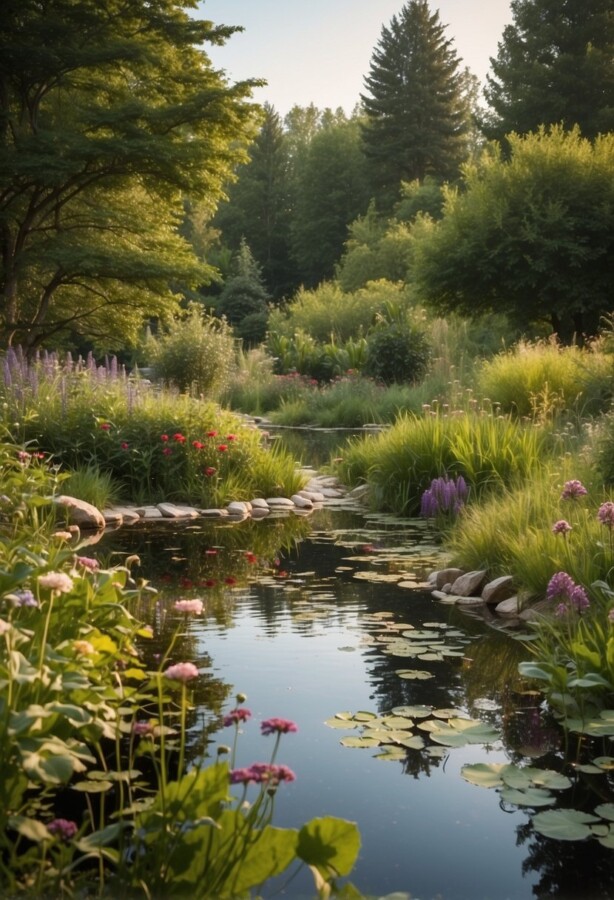
A wildlife garden needs more than flowers. Combine seasonal food, clean water, shelter from weather and predators, and suitable nesting or overwintering places. Use regional plants, retain some logs or leaves where safe, and minimize broad-spectrum pesticides. These choices connect a small garden to the wider importance of wildlife conservation.
32. Build habitat in layers
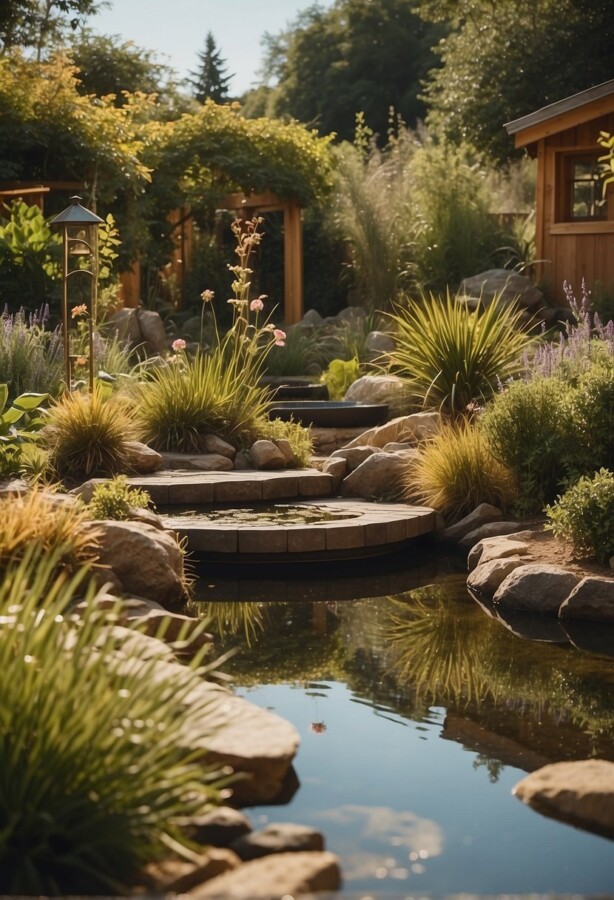
Use several vegetation heights: ground-level cover, flowering perennials, shrubs, and trees where space allows. Add a few cavities, stems, leaf layers, or deadwood features in locations that do not create a safety hazard. Structural variety gives animals more ways to feed, hide, nest, and respond to seasonal conditions—part of understanding how animals adapt to their environment.
33. Design for biodiversity, not just bloom count

Use a mix of plant species, growth forms, flower shapes, seed types, and seasonal roles rather than planting one “pollinator” variety in bulk. Preserve some bare ground, leaf litter, stems, cavities, and water where appropriate, and remove invasive species before they spread. A garden with varied structure usually serves more organisms than a bed selected only for visual peak bloom.
34. Plant bee forage across the seasons
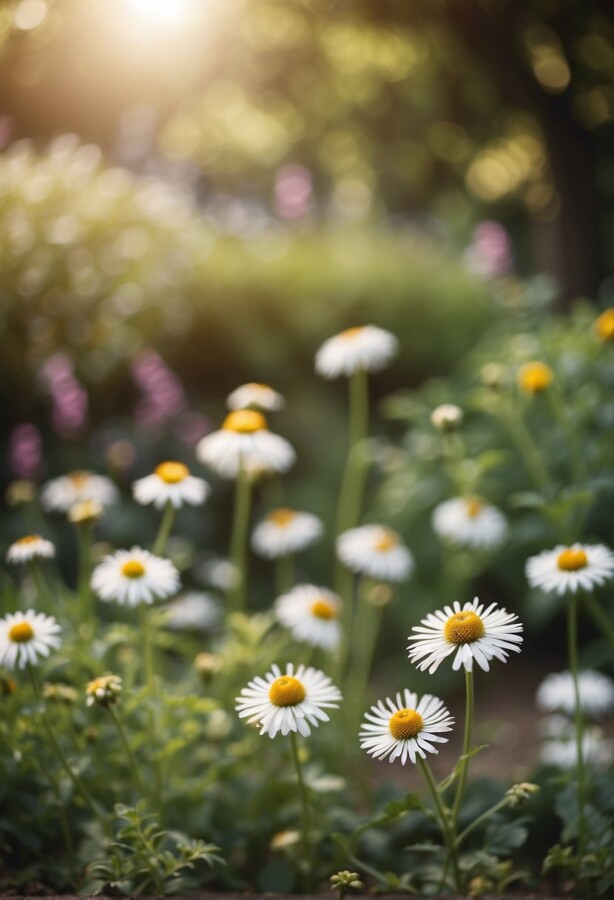
Select pesticide-free flowering plants that collectively bloom from early spring through autumn in your region. Include different flower forms so insects with different body sizes and mouthparts can feed. The U.S. Fish and Wildlife Service recommends native, site-suitable plants and warns against pesticide-treated stock in pollinator gardens.
35. Include nesting habitat for pollinators
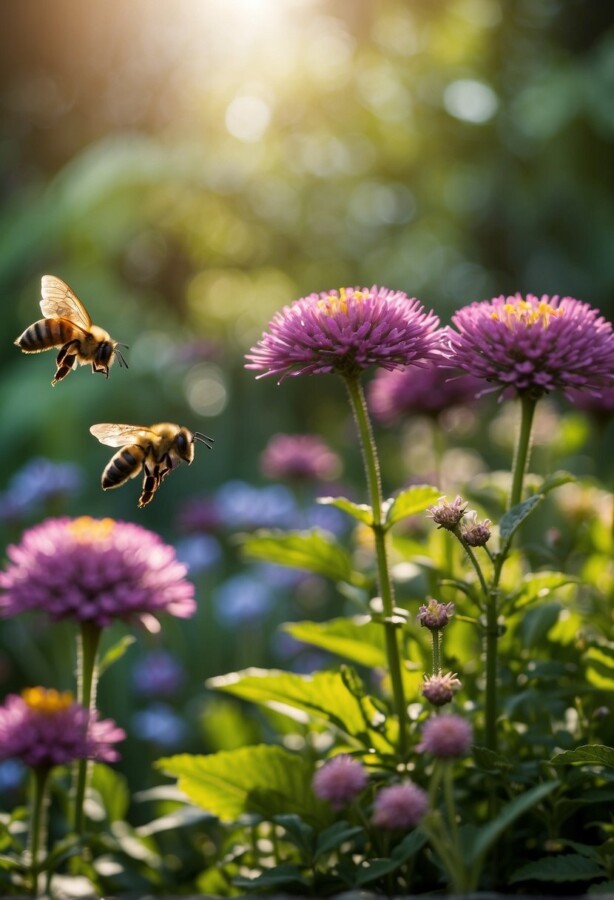
Flowers provide food, but many native bees also need undisturbed soil, hollow or pithy stems, crevices, or natural cavities. Leave small, well-drained patches of bare ground where safe and delay cutting selected stems until spring. Large insect hotels can concentrate parasites or disease when poorly designed or neglected. The Xerces Society recommends modest, dispersed, natural nesting materials unless the structure will be actively managed.
36. Maintain bird feeders and baths responsibly
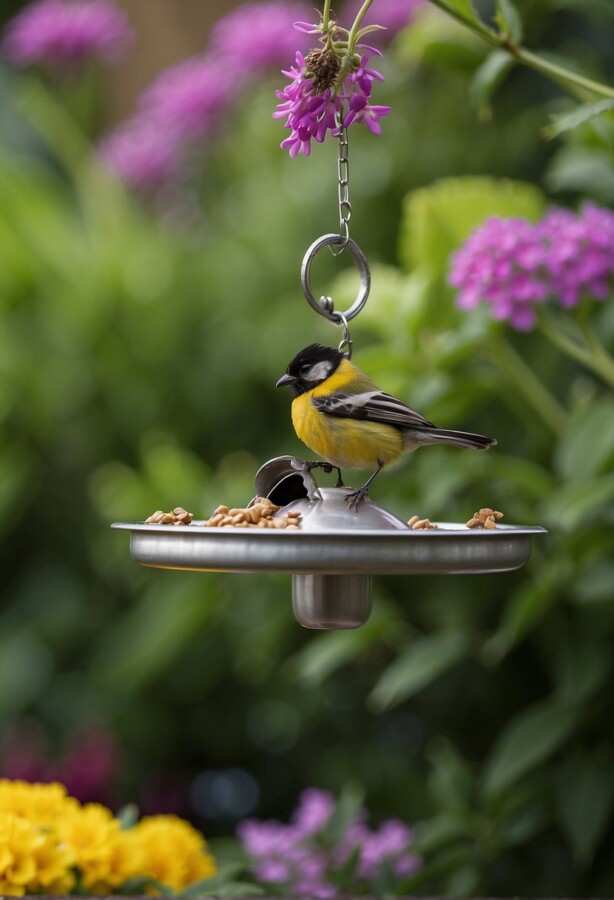
Place feeders where birds can see approaching predators and where spilled seed can be cleaned. Wash feeders routinely and pause feeding when local wildlife agencies report relevant disease outbreaks. Use a shallow, stable birdbath with a textured surface, refresh it often, and scrub it regularly; the CDC advises emptying and cleaning water-holding containers at least weekly to interrupt mosquito breeding.
37. Pair butterfly nectar plants with host plants

Adult butterflies need nectar, while caterpillars often depend on a narrow group of host plants. Identify butterflies native to the region, then include both food types and avoid pesticide-treated stock. Expect some chewed leaves: a host plant that remains visually untouched may not be serving its intended ecological role.
Choose lower-impact materials, energy, lighting, and decor
Reused, recycled, or solar-powered does not automatically mean safe, durable, or low-impact. Evaluate materials and equipment by toxicity, service life, repairability, energy demand, maintenance, and what happens when the item can no longer be used.
38. Avoid tires in edible garden beds
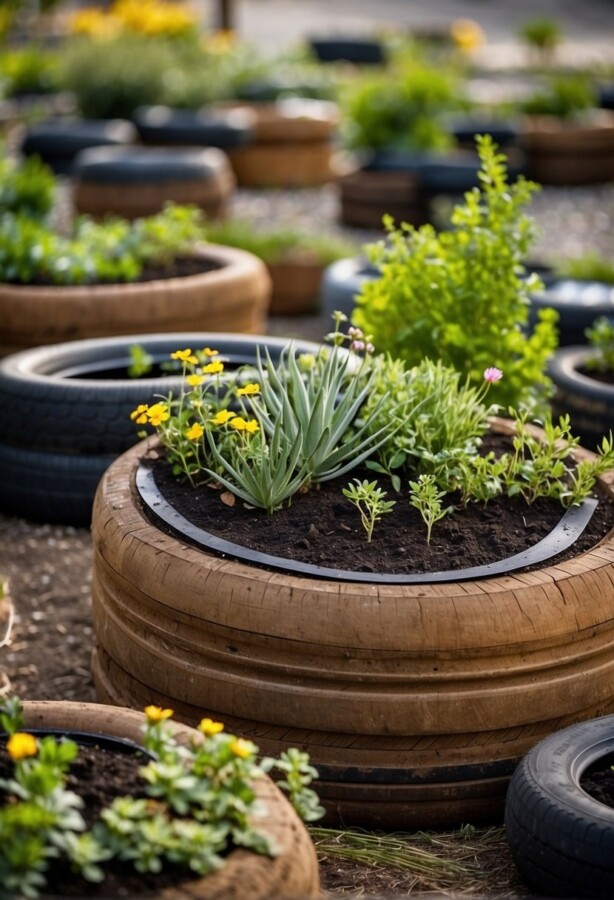
Old tires may look like a low-cost reuse project, but they are a poor choice for food gardens or children’s growing spaces. NC State Extension warns that tires contain metals and chemical additives that can leach as rubber breaks down. Keep this image as a cautionary example, not a recommendation; use certified food-safe planters, untreated wood, masonry, or known-clean containers instead.
39. Use solar power for defined garden functions—without over-lighting
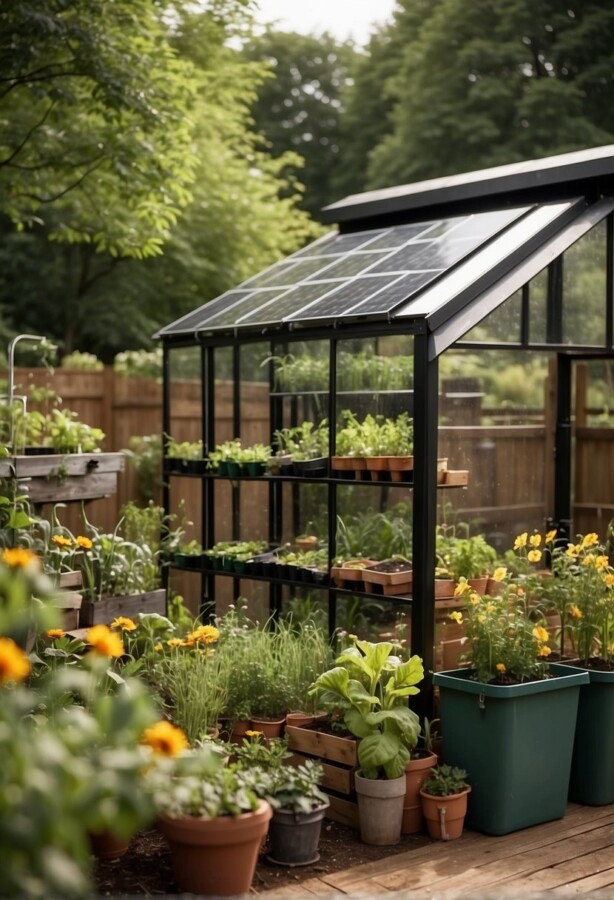
Solar panels can power greenhouse ventilation, pumps, sensors, or small tools when the electrical load and equipment justify installation. Start with passive ventilation and efficient equipment so the system does not need to offset avoidable demand. If solar garden lights are included, remember that the panel changes the energy source, not the ecological effect of light at night. Aim fixtures downward, keep brightness low, choose warm-colored light, and use timers or motion controls in line with DarkSky International’s responsible-lighting principles.
40. Choose durable, functional garden art
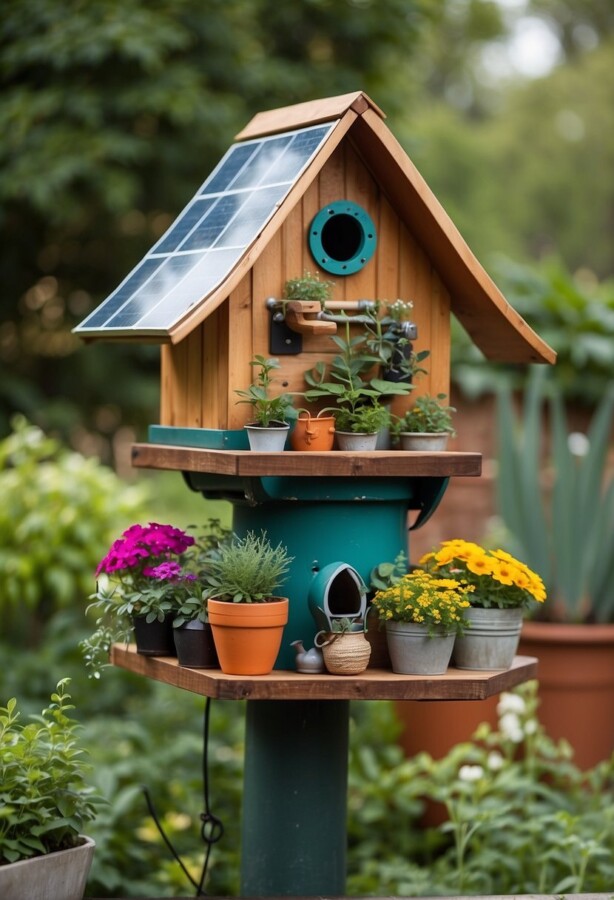
Reused or decorative material is valuable only when it is safe outdoors and lasts long enough to justify the work. Avoid peeling lead paint, brittle plastics, treated wood of unknown origin, sharp metal edges, and objects that trap stagnant water. Favor pieces that can be maintained, repaired, disassembled, or recycled when they reach the end of their useful life.
41. Choose durable, repairable garden equipment and furniture
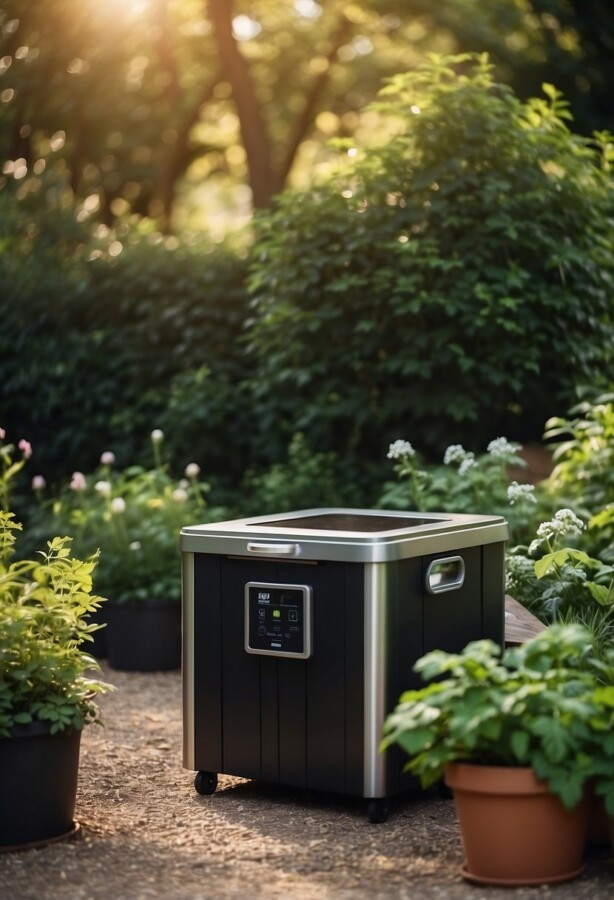
Evaluate garden appliances, tools, and furniture by service life, energy use, repairability, replaceable parts, material safety, and end-of-life options—not by one “eco” label. A device that cannot be serviced may create more waste than a simpler manual alternative. For furniture, durable wood from a traceable source, recycled metal, or high-quality recycled plastic can each be reasonable in the right climate. Covers, dry storage, and replaceable components often extend useful life more than frequent replacement.
Design gardens for people, learning, and shared use
A garden lasts when people can reach it, understand it, and share responsibility for it. Accessibility, storage, rules, and teaching features should be planned as carefully as the plants.
42. Make community gardens easy to share
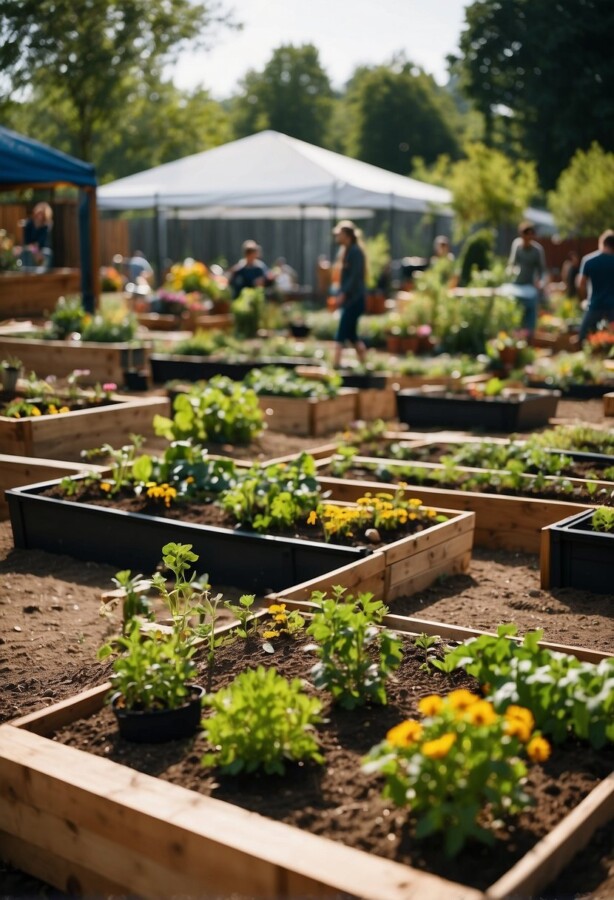
A shared garden needs social infrastructure as much as planting beds. Provide clear plot boundaries, accessible paths, shade, seating, water, secure tool storage, compost rules, and a visible maintenance schedule. Decide who approves changes, handles conflicts, and cares for common areas before adding features that depend on a few volunteers.
43. Turn sustainability features into teaching tools
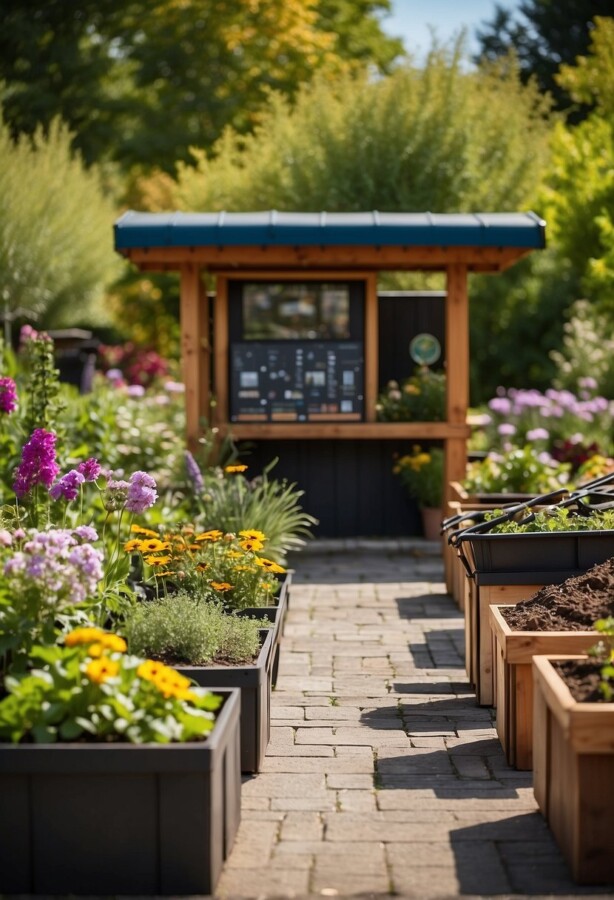
Use concise labels or QR-linked resources to explain where rainwater goes, what belongs in compost, why stems are left standing, or how a permeable path works. Pair each claim with a measurable or observable feature. This keeps the garden from becoming a collection of vague “green” labels and helps visitors transfer an idea to their own space.
44. Create an outdoor learning area
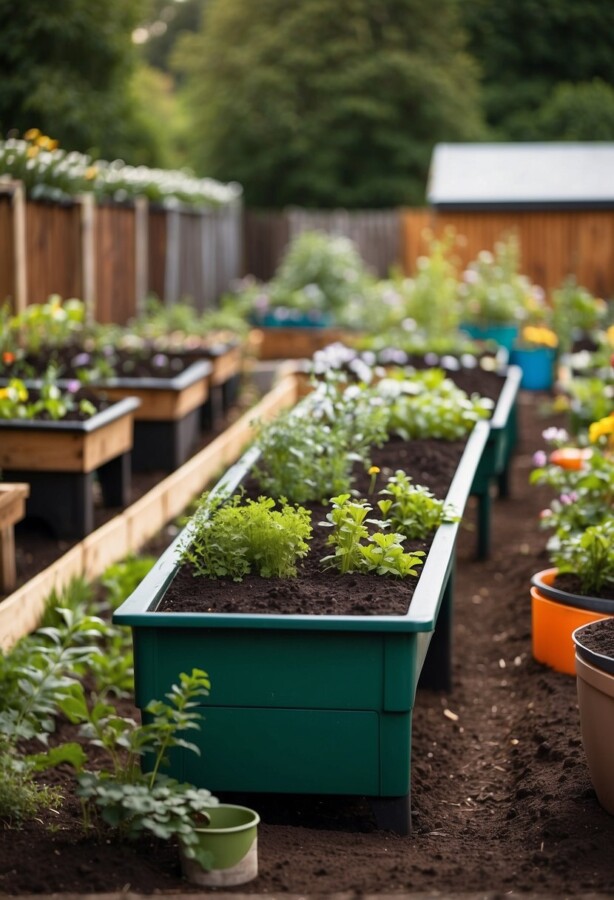
Arrange demonstration beds around a small teaching area with shade, seating, storage, and a nearby water source. Keep sightlines open so a facilitator can address the group, and include at least one accessible work surface. A rain gauge, compost thermometer, plant labels, and simple observation logs can turn maintenance into useful data rather than a one-time lesson.
45. Give children safe, reachable projects

Use low beds, broad paths, rounded edges, child-sized tools, and plants that give quick feedback, such as radishes, peas, beans, or herbs suited to the climate. Avoid unknown reclaimed materials, tire planters, toxic plants, and deep open water in children’s areas. A small supervised habitat project—such as a bundle of clean hollow stems or a shallow water dish that is emptied often—can teach observation without creating a large maintenance burden.
Frequently asked questions about sustainable garden ideas
What makes a garden sustainable?
A sustainable garden fits local conditions, protects soil, manages water carefully, limits unnecessary inputs, supports habitat or food, uses safe durable materials, and remains realistic to maintain.
Are native plants always drought-tolerant?
No. “Native” describes geographic origin, not water demand. Choose each species for the site’s sun, soil, drainage, and climate, and provide establishment watering when needed.
What is the easiest sustainable garden idea to start with?
Start by covering bare soil with an appropriate mulch or replacing one poorly suited plant. Both are manageable projects, but check the site first so the material or plant solves a real problem.
Can old tires be used as garden planters?
Avoid tires for edible crops and children’s gardens. As rubber ages, it can release contaminants. Use known-clean, food-safe containers, untreated wood, masonry, or purpose-built planters instead.
Do rain barrels need maintenance?
Yes. Keep the inlet screened and the barrel tightly covered, clean debris, inspect the base and overflow, follow local rules, and drain or winterize the system where freezing occurs.
Are solar garden lights wildlife-friendly?
Not automatically. Solar power reduces grid electricity use, but light can still disturb wildlife. Use warm, shielded, low-level fixtures with timers or motion controls, and leave dark areas.
How can a small garden be more sustainable?
Choose compact plants with more than one function, grow herbs near the kitchen, use secure vertical supports, collect a small amount of rainwater where legal, and avoid overcrowding.
Choose one change and measure the result
The most useful next step is not to copy all 45 ideas. Choose one constraint, make one well-matched change, and watch what happens over a season. Useful measures include less supplemental watering, fewer bare-soil weeds, healthier plants, more consistent harvests, safer access, or more wildlife using the space. Expand only when the first change is working and maintainable.