
The North Island brown kiwi (Apteryx mantelli) is a flightless, nocturnal bird found only in New Zealand and listed as Vulnerable by the IUCN. About 35,000 remain — the most common of the five kiwi species — but numbers slowly fall wherever introduced predators such as stoats and dogs are left uncontrolled.
- Status: Vulnerable (IUCN)
- Known as: North Island Brown Kiwi, Apteryx mantelli.
- Estimated numbers left in the wild: around 35,000 (roughly 10,000–20,000 mature adults).
Brown kiwi live only in New Zealand — they are found nowhere else in the world. About the size of a domestic chicken, they stand roughly 40 centimeters (16 inches) tall, and as flightless birds they have only tiny, vestigial wings hidden beneath their shaggy feathers.
Brown kiwi feed mainly on invertebrates — earthworms, grubs, beetle and cicada larvae, spiders and insects — along with some fallen fruit and seeds. Their loose, hair-like brown feathers act as insulation and help them blend into the forest floor where they forage at night.
Description
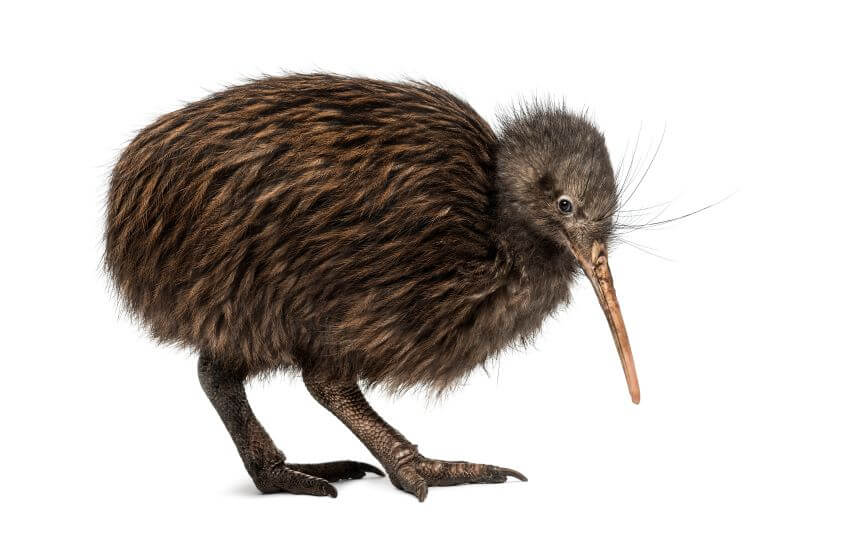
The brown kiwi is the national symbol of New Zealand — so iconic that New Zealanders themselves are nicknamed “Kiwis.” These birds are shy and easily stressed, and become active mainly after dark.
Only around 35,000 brown kiwi remain across New Zealand, and the IUCN lists the species as Vulnerable — not a bird that is safe from extinction. Brown kiwi are long-lived, commonly reaching 25 to 50 years. Their populations are held back by introduced predators — cats, ferrets, dogs and stoats — which prey on eggs, chicks and adults.
Anatomy and Appearance
The brown kiwi is a sturdy flightless bird covered in almost hair-like feathers, which lack the barbules found on most birds’ feathers. This gives these birds a decidedly shaggy look. The feathers are reddish-brown, though they are also streaked.
They have brown plumage with some white markings on their chest and around their eyes. These bird species are approximately the size of a chicken or even smaller than a chicken, and they have a long beak that is perfect for tearing into the bark to get at insects.
The kiwi has no tail and measures between 45 and 55 centimeters in length. Males are smaller than females, weighing 1.6 to 2.8 kilograms compared to the females’ 2.1 to 3.9 kilograms. The kiwi’s beak is long, slim, and curves slightly downwards.
See Related: Amsterdam Albatross
Location
New Zealand is the brown kiwi’s principal home, with an additional population on Stewart Island. The North Island Brown Kiwi lives in various habitats, from coastal sand dunes to tussock grasslands, native forests, and subalpine scrub. These bird species were located on the Eastern north island of New Zealand.
Brown Kiwi Habitat
Many of these species prefer to live in swampy areas with tall, dense vegetation. These bird species are primarily nocturnal- they sleep during the day and come out at night to hunt for food. They have a diet of snails, earthworms, insects, grubs, and other small animals.
These birds also swallow stones to help their gizzard grind up the animals it eats.
They are typically shy creatures that are difficult to spot in their natural habitat which is mostly in lowland sites or scrub like farmland. They are primarily active after sunset but will go looking for food during the day if necessary.
Brown Kiwi Diet and Nutrition
These birds are solitary birds most of the time, roosting in low vegetation and a species emerging at night to eat insects. Grubs and worms are found underground by smell – the kiwi’s nostrils are at the tip of its beak, allowing it to scent this quarry more easily.
They also eat many other things found in their habitat, however, including seeds and fruits like berries. Crayfish, frogs, beetles, and eels are also taken when the opportunity offers.
These shy birds may not have been nocturnal before the arrival of humans and the predators they introduced, though this is not certain. They check leaf litter in finding foods to eat.
Brown Kiwi Mating Habits
The kiwi is a very long-lived bird, and one generation may be anywhere from 30 to 50 years, though reproduction is now believed to be somewhat faster.
They are monogamous, and a male and females remain together for decades once bonded. They use their loud nocturnal calls to keep in touch and share a burrow periodically during the breeding season.
The female lays one enormous egg — about 20% of her body weight, among the largest eggs relative to body size of any bird.
The male incubates this egg for up to 92 days, and the young bird is soon able to fend for itself after hatching, though it often stays near its parents until the next breeding season. These bird species hold the world record for laying the largest bird egg relative to their body size.
These species make their nests in hollow logs, burrow dug, or several burrows, and they lay their eggs in these nests. They are monogamous birds, meaning they mate with one partner for life.
Males are responsible for incubating the eggs, in a hollow log and they also take care of the young chicks once they hatch. Their chicks are able to leave the nest and fend for themselves when they are about two months old.
The male does almost all of the incubating, sitting on the single egg for roughly 75 to 90 days. Chicks hatch fully feathered — a miniature version of the adult — and can leave the burrow to find food within their first week, though they often stay near their parents for a while.
Role in the Ecosystems
These species cover many aspects of the ecosystem. These animals are omnivores, which means that kiwis eat plants and other animals.
They are an important part of the ecosystem because they help to keep insect populations in check. They were also important seed dispersal species, which is good because they will go to different areas of their native forests to find food.
The brown kiwi is a flightless bird found only in New Zealand. If it became extinct, it would be a major loss to its ecosystem: kiwi help disperse seeds and keep invertebrate populations in check, so without them plant diversity and soil health would suffer.
These animals are also important in maintaining soil health. So, if we lose the North Island Brown Kiwi, we lose more than just an interesting animal-we lose essential members of our ecosystem that play a crucial role in keeping everything balanced.
Relationship With Humans
Brown kiwi hold a special place in New Zealand culture — they are a national icon and are fully protected by law. Far from being hunted, they are the focus of one of the country’s largest community-led conservation efforts.
The real drivers of their decline are introduced mammals, not hunting: stoats kill most kiwi chicks, while dogs and ferrets kill adults. Without predator control, only about 5% of chicks survive to adulthood, and unmanaged populations fall by roughly 2% a year.
Brown Kiwi Facts
Here are the interesting and fun facts you need to know about Brown Kiwi Facts
- They live only in New Zealand and are the most common of the five kiwi species.
- They are flightless and nocturnal, foraging on the forest floor at night by smell.
- They eat mostly invertebrates — worms, grubs and insects — plus some fallen fruit.
- Their nostrils sit at the very tip of the beak, a feature unique among birds.
- Their main threats are introduced predators — stoats, dogs, ferrets and cats — not humans.
- The female lays one of the largest eggs relative to body size of any bird.
See Related: How Do Animals Adapt to Their Environment?
Conservation Status
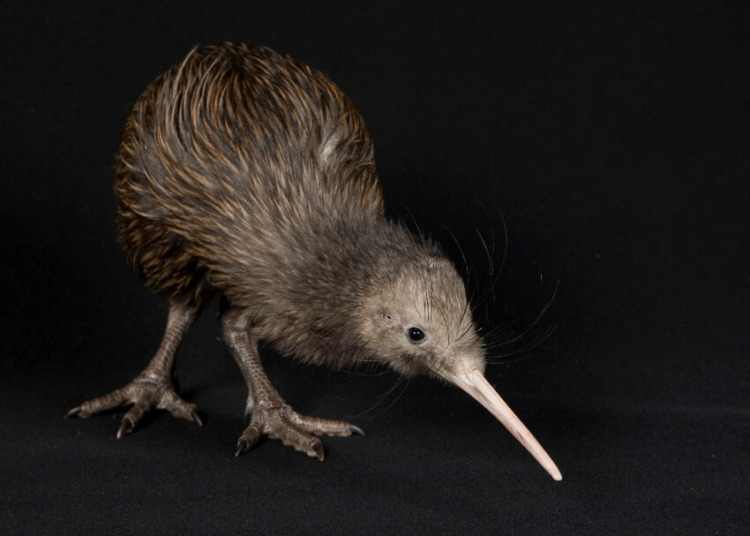
The IUCN lists the brown kiwi as Vulnerable, with an estimated 35,000 birds remaining — the most numerous kiwi, but still slowly declining in areas without predator control.
Brown kiwi are found only in New Zealand, and their main threats are introduced predators — not humans. Their populations have declined over time due to predation by stoats, dogs and other introduced mammals, together with historic habitat loss.
There are a few organizations that are working to conserve these bird species populations, including the New Zealand Department of Conservation and Forest Lifeforce Foundation.
Threats
The overwhelmingly central source of danger to the brown kiwi today is the activity of introduced predators. Different predators threaten different stages of the birds’ life cycle: stoats are by far the biggest killer of chicks, rats and cats take eggs and young chicks, and dogs and ferrets kill adult birds.
Brown kiwi are not hunted — they are a fully protected national icon. Their decline is driven almost entirely by introduced mammalian predators: stoats, ferrets, cats, dogs and rats, which prey on eggs, chicks and adults at different life stages.
Dogs and ferrets can kill adult birds and do so in those areas where they are present. Populations not exposed to these risks are more stable than those where predation is a risk.
While predators are now the dominant threat, historic habitat loss and fragmentation shrank kiwi range and still limit where populations can recover. Uncontrolled dogs remain the single biggest killer of adult kiwi wherever the two overlap.
See Related: Extinction vs. Threatened vs. Extinct Species
Conservation efforts
Government conservation efforts and non-profit organizations alike are being used to help preserve the kiwi for the future. Control and culling of predators are naturally central to most of these efforts.
Another conservation approach is Operation Nest Egg, which involves taking eggs and sub-adults out of the wild to help kiwi chicks survive and keeping them until the kiwis are large enough to be safe from most of the introduced predators. This method seems to be paying dividends in a rising kiwi population in the Haast area.
Other conservation efforts:
- Brown Kiwis are vulnerable because of human predators. These new birds should be protected in the wild in North Island and should have more kiwi zoos to help increase their population.
- These bird species should be added to no-kill policies nationwide, as well as being incorporated into the animal law curriculum for schools to teach what it means to protect animals like Brown kiwis.
- With around 35,000 birds left but numbers still falling in unmanaged areas, sustained funding for predator control remains essential.
See Related: Fascinating facts About Conservation
Organizations
Kiwis for Kiwi
Kiwis for Kiwi is a newly founded fundraising and advocacy organization formed in October 2012 to support different kiwi conservation projects throughout New Zealand.
Whakatane Kiwi Trust
The Whakatane Kiwi Trust funds the Whakatane Kiwi Project in New Zealand to protect the Northern brown kiwi. Funding goes towards predator control, breeding programs, mammalian pest control programs, and awareness projects.
Others
These species were also under the care of various organizations such as the Smithsonian’s National Zoo and Conservation Biology Institute. It is where in Smithsonian’s National Zoo the species is protected as well as Conservation Biology Institute helps in researching about these kiwi species.
See Related: Best Wildlife Conservation Jobs
Final Thoughts
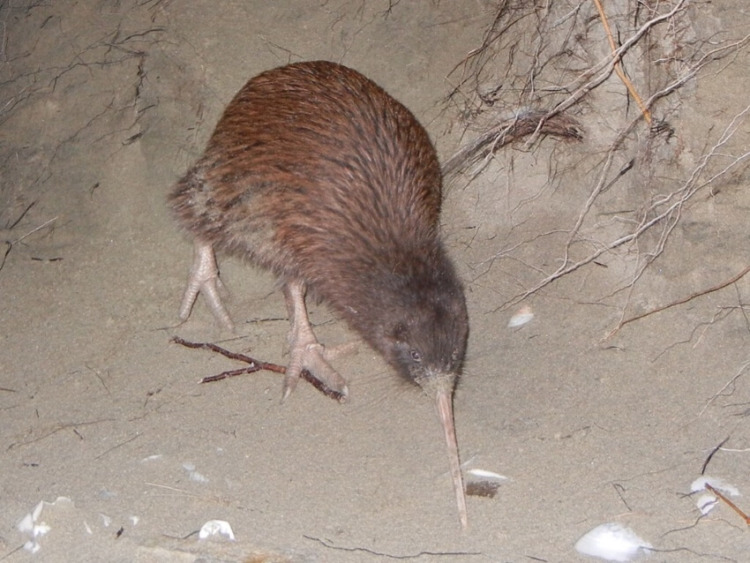
The brown kiwi is New Zealand’s most common kiwi, yet with about 35,000 birds left and slow declines in unmanaged areas it remains Vulnerable. These flightless birds forage on the ground at night, feeding mainly on invertebrates with some fallen fruit.
According to the IUCN, roughly 35,000 brown kiwi remain. Their numbers have fallen over time due to introduced predators and historic habitat loss — but intensive predator control and egg-rearing programs are now reversing the decline in managed areas.
FAQ
What is Brown kiwi?
Brown Kiwi is the North Island Brown Kiwi or Brown kiwi (Apteryx mantelli). They are exclusively native to New Zealand and are currently classified as a vulnerable species.
They are flightless and nocturnal, with tiny vestigial wings, coarse hair-like feathers, and nostrils at the very tip of a long bill — a bird found nowhere else on Earth.
Why are Brown kiwis vulnerable?
Brown kiwi are Vulnerable mainly because of introduced predators. About 35,000 remain in New Zealand, but stoats kill most chicks while dogs and ferrets kill adults, so numbers keep falling wherever predators aren’t controlled.
In fact, without predator control only about 5% of kiwi chicks survive to adulthood — most are killed by stoats before they are six months old.
Intensive predator control and egg-rearing programs such as Operation Nest Egg can lift chick survival to around 65%, which is helping some populations recover.
Community-led trapping, kiwi sanctuaries and predator-free islands are now central to keeping the species safe.
Are Brown kiwis endangered or extinct?
North Island Brown Kiwi or brown kiwi is currently considered to be vulnerable animals. Their main threats are introduced predators — stoats, dogs, ferrets and cats — not humans. Kiwi are fully protected, but without ongoing predator control their numbers keep declining, so sustained conservation is what stands between them and extinction.
Other Species Profile
Related Resources
See Related: Brown Hyena: Is This Animal Endangered?