
Controlling water flow can generate renewable electricity, store energy, supply irrigation water, support navigation, and reduce some flood risks. The tradeoff is that dams, reservoirs, diversions, and timed releases can disrupt fish migration, sediment movement, water temperature, habitats, and downstream communities.
The environmental result depends on more than whether a project is labeled renewable. Its location, reservoir size, operating rules, fish passage, sediment management, climate exposure, safety program, and treatment of affected communities all matter.
This guide examines 17 water flow pros and cons: eight potential benefits and nine significant limitations. It focuses on controlled river flow for hydropower and water management rather than household water pressure or plumbing equipment.
Key takeaways
- Hydropower is renewable because it depends on the water cycle, but individual projects are not automatically environmentally sustainable.
- Reservoir hydropower can respond quickly to electricity demand, while pumped storage can shift energy from low-demand to high-demand periods.
- Dams can support irrigation, water supply, navigation, recreation, and flood management, but these purposes may compete with electricity generation and ecological needs.
- Changing a river’s timing, depth, temperature, sediment, and connectivity can affect ecosystems far beyond the reservoir itself.
- Hydropower has no fuel-combustion emissions during generation, but construction and some reservoirs produce lifecycle greenhouse gas emissions.
- Drought, changing precipitation, aging infrastructure, and competing water demands can reduce reliability.
What does controlled water flow mean?
Water flow is the movement of water through a river, stream, channel, pipe, or hydraulic structure. In river science, streamflow or discharge describes the volume of water passing a location during a defined period.
Humans control river flow through dams, reservoirs, weirs, gates, canals, diversions, levees, and hydropower facilities. Operators may store water when inflow is high and release it later for electricity, irrigation, drinking-water supply, navigation, flood management, or ecological requirements.
That broader scope distinguishes this guide from our separate comparison of the pros and cons of hydroelectric energy.
How controlled water flow produces electricity
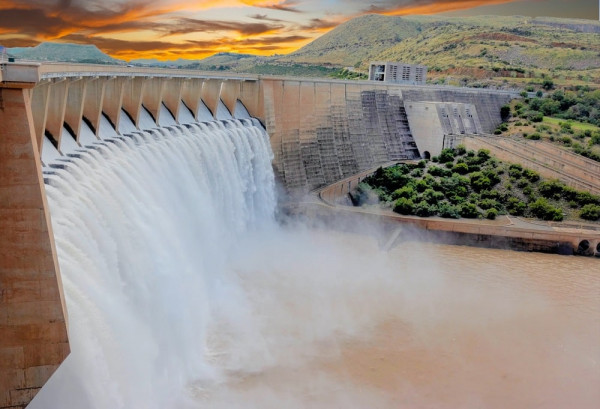
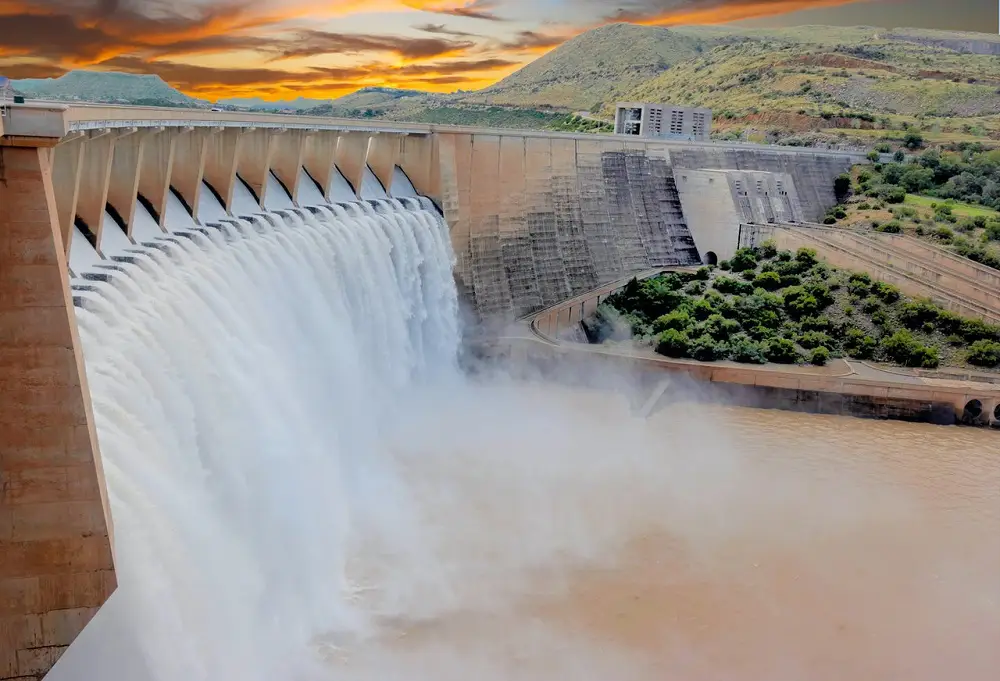
Hydropower converts the energy of moving or falling water into mechanical energy and then electricity. Water passes through a penstock or channel, turns a turbine, and drives a generator.
The amount of available power depends mainly on two factors:
- Flow: the volume of water moving through the system.
- Head: the change in elevation or water pressure between the intake and turbine.
The U.S. Energy Information Administration explains that greater flow and greater head generally allow a facility to produce more electricity. In simplified engineering terms, potential output can be represented as P ≈ ρgQHη, where Q is flow, H is head, and η represents system efficiency. See the EIA’s explanation of hydropower for the underlying mechanics.
Three common hydropower configurations
| System | How it works | Primary tradeoff |
|---|---|---|
| Impoundment | A dam stores water in a reservoir and releases it through turbines when needed. | Provides storage and dispatchable output but usually causes the largest land and river changes. |
| Run-of-river or diversion | Some river flow is directed through a turbine with little or no large storage reservoir. | May flood less land but remains dependent on seasonal flow and can still alter habitat and fish movement. |
| Pumped storage | Electricity pumps water to an upper reservoir; the water is later released to generate electricity. | Provides energy storage rather than new primary energy and loses some electricity during the cycle. |
Hydropower remains a material part of electricity systems. The EIA reports that it supplied about 5.6% of U.S. utility-scale electricity and 23.1% of U.S. utility-scale renewable generation in 2025. Globally, the International Hydropower Association reported that pumped-storage capacity passed 200 gigawatts in 2025. These figures describe scale, not environmental performance; individual projects still require site-specific evaluation.
Water flow pros and cons at a glance
| Potential benefit | Related drawback |
|---|---|
| Renewable electricity | Reservoirs and construction are not emission-free |
| Fast, controllable power output | Flow changes can damage downstream ecosystems |
| Large-scale energy storage | Pumped storage consumes more electricity than it returns |
| Flood-management capacity | Benefits depend on available reservoir space and operating decisions |
| Irrigation and water supply | Water allocation can reduce downstream flows |
| Navigation and recreation | Reservoirs may replace rivers, wetlands, farms, and cultural sites |
| Long operating life | Construction is expensive and maintenance remains essential |
| Regional economic value | Costs and benefits may be distributed unequally |
| Drought buffering through storage | Long droughts can reduce both water supply and electricity generation |
Benefits of controlling water flow
1. Water flow can generate renewable electricity
Hydropower uses water replenished through precipitation, runoff, and the wider water cycle. It does not require a continuously purchased fuel such as coal or natural gas.
Renewable does not mean unlimited, however. The quantity of usable water varies by location, season, snowpack, rainfall, evaporation, environmental restrictions, and competing demand.
2. Generation produces little direct air pollution
A turbine does not burn fuel while producing electricity. Operating a hydropower generator therefore avoids the direct smokestack emissions associated with fossil-fuel combustion.
The accurate claim is that hydropower generally has low operational emissions—not that it creates no pollution. Dam construction, concrete and steel production, land clearing, transmission infrastructure, and reservoir greenhouse gases contribute to its lifecycle footprint. Readers comparing technologies should consider electricity sources with the lowest greenhouse gas emissions on a lifecycle basis.
3. Reservoir hydropower can respond quickly to demand
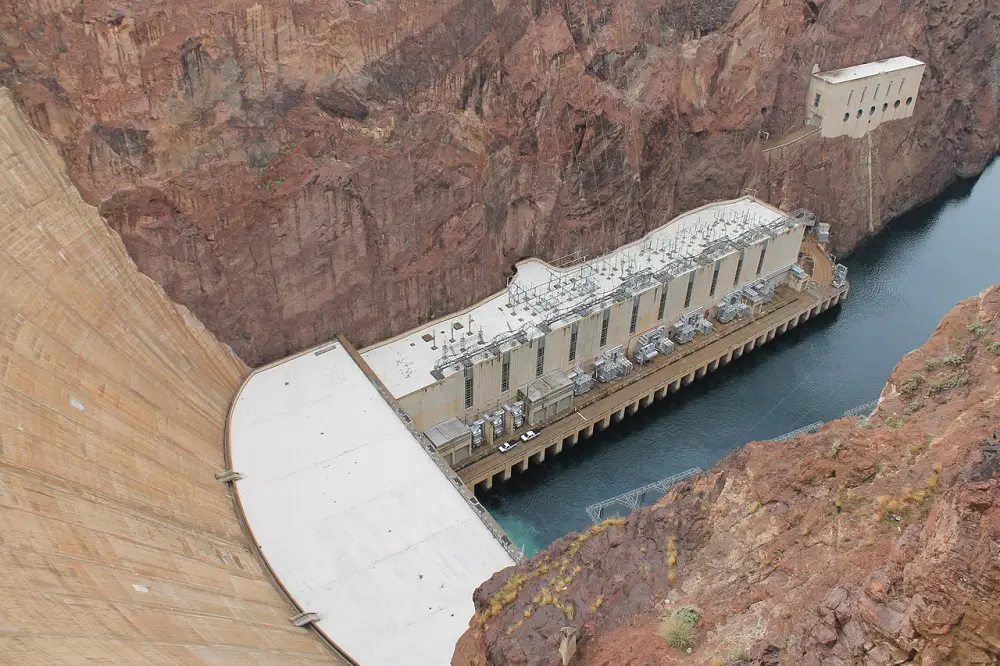
Facilities with stored water can increase or reduce generation more quickly than many large thermal power stations. That flexibility helps grid operators respond to demand changes, equipment outages, or fluctuations in wind and solar output.
Hydropower does not eliminate the need to manage demand. Measures such as efficiency, load shifting, and other energy conservation techniques can reduce the amount of generating and storage infrastructure required.
4. Pumped storage can store energy at grid scale
Pumped-storage facilities move water uphill when electricity is abundant or inexpensive. They release it later through turbines when demand and electricity value are higher.
The process functions like a large water battery, but it is not a source of free electricity. More power is used to pump the water uphill than is recovered during generation. Its value comes from timing, capacity, grid stability, and long-duration storage.
5. Hydropower facilities can operate for many decades
Hydropower projects require major civil works, but turbines, generators, dams, tunnels, and related infrastructure can remain in service for decades when maintained and modernized.
The U.S. Department of Energy describes typical hydropower lifespans of 65 to 85 years and notes that low fuel, operating, and maintenance expenses can reduce lifetime costs. Long service life does not remove the need for inspections, rehabilitation, sediment management, or updated safety standards.
6. Reservoirs can support irrigation and water supply
Stored water can be released for farms, households, industry, and livestock during periods when natural river flow is insufficient. A single dam may therefore provide both electricity and water-management services.
Those uses can conflict. Holding water for future supply may reduce current power generation, while releasing water for electricity may leave less available during a later dry period. Ecological flow requirements add another legitimate demand.
7. Some dams help manage floods and navigation
A reservoir with unused storage capacity can capture part of a high-flow event and release water more gradually. Dams and locks can also maintain navigation channels or help vessels pass elevation changes.
A dam does not eliminate flood risk. Performance depends on reservoir levels, rainfall forecasts, inflow volume, spillway capacity, release rules, downstream conditions, and the severity of the event. A reservoir already near capacity has less space to capture incoming water.
8. Reservoirs may provide recreation and regional economic value
Some reservoirs support boating, fishing, swimming, shoreline access, tourism, and related businesses. Construction and operation can also create employment, roads, transmission connections, and local tax revenue.
These benefits are not automatic and may not compensate for the loss of a free-flowing river, farmland, fisheries, or culturally important places. A credible project assessment must identify who receives the benefits and who bears the costs.
Drawbacks of controlling water flow
9. Dams alter a river’s natural flow regime
Rivers naturally rise and fall with rain, snowmelt, groundwater, and seasonal weather. Plants and animals respond to the timing, duration, frequency, and magnitude of those changes.
A dam can flatten seasonal peaks, reduce low flows, create sudden artificial fluctuations, or move water from one basin to another. These changes can affect spawning, feeding, seed dispersal, floodplain renewal, groundwater recharge, and the wider types of ecosystems connected to a river.
10. Dams can block fish and wildlife movement
Many fish need to move between feeding, nursery, and spawning habitats. A dam can create a physical barrier, while turbines may injure or kill some fish moving downstream.
Fish ladders, lifts, bypass systems, screens, and fish-friendlier turbines can reduce harm, but effectiveness varies by species, river, facility, and operating conditions. Mitigation is not equivalent to restoring a completely connected river.
11. Reservoirs trap sediment
Rivers carry sand, silt, gravel, nutrients, and organic material downstream. A reservoir slows the water, allowing much of that material to settle.
Sediment accumulation gradually reduces storage capacity. Downstream, sediment-starved water can erode riverbanks and beds, while deltas, wetlands, floodplains, and coastlines receive less material needed to maintain their form and fertility.
12. Releases can change water temperature, oxygen, and chemistry
Water released from deep in a reservoir may be colder, warmer, or lower in dissolved oxygen than the natural river flow. Reservoir stratification, algae, nutrient retention, and altered residence times can further change water quality.
These effects matter because aquatic species are adapted to particular temperature, oxygen, turbidity, and seasonal conditions. Operating outlets at different depths, aerating releases, and maintaining environmental flows can help, but each measure requires project-specific design and monitoring.
13. Reservoirs flood and fragment habitats
Creating a reservoir may inundate forests, wetlands, grasslands, farms, river valleys, archaeological sites, and wildlife corridors. Roads, transmission lines, quarries, and construction areas can extend the impact beyond the waterline.
The new reservoir is itself an aquatic habitat, but it does not replace the ecological functions of every river, wetland, or terrestrial area that was lost. Understanding habitats and the species that depend on them is therefore essential during site selection.
14. Projects can displace communities and cultural resources
Reservoir construction may require households, farms, businesses, and entire settlements to relocate. Downstream communities can also lose fisheries, flood-recession agriculture, river access, or culturally important landscapes even when their homes are not flooded.
Compensation alone may not restore livelihoods, social networks, cultural identity, or access to traditional resources. Meaningful consultation, informed participation, benefit sharing, grievance processes, and long-term livelihood monitoring are material parts of project quality.
15. Hydropower is not entirely free of greenhouse gas emissions
Hydropower generators do not burn fuel during operation, but emissions can arise from construction and from organic matter decomposing in reservoirs.
Reservoir carbon dioxide and methane emissions are highly site-specific. Influential factors include temperature, reservoir depth, flooded vegetation and soil, nutrient inputs, water-level changes, age, and the amount of electricity produced relative to the flooded area. Some projects have very low lifecycle emissions; poorly selected reservoirs can have a substantially larger footprint.
The EIA’s hydropower environmental overview notes that the quantity of reservoir greenhouse gases remains uncertain and varies by location and regional conditions.
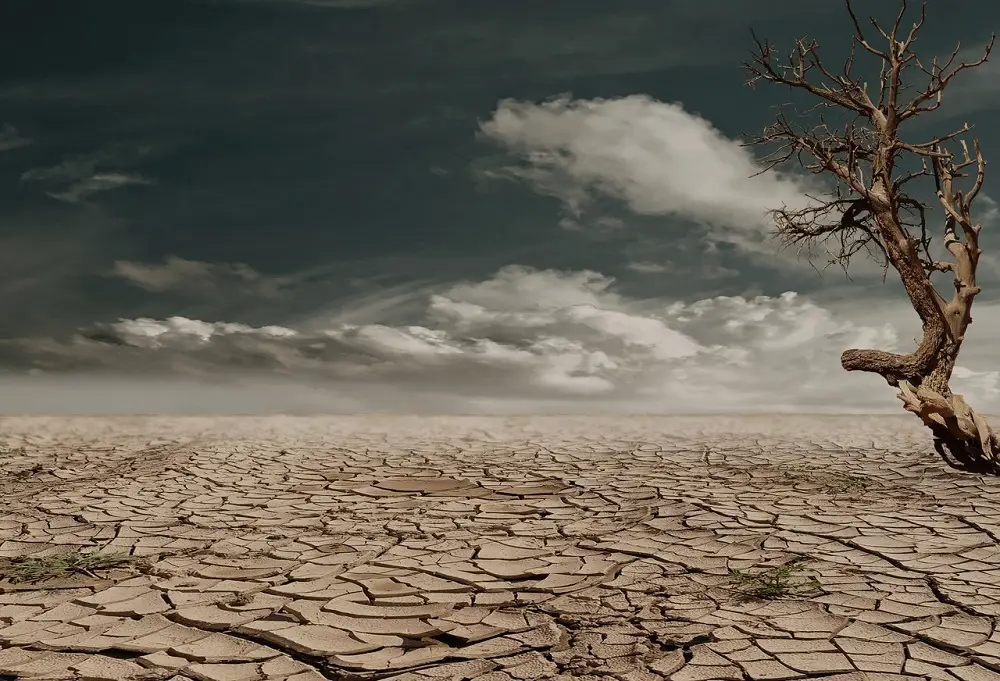
16. Drought and climate variability can reduce reliability
Hydropower output depends on water availability. Low rainfall, weak snowpack, high evaporation, prolonged heat, and competing withdrawals can reduce reservoir levels and river flow.
Climate risk is not limited to drought. More intense precipitation can create operational and safety challenges, while shifting snowmelt can change the timing of inflows. A project designed around historical hydrology may require new operating rules or physical upgrades as conditions change.
17. Large projects carry financial and safety risks
Major dams require extensive engineering, construction materials, roads, tunnels, transmission infrastructure, environmental review, land acquisition, and long development periods. Geological surprises, design changes, inflation, mitigation obligations, and schedule delays can increase costs.
Dams also require continuing inspection, instrumentation, maintenance, emergency planning, and corrective work. Failure is not a routine outcome, but the volume of stored water means the consequences can be severe. The U.S. Bureau of Reclamation’s dam-safety program emphasizes inspections, current engineering analysis, risk assessment, and corrective action.
How is water flow measured?
River flow is normally measured as discharge: the volume of water passing a defined cross-section during a unit of time. Common units include cubic feet per second, cubic meters per second, and liters per second.
A basic relationship is:
Discharge = cross-sectional area × average water velocity
Actual river monitoring is more involved because depth, width, velocity, channel shape, vegetation, sediment, and turbulence vary across the channel and over time.
The U.S. Geological Survey streamgaging method generally involves three steps:
- Continuously measure river stage, also called gage height.
- Periodically measure discharge across the channel.
- Develop and maintain a stage-discharge relationship that converts stage readings into estimated streamflow.
Hydropower planning then combines the expected flow record with hydraulic head, turbine efficiency, environmental-flow requirements, downtime, sediment, and transmission constraints. A household pressure regulator or shower valve cannot determine whether a river is suitable for hydropower.
Is controlling water flow sustainable?
Controlled water flow can support a lower-carbon electricity system and reliable water services, but sustainability must be demonstrated at the project level. A renewable energy label does not override ecological, social, or safety impacts.
A credible assessment should answer the following questions:
- Need: Is the project solving a clearly defined energy, storage, water-supply, navigation, or flood-management problem?
- Alternatives: Could efficiency, grid upgrades, solar, wind, batteries, demand response, existing-dam upgrades, or a smaller project deliver similar value with less damage?
- River flow: Will operating rules preserve adequate seasonal and environmental flows?
- Connectivity: Can fish and other aquatic species move through the river system?
- Sediment: How will sediment enter, accumulate, bypass, or leave the reservoir?
- Water quality: How will temperature, oxygen, nutrients, and algae be monitored and managed?
- Climate resilience: Does the design account for plausible future droughts, floods, snowmelt changes, and evaporation?
- Communities: Were affected people able to participate meaningfully, and are benefits, compensation, and long-term risks distributed fairly?
- Emissions: Has the project completed a reservoir-specific lifecycle greenhouse gas assessment?
- Safety: Are inspection, maintenance, emergency planning, financing, and downstream warning systems adequate throughout the project’s life?
These questions reflect basic conservation principles: avoid unnecessary damage first, minimize unavoidable impacts, restore affected systems where possible, and monitor whether promised protections work.
Frequently asked questions
What are the main pros and cons of controlling water flow?
The main benefits are renewable electricity, flexible power output, energy storage, irrigation, water supply, navigation, recreation, and some flood-management capacity. The main drawbacks are altered river flow, blocked fish migration, trapped sediment, water-quality changes, flooded habitat, community displacement, reservoir emissions, drought exposure, high costs, and dam-safety risk.
Is hydropower a renewable energy source?
Yes. Hydropower is renewable because river flow is replenished by the water cycle. However, a renewable energy source is not automatically environmentally sustainable. The effects of the dam, reservoir, transmission system, and operating rules must also be considered.
Does hydropower cause pollution?
Hydropower produces little direct air pollution during electricity generation, but it is not emission-free. Construction has a carbon footprint, and decomposing organic matter in some reservoirs releases carbon dioxide and methane. Dams can also change water temperature, oxygen, chemistry, and sediment.
How is water flow measured in a river?
River flow is measured as discharge, or the volume of water passing a location over time. Hydrologists measure river stage and periodically measure channel area and water velocity. They then use a stage-discharge relationship to estimate continuous streamflow.
Is pumped-storage hydropower a renewable energy source?
Pumped storage is primarily an energy-storage system, not a primary energy source. It uses electricity to pump water uphill and later recovers part of that energy by releasing the water through turbines. Its emissions depend partly on the electricity used for pumping and the reservoirs involved.
The bottom line
Controlling water flow creates real public benefits, particularly when a project supplies low-carbon electricity, grid flexibility, water storage, or flood-management capacity that cannot be delivered more effectively another way.
Those benefits do not erase the costs. A dam can transform a connected river into a series of managed pools, change sediment and temperature, obstruct fish, flood land, create reservoir emissions, and shift risks onto downstream or displaced communities.
The strongest projects are not simply the largest or most productive. They are the projects that demonstrate a clear need, compare realistic alternatives, protect environmental flows, manage sediment and water quality, account for climate change, maintain rigorous safety programs, and treat affected communities fairly.
For a narrower comparison focused specifically on electricity generation, see our guide to the pros and cons of hydroelectric energy.