
There is no scientifically accepted ranking of the animal with the shortest attention span. Researchers test different forms of attention—including selecting a stimulus, maintaining vigilance, shifting focus, and withholding an impulsive response—using tasks designed for particular species. A fruit fly turning toward novelty, a rabbit scanning for danger, and a dog abandoning a training cue are not equivalent behaviors.
The phrase “animals with short attention spans” is therefore useful only as informal shorthand. Rapid attention shifts can reflect curiosity, high arousal, predator detection, efficient foraging, or sensitivity to movement and sound. They do not automatically indicate poor memory, low intelligence, or an inability to concentrate.
This evidence-based comparison uses findings from animal behavior science to examine 13 species that are often described as distractible. Some are legitimate research models for attention. For others, the “short attention span” label is weak, misleading, or contradicted by what the animals can learn and remember.
Direct answer: Scientists cannot name one animal with the shortest attention span because no standardized test has been given across the animal kingdom. Fruit flies and mice are widely used in attention research, but that does not make either species the confirmed winner. Goldfish are one of the clearest myth-busting examples: they can learn recurring cues and schedules far beyond three seconds.
Key takeaways
- No accepted shortest-span ranking exists. Different animals perceive the world through different senses and cannot be compared fairly with one universal task.
- Attention is not one ability. Selective attention, vigilance, orienting, task persistence, motivation, and impulse control can produce different results in the same animal.
- Rapid switching may be adaptive. Prey detection, predator avoidance, social monitoring, and efficient foraging often reward quick changes in focus.
- Memory and attention are separate. An animal can shift attention frequently while retaining locations, cues, schedules, or learned behaviors.
- The goldfish claim is a myth. Goldfish have demonstrated learning and temporal discrimination that cannot be reconciled with a three-second memory.
What “attention span” means in animals
Selective attention
Selective attention is the ability to prioritize one stimulus while filtering out competing information. A fly orienting toward a newly salient object, a cat turning toward a familiar voice, and a dog following a hand signal can all demonstrate selection. The relevant question is not simply how long the animal looks, but what it selects and what information it ignores.
Sustained attention and vigilance
Sustained attention is maintaining performance or monitoring over time. In behavioral ecology, vigilance often means repeatedly scanning for predators or competitors. A rabbit or squirrel that interrupts feeding to check its surroundings may look distractible, yet the repeated scanning can be precisely the behavior that keeps it alive.
Reorientation, motivation, and impulse control
Reorientation describes shifting attention when something new appears. Researchers also measure whether an animal can resist acting too soon, continue after an error, or respond accurately when a cue is brief. The five-choice serial reaction time task, for example, separately records accuracy, premature responses, omissions, and response speed in rodents.
Motivation matters just as much. Hunger, fatigue, fear, novelty, reward value, prior training, sensory ability, and time of day can all change performance. Even within one species, different individuals may respond differently to the same test. That is one reason findings about a laboratory population should not be treated as a universal rule for every member of a species. For broader taxonomic context, see how scientists define a species.
Can scientists identify the animal with the shortest attention span?
No animal can currently be named with confidence. A fair ranking would require every species to complete a comparable task under comparable conditions. That is not realistic when one animal relies primarily on vision, another on smell, another on echolocation, and another lives underwater.
Most studies instead ask a narrower question: Can this animal detect a brief cue? Does it continue monitoring when rewards become infrequent? Can it ignore a distractor? Will it return to a location at the correct time? Those experiments produce useful evidence about particular attention processes, but they do not create a universal attention-span leaderboard.
Lists that assign exact spans in seconds usually confuse attention with memory, reaction time, task duration, or how long an animal remains visibly still. The comparison below separates the popular perception from the more defensible interpretation.
Thirteen animals often described as having short attention spans
| Animal | Why it may seem distractible | Better interpretation | Evidence for a universal short span |
|---|---|---|---|
| 1. Fruit fly | Rapidly orients to novelty and salient visual cues | Measurable selective attention and salience processing | No validated fixed duration |
| 2. Mouse | Makes omissions or premature responses in difficult tasks | Researchers can measure distinct attention and inhibition variables | Task-specific evidence only |
| 3. Dog | Breaks focus around smells, movement, people, or other dogs | Focus depends heavily on motivation, environment, age, and training | Highly context-dependent |
| 4. Cat | Ignores repeated cues but reacts quickly to meaningful movement or sound | Selective orientation rather than indiscriminate inattention | Weak as a global label |
| 5. Hamster | Moves frequently between digging, climbing, foraging, and exploring | Nocturnal exploration and species-specific enrichment needs | Weak |
| 6. Ferret | Alternates intense play, exploration, and rest | State-dependent arousal and exploratory behavior | Weak |
| 7. Rabbit | Stops activities to scan or react to possible threats | Prey vigilance and rapid reorientation | Weak and context-dependent |
| 8. Meerkat | Switches between foraging, social monitoring, and sentry behavior | Vigilance is distributed across a cooperative group | Does not establish a deficit |
| 9. Squirrel | Pauses repeatedly while feeding and changes direction abruptly | Balances food intake, risk detection, and spatial memory | Does not establish a global deficit |
| 10. Hummingbird | Spends only brief periods at individual flowers | Efficient task switching combined with spatial and temporal memory | Contradicted by timing abilities |
| 11. Chimpanzee | Curiosity and changing rewards alter task engagement | Goal-dependent attention with demonstrated persistence | Blanket claim is unsupported |
| 12. Bear | Moves between different foods and environmental cues | Flexible, goal-directed foraging | Weak |
| 13. Goldfish | Popular culture claims a three-second memory | Can learn cues, schedules, and operant tasks | Contradicted by evidence |
1. Fruit flies
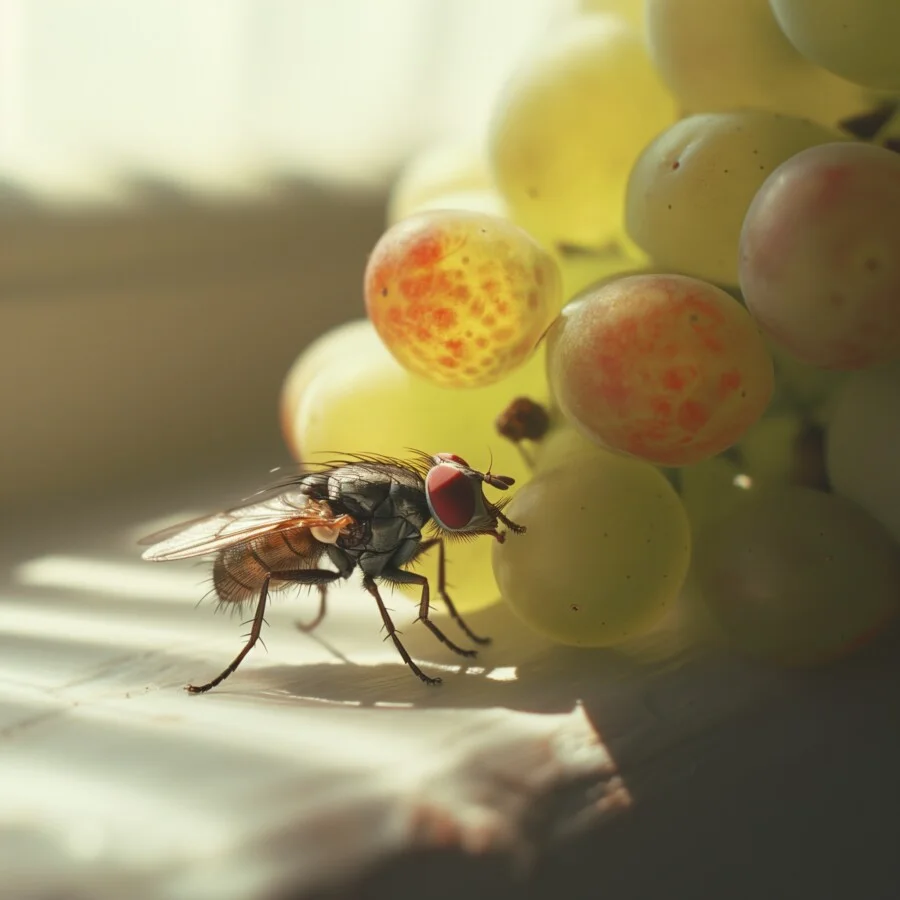
Fruit flies (Drosophila melanogaster) are among the strongest examples on this list because researchers can measure attention-like selection in their behavior and nervous systems. In a 2003 Nature Neuroscience study, fruit flies selectively oriented toward salient visual stimuli. Novelty, odor, or heat associated with a target also changed measurable brain activity linked with behavioral tracking.
That evidence does not establish a fixed attention span measured in seconds. It shows that flies prioritize competing stimuli and rapidly update that selection when environmental significance changes. For a small flying insect, fast reorientation can help with feeding, navigation, courtship, and threat avoidance.

Research takeaway: Fruit flies provide evidence of selective attention and rapid reorientation, not proof that they have the animal kingdom’s shortest attention span.
2. Mice
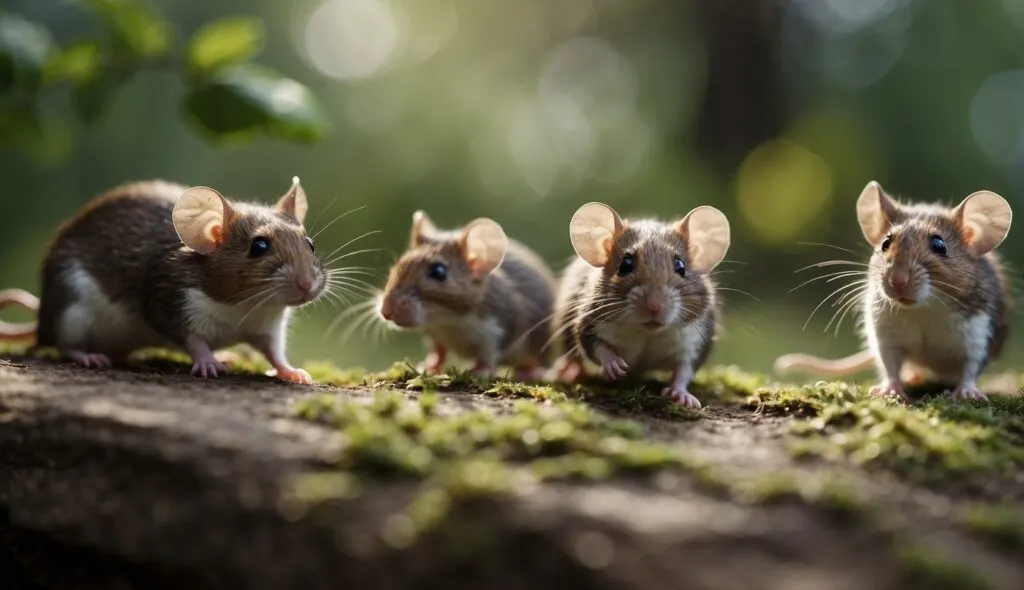
Mice are widely used in neuroscience because researchers can adapt controlled behavioral tasks to examine visual attention, omissions, reaction speed, impulsive responding, and learning. In versions of the five-choice serial reaction time task, an animal must detect which location briefly displayed a light and respond correctly to receive a reward.
Errors under a demanding laboratory condition do not prove that mice are generally inattentive. Performance can change when researchers alter cue duration, waiting time, reward conditions, sleep, stress, or the difficulty of the test. The value of mice is that these variables can be measured separately—not that mice have been assigned a universal short span.

Research takeaway: Mice are important attention-research models, but being a model organism is not evidence that they are naturally incapable of sustained focus.
3. Dogs
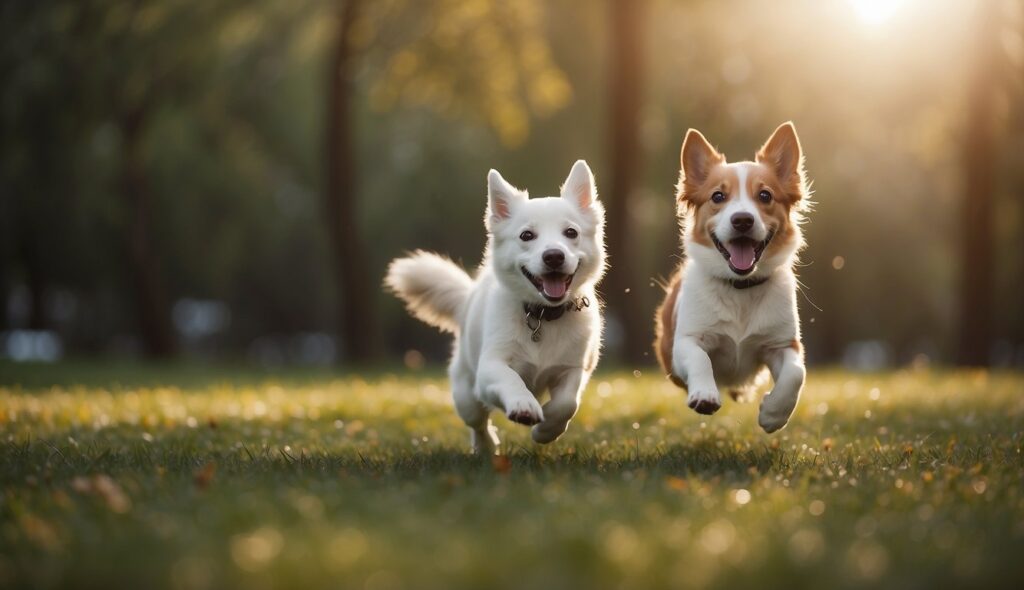
A dog may disengage from a person when a stronger smell, movement, noise, or social cue appears. That behavior is highly context-dependent. Reward value, arousal, age, health, prior learning, breed history, and the number of surrounding distractions can all change how long a dog remains engaged.
Dogs can also sustain impressive goal-directed behavior. In the well-known study of Rico the border collie, one highly trained individual could retrieve more than 200 named objects and infer a new label by exclusion. Rico later retained some of those new mappings. This does not describe every dog, but it shows why “dogs have short attention spans” is too broad.
Research takeaway: Canine attention is flexible and strongly influenced by the task and environment. A distracted dog is not necessarily an animal with poor memory or limited learning ability.
4. Cats
Cats often appear inattentive because they do not respond to every repeated human cue. Yet their senses remain tuned to movement, sound, scent, and changes that matter to them. A cat that ignores a request but immediately turns toward a rustle may be selecting between competing stimuli rather than failing to notice either one.
In a study of 20 domestic cats, the animals responded to recorded voices primarily through ear and head movements. Cats that habituated to unfamiliar voices showed a renewed response to their owner’s voice, indicating that they could distinguish humans through vocal cues alone.
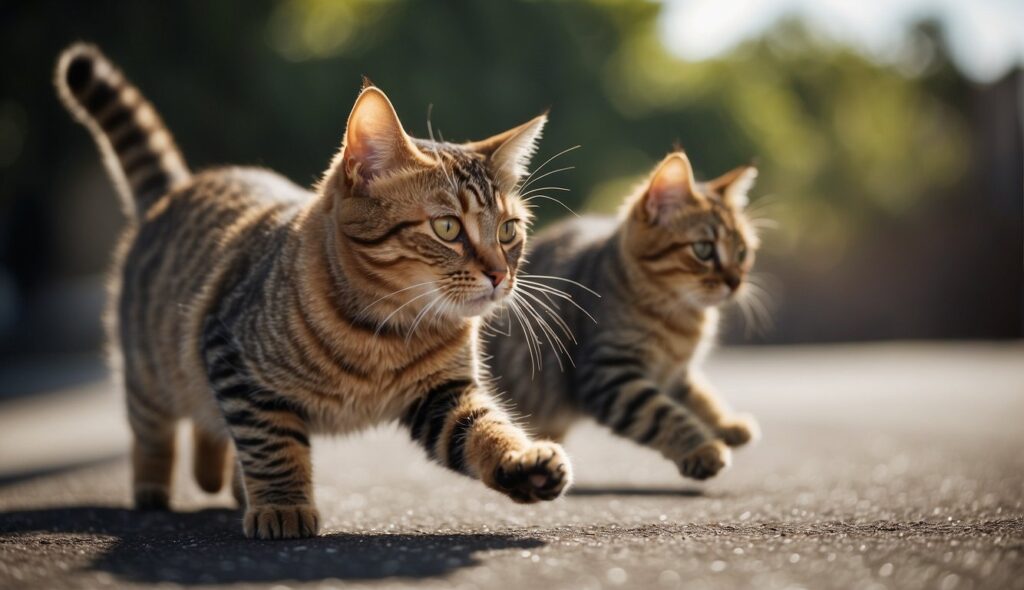
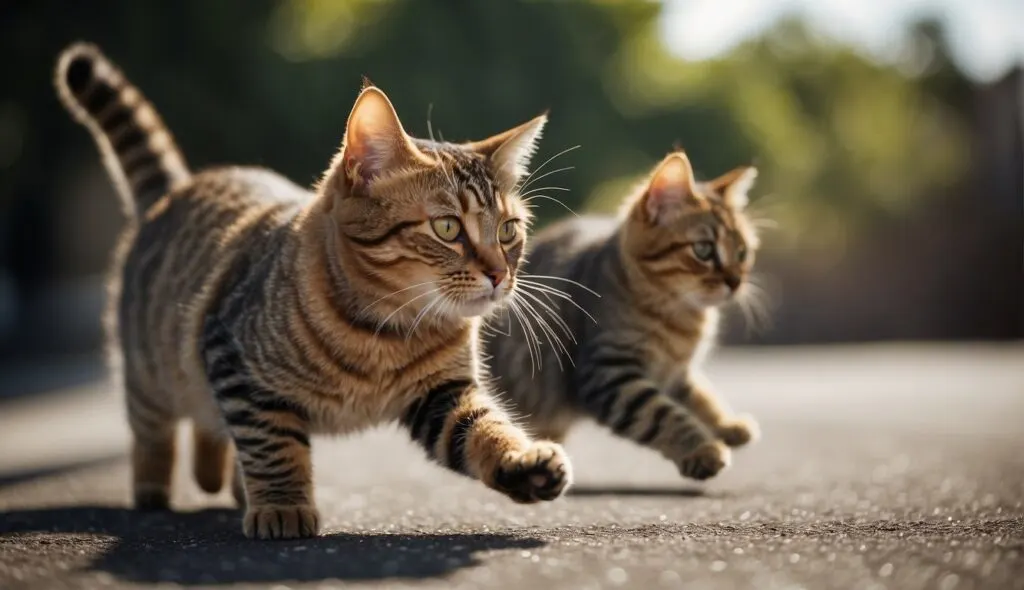
Research takeaway: Feline behavior is better described as selective and motivation-dependent than as evidence of a universally short attention span.
5. Hamsters
Hamsters frequently switch among digging, foraging, climbing, chewing, grooming, and investigating new odors. In a confined enclosure, that activity can look like an inability to settle. It may instead reflect normal exploration, an unsuitable environment, or an unmet opportunity to burrow and forage.
There is no broadly accepted stopwatch measure establishing that hamsters possess one of the shortest attention spans. Pet care should therefore focus less on making a hamster concentrate and more on providing deep, stable bedding, hiding places, safe chewing materials, a suitable wheel, and opportunities to search for food.
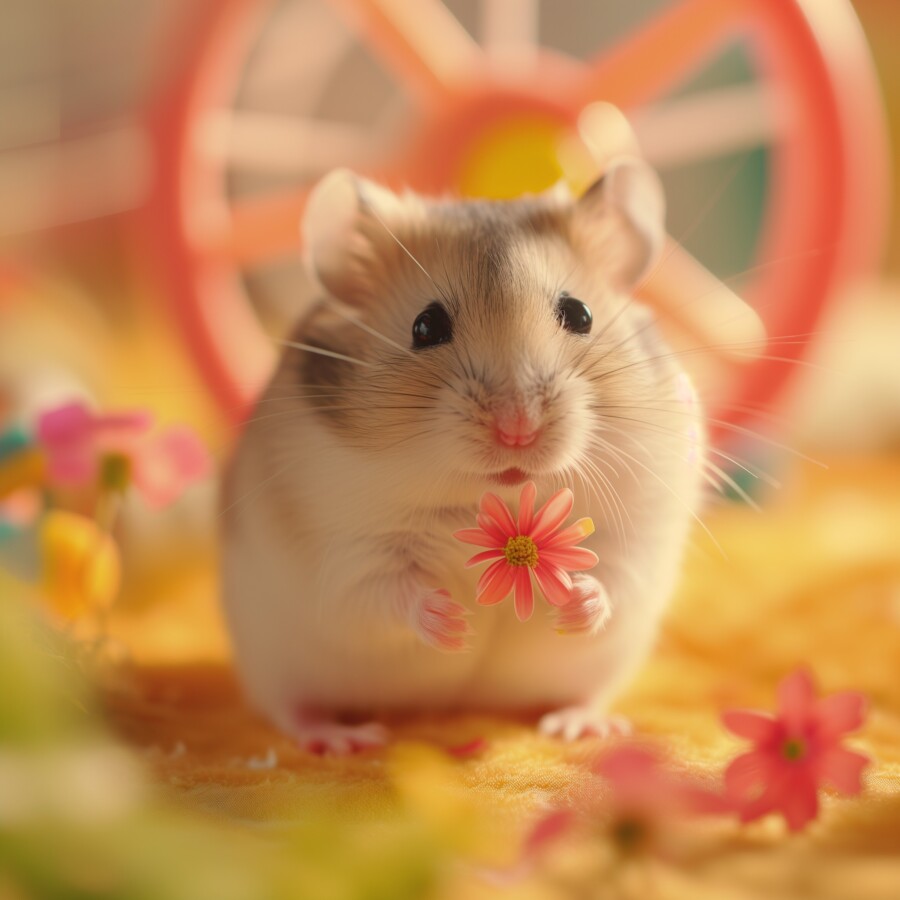
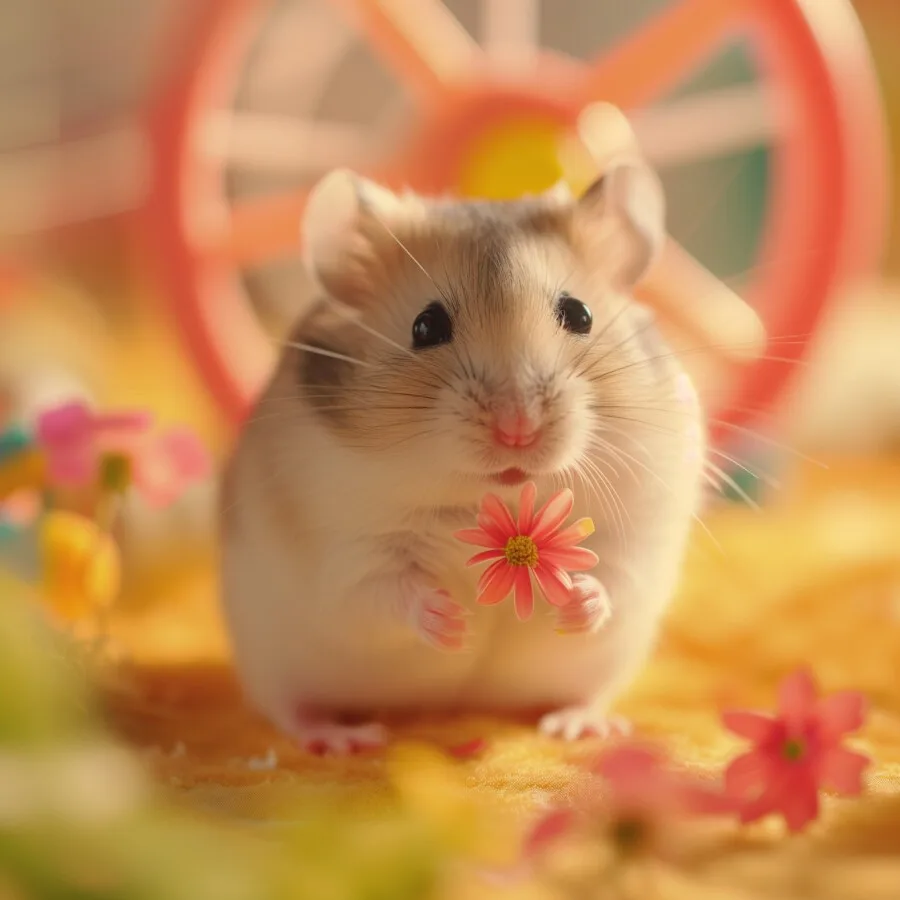
Research takeaway: Hamsters may change activities rapidly, but the evidence for labeling the entire species as unusually inattentive is weak.
6. Ferrets
Domestic ferrets are energetic, exploratory mustelids. Their play can include rapid hops, twists, and sideways movements commonly called the “weasel war dance.” They may investigate one object briefly before following a tunnel, odor, sound, or moving toy.
Those short play bouts are not a validated measure of cognitive limitation. Ferrets also alternate periods of intense activity with substantial sleep. Attention observed during a high-arousal play period will differ from attention during quiet exploration, feeding, training, or rest.
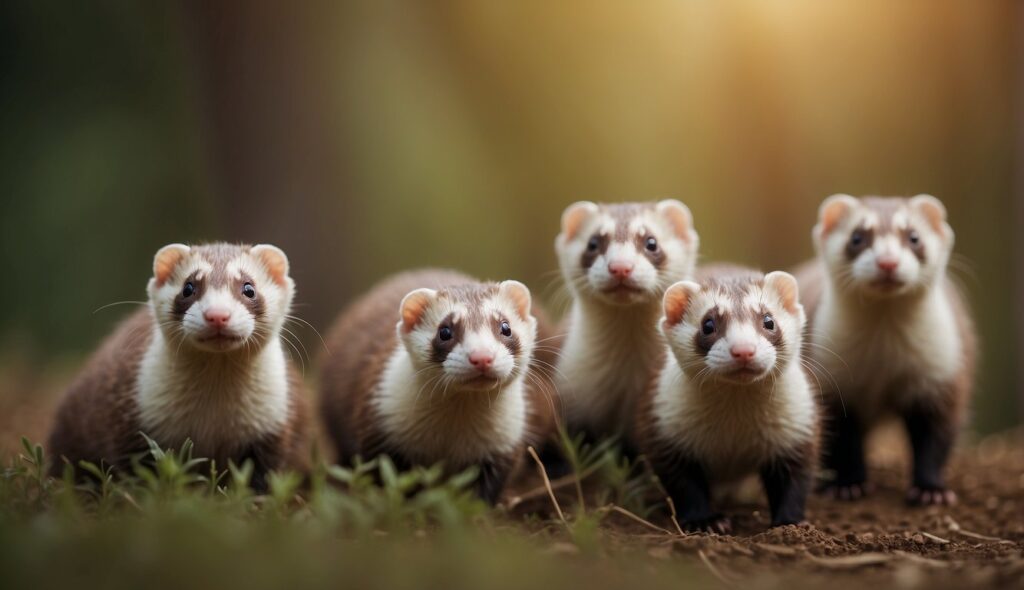
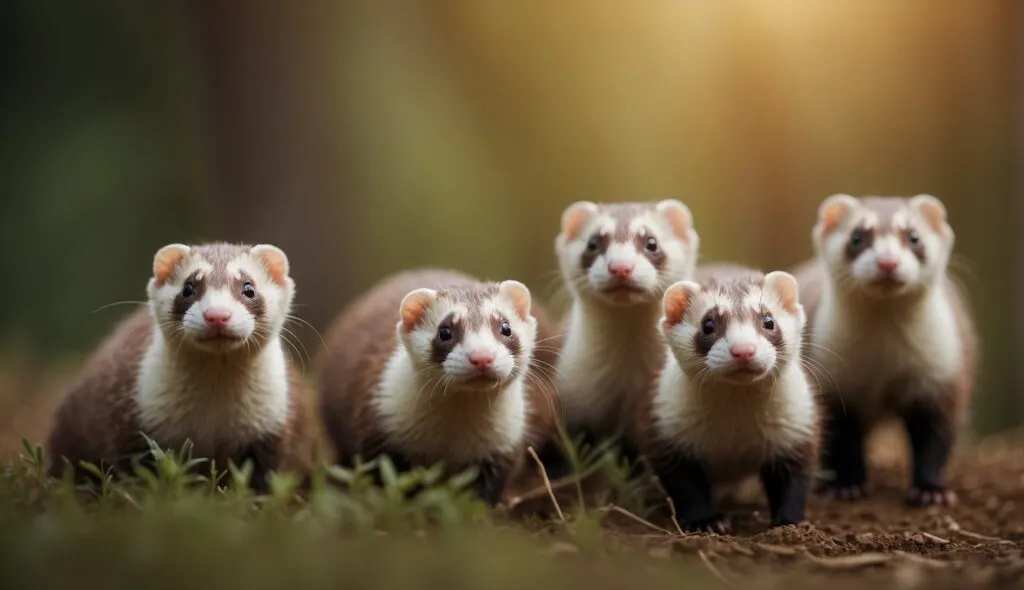
Research takeaway: Ferrets can look distractible during play, but the evidence for a fixed, globally short attention span is limited.
7. Rabbits
Rabbits are prey animals whose survival depends partly on detecting changes in sound, scent, movement, and air disturbance. A rabbit may interrupt eating, grooming, or play to raise its head, rotate its ears, freeze, or move toward cover.
That pattern is better understood as vigilance than as an attention deficit. A safe domestic rabbit may gradually spend more time resting or interacting, but forcing prolonged engagement can increase stress. Enrichment should support digging, chewing, hiding, foraging, and voluntary exploration.
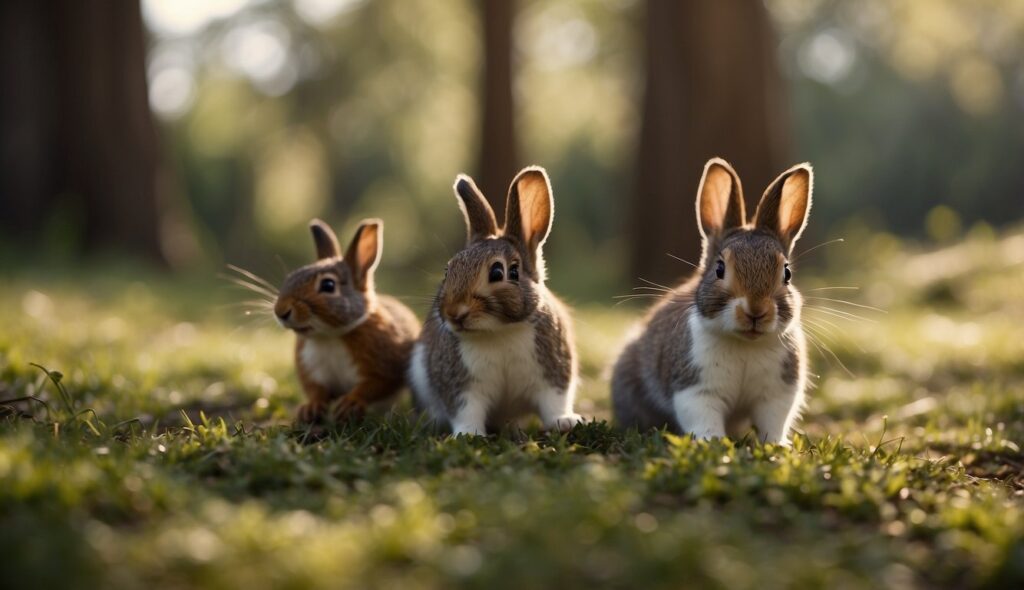
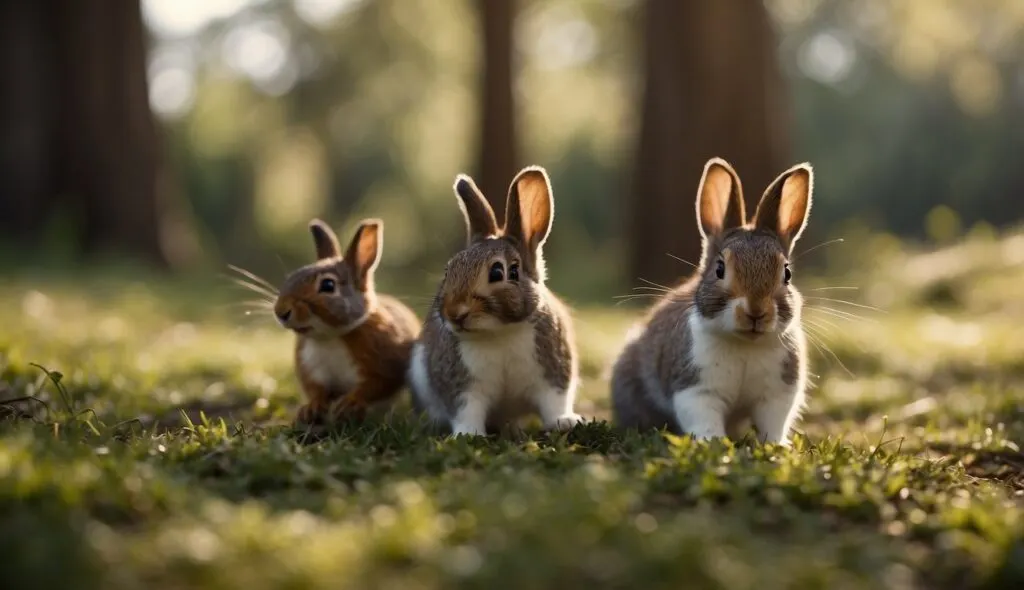
Research takeaway: Rabbits often reorient quickly because monitoring for danger is valuable. Rapid scanning should not be confused with poor cognition.
8. Meerkats
Meerkats (Suricata suricatta) live in social groups in which individuals forage, monitor companions, care for young, and watch for threats. Their attention shifts as their role and immediate circumstances change.
The classic research on meerkat sentinels showed that vigilance can be organized socially. While one individual watches from an elevated position, others can devote more effort to foraging. That distributed system is not compensation for a simplistic species-wide attention deficit; it is a cooperative strategy.
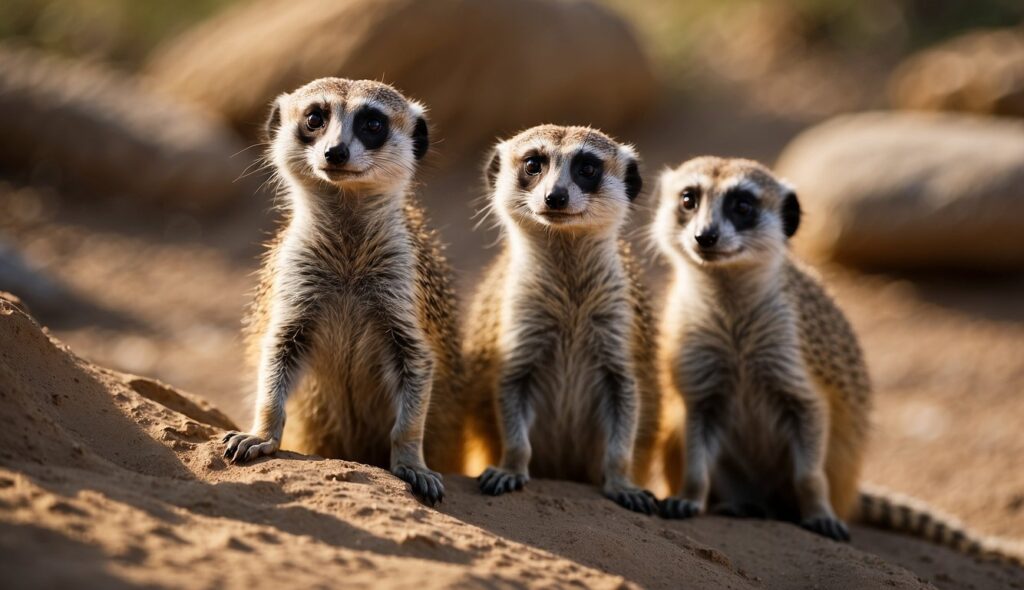
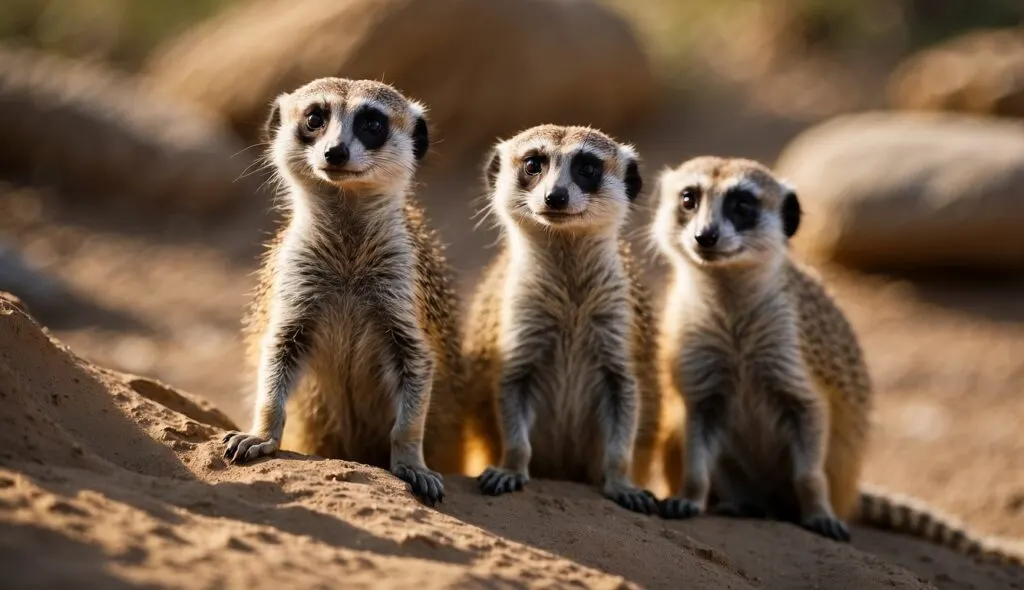
Research takeaway: Meerkat attention is flexible, role-dependent, and embedded in group behavior.
9. Squirrels
Squirrels commonly stop feeding to scan, retreat, change position, or investigate a sound. These abrupt movements have helped create the popular image of an animal that cannot remain focused.
Behavioral research offers a more useful explanation. A study of gray-squirrel foraging examined the trade-off between feeding efficiency and predation risk. Squirrels also rely on spatial information when recovering stored food. Frequent scanning can therefore coexist with effective memory and goal-directed foraging.
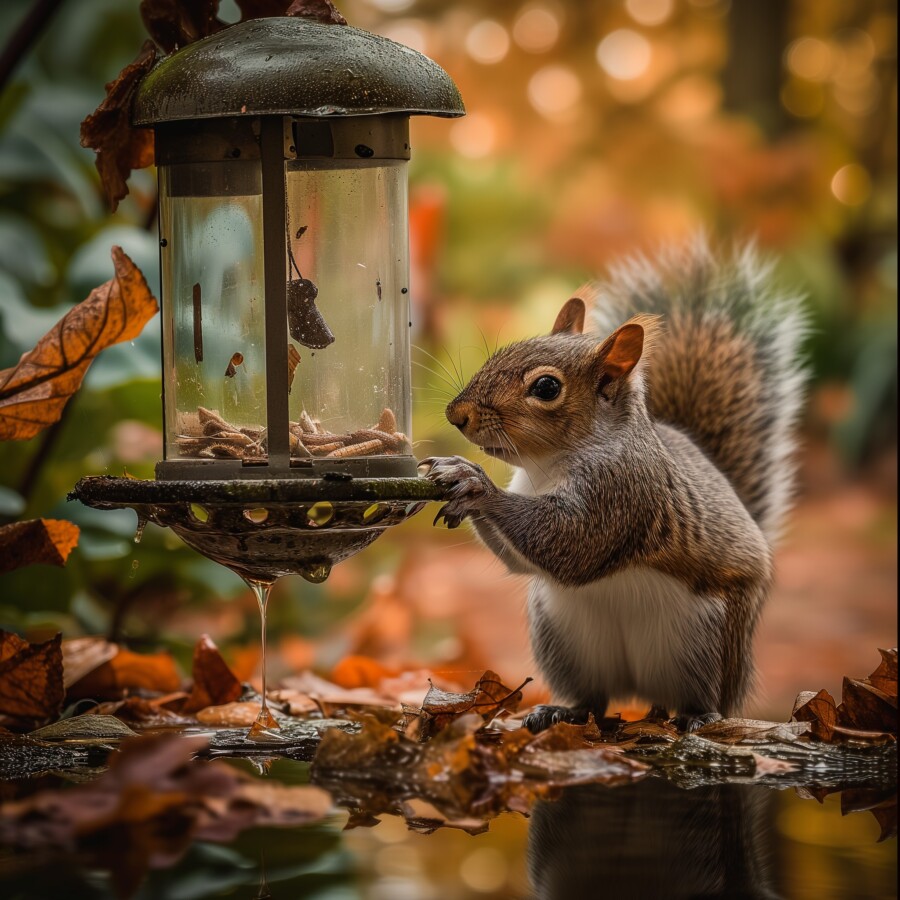
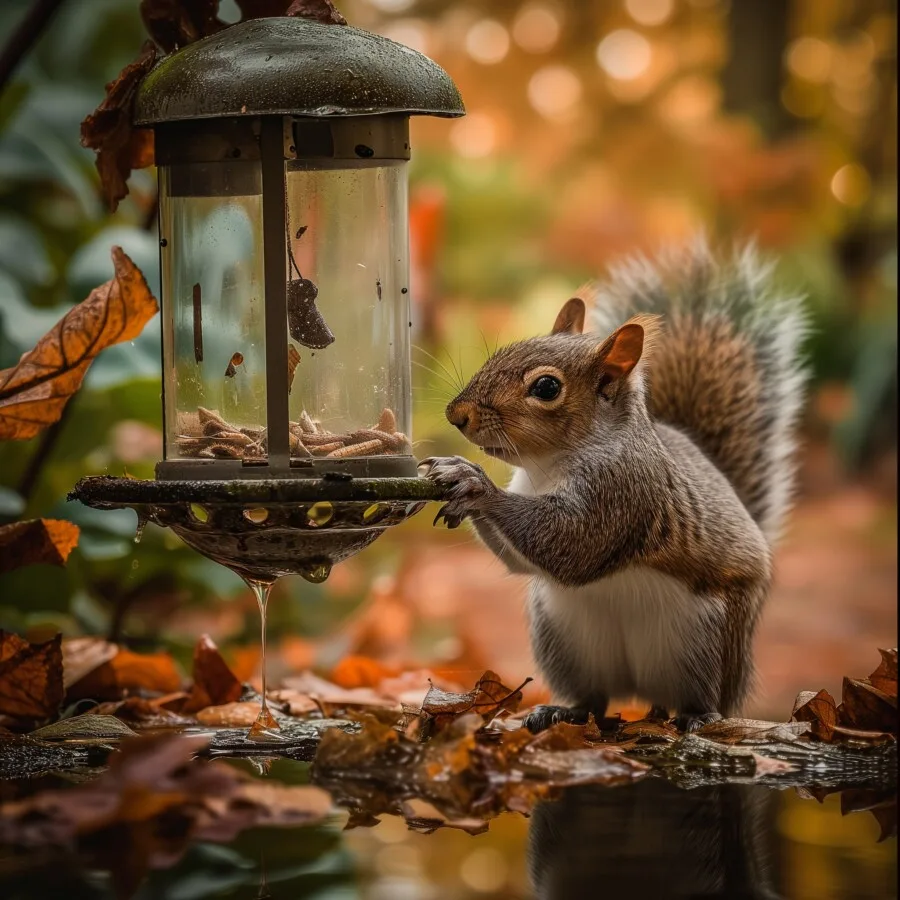
Research takeaway: Squirrel behavior reflects a changing risk–reward calculation, not a general inability to focus.
10. Hummingbirds
A hummingbird may visit a flower for only a few seconds before moving to the next. Judged only by time spent at each bloom, that can resemble a short attention span. Ecologically, however, the bird is continuing one coherent foraging task across many locations.
Free-living rufous hummingbirds have demonstrated detailed temporal memory. In a Current Biology timing study, birds learned refill schedules for multiple artificial flowers and adjusted return visits accordingly. Brief contact with each flower did not prevent them from tracking where and when food would become available.
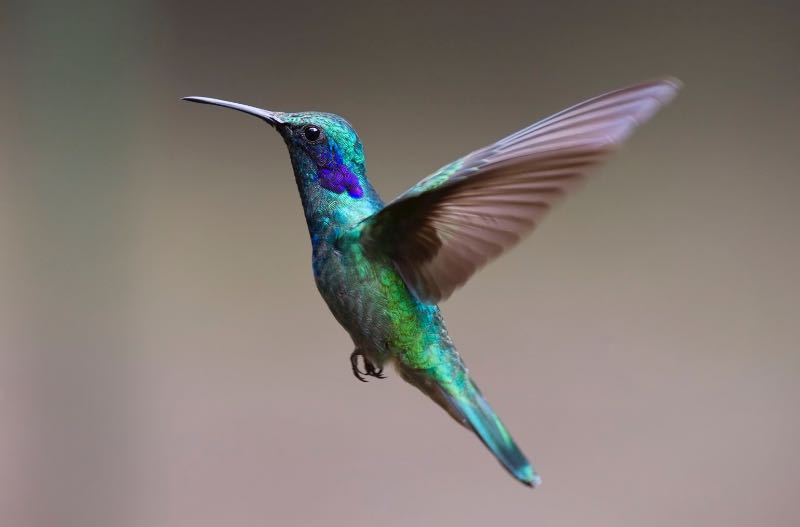
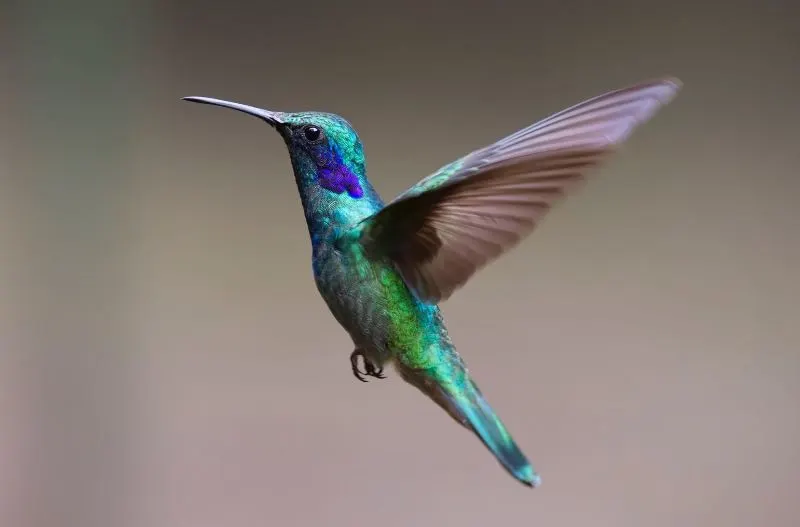
Research takeaway: Hummingbirds are rapid task switchers with sophisticated foraging memory, not convincing examples of globally poor attention.
11. Chimpanzees
Chimpanzee engagement varies with the task, reward, social setting, and individual. Curiosity may draw attention toward new objects or interactions, but that does not justify a blanket claim that chimpanzees have short attention spans.
In one goal-directed communication experiment, two language-trained chimpanzees used gestures to help a human find hidden food. They persisted and modified their signals in response to the human’s actions. The sample was small and unusually trained, so it should not be generalized to every chimpanzee, but it directly demonstrates sustained, flexible effort toward a goal.

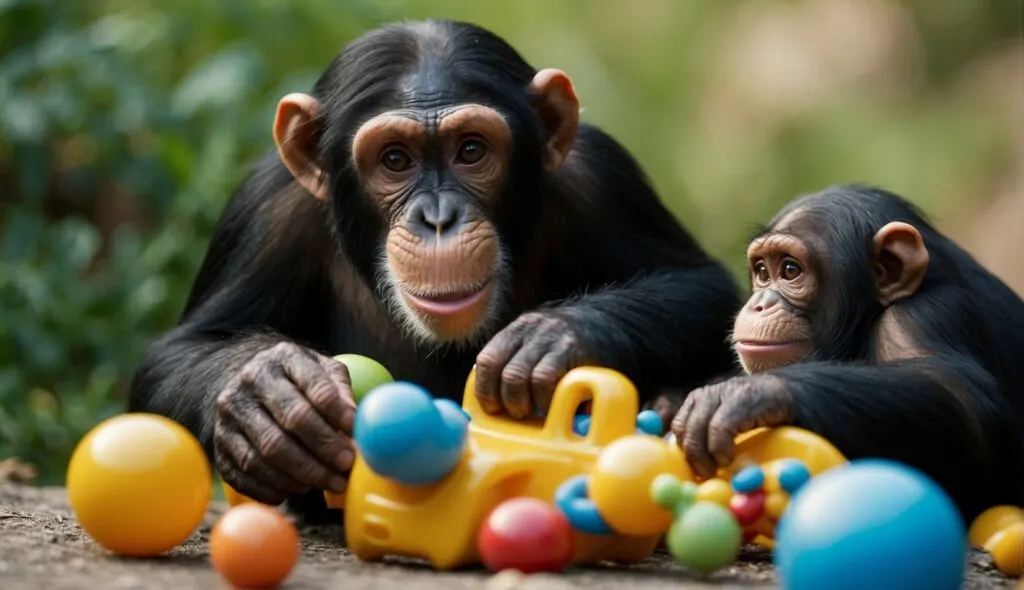
Research takeaway: Chimpanzees can sustain attention when a task is meaningful, making the global short-span label unsupported.
12. Bears
Bears move among seasonal foods, scents, sounds, competitors, terrain, and possible threats. During foraging, a bear may repeatedly switch between digging, grazing, searching vegetation, catching fish, or investigating an odor.
That flexibility is not evidence of a short attention span. Bears can persist in demanding, goal-directed searches when the reward warrants the effort. The behavior observed during an abundant salmon run will also differ from a long search for dispersed foods. No standardized evidence supports ranking bears among the animals with the shortest global attention spans.


Research takeaway: Bears belong on this list mainly as a myth check; evidence for an unusually short species-wide attention span is weak.
13. Goldfish
The familiar claim that a goldfish forgets everything after three seconds has no credible scientific basis. It also confuses memory duration with attention. Common goldfish (Carassius auratus) can learn associations, respond to recurring cues, and adjust behavior based on previous experience.
In a 1994 operant-learning study, goldfish could activate a lever for food, but the lever provided food only during a specific one-hour period each day. The fish learned to concentrate their responses around the period when food was available. This was a timing and learning experiment rather than a universal attention-span test, but it is incompatible with the three-second-memory myth.
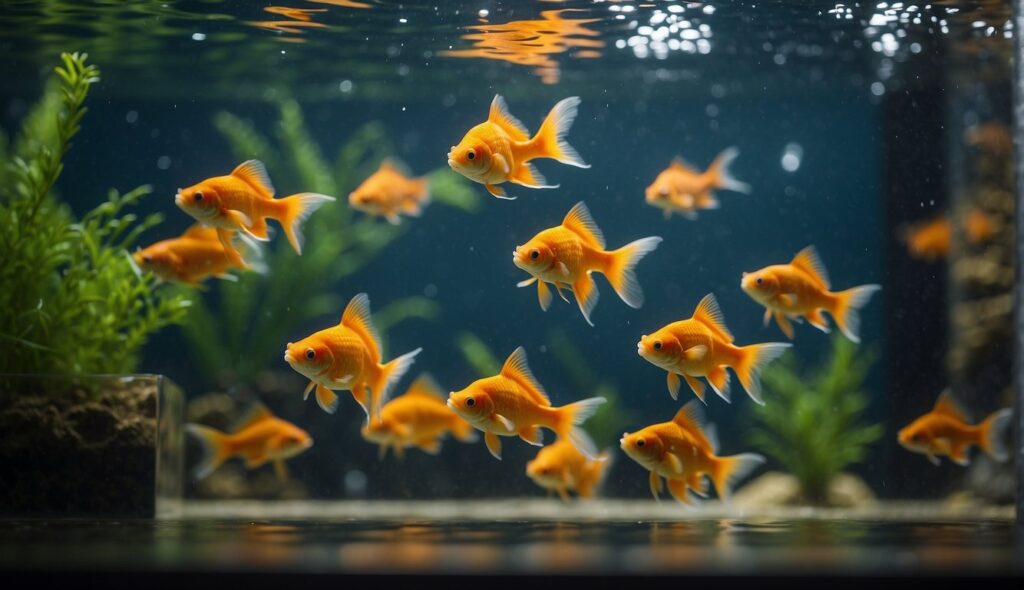
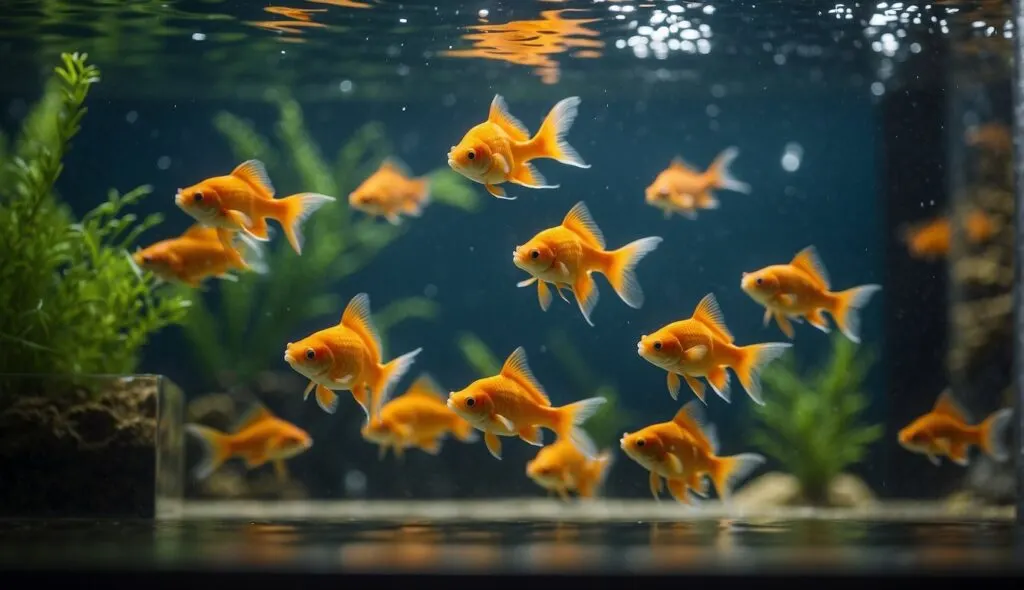
Research takeaway: Goldfish are not a defensible candidate for the shortest attention span. They are better used to illustrate how a memorable myth can outlive contrary evidence.
What these examples reveal about animal attention
Rapid attention shifts can be useful
Fast reorientation is often beneficial. A fruit fly must prioritize a changing visual target, a squirrel must alternate feeding with threat detection, and a hummingbird must move efficiently among flowers. Remaining fixed on one stimulus could be less effective—or more dangerous—than switching at the right moment.
Attention, memory, and intelligence are different
An animal can attend briefly to each item while preserving information across minutes, days, or longer. Hummingbirds track feeding schedules, squirrels recover stored food, dogs learn cues, and goldfish learn recurring availability. None of those abilities can be summarized by recording how long the animal looks at one object.
The prey-versus-predator rule is too simple
Prey species often benefit from vigilance, but predators also monitor moving prey, competitors, wind, cover, and scent. Some predators sustain a stalk; others switch among cues or search patches. The most useful explanation depends on the species, habitat, and immediate goal. For a related ecological example, see how predators search for food.
How to support attention and enrichment in pets
For companion animals, apparent distractibility is often a practical training or welfare question rather than a species ranking. These steps are more useful than trying to assign a number of seconds:
- Reduce competing stimuli. Begin training in a quiet, familiar setting before gradually introducing movement, sounds, people, or other animals.
- Keep the task clear. Ask for one observable behavior at a time and stop before fatigue or frustration erodes performance.
- Use meaningful rewards. Food, play, access, praise, or distance from a stressor can have different value for different animals.
- Use humane, reward-based methods. The American Veterinary Society of Animal Behavior recommends reward-based training rather than aversive methods for dogs.
- Match enrichment to the species. Dogs may benefit from scent work and interactive training; cats from hunting-style play; rabbits from digging and chewing; ferrets from tunnels; and hamsters from burrowing and foraging opportunities.
- Respect voluntary disengagement. Turning away, hiding, freezing, escalating movement, or refusing a reward may signal fear, fatigue, overstimulation, or an unclear task rather than stubbornness.
Learning how dogs communicate can help owners distinguish low motivation from stress or confusion. A sudden, marked change in a pet’s normal responsiveness can also warrant a veterinary assessment rather than more intensive training.
Frequently asked questions
What animal has the shortest attention span?
No animal has been established as the definitive answer. Researchers use species-specific tasks that measure different processes, so results cannot be converted into one scientifically valid ranking. Fruit flies and mice are prominent attention-research models, but neither can be declared the universal shortest-span animal.
Do goldfish have a three-second attention span?
No. The popular three-second claim is unsupported and usually confuses attention with memory. Goldfish can learn cues and recurring schedules, and research has shown that they can adjust behavior around a daily feeding opportunity.
Are prey animals more distractible than predators?
Not as a universal rule. Many prey animals scan frequently because early threat detection improves survival. Predators also divide attention among prey movement, scent, terrain, cover, competitors, and risk. The relevant pattern depends on the ecological task rather than a simple prey-versus-predator category.
Can training improve an animal’s focus?
Training can improve performance on a defined behavior when the task is clear, the reward is meaningful, distractions are introduced gradually, and the animal is comfortable. It does not create a fixed species-wide attention span. Humane reward-based methods are preferable to punishment or forced engagement.
Is a short attention span always a disadvantage?
No. Rapid attention switching can help an animal detect predators, track social information, inspect several food sources, or respond to sudden environmental change. The more useful question is whether the animal allocates attention effectively for the task it faces.
Final answer
The honest answer is that science has no single winner for the shortest animal attention span. Cross-species rankings usually compare behaviors that were measured in different ways—or were never formally measured at all.
Fruit flies and mice provide valuable evidence about specific attention mechanisms. Rabbits, meerkats, and squirrels show how vigilance can resemble distractibility. Hummingbirds demonstrate that rapid switching can coexist with precise timing. Chimpanzees can persist toward a goal, and goldfish clearly remember more than popular culture suggests.
Instead of asking which animal is worst at paying attention, ask what information the animal is selecting, why it shifts focus, and how that behavior serves its needs. That produces a more accurate—and far more interesting—view of animal cognition.