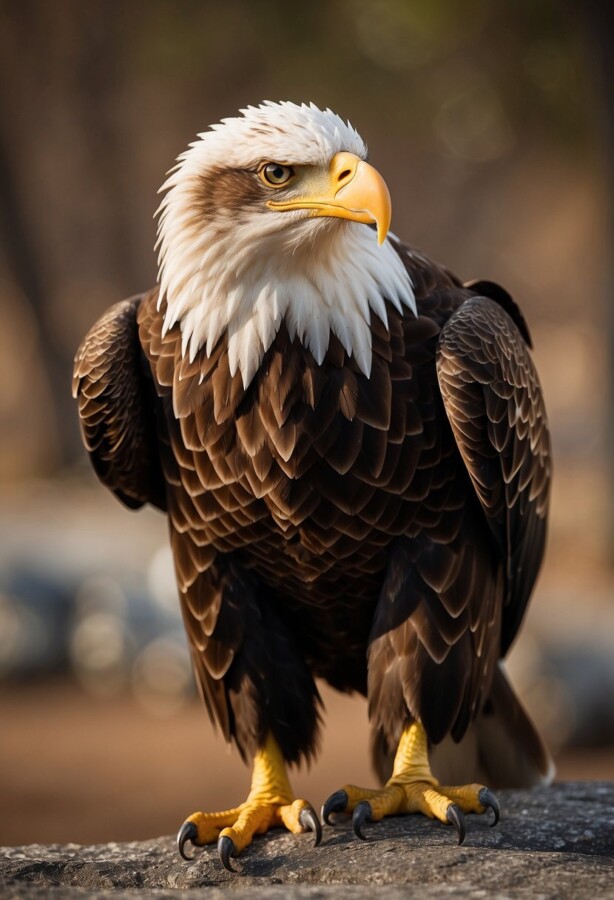
More than 60 living bird species are commonly called eagles, and they are not all close relatives. This guide compares 35 types of eagles by accepted scientific name, approximate adult size, range, habitat, diet, identification features, and global conservation status.
All eagles belong to the hawk-and-eagle family Accipitridae, but the common name spans several lineages, including booted eagles, sea eagles, hawk-eagles, harpy-type forest eagles, and buzzard-eagles. The list below is a representative selection rather than a complete world checklist.
Last reviewed: July 2026. Taxonomy follows the IOC World Bird List v15.2, while global conservation categories reflect IUCN and BirdLife assessments available at the time of review.
Key takeaways
- “Eagle” is a common name, not one genus. The 35 species here belong to several genera within Accipitridae.
- Size comparisons depend on the measurement. The heaviest, longest, and widest-winged species are not always the same bird.
- Global status can hide regional decline. A species listed as Least Concern may still be disappearing from parts of its range.
- Taxonomy changes. This update corrects older scientific names for the Chaco, Solitary, Indian Spotted, and Crowned eagles.
What counts as an eagle?
There is no universal anatomical rule that separates every eagle from every hawk. Ornithologists use “eagle” for a range of generally large or powerfully built raptors, but some smaller species carry the name and some large hawks do not. The accepted names used here follow the IOC World Bird List v15.2. Readers unfamiliar with biological classification may also find our explanation of what a species is useful.
Eagle form reflects ecology. Long, broad wings favor soaring over open country; shorter rounded wings and long tails improve maneuverability in forests; heavy feet help subdue mammals; and sea eagles combine broad wings with strong toes for taking fish. These differences are practical examples of how animals adapt to their environment across different habitat types.
35 types of eagles at a glance
Measurements are approximate adult ranges; females are usually larger than males, and published values vary by source and subspecies. Conservation categories are global IUCN Red List categories available in July 2026, not national or regional assessments.
| No. | Eagle | Scientific name | Length | Wingspan | Global status |
|---|---|---|---|---|---|
| 1 | Crowned Solitary Eagle (Chaco Eagle) | Buteogallus coronatus | 73–79 cm | 170–183 cm | Endangered (EN) |
| 2 | Black Solitary Eagle (Solitary Eagle) | Buteogallus solitarius | 63–79 cm | 152–188 cm | Near Threatened (NT) |
| 3 | Black-Chested Buzzard-Eagle | Geranoaetus melanoleucus | 62–76 cm | 149–200 cm | Least Concern (LC) |
| 4 | Harpy Eagle | Harpia harpyja | 86–107 cm | 176–224 cm | Vulnerable (VU) |
| 5 | Papuan Eagle | Harpyopsis novaeguineae | 75–90 cm | 121–157 cm | Vulnerable (VU) |
| 6 | Philippine Eagle | Pithecophaga jefferyi | 86–102 cm | 184–220 cm | Critically Endangered (CR) |
| 7 | Black Eagle | Ictinaetus malaiensis | 65–81 cm | 148–182 cm | Least Concern (LC) |
| 8 | Lesser Spotted Eagle | Clanga pomarina | 54–65 cm | 143–168 cm | Least Concern (LC) |
| 9 | Indian Spotted Eagle | Clanga hastata | 60–65 cm | About 150 cm | Near Threatened (NT) |
| 10 | Tawny Eagle | Aquila rapax | 58–75 cm | 157–190 cm | Vulnerable (VU) |
| 11 | Spanish Imperial Eagle | Aquila adalberti | 72–85 cm | 177–220 cm | Vulnerable (VU) |
| 12 | Greater Spotted Eagle | Clanga clanga | 59–71 cm | 157–179 cm | Vulnerable (VU) |
| 13 | Steppe Eagle | Aquila nipalensis | 62–81 cm | 165–215 cm | Endangered (EN) |
| 14 | Eastern Imperial Eagle | Aquila heliaca | 68–90 cm | 176–216 cm | Vulnerable (VU) |
| 15 | Gurney’s Eagle | Aquila gurneyi | 74–86 cm | 165–190 cm | Near Threatened (NT) |
| 16 | Wahlberg’s Eagle | Hieraaetus wahlbergi | 53–61 cm | 130–146 cm | Least Concern (LC) |
| 17 | Golden Eagle | Aquila chrysaetos | 66–102 cm | 180–234 cm | Least Concern (LC) |
| 18 | Booted Eagle | Hieraaetus pennatus | 40–50 cm | 110–135 cm | Least Concern (LC) |
| 19 | Wedge-Tailed Eagle | Aquila audax | 81–106 cm | 182–232 cm | Least Concern (LC) |
| 20 | African Hawk-Eagle | Aquila spilogaster | 55–65 cm | 130–160 cm | Least Concern (LC) |
| 21 | Little Eagle | Hieraaetus morphnoides | 45–55 cm | 100–135 cm | Least Concern (LC) |
| 22 | Verreaux’s Eagle | Aquila verreauxii | 75–96 cm | 181–230 cm | Least Concern (LC) |
| 23 | Black-and-Chestnut Eagle | Spizaetus isidori | 60–80 cm | 147–180 cm | Endangered (EN) |
| 24 | Ayres’s Hawk-Eagle | Hieraaetus ayresii | 44–57 cm | 124–137 cm | Least Concern (LC) |
| 25 | Ornate Hawk-Eagle | Spizaetus ornatus | 56–69 cm | 117–142 cm | Near Threatened (NT) |
| 26 | Pygmy Eagle | Hieraaetus weiskei | 38–48 cm | 112–126 cm | Least Concern (LC) |
| 27 | Martial Eagle | Polemaetus bellicosus | 78–96 cm | 188–260 cm | Endangered (EN) |
| 28 | Black Hawk-Eagle | Spizaetus tyrannus | 58–70 cm | 115–148 cm | Least Concern (LC) |
| 29 | Long-Crested Eagle | Lophaetus occipitalis | 53–65 cm | 110–129 cm | Least Concern (LC) |
| 30 | Crowned Eagle (Crowned Hawk-Eagle) | Stephanoaetus coronatus | 80–99 cm | 151–181 cm | Near Threatened (NT) |
| 31 | Black-and-White Hawk-Eagle | Spizaetus melanoleucus | 51–58 cm | About 117 cm | Least Concern (LC) |
| 32 | Cassin’s Hawk-Eagle | Aquila africana | 50–56 cm | 103–113 cm | Least Concern (LC) |
| 33 | Bonelli’s Eagle | Aquila fasciata | 55–74 cm | 143–180 cm | Least Concern (LC) |
| 34 | Crested Eagle | Morphnus guianensis | 71–89 cm | 138–176 cm | Near Threatened (NT) |
| 35 | Bald Eagle | Haliaeetus leucocephalus | 70–102 cm | 180–244 cm | Least Concern (LC) |
Status key: CR = Critically Endangered; EN = Endangered; VU = Vulnerable; NT = Near Threatened; LC = Least Concern. The IUCN treats CR, EN, and VU species as threatened with extinction.
1. Crowned Solitary Eagle (Chaco Eagle)
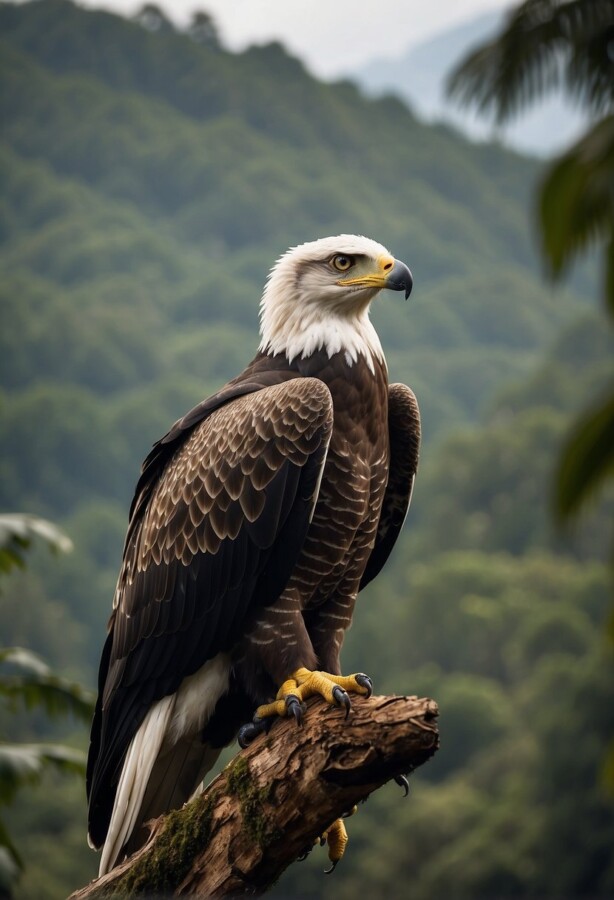
Scientific name: Buteogallus coronatus | Approximate adult size: 73–79 cm long; 170–183 cm wingspan | Global status: Endangered
The current accepted name is Buteogallus coronatus; older references often place it in Harpyhaliaetus. Adults are mostly silvery gray with a dark crest and a short black tail crossed by a broad white band, making the tail pattern one of the best field marks.
This rare South American raptor uses savannas, marsh edges, scrub, and open woodland where large trees remain for nesting. It hunts vertebrate prey on or near the ground. Habitat conversion, shooting linked to perceived livestock conflict, collisions, and electrocution contribute to its Endangered status.
2. Black Solitary Eagle (Solitary Eagle)
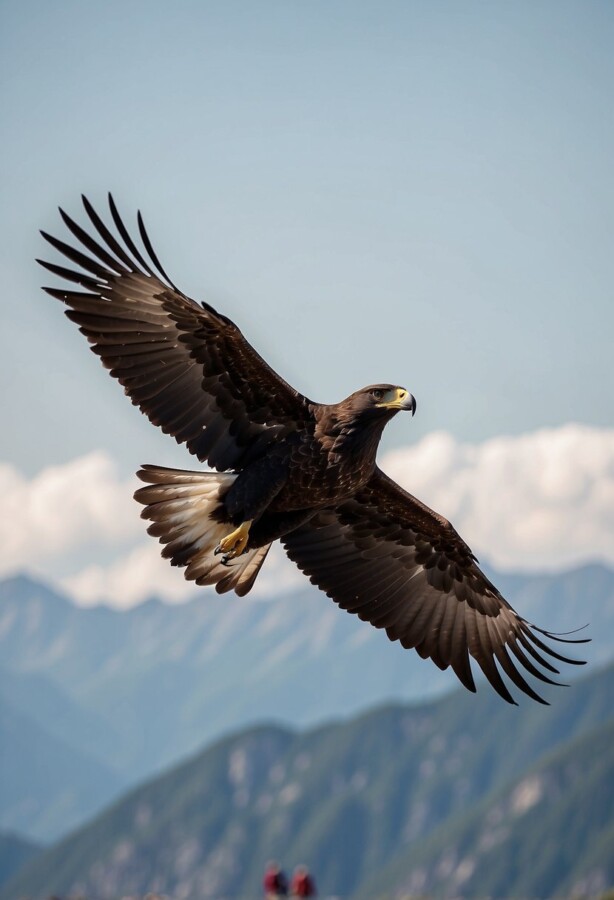
Scientific name: Buteogallus solitarius | Approximate adult size: 63–79 cm long; 152–188 cm wingspan | Global status: Near Threatened
The Solitary Eagle is a broad-winged, heavy-bodied raptor that can look almost black. Adults have a short tail with a white band and tip. Its accepted scientific name is Buteogallus solitarius, replacing the older combination Harpyhaliaetus solitarius.
It lives mainly in hilly and montane forest from Mexico through Central America to northwestern South America. The species is uncommon and easily confused with smaller black hawks. Its diet remains poorly documented, although large snakes, birds, and small mammals have been recorded. Forest loss and low population density support its Near Threatened classification.
3. Black-Chested Buzzard-Eagle
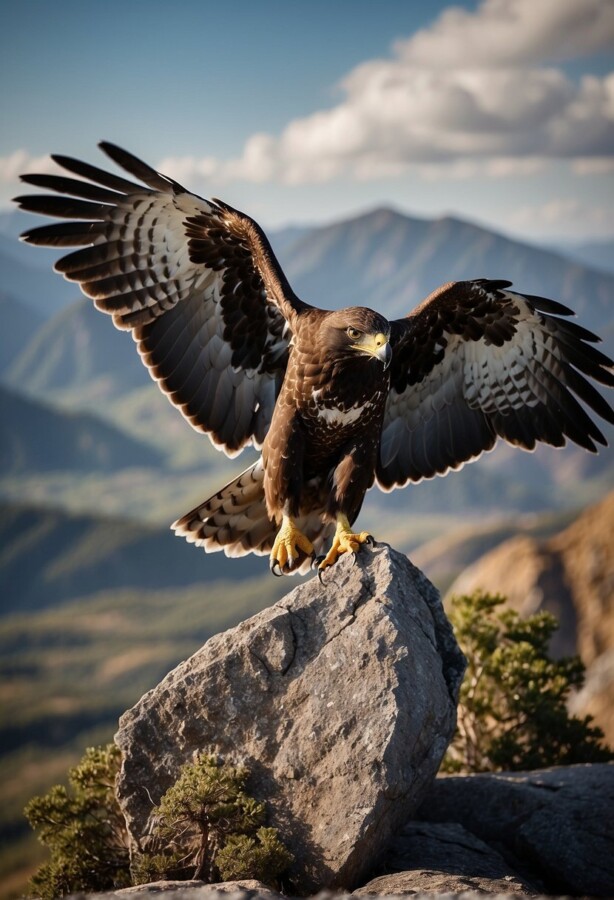
Scientific name: Geranoaetus melanoleucus | Approximate adult size: 62–76 cm long; 149–200 cm wingspan | Global status: Least Concern
Despite its common name, the Black-Chested Buzzard-Eagle belongs to a buteonine lineage rather than the booted-eagle group. Adults show gray upperparts, a dark chest, and a white belly; juveniles are much browner and can look like a different species.
It occupies open country, mountain slopes, cliffs, grassland, and steppe across much of South America. Broad wings make it an efficient soarer, while strong feet help it take rabbits, rodents, reptiles, and birds; carrion is also used. The species is globally Least Concern, although local populations can be affected by persecution and land-use change.
4. Harpy Eagle
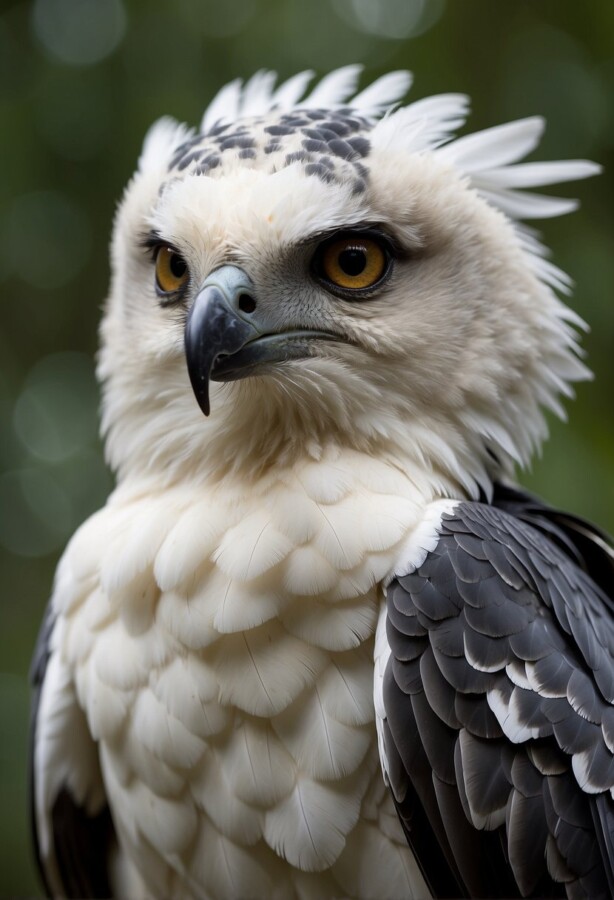
Scientific name: Harpia harpyja | Approximate adult size: 86–107 cm long; 176–224 cm wingspan | Global status: Vulnerable
The Harpy Eagle is one of the heaviest and most powerful forest eagles. Its gray head, raised double crest, black breast band, barred legs, and massive talons are unmistakable at close range. Short, broad wings and a long tail help it maneuver between trees.
Its range extends from southern Mexico through Central America into tropical South America, with the strongest populations in large, connected forests. Harpy Eagles mainly hunt tree-dwelling mammals such as sloths and monkeys, along with large birds. Deforestation, hunting, and slow reproduction are central reasons for its Vulnerable status.
5. Papuan Eagle
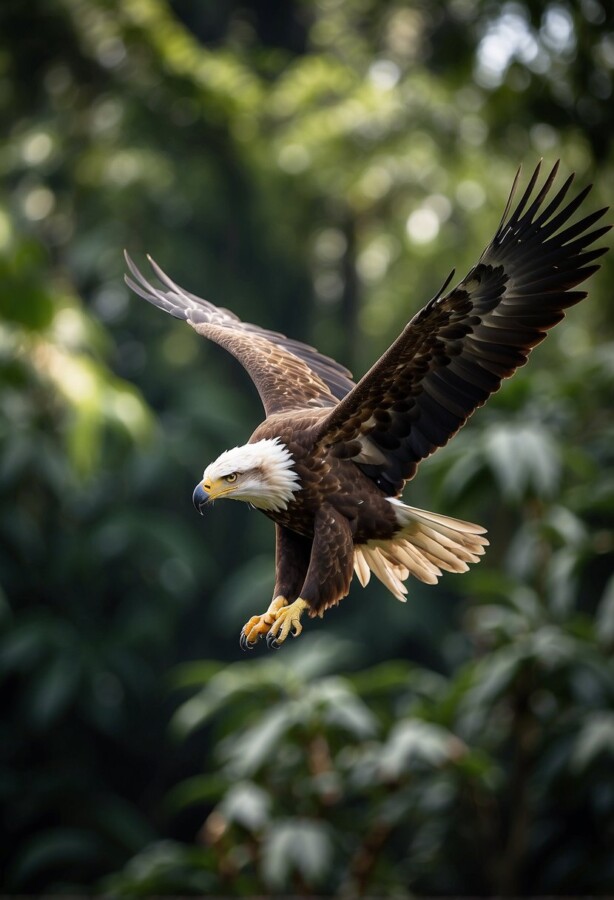
Scientific name: Harpyopsis novaeguineae | Approximate adult size: 75–90 cm long; 121–157 cm wingspan | Global status: Vulnerable
The Papuan Eagle has a large head, long tail, broad rounded wings, powerful legs, and gray-brown plumage suited to life inside rainforest. Females are larger than males, as in most eagles. Its shape favors agile flight through dense vegetation rather than long-distance soaring.
Endemic to New Guinea, it depends on lowland and montane forest and takes arboreal mammals, birds, and reptiles. The species is difficult to survey because it occurs at low density in extensive forest. Logging, forest conversion, and hunting pressure have contributed to its Vulnerable classification.
6. Philippine Eagle
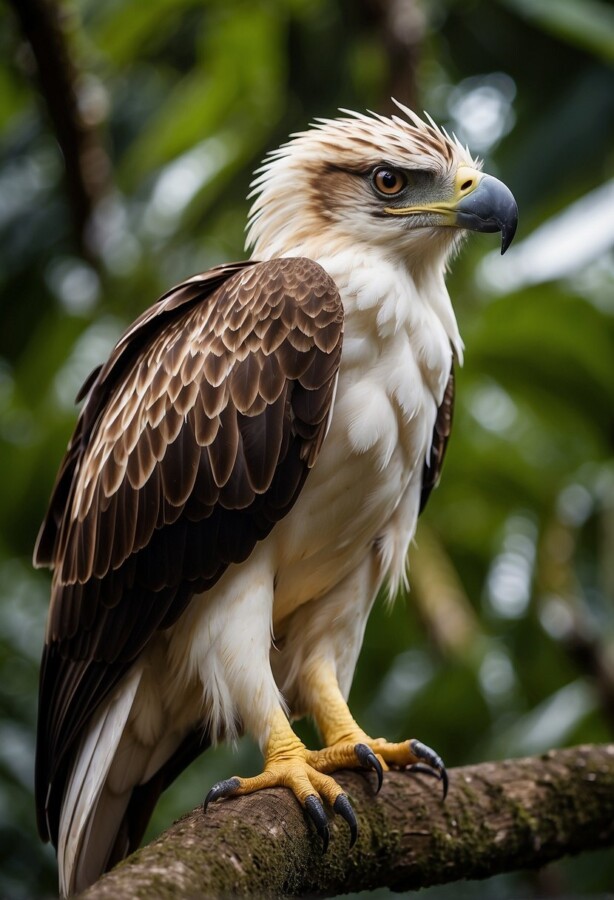
Scientific name: Pithecophaga jefferyi | Approximate adult size: 86–102 cm long; 184–220 cm wingspan | Global status: Critically Endangered
The Philippine Eagle combines a long body and broad wings with a shaggy brown-and-cream crest, a deep blue-gray bill, and pale underparts. It is adapted to maneuver through forest canopies and is among the world’s largest eagles by length.
It survives on Luzon, Samar, Leyte, and Mindanao, where pairs require large forest territories. Its diet includes flying lemurs, civets, monkeys, birds, reptiles, and other available prey. The Philippine Eagle Foundation estimates roughly 400 breeding pairs remain. Deforestation and shooting are the main threats; see our Philippine eagle conservation profile for more detail.
7. Black Eagle

Scientific name: Ictinaetus malaiensis | Approximate adult size: 65–81 cm long; 148–182 cm wingspan | Global status: Least Concern
Adult Black Eagles are almost entirely black, with yellow feet and cere, long wings, and a long tail. Their broad wing “fingers” and slow, buoyant flight are useful identification clues when they patrol wooded slopes.
The species ranges from the Himalayan foothills and the Indian subcontinent through Southeast Asia. It is especially known for searching the canopy for nests, taking eggs and nestlings as well as birds, mammals, and reptiles. Although globally Least Concern, it relies on forest structure and can decline where mature woodland is heavily fragmented.
8. Lesser Spotted Eagle
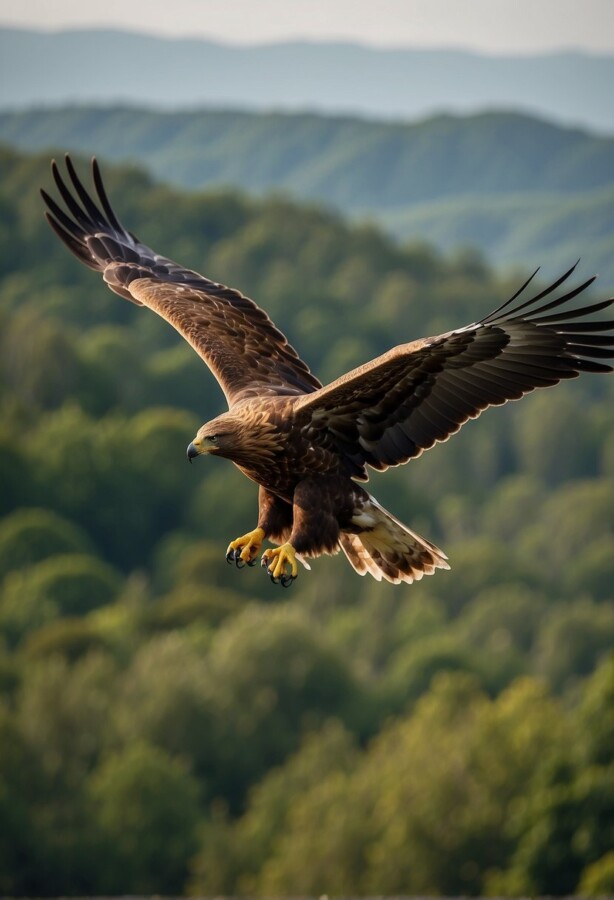
Scientific name: Clanga pomarina | Approximate adult size: 54–65 cm long; 143–168 cm wingspan | Global status: Least Concern
The Lesser Spotted Eagle is a medium-sized, compact eagle with a relatively small head. Adults often show a two-tone upperwing: paler brown coverts contrast with darker flight feathers. Identification can be difficult where Greater Spotted Eagles and hybrids occur.
Most birds breed in eastern and central Europe and migrate to sub-Saharan Africa. They favor forest edges, wet meadows, and mixed farmland where small mammals, amphibians, reptiles, insects, and birds are available. The species is globally Least Concern, but drainage, intensive agriculture, and forest change affect some breeding populations.
9. Indian Spotted Eagle
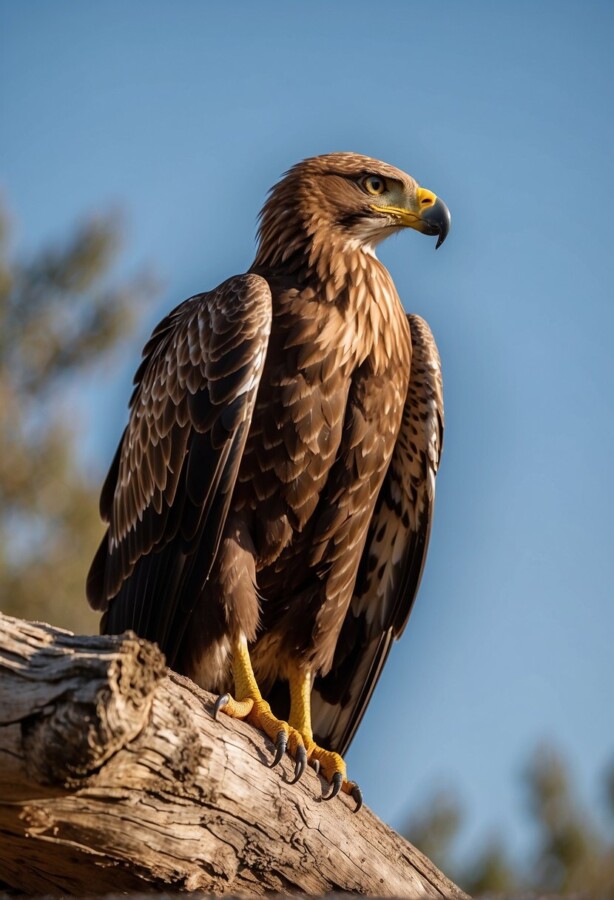
Scientific name: Clanga hastata | Approximate adult size: 60–65 cm long; about 150 cm wingspan | Global status: Near Threatened
The accepted scientific name is Clanga hastata, not Aquila hastata. This broad-headed spotted eagle is generally lighter than the Greater Spotted Eagle, with dark eyes and relatively long legs. Older juveniles can lose much of the spotting that gives the species its name.
It occurs mainly in India and neighboring parts of South Asia, using dry open forest, wooded farmland, grassland, and wetlands. It takes small mammals, birds, reptiles, and carrion. The latest global assessment lists it as Near Threatened; older references that call it Vulnerable are now outdated.
10. Tawny Eagle
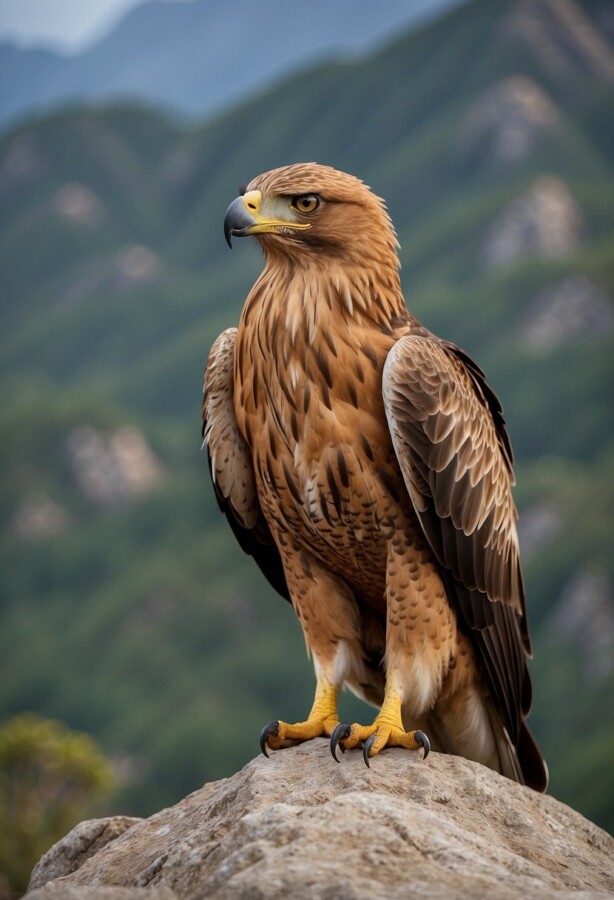
Scientific name: Aquila rapax | Approximate adult size: 58–75 cm long; 157–190 cm wingspan | Global status: Vulnerable
Tawny Eagles are highly variable in color, ranging from pale buff to dark brown. Adults usually have a heavy bill, long wings, and fully feathered legs. That variation can make identification difficult where Steppe Eagles and other brown raptors overlap.
The species uses savanna, semi-desert, open woodland, and other dry country across Africa and parts of South Asia. It hunts mammals, birds, and reptiles but also scavenges readily. Poisoning, electrocution, habitat degradation, food-supply changes, and persecution have driven declines and a global Vulnerable classification.
11. Spanish Imperial Eagle
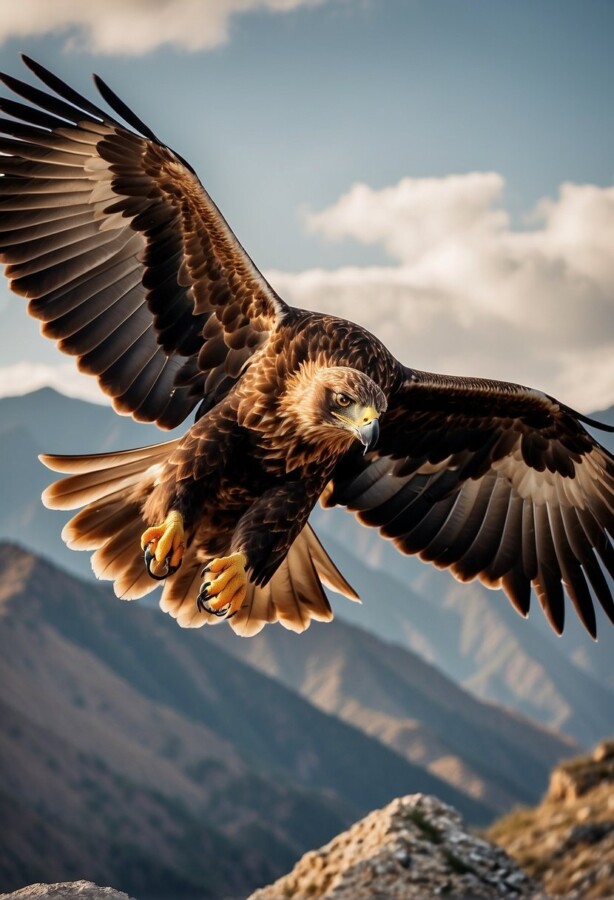
Scientific name: Aquila adalberti | Approximate adult size: 72–85 cm long; 177–220 cm wingspan | Global status: Vulnerable
The Spanish Imperial Eagle is a large, dark eagle with a pale nape and conspicuous white shoulder patches. Juveniles are much paler and browner. Once treated as a form of the Eastern Imperial Eagle, it is now recognized as a separate species.
It breeds mainly in Spain, with a smaller and growing presence in Portugal, favoring dehesa, open woodland, and forest–grassland mosaics. Rabbits are its principal prey, so rabbit disease can affect breeding success. Intensive conservation has supported recovery, but electrocution, poisoning, collisions, habitat change, and prey shortages keep it globally Vulnerable.
12. Greater Spotted Eagle
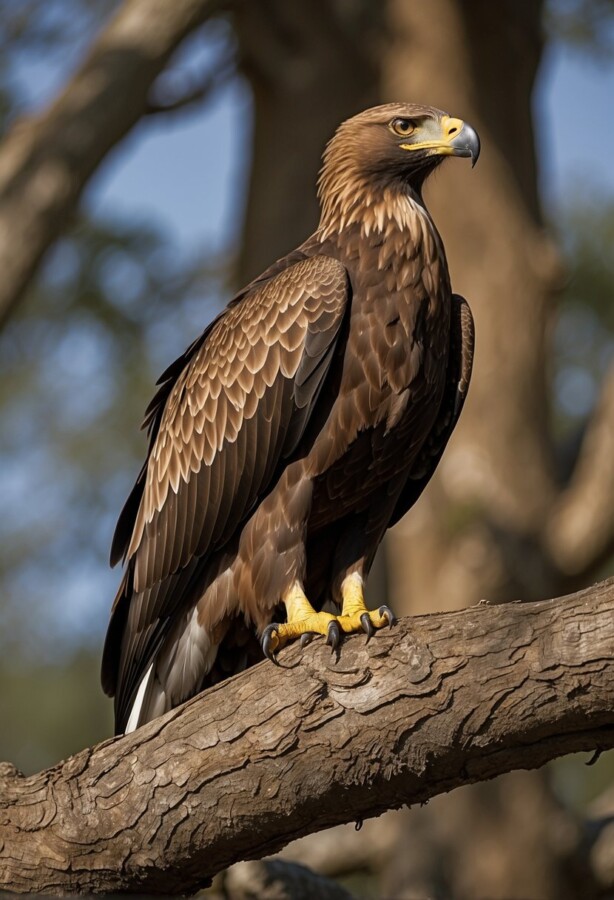
Scientific name: Clanga clanga | Approximate adult size: 59–71 cm long; 157–179 cm wingspan | Global status: Vulnerable
The Greater Spotted Eagle is a dark brown, broad-winged raptor with feathered legs. Juveniles often show pale spots on the upperparts, while adult plumage becomes more uniform. Separating it from the Lesser Spotted Eagle can require careful attention to structure, plumage, and location.
It breeds from eastern Europe across northern Asia and winters from southern Europe and Africa to the Middle East and South Asia. Wetlands, floodplains, marshes, and nearby forests are especially important. It eats small mammals, waterbirds, amphibians, fish, and carrion. Wetland loss, disturbance, persecution, and hybridization contribute to its Vulnerable status.
13. Steppe Eagle
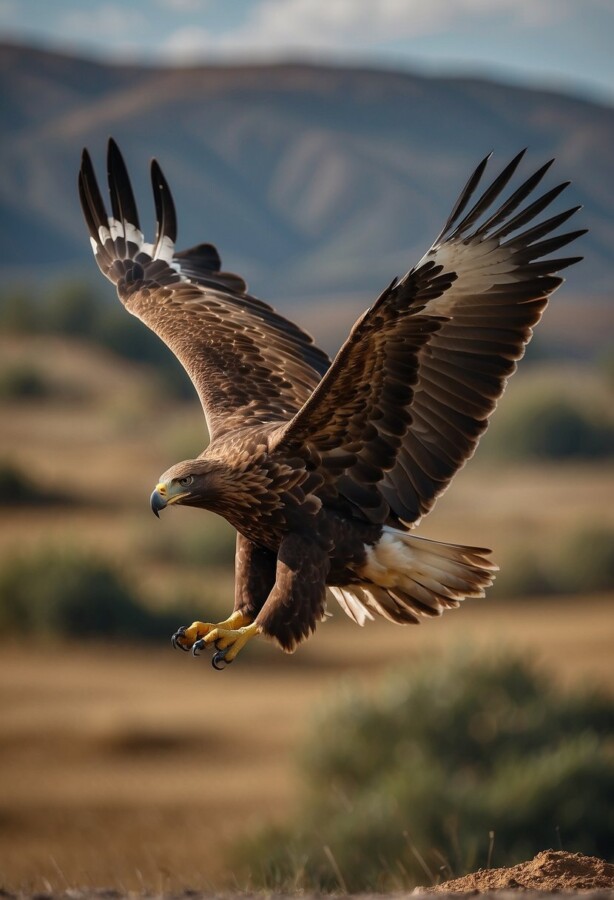
Scientific name: Aquila nipalensis | Approximate adult size: 62–81 cm long; 165–215 cm wingspan | Global status: Endangered
Adult Steppe Eagles are large, mostly brown birds with long wings and a distinctive gape line that extends well behind the eye. Juveniles often show a pale band along the underwing. Their shape is built for efficient soaring over open country.
They breed across Eurasian steppes and semi-deserts and migrate to Africa, the Middle East, and South Asia. Ground squirrels and other small mammals are important during breeding, while carrion can dominate on migration and wintering grounds. Electrocution, poisoning, nest disturbance, habitat change, and dangerous infrastructure have contributed to the species’ Endangered status.
14. Eastern Imperial Eagle
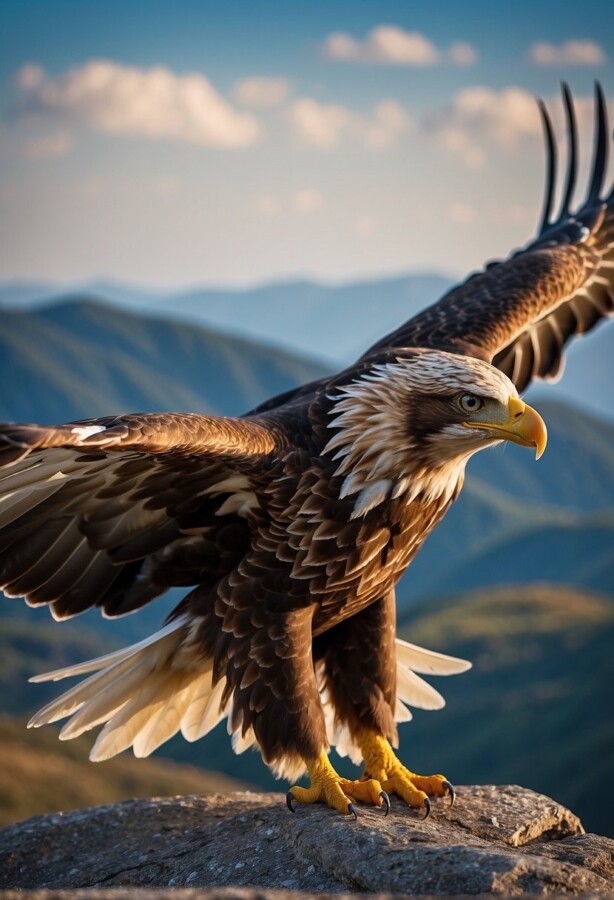
Scientific name: Aquila heliaca | Approximate adult size: 68–90 cm long; 176–216 cm wingspan | Global status: Vulnerable
Adults are dark brown with a golden-buff nape and small white shoulder patches. Juveniles are pale tawny with strong streaking and a different flight pattern, so age matters during identification.
The breeding range extends from southeastern Europe through western and central Asia; many birds migrate to Africa, the Middle East, and southern or eastern Asia. The species hunts ground squirrels, hares, birds, reptiles, and carrion in open areas near nesting trees. Electrocution, poisoning, persecution, habitat loss, and prey decline support its Vulnerable classification.
15. Gurney’s Eagle
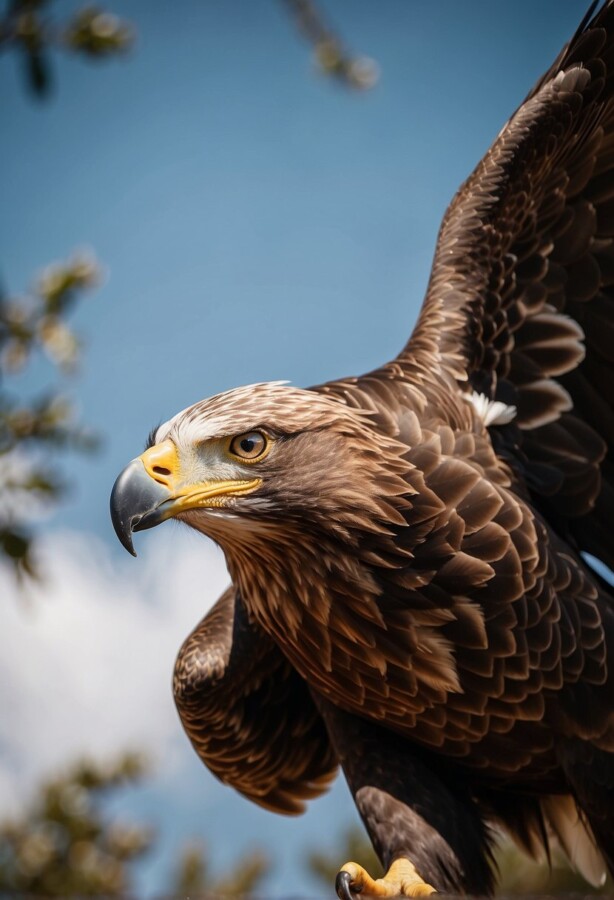
Scientific name: Aquila gurneyi | Approximate adult size: 74–86 cm long; 165–190 cm wingspan | Global status: Near Threatened
Gurney’s Eagle is a large, dark eagle with a heavy head, broad wings, fingered tips, and a long rounded tail. Adults are dark brown to nearly black, with paler flight feathers visible from below. Juveniles are more mottled.
It occurs in New Guinea and nearby islands, using lowland and foothill forest, forest edge, and some disturbed landscapes. Its diet is incompletely known but includes mammals, birds, and reptiles. Forest conversion and a relatively restricted range are the main concerns behind its Near Threatened status.
16. Wahlberg’s Eagle
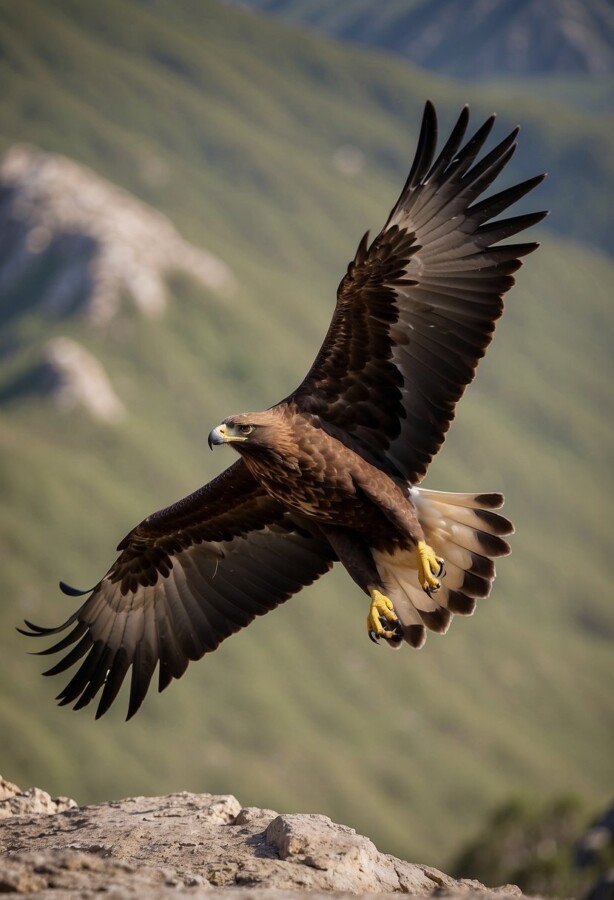
Scientific name: Hieraaetus wahlbergi | Approximate adult size: 53–61 cm long; 130–146 cm wingspan | Global status: Least Concern
Wahlberg’s Eagles occur in dark, pale, and intermediate color morphs. They have a small head, relatively narrow bill, long wings, and a slightly squared tail. The dark morph is most common and can be confused with several other brown raptors.
The species breeds in wooded savanna and open woodland across sub-Saharan Africa, with many populations making seasonal movements. Birds, reptiles, small mammals, and large insects all appear in the diet. It remains globally Least Concern, but long-term road surveys have documented steep declines across parts of the African savanna.
17. Golden Eagle
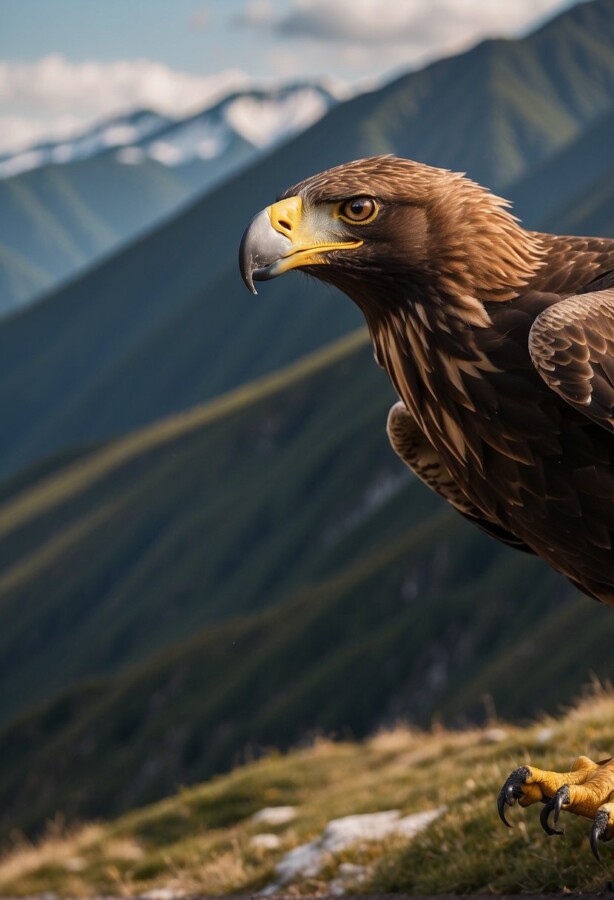
Scientific name: Aquila chrysaetos | Approximate adult size: 66–102 cm long; 180–234 cm wingspan | Global status: Least Concern
The Golden Eagle is a large, dark brown raptor with golden feathers on the back of the head and neck. Juveniles show bold white patches in the wings and at the base of the tail. Long, broad wings support fast gliding, soaring, and powerful dives.
This species spans much of the Northern Hemisphere, using mountains, tundra, steppe, desert, and other open or semi-open landscapes. It hunts rabbits, hares, ground squirrels, birds, and other prey and also scavenges. Golden Eagles are globally Least Concern, although regional populations face collision, electrocution, poisoning, disturbance, and habitat pressures.
18. Booted Eagle
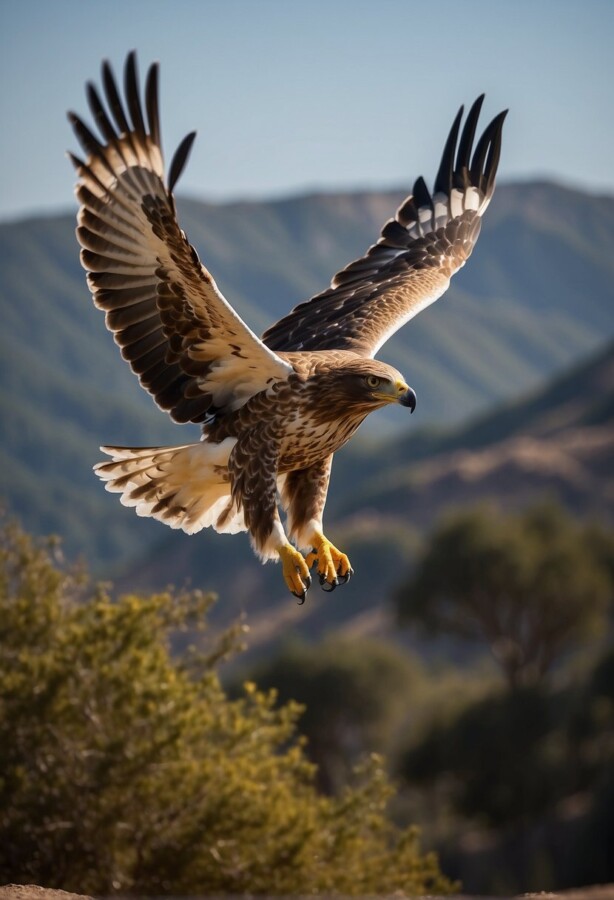
Scientific name: Hieraaetus pennatus | Approximate adult size: 40–50 cm long; 110–135 cm wingspan | Global status: Least Concern
The Booted Eagle is a small, compact eagle with fully feathered legs—the “boots” behind its name. Pale and dark morphs occur. Pale birds show a dark flight-feather border around a light body, while white shoulder patches can resemble landing lights from above.
It breeds across parts of Europe, North Africa, and Asia and winters mainly in sub-Saharan Africa and South Asia. Forest edges, wooded hills, and open country provide hunting space for birds, small mammals, reptiles, and large insects. The species is globally Least Concern, though migration hazards and habitat change affect local populations.
19. Wedge-Tailed Eagle
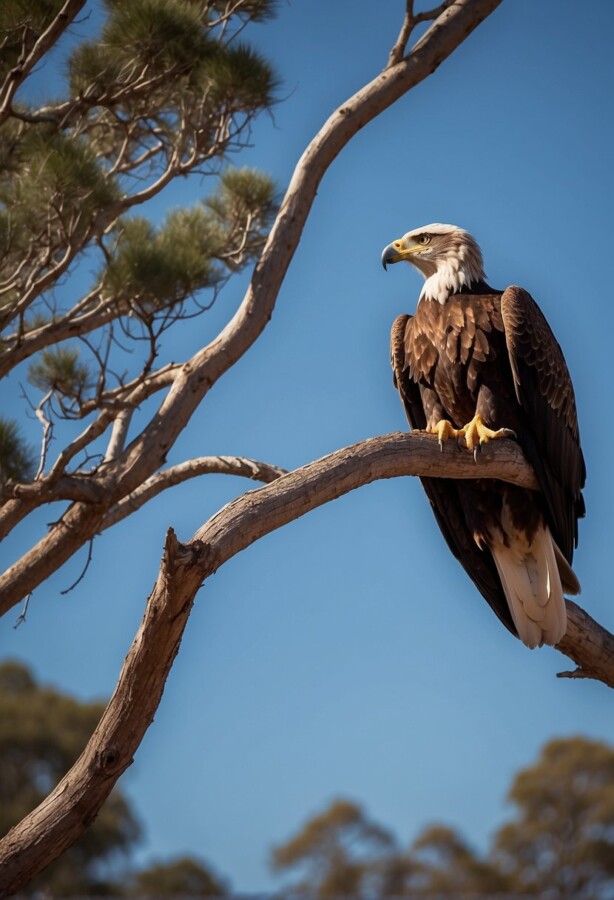
Scientific name: Aquila audax | Approximate adult size: 81–106 cm long; 182–232 cm wingspan | Global status: Least Concern
The Wedge-Tailed Eagle is Australia’s largest bird of prey. Adults become very dark with age and show long wings, feathered legs, and the unmistakable wedge-shaped tail that remains visible when the bird is soaring.
It occurs across mainland Australia, Tasmania, and southern New Guinea in habitats ranging from desert and grassland to open forest. It hunts rabbits, reptiles, birds, and mammals and scavenges carrion. The species is globally Least Concern, but the Tasmanian subspecies is nationally listed as Endangered and faces threats from collisions, persecution, and habitat disturbance.
20. African Hawk-Eagle
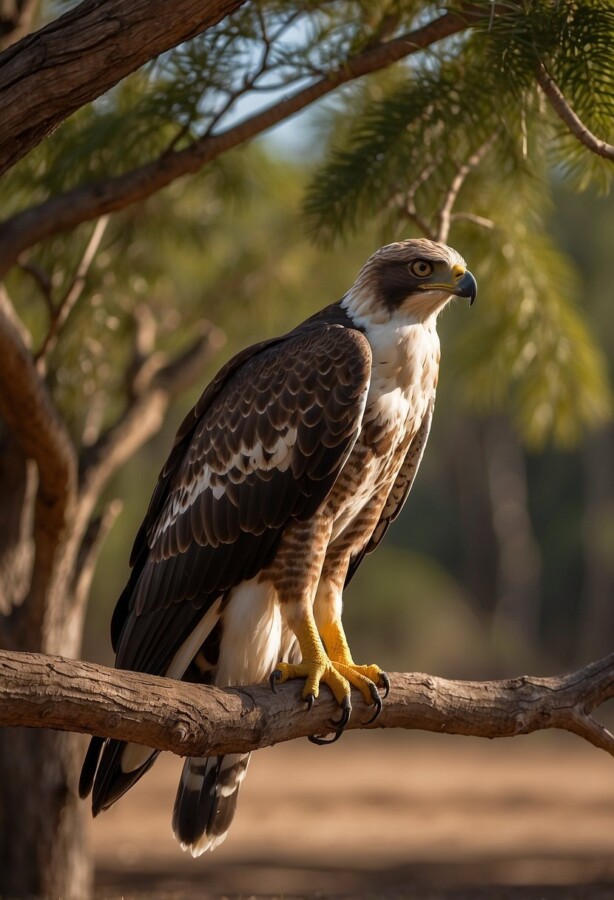
Scientific name: Aquila spilogaster | Approximate adult size: 55–65 cm long; 130–160 cm wingspan | Global status: Least Concern
Adult African Hawk-Eagles have dark upperparts and heavily streaked white underparts, with a pale tail crossed by a broad dark terminal band. Immatures are warmer rufous below. The species is agile and often hunts from a high perch or by fast flight.
It inhabits woodland, wooded savanna, and riverine forest across sub-Saharan Africa, taking birds, small mammals, and reptiles. Pairs may hunt cooperatively. Although the global IUCN category remains Least Concern, large-scale road surveys have estimated severe declines in parts of the African savanna, making protected areas increasingly important.
21. Little Eagle

Scientific name: Hieraaetus morphnoides | Approximate adult size: 45–55 cm long; 100–135 cm wingspan | Global status: Least Concern
Little Eagles occur in pale and dark morphs. They have a compact body, broad wings, and a relatively long tail; the underwing pattern often includes a dark M-shaped mark across the coverts. Females are larger than males.
They occur across much of mainland Australia in open woodland, wooded grassland, farmland, and semi-arid country, generally avoiding closed rainforest. Rabbits, small mammals, birds, and reptiles form the main diet. The global status is Least Concern, but habitat loss and prey changes have produced significant regional concern in parts of Australia.
22. Verreaux’s Eagle
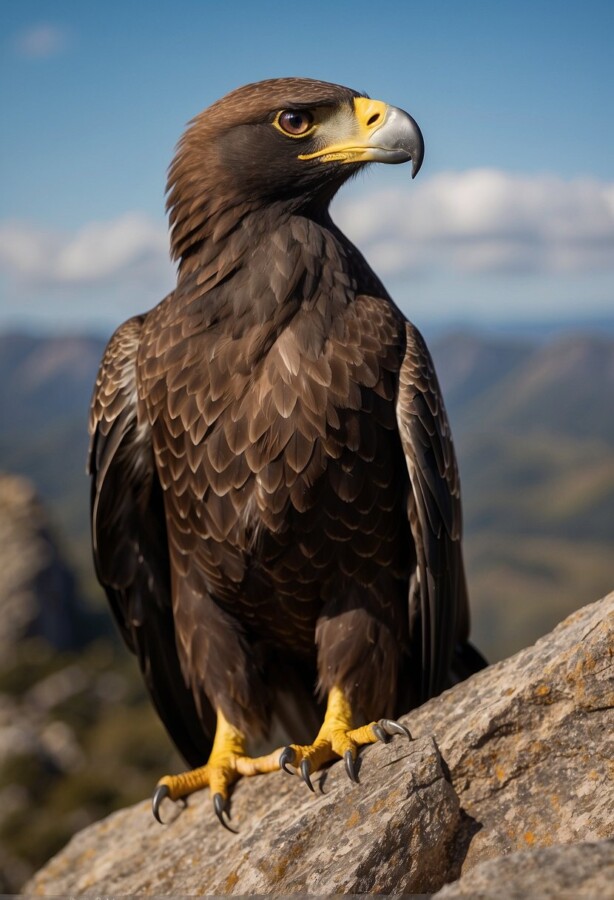
Scientific name: Aquila verreauxii | Approximate adult size: 75–96 cm long; 181–230 cm wingspan | Global status: Least Concern
Verreaux’s Eagle is a large black eagle with white rump, back, and wing markings that form a striking V when perched or flying. Its broad wings and powerful feet suit steep, rocky terrain.
The species occurs across mountains, escarpments, and rocky outcrops in sub-Saharan Africa and parts of the Arabian Peninsula. Rock hyraxes are its main prey in many areas, supplemented by other mammals and birds. It is globally Least Concern, but local declines can follow quarrying, disturbance, persecution, and reductions in hyrax populations.
23. Black-and-Chestnut Eagle
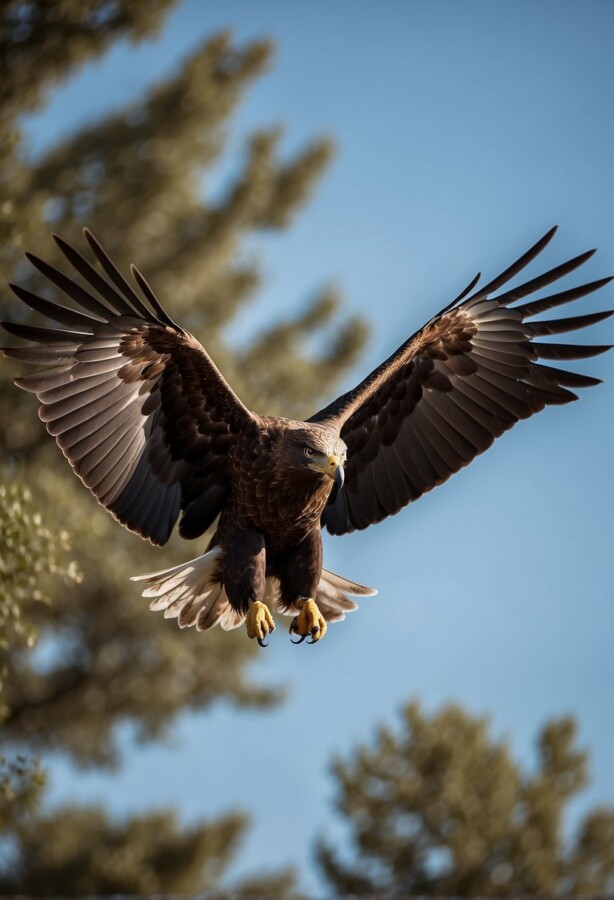
Scientific name: Spizaetus isidori | Approximate adult size: 60–80 cm long; 147–180 cm wingspan | Global status: Endangered
Adults combine black upperparts, a dark crest, and rich chestnut underparts. In flight, pale patches in the wings and tail contrast with the darker body. Juveniles are much whiter below, which can complicate identification.
This eagle follows the Andes from Venezuela and Colombia south to Argentina, relying on montane and cloud forest. It hunts arboreal mammals and medium-sized birds. Deforestation, fragmentation, and direct killing—sometimes following attacks on domestic poultry—have contributed to its Endangered status.
24. Ayres’s Hawk-Eagle
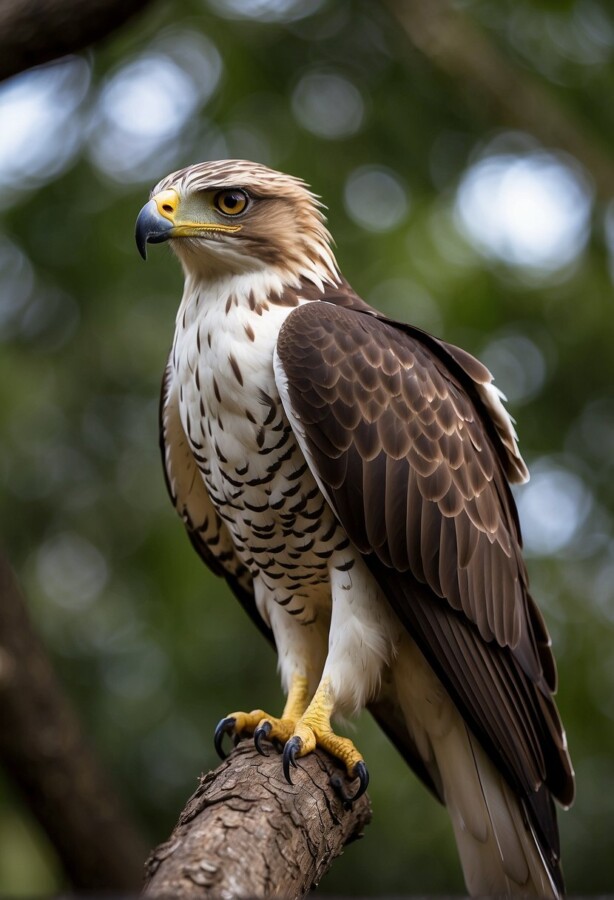
Scientific name: Hieraaetus ayresii | Approximate adult size: 44–57 cm long; 124–137 cm wingspan | Global status: Least Concern
Adult Ayres’s Hawk-Eagles have a dark back, white throat and underparts, and dense dark spotting or barring below. A small crest, yellow eyes, and long feathered legs complete the profile. Juveniles are browner above and less heavily marked.
The species occurs in forest, wooded savanna, and plantations across sub-Saharan Africa. It is an agile bird hunter, often taking pigeons and doves above or within the canopy; small mammals and bats may also be eaten. It is globally Least Concern, but forest loss can reduce suitable nesting and hunting habitat.
25. Ornate Hawk-Eagle
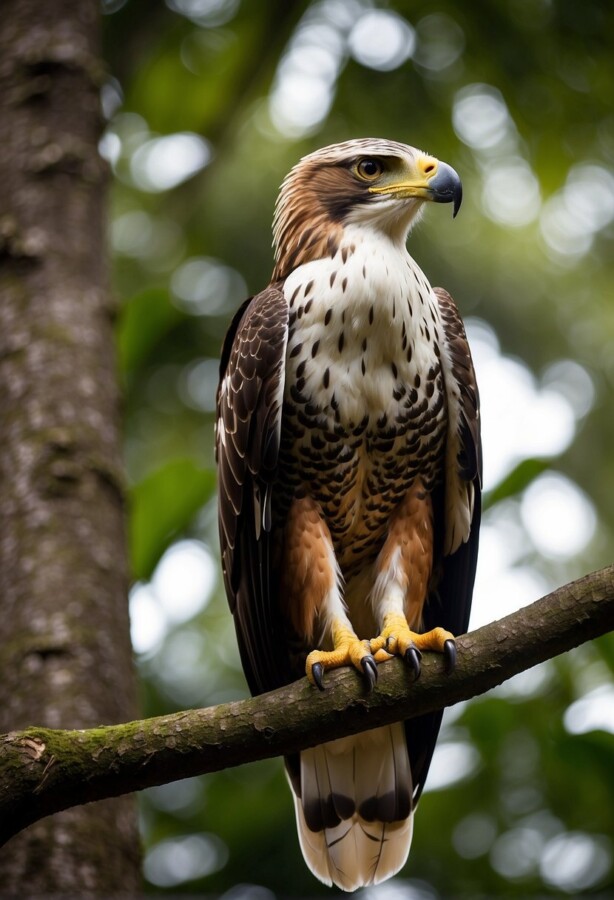
Scientific name: Spizaetus ornatus | Approximate adult size: 56–69 cm long; 117–142 cm wingspan | Global status: Near Threatened
The Ornate Hawk-Eagle is one of the most distinctive Neotropical raptors. Adults show a long black crest, orange-rufous sides to the head, a white throat bordered in black, and strongly barred underparts. Juveniles are much paler.
It inhabits tropical and subtropical forest from Mexico through Central America and much of South America. Birds and small to medium-sized mammals are the main prey, with reptiles taken occasionally. The species is Near Threatened because forest clearance and fragmentation continue across much of its range.
26. Pygmy Eagle
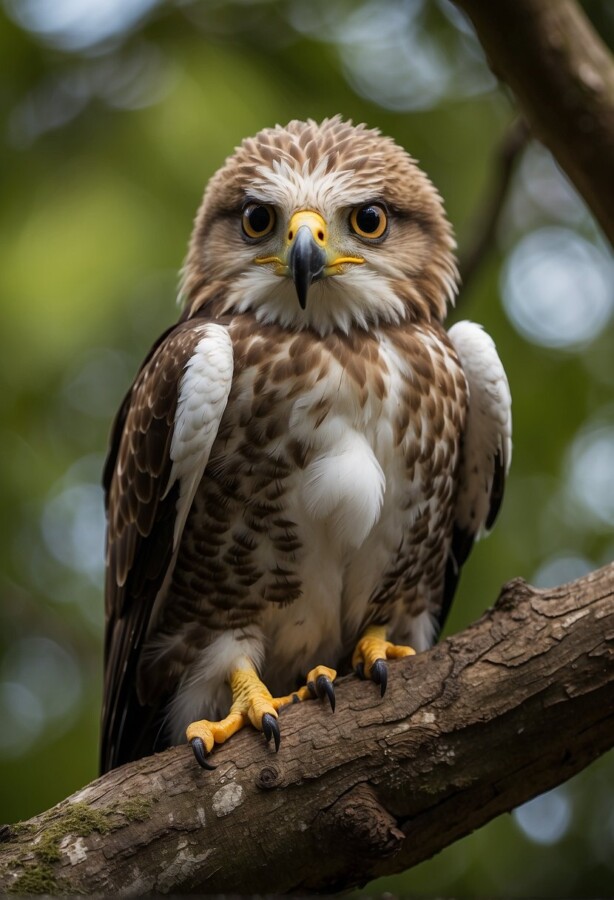
Scientific name: Hieraaetus weiskei | Approximate adult size: 38–48 cm long; 112–126 cm wingspan | Global status: Least Concern
The Pygmy Eagle is one of the smallest booted eagles. Its compact body, feathered legs, barred flight feathers, and pale or rufous underparts resemble the closely related Little Eagle, but the Pygmy Eagle is confined to the New Guinea region.
It uses rainforest, forest edge, and wooded clearings, where it hunts birds, reptiles, and small mammals. The species is not Data Deficient: its current global classification is Least Concern. Even so, its biology is less studied than that of many larger eagles, and forest change remains relevant to local populations.
27. Martial Eagle
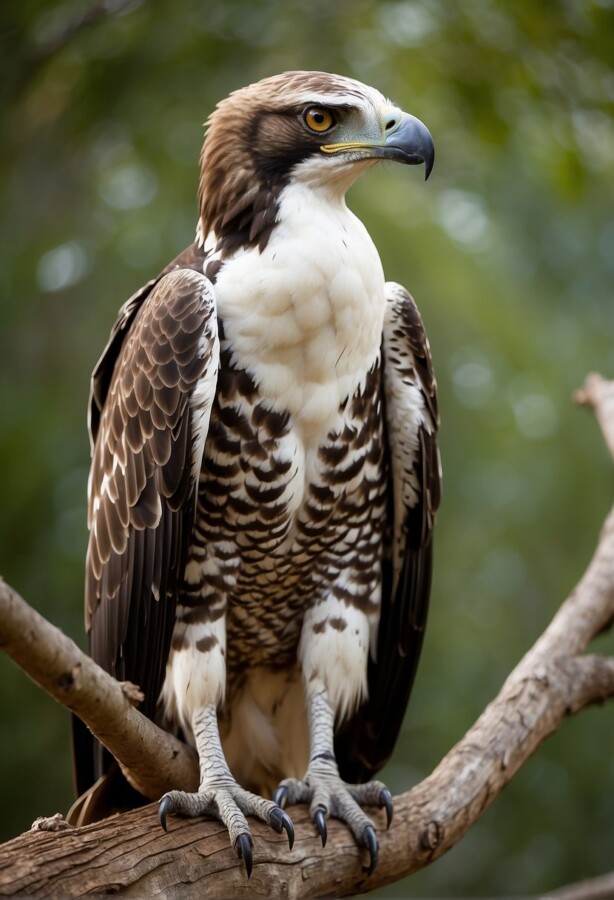
Scientific name: Polemaetus bellicosus | Approximate adult size: 78–96 cm long; 188–260 cm wingspan | Global status: Endangered
The Martial Eagle has exceptionally long, broad wings, a dark brown head and upperparts, and white underparts covered with dark spots. Its powerful build allows it to take a wide range of prey, although exaggerated claims about livestock attacks have often fueled persecution.
It occupies savanna, semi-desert, and open woodland across sub-Saharan Africa, hunting mammals, birds, and reptiles from high soaring flights. Shooting, poisoning, electrocution, habitat change, prey depletion, and collisions have caused severe declines. Long-term surveys have estimated losses of roughly 90% over three generation lengths in sampled African savanna regions, consistent with its Endangered status.
28. Black Hawk-Eagle
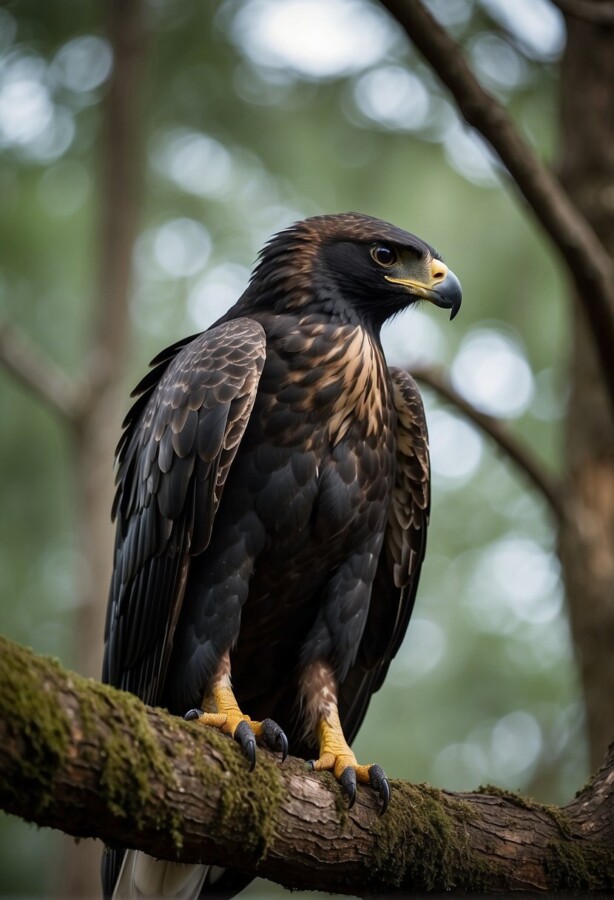
Scientific name: Spizaetus tyrannus | Approximate adult size: 58–70 cm long; 115–148 cm wingspan | Global status: Least Concern
The Black Hawk-Eagle is mostly black, with a long crest, yellow legs and cere, a strongly banded tail, and white checkering on the underwings. Its loud whistled calls often reveal a bird soaring above the canopy before it is seen.
It ranges from Mexico through Central America to much of tropical South America, using lowland and foothill forest, edges, and second growth. Birds, mammals, and reptiles all occur in the diet. The species is globally Least Concern, though extensive forest loss can reduce local numbers.
29. Long-Crested Eagle
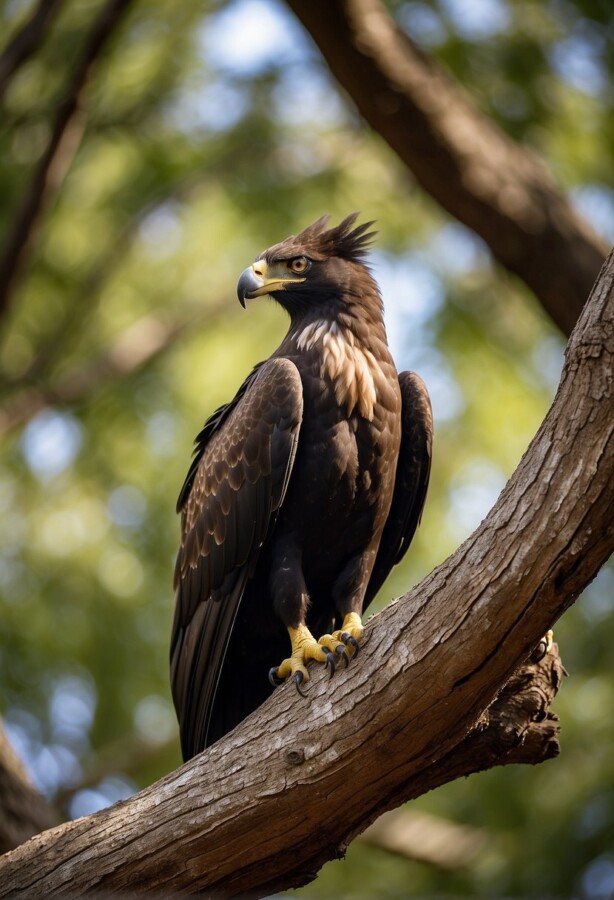
Scientific name: Lophaetus occipitalis | Approximate adult size: 53–65 cm long; 110–129 cm wingspan | Global status: Least Concern
The Long-Crested Eagle is dark brown to blackish, with a conspicuous shaggy crest and white panels visible in the wings during flight. It often sits upright on poles, trees, and other exposed perches while scanning the ground.
It occurs across much of sub-Saharan Africa in moist grassland, open woodland, wetlands, plantations, and farmland. Rodents dominate the diet, with birds, reptiles, and insects also taken. Although globally Least Concern, long-term road surveys indicate large declines in parts of the African savanna, so the category should not be read as proof that every population is stable.
30. Crowned Eagle (Crowned Hawk-Eagle)
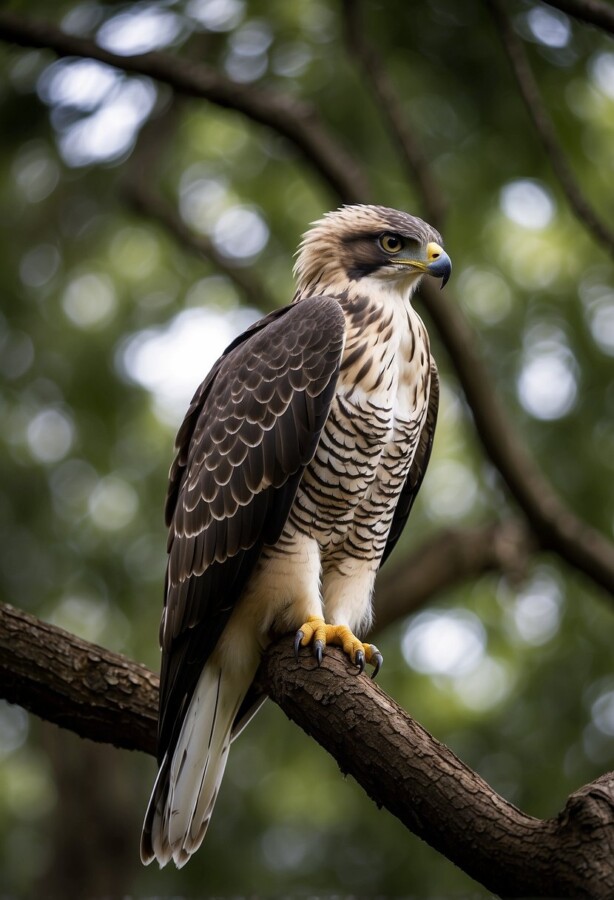
Scientific name: Stephanoaetus coronatus | Approximate adult size: 80–99 cm long; 151–181 cm wingspan | Global status: Near Threatened
The correct scientific name for the African Crowned Eagle is Stephanoaetus coronatus, not Nisaetus coronatus. It has a double crest, barred underparts, powerful legs, short broad wings, and a long tail—an effective shape for hunting inside forest.
It inhabits forest, forest–savanna mosaics, wooded ravines, and some plantations across sub-Saharan Africa. Medium-sized mammals, including monkeys, hyraxes, and small antelope, are central to its diet, along with large birds. Forest loss, persecution, and slow reproduction support its Near Threatened status. See our detailed guide to the crowned eagle.
31. Black-and-White Hawk-Eagle
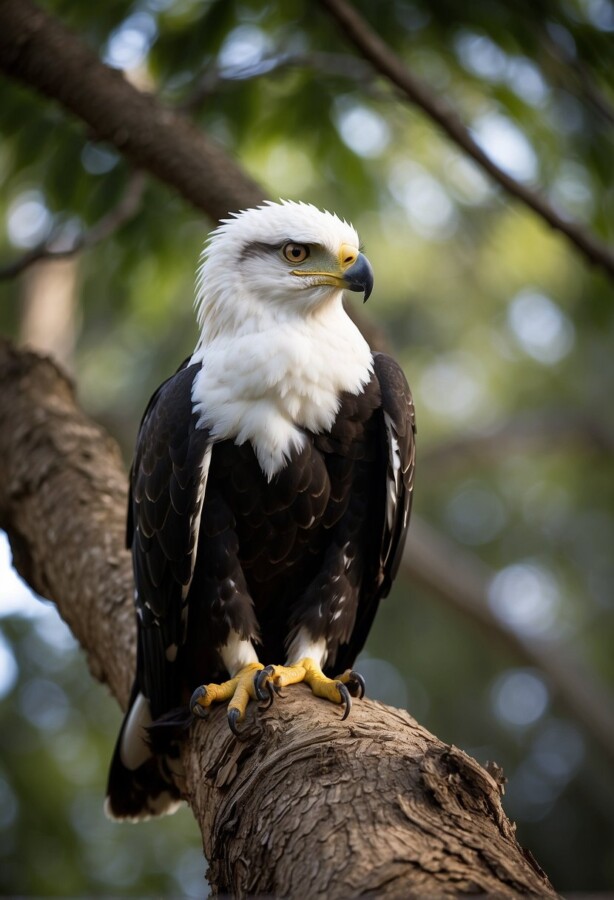
Scientific name: Spizaetus melanoleucus | Approximate adult size: 51–58 cm long; about 117 cm wingspan | Global status: Least Concern
This compact forest eagle is sharply patterned: white head, neck, and underparts contrast with a black mask, short black crest, dark back, and banded tail. Its broad wings and contrasting plumage are easiest to appreciate when it circles above the forest.
The species occurs from southern Mexico through Central America and across much of tropical South America. It hunts birds, small mammals, and reptiles in lowland and foothill forest. It is globally Least Concern but naturally uncommon, and continued habitat loss makes reliable monitoring important.
32. Cassin’s Hawk-Eagle
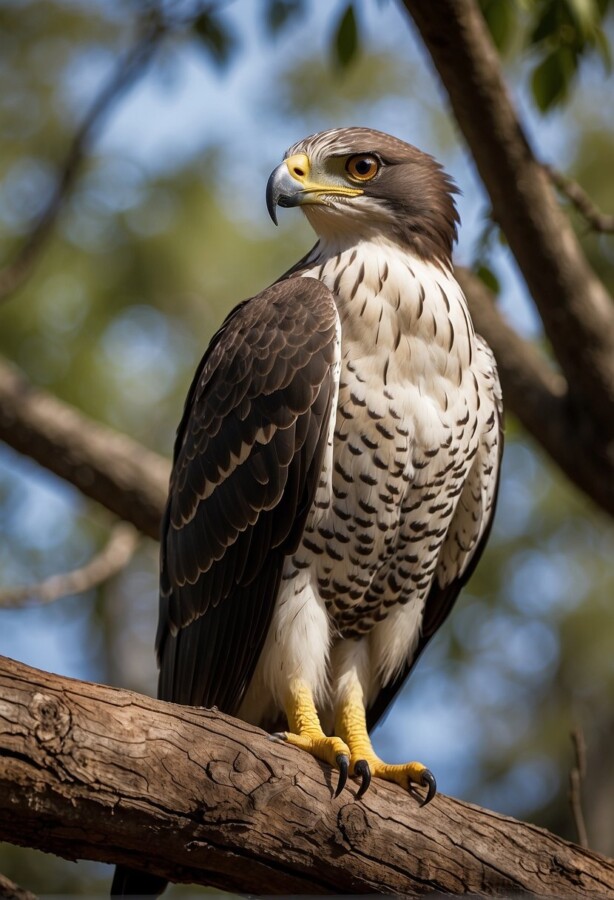
Scientific name: Aquila africana | Approximate adult size: 50–56 cm long; 103–113 cm wingspan | Global status: Least Concern
Cassin’s Hawk-Eagle has short rounded wings, a relatively long tail, dark upperparts, and strongly contrasting white underparts with dark flanks. Its compact shape helps it move through dense forest, where it is seen less often than many open-country eagles.
It ranges from Sierra Leone through the Congo Basin to western Uganda and northern Angola, using primary and secondary rainforest. Birds and tree squirrels are important prey. The global status is Least Concern, but deforestation and fragmentation continue to reduce forest habitat.
33. Bonelli’s Eagle
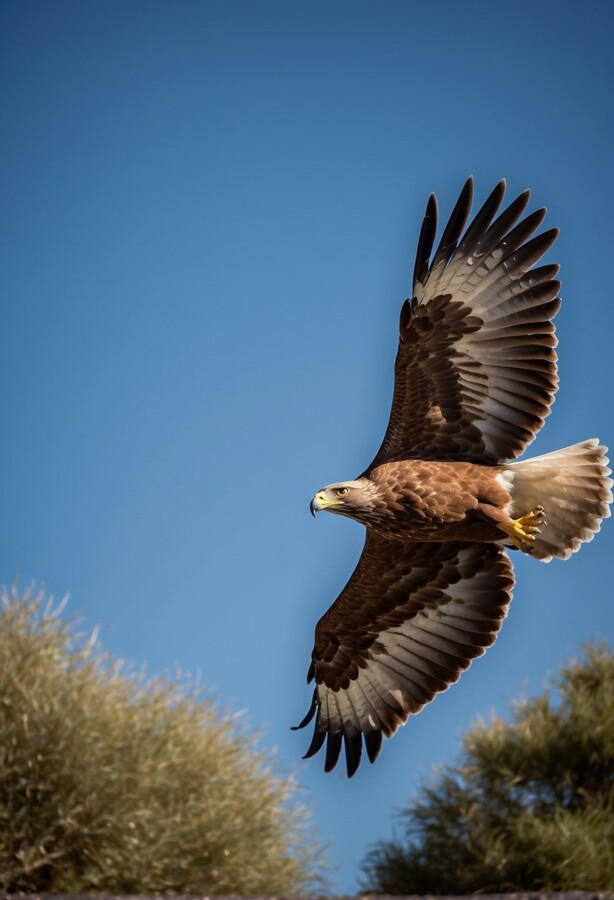
Scientific name: Aquila fasciata | Approximate adult size: 55–74 cm long; 143–180 cm wingspan | Global status: Least Concern
Adult Bonelli’s Eagles have dark upperparts, a pale patch on the back, a light streaked body, and a dark terminal tail band. Long wings and a relatively long tail give them speed and maneuverability during low, fast hunting flights.
The species has a fragmented range from the Mediterranean and North Africa through the Middle East and South Asia to parts of Southeast Asia. It takes rabbits, birds, and other medium-sized prey. The global category is Least Concern, but several regional populations are threatened by electrocution, collisions, persecution, habitat change, and declining prey.
34. Crested Eagle
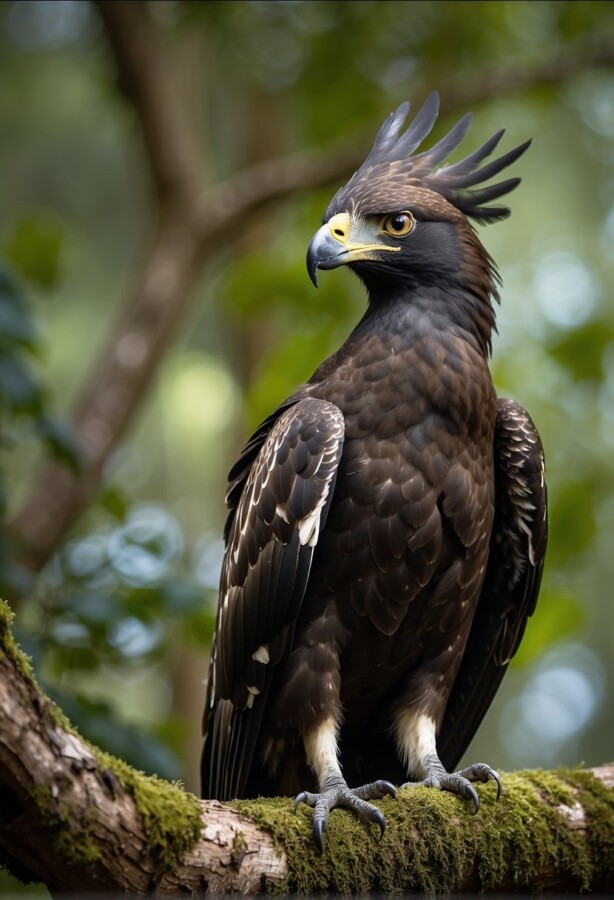
Scientific name: Morphnus guianensis | Approximate adult size: 71–89 cm long; 138–176 cm wingspan | Global status: Near Threatened
The Crested Eagle has a prominent crest, long tail, broad rounded wings, and variable plumage ranging from pale gray-brown to dark gray. Juveniles can resemble young Harpy Eagles, but Crested Eagles are slimmer and have a different head and tail pattern.
It occurs from Central America through the Amazon and into parts of southern South America, usually in large tracts of lowland forest. Arboreal mammals, birds, reptiles, and other vertebrates make up the diet. Forest loss and low natural density contribute to its Near Threatened status.
35. Bald Eagle

Scientific name: Haliaeetus leucocephalus | Approximate adult size: 70–102 cm long; 180–244 cm wingspan | Global status: Least Concern
The Bald Eagle is a North American sea eagle. Adults develop the familiar white head and tail at about four to five years of age; younger birds are mottled brown. Broad wings, a heavy bill, and powerful feet suit life around lakes, rivers, wetlands, and coasts.
Fish dominate the diet, but Bald Eagles also scavenge, steal food from other birds, and take waterfowl or mammals. The species recovered after legal protection, habitat work, and the restriction of DDT, and it is now globally Least Concern. It was formally designated the United States’ national bird in 2024, while remaining protected under federal law.
Why eagle conservation requires more than a global status label
The IUCN Red List provides a global assessment. It does not mean that every national population, subspecies, or region has the same outlook. The Wedge-Tailed Eagle, for example, is globally Least Concern, while its Tasmanian subspecies is endangered under Australian law. Little Eagles also face stronger concern in parts of Australia than their global category suggests.
A similar distinction matters in Africa. Research published in Nature Ecology & Evolution found widespread declines among savanna raptors, including species whose global categories remain Least Concern. Protected areas performed better than surrounding landscapes, but declines were also recorded inside some protected areas.
Across continents, recurring threats include forest clearance, wetland drainage, poisoning, shooting, electrocution, collisions, declining prey, and disturbance around nests. Protecting eagles therefore requires more than preserving individual nest trees. It requires connected habitat, safe power infrastructure, viable prey populations, enforceable wildlife protection, and cooperation with the people living beside these predators.
Continue with our guides to endangered birds around the world, practical solutions to habitat loss, and the types of ecosystems these apex predators help regulate.
Frequently asked questions
How many species of eagles are there?
More than 60 living species are commonly called eagles. The exact total depends on the taxonomic checklist and on which common names are included because “eagle” is not a single scientific group.
What are the main types of eagles?
Common ecological groups include booted eagles, sea or fish eagles, serpent-eagles, hawk-eagles, harpy-type forest eagles, and buzzard-eagles. These labels describe related lineages or hunting styles, but they do not form one simple taxonomic ladder.
What is the largest eagle in the world?
There is no single winner because size can mean weight, body length, wingspan, or foot strength. Steller’s Sea Eagle is often cited as the heaviest living eagle on average, while Philippine and Harpy eagles rank among the largest forest eagles. Large Golden, Martial, Wedge-Tailed, and sea eagles can exceed two meters in wingspan.
Are all eagles endangered?
No. Eagle species range from Least Concern to Critically Endangered. In this list, the Philippine Eagle is Critically Endangered, while the Chaco, Steppe, Black-and-Chestnut, and Martial eagles are Endangered. A Least Concern label does not guarantee that every regional population is stable.
What do eagles eat?
Eagle diets reflect habitat and anatomy. Sea eagles often take fish and waterbirds; forest eagles may hunt monkeys, sloths, squirrels, or birds; open-country eagles take rabbits, rodents, reptiles, and ground birds. Many species also scavenge carrion when it is available.
What is the difference between an eagle and a hawk?
Both are common names used within the family Accipitridae, and there is no single scientific boundary that separates every eagle from every hawk. Eagles are often larger and more powerfully built, but considerable overlap exists. Scientific names and field marks are more reliable than the common-name label alone.
See Related: how much weight an eagle can actually carry — the answer is far less than the folklore suggests.