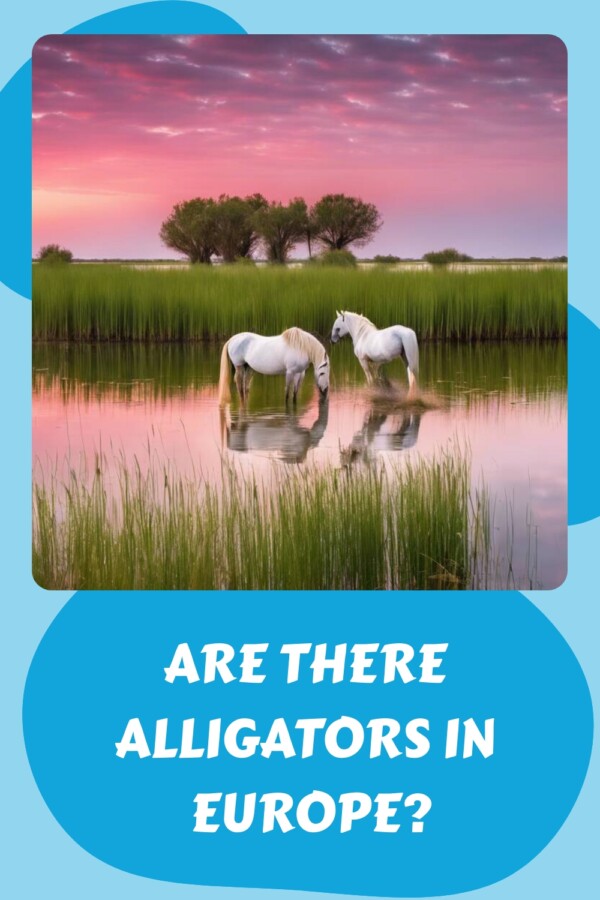
Are there alligators in Europe? No native or established, self-sustaining wild alligator population is known on the continent. The two living alligator species are native to the southeastern United States and eastern China. A captive animal could escape or be released, and an individual might survive for a time in a mild area, but that would not make alligators native to Europe.
The key distinction is between a species being native, a single animal being present, and a breeding population being established. Those are three different claims, and reported sightings should not be treated as evidence of colonization without verified reproduction over multiple years.
Key takeaways
- American alligators are native to the southeastern United States; Chinese alligators are native to a restricted part of eastern China.
- Europe has suitable-looking wetlands, but habitat appearance alone does not create a native range or a viable breeding population.
- Cold weather reduces alligator feeding and activity, yet American alligators can tolerate brief freezing. Individual survival is not the same as successful reproduction.
- An isolated European sighting would most likely involve an escaped or released captive animal, assuming the identification was correct.
- Alligators, crocodiles, and caimans are related crocodilians, but they are not interchangeable names. They do share the same mouth anatomy: an alligator’s tongue is fixed to the floor of its mouth, exactly as a crocodile’s is.
Are alligators native to Europe?
No. The genus Alligator has two living species: the American alligator (Alligator mississippiensis) and the Chinese alligator (Alligator sinensis). Neither has a natural range in Europe.
| Species | Native range | Status in Europe | Relevant trait |
|---|---|---|---|
| American alligator Alligator mississippiensis | Southeastern United States | No native or established wild population is known | Freshwater-oriented, with limited tolerance of brackish water and brief freezing |
| Chinese alligator Alligator sinensis | Restricted areas of eastern China | No native or established wild population is known | Smaller than the American species and adapted to a temperate seasonal climate |
A species is native when it occurs in a region through natural biogeographic processes rather than human transport. An escaped pet, zoo animal, or deliberately released reptile is non-native even if it survives. An established population requires ongoing reproduction without repeated human introductions.
Why Europe has no wild alligator population
Biogeography matters more than a map of wetlands
Modern alligators evolved and diversified outside Europe. Their absence is therefore not explained by one missing habitat feature. Native ranges reflect evolutionary history, past climate, geographic barriers, and long-term ecological relationships. The difference between native and non-native species is more useful here than a simple question about whether Europe has swamps.
Cold changes activity and reproductive odds
Alligators are ectothermic reptiles, not warm-blooded animals. The National Park Service reports that American alligators can tolerate limited freezing, but their foraging stops when water temperatures fall below roughly 68–73°F (20–23°C). Colder conditions shorten the active feeding season and increase dependence on suitable shelter.
Reproduction creates a higher barrier than short-term survival. Female American alligators build nests above the waterline, incubation averages 58–63 days, and nest temperature affects the sex of the hatchlings. A location must therefore provide suitable adults, nest material, hydrology, incubation temperatures, and juvenile survival—not merely water and prey.
A wetland is not enough
Europe contains extensive wetland habitats, including marshes, ponds, river floodplains, and Mediterranean wetlands. Some may look similar to alligator habitat, but visual similarity is only one variable. A self-sustaining population would require enough compatible adults to arrive in the same area, survive year-round, find mates, nest successfully, and produce offspring that reach maturity.
Could an escaped alligator survive in Europe?
Possibly for a time, depending on the species, the animal’s size and health, access to deep water or shelter, and the local climate. It would be inaccurate to claim that every alligator would die as soon as a European winter began. It would be equally inaccurate to treat temporary survival as evidence that a breeding population could establish.
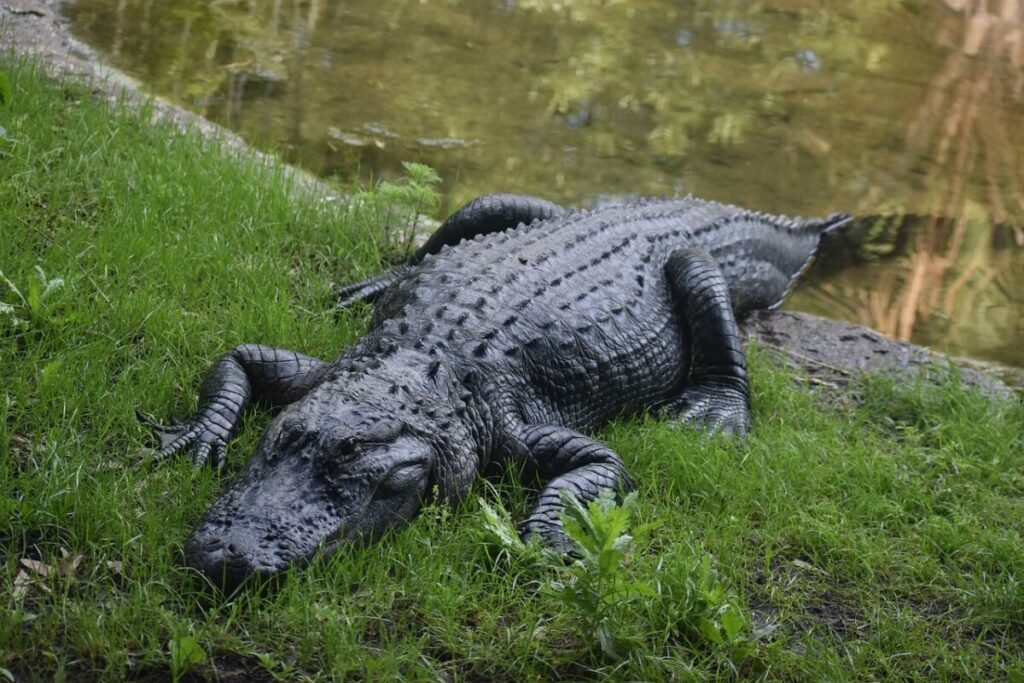
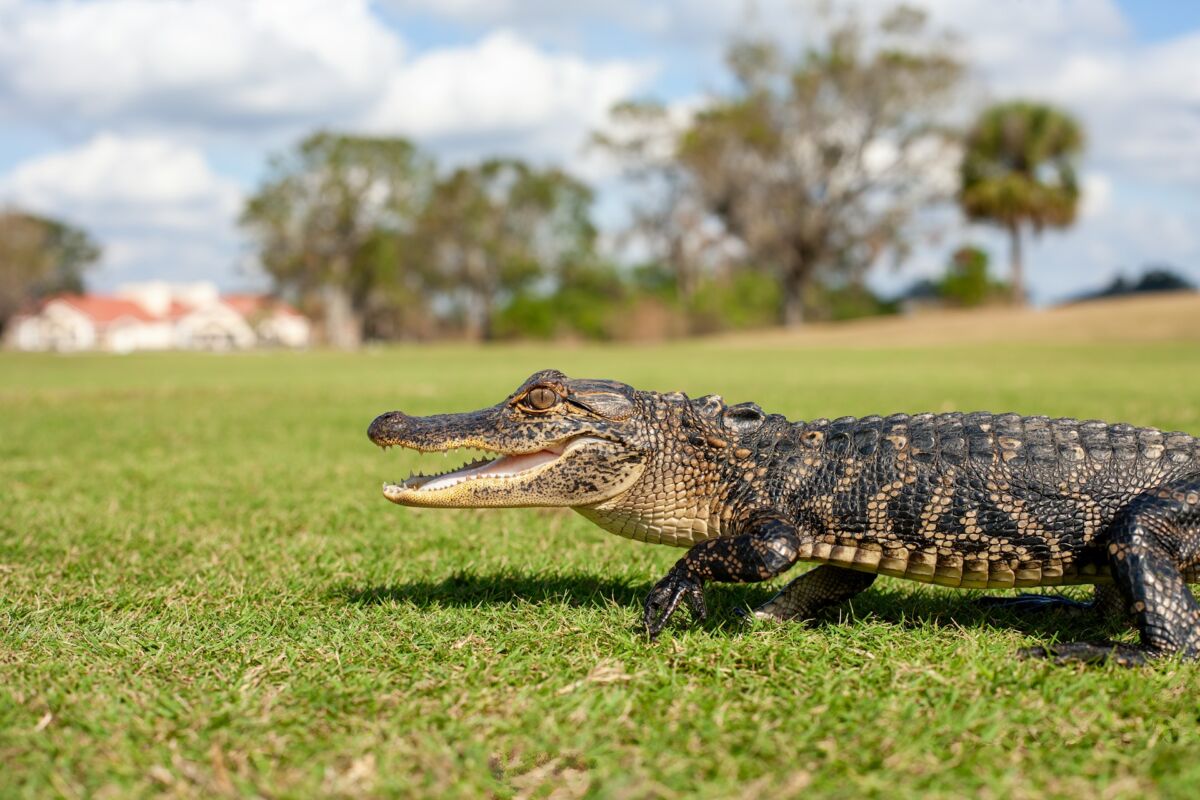
The U.S. Geological Survey’s nonindigenous species records document American alligators far outside their native U.S. range. Most were escaped or deliberately released pets, and many local records ended after the animals were captured. Several places had no evidence of reproduction. These records show why one confirmed animal should be described as an occurrence, not a population.
- Occurrence: one or more animals are verified in a location.
- Persistence: an animal survives for months or through one or more seasons.
- Establishment: the population reproduces and replaces itself without repeated releases.
- Spread: the established population expands into new areas.
No credible evidence currently demonstrates the establishment or spread stages for alligators in Europe. That is why an alleged sighting should be investigated without being inflated into a claim about a European alligator population.
Alligator, crocodile, or caiman?
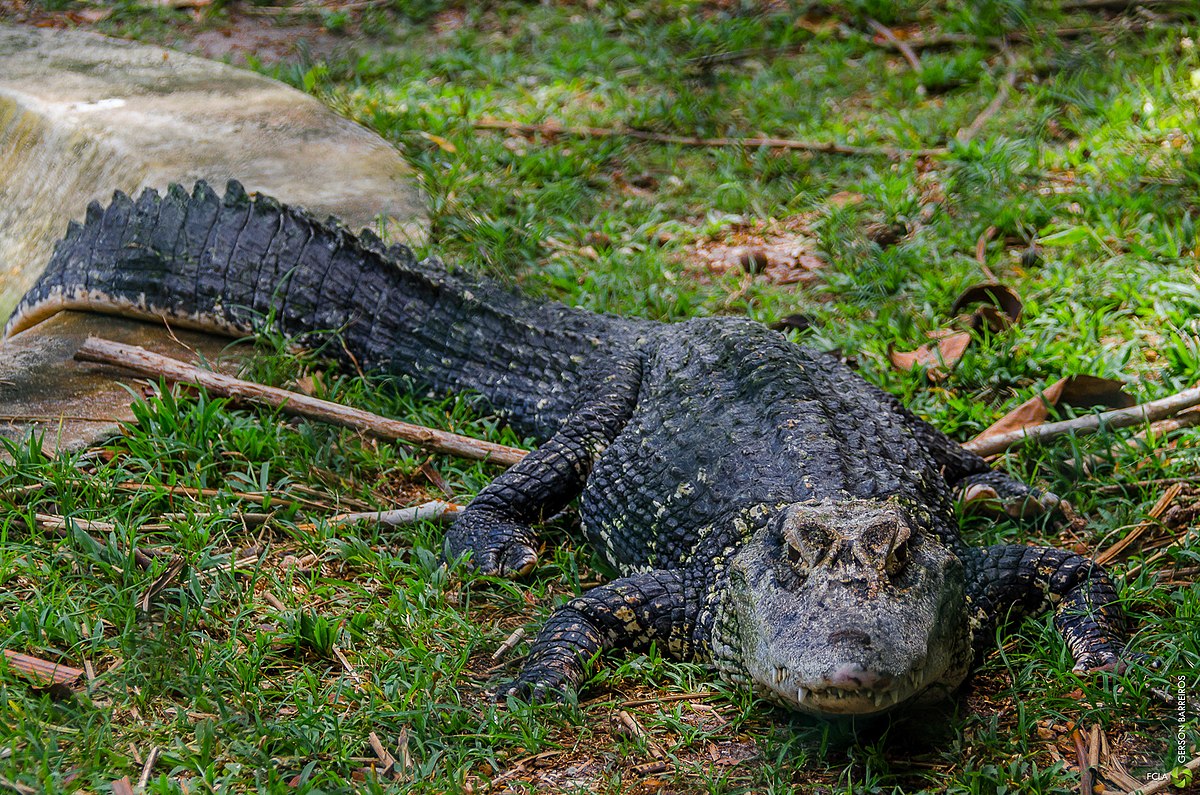
People often use these names loosely, especially when an animal is seen briefly or photographed from a distance. All are crocodilians, but alligators and caimans belong to the family Alligatoridae, while true crocodiles belong to Crocodylidae.
| Group | Natural range | Common identification clue | Typical water use | Native to Europe? |
|---|---|---|---|---|
| Alligator | Southeastern United States and eastern China | Usually a broad, rounded snout; lower teeth are less visible when the mouth is closed | Primarily freshwater; American alligators tolerate brackish water briefly | No |
| Caiman | Central and South America | Varies by species; some have a noticeable bony ridge around the eyes | Mostly freshwater | No |
| Crocodile | Tropical and subtropical parts of Africa, Asia, the Americas, and Australia | Often a narrower snout; the fourth lower tooth is commonly visible when the mouth is closed | Varies; several species tolerate brackish or salt water better than alligators | No |
Snout shape is a shortcut, not a definitive field test. Camera angle, age, species variation, and poor image quality can make confident identification impossible. Reports should use cautious wording until the animal is examined or clearly documented.
Reptiles that are native to Europe
Europe has no native living alligator, crocodile, caiman, or gharial, but it has a varied reptile fauna. The existing images in this article show three useful examples.
European adder
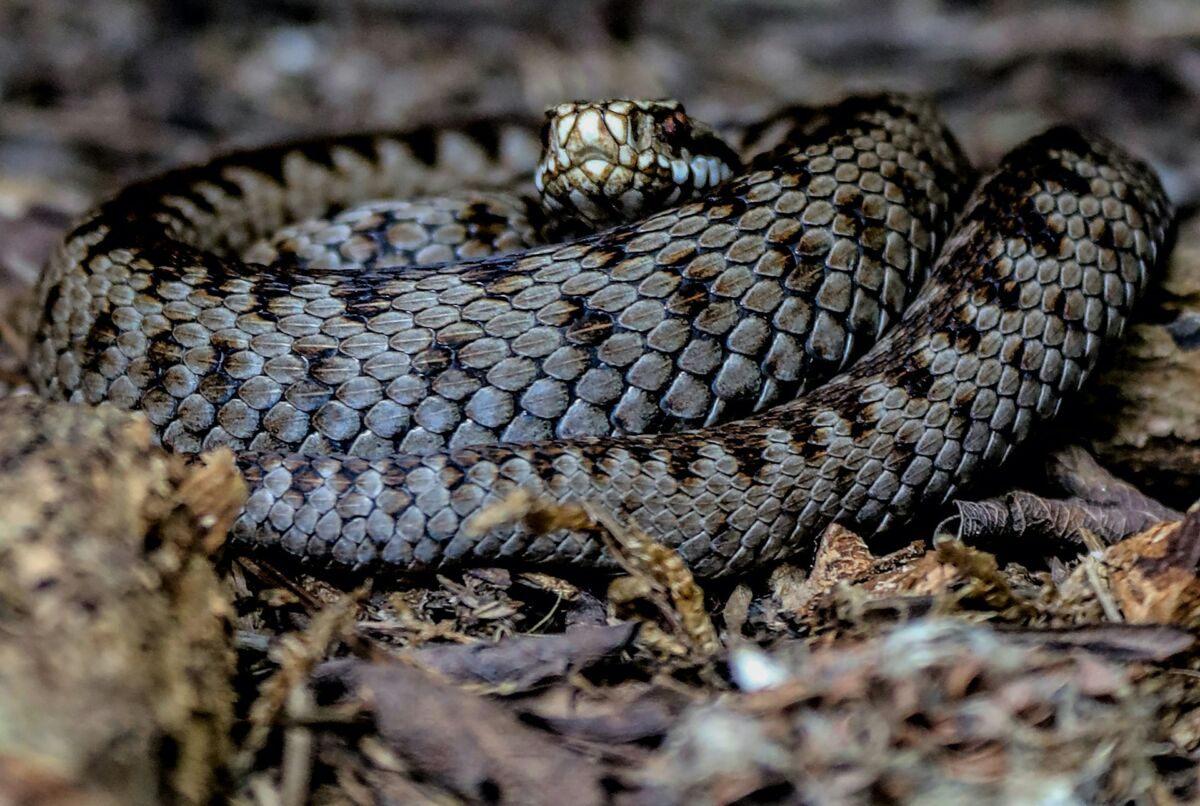
The European adder (Vipera berus) occurs across much of northern, central, and eastern Europe. Its markings vary, but many individuals have a dark zigzag pattern along the back. It is venomous and should not be handled, although it generally avoids people when given space.
Spur-thighed tortoise
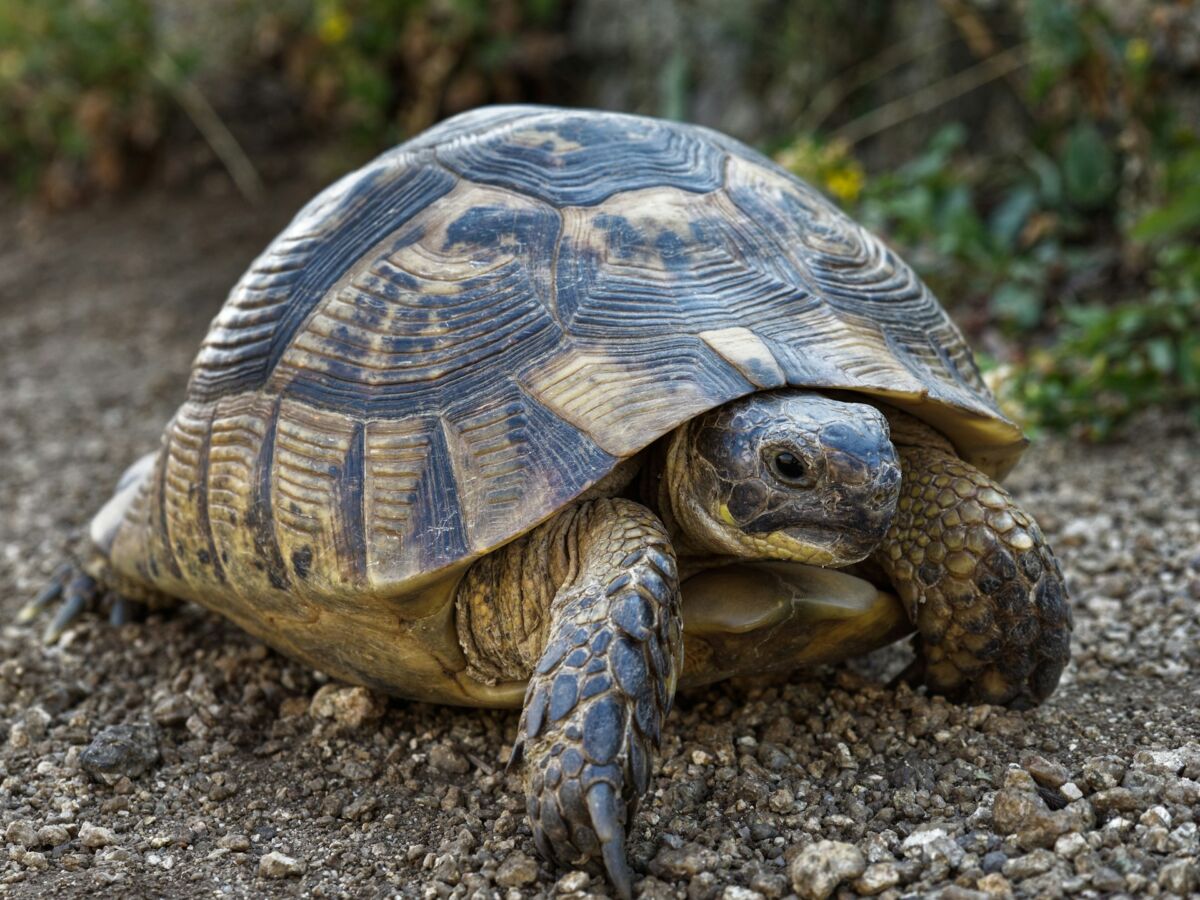
The spur-thighed tortoise (Testudo graeca), also called the Greek tortoise, occurs in parts of southern Europe and the wider Mediterranean region. It favors dry scrub, open woodland, grassland, and other sun-exposed terrestrial habitats.
European pond turtle
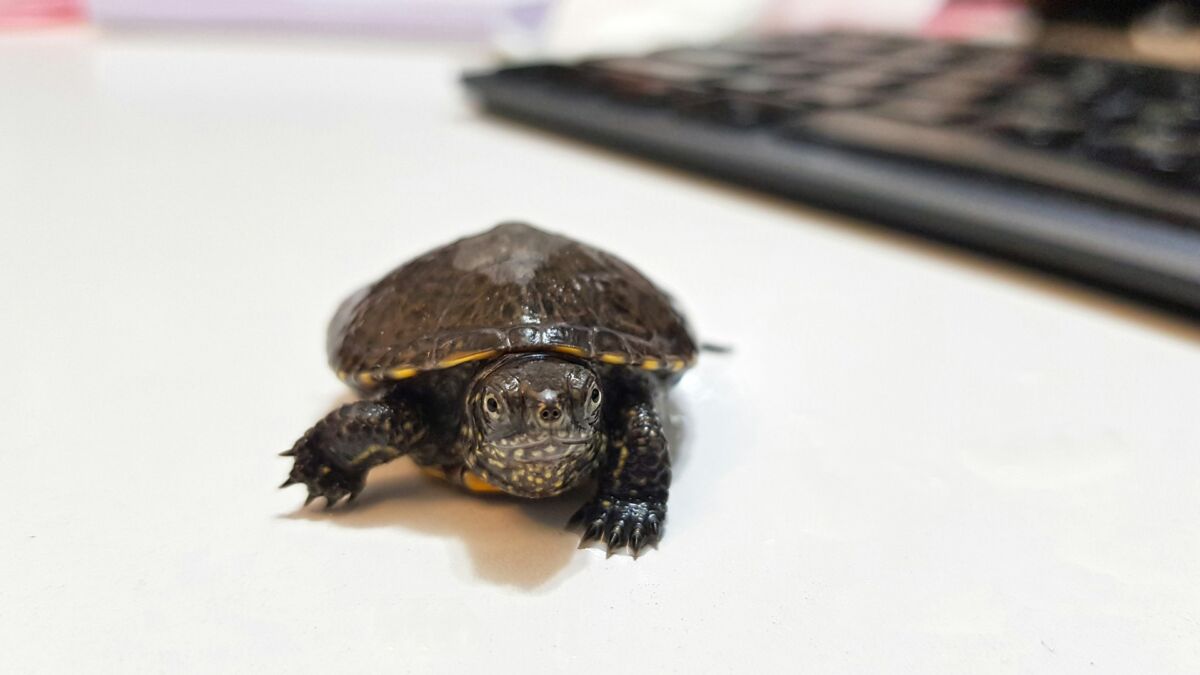
The European pond turtle (Emys orbicularis) is native to parts of Europe and neighboring western Asia and North Africa. It inhabits ponds, marshes, canals, and slow-moving freshwater, usually where basking sites and aquatic vegetation are available.
Did alligator relatives once live in Europe?
Europe’s fossil record includes alligator-like eusuchian reptiles such as Diplocynodon, known from Paleocene to Miocene deposits. A 2022 PeerJ study examined a European species that had long been treated as an early alligator relative. A broader 2025 phylogenetic analysis in Communications Biology questioned that traditional placement and proposed that Diplocynodon may fall outside true Crocodylia.
The careful conclusion is that alligator-like reptiles lived in prehistoric Europe, but their exact evolutionary position remains under study. Fossils millions of years old do not provide evidence for modern alligators living wild on the continent today.
What to do if you see a suspected alligator in Europe
Treat the report seriously until the animal is identified, but do not approach it to obtain proof. A large reptile can move quickly at close range, and an escaped captive animal may behave unpredictably.
- Keep well back and do not enter the water.
- Move children and pets indoors or far from the area.
- Do not feed, touch, corner, or attempt to capture the animal.
- Record the exact location and time. Take a photograph only from a safe distance.
- Contact local police, emergency services, or the relevant wildlife authority and follow their instructions.
Never release a captive reptile into the wild. Released exotic animals can create public-safety, animal-welfare, and ecological problems, while also forcing authorities to organize a difficult capture operation.
Frequently asked questions
Are there wild alligators in Europe?
No native or established self-sustaining wild alligator population is known in Europe. A verified individual would most likely be an escaped or released captive animal.
Can an alligator survive a European winter?
An individual might survive for a time in a mild or sheltered location because American alligators can tolerate brief cold and limited freezing. Prolonged cold reduces feeding and makes successful reproduction much less likely.
Are crocodiles native to Europe?
No living crocodile species is native to Europe. Crocodiles are kept in European zoos and private facilities, so an isolated escape or release is possible, but it would not represent a native population.
Are caimans found in Europe?
Caimans are native to Central and South America, not Europe. Any caiman found outside captivity in Europe would be a non-native individual, most likely linked to an escape or release.
What should I do if I see a suspected alligator in Europe?
Keep well back, move children and pets away, do not feed or corner the animal, and contact local police, emergency services, or the relevant wildlife authority. Share the location and a photograph only if you can take it safely.
The bottom line
Alligators are not native to Europe, and no established self-sustaining wild population is known there. Europe’s climate is part of the explanation, but the stronger answer combines native range, reproductive requirements, founder numbers, and long-term evidence. A lone animal could be an escapee; it would not, by itself, change the biological status of alligators in Europe.