
Twenty animals that start with N span five continents and every major habitat. You’ll find mammals, birds, reptiles, amphibians, and marine species here, each with its natural range and current IUCN conservation status.
The letter N covers a pretty wild range of creatures. There’s the spiral-tusked narwhal up in the Arctic, the termite-munching numbat of Australia, and the flashy northern cardinal that brightens up snowy backyards in the U.S.
The countdown below runs from 20 to 1. For each animal, you’ll get its home turf, a couple of traits, and its conservation status—basically, how close it is to vanishing.
Some names are a bit misleading. A narwhal’s “horn” is actually a giant tooth, and the northern white rhino is functionally extinct—no breeding pairs left in the wild, sadly.
20. Northern Leopard Frog
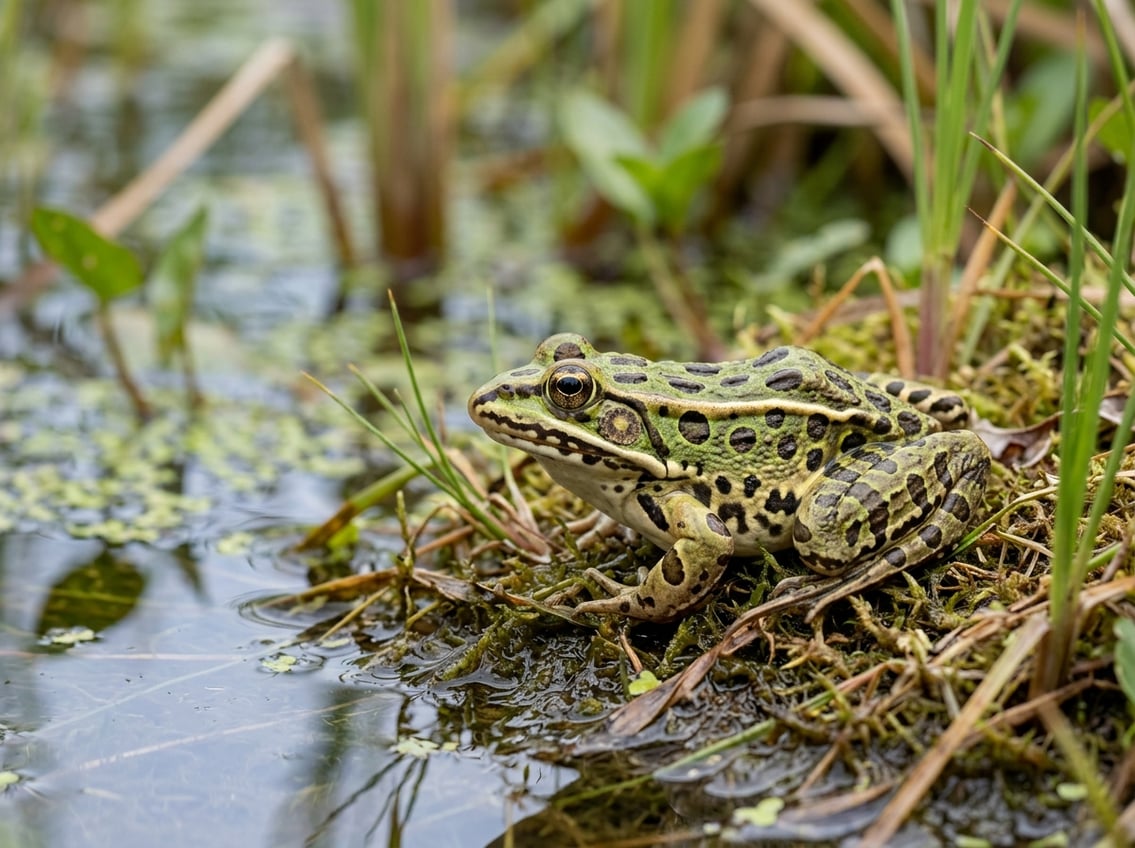
The northern leopard frog is native to North America. You’ll spot it from southern Canada through the northern U.S., hanging out in marshes, wet meadows, and along the edges of ponds and slow streams.
Its back is covered in dark, round spots with pale outlines—hence the “leopard” part of its name. Adults usually hit about 3 to 4 inches long.
They eat insects, spiders, worms, and other small invertebrates, hunting by ambush on damp ground. In winter, they chill underwater at the bottom of ponds that don’t freeze all the way through.
Males call in spring with a low, snoring trill—kind of odd if you’ve never heard it. Conservation status: Least Concern, but western populations have taken a hit from habitat loss, disease, and water pollution.
19. Northern White Rhinoceros
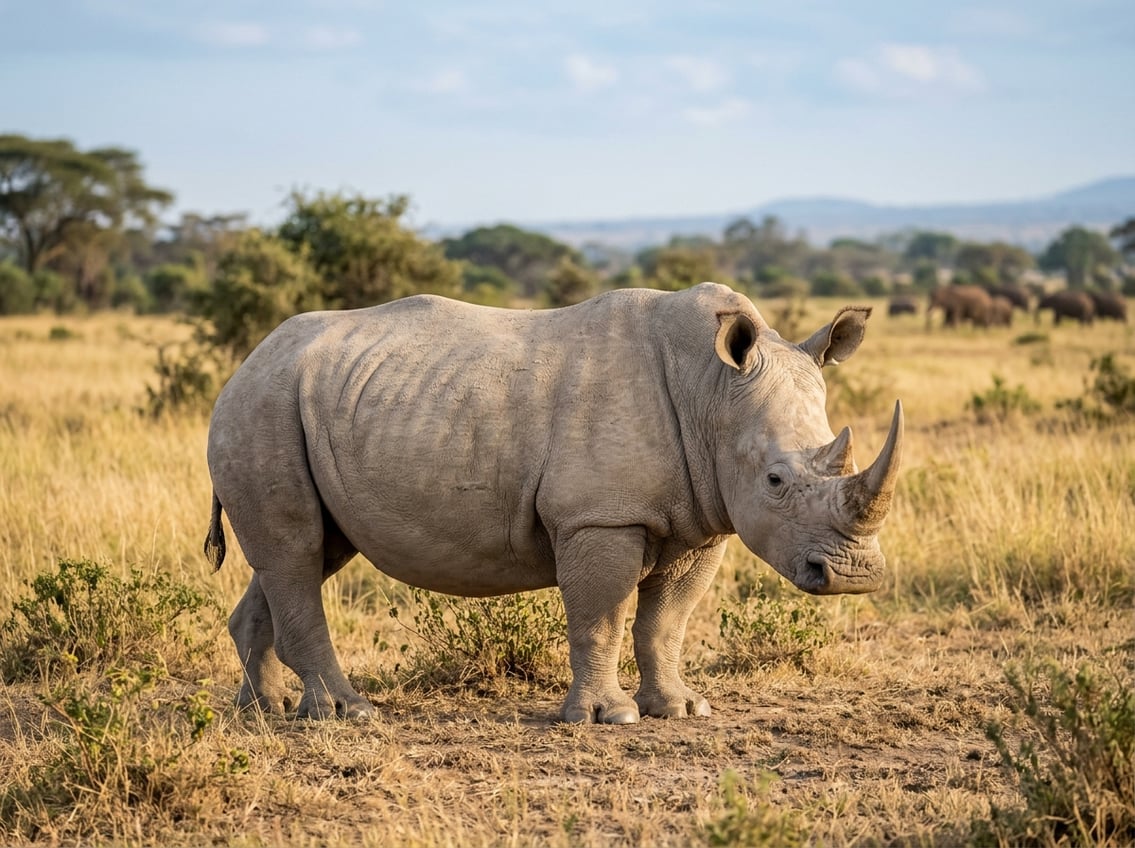
The northern white rhinoceros is a subspecies of white rhino that used to roam Central Africa—places like Sudan, Chad, Uganda, and the DRC. Now, only two are left, both females living under armed guard in Kenya at Ol Pejeta Conservancy.
No males remain, so natural breeding’s off the table. Poaching for rhino horn and civil conflict wiped them out in the wild.
Scientists are trying to save the line with stored eggs, frozen sperm, and southern white rhino surrogates. Conservation status: Critically Endangered (possibly extinct in the wild). The southern white rhino, their closest relative, is Near Threatened.
18. Nubian Ibex

The Nubian ibex is a wild goat that sticks to the rocky mountains of Israel, Jordan, Egypt, Saudi Arabia, Oman, Yemen, and Sudan. It loves steep cliffs and dry slopes where most predators just can’t follow.
Males sport long, ridged horns that curve back and sometimes hit three feet in length. Females’ horns are way shorter.
Split, rubbery hooves help them grip bare rock and climb almost vertical faces. They munch on tough grasses, leaves, and shrubs, and can go a while without water.
Their sandy-brown fur helps them blend into sandstone and reflects the desert heat. Conservation status: Vulnerable. Hunting, livestock competition, and scarce water keep their numbers low.
17. Northern Elephant Seal
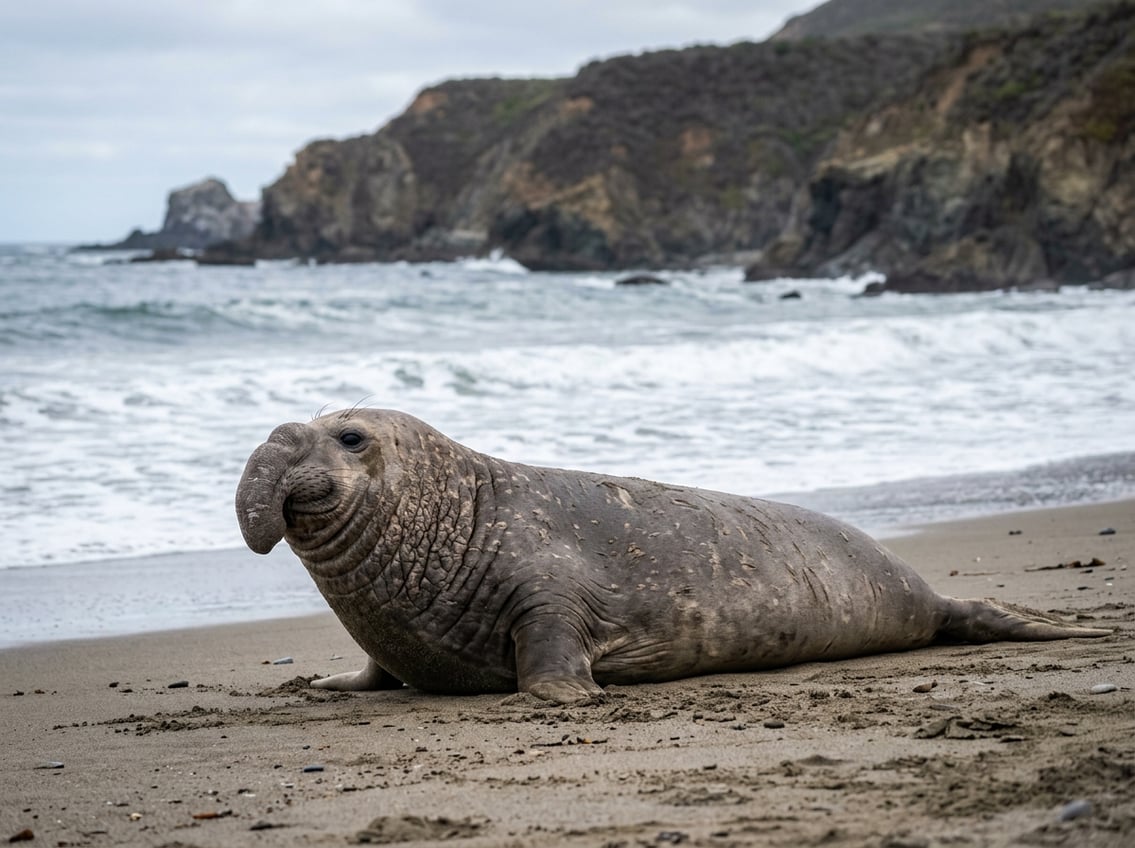
Northern elephant seals breed on California and Baja beaches and islands, then head far out into the North Pacific to feed. Adult males can weigh up to 5,000 pounds and have a big, droopy snout that gives them their name.
Females are much smaller, usually topping out at 1,500 pounds. These seals dive deep—over 1,000 feet—and can stay underwater for more than 20 minutes hunting squid and fish.
Commercial hunting for blubber oil nearly wiped them out in the 1800s. Thanks to protection in Mexico and the U.S., their numbers bounced back to over 100,000.
Conservation status: Least Concern.
16. North American Beaver
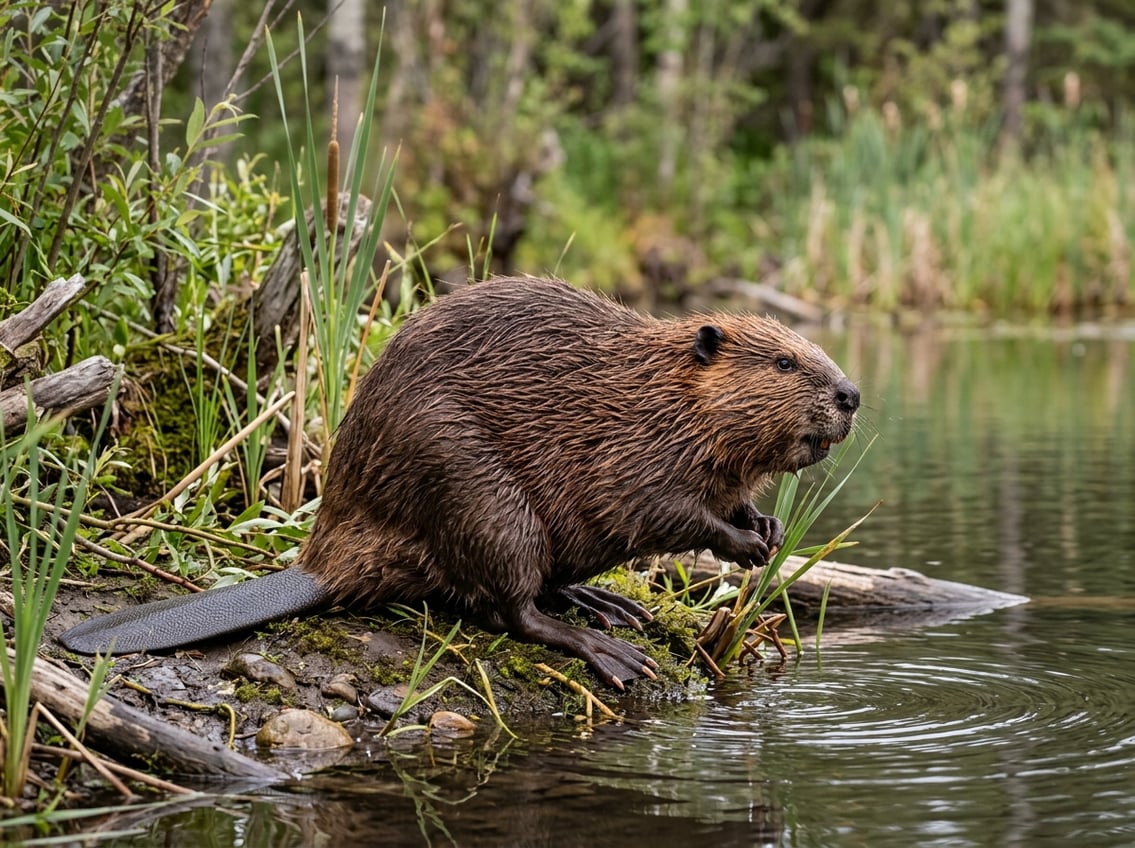
The North American beaver is the continent’s biggest rodent, weighing 35 to 65 pounds. It lives in rivers, streams, ponds, and marshes from Alaska and Canada all the way down through most of the U.S. and into northern Mexico.
Beavers use their orange, iron-tough teeth to fell trees. With branches and mud, they build dams that create ponds for fish, frogs, waterfowl, and insects.
Their flat, scaly tails act as rudders and slap the water as an alarm signal. Waterproof fur and clear eyelids make life in the water a breeze.
Ecologists call them a keystone species because their dams totally reshape watersheds. Conservation status: Least Concern, after bouncing back from heavy fur trapping in the 1800s.
15. Northern Cardinal
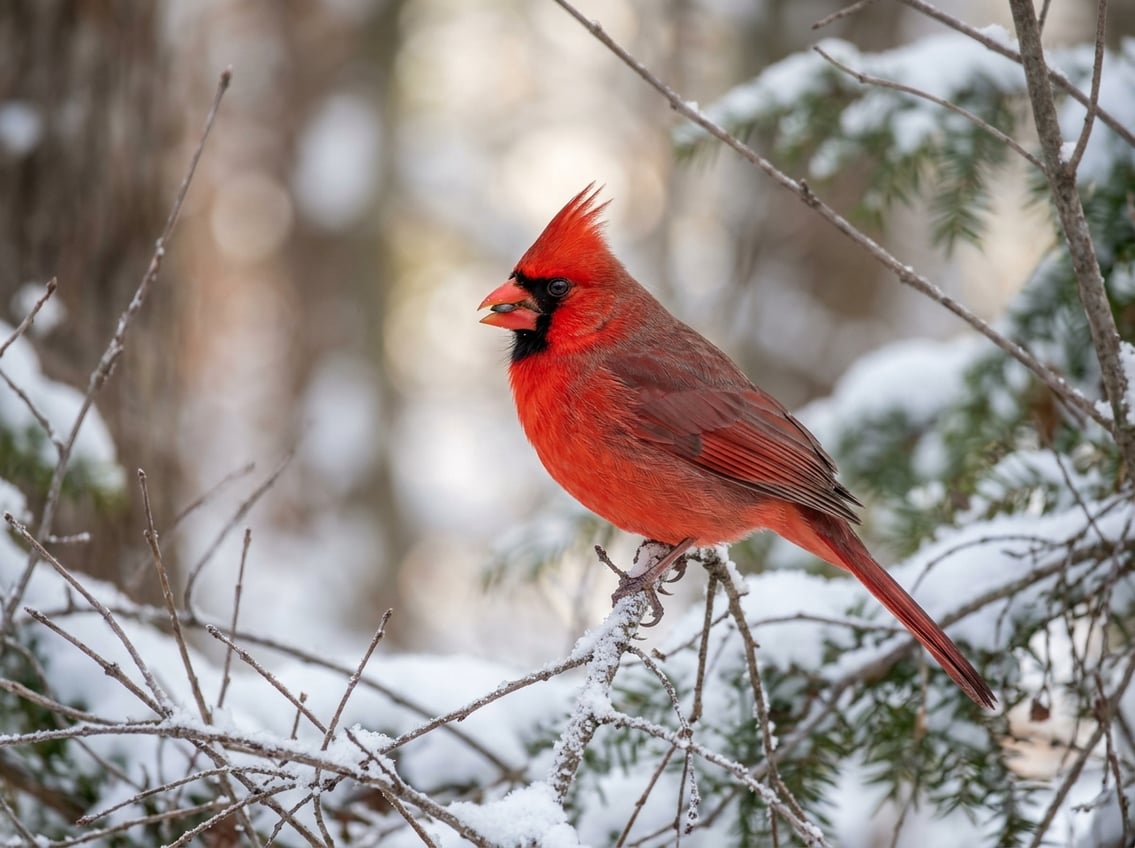
The northern cardinal is a songbird found all over the eastern and central U.S., southeastern Canada, Mexico, and parts of Central America. It sticks to woodland edges, thickets, gardens, and suburban yards.
Males are bright red with a black face mask, while females are a warm brown with red touches on the crest, wings, and tail. Both have a pointed crest and a thick orange-red bill made for cracking seeds.
Cardinals eat sunflower seeds, berries, grains, and insects. They don’t migrate, so you’ll spot them all winter—sometimes looking extra bold against the snow.
Both sexes sing, which is pretty unusual for North American songbirds. Conservation status: Least Concern. Fun fact: the northern cardinal is the state bird for seven U.S. states, including Virginia, Ohio, and Kentucky.
14. Natterjack Toad
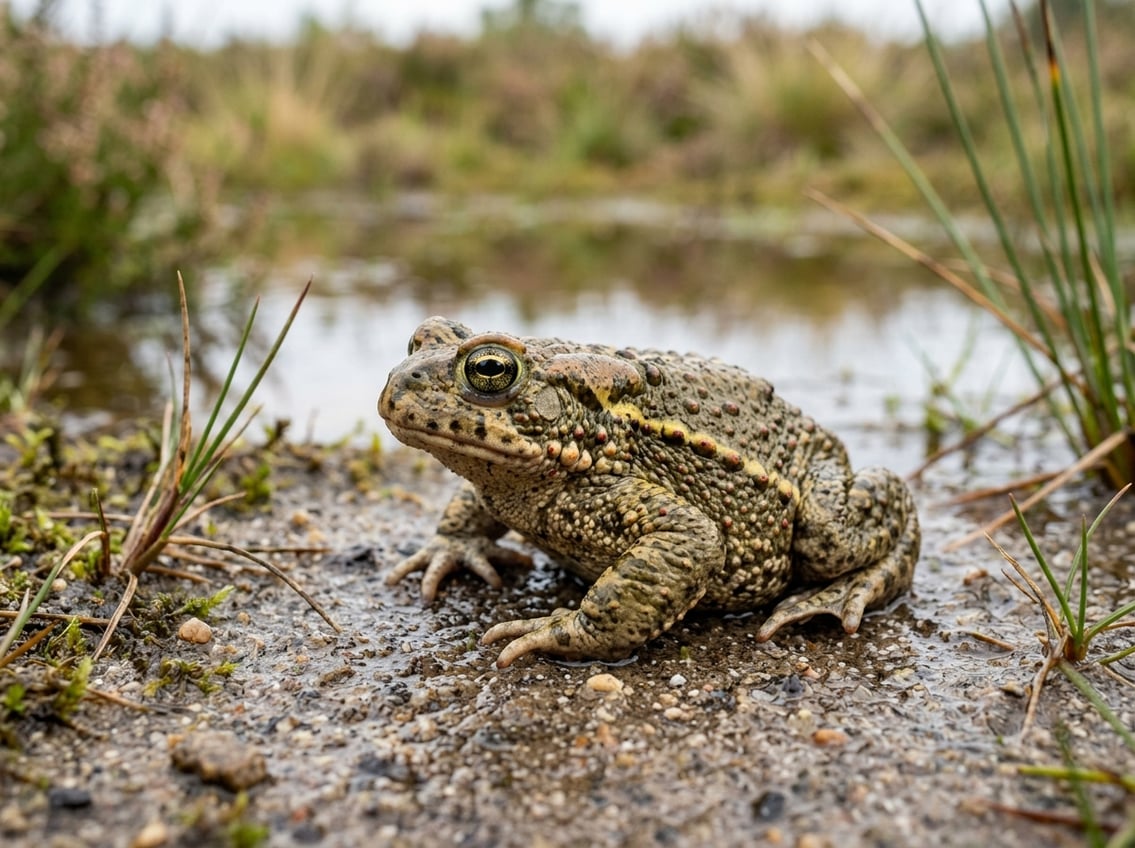
The natterjack toad is a European amphibian you’ll find in sandy coastal dunes, heathlands, and shallow pools across Britain, Ireland, Spain, France, and bits of Scandinavia. A thin yellow stripe runs down its back, setting it apart from the common toad.
Short legs give it more of a run than a hop. Males let out a loud, raspy call using an inflatable throat sac—on still nights, you can hear it from over a mile away. That’s why people call it “the loudest amphibian in Europe.”
They breed in warm, shallow pools that dry up later in summer, which keeps fish and most predators away. Conservation status: Least Concern globally, but rare and legally protected in Britain, where dune loss has really shrunk its range.
13. Nutria
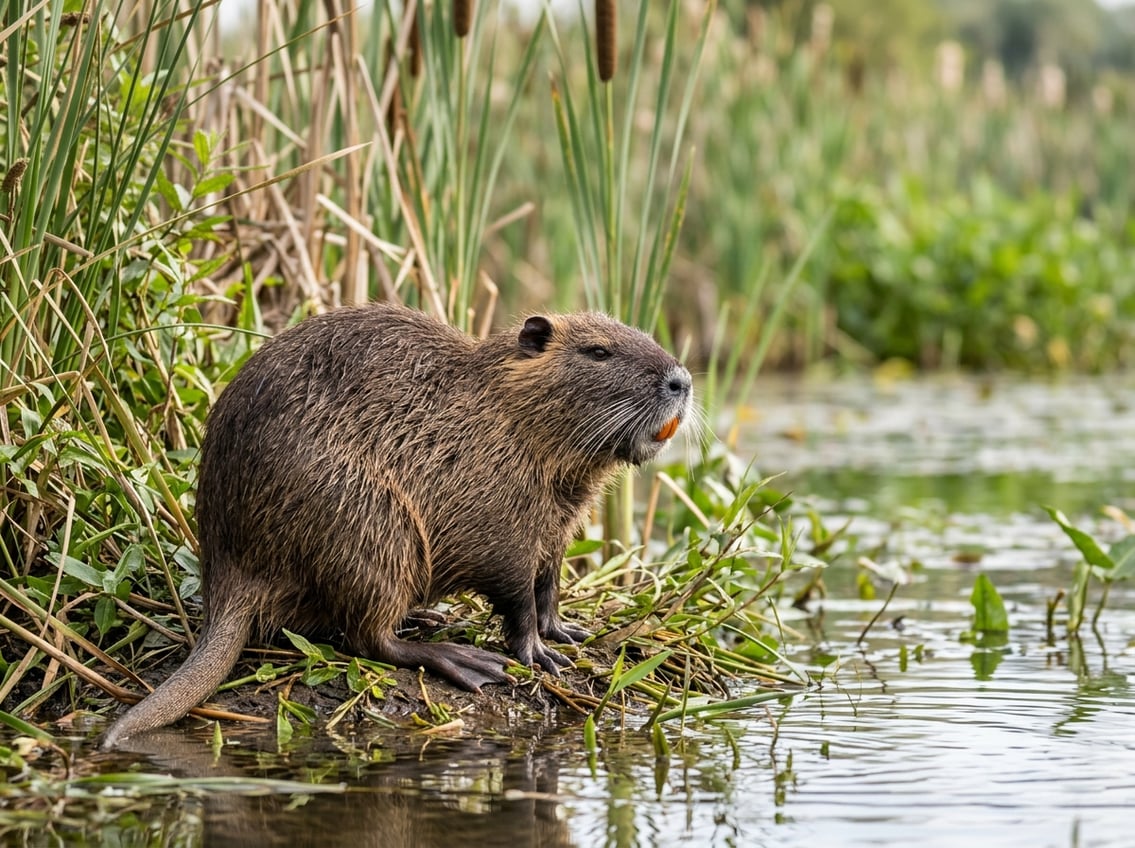
The nutria, or coypu, is a big semi-aquatic rodent from southern South America. Fur farming brought it to North America, Europe, and Asia, where escapees started wild populations.
Adults weigh 15 to 20 pounds, with webbed hind feet, a rounded tail, and those unmistakable bright orange front teeth. Their whiskers and high-set eyes make them perfect for marshes, rivers, and drainage canals.
Nutria eat roots, rhizomes, and stems. When they overgraze, they strip marshes bare and turn wetlands into open water—a problem called eat-out.
States like Louisiana and Maryland, plus some European countries, run control programs to limit the damage. Conservation status: Least Concern in their native range, but they’re considered invasive in much of the U.S. and Europe.
12. Nēnē

The nēnē, or Hawaiian goose, only lives in Hawaii. It wanders grasslands, lava plains, shrublands, and volcanic slopes on Hawaii Island, Maui, Kauai, and Molokai.
Deep furrows mark its buff-colored neck feathers, and its feet are only partly webbed—handy for hiking over rough lava rock instead of swimming. The nēnē descended from Canada geese that showed up about 500,000 years ago.
It eats grasses, leaves, seeds, and berries. By 1952, fewer than 30 birds survived, but captive breeding, predator control, and habitat protection brought the wild population back up over 3,000.
Conservation status: Near Threatened. The nēnē is Hawaii’s state bird and still protected by U.S. law.
11. Nilgai
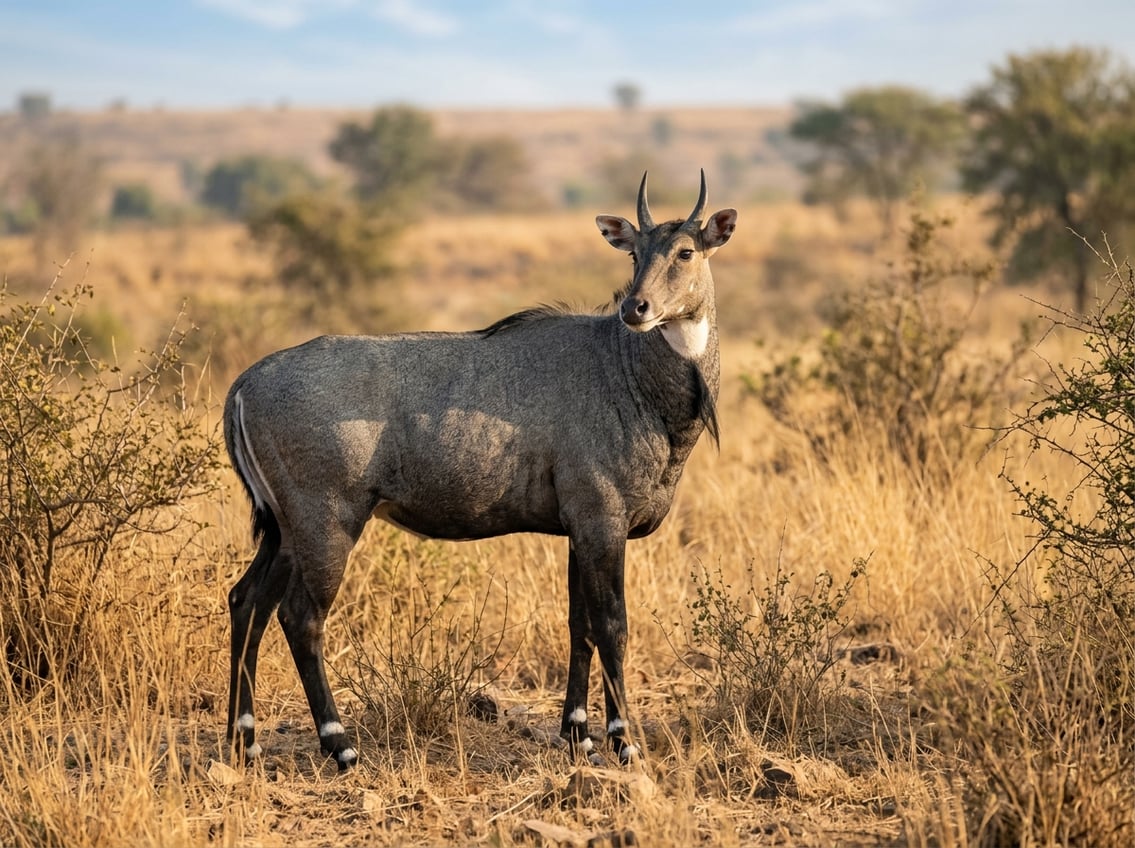
The nilgai is Asia’s largest antelope, and you’ll mostly find it in India, Nepal, and Pakistan. It hangs out in dry grasslands, scrubby forests, and sometimes along farmland edges.
The name “nilgai” means “blue cow” in Hindi. Males sport a slate-blue-gray coat, little straight horns, and a dark throat tuft, while females and youngsters go for tawny brown and don’t have horns at all.
Bulls can get hefty, sometimes topping 500 pounds and standing about 5 feet tall at the shoulder. Herds munch on grasses, leaves, buds, and fruit—basically whatever’s around.
Believe it or not, there are free-ranging nilgai in southern Texas, all descended from animals brought over to ranches in the 1920s and 1930s. Sometimes Texas really does have everything.
Conservation status: Least Concern. Populations in India stay stable, partly because a lot of folks there see the nilgai as a sacred animal.
10. Nyala
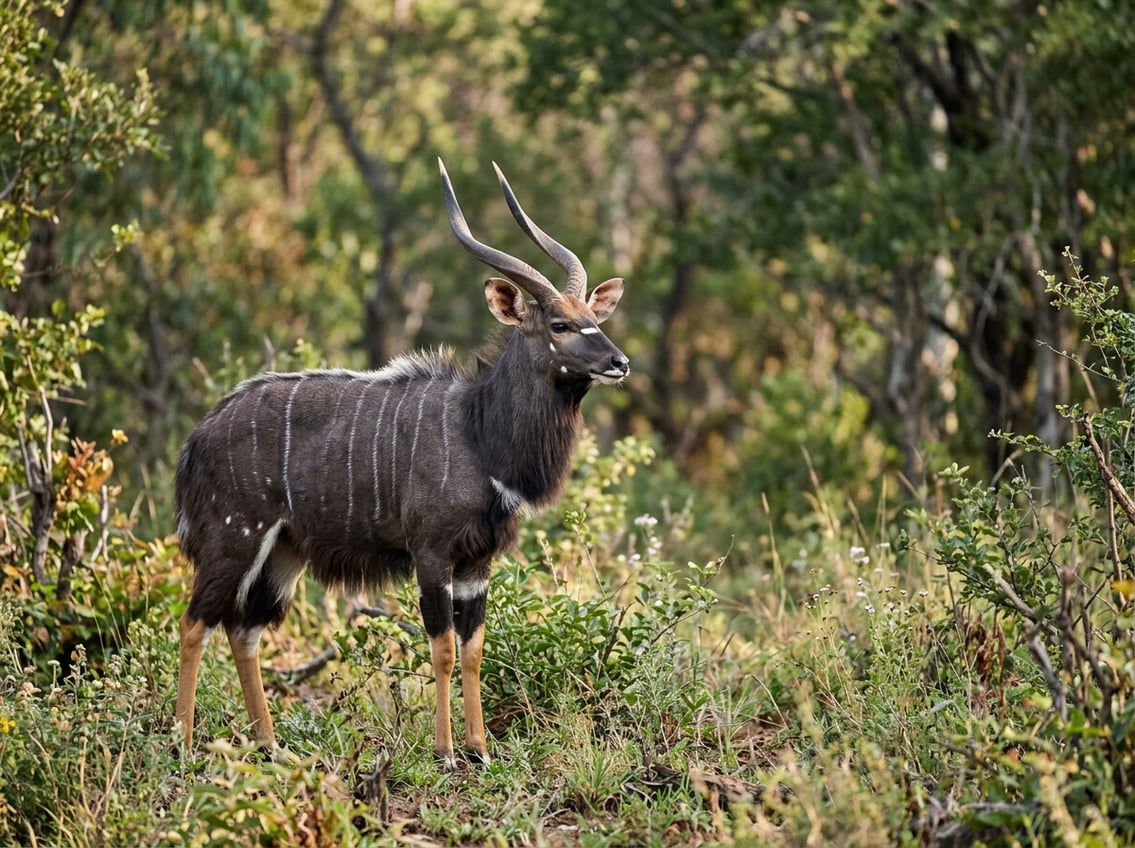
The nyala is a spiral-horned antelope from southern Africa. You’ll usually spot it in dense woodlands, thickets, or near rivers in places like Mozambique, Malawi, Zambia, Zimbabwe, Eswatini, and South Africa.
Males and females look wildly different. Bulls are dark slate-gray with shaggy fringes, white stripes, and horns that can hit 33 inches, while cows are chestnut-red, hornless, and weigh about half as much.
Nyala eat leaves, fruit, flowers, and fresh grass, especially when they’re close to water. They’re pretty shy, sticking close to cover and foraging mostly during the cooler parts of the day.
Leopards, lions, and African wild dogs are always on the lookout for them. It’s a rough neighborhood.
Conservation status: Least Concern. Protected reserves like Kruger and Hluhluwe-iMfolozi have big, healthy populations.
9. Common Nighthawk
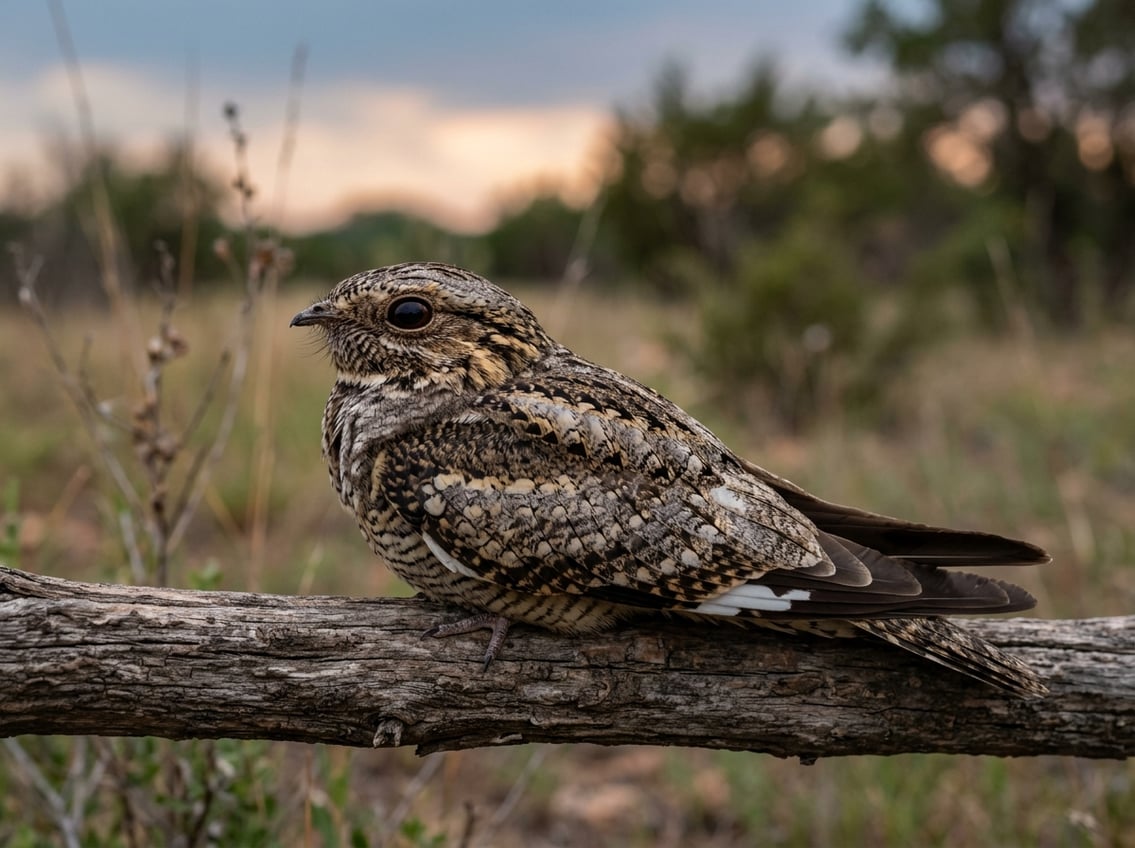
The common nighthawk is an insect-eating bird that breeds all over North America, from Canada right down to Central America, and then heads to South America for winter. It likes nesting on open ground, gravel bars, forest clearings, and even flat gravel rooftops in cities.
Despite the name, it’s not a hawk—it’s actually part of the nightjar family. It snatches up flying insects with its wide, gaping mouth.
Those long, pointed wings have a white bar near the tips, which you can spot during its wild, erratic dusk flights. Its mottled gray-brown feathers make it almost invisible when it stretches out along a branch.
Males put on diving displays that end with a strange booming sound, thanks to air rushing through their wing feathers. Nature’s got some weird party tricks.
Conservation status: Least Concern, but numbers are dropping as insect populations shrink.
8. Common Nightingale

The common nightingale is a small, brown songbird that breeds in Europe, western Asia, and North Africa. When winter rolls around, it heads south to sub-Saharan Africa.
It loves dense scrub, coppiced woodland, and thickets with lots of undergrowth. Its plain looks hide a shockingly good voice.
Males can sing over 200 different phrases, mixing whistles, trills, and flute-like notes. They belt out songs at night to attract a mate, and during the day to mark territory—talk about dedication.
Nightingales feed on insects, worms, and berries, usually picking them up from the ground under cover.
Conservation status: Least Concern globally. In the UK, though, numbers have crashed as scrub disappears and deer eat away the low cover nightingales need.
7. Eastern Newt

The eastern newt is a salamander you’ll find across eastern North America, from Canada down to Florida and Texas. It lives in ponds, marshes, ditches, and moist forests.
Its life cycle is a bit of a journey. Aquatic larvae hatch in water, then transform into a bright orange land stage called an eft that roams the forest floor for a couple of years before heading back to the water as a greenish adult.
All stages show off red spots ringed in black, warning predators that the newt’s skin is toxic. Those spots are like little neon signs: “Don’t eat me.”
Adults grow to about 5 inches. They eat insects, small crustaceans, snails, and amphibian eggs.
Conservation status: Least Concern. Still common, but pond drainage and road crossings can cause trouble in some areas.
6. Chambered Nautilus
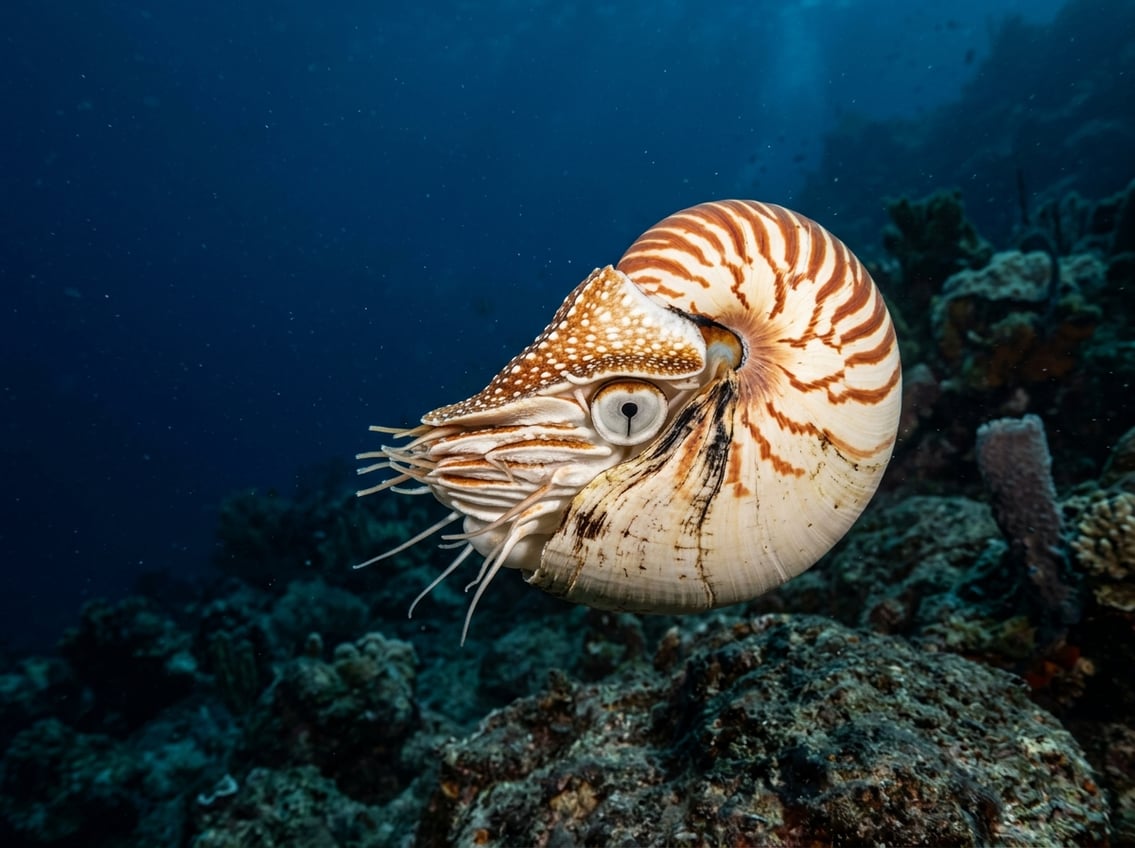
The chambered nautilus is a shelled cephalopod, related to octopuses and squid. It hangs out on deep coral reef slopes in the Indo-Pacific, from Australia and Indonesia to Fiji and the Philippines, usually between 300 and 1,500 feet deep.
Its coiled shell has gas-filled chambers. The nautilus adjusts the gas and fluid inside to float up or sink down—pretty clever, honestly.
It uses up to 90 tentacles (no suckers, just sticky pads) to grab shrimp, crabs, and whatever dead stuff it finds. Its pinhole eyes work without a lens, which seems a bit primitive, but hey, it gets the job done.
Nautiluses grow slowly and might live over 15 years. Not bad for a creature that looks straight out of prehistory.
Conservation status: Endangered. People collected their shells for jewelry and trinkets, so now international trade is regulated under CITES Appendix II.
5. Nurse Shark

The nurse shark is a bottom-dweller found in warm coastal waters of the western Atlantic, eastern Pacific, and eastern Atlantic. You’ll often spot them resting on sandy flats, coral reefs, or in mangrove channels—sometimes piled together under ledges like they’re at a sleepover.
Adults usually reach 7 to 9 feet. Two fleshy barbels dangle under the snout, perfect for finding prey hiding in the sand.
Nurse sharks hunt at night, sucking up crustaceans, mollusks, stingrays, and small fish. Their suction is so strong, they can yank prey right out of crevices.
They’re slow and not aggressive, but if you mess with one, it can bite. It’s best to let sleeping sharks lie.
Conservation status: Vulnerable. Fishing, habitat damage, and slow reproduction have hurt populations in parts of Central and South America.
4. Nile Crocodile
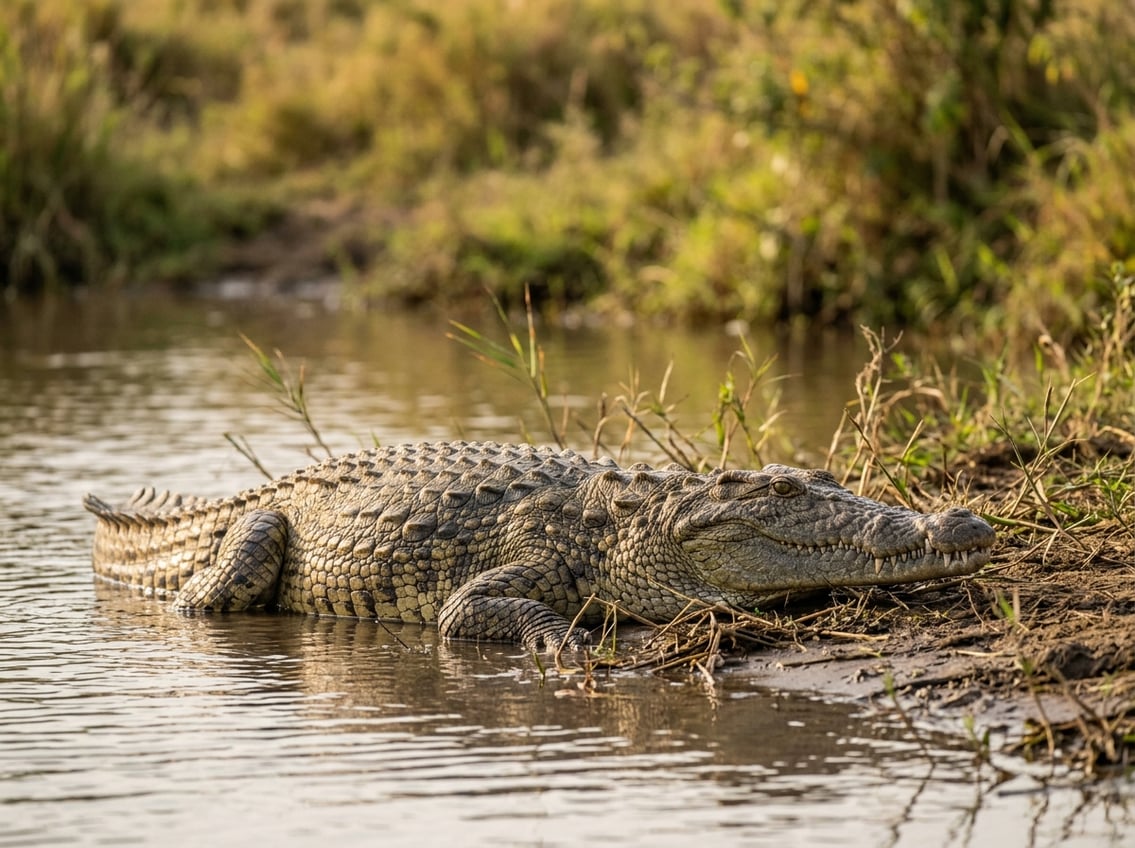
The Nile crocodile is Africa’s biggest croc, found in rivers, lakes, swamps, and estuaries across sub-Saharan Africa and Madagascar. It’s a living dinosaur, honestly.
Adults usually measure 11 to 16 feet, but big males can go over 18 feet and 1,500 pounds. Their backs are armored with bony plates called osteoderms.
These crocs are ambush predators. They wait at the water’s edge, then grab fish, birds, antelope, or zebra, using a wild spinning move to tear food apart.
Females guard their nests for about 90 days and carry hatchlings to the water in their mouths. It’s oddly tender for such a fierce animal.
Conservation status: Least Concern. Regulated hunting, ranching, and legal protection turned things around after big declines in the 1900s, but conflicts with people still happen.
3. Naked Mole-Rat
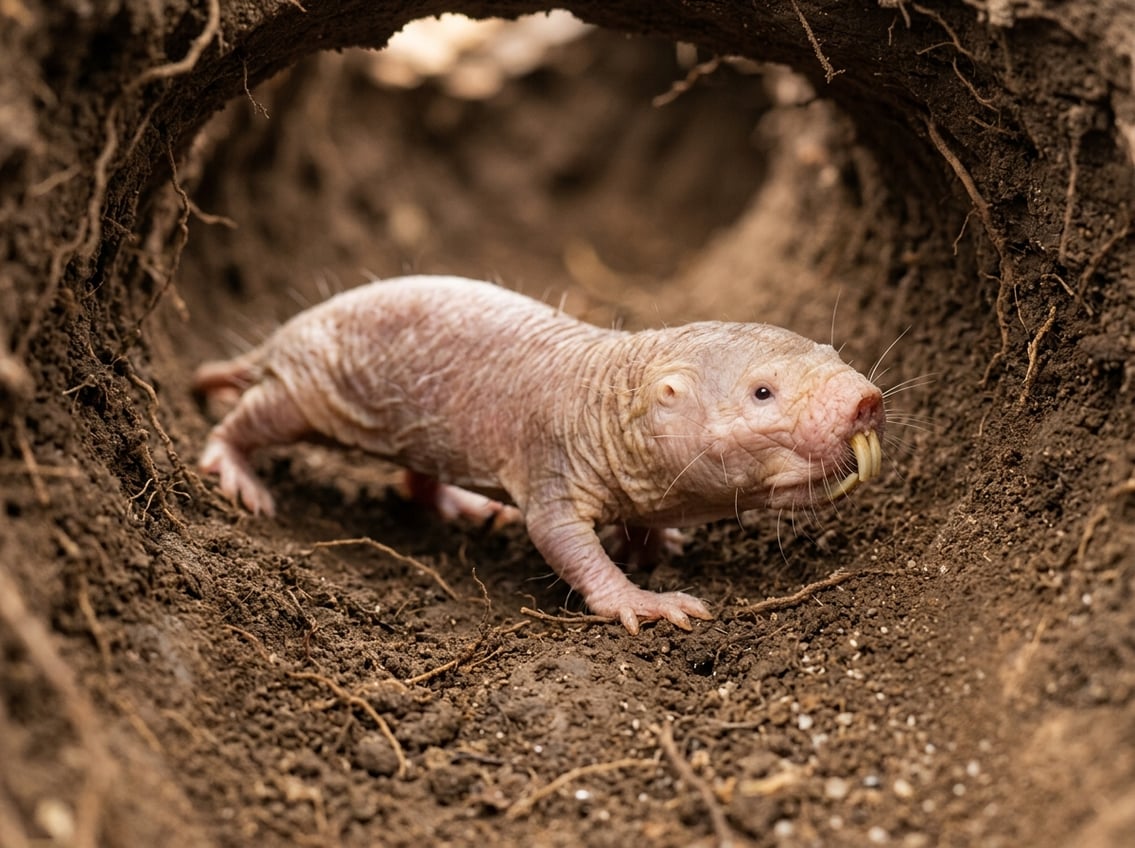
The naked mole-rat is a burrowing rodent from the dry grasslands and scrub of Kenya, Ethiopia, and Somalia. It spends nearly its whole life underground, digging out tunnel systems that can stretch for miles—no joke.
Colonies can have anywhere from 20 to 300 animals and live under a system called eusociality, which is way more common in ants and bees than mammals. One breeding queen produces all the babies while the rest dig, forage, or defend the colony.
Their wrinkled pink skin has barely any hair. Those big front teeth stick out in front of their lips, so they can dig without eating dirt. Clever, if a little odd-looking.
Naked mole-rats handle low oxygen like champs, barely feel pain from certain irritants, and sometimes live past 30 years. That’s a wild combo for such a weird little creature.
Conservation status: Least Concern.
2. Numbat
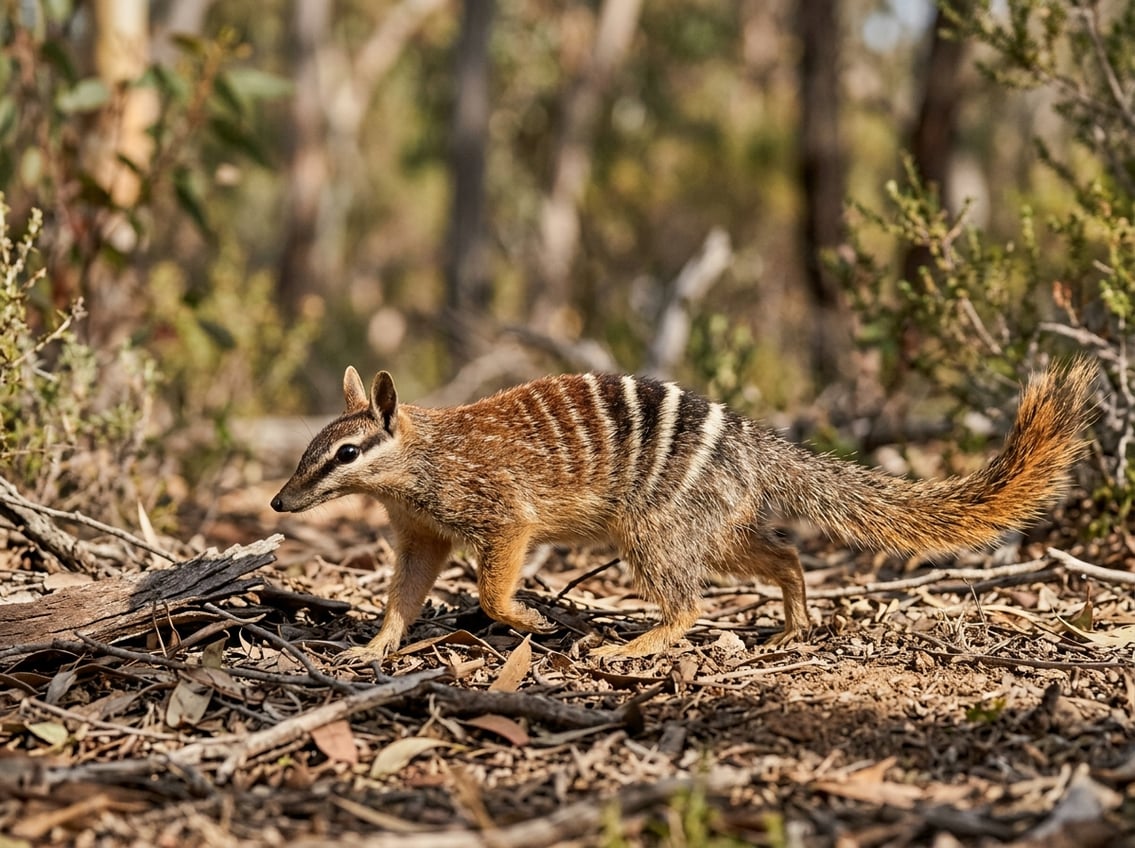
The numbat is a small, termite-eating marsupial found only in southwestern Western Australia. It likes eucalypt woodland, especially wandoo and jarrah forests with plenty of hollow logs.
Adults weigh about a pound and measure 14 to 18 inches, counting the bushy tail. Their reddish-brown fur is marked with four to eleven white stripes across the rump—almost like a tiny, furry zebra.
A sticky tongue up to 4 inches long lets it slurp up termites from shallow galleries. One numbat can eat around 20,000 termites a day, which is kind of impressive (and maybe a bit gross).
Unlike most marsupials, numbats are active by day, and the females don’t have a pouch. Marsupials just keep surprising us.
Conservation status: Endangered. Fewer than 1,000 mature numbats are left, threatened by foxes, feral cats, and habitat loss.
1. Narwhal
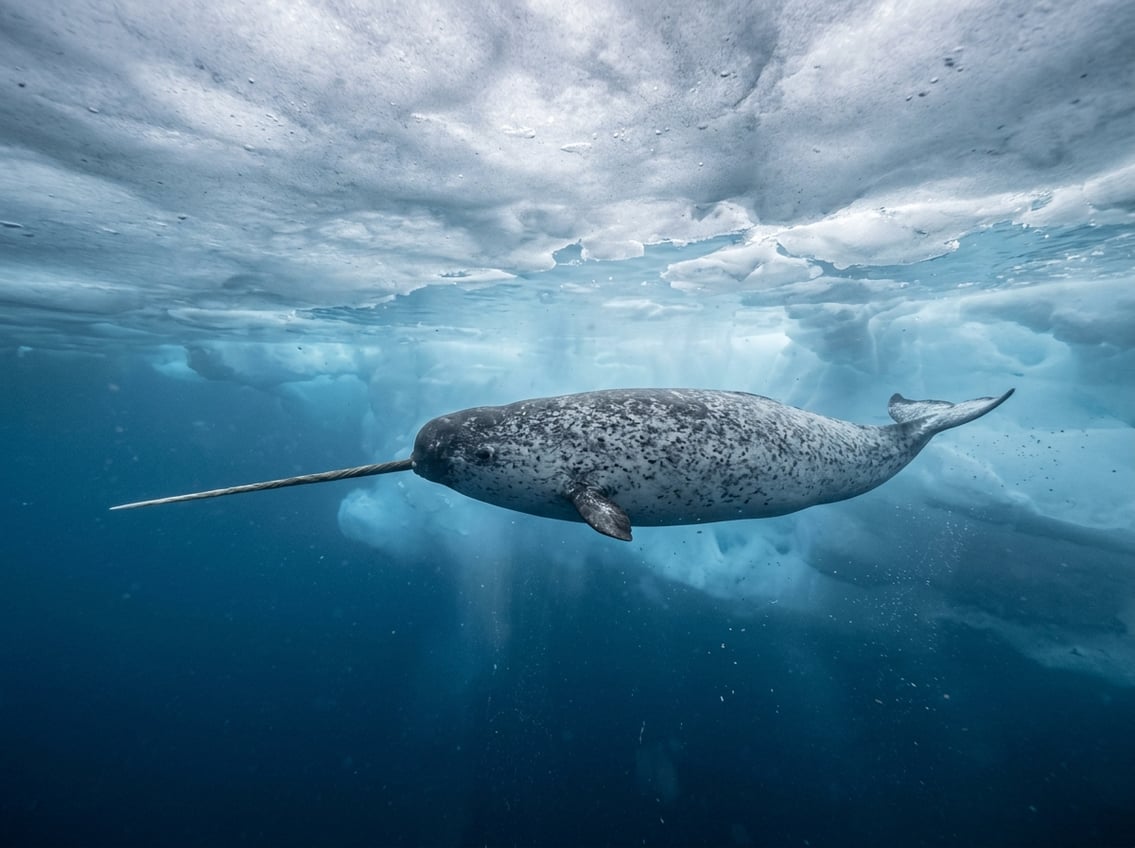
The narwhal is a medium-sized toothed whale from Arctic waters near Greenland, Canada, Norway, and Russia. It spends winters under thick pack ice and shifts into coastal bays and fjords in summer.
Its famous tusk isn’t a horn—it’s actually an enlarged left canine tooth that spirals counterclockwise, growing up to 10 feet long, mostly in males. The tusk is packed with nerve endings and seems to sense changes in the water. That’s pretty wild, right?
Adults reach 13 to 18 feet and hunt Greenland halibut, Arctic cod, squid, and shrimp, diving deeper than 4,500 feet. It’s not an easy life under the ice.
Their mottled gray skin inspired the Old Norse name meaning “corpse whale.” Not the most flattering, but it sticks.
Conservation status: Least Concern, though sea ice loss and shipping noise are becoming bigger worries.
Animal Groups Represented In This List

Here’s a lineup of 20 species covering every major vertebrate group, plus one invertebrate. Turns out, animals with “N” names pop up all over the animal kingdom.
Mammals
Ten mammals made the cut: northern white rhinoceros, Nubian ibex, northern elephant seal, North American beaver, nutria, nilgai, nyala, naked mole-rat, numbat, and narwhal.
That’s a mix of placental mammals and one marsupial, the numbat. Their habitats? Pretty much everywhere—from Arctic sea ice to African cliffs to South American wetlands.
Birds
Three birds show up: northern cardinal, nēnē, and two night birds—the common nighthawk and common nightingale.
Two are songbirds. The nighthawk’s part of the nightjar family, and the nēnē is a goose you’ll only find in Hawaii.
Reptiles And Amphibians
The Nile crocodile stands in for reptiles. Three amphibians make the list: northern leopard frog, natterjack toad, and eastern newt.
Amphibians are kind of like nature’s early warning system. Because their skin lets stuff in, they’re super sensitive to pollution and drought—so if they’re in trouble, it’s usually a red flag for the whole habitat.
Marine Animals
Four species here call salt water home. Narwhal’s a marine mammal, northern elephant seal breeds on land but lives at sea, nurse shark is a cartilaginous fish, and chambered nautilus is a mollusk.
Other marine “N” animals worth a shout? Nudibranch, needlefish, Napoleon wrasse, and northern anchovy.
Conservation Status Guide
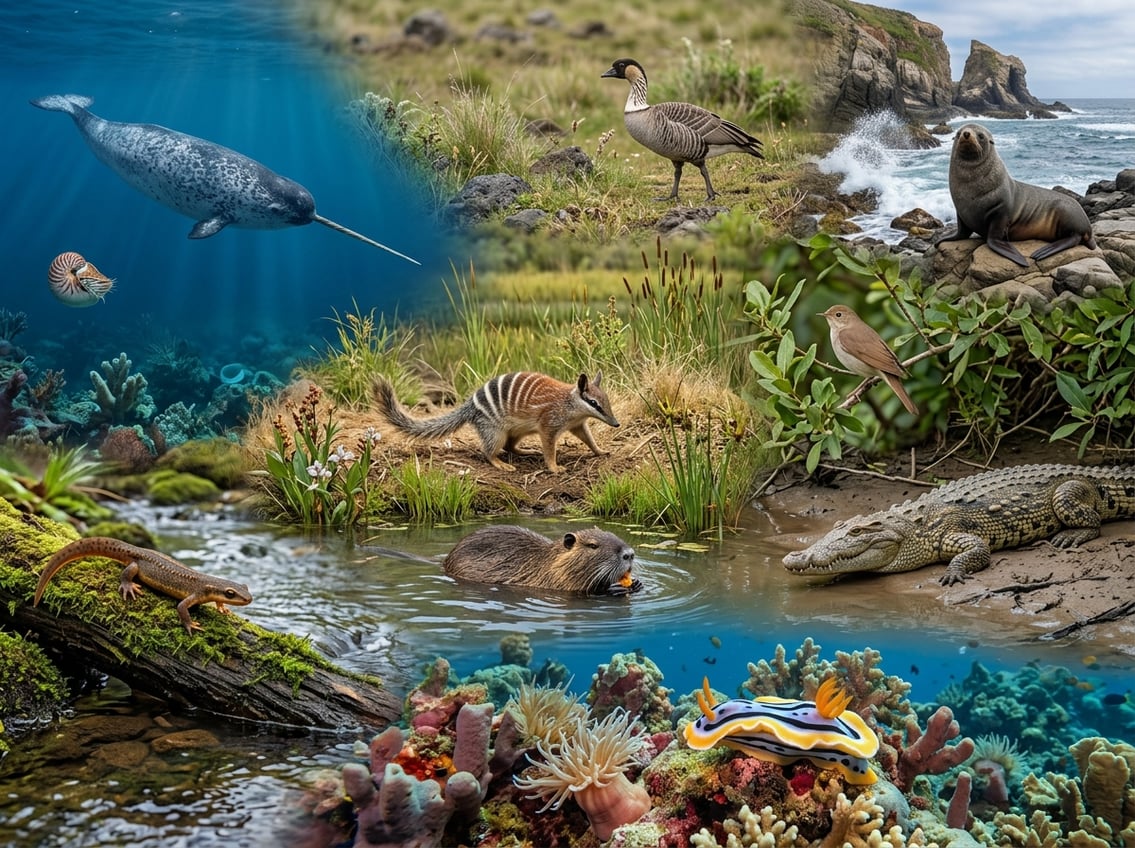
The International Union for Conservation of Nature (IUCN) keeps the Red List of Threatened Species. It’s basically the go-to reference for measuring extinction risk around the world.
What IUCN Categories Mean
| Category | Plain-language meaning |
|---|---|
| Least Concern | Widespread and not currently at risk |
| Near Threatened | Close to qualifying as threatened soon |
| Vulnerable | High risk of extinction in the wild |
| Endangered | Very high risk of extinction |
| Critically Endangered | Extremely high risk; often very few left |
| Extinct in the Wild | Survives only in captivity or cultivation |
| Extinct | No individuals remain |
Assessors look at things like population size, decline rate, range, and known threats.
Why A Species’ Status Can Change
They review and update statuses as new survey data comes in. For example, the nēnē moved from Vulnerable to Near Threatened after captive breeding boosted its wild numbers.
Sometimes ratings get worse. The chambered nautilus landed on the Endangered list in 2022 when shell-trade data showed just how much it was being harvested.
And occasionally, better science changes the status, even if the animal’s population didn’t really move much.
How Habitat Loss And Trade Affect Wildlife
Habitat loss is probably the biggest threat to most species here. Forest clearing hurts the numbat, dune loss hits the natterjack toad, and draining wetlands puts frogs and newts at risk.
Trade also drives some declines. Poaching for horn wiped out the northern white rhinoceros, and shell collecting hit nautilus populations hard.
Invasive predators play a role too. Foxes and feral cats still block numbat recovery in Western Australia.
Frequently Asked Questions
What are some common animals that start with the letter N?
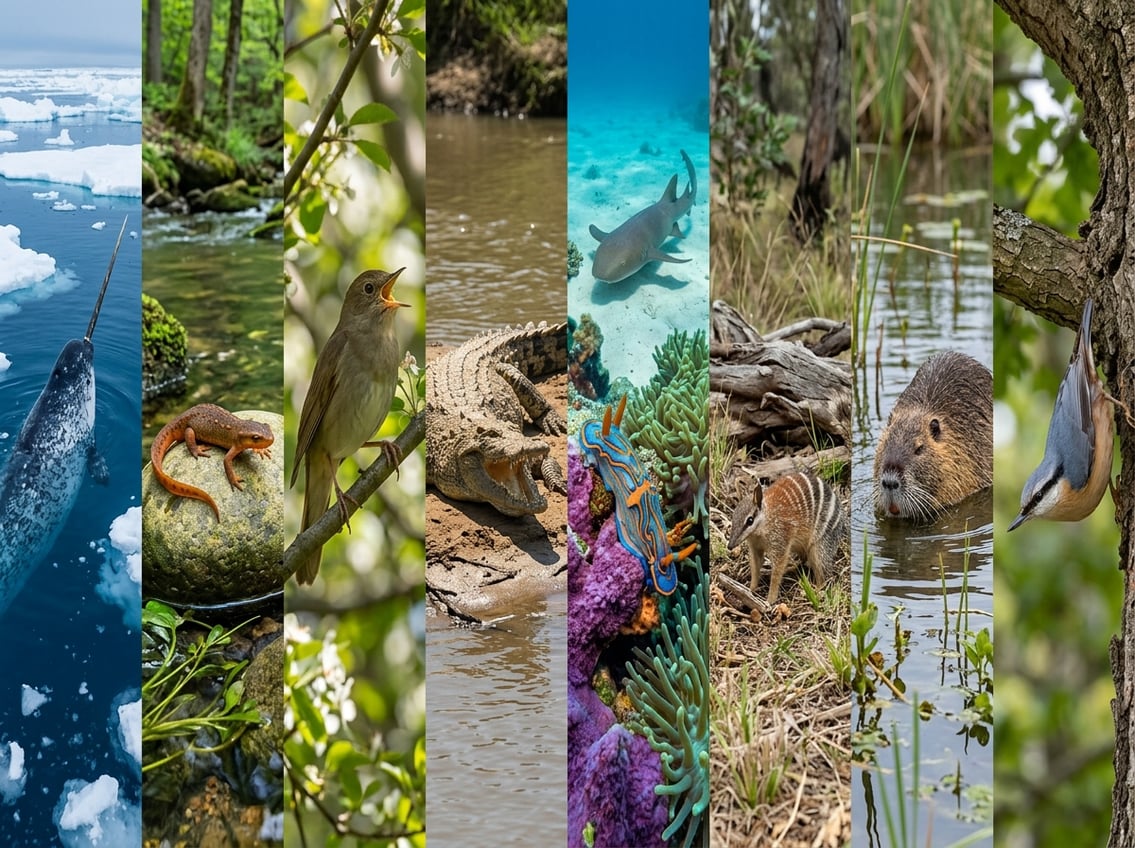
Some of the best-known are narwhal, newt, nightingale, nurse shark, northern cardinal, and North American beaver. Nutria, nighthawks, and Nile crocodiles are pretty familiar too. You’ll find them in all sorts of places, from Arctic waters to African rivers.
Which animals beginning with N are suitable for kids to learn about?
Narwhals, numbats, newts, nēnē geese, and northern cardinals are great for kids. They’re easy to recognize and describe. The narwhal’s tusk and the numbat’s stripes stick in your memory. Plus, each one has a simple habitat story.
What animal that starts with N can be seen at a zoo?
Nyala, nilgai, Nubian ibex, naked mole-rats, and Nile crocodiles show up in a lot of zoos. A few places in Australia and the U.S. have numbats. Big aquariums sometimes keep nurse sharks and chambered nautiluses too.
Can I see pictures of animals that start with N?
Yep! Every entry in this list comes with a photo of the animal in its natural habitat, from icy seas to sunny grasslands. The images help you connect the name to what the animal actually looks like.
What are some rare or unusual animals whose names begin with N?
The northern white rhinoceros is basically extinct, with just two females left. Numbats and chambered nautiluses are both Endangered—numbats from habitat loss, nautiluses from shell collecting. The naked mole-rat is just odd: it’s one of the only mammals that lives in colonies like insects do.
What is the name of an animal that starts with N?
The narwhal is probably the most famous one. This Arctic whale has a long spiral tusk, which is actually an oversized left canine tooth—definitely not a horn, despite what cartoons might say.
There are others too, like the numbat, nyala, and nutria. Oh, and don’t forget the northern cardinal if you’re into birds.