
Yes—most plain paper coffee filters can be composted with the used coffee grounds. The safest choices are filters made only from paper or labeled compostable, unbleached, totally chlorine-free, or elemental chlorine-free. Do not compost reusable metal filters, nylon mesh, plastic-reinforced filters, or products whose instructions specify commercial composting when you only have a backyard pile.
Key takeaways
- Plain, uncoated paper coffee filters can generally go into a backyard compost pile with the grounds.
- White filters are not automatically non-compostable. Check the material, manufacturer instructions, and certification rather than relying on color alone.
- A filter labeled “commercially compostable” may require an industrial facility and may not be certified for a home pile.
- Reusable metal and cloth filters should be cleaned and reused, not discarded after each brew.
- Tearing a paper filter into smaller pieces and mixing it into an aerated pile helps it break down more efficiently.
- Coffee grounds are useful compost material, but they should not dominate the pile.
Which coffee filters are compostable?
| Filter type | Backyard compost? | Best disposal method | What to check |
|---|---|---|---|
| Plain paper filter | Usually yes | Compost with the grounds | Confirm that it has no plastic mesh, coating, or synthetic reinforcement |
| Unbleached brown paper | Usually yes | Home compost | Look for plain paper or a home-compostable statement |
| White paper filter | Often, but verify | Follow the package instructions | Some are commercially compostable; color does not determine suitability |
| Commercially compostable filter | Not necessarily | Accepted commercial facility | Check whether the certification covers home or industrial composting |
| Reusable cotton or cloth filter | Not while usable | Wash and reuse | At end of life, compost only if every component is natural and the manufacturer approves it |
| Reusable metal filter | No | Reuse, then recycle if locally accepted | Check local scrap-metal rules |
| Nylon, plastic, or synthetic mesh | No | Reuse or dispose according to local rules | Do not place synthetic mesh in compost |
The U.S. Environmental Protection Agency includes coffee grounds and paper filters among materials that can be added to a backyard compost pile. That guidance applies to ordinary paper filters, not every product marketed with environmental language.
How to tell if a coffee filter is compostable
Start with the package or manufacturer’s product page. Look for a clear material description and a composting instruction rather than relying on phrases such as “natural,” “green,” or “biodegradable.”
1. Look for plain paper
A filter made only from paper is the simplest type to evaluate. Avoid filters containing plastic mesh, synthetic fibers, laminated layers, or a coating that the manufacturer does not identify as compostable.
2. Read the compostability wording carefully
“Compostable” does not always mean “suitable for a backyard pile.” A product may be certified only for commercial facilities, where temperature and process controls differ from home composting.
For example, Melitta states that its current BPI-certified cone filters are commercially compostable and notes that suitable facilities may not exist in every area. Follow that qualification rather than assuming every certification applies at home.
3. Check the seams and reinforcement
Most ordinary folded paper seams are not a problem. Be more cautious with filters that use visible plastic rings, synthetic mesh, adhesives, or reinforcement whose composition is not disclosed.
Can you compost bleached or white coffee filters?
A white filter is not automatically unsuitable for composting. Manufacturing methods and certifications matter more than color. Some current white cone filters are elemental chlorine-free and certified for commercial composting by the Biodegradable Products Institute.
Unbleached brown paper remains a straightforward choice for people who want to avoid uncertainty. However, the original claim that all bleached filters should be excluded from compost was too broad. Check the specific product rather than using color as the only test.
How to compost coffee filters in five steps
- Let the filter cool. Wait until the grounds and filter are safe to handle.
- Confirm the material. Compost plain paper filters. Remove any plastic component or discard a synthetic filter according to local rules.
- Leave the grounds inside. There is no need to scrape the filter clean before adding it to the pile.
- Tear the filter into several pieces. Smaller pieces expose more surface area to decomposers and usually break down more efficiently.
- Mix it into the pile. Bury the wet filter among other materials rather than leaving it in a dense layer on top. Add dry leaves, shredded uncoated cardboard, or other browns when the pile becomes wet or compacted.
Keep the pile about as damp as a wrung-out sponge and turn it periodically so microorganisms receive oxygen. The EPA and the University of Minnesota Extension both emphasize moisture, air, balanced ingredients, and smaller pieces as important decomposition factors.
For more examples of balancing household scraps, see how to handle banana peels and other kitchen waste in compost.
Can you compost coffee grounds with the filter?
Yes. Used grounds can remain inside the paper filter. They add organic material and moisture, but more is not always better.
Oregon State University Extension recommends keeping coffee grounds below about 20% of a compost pile’s total volume. Excess grounds can create an imbalanced, dense pile and may cause problems when applied directly around plants before composting.
If you produce more grounds than your pile can comfortably handle, consider other responsible ways to recycle and reuse coffee waste.
Home composting versus commercial composting
The distinction matters because commercial facilities can maintain controlled conditions that a backyard pile may not reach.
- Backyard composting: Appropriate for ordinary plain paper filters when they contain no plastic or synthetic reinforcement.
- Commercial composting: Appropriate for filters specifically certified for industrial or commercial processing, provided your local facility accepts them.
- Municipal green bin: Follow the collection program’s accepted-material list. A compostability logo does not override local rules.
When a package says “commercially compostable,” do not place it in a backyard bin unless the manufacturer also confirms home compostability.
Can coffee filters go in a worm bin?
Plain paper filters can usually go into a properly managed worm bin with modest amounts of coffee grounds. Oregon State University Extension includes coffee grounds and paper filters among acceptable vermicomposting inputs.
Tear the filter into smaller pieces, mix it into the bedding, and avoid feeding large, compacted quantities at once. Do not add metal, nylon, or plastic filter components.
Are coffee filters biodegradable?
Plain paper filters are biodegradable because microorganisms can break down their paper fibers. That does not mean every product described as biodegradable belongs in a backyard compost pile.
Biodegradable describes a material’s ability to break down biologically. Compostable describes breakdown under composting conditions into material suitable for the composting system. The distinction is explained in more detail in our guide to biodegradable and compostable materials.
Are paper coffee filters environmentally friendly?
Paper filters are not impact-free. They are single-use products that require fiber, manufacturing, packaging, and transport. Composting a suitable filter is preferable to sending the same organic material to general waste, but it does not erase those upstream impacts.
Reusable metal and cloth filters reduce recurring filter waste but require cleaning and produce a different cup because they allow more oils and fine particles through. The practical choice depends on your brewer, taste preferences, access to composting, and willingness to maintain a reusable filter.
The most effective option is usually the one you can use correctly for years: compost verified paper filters consistently, or maintain a durable reusable filter rather than replacing it frequently.
How to choose compostable coffee filters
Prioritize compatibility before environmental claims. A filter that is the wrong size may collapse, overflow, or fail to brew correctly.
- Match the exact cone, basket, or brewer-specific shape.
- Confirm the numbered size, such as No. 2, No. 4, or No. 6.
- Look for a clear paper-material description.
- Distinguish home-compostable wording from commercial-composting certification.
- Prefer transparent manufacturer documentation over vague environmental marketing.
- Check local compost-facility rules before relying on an industrial certification.
Affiliate disclosure: Our Endangered World may earn a commission from qualifying purchases made through the links below, at no additional cost to you. These examples were selected from current public product documentation. We are not claiming hands-on product testing.
Product details and availability last verified July 21, 2026.
If You Care No. 6 unbleached cone filters
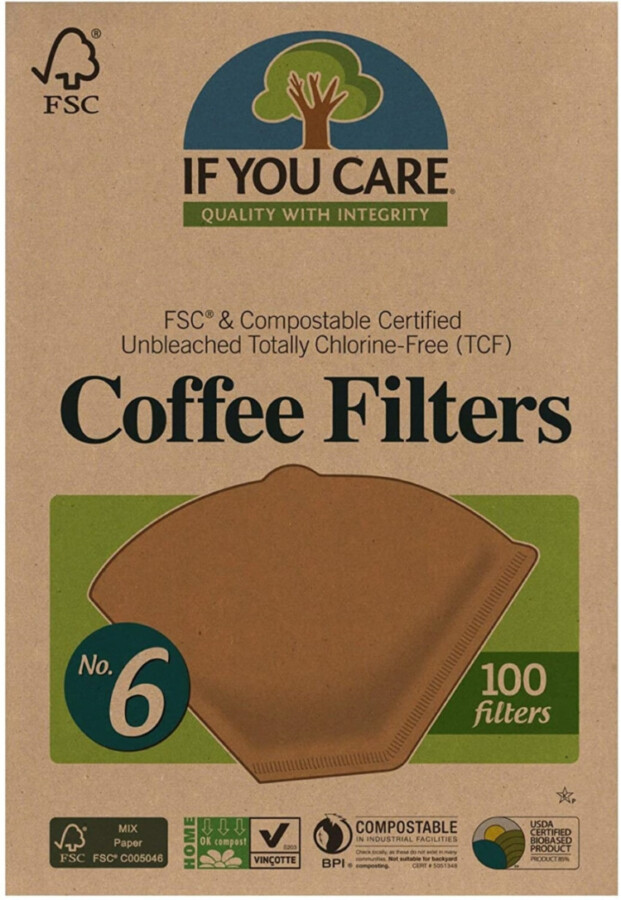
Best for: Larger cone brewers designed for No. 6 filters.
If You Care states that its current cone filters are made from unbleached, totally chlorine-free paper and use a reinforced wave seam. The principal limitation is compatibility: No. 6 is a large cone size and will not fit most smaller machines.
Verify before buying: Your brewer’s filter number and whether your composting method accepts the product under its current packaging instructions.
Melitta No. 2 natural brown cone filters
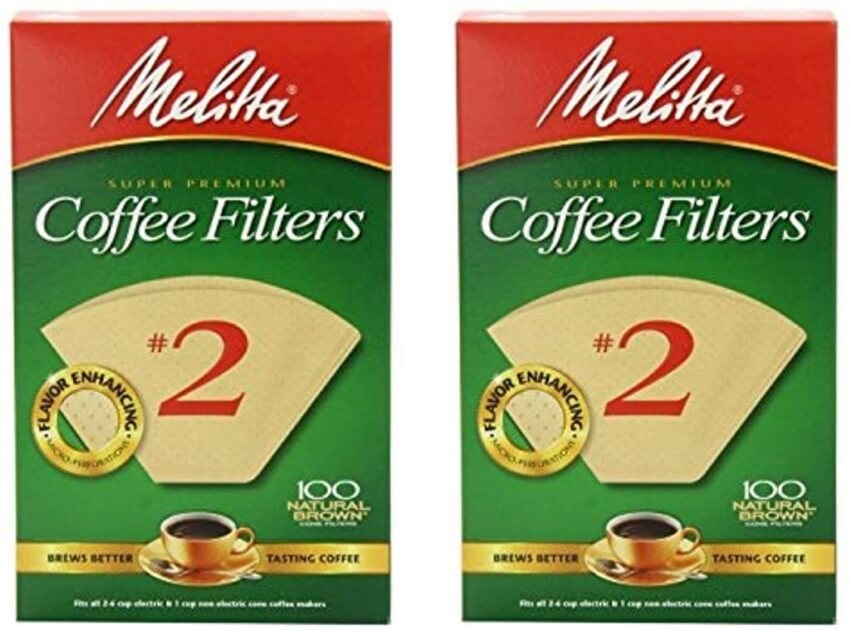
Best for: Smaller cone brewers that specify No. 2 filters.
Melitta’s current cone-filter line includes BPI-certified commercially compostable products, while its natural brown filters are described as chlorine- and bleach-free. Commercial certification does not guarantee acceptance in a local curbside program, so check the package and local rules.
Verify before buying: That your machine uses No. 2 filters rather than No. 4 or another size.
Frequently asked questions
Are all paper coffee filters compostable?
Most plain, uncoated paper coffee filters are suitable for composting. Check the package for plastic reinforcement, synthetic fibers, coatings, or instructions limiting the filter to commercial composting.
Can bleached white coffee filters be composted?
Some can. White color alone does not determine compostability, and some current white paper filters are certified for commercial composting. Check the specific material, certification, and manufacturer instructions.
Can you compost coffee grounds inside the filter?
Yes. Add the grounds and suitable paper filter together. Keep coffee grounds below roughly 20% of the pile’s total volume and balance them with other compost materials.
How long do coffee filters take to decompose?
There is no universal timeline. Temperature, moisture, oxygen, filter thickness, pile management, and particle size all affect the rate. Tearing the filter and mixing it into an active pile generally helps it break down faster.
Can coffee filters go in a worm bin?
Plain paper filters can go into a managed worm bin with modest amounts of grounds. Tear them into smaller pieces and do not include plastic, nylon, or metal components.
Can compostable coffee filters go in a municipal green bin?
Only when the local organics program accepts them. Municipal rules vary, and a commercial-compostability certification does not guarantee acceptance by every collection service.
The final verdict
Most ordinary paper coffee filters can go into a backyard compost pile with the grounds. Check the material first, tear the filter into smaller pieces, mix it into the pile, and maintain enough dry material and airflow to prevent clumping.
Do not assume that every filter is compostable or that every certification applies at home. Reuse metal and cloth filters, keep synthetic mesh out of the compost, and follow local rules for products labeled commercially compostable.
New to managing a compost pile? These recommended composting books provide deeper guidance on balancing materials, troubleshooting odors, and using finished compost safely. You can also compare the rules for other paper materials by checking whether brown paper bags are compostable.