Hector’s dolphin (Cephalorhynchus hectori) is the world’s smallest marine dolphin and the only cetacean endemic to New Zealand, where it lives in shallow coastal waters around the South Island. Listed as Endangered on the IUCN Red List, it is highly social and easily recognized by its distinctive rounded, “Mickey Mouse”-shaped dorsal fin.
Hector’s dolphin is named after Sir James Hector, the New Zealand scientist who first examined a specimen in the 1870s. The species has two subspecies: the South Island Hector’s dolphin and the Critically Endangered Māui dolphin of the North Island’s west coast.
Hector’s dolphins are a member of the oceanic dolphin family
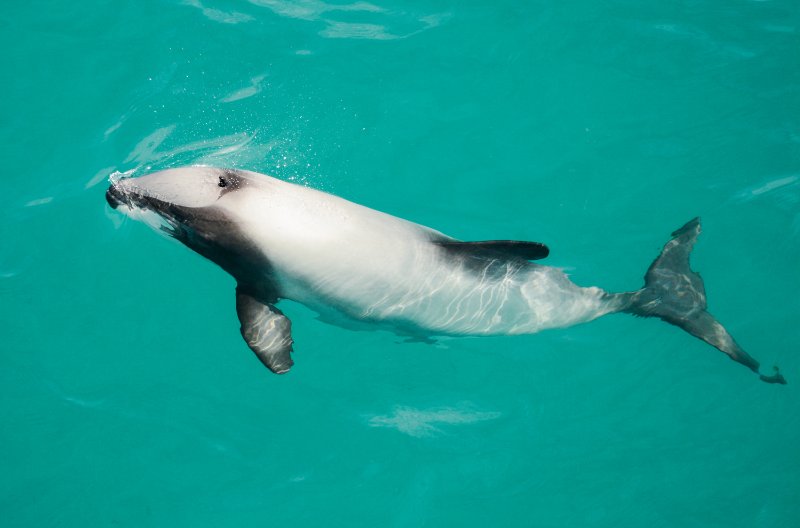
The hector’s dolphin is a member of the oceanic dolphin family (Delphinidae). Unlike most dolphins, it is not widespread: it lives only in the cool, shallow coastal waters of New Zealand, never in tropical seas.
The hector’s dolphins are highly sociable creatures that form strong attachments with other members of their group. Because there aren’t many left in the wild, hector’s dolphin is endangered and should be protected.
The restricted range of their habitat, together with the deterioration of environmental conditions in areas they inhabit, makes them vulnerable. Hector’s dolphins are found only in New Zealand’s coastal waters, not worldwide, and inhabit cool temperate seas rather than tropical ones. Hector’s dolphins are highly sociable creatures that form close relationships with other group members.
Ties between members of different species are especially tight among Hector’s dolphins.
They are highly sociable creatures that form strong friendships with other group members and they also have a special bond with other group members.
Hector’s dolphins are found only in New Zealand’s coastal waters
Hector’s dolphins are found only around New Zealand — the South Island subspecies in the island’s coastal waters and the Māui dolphin off the North Island’s west coast.
Hector’s dolphins communicate using high-frequency clicks rather than the whistles most dolphins use. They have a very low reproductive rate, with females giving birth to a single calf only once every two to four years, and calves stay with their mothers for up to two years.
Hector’s dolphin facts
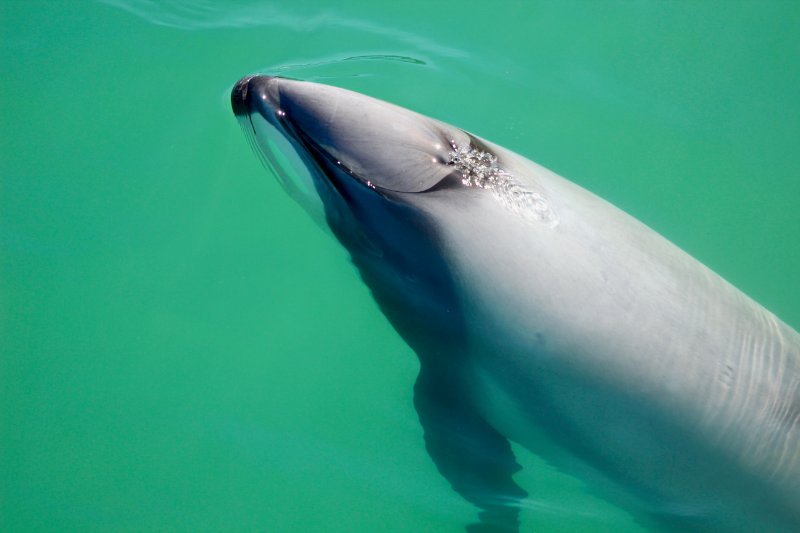
Hector’s Dolphins live in shallow coastal waters, usually within a few kilometres of shore and less than about 100 metres deep. They rarely travel far and show strong site fidelity to particular stretches of coast, feeding on small fish such as red cod and squid.
Hector’s Dolphin is endangered because humans continue to catch fish near their habitat. Because people keep fishing around these dolphin habitats and actually catch Hector’s dolphin.
These types of dolphins are extremely endangered and need help right now.
- Status: Endangered (IUCN Red List); the Māui dolphin subspecies is Critically Endangered
- Known as: Hector’s Dolphin, White-headed dolphin, New Zealand Dolphin
- Estimated numbers left in the wild: About 15,000 mature individuals (South Island subspecies); the Māui dolphin subspecies has only around 54 (IUCN).
Description
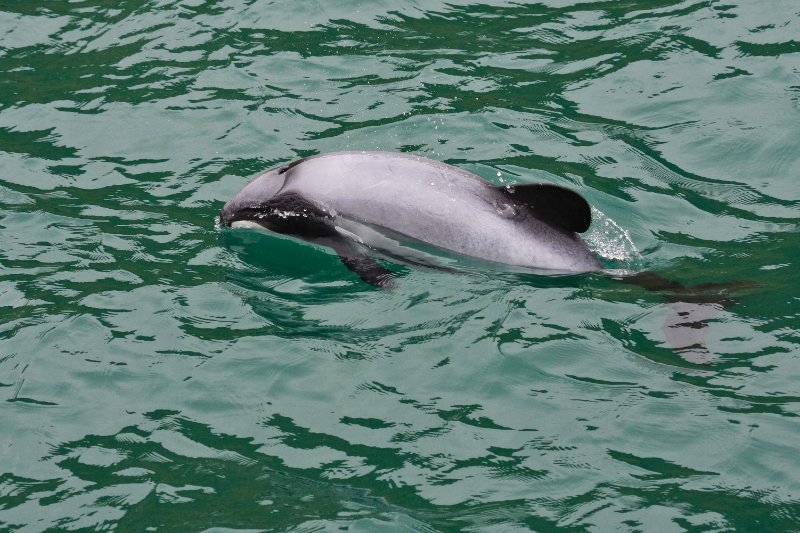
Hector’s dolphin is the world’s smallest marine dolphin and New Zealand’s only endemic cetacean. Adults measure just 1.2 to 1.6 metres long, with males slightly smaller than females, and weigh only about 40 to 60 kilograms.
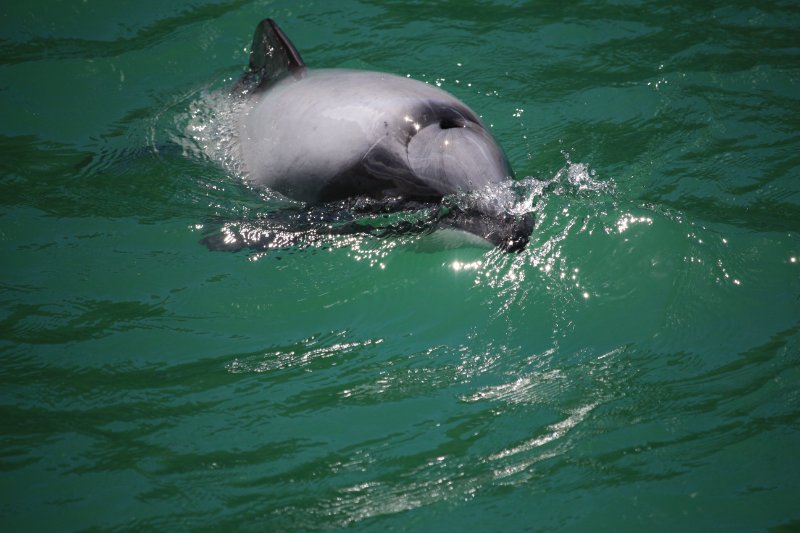
Hector’s dolphins do not have the beak usually associated with dolphins in general but have a shorter face, making them look more ‘whale-like.
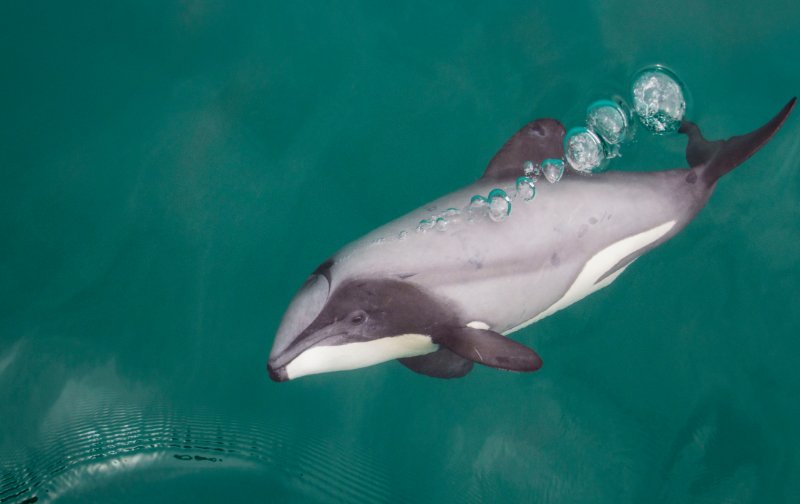
The back of this dolphin is light grey or white, with white extending down the front of the face. The throat and undersides are white, while black patches surround the eye region and extend to the rounded flippers. The round dorsal fin and the tail are also black.
Examination of one of the dolphins by Sir James Hector in the last part of the 19th Century resulted in the species being named after him. Hector’s dolphins eat fish and squid and will take whatever fish is available. They also hunt for crabs and flounder on the ocean bottom.
The dolphins hunt and live in shallow waters and tend to stay underwater for only about 90 seconds. The use of echolocation enables the dolphins to find their prey with relative ease.
Hector’s dolphins assemble in small groups of 2 to 10 animals and appear to communicate with one another by clicks, unlike the whistles usually used by most dolphins. These dolphins have a low reproductive rate, with a calf being born only once every 2 to 4 years.
The calves remain under their mother’s protection until they are nearly fully grown and live independently. Young dolphins are especially playful and will use seaweed as a toy or blow bubbles for amusement. All ages of these dolphins often swim and leap around boats.
See Related: Reasons Why Biodiversity Important to Ecosystems
Location
Hector’s dolphin is found only in the shallow waters around New Zealand’s South Island. Its subspecies, the Māui dolphin, is Critically Endangered, with only about 54 individuals over one year old remaining (2021 estimate). The Māui dolphin lives off the west coast of the North Island.
See Related: Endangered Species in Florida You Need to Know
Conservation
By keeping fish away from Hector’s Dolphin habitat, we can help Hector’s Dolphins to survive. We may also attempt to reduce pollution levels in the seas so that Hector’s Dolphins have a good living environment.
To survive, Hector’s dolphins require our assistance, and we should try to preserve this magnificent species.
Threats
The nets of commercial and casual fishers are the greatest threats to Hector’s and Maui’s dolphins. Set nets are often placed out to catch fish in a relatively small area and trap the dolphins that drown in them.
Gill-nets used by commercial fisheries pose even more danger and are directly responsible for the near extinction of Maui’s dolphins. The monofilament used to make the nets is so thin that the dolphins’ echolocation cannot detect it. Entanglement in fishing nets still kills at least about 100 Hector’s dolphins every year — more than are born, which is why the population continues to decline.
Tourists can also disturb the dolphins, and they are, of course, subject to the detrimental effects of pollution. Sharks also prey on Hector’s dolphins.
See Related: Celebrity Environmentalists You Need To Know
Conservation efforts
NGOs, such as the World Wildlife Fund, are working to ban gill-nets in all parts of the Hector’s and Maui’s dolphin ranges.
Gill-nets have been banned completely around North Island and are only allowed to be set 4 miles offshore around South Island. Sanctuaries for marine mammals have also been established around both islands.
See Related: Environmental Organizations in South America
Organizations
Do you know of or are you a part of an organization that works to conserve Hector’s Dolphin? Then please contact us to have it featured on Our Endangered World.
Conclusion
Hector’s Dolphins live in the shallow seas near New Zealand. They have black circles around their eyes and white skin that goes all the way to their flippers.
Hector’s dolphins feed mainly on small fish such as red cod and squid, using echolocation to find prey in the coastal waters they inhabit.
Hector’s Dolphins have a low reproductive rate and they are almost on the verge of extinction. There is not enough space for them. They assemble in small groups and communicate with one another using clicks, instead of whistles that most dolphins use.
Hector’s Dolphins reproduce slowly, but when they are young they stay with their mothers. Gill-nets and sharks have killed them in the past. Now there is a ban on gill-nets and sanctuaries have been established to protect them from sharks.
Hector’s dolphins have white skin with black markings on their eye region and extending to rounded flippers, a roundish dorsal fin, and a small tail.
Hector’s dolphins need our help. Their numbers are still declining, and the Māui dolphin subspecies is among the world’s most endangered marine mammals. Reducing gillnet bycatch is essential if we want these dolphins to survive.
FAQ
Other Species Profiles
- South Asian River Dolphin
- Wild Bactrian Camel
- Andean Flamingo
- Oriental Short-Clawed Otter
- Arabian Oryx
Related Resources
- Fun and Interesting Devil Fish Facts
- Types of Turtle Around The World
- Types of Sharks Around The World
See Related: The Hebridean Whale and Dolphin Trust
See Related: How Long Can a Dolphin Stay Out of Water? Survival Facts