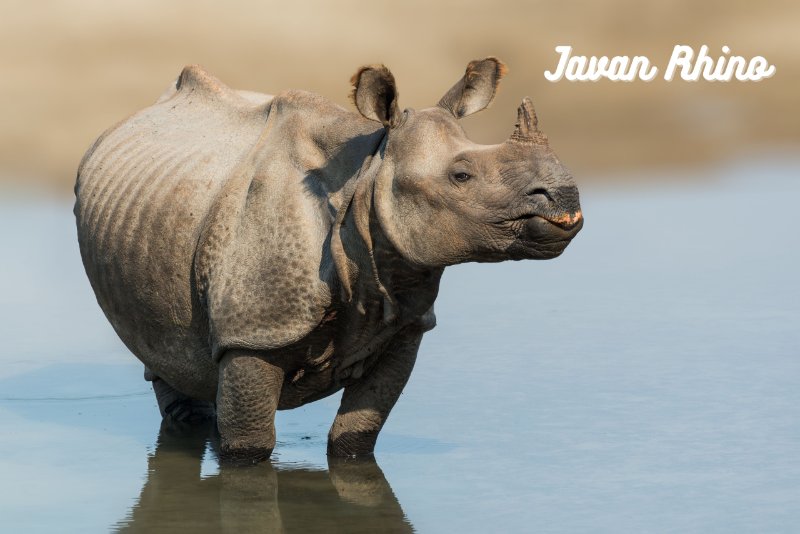
The Javan rhino is a grey-colored beast with a longhorn. Its bumpy, armored appearance makes it resemble a helmet. It has a smaller head and no bumps on its skin; however, it significantly reaches the more excellent one-horned Rhino.
The Javan rhinoceros (Rhinoceros sondaicus) survives in Ujung Kulon National Park on Java, Indonesia. Its controlled status, reviewed population estimate, and source are shown in the evidence panel.
- Status: See the evidence panel for the current controlled assessment.
- Known as: Javan Rhino, Lesser One-horned Rhinoceros, Sunda Rhinoceros.
- Population: See the evidence panel for the reviewed estimate, source, and source date.
Description
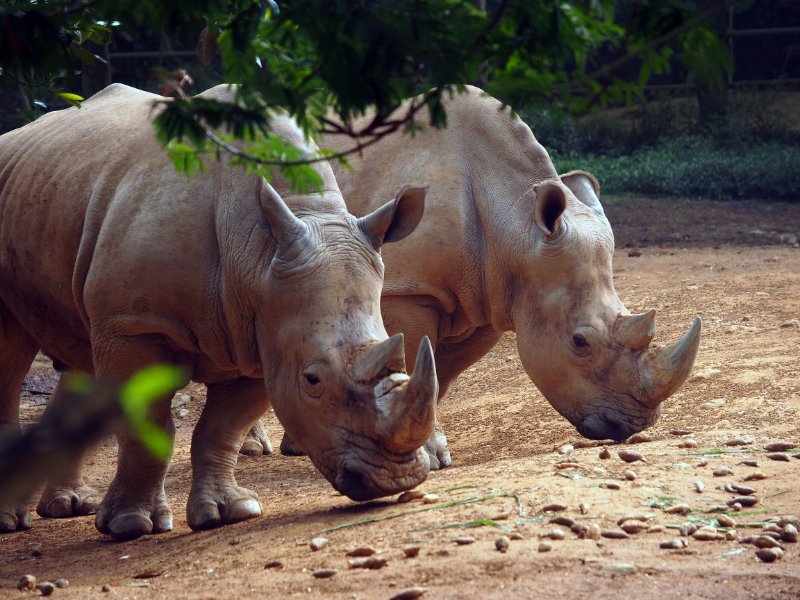
Armored with a thick, deeply folded hide, the Javan rhino has a prehistoric look that evokes the earlier periods of the Mammals’ age. This species of rhinoceros weighs 900 to 2,300 kilograms, stands 1.5 to 1.7 meters tall, and measures between 2 and 4 meters long.
The animal’s single horn is too short to be used as a weapon, at only 20 centimeters or less. Instead, it appears to be a specialized tool for hooking high-growing plants to bring them down to a level where the Rhino can eat them or push through dense vegetation.
When the Rhino is forced to fight, it slashes with its lower incisors rather than attempting to use its horn. Food harvesting is accomplished with a prehensile upper lip.
During the day’s heat, the Javan rhino lies in mud wallows to stay calm or bathes in water. When the more relaxed evening comes, these rhinoceroses begin to forage, eating leaves, shoots, twigs, and fruit. They need regular access to salt licks and will drink ocean water to get salt if necessary.
They are timid and retiring, and any human activity is enough to make them flee into the most inaccessible area available. The Javan rhino lives most frequently in tall, thick grass or beds of reeds within lowland jungles and rainforests.
Javan rhinos tend to be solitary, though they do not seem hostile to others of their species. They may sometimes casually associate in small groups at salt licks or favorite wallows. Male rhinos mark their territories with dung piles and by mauling vegetation.
Female rhinos are ready to have their first calf at four years and are likely to reproduce every five or six years after that.
Location
The last known wild population of Javan rhinoceroses lives in Ujung Kulon National Park on Java, Indonesia. The Vietnamese population is extinct.
This Rhino is found in highly lush lowland rainforests, though it will live at higher altitudes if driven there by humans.
Conservation
Threats
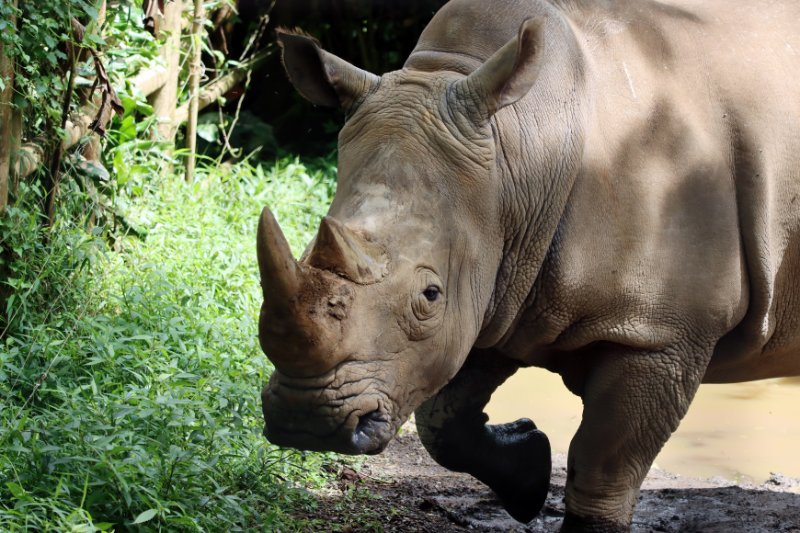
Extinction may loom for the Javan rhino, which has slowly been pushed back over the centuries by hunting and habitat destruction. Today, these problems have reached crisis proportions.
The tiny remaining population is still being hunted to supply the insatiable Chinese market with “medicinal” rhino horns. Besides, the jungle is being cut down, and habitat fragmentation is underway.
Conservation Efforts
Conservation efforts for Javan rhinoceroses include protection against poaching, habitat management, and work with local communities. This profile’s controlled status and cited source are shown in the evidence panel.
Future projects that are now being worked on include creating more sanctuaries and devising plans to make existing covers safer and better protected for this million-year-old species of rhinoceros.
About the Javan Rhino

It is the smallest (closer in size to the black rhinoceros of the genus Diceros) and most recently extinct species of rhinoceros. It belongs to the same genus as the Indian rhinoceros and has similar mosaic, armor-like skin. Still, it is smaller (closer to the black rhinoceros of the genus Diceros).
Its horn is usually shorter than 9.8 inches and smaller than the other rhino species. Only adult males have horns; females lack them altogether. Javan rhinos have been recorded as living up to 45 years in captivity.
Habitat
The Javan rhinoceros historically occurred across a wider part of Southeast Asia. Its surviving wild population is restricted to Ujung Kulon National Park on Java, Indonesia.
The Javan rhino prefers thick, lowland rainforests, grasslands, and reed beds with numerous waterways, massive floodplains, or wet areas with many mud wallows. Despite its preference for low-lying regions, the Vietnamese subspecies were forced to higher ground (up to 2,000 m or 6561 ft), probably because of human encroachment and poaching.
Diet & Nutrition
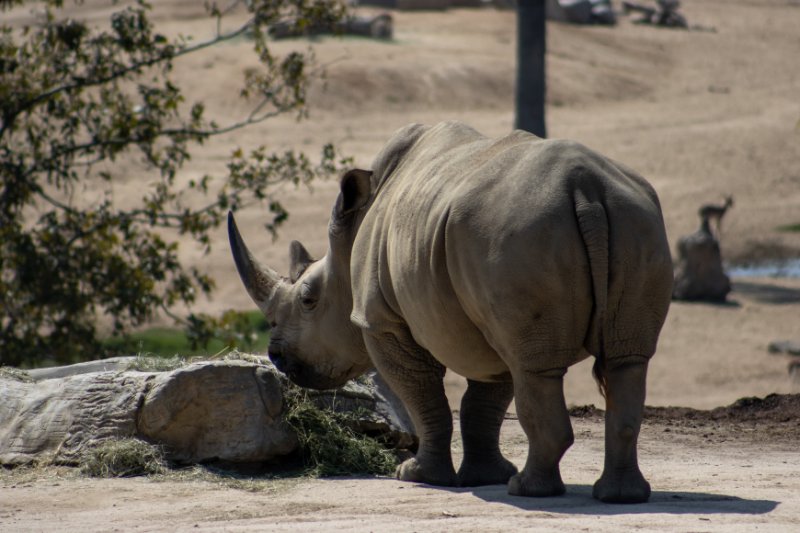
The Javan rhinoceros is primarily herbivorous, eating plants including trees’ shoots, twigs, young foliage, and fallen fruit. Most species’ preferred plants grow in shaded areas in jungle clearings, scrubland, and other vegetation types without large trees.
The Javan rhino uses its prehensile upper lip to pluck leaves from the trees and eat them. Thanks to its ability to knock down trees, it is the most versatile feeder of all the rhino species. It is presently a pure browser, but it was formerly both browsed and grazed in its ancient range. The Rhino consumes approximately 50kg of food daily.
It, too, requires salt in its diet, as does the Sumatran Rhino. The salt licks formerly available throughout its historical territory do not exist in Ujung Kulon; however, rhinos have been observed drinking seawater, which they may do for the same nutritional need.
What disease is killing the Javan rhinos?
The disease that is killing the Javan rhinos is fungal infection caused by Fusarium solani. This disease is known as rhinoconjunctivitis and has caused the death of multiple Javan rhinos in Indonesia. The fungus infects the respiratory system of the rhinos and causes respiratory distress, leading to their death.
Javan Rhino is under threat of extinction.
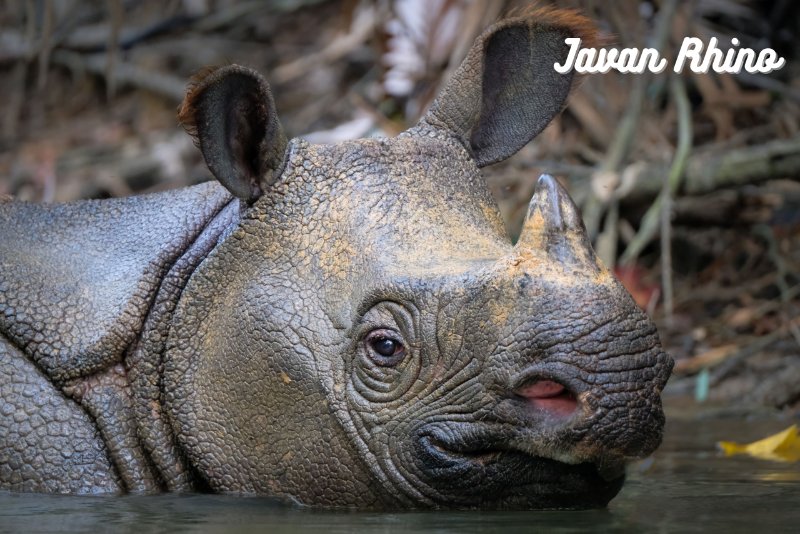
Poaching, habitat loss, population fragmentation, and concentration in one location create serious risks. The last known wild population is in Ujung Kulon National Park on Java, Indonesia.
The Javan rhino is the only member of its species in the Rhinoceros genus, among just five remaining species in the Rhino family. Rhinos and equids are the sole surviving members of a long-extinct group of ungulates that dates back some 50 million years.
Even though these species inhabit national parks now, they are still threatened by poaching, and small population sizes make them highly vulnerable to disease and natural disasters.
When did Javan rhinos become endangered?
A very small surviving population faces poaching, habitat risks, and concentration in one location. The evidence panel records the controlled status, reviewed population estimate, and source.
Rhino Conservation Organizations
Save the Rhino
Save the Rhino works with local partners in Asia and Africa to protect the five different rhino species. They support anti-poaching activities, monitoring, environmental education, community conservation, translocations, and captive breeding.
What is causing rhinos to be endangered?
Rhinos are endangered due to a combination of factors. Still, the primary cause is poaching for their horns, which are highly valued in traditional Asian medicine and as a status symbol. Additionally, habitat loss and fragmentation, coupled with civil unrest and armed conflicts in some areas, have contributed to the decline of rhino populations. It is estimated that there are fewer than 30,000 rhinos left in the wild.
Conclusion
Javan rhinoceroses are native to Java, Indonesia, where the surviving wild population occurs in Ujung Kulon National Park.
The Javan rhinoceros faces an extremely high risk of extinction. The evidence panel gives the controlled status, reviewed population estimate, source, and date.
Javan Rhino is a type of Rhino that’s native to the Javan region of Indonesia and is endangered because it has been poached for its horn which is believed to be used for medicinal purposes. Not only that but they have also been hunted as food sources.
FAQ
Where do Javan rhinoceroses live?
The last known wild population lives in Ujung Kulon National Park on Java, Indonesia.
Why does the Javan rhinoceros face a high risk of extinction?
A very small population, poaching, habitat risks, and concentration in one location leave the species highly vulnerable to extinction.
How many Javan rhinoceroses are left?
See the evidence panel for the reviewed population estimate, source, and source date.
Other Species Profiles
Related Resources