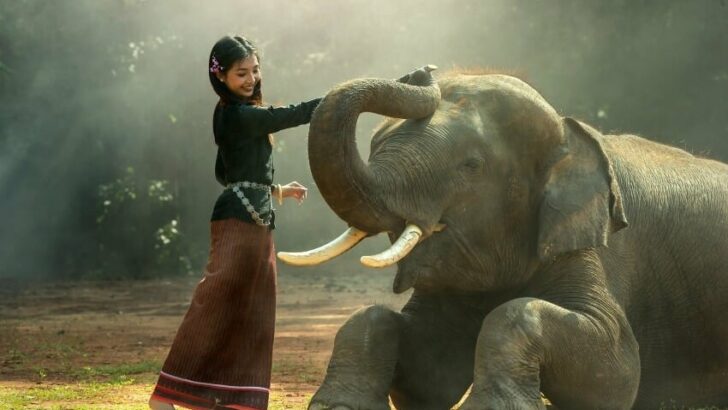
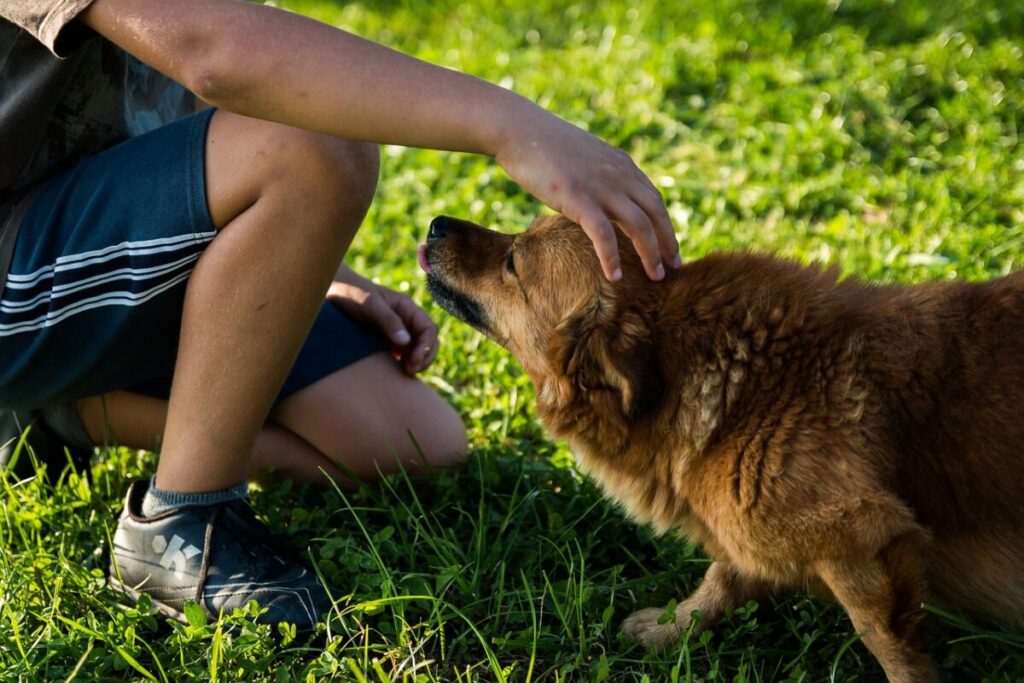
Why do animals like being pet? Many domesticated and social animals enjoy gentle petting because it can activate pleasant-touch pathways, resemble social grooming, and become associated with safety, attention, and trusted relationships. But petting is not automatically pleasurable. Species, individual history, body area, pressure, duration, pain, and the animal’s ability to move away all affect the response.
Key takeaways
- Some animals find certain kinds of touch rewarding; no species or individual should be assumed to enjoy petting.
- Gentle touch may resemble grooming and can become linked with safety, attention, or other positive experiences.
- Familiarity and choice matter. An animal that approaches, stays loose, and re-initiates contact is giving a stronger “yes” than one that merely remains still.
- Read the whole body. A wagging tail or a purr alone does not prove that an animal is comfortable.
- Wild animals should be observed from a safe distance, not touched or fed.
Why petting can feel good to animals
1. Gentle touch can activate rewarding sensory pathways
Touch is not a single sensation. Skin contains different sensory pathways for pressure, temperature, pain, itch, and gentle movement. A 2013 mouse study published in Nature identified a population of MRGPRB4+ sensory neurons that responded to massage-like stroking of hairy skin but not to pinching. Activating those neurons produced positively reinforcing or anxiety-reducing behavior in the experiment.
This finding offers a plausible biological reason that slow stroking can feel pleasant. It does not prove that every mammal enjoys human touch, and MRGPRB4 is not one universal “petting neuron.” The evidence came from mice, while species, context, and individual preference still determine the response. Like other mammals, humans are animals with specialized pathways for affective touch, but we should not assume another species experiences touch exactly as we do.
2. Petting can resemble social grooming
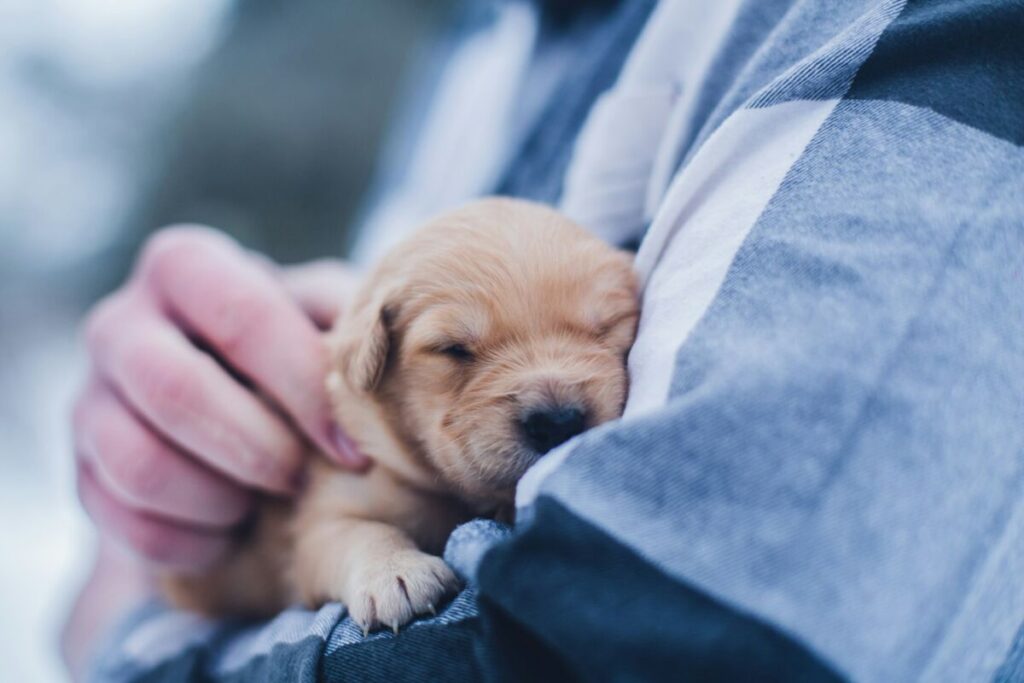
Many social animals groom one another. This behavior, often called allogrooming, can clean hard-to-reach areas while also maintaining social relationships. A human hand is not the same as a tongue, beak, or another animal’s grooming behavior, but slow, repeated strokes may provide a familiar pattern of low-intensity contact.
Early caregiving may also influence how an animal responds to touch later in life. Mothers lick, nuzzle, preen, or otherwise contact their young in many species. Still, it is too broad to say that adult animals enjoy petting simply because it “reminds them of childhood.” Socialization, learning, current mood, and physical comfort are at least as important.
3. Touch can become associated with safety and attention
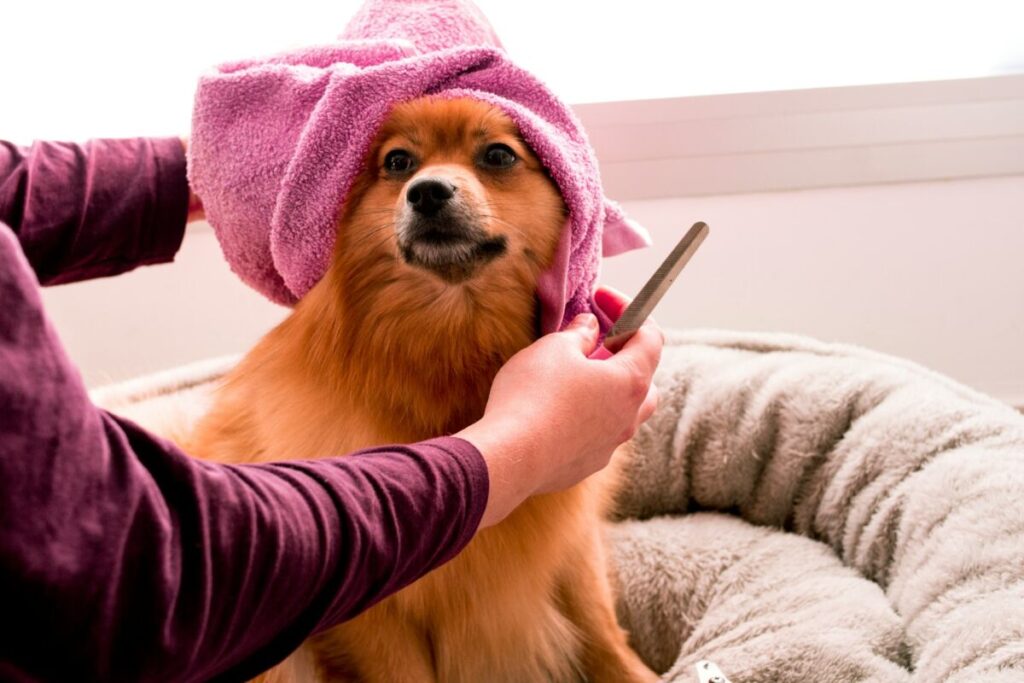
Animals learn from what follows an interaction. If a person’s hands reliably predict food, play, relief from an itch, or calm companionship—and do not restrain or hurt—the animal may learn that touch is a positive cue. Dogs may lean into a familiar person, cats may position their head for a cheek rub, and other companion animals may return to a preferred scratching spot.
The reverse is also true. Rough handling, unwanted restraint, pain, limited socialization, or a history of frightening contact can make petting stressful. Tolerance is not the same as enjoyment: an animal that freezes may be coping, not asking you to continue.
4. Familiar contact may support calm and social bonding
Petting is often described as an “oxytocin boost,” but the evidence needs context. A review of 69 human-animal interaction studies found reported effects on mood and several stress-related measures. The authors also noted that direct oxytocin research was limited and that familiarity, voluntary participation, and the quality of the relationship matter.
In practice, gentle contact may help a relaxed animal settle further when that animal already trusts the person and chooses the interaction. Petting should not be forced onto a frightened, cornered, injured, or highly aroused animal. Giving space is often the safer and kinder response.
5. Petting gives animals a way to control social contact
Touch can function as two-way communication. An animal may approach, nudge a hand, lean in, reposition its body, or return after a pause. It may also turn away, stiffen, flick its tail, flatten its ears, or leave. The most respectful interaction treats these signals as information rather than assuming that affection gives a person unlimited permission to touch.
Do all animals like being petted?
No. Even within species known for living closely with people, preferences vary widely. One dog may seek chest scratches but dislike head pats. One cat may enjoy brief cheek rubs but become overstimulated by long strokes down the back. Another animal may prefer play, proximity, food, or simply sharing a quiet space without being touched.
Touch preferences can change with age, pain, illness, pregnancy, fatigue, fear, previous experience, and the surrounding environment. A sudden or intense change—especially flinching, guarding one area, growling, hissing, or biting—can indicate discomfort and deserves veterinary attention.
How to tell whether an animal wants you to continue
Here, “consent” is practical shorthand for observable choice: the animal can approach, move away, and re-initiate contact. Judge the whole pattern rather than relying on one signal.
| Likely comfortable | Pause and reassess | Stop and create space |
|---|---|---|
| Loose posture; soft eyes; neutral ears; normal breathing | Turns the head away; shifts weight away; briefly freezes | Stiff or crouched posture; tries to hide, flee, or escape |
| Approaches, stays nearby, leans in, or repositions for contact | Repeated yawning, lip licking, skin twitching, or tail flicking | Growling, hissing, snarling, swatting, snapping, or biting |
| Returns or nudges after you stop | Does not re-initiate when you pause | Hard stare, flattened ears, bared teeth, or raised fur |
The RSPCA’s dog body-language guide describes loose posture, natural ears, and relaxed eyes as positive signs, while turning away, lip licking, tucked tails, and stiff posture can signal discomfort. For cats, Cats Protection advises reading posture, ears, eyes, whiskers, and movement together. Purring alone is not proof of pleasure because cats may also purr when stressed or in pain.
Use the pause test
- Ask the owner or handler before approaching an animal you do not know.
- Stand or sit at an angle rather than looming over the animal. Let it choose whether to approach.
- Offer two or three seconds of gentle contact in an area the animal usually accepts.
- Stop and move your hand away.
- Continue only if the animal stays relaxed and clearly re-initiates, such as leaning in, nudging, or returning to your hand.
If the animal does nothing, turns away, or leaves, accept that answer. Do not follow, corner, restrain, or repeatedly test the animal.
Petting preferences by animal
These are cautious starting points, not universal rules. The individual animal’s body language and the caregiver’s guidance take priority.
| Animal or context | Safer starting approach | What not to assume |
|---|---|---|
| Dogs | Let the dog approach. With permission, begin at the chest, shoulder, or side using slow strokes. | A wagging tail does not automatically mean “pet me,” and an unfamiliar dog may dislike a hand reaching over the head. |
| Cats | Let the cat initiate. Try a brief cheek, chin, or head rub, then pause. | A raised belly is not always an invitation to touch it, and purring does not always mean the cat is comfortable. |
| Rabbits and other small companion mammals | Ask the caregiver, stay low, move slowly, and avoid lifting unless necessary. | Remaining still may reflect fear. Small animals can be stressed by restraint even when they do not struggle. |
| Horses, goats, and other large domestic animals | Get the handler’s permission, approach where the animal can see you, and follow species-specific handling guidance. Do not assume that every individual responds the same way. | Size, familiarity with people, and a calm appearance do not remove the risk of a kick, bite, or sudden movement. |
| Wild animals | Observe from a safe distance and leave the animal an escape route. | Approaching a person does not make wildlife tame or safe to touch. |
Why cats rub their faces on people
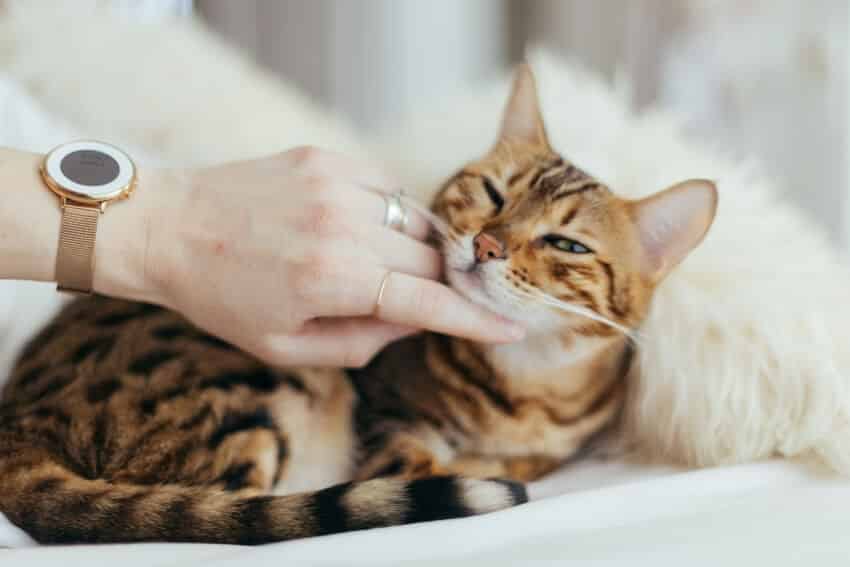
When a cat rubs its cheek or forehead against a person, the behavior is often called bunting. It combines touch with scent communication from glands around the face. Cheek rubbing can occur when a cat is relaxed and socially engaged, but it does not mean the cat literally “owns” the person. Cats live in an olfactory world, as do many animals with powerful senses of smell, so scent and touch often work together.
Can petting benefit people too?
Human-animal interaction research reports possible benefits for mood, social connection, and some stress-related measures, especially when the person likes animals and the interaction is voluntary. These effects are not guaranteed, and spending time with a pet is not a substitute for medical or mental health care.
Animals can also carry germs even when they appear healthy. The CDC recommends washing your hands after touching or playing with animals, supervising young children, and taking extra care at farms, fairs, and petting zoos.
How to pet animals safely and respectfully
- Ask first. Get permission from the owner, keeper, or handler.
- Let the animal choose. Do not chase, corner, restrain, or pull an animal closer.
- Keep contact brief at first. Use the pause test instead of assuming that more petting is better.
- Avoid vulnerable moments. Do not disturb an animal that is eating, sleeping, injured, caring for young, hiding, or trying to leave.
- Supervise children. Teach them not to hug, climb on, kiss, tease, or put their face near an animal’s face.
- Keep wildlife wild. The National Park Service advises no touching, feeding, or harassing wildlife.
- Respond to changes. If a normally social pet suddenly resists touch or guards one area, contact a veterinarian.
Frequently asked questions
Do all animals enjoy being petted?
No. Enjoyment depends on species, individual temperament, socialization, previous experience, health, body area, and the current situation. Some animals seek touch; others tolerate it or avoid it.
Why do dogs like being petted?
Many dogs learn that gentle touch from familiar people predicts attention, safety, play, or other positive experiences. Petting may also provide pleasant sensory stimulation. The dog’s loose posture and willingness to re-initiate are more informative than a tail wag alone.
Why do cats like being petted?
Some cats enjoy petting because it resembles social contact and grooming, stimulates touch-sensitive skin, and occurs within a trusted relationship. Cats often prefer shorter interactions than people expect, so pause frequently and let the cat decide whether to continue.
Do wild animals like being petted?
A wild animal may approach, tolerate touch, or appear curious, but that does not make contact safe or beneficial. Touching wildlife can cause stress, injury, or disease transmission. Observe from a distance and contact a qualified wildlife rehabilitator if an animal appears injured.
Can petting calm a frightened animal?
Sometimes a familiar animal actively seeks touch when mildly unsettled. A frightened animal that is avoiding contact, frozen, cornered, or trying to escape needs space—not forced petting. Reduce pressure first and seek professional help for persistent fear or aggression.
Why does my pet suddenly dislike being touched?
A sudden change can be related to pain, skin irritation, illness, stress, or a frightening experience. Stop touching the sensitive area and arrange a veterinary assessment, particularly if the reaction is new, intense, or accompanied by other behavioral or physical changes.
The best rule is to let the animal choose
The clearest answer is not that animals universally “love attention.” Some animals find specific kinds of touch rewarding in specific relationships. Pet gently, pause often, and respect the answer you receive. For wild species such as the Asian elephant, support welfare through habitat protection and practical ways to help species facing extinction rather than seeking direct contact.