
The giant armadillo (Priodontes maximus) is the largest living armadillo species, a solitary, termite-eating burrower found only in South America and listed as Vulnerable by the IUCN. Despite its intimidating claws and armor, it is a shy insectivore, not a predator — and its population has fallen an estimated 30–50% over the past three decades due to hunting and habitat loss.
Giant armadillos are powerful diggers, using their enormous curved claws — including a sickle-shaped, roughly 20 cm (8 in) third claw — to tear open termite mounds and dig burrows. They typically weigh 20 to 60 kg (44 to 132 lbs), with captive individuals recorded up to 80 kg (176 lbs), and measure about 75 to 100 cm (2.5 to 3.3 ft) in body length plus a 40 to 50 cm (16 to 20 in) tail, for a total length of roughly 1.5 meters (5 feet).
Giant Armadillos are born with soft shells that harden soon after birth. They actively seek out and construct dug burrows in which they may live in solitude.
Some remarkable features about these creatures include the fact that they can turn their entire heads 360 degrees, and that they may do so spontaneously!
- Status: Vulnerable
- Known as: Giant Armadillo, Ocarro.
- Estimated numbers left in the wild: Unknown, but the population has likely fallen by 30% to 50% in the past few decades.
Description of Giant Armadillo
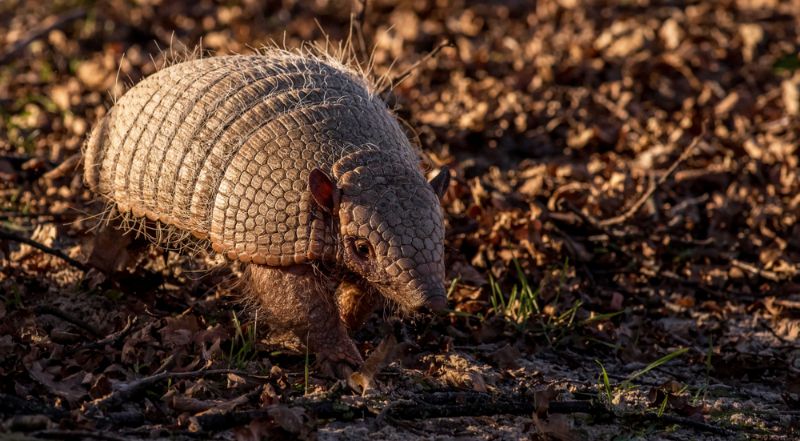
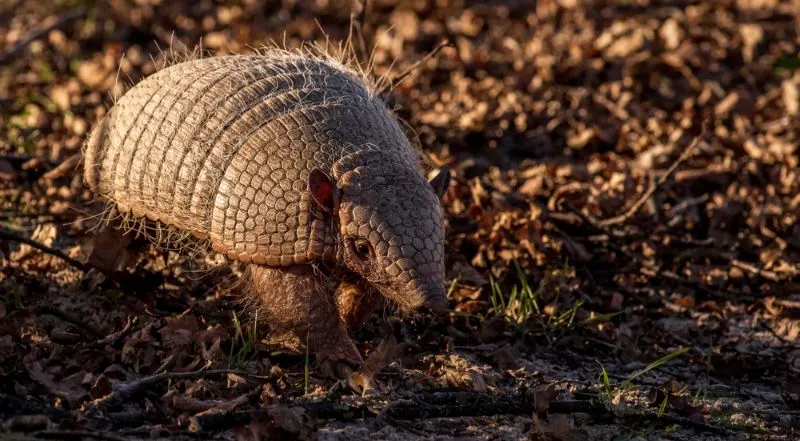
The largest of one of Earth’s most fascinating groups of armored animals, the giant armadillo measures up to 1 meter long, exclusive of the tail, with the tail adding another 50 centimeters.
On average, giant armadillos weigh around 30 kilograms (66 lbs), though individuals in captivity have been recorded at up to 80 kilograms (176 lbs).
With a wide head protected by armored scales, an armored back, short, sturdy legs, and a distinctive pink band around the lower edge of its shell, the giant armadillo is an unmistakable creature even among the intriguing lifeforms of South America.
It possesses more teeth than any other mammal – up to 100 – and has large claws on its front feet, the third claw in particular developed into a large sickle.
Giant armadillos are solitary individuals who feed mainly on termites. They are excellent diggers and live in burrows in forests or scrub, emerging at night to feed.
Since this creature cannot curl into a ball as its smaller relatives can, it protects itself when attacked by digging quickly into the ground until only its armor-plated back is exposed.
The armadillo remains in one area for a few weeks at most before moving on in search of fresh territory and food. It does not defend a territory against other giant armadillos and largely ignores them.
The third claw is used to tear into termite nests – a single giant armadillo can completely wipe out a termite nest while feeding. It also dines on other invertebrates and even the occasional unlucky snake or lizard.
These species remain mysterious creatures despite their large size and spectacular, prehistoric appearance. Their solitary habits and night-time activity patterns make them hard to observe. Baby giant armadillos have never been seen in the wild, so their natural breeding habits are completely unknown.
Female giant armadillos appear to bear only a single youngster most of the time, though twins sometimes occur.
Youngsters stay with their mother for around half a year, nursing the entire time, then strike out on their own.
The species reaches sexual maturity at around a year and can live for 15 years in the wild.
Location
The giant armadillo is found chiefly in Brazil but also in Paraguay, Argentina, Bolivia, Colombia, Venezuela, Suriname, Guyana, French Guiana, Ecuador, and Peru. The species is now considered possibly extirpated in Uruguay.
Giant Armadillo is a large mammal that can be found in South America
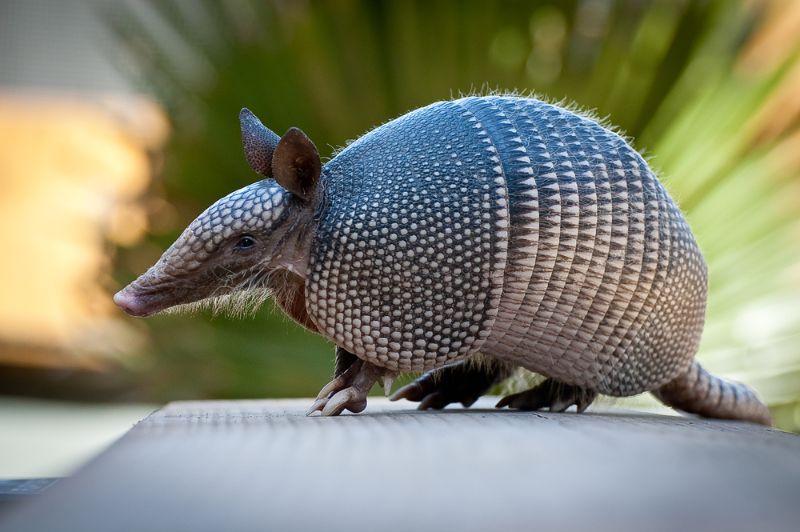
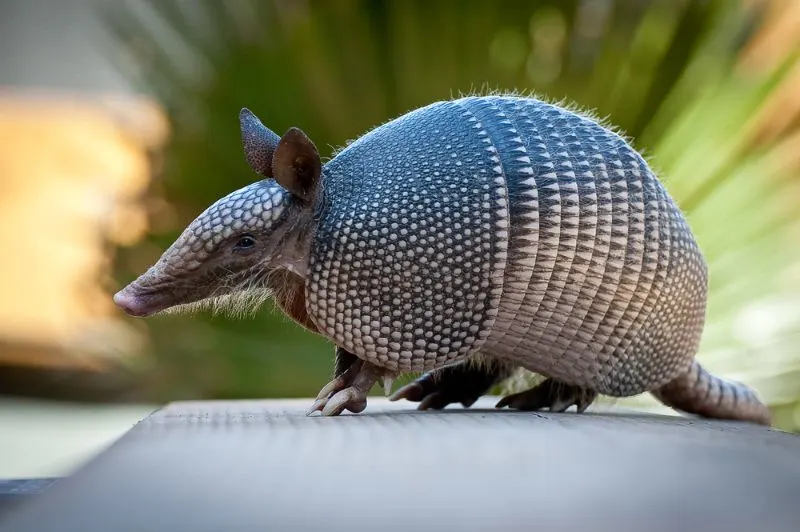
Giant armadillos belong to the superorder Xenarthra (historically nicknamed “Edentata,” meaning “toothless”), a group that also includes anteaters and sloths — but despite the old nickname, giant armadillos are not toothless: they have more teeth than any other land mammal.
However, while armadillos may be quite large, their thick shell on their back gives them protection from predators. They are unusual in that they feed almost entirely on ants and termites, though they occasionally eat other invertebrates.
The giant armadillo has long claws and forearms it uses to clear away debris while searching for food. It is threatened primarily because it is hunted extensively for bushmeat.
The Giant Armadillo is a heavily armored animal covered in thick, bony plates. It is currently classified as Vulnerable by the IUCN, and continued deforestation, habitat fragmentation, and hunting put it at further risk.
Giant armadillo burrows are frequently reused by many other species — including anteaters, opossums, and even ocelots — making the species an important “ecosystem engineer” for South American forests. They favor forested habitat with tree cover for food and protection.
Giant Armadillos are high up on the food chain
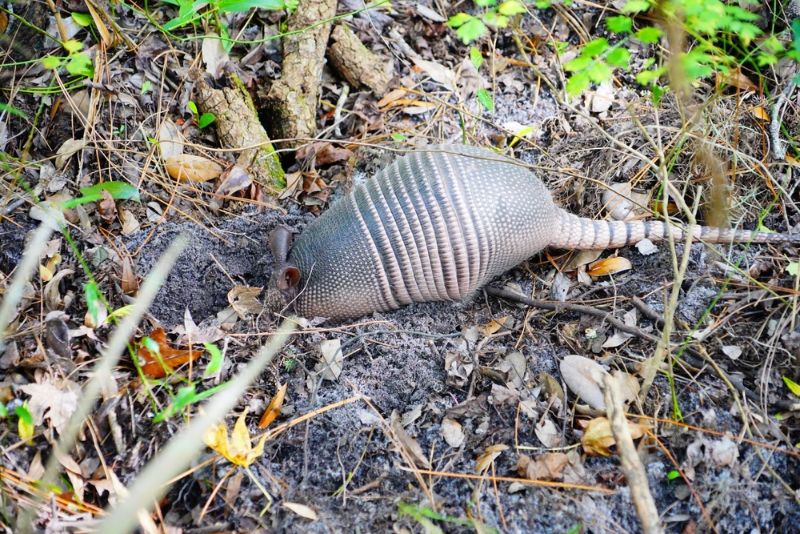
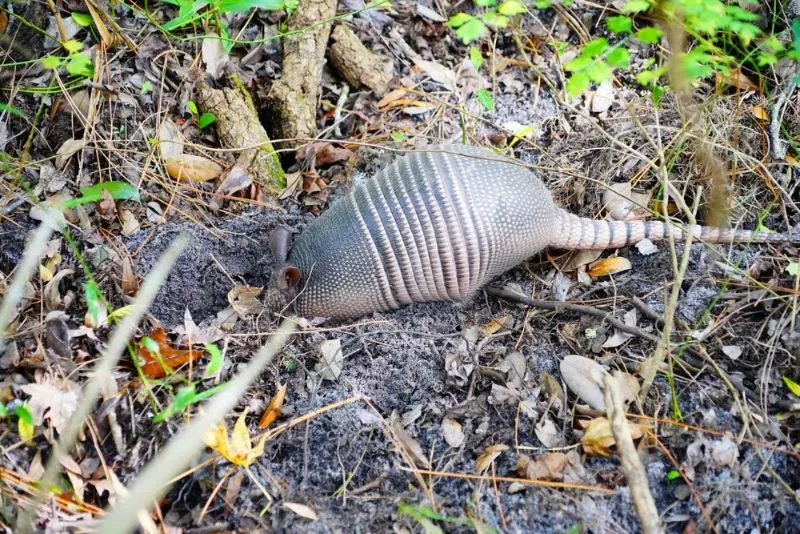
Giant armadillos pose no threat to livestock or people — as insectivores, they feed almost exclusively on ants and termites. The primary threat they face from humans is subsistence hunting for bushmeat, compounded by habitat loss from deforestation.
Giant armadillo burrows also improve soil aeration and moisture penetration in the forest floor, aiding water retention across their habitat.
As prey for large predators such as jaguars and pumas, and as a natural check on termite and ant populations, giant armadillos play an important role in maintaining balance within their forest ecosystem.
Giant armadillos also have an impact on the soil because their tunnels increase moisture penetration and runoff, which aids in the reduction of erosion.
They help to prune plants through their burrowing activities. And because these species feed on insects that harm people rather than plants or animals, they have a minimal environmental effect.
Giant Armadillo reproduction
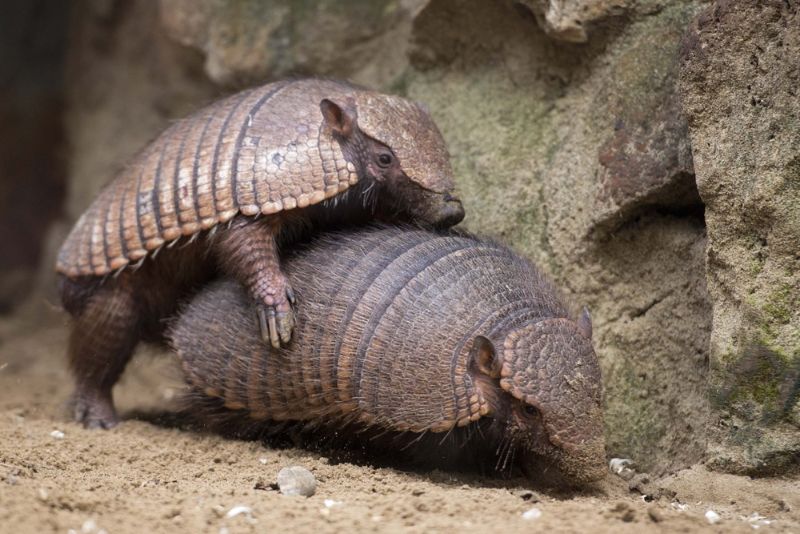
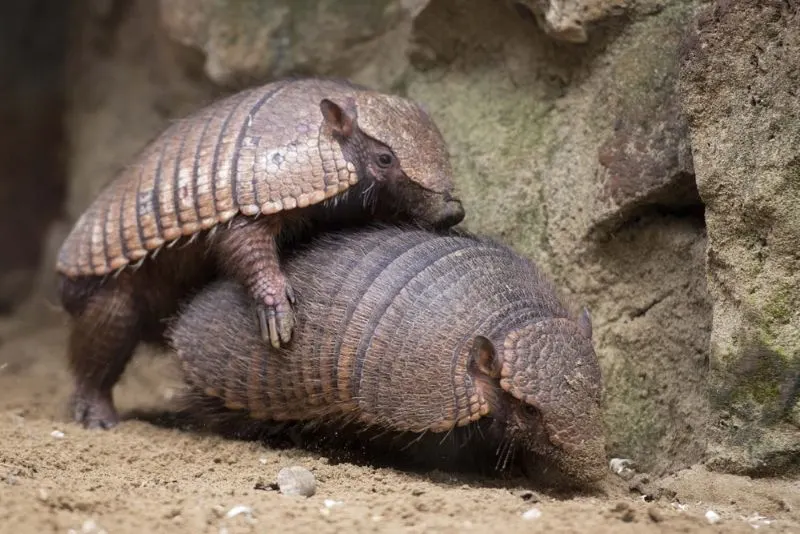
Giant armadillos use their large claws to dig burrows up to 20 feet long and 5 feet deep. Their reproduction remains poorly understood by scientists, since baby giant armadillos have almost never been observed in the wild, and no giant armadillo has ever successfully bred in captivity.
When threatened, giant armadillos dig rapidly into the ground for protection rather than rolling into a ball, which — unlike some smaller armadillo species — they are physically unable to do. In the wild, they are estimated to live 12 to 15 years.
Giant Armadillo habitat
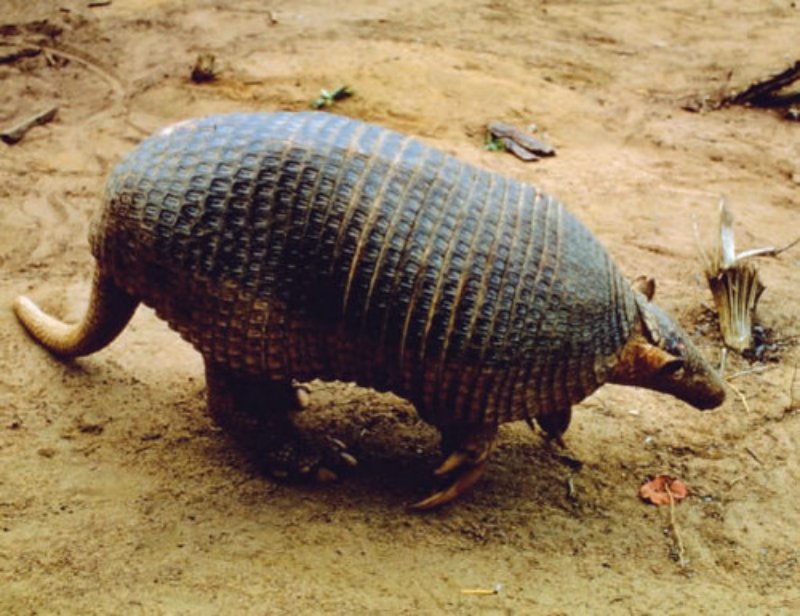
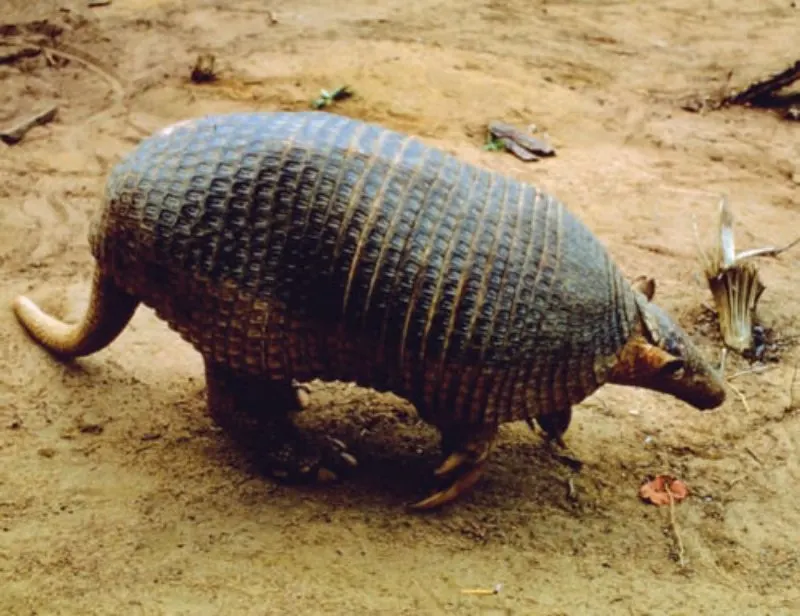
The giant armadillo has vanished from much of its former range in eastern Paraguay and is now nationally listed as Endangered there. The largest of all armadillo species, giant armadillos typically weigh 20 to 60 kg (44 to 132 lbs) and reach about 1.5 meters (5 feet) in total length. They reside in forested areas and grasslands with plenty of cover to protect them from predators like jaguars.
Armadillos live in hot, dry environments. They like moist places and regions with a lot of prey. Human encroachment and hunting have resulted in the presence of these species in many suburban areas. Human expansion and deforestation are rapidly eliminating the habitat for giant armadillos.
They dwell in burrows or in heavily forested regions with many low-hanging branches to provide protection from predators.
Conservation of Giant Armadillo
Threats
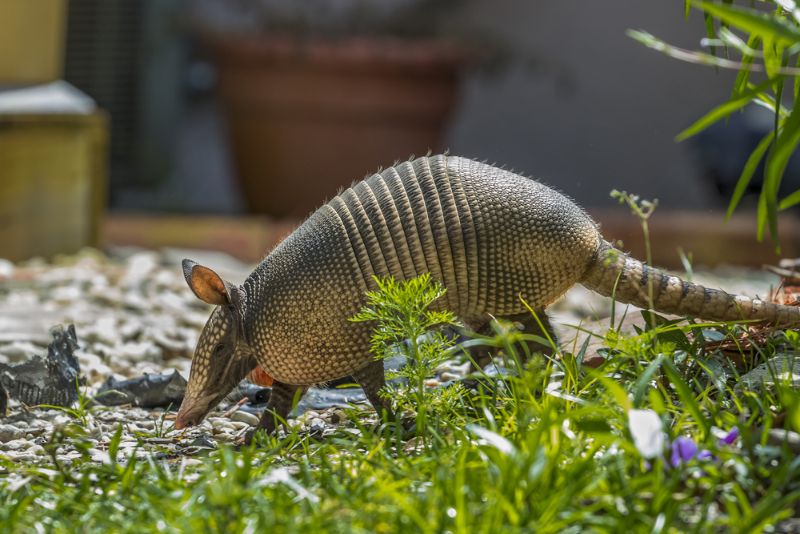
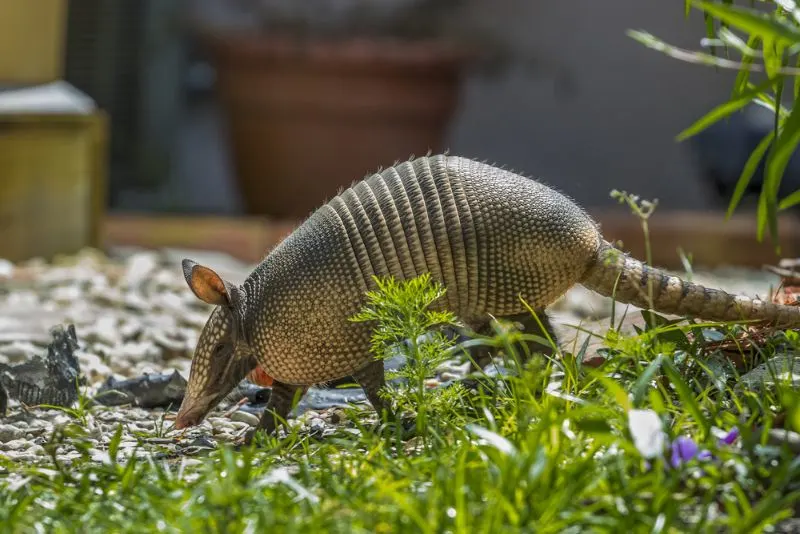
Recklessly excessive hunting for meat is the main threat to giant armadillos, with very little official effort being made to prevent their killing.
The armadillo’s armor is no match for a rifle bullet, and they make attractive prey since they are slow-moving, prefer to defend themselves by digging in and hunkering down, and offer plenty of meat.
The vast majority of population loss in the species is due to impoverished people in their region hunting them for food.
Some are also captured in an effort to sell them on the illegal exotic pet market, but almost always die soon after being caged and transported.
Habitat loss is contributing to the pressures facing the species also.
Conservation efforts
The giant armadillo is protected by law in most of the countries it is found in, but enforcement is weak or non-existent in many areas.
The armadillos happen, by chance, to inhabit several massive nature reserves, which gives them some protection, but much more conservation is needed to preserve the species for the future.
Conclusion
Giant armadillos are ancient, a prehistoric-looking creature that is threatened by human hunting. Their meat has a high market value and may be sold for a premium on the black market to people who want it. They are hunted and trapped by humans due to their slow movement and digging behavior in self-defense, making them easy targets late at night when they emerge to feed.
Armadillos have been hunted for their meat with little legal recourse, and the species has thus far received no protection from enforcement officials or government authorities attempting to safeguard them. Their thick shell provides no protection against rifle rounds, which makes them highly vulnerable if you encounter one of these creatures; please don’t shoot!
Habitat loss is as serious an issue as irresponsible hunting, since giant armadillos may be found in several significant nature preserves and parks.
These species are becoming increasingly uncommon. They have decreased in number over time, and there is little prospect for their survival in the future.
IUCN currently classifies the giant armadillo as Vulnerable.
FAQ
Where is Giant Armadillo found?
Giant armadillos are found only in South America, east of the Andes — including Brazil, Bolivia, Paraguay, Argentina, Colombia, Venezuela, Ecuador, Peru, and the Guianas. They have declined or disappeared across much of their southern range: the species is considered possibly extirpated in Uruguay and is nationally listed as Endangered in both Argentina and Paraguay.
The giant armadillo (Priodontes maximus) is the sole living species in its genus. It belongs to the family Chlamyphoridae within the order Cingulata (armadillos), part of the wider superorder Xenarthra, which also includes anteaters and sloths.
They are hunted for bushmeat across much of their range, which — along with deforestation and habitat fragmentation — is a leading driver of their Vulnerable IUCN status.
What is Giant Armadillo’s natural habitat and range?
Giant Armadillos are native to a broad swath of South America east of the Andes, including Brazil, Paraguay, Bolivia, Argentina, Colombia, Venezuela, Ecuador, and Peru. These species may be found in tropical and subtropical grasslands, savannas, and shrublands.
They require a humid and warm environment with soft soil to dig in. Because Giant Armadillos eat ants and termites as their primary food, they can be seen near termite mounds or anthills.
Is Giant Armadillo endangered?
The Giant Armadillo, a little-known endangered species found in a variety of South American terrains, is one of the world’s largest armadillos.
The IUCN classifies giant armadillos as “Vulnerable to Extinction,” noting that they are uncommon throughout their range and have local declines in Uruguay and other countries.
Despite the fact that habitat destruction, poisoning, and hunting pose significant threats to remaining populations, a lot about this creature remains unknown.
Arnaud Desbiez and his Giant Armadillo Conservation Project (GACP) field team have been leading the charge to learn more about this elusive species in Brazil.
The team created the first long-term ecological study of huge armadillos in Brazil’s Pantanal and Cerrado, as well as educating, outreach efforts, and media campaigns to promote the conservation of this little-known species.
What is the rarest armadillo?
The rarest armadillo is the pink fairy armadillo (Chlamyphorus truncatus). This small, burrowing mammal is native to Argentina and is considered a vulnerable species due to habitat loss and hunting. The pink fairy armadillo is known for its unique appearance, with a pinkish shell and soft, white fur.
Organizations
Jaguar Conservation Fund
Jaguar Conservation Fund is based in Brazil and works primarily with Jaguars. However, they focus on other conservation projects too including gaining information about the Giant Armadillo.
Other Species Profiles
Related Resources