
The health effects of air pollution extend far beyond coughing or irritated eyes. Fine particulate matter can penetrate deep into the lungs and enter the bloodstream, while ground-level ozone inflames the airways. Long-term exposure is linked to heart disease, stroke, chronic obstructive pulmonary disease, lung cancer, respiratory infections, diabetes and other serious outcomes.
A peer-reviewed BMJ modeling study estimated that ambient air pollution from fossil-fuel use was attributable to 5.13 million excess deaths worldwide in 2019. That figure is not a literal count of death certificates naming fossil fuels. It is a statistical estimate, with an uncertainty range of 3.63 million to 6.32 million, based on modeled pollution exposure, disease risks and baseline mortality.
Last fact-checked: July 16, 2026.
Key takeaways
- The BMJ study attributed an estimated 5.13 million excess deaths in 2019 to outdoor PM2.5 and ozone pollution associated with fossil-fuel use.
- The estimate represented about 61% of the study’s modeled 8.34 million deaths from ambient PM2.5 and ozone, but it remains a modeled scenario rather than a directly observed death count.
- Heart and circulatory diseases account for much of the mortality burden. Air pollution also harms the lungs and is associated with lung cancer, diabetes, respiratory infections and other conditions.
- Global death estimates differ because organizations use different years, pollutants, exposure models, health outcomes and counterfactual pollution levels. The totals should not be treated as interchangeable.
- Personal exposure-reduction steps can help during polluted periods, but the largest and most durable health gains require cleaner power, transport, buildings and industry.


What the BMJ fossil-fuel air pollution study found
The 2023 BMJ study asked a specific counterfactual question: how many deaths associated with ambient PM2.5 and ozone in 2019 could be attributed to emissions from fossil-fuel use? The researchers combined Global Burden of Disease mortality data, population and satellite information, atmospheric chemistry modeling and exposure-response functions.
| Study result | Estimate | How to interpret it |
|---|---|---|
| Deaths attributable to ambient PM2.5 and ozone from all sources | 8.34 million | The modeled 2019 burden from the two pollutants, including natural and human-caused sources. |
| Deaths attributable to fossil-fuel-related ambient air pollution | 5.13 million | The modeled portion associated with fossil-fuel emissions. |
| Uncertainty interval for the fossil-fuel estimate | 3.63 million to 6.32 million | The plausible range reported by the researchers, reflecting uncertainty in exposure, risk and mortality inputs. |
| Share of modeled PM2.5 and ozone deaths linked to fossil fuels | 61% | A proportion within this study’s methods and assumptions, not a universal share for every air-pollution estimate. |
The estimated burden was concentrated in major noncommunicable diseases. In the study’s global results, ischemic heart disease accounted for about 30% of the deaths attributed to ambient PM2.5 and ozone, while stroke and chronic obstructive pulmonary disease each accounted for about 16%. Diabetes accounted for about 6%. The authors also reported a substantial undefined portion, which is one reason not to reduce the result to a simple list of diseases.
The study estimated that replacing fossil-fuel-related emissions with a clean-energy scenario could avoid most of the deaths attributed to those emissions. That finding supports the public-health case for reducing fossil-fuel combustion, but the exact number is not a guaranteed forecast. It depends on how quickly emissions fall, which energy sources replace them, local population exposure, future disease rates and the study’s underlying assumptions.
What “attributable deaths” means
Attributable mortality is a population-level estimate. Researchers compare estimated exposure and health risk with a lower-exposure counterfactual, then calculate the share of deaths statistically associated with the difference. The method is widely used in environmental burden-of-disease research, but it cannot identify which individual death would or would not have occurred in a pollution-free scenario.
This distinction matters. “Air pollution was attributable to an estimated 5.13 million excess deaths” is more accurate than saying fossil fuels directly and individually “caused exactly 5.1 million deaths.” The first wording reflects the evidence and uncertainty; the second overstates the precision of a model.
Why global air pollution death estimates differ
Readers often encounter several credible but different numbers. The latest WHO technical brief on the health effects of air pollution, published in June 2026, says air pollution causes about 6.6 million deaths globally each year and that roughly 84% are from noncommunicable diseases. A separate WHO fact sheet estimates 4.2 million premature deaths from ambient outdoor air pollution in 2019. The State of Global Air 2025 report attributes 7.9 million deaths to air pollution in 2023.
| Source | Reference year | Headline estimate | Main scope |
|---|---|---|---|
| BMJ fossil-fuel study | 2019 | 8.34 million deaths from ambient PM2.5 and ozone; 5.13 million attributed to fossil-fuel use | A dedicated atmospheric model separating fossil-fuel emissions from other pollution sources. |
| WHO ambient air pollution fact sheet | 2019 | 4.2 million premature deaths | Ambient outdoor air pollution using WHO’s burden-estimation framework. |
| WHO 2026 technical brief | Latest WHO synthesis | About 6.6 million deaths annually | Combined global health burden from ambient and household air pollution. |
| State of Global Air 2025 | 2023 | 7.9 million deaths | Global Burden of Disease-based assessment covering ambient and household air pollution. |
The totals vary mainly because the assessments use different exposure data, pollutant sets, disease outcomes, risk functions, baseline mortality data and counterfactual concentrations. They also cover different years. Monitoring is sparse in many low- and middle-income regions, so researchers often combine ground stations with satellite observations and atmospheric models.
The practical conclusion is consistent across the major assessments: air pollution is a leading environmental health risk, and combustion-related pollution contributes substantially to preventable disease and premature death. The uncertainty affects the exact total, not the basic direction of the evidence.
Which air pollutants cause the greatest health concern?
Fine particulate matter, or PM2.5
PM2.5 refers to particles with an aerodynamic diameter of 2.5 micrometers or smaller. They may be emitted directly by vehicles, power plants, industrial processes, heating and fires, or form in the atmosphere when gases such as sulfur dioxide, nitrogen oxides and ammonia react.
Because these particles are so small, they can travel deep into the lungs, and some components can enter the bloodstream. The U.S. Environmental Protection Agency’s review of particulate-matter health effects links exposure with premature death in people with heart or lung disease, nonfatal heart attacks, irregular heartbeat, aggravated asthma, reduced lung function and respiratory symptoms.
Ground-level ozone
Ground-level ozone is not emitted directly from a tailpipe or smokestack. It forms when nitrogen oxides and volatile organic compounds react in sunlight. Hot, sunny conditions can accelerate that chemistry, which is why ozone episodes often worsen in summer.
Ozone is a powerful oxidant. Breathing it can constrict and inflame the airways, cause coughing and shortness of breath, reduce lung function and aggravate asthma, emphysema and chronic bronchitis. Children, older adults, people with asthma and people who work or exercise outdoors face higher exposure or susceptibility. The EPA’s ground-level ozone health guidance provides a fuller explanation.
Nitrogen dioxide and other co-pollutants
Nitrogen dioxide, or NO2, is produced mainly by fuel combustion and is often elevated near busy roads and other combustion sources. It irritates the respiratory system and also contributes to the formation of ozone and secondary particulate matter. Sulfur dioxide, carbon monoxide, toxic metals, volatile organic compounds and black carbon can add to the risk, although the pollutant mixture and dominant sources vary by place.
The WHO global air quality guidelines set health-based guideline levels for PM2.5, PM10, ozone, nitrogen dioxide, sulfur dioxide and carbon monoxide. For PM2.5, WHO recommends an annual mean of no more than 5 micrograms per cubic meter and a 24-hour mean of no more than 15 micrograms per cubic meter. These are public-health guidelines, not automatically enforceable legal limits.
How air pollution damages the body
Heart and blood vessels
Air pollution is often framed as a lung problem, but cardiovascular disease accounts for a large share of the mortality burden. Fine particles can trigger inflammation, oxidative stress, changes in autonomic nervous-system function, blood-vessel dysfunction and a greater tendency toward clotting. These pathways can worsen atherosclerosis and increase the risk of heart attack, stroke, arrhythmia and heart failure, particularly in people who already have cardiovascular disease.
Lungs and airways
Short-term exposure can irritate the airways, trigger coughing or chest tightness and worsen asthma. Repeated or long-term exposure can impair lung development, reduce lung function and aggravate chronic respiratory diseases. People with asthma or COPD may experience symptoms at lower pollution levels than healthy adults.
Cancer
The International Agency for Research on Cancer classifies outdoor air pollution and particulate matter in outdoor air as carcinogenic to humans. The clearest causal evidence is for lung cancer. This classification does not mean every exposure produces cancer; it means the evidence is sufficient to conclude that the hazard can cause cancer, with risk shaped by concentration, duration and individual factors.
Metabolic, neurological and reproductive health
Burden-of-disease assessments increasingly include or evaluate links with type 2 diabetes, dementia, adverse birth outcomes and other conditions. Evidence strength is not identical for every outcome, and researchers continue to refine the causal pathways and risk estimates. The most responsible summary is that air pollution affects multiple organ systems, while the certainty and quantified burden vary by disease.
Who is most vulnerable?
Everyone breathes the surrounding air, but exposure and susceptibility are not evenly distributed. The WHO’s 2026 evidence brief identifies children, pregnant people, older adults, people with chronic disease and people in lower socioeconomic groups as among those at greatest risk.
- Children: Their lungs and immune systems are still developing, they breathe more air relative to body weight, and they may spend more time being active outdoors.
- Older adults: Age-related changes and a higher prevalence of heart and lung disease can increase susceptibility.
- People with heart or lung conditions: Pollution can aggravate asthma, COPD, coronary disease, arrhythmias and heart failure.
- Pregnant people and developing fetuses: Exposure is associated with adverse pregnancy and birth outcomes, although individual risk depends on timing, dose and other factors.
- Outdoor workers and highly active people: Longer exposure and higher breathing rates can increase the dose inhaled during polluted periods.
- Communities near major roads, ports, industrial sites and combustion sources: Proximity can increase exposure, while housing quality, access to health care and ability to avoid pollution shape the resulting risk.
This distribution is an environmental-justice issue. People who contribute least to emissions may have fewer resources to reduce exposure, move away from pollution sources or obtain treatment. Effective clean-air policy should therefore reduce average pollution and close exposure gaps.
Europe’s latest air pollution health data
Europe has made measurable progress, but the remaining health burden is large. The European Environment Agency’s latest burden-of-disease assessment, published in December 2025 and updated in January 2026, uses exposure data through 2023. It estimates that reducing concentrations to WHO guideline levels could have prevented 182,000 deaths attributable to PM2.5, 63,000 attributable to ozone and 34,000 attributable to nitrogen dioxide in the EU in 2023.
Those three figures must not be added together. The EEA calculates each pollutant separately, and exposures are correlated. Adding them would double-count part of the burden. The agency also reports that PM2.5-attributable premature deaths fell 57% between 2005 and 2023, while 95% of urban Europeans remained exposed to at least one pollutant above WHO recommendations.
The EEA’s 2026 air quality status report reaches the same broad conclusion: concentrations have declined over two decades, yet more than nine in ten Europeans remain exposed above WHO guideline levels for at least some pollutants.


EU standards are tightening
The revised EU Ambient Air Quality Directive 2024/2881 entered into force in December 2024 and sets stricter standards for 2030. The new limits move closer to WHO guidance, although they do not fully match every WHO value. Implementation will require national and local action on traffic, heating, energy, industrial emissions and monitoring.
Where fossil-fuel air pollution comes from
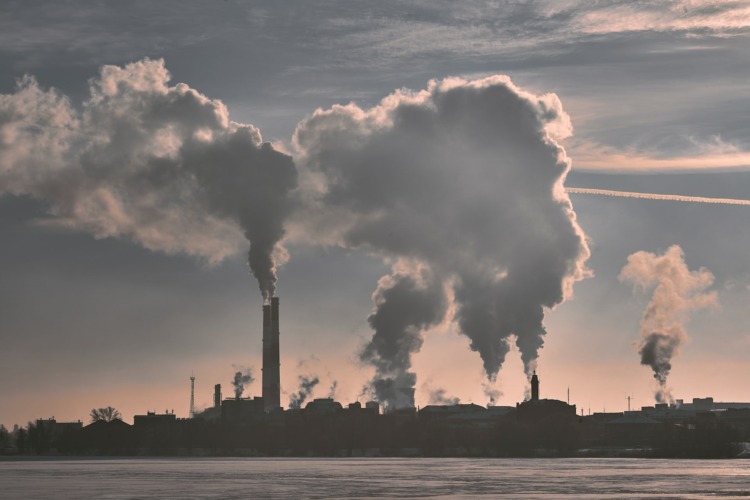
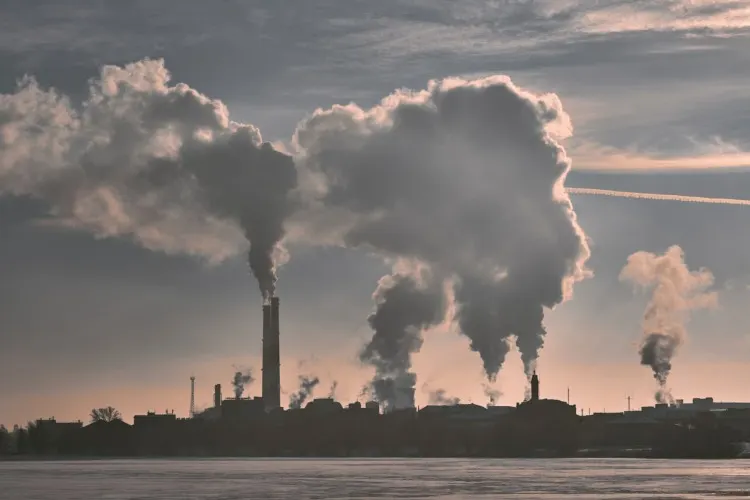
Fossil-fuel combustion emits primary particles and gases that form secondary PM2.5 and ozone. The size and composition of the resulting pollution depend on the fuel, technology, pollution controls, weather and surrounding chemistry.
- Power generation: Coal, oil and gas combustion can release sulfur dioxide, nitrogen oxides, particulate matter and toxic pollutants. Controls reduce emissions, but they do not make combustion pollution-free.
- Road transport: Exhaust emits nitrogen oxides, particles and organic compounds. Brake, tire and road wear also produce particles, so vehicle electrification should be paired with public transport, walking, cycling and lower traffic volumes where feasible.
- Industry: Refineries, cement production, metals, chemicals and other facilities can emit particles and precursor gases, depending on the process and controls.
- Buildings: Boilers, furnaces, generators, stoves and water heaters can contribute to outdoor and indoor pollution. Propane is a fossil fuel, so switching from one combustion fuel to another does not eliminate combustion-related emissions.
- Oil and gas operations: Extraction, processing and distribution can emit methane, volatile organic compounds and other pollutants before the fuel is burned.
What policy and technology can do
Air pollution is not primarily a problem that individuals can solve through better shopping choices. WHO notes that most outdoor sources are beyond individual control and require coordinated policy across energy, transport, buildings, industry, waste, agriculture and urban planning.
- Replace high-emitting combustion: Expanding genuinely low-emission electricity and clean household energy can reduce both direct particles and gases that form secondary pollution.
- Design cleaner transport systems: Reliable public transit, safe walking and cycling networks, rail, low-emission freight and well-designed low-emission zones can reduce traffic pollution while improving access.
- Improve buildings: Better insulation, efficient electric equipment and cleaner district energy can reduce fuel use and exposure from heating.
- Control industrial emissions: Best-available controls, continuous monitoring, transparent reporting and enforcement can cut pollution while facilities transition to cleaner processes.
- Protect high-exposure communities first: Monitoring and investment should prioritize schools, homes and workplaces near roads, ports, industrial sites and other concentrated sources.
The value and limits of lower-cost air sensors
Lower-cost sensors can reveal short-term changes, supplement official networks and help communities investigate possible hot spots. They are not equivalent to certified regulatory monitors. The EPA Air Sensor Toolbox warns that sensors can show bias, respond to temperature and humidity, drift over time and occasionally report questionable data. Results are strongest when devices are selected for a defined purpose, maintained properly and compared with nearby reference monitors.
How to reduce your exposure on polluted days
Personal actions cannot remove the underlying source, but they can reduce the dose you breathe during a pollution episode. The right response depends on the pollutant, the severity and duration of the event, your health and local public-health advice.
- Check a trusted local air quality index. Use your national or regional monitoring service. In the United States, the Air Quality Index translates pollutant measurements into health categories. AQI scales differ between countries, so follow the advice attached to the service you use.
- Adjust timing, location and intensity. When pollution is high, move strenuous activity indoors, shorten outdoor exercise or choose a route farther from heavy traffic. Ozone often peaks later in the day, while particle pollution can follow different patterns.
- Create a cleaner indoor space. Close windows when outdoor air is unhealthy, avoid indoor particle sources such as smoking and frying, and use a properly sized portable air cleaner. EPA guidance on home air cleaners recommends choosing a particle cleaner with a suitable clean air delivery rate, often using a HEPA filter. Do not use ozone-generating air cleaners in occupied rooms.
- Use the right respirator for particle pollution. A well-fitted N95, P100 or equivalent filtering respirator can reduce inhalation of particles. According to NIOSH respirator guidance, particulate respirators do not protect against gases or vapors. Fit and a good face seal are essential.
- Follow your medical action plan. People with asthma, COPD or cardiovascular disease should keep prescribed medication available and follow clinician guidance. Seek urgent care for severe breathing difficulty, chest pain, fainting, confusion or other emergency symptoms.
Health note: This article provides general information, not individual medical advice. A clinician can help you plan for pollution episodes if you are pregnant, have a chronic condition, are caring for a child or have symptoms related to poor air quality.
What the evidence means for energy and public health
The BMJ study’s central contribution is not a single dramatic number. It is the source-specific finding that a large share of the modeled PM2.5 and ozone mortality burden was associated with fossil-fuel use. That connects energy policy with near-term health outcomes, not only long-term climate targets.
Cleaner energy can reduce exposure quickly when it displaces high-emitting combustion, but the details matter. A nominally “clean” transition can still leave communities exposed if it shifts pollution to mining, manufacturing, backup generators, biomass burning or industrial corridors. Health-centered policy should measure actual emissions and exposure, protect workers and nearby residents, and track who receives the benefits.
For readers who want broader context on air, water and noise contamination, this curated list of books on pollution offers a useful next step. For immediate decisions, start with your local air-quality service and official health guidance rather than a consumer sensor alone.
Frequently asked questions
What are the main health effects of air pollution?
Air pollution is linked to heart disease, stroke, chronic obstructive pulmonary disease, lung cancer, respiratory infections, aggravated asthma and type 2 diabetes. Evidence also connects exposure with adverse birth outcomes and possible neurological effects, although certainty varies by condition.
What is PM2.5 and why is it dangerous?
PM2.5 is particulate matter with a diameter of 2.5 micrometers or smaller. These particles can reach deep into the lungs, and some components can enter the bloodstream, contributing to cardiovascular and respiratory harm.
Did the BMJ study prove that fossil fuels kill exactly 5.1 million people each year?
No. The study estimated that 5.13 million excess deaths in 2019 were attributable to ambient PM2.5 and ozone from fossil-fuel use. It reported an uncertainty interval of 3.63 million to 6.32 million and relied on modeled exposure and risk relationships.
Why are WHO, BMJ and State of Global Air death estimates different?
They use different years, pollutants, exposure models, disease outcomes, baseline mortality data and counterfactual pollution levels. Some estimates cover ambient outdoor pollution only, while others include household pollution. The figures answer different questions and are not directly interchangeable.
Can a face mask protect against air pollution?
A well-fitted particulate respirator such as an N95 or P100 can reduce exposure to particles. Loose surgical or cloth masks provide less reliable particle protection, and particulate respirators do not filter gases or vapors such as ozone.
Would phasing out fossil fuels improve public health?
Reducing fossil-fuel combustion can lower emissions of PM2.5, nitrogen oxides, sulfur dioxide and other pollutants, producing near-term health benefits. The size and distribution of those benefits depend on the replacement technologies, speed of implementation and whether high-exposure communities are prioritized.
The bottom line
Air pollution damages the heart, lungs and other organ systems, and the burden falls unequally. The BMJ estimate of 5.13 million fossil-fuel-attributable deaths is best understood as a modeled measure of preventable population risk, not an exact annual body count. Its public-health message is still clear: reducing fossil-fuel combustion, strengthening pollution controls and protecting high-exposure communities can prevent disease and save lives.