
Quick answer: The plants commonly called ivy fall into three groups: true ivies in the genus Hedera, named cultivars selected for distinctive foliage, and unrelated plants such as Boston ivy, Swedish ivy, and poison ivy. The botanical name matters because these plants differ in care, climbing method, seasonal behavior, invasive risk, and safety.
This list keeps 20 familiar ivy names while showing what each plant actually is. Use it to compare leaf shape, growth habit, indoor or outdoor suitability, and the main concern to check before planting.
Research note: Botanical names and native-range information were checked against Plants of the World Online from the Royal Botanic Gardens, Kew. Safety guidance was checked against current CDC/NIOSH recommendations. Research was last reviewed in July 2026.
Key Takeaways
- True ivy belongs to the genus Hedera in the Araliaceae family.
- Goldchild, Ivalace, Needlepoint, Duckfoot, Manda’s Crested, Shamrock, and Buttercup are cultivated selections rather than separate ivy species.
- Boston ivy, Swedish ivy, and poison ivy are unrelated to true ivy despite their common names.
- English, Irish, Canary Island, and related ivies can become invasive in some regions. Check local rules before planting them outdoors.
- Use a freestanding support instead of allowing a vigorous vine to climb a tree, damaged wall, roof, gutter, or wood-sided structure.
What Counts as True Ivy?
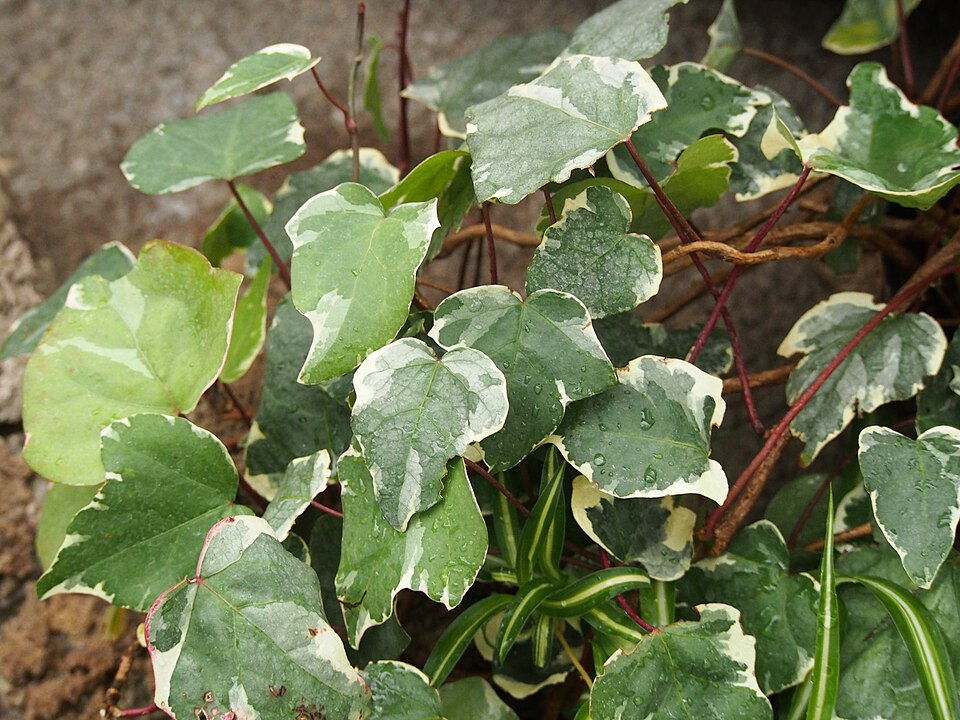
A true ivy is a species in the genus Hedera. These evergreen woody plants usually spread across the ground or climb with short aerial rootlets. Their juvenile climbing leaves are often lobed, while mature flowering stems may produce less-lobed or unlobed leaves.
A species occurs as a recognized botanical population. A cultivar is a selected form maintained for characteristics such as yellow margins, curled leaves, or compact growth. This difference between a species and a cultivar explains why Goldchild and Needlepoint belong on an ivy list even though neither is a separate species.
| Category | Meaning | Examples in this list |
|---|---|---|
| True ivy species | A naturally occurring species in the genus Hedera | English, Irish, Azores, Algerian, Japanese, Himalayan, Canary Island, Russian, and Persian ivy |
| Ivy cultivar | A selected and named form of a true ivy species | Goldchild, Gloire de Marengo, Ivalace, Needlepoint, Duckfoot, Manda’s Crested, Shamrock, and Buttercup |
| Common-name lookalike | An unrelated plant that includes “ivy” in its common name | Boston ivy, Swedish ivy, and poison ivy |
20 Types of Ivy at a Glance
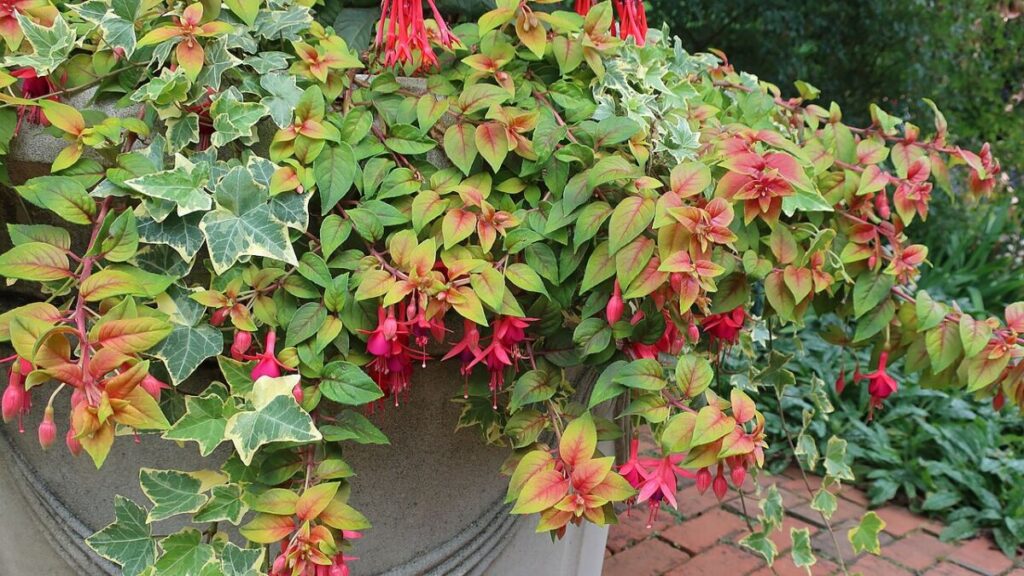
| Name | Botanical identity | Category | Best known for | Main caution |
|---|---|---|---|---|
| English ivy | Hedera helix | True species | Evergreen climbing and ground cover | Invasive or regulated in some regions |
| Goldchild | Hedera helix ‘Goldchild’ | Cultivar | Yellow-edged foliage and containers | Color fades in insufficient light |
| Irish ivy | Hedera hibernica | True species | Broad glossy leaves and rapid coverage | Can be difficult to distinguish from English ivy |
| Gloire de Marengo | Usually Hedera algeriensis ‘Gloire de Marengo’ | Cultivar | Large cream-edged leaves | Parent species may be labeled differently |
| Ivalace | Hedera helix ‘Ivalace’ | Cultivar | Curled, lace-like foliage | Hot direct sun may scorch leaves |
| Azores ivy | Hedera azorica | True species | Large climbing growth in mild climates | Needs space and regular control |
| Needlepoint | Hedera helix ‘Needlepoint’ | Cultivar | Narrow pointed lobes and topiary | Indoor plants suffer in hot, dry conditions |
| Algerian ivy | Hedera algeriensis | True species | Large leaves and warm-climate cover | Common-name overlap and invasive risk |
| Boston ivy | Parthenocissus tricuspidata | Lookalike | Red autumn color on walls | Deciduous and unsuitable for vulnerable surfaces |
| Japanese ivy | Hedera rhombea | True species | Glossy East Asian ivy foliage | “Japanese ivy” may also be used for Boston ivy |
| Himalayan ivy | Hedera nepalensis | True species | Variable leaves and cool-region growth | Vigorous stems need management |
| Canary Island ivy | Hedera canariensis | True species | Large leaves in mild climates | Often sold under the Algerian ivy name |
| Russian ivy | Hedera pastuchovii | True species | Narrow leaves and uncommon collections | Less widely available than English ivy |
| Swedish ivy | Plectranthus verticillatus | Lookalike | Trailing indoor baskets | Does not cling and is sensitive to frost |
| Persian ivy | Hedera colchica | True species | Very large, leathery leaves | Needs substantial room outdoors |
| Duckfoot ivy | Hedera helix ‘Duckfoot’ | Cultivar | Small three-lobed leaves | Still capable of spreading outdoors |
| Manda’s Crested | Hedera helix ‘Manda’s Crested’ | Cultivar | Wavy crested foliage | Slower than many large-leaved ivies |
| Shamrock ivy | Hedera helix ‘Shamrock’ | Cultivar | Rounded three-lobed leaves | Containers should not be allowed to dry completely |
| Buttercup ivy | Hedera helix ‘Buttercup’ | Cultivar | Yellow-green to gold foliage | Strong heat and sun may scorch leaves |
| Poison ivy | Primarily Toxicodendron radicans | Lookalike | Three-leaflet identification | Urushiol can cause serious skin reactions |
Different Types of Ivy, Cultivars, and Lookalikes
1. English Ivy

Hedera helix, or English ivy, is the reference point for most ornamental ivies. It is a true ivy in the Araliaceae family. Juvenile stems usually bear three- to five-lobed leaves and produce aerial rootlets that attach to bark, masonry, stone, and other textured surfaces. Mature flowering stems develop a shrubbier form with less-lobed leaves.
English ivy works as an evergreen ground cover, wall climber, container plant, or indoor foliage plant. It tolerates shade better than many flowering vines, but indoor plants still need usable light and air movement. Outdoors, it can escape gardens, cover native vegetation, and add heavy growth to tree canopies.
Regional rules matter. The Washington State Noxious Weed Control Board, for example, regulates named English and Irish ivy cultivars and places them on the state quarantine list. Check the botanical name and local invasive-plant list before buying or propagating it.
2. Goldchild Ivy
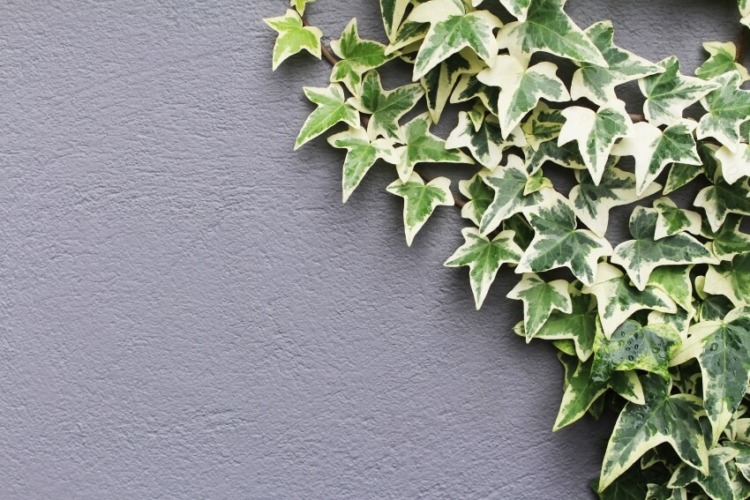
Goldchild is commonly sold as Hedera helix ‘Goldchild’. Its gray-green leaf centers are surrounded by yellow to cream margins, making it easier to recognize than plain green English ivy. It is a cultivar of English ivy, not a separate wild species.
Its relatively compact foliage suits containers, hanging displays, mixed planters, and indoor shelves. Variegation is usually stronger in bright filtered light. Deep shade can produce greener growth, while intense afternoon sun in a hot climate can scorch the pale margins.
Goldchild remains an English ivy cultivar, so its ornamental appearance does not remove the need to control outdoor spread. Containers or regularly pruned supports are more responsible choices in regions where English ivy escapes cultivation.
3. Irish Ivy
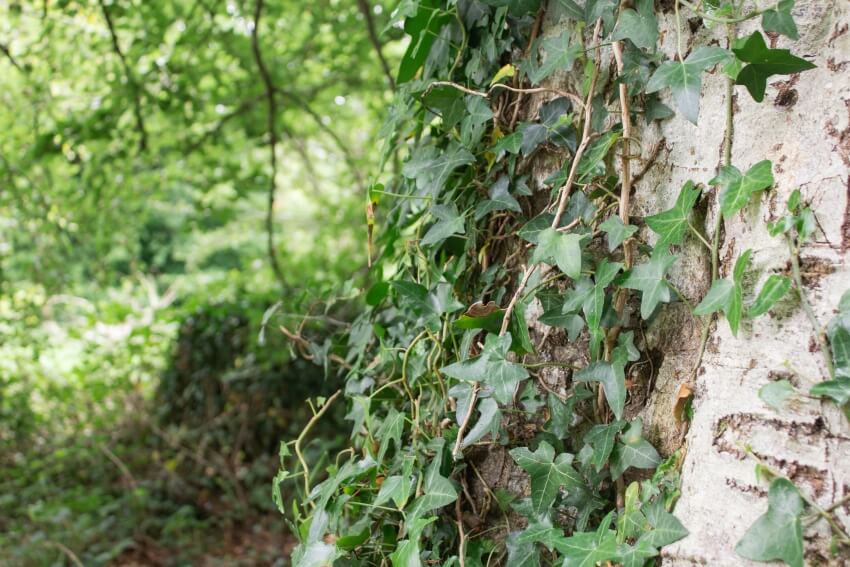
Hedera hibernica is known as Irish ivy or Atlantic ivy. Kew recognizes it as a true species in the genus Hedera. It is closely related to English ivy and is widely grown for broad, glossy foliage and fast coverage.
Irish ivy often has larger, broader leaves and a more vigorous growth habit than typical English ivy, but leaf size and shape vary. Nursery stock, hybrids, and cultivars can make visual identification uncertain. Use the plant label, growth details, and a regional flora rather than relying on a single leaf characteristic or scent.
Its speed makes it useful on a controlled trellis or for covering a large designed surface. The same trait creates ecological risk when stems reach woodland edges or mature trees. Some jurisdictions regulate Irish ivy alongside English ivy.
4. Gloire de Marengo
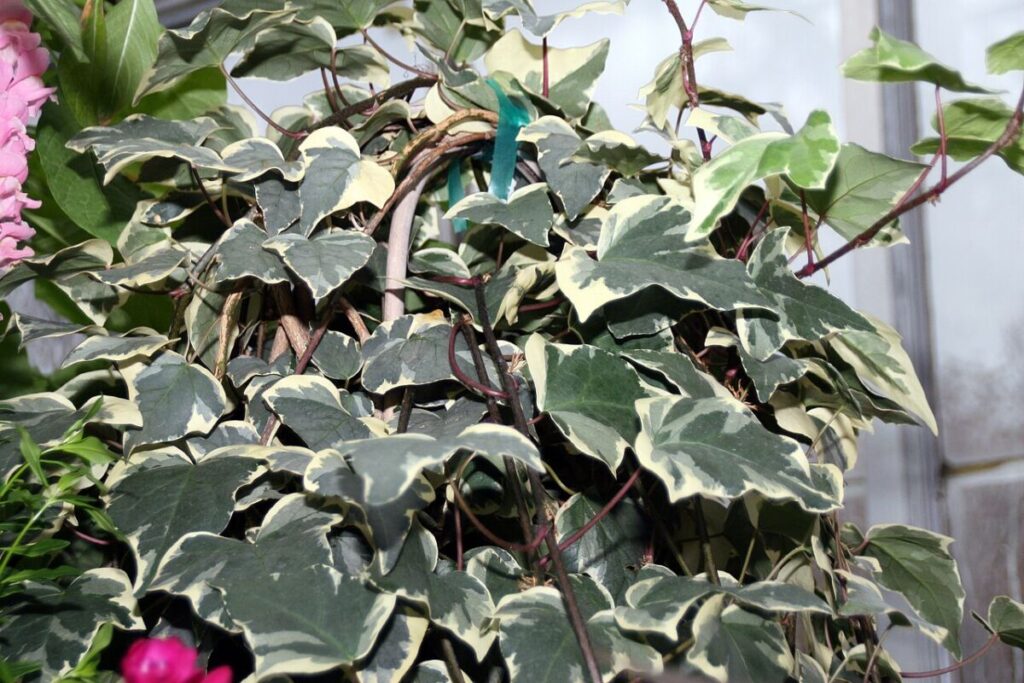
Gloire de Marengo is a large-leaved variegated cultivar usually sold as Hedera algeriensis ‘Gloire de Marengo’. Its foliage combines green centers with cream or pale gray-green margins, sometimes accompanied by reddish stems.
Older references and nursery labels may place this cultivar under Hedera canariensis. That disagreement reflects a long history of overlapping horticultural names, not necessarily a different-looking plant. Keep the nursery label and compare it with accepted names for Hedera algeriensis and Hedera canariensis.
The cultivar is best suited to a roomy container, sheltered wall, or substantial trellis in a mild climate. Its pale margins can be damaged by cold wind or harsh heat, and its large stems require more management than a compact English ivy cultivar.
5. Ivalace Ivy
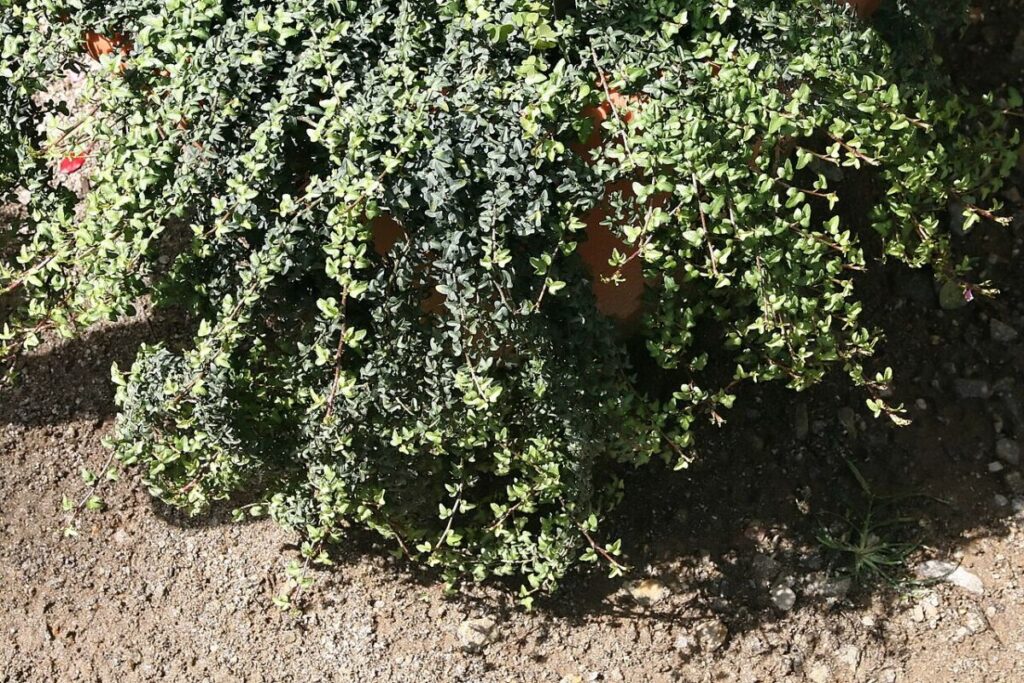
Ivalace, commonly written as Hedera helix ‘Ivalace’, has small leaves with curled or crimped margins. The folds create a dense, lace-like surface that looks different from the flatter leaves of standard English ivy.
Its compact foliage works well in indoor pots, hanging containers, small topiary frames, and detailed mixed plantings. Place indoor plants where they receive bright filtered light without prolonged heat from a window. Outdoors, part shade is safer than a hot exposed wall in warm regions.
Ivalace is still an English ivy cultivar. Keep outdoor plants contained and remove stems that begin rooting beyond their intended area.
6. Azores Ivy
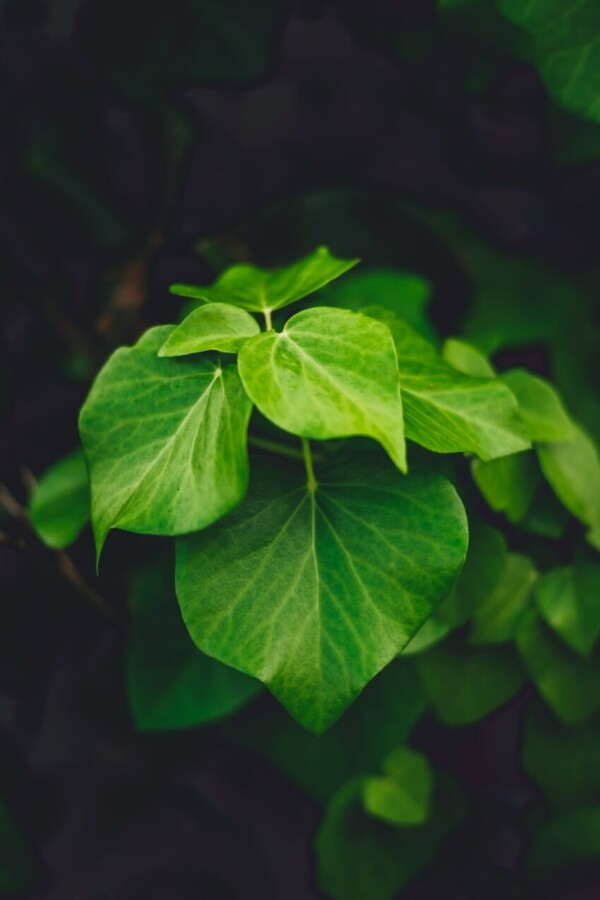
Hedera azorica is a true ivy associated with the Azores. It has the familiar two-stage Hedera growth pattern: lobed juvenile foliage on spreading or climbing stems and less-lobed mature foliage on flowering growth.
Azores ivy can form substantial woody stems in a mild, moist climate. Its large-scale growth makes it more appropriate for a managed landscape support than a small indoor display. Do not allow it to climb into a living tree canopy or cross into unmanaged habitat.
Because it is less common in mainstream garden centers, confirm the botanical label rather than assuming that any large-leaved Atlantic ivy is H. azorica.
7. Needlepoint Ivy
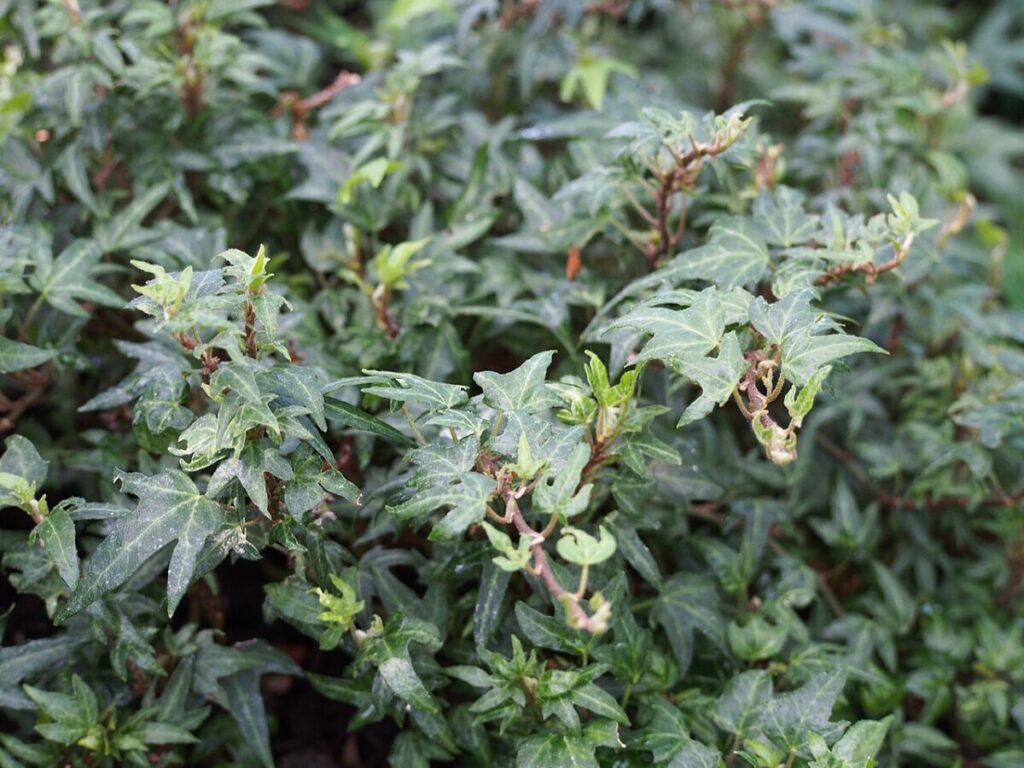
Needlepoint is an English ivy cultivar with narrow, sharply pointed lobes. The thin central lobe and smaller side lobes give each leaf a star-like or bird-foot outline.
Its fine texture suits hanging baskets, tabletop pots, topiary forms, and combinations with broad-leaved houseplants. It can also be used outdoors on a small support where it is legal and unlikely to escape.
Indoor Needlepoint ivy performs better with bright filtered light, moderate temperatures, and a potting mix that drains freely. Inspect leaf undersides regularly because dry indoor conditions can favor spider mites.
8. Algerian Ivy
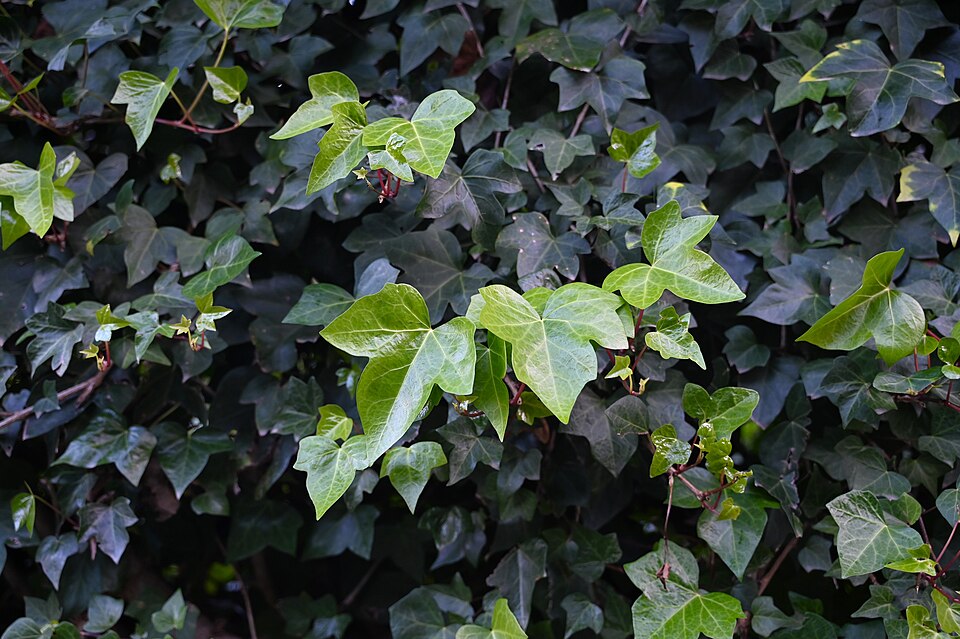
Hedera algeriensis is an accepted true ivy species from North Africa. It typically produces larger leaves and thicker-looking growth than standard English ivy. Plain green and variegated selections are both cultivated.
The common name is less precise than the botanical name. Some North American authorities and nurseries apply “Algerian ivy” to Hedera canariensis. The California Invasive Plant Council profile, for example, uses Algerian ivy as the common name for H. canariensis and rates that plant High for invasive impact in California.
Large-leaved Algerian ivy can provide quick coverage in a warm coastal landscape, but that speed is also the main reason to avoid it near natural areas. Confirm the scientific name and check local invasive-plant guidance before planting either species.
9. Boston Ivy
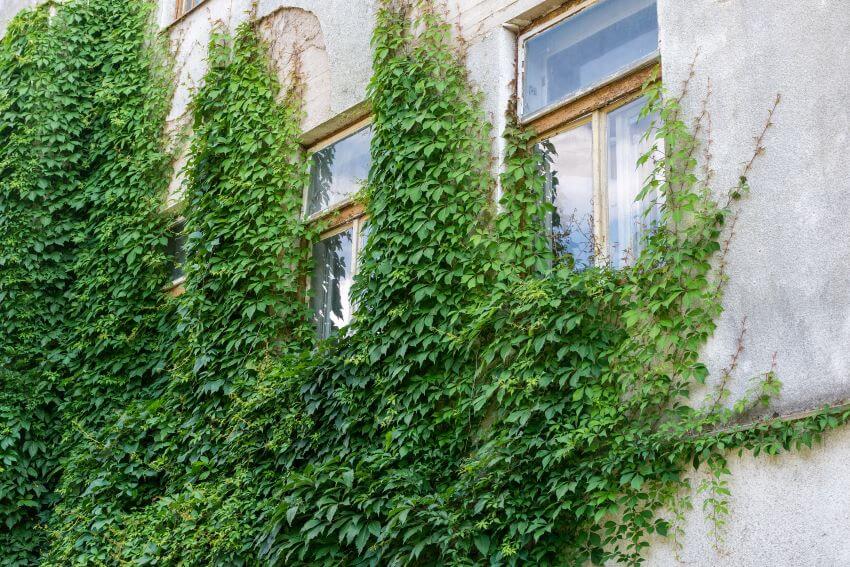
Boston ivy is Parthenocissus tricuspidata, a woody vine in the grape family, Vitaceae. It is unrelated to true ivy. Its stems climb using tendrils tipped with adhesive discs rather than the short aerial rootlets produced by Hedera.
Boston ivy is deciduous. Its green summer foliage often changes to red, orange, or purple before falling in autumn. That seasonal color makes it a common choice for large masonry surfaces, pergolas, and landscape screens.
Do not use it on wood siding, shingles, loose render, cracked masonry, gutters, or structures that require frequent painting. Adhesive discs can be difficult to remove and may damage a weak finish. A freestanding trellis keeps the vine separated from the building and makes maintenance easier.
10. Japanese Ivy

Hedera rhombea is the true species most accurately called Japanese ivy. It is an evergreen Hedera native to parts of temperate East Asia and is recognized by its glossy foliage and woody climbing habit.
The common name can cause confusion because Boston ivy is also called Japanese creeper or Japanese ivy in some sources. Check the genus: Hedera rhombea is true evergreen ivy, while Parthenocissus tricuspidata is deciduous Boston ivy.
Use Japanese ivy on a managed support in a climate suited to evergreen ivy. Its availability is more limited than English ivy, so specialty nursery labels are especially important.
11. Himalayan Ivy
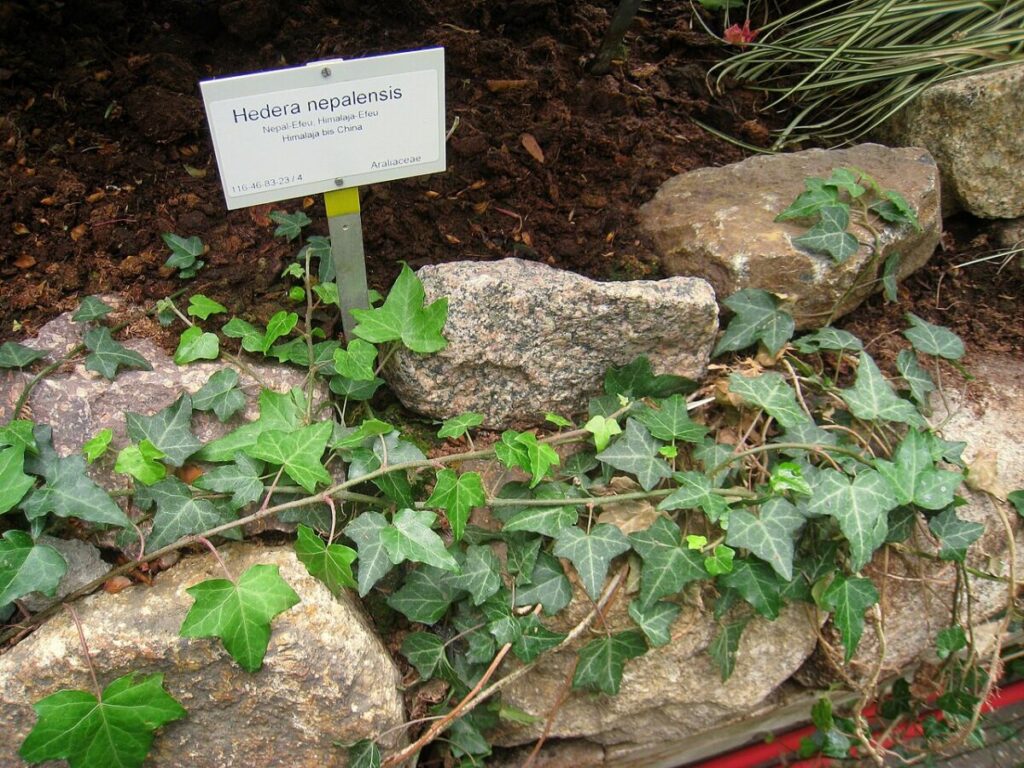
Hedera nepalensis, commonly called Himalayan ivy, is a true ivy found across parts of South and Central Asia. Its broad natural range contributes to noticeable variation in leaf size and shape.
Juvenile leaves may be triangular or lobed, while mature flowering foliage becomes less lobed. The plant can form long climbing stems and substantial ground coverage when conditions suit it.
Himalayan ivy is better matched to a large controlled support than a small garden corner. Avoid planting it where stems can enter woodland, climb mature trees, or become difficult to reach for pruning.
12. Canary Island Ivy
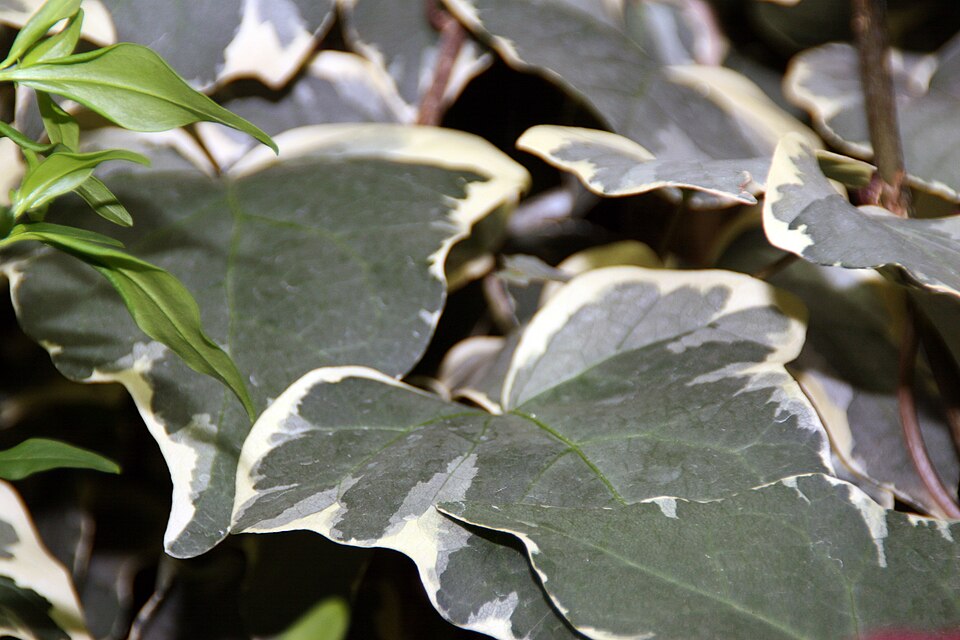
Hedera canariensis is a true ivy species associated with the Canary Islands. It is a large-leaved evergreen climber suited to mild conditions.
Canary Island ivy and Algerian ivy are frequently confused in cultivation. Some sellers treat the common names as interchangeable, while accepted botanical databases recognize H. canariensis and H. algeriensis as separate species. Buy by scientific name when that distinction matters.
Outside its native range, this ivy can spread beyond landscaping and suppress understory plants. Containers, isolated trellises, and frequent pruning reduce the chance of uncontrolled growth, but local invasive guidance should determine whether it is appropriate to plant at all.
13. Russian Ivy
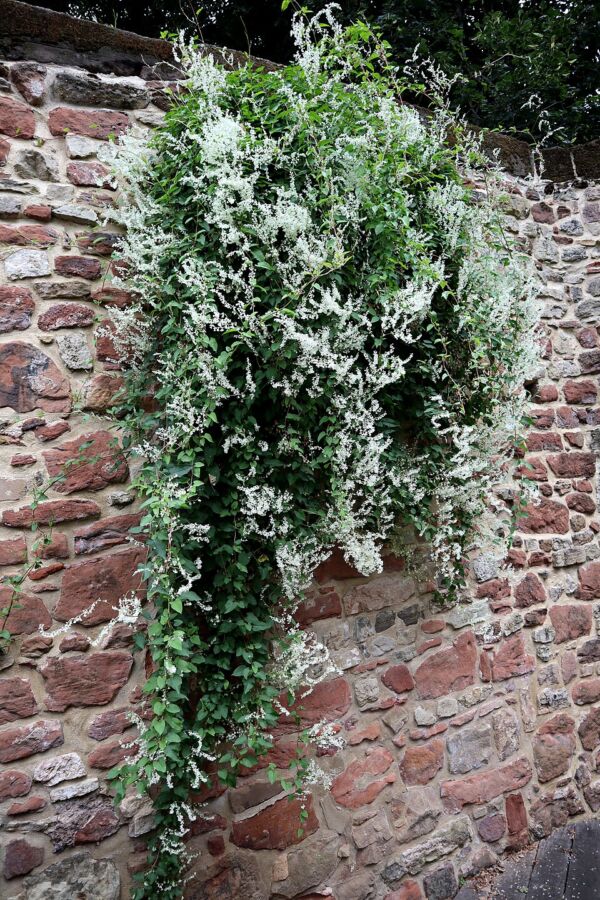
Hedera pastuchovii is commonly called Russian ivy or Pastuchov’s ivy. Kew records its native distribution across Iran, Iraq, the North Caucasus, and Transcaucasia.
Its juvenile leaves tend to be narrower and less deeply lobed than the familiar leaves of many English ivy cultivars. The glossy foliage and uncommon botanical identity make it most relevant to collectors and specialist gardens.
Russian ivy is not the same plant as Russian vine, usually sold as a fast-growing flowering climber. Confirm the genus Hedera before treating a nursery plant as ivy.
14. Swedish Ivy
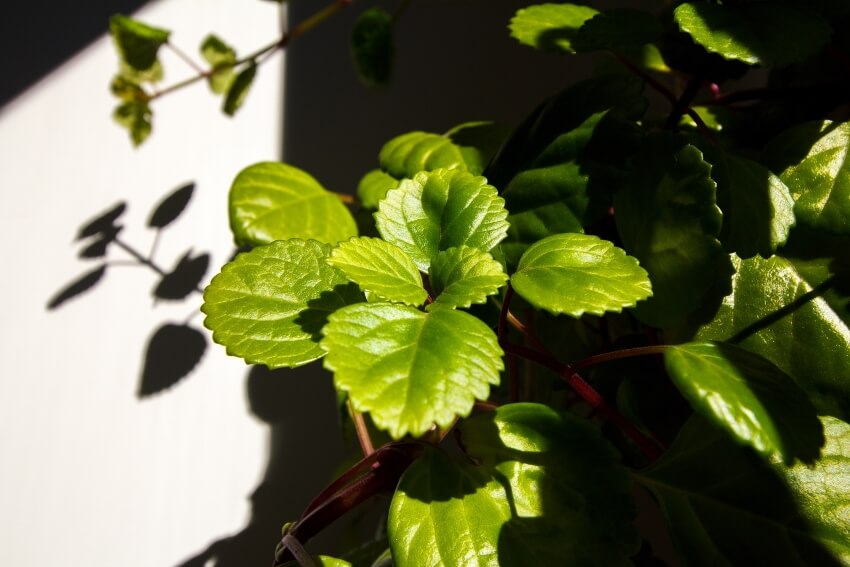
Swedish ivy is generally identified as Plectranthus verticillatus. It belongs to the mint family, Lamiaceae, rather than the ivy family. Its rounded, scalloped leaves grow on soft trailing stems that drape over a pot instead of attaching to walls.
The University of Florida IFAS Extension recommends it as an adaptable houseplant and notes that it displays well in a hanging basket. Indoor plants prefer bright light, while outdoor plants need protection from direct hot sun.
Choose Swedish ivy when you want an easy trailing houseplant rather than a woody evergreen climber. Pinching the stem tips encourages branching, and cuttings root readily for propagation.
15. Persian Ivy
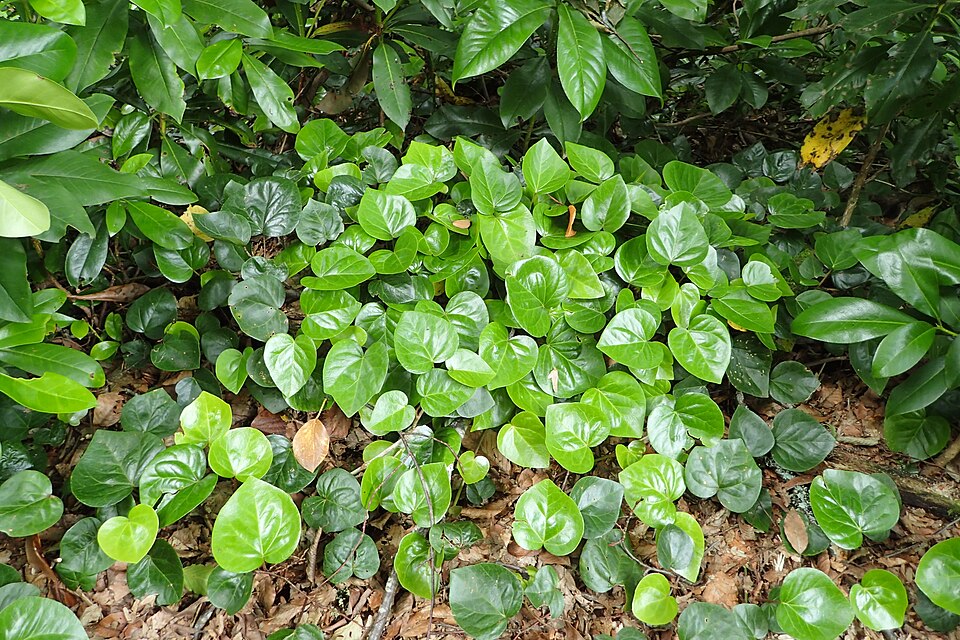
Hedera colchica, known as Persian ivy or Colchis ivy, is a true ivy native to the region between northern Türkiye and the western Caucasus.
Persian ivy is distinguished by unusually large, leathery leaves. Juvenile foliage may be shallowly lobed, while mature leaves are often broadly heart-shaped or unlobed. Its visual weight makes it effective on a substantial wall, screen, or large shaded bank.
This is not a compact plant. Give it enough room for long-term growth and keep stems away from trees, rooflines, gutters, and weak surfaces. Variegated selections such as Sulphur Heart are sold for yellow-marked foliage, but labels should retain the parent species name.
16. Duckfoot Ivy
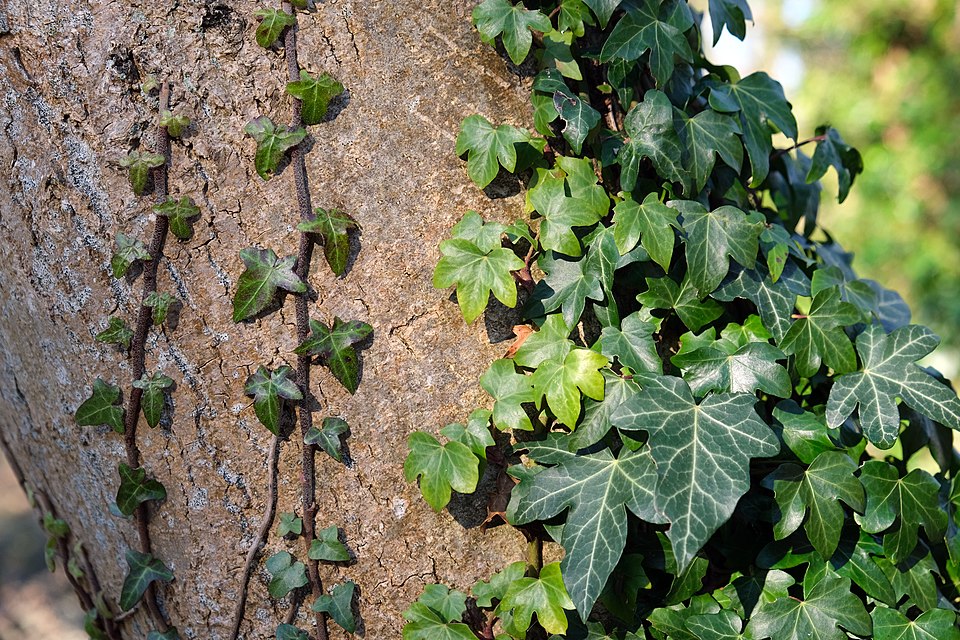
Duckfoot ivy is an English ivy cultivar commonly labeled Hedera helix ‘Duckfoot’. Its small leaves have three rounded lobes that resemble a webbed bird’s foot.
The compact leaf shape works well in hanging baskets, small pots, topiary frames, and combination containers. Bright filtered light helps maintain dense growth indoors without exposing the leaves to excessive heat.
Duckfoot may look less aggressive than a large-leaved ivy, but it remains a rooting and climbing English ivy cultivar. Keep outdoor stems within their intended container or support.
17. Manda’s Crested Ivy
Manda’s Crested is a named English ivy cultivar with wavy, crested leaf margins. The irregular edges give a mature plant a textured appearance without the strong color contrast of a variegated cultivar.
New and summer growth is generally green, while colder conditions may bring bronze tones to exposed foliage. Seasonal color varies with climate, light, and plant health, so it should not be used as the only identification feature.
Its moderate growth suits containers and small supports where the leaf texture can be viewed closely. Prune stems that lose the desired crested form or extend beyond the planting area.
18. Shamrock Ivy
Shamrock ivy is a compact English ivy cultivar with three broad, rounded lobes. The outline resembles a stylized clover or shamrock more closely than the pointed leaves of Needlepoint.
Its small leaves make it useful for indoor pots, hanging containers, wreath forms, and tabletop topiary. Provide bright filtered light and rotate the container periodically so growth remains balanced.
Do not judge watering needs by a fixed weekly schedule. Check the potting mix and water when the upper layer begins to dry, allowing excess water to drain rather than leaving the roots in standing water.
19. Buttercup Ivy
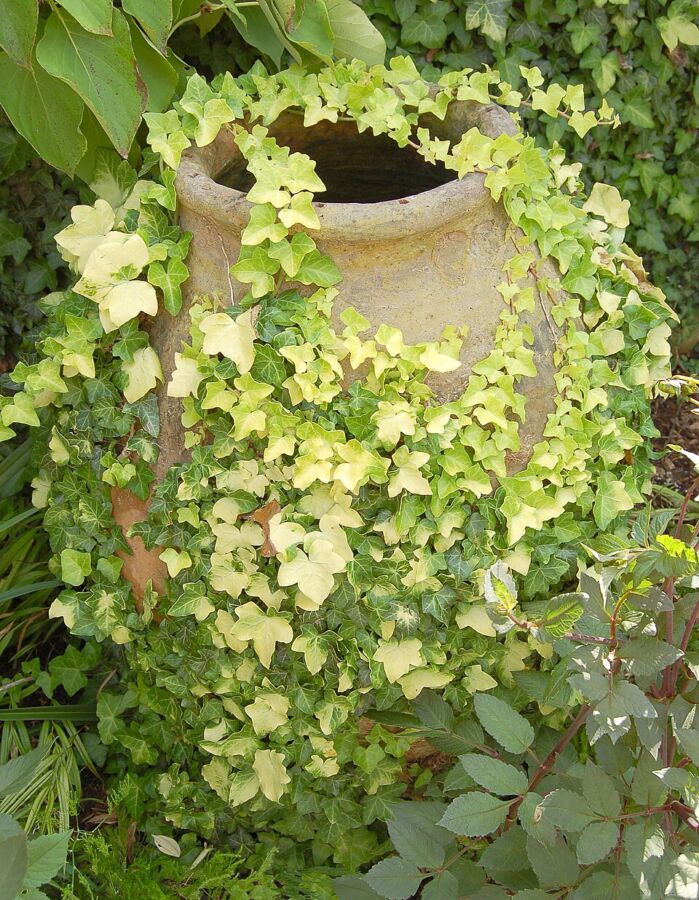
Buttercup is a yellow-leaved English ivy cultivar commonly listed as Hedera helix ‘Buttercup’. Its foliage can range from yellow-green to gold depending on light, temperature, and season.
Brighter light generally supports stronger yellow coloring, but exposure must be balanced against heat. In a hot climate, direct afternoon sun can bleach or scorch the leaves. Indoors, place it near bright filtered light rather than against hot glass.
Buttercup is a useful choice for a container that needs contrasting foliage. Treat it as an English ivy cultivar when checking local invasive restrictions and controlling outdoor spread.
20. Poison Ivy
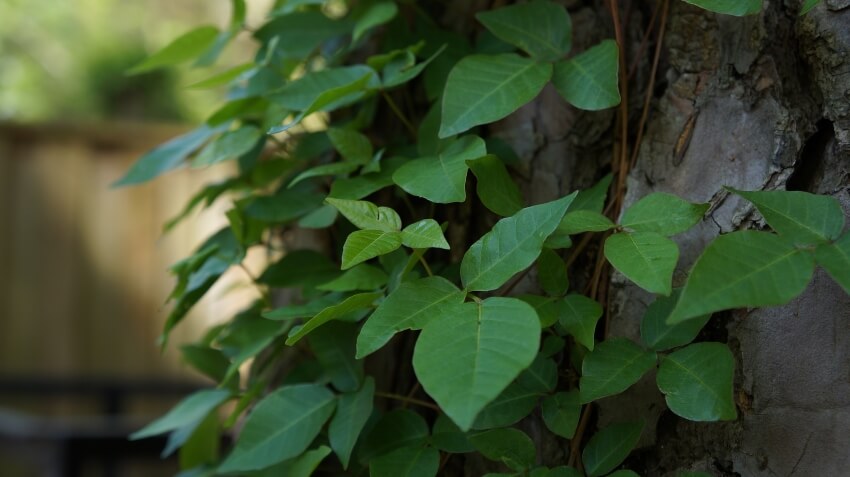
Poison ivy is not a true ivy. Eastern poison ivy is primarily Toxicodendron radicans, a member of the cashew family. It may grow as a hairy climbing vine, trailing plant, or shrub-like growth. Western poison ivy is more commonly a low shrub.
“Leaves of three, let it be” is useful, but it is only a starting point. Look for three leaflets joined at one point, with the center leaflet usually carried on a longer stalk. Leaf edges may be smooth, toothed, or irregular, and color changes through the growing season.
- Do not touch an unidentified three-leaflet plant with bare skin.
- Urushiol can transfer from tools, gloves, clothing, footwear, and animal fur.
- Do not burn poison ivy. Smoke can expose the eyes, skin, and respiratory system.
- Dead vines and leafless stems can still carry urushiol.
The CDC/NIOSH poisonous plant guidance recommends rinsing exposed skin promptly with rubbing alcohol, a poison-plant wash, degreasing soap such as dishwashing soap, and plenty of water. Clean beneath the fingernails and wash exposed clothing and tools separately.
Calamine lotion, cool wet compresses, or hydrocortisone cream may help a mild reaction. Seek medical care for a severe or widespread rash, a reaction involving the face or genitals, or signs of infection. Difficulty breathing or significant swelling requires emergency help.
How to Choose and Manage Ivy Responsibly
An ivy that performs well in a pot may be a poor choice beside woodland, damaged masonry, or a mature tree. Use this process before planting:
- Confirm the botanical name. A common name such as Japanese, Algerian, or Canary ivy may refer to different plants in different markets.
- Check regional rules. Search your state, province, council, or national invasive-species database. A plant that is legal in one region may be quarantined or discouraged in another.
- Match the growth habit to the site. Use compact cultivars in containers, Swedish ivy in hanging baskets, and large species only where long stems can be reached and pruned.
- Choose a safe support. A freestanding trellis is preferable to a tree, wood-sided building, roof, gutter, cracked wall, or loose render.
- Monitor the boundary. Remove rooted stems, seedlings, fruiting growth, and vines extending into neighboring or unmanaged land.
For watering, potting, pruning, and propagation details, continue with this guide to how to grow ivy indoors and outdoors.
If the goal is stabilizing a bank or exposed soil, compare lower-risk erosion-control options before using a fast-spreading ivy near natural habitat.
Frequently Asked Questions About Ivy
What is a true ivy?
A true ivy is a species or cultivar in the genus Hedera, in the Araliaceae family. Boston ivy, Swedish ivy, and poison ivy are not true ivies.
Which ivy is best indoors?
Compact English ivy cultivars such as Ivalace, Needlepoint, Goldchild, Duckfoot, and Shamrock suit indoor containers when they receive bright filtered light and suitable humidity. Swedish ivy is often easier for beginners, but it is not a true ivy.
What is the difference between English ivy and Irish ivy?
English ivy is Hedera helix, while Irish ivy is Hedera hibernica. Irish ivy often has broader, glossier leaves and more vigorous growth, but the two can be difficult to identify from leaf shape alone.
Does ivy damage walls?
Ivy is most likely to create problems on cracked masonry, loose render, wood siding, shingles, gutters, and surfaces that need repainting. A freestanding trellis reduces direct contact and makes pruning easier.
Is English ivy invasive?
English ivy is invasive or regulated in some regions, particularly where it escapes into forests and covers native vegetation or tree canopies. Its status depends on the jurisdiction, so check local rules before planting it outdoors.
Which Ivy Should You Choose?
For an indoor container, start with a compact English ivy cultivar such as Ivalace, Needlepoint, Goldchild, Duckfoot, or Shamrock. Swedish ivy is a forgiving trailing alternative when self-clinging growth is not required.
For seasonal wall color, Boston ivy provides a deciduous display. For evergreen coverage, a true Hedera may be suitable only after checking invasive status and choosing a support that can be inspected and maintained.
Avoid using any vigorous ivy as an unattended ground cover beside woodland, waterways, mature trees, or neighboring property. The right choice is the plant whose botanical identity, growth habit, and regional status fit the site, not simply the one that covers space fastest.