
Deer are hoofed, ruminant mammals in the family Cervidae. Depending on the taxonomic authority, modern references recognize more than 50 living species, but the exact total varies because genetic research sometimes splits, combines, or renames populations. This guide compares 10 representative types of deer by scientific name, native range, habitat, antlers, coat, ears, and tail. In biological terms, these are species or subspecies, not deer breeds.
The list includes nine species plus the black-tailed deer group, which is generally classified within mule deer. For reliable identification, use several traits together. Coat color can change with age and season, while range, tail pattern, ear size, and antler structure are usually more useful.
Last fact-checked: July 16, 2026. Deer taxonomy continues to change as new genetic and morphological research is published.
Key takeaways
- Most deer have antlers rather than horns. Antlers are bone and are normally shed and regrown.
- Caribou, also called reindeer, are the only living deer in which both sexes normally grow antlers.
- The northern pudu is the smallest living deer; sambar are among the largest.
- Black-tailed deer are generally treated as two coastal subspecies of mule deer, not a separate species.
- Scientific names matter because common names and taxonomic treatments can vary between regions and authorities.
Deer species and types at a glance
| Type | Scientific name | Native range | Best identifying trait | Taxonomic note |
|---|---|---|---|---|
| White-tailed deer | Odocoileus virginianus | North, Central, and South America | Bright white underside of raised tail | Species |
| Mule deer | Odocoileus hemionus | Western North America | Large ears and forked antlers | Species |
| Hog deer | Axis porcinus | South and mainland Southeast Asia | Low, stocky body and head-down run | Species |
| Caribou or reindeer | Rangifer tarandus | Circumpolar North America and Eurasia | Both sexes normally grow antlers | One species with regional forms |
| Red brocket | Mazama americana complex | South American forests | Red coat and short, spike-like male antlers | Taxonomy remains under study |
| Northern pudu | Pudella mephistophiles | High Andes of Colombia, Ecuador, and northern Peru | Extremely small body and short antler spikes | Often still listed as Pudu mephistophiles |
| Black-tailed deer | O. h. columbianus and O. h. sitkensis | Pacific coast of western North America | Dark-topped or black-tipped tail | Mule deer subspecies group |
| Fallow deer | Dama dama | Europe and western Asia; introduced widely | Palmate antlers and spotted summer coat | Species |
| Thorold’s deer | Cervus albirostris | Eastern Tibetan Plateau | White muzzle and broad hooves | Species |
| Sambar | Rusa unicolor | South and Southeast Asia | Large body, shaggy coat, and three-tined male antlers | Species |
How to tell different types of deer apart
Start with location. A deer photographed in an Andean cloud forest has a different set of likely identities from one seen in Arctic tundra or a Pacific coastal rainforest. Compare the animal’s known habitat and local terrain before relying on color alone.
- Antlers: Look for simple spikes, repeated forks, broad palms, or a small number of tines. Antlers are bony structures that are normally shed; horns have a keratin sheath and usually persist.
- Ears and face: Mule deer have oversized ears, Thorold’s deer has a white muzzle, and northern pudu have a compact head with small rounded ears.
- Tail and rump: White-tailed deer flash a white tail, mule deer have a narrow black-tipped tail, and black-tailed deer show a darker tail pattern.
- Body size and coat: Northern pudu are extremely small, sambar are large and shaggy, and fallow deer often retain conspicuous white spots in summer.
- Season and age: Many deer grow darker winter coats, fawns of several species are spotted, and males may be antlerless after the annual shed.
10 types of deer around the world
1. White-tailed deer
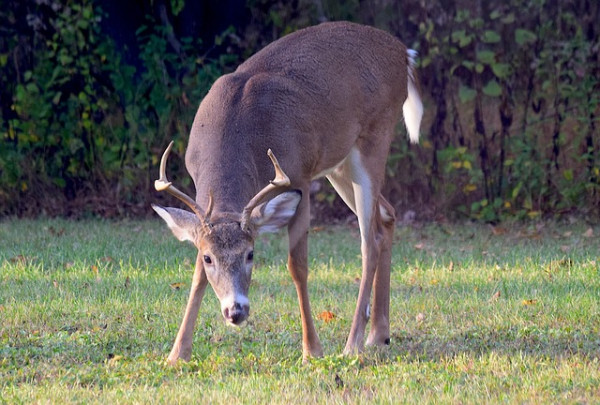
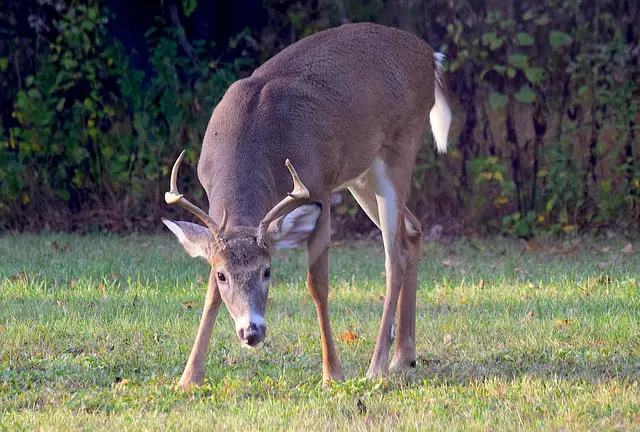
The white-tailed deer (Odocoileus virginianus) is one of the most widespread native deer in the Americas. Its range extends from southern Canada through much of the United States, Mexico, and Central America into northern South America. When alarmed, it raises its tail and exposes a bright white underside.
White-tailed deer adapt to forest edges, farms, wetlands, brush, and suburbs. Their diet shifts with local plant availability and may include leaves, shoots, twigs, acorns, fruit, and crops. In gardens, they may browse ornamentals such as petunias; see our guide to whether deer eat petunias.
High densities can suppress forest regeneration and increase conflicts with drivers and gardeners. Our overview of the effects of animal overpopulation explains why abundance can become an ecological management issue. White-tailed deer also support predators, including coyotes, mountain lions, and canids such as the red wolf.
2. Mule deer
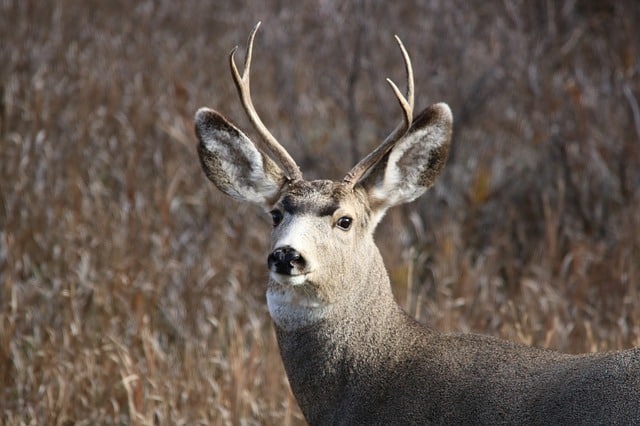
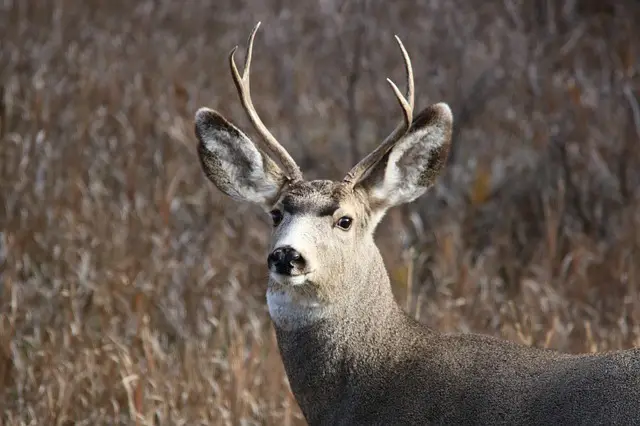
Mule deer (Odocoileus hemionus) are native to western North America. Their large ears, narrow black-tipped tail, and antlers that fork repeatedly help separate them from white-tailed deer. When escaping, they often use a stiff-legged bounding gait called stotting.
Different populations occupy deserts, shrublands, foothills, conifer forests, and high mountain ranges. Many move between seasonal ranges. Mule deer are selective browsers that eat shrubs, forbs, leaves, twigs, and other nutritious plant parts. They may also feed in landscaped areas, including on plants discussed in our guide to deer and hydrangeas.
3. Hog deer
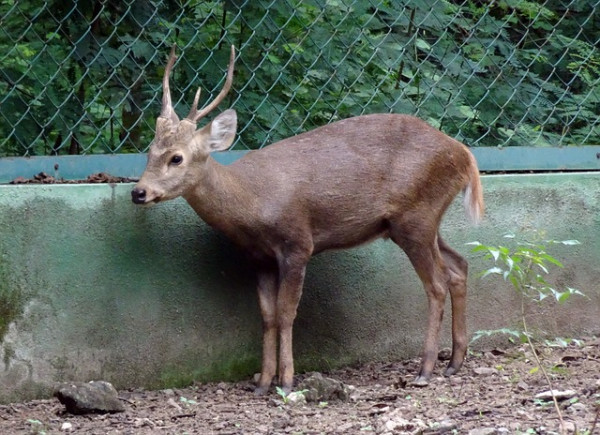
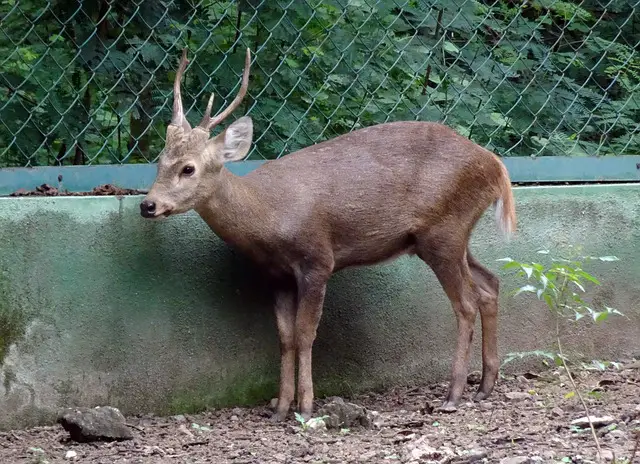
The hog deer (Axis porcinus) is native to parts of the northern Indian subcontinent and mainland Southeast Asia. It has a low, stocky body, relatively short legs, and a distinctive habit of running with its head held low, slipping under vegetation rather than leaping over it.
Hog deer favor floodplain grasslands, reedbeds, and open areas close to dense cover. They mainly graze but also browse leaves, shoots, and fruit. Adults are often solitary outside feeding concentrations and breeding periods. Habitat conversion, hunting, and fragmented populations have reduced many native populations.
4. Caribou or reindeer
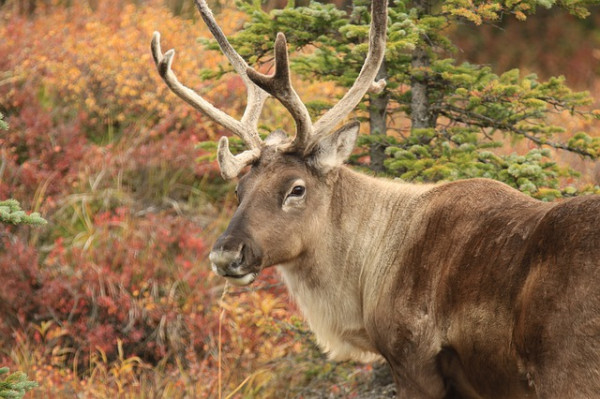
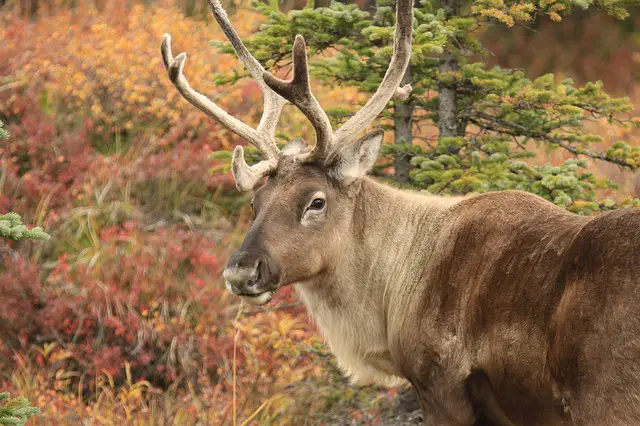
Caribou and reindeer are the same species, Rangifer tarandus. “Caribou” is commonly used for wild North American populations, while “reindeer” is widely used in Eurasia and for domesticated or semi-domesticated animals. The Alaska Department of Fish and Game notes that both males and females grow antlers, although female antlers are usually smaller.
Caribou live in Arctic tundra, mountain tundra, and northern forests. Their broad, concave hooves spread their weight on snow and soft ground and also help when swimming. Summer foods include willows, sedges, mushrooms, and flowering tundra plants; lichens become especially important in winter.
Some herds make long seasonal migrations, while others move much shorter distances. Pregnancy lasts about 228 days, or roughly 7.5 months, and a female usually gives birth to one calf in May or June. The often-repeated figure of 45 days refers to the age when calves rely more heavily on grazing, not the gestation period.
5. Red brocket

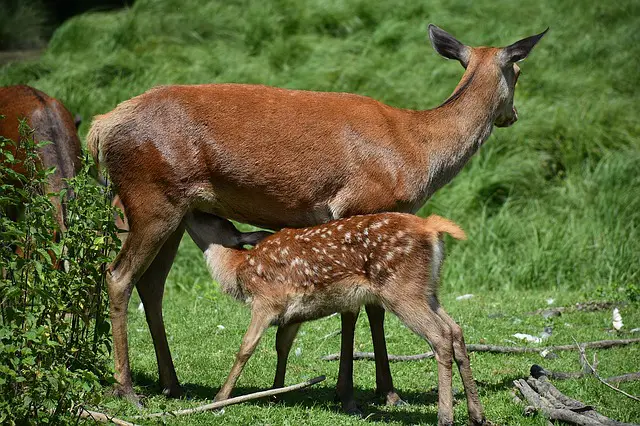
The red brocket (Mazama americana complex) lives in dense forests across much of South America. It is the largest of the brocket deer, but it is still much smaller than sambar, elk, or moose. Its compact body, reddish coat, and short, unbranched antler spikes in adult males suit life in thick vegetation.
Red brockets are generally solitary and difficult to observe. They eat fruit, leaves, shoots, seeds, and fungi, changing their diet as food availability shifts. Genetic and chromosome research indicates that animals historically grouped under Mazama americana may include more than one lineage, so range maps and conservation assessments should be read with that taxonomic uncertainty in mind.
6. Northern pudu
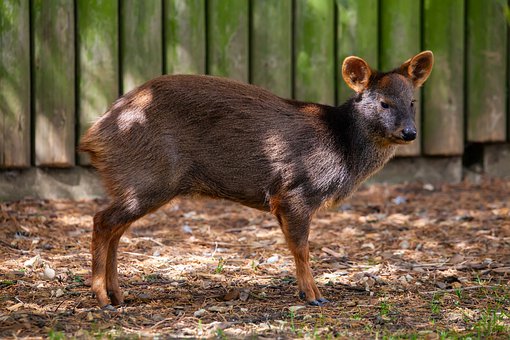
The northern pudu (Pudella mephistophiles, also widely listed as Pudu mephistophiles) is the smallest living deer. Adults stand about 32 to 35 centimeters at the shoulder and weigh roughly 3.3 to 6 kilograms. They have dark, coarse coats, small rounded ears, and short spike-like antlers in males.
This species inhabits high-elevation Andean forests and páramo in Colombia, Ecuador, and northern Peru. Chile and Argentina are associated with the larger southern pudu, not the northern species.
A 2024 study in the Journal of Mammalogy described the Peruvian Yungas pudu (Pudella carlae) as a separate species and revalidated the genus Pudella. That discovery is one reason a fixed global deer-species count should be treated cautiously.
7. Black-tailed deer
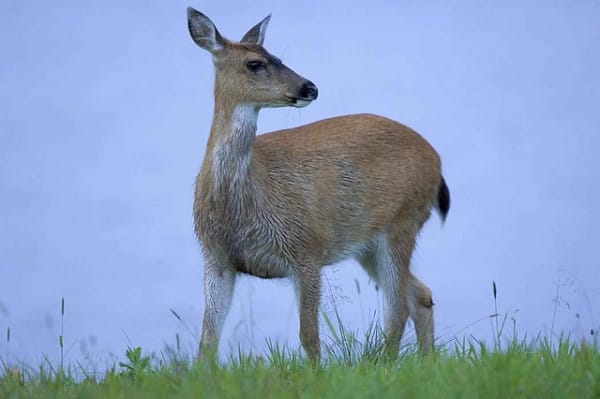
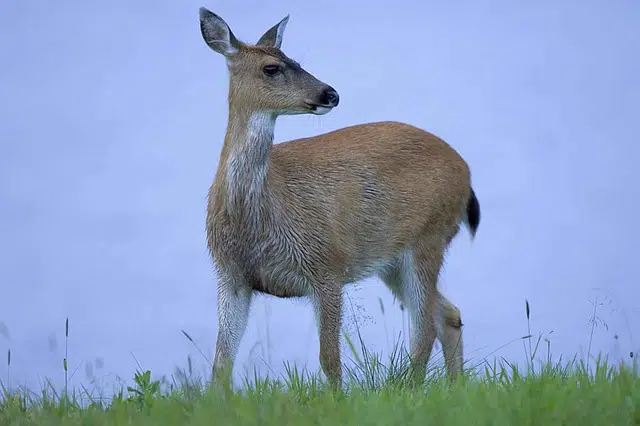
“Black-tailed deer” usually refers to two coastal forms of mule deer: the Columbian black-tailed deer (Odocoileus hemionus columbianus) and the Sitka black-tailed deer (O. h. sitkensis). Most current classifications treat both as mule deer subspecies rather than a separate deer species.
Columbian black-tailed deer range along the Pacific coast from California through Oregon, Washington, and British Columbia. Sitka black-tailed deer live farther north in coastal British Columbia and southeastern Alaska. Their dark tail pattern, coastal range, and generally darker, smaller build help distinguish them from inland mule deer. The mule-deer complex has a complicated evolutionary history, but black-tailed deer should not be described as the simple result of white-tailed deer and black-tailed deer crossing.
8. Fallow deer

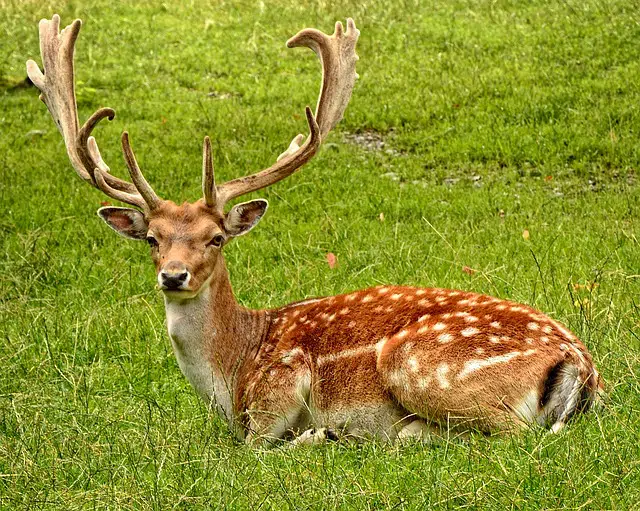
Fallow deer (Dama dama) originated in Europe and western Asia and have been introduced to many other regions. They are medium-sized deer with long tails, a dark stripe along the back and tail, and several common coat colors. The familiar chestnut coat with white spots is most conspicuous in summer.
Mature males grow broad, palmate antlers, meaning the upper antler forms a flattened surface rather than only cylindrical branches. Fallow deer use woodland, grassland, farmland, parkland, and scrub, often feeding in open areas near cover. They graze grasses and herbs and browse leaves, shoots, bark, fruit, and fungi.
9. Thorold’s deer

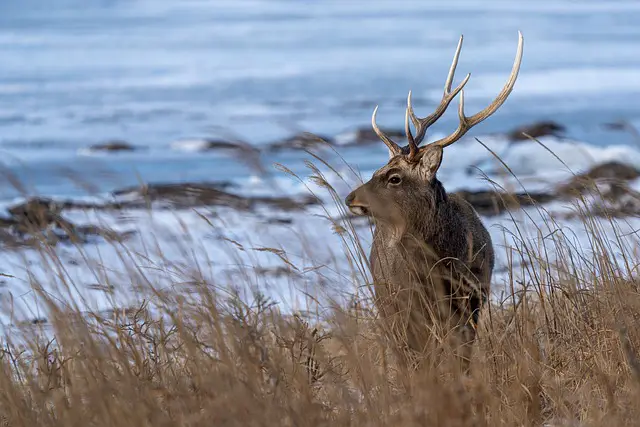
Thorold’s deer (Cervus albirostris) is also called the white-lipped deer. Its white muzzle and throat contrast with a darker body, while broad hooves help it move across steep, rough ground. Adult males carry large branching antlers.
The species lives in high-elevation grassland, shrubland, and forest on the eastern Tibetan Plateau. It feeds mainly on grasses, sedges, and other alpine plants. Its restricted range, hunting pressure, and habitat change have contributed to its Vulnerable conservation status, connecting it to broader work to save animals facing extinction.
10. Sambar

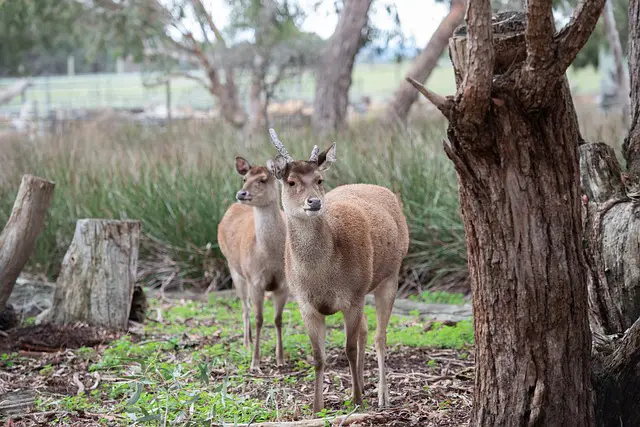
The sambar (Rusa unicolor) is one of the largest living deer. It is native to the Indian subcontinent, southern China, and much of Southeast Asia. Size and coat color vary across its broad range, but adults typically have a dark, coarse coat, a dense neck mane, and a long tail with a pale underside.
Only males grow antlers, which usually have three tines on each side. Sambar occupy forests, woodland, montane grassland, and wet areas, and they commonly stay close to water. Their broad diet includes grasses, leaves, shoots, fruit, aquatic plants, bark, and plants such as bamboo.
A representative list, not a complete deer checklist
These 10 entries show how much the deer family varies, but they leave out familiar cervids such as moose, elk or wapiti, red deer, roe deer, muntjacs, water deer, and several newly recognized or debated South American lineages. They also illustrate why “type of deer” is not always the same as “deer species”: black-tailed deer are a subspecies group, while the red brocket may represent a complex of multiple lineages.
For field identification, combine location, habitat, tail pattern, ear shape, body proportions, and antlers. For conservation research, check the scientific name and publication date because taxonomic changes can alter a species’ mapped range and threat assessment. Our guide to endangered deer species focuses on cervids facing the greatest documented risks.
Explore related deer and wildlife guides
- Interesting deer facts about anatomy, behavior, and adaptation
- What biologists mean by a species
- Deer species threatened with extinction
- Examples of habitats used by wildlife
How this guide was fact-checked
Family-level traits were checked against the University of Michigan’s Animal Diversity Web. Caribou terminology, antlers, habitat, and diet were cross-checked with the Alaska Department of Fish and Game, while gestation timing was checked against the Animal Diversity Web caribou account. The northern pudu section incorporates the 2024 peer-reviewed description of Pudella carlae. Where taxonomic authorities differ, the article states the uncertainty instead of presenting one count or classification as universally settled.
Frequently asked questions about deer species
How many different deer species are there?
Modern references generally recognize more than 50 living species in the family Cervidae, but there is no single permanent total. Different taxonomic authorities may split or combine populations, and new research can change the count.
What is the most widespread deer in North America?
The white-tailed deer is the most widely distributed native deer across much of North America and extends through Central America into South America. Local abundance varies by region and habitat.
Which deer species has females with antlers?
Caribou, also called reindeer, are the only living deer species in which both males and females normally grow antlers. Female antlers are usually smaller, and an individual female may occasionally lack them.
What is the smallest deer species?
The northern pudu is the smallest living deer. Adults stand about 32 to 35 centimeters at the shoulder and usually weigh about 3.3 to 6 kilograms.
Are black-tailed deer a separate species?
Most current classifications treat Columbian and Sitka black-tailed deer as two coastal subspecies of mule deer, Odocoileus hemionus, rather than as a separate species.
Are deer antlers the same as horns?
No. Antlers are made of bone and are normally shed and regrown. True horns have a bony core covered by keratin and usually remain attached throughout the animal’s life.