The red slender loris (Loris tardigradus) is a small, nocturnal primate found only in Sri Lanka, where it lives in the rainforests of the island’s southwestern wet zone. Weighing about 85-170 grams, it is one of the most insectivorous of all primates, hunting insects and small prey by night. The IUCN lists it as Endangered.
Once assessed as Vulnerable, the red slender loris is now classified as Endangered on the IUCN Red List (ZSL EDGE of Existence), driven by habitat loss and hunting for the pet and traditional-medicine trades.
This species is among the most faunivorous of all primates, feeding mainly on insects along with geckos, lizards, and bird eggs, and supplementing this with some leaves, buds, and berries.
- Conservation Status: Endangered
- Known as: Red Slender Loris, Slender loris.
- Scientific name: Loris tardigradus
- Estimated numbers left in the wild: Declining; the Critically Endangered Horton Plains subspecies numbers only about 80.
Description of the Red Slender Loris
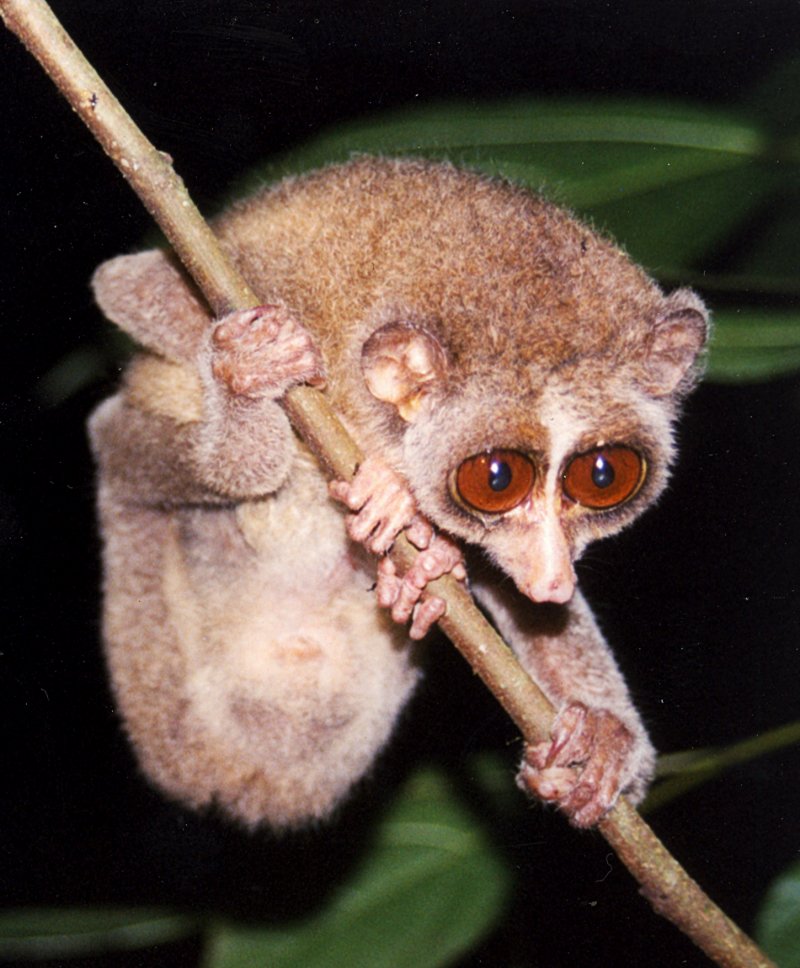
The red slender loris (Loris tardigradus) is a small, tailless primate weighing around 85 to 170 grams and measuring about 18 to 26 centimeters in body length. It has enormous forward-facing eyes, rounded ears, and long, slender limbs.
The large, forward-facing eyes give the slender red loris excellent night vision and depth perception. The hands and feet are nimble and well adapted to climbing through the trees this loris calls home. The big toe is opposable, as is the thumb. Individual fur color varies from grey to russet.
Red slender lorises forage alone despite their social aspects. They move quickly through the treetops as they quest for food, which mostly takes the form of insects. They supplement their insectivorous diet with leaves, berries, and other plant parts.
Red slender lorises can also be quite predatory at times. They creep up on lizards and grab them with both hands. And they devour the entire reptile, scales, bones, and all. These lorises grow active when the sun begins to sink and rest or sleep during the daylight hours.
Red slender lorises are pretty friendly when not feeding. They form small groups who groom each other, play and sleep in the same area. These lorises may sleep in tangled areas of branches, tree hollows, or simply on a limb, curled up tightly. Females outrank males in their social hierarchy.
Mating typically takes place with both partners hanging upside down beneath a branch, gripping the wood with their feet.
The maximum lifespan of a red slender loris in the wild is thought to be 18 years.
Location
This small, agile primate is endemic to the southwestern wet zone of Sri Lanka, where the lowland red slender loris (Loris tardigradus tardigradus) favors rainforest below about 900 meters. A separate montane subspecies, the Horton Plains slender loris, lives in the island’s central highlands at much higher elevations.
Behavior and Diet of the Red Slender Loris
The Red Slender Loris is a nocturnal primate. And their behavior is adapted to living in the dark. They are arboreal and spend most of their time in trees.
And they move slowly and carefully to locate insect prey. Their diet consists mainly of insects, but they also eat small animals and fruits.
Different Types of Slender Loris Species
Gray Slender Loris
The Gray Slender Loris (Loris lydekkerianus) is a small primate found in India and Sri Lanka. It has grayish-brown fur and large eyes adapted for night vision, with an average weight of around 200-300 grams and a body length of 18-25 cm. Like all lorises, it has no tail.
The Gray Slender Loris is arboreal. And they prefer to live in dense vegetation, where they can hide from predators and find their prey. They are primarily insectivorous. And they feed on insects such as crickets, grasshoppers, and spiders. But they also eat small animals and fruits.
The Gray Slender Loris is found in the tropical rainforests of India and Sri Lanka. And they live in the trees of the forest canopy. The Indian Slender Loris is located in southern India, while the Sri Lankan Slender Loris is found in Sri Lanka.
The Gray Slender Loris is a vulnerable species on the IUCN Red List. The species is threatened by habitat loss due to deforestation, fragmentation, and degradation caused by human activities. The pet trade is also a significant threat to the species, as they are often captured and sold as pets.
Efforts are being made to conserve the Gray Slender Loris. It includes habitat conservation and restoration, public awareness campaigns, and law enforcement to prevent the illegal pet trade. The species is also protected by Indian and Sri Lankan law and international conservation treaties.
Lowland Red Slender Loris
The lowland red slender loris (Loris tardigradus tardigradus) is the subspecies found in the wet lowland rainforests of southwestern Sri Lanka.
It is a small nocturnal primate endemic to the island of Sri Lanka. They are known for their distinctive reddish-brown fur color, darker on their back and lighter on their underside. The Western Red Slender Loris has large, round eyes adapted for night vision. And they have long, slender limbs that help them move through the trees.
The Western Red Slender Loris is found in the wet lowland forests of Sri Lanka. They prefer to live in dense vegetation, including tropical rainforests. It is where they can hide from predators and locate insect prey. The species’ range is limited to the southwestern part of Sri Lanka. And it is found in areas of the island with elevations below 1,000 meters.
The Western Red Slender Loris is primarily insectivorous, feeding on various insects and spiders. They eat small animals such as lizards, frogs, and birds. And they also eat fruits and flowers when insect prey is scarce. The species is known for its slow and deliberate movements when hunting. It uses its large eyes and sensitive hearing to locate prey in the dark.
The Western Red Slender Loris is a solitary and nocturnal species. They spend most of the day sleeping in tree hollows or dense vegetation. They are known for their slow movements. And they can hang from branches using only one foot. The species is also capable of vocalizations. They use high-pitched calls for communication with other species members.
The Western Red Slender Loris is listed as an endangered species due to habitat loss, degradation, and hunting for the pet trade. Their natural habitat is threatened by deforestation and the conversion of forests to agricultural land. The species is protected under Sri Lankan law. And efforts are being made to conserve their remaining habitat and prevent their capture for the pet trade.
Montane Slender Loris
The montane, or Horton Plains, slender loris (Loris tardigradus nycticeboides) is the other subspecies, found only in the mountainous central highlands of Sri Lanka. Rediscovered and photographed in 2010 after decades without a confirmed sighting, it is Critically Endangered, with perhaps only about 80 individuals remaining.
This species is endemic to the central highlands of Sri Lanka, found at elevations between 1,200 and 2,000 meters. They adapt well to the cold temperatures of their habitat. And their thick fur coat helps them stay warm.
Their habitat comprises tropical montane forests characterized by dense vegetation, mist, and cloud cover. The Montane Slender Loris also occurs in disturbed habitats such as tea and rubber plantations and human settlements.
They have dark gray fur, which is longer and denser than other Loris species. Their hair helps them blend in with their rocky environment, making them difficult to spot.
They have large eyes adapted for nocturnal vision. And they can rotate their heads 180 degrees to scan their surroundings. They also have long slender limbs, which are well-suited for moving through dense vegetation.
The Montane Slender Loris is a solitary and nocturnal primate. They are known for their slow movement and are active for about 9-10 hours per night. They feed on various food items, including insects, small animals, fruits, and flowers. They are known to feed on the nectar of several plant species, including Rhododendrons, which are abundant in their habitat.
The Montane Slender Loris is classified as endangered by the International Union for Conservation of Nature (IUCN) Red List. The main threats to their survival are habitat loss and fragmentation. And it is due to human activities such as deforestation, agriculture, and urbanization. It is also at risk from hunting and the pet trade. It is essential to conserve their habitat to ensure the survival of this species.
Slow Loris
The Slow Loris is a group of primates known for their big eyes and slow movements. They belong to the family Lorisidae, which also includes the slender lorises and the African pottos. Slow lorises are native to South and Southeast Asia, including parts of India, Bangladesh, Indochina, and the Sunda islands of Indonesia and Borneo.
They are small, nocturnal primates with long slender limbs and a round head. They have woolly fur in various colors, including brown, gray, and reddish-brown.
Their large eyes provide excellent night vision. And their hearing and sense of smell are also well-developed. They are arboreal animals, spending most of their time in trees. And they are known for their slow and deliberate movements.
Slow lorises are solitary animals and are territorial. They mark their territory with scent glands on their wrists. And they use various vocalizations to communicate with other lorises. Slow lorises are omnivores, feeding on insects, small animals, tree gum, and fruits.
They are threatened by habitat loss, hunting, and the illegal pet trade. In addition, their venomous bite makes them popular in the traditional medicine market. And it has led to the capture and mistreatment of thousands of individuals each year.
They are protected by law in most of their native range. But enforcement of these laws is often lax. As a result, several species of slow loris are considered endangered or critically endangered by the IUCN.
The Red Slender Loris is a nocturnal animal endemic to Sri Lanka
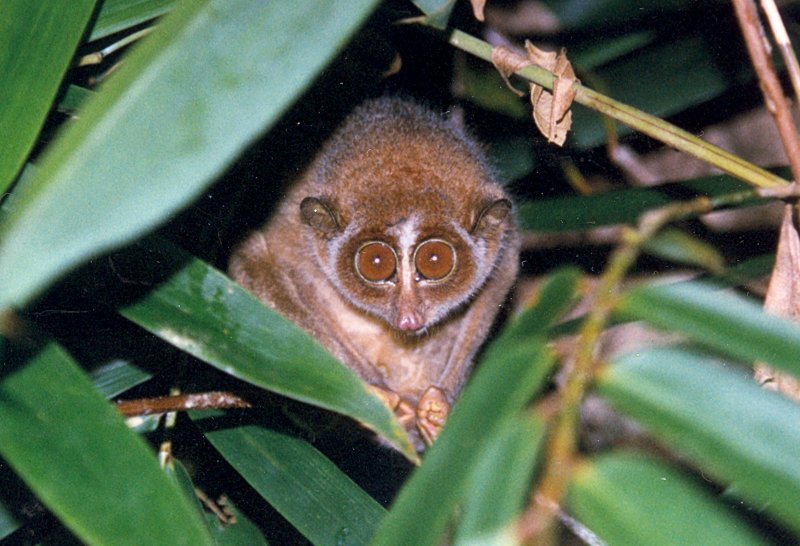
The Red Slender Loris is a nocturnal mammal that lives in the rainforest trees of southwestern Sri Lanka, often at low altitudes, which leaves it exposed to hunters. Unlike the slow lorises, slender lorises are not venomous and have few physical defenses. Instead they rely on stealth, staying still, and moving slowly through the canopy at night to avoid predators such as birds of prey and snakes.
This species is mainly active at night. And they rest in hidden dense leaves during the day to avoid potential predators. It can also fold its ears when it is not being used.
See Related: Different Types of Ivy Plants (+ Examples)
Red slender lorises are omnivores
Red Slender Lorises are omnivores. But like the other lorises, they consume insects as their primary diet. They have a highly developed sense of smell, which they use to find insect prey in the dark. In addition, they’ve been observed eating eggs and tiny vertebrates.
Red slender lorises will add small vertebrates such as mice and birds to their diet. But they won’t consume larger mammals. They also eat arthropods and fruit. These strange creatures have been observed eating food while hanging upside down from a branch or climbing.
Although insects and other small animals make up the great majority of their diet, red slender lorises will occasionally take a little plant material such as leaves, buds, and berries when prey is scarce.
Red slender lorises eat poisonous millipedes to self-medicate, even though millipedes can kill them. They also have a habit of licking their arms and legs. And it has been suggested for nutritional or sanitary reasons. Some of their kind have been somewhat observed eating soil, but its purpose is unknown.
See Related: Ways Climate Change is Affecting Animals
The red slender loris is now considered endangered
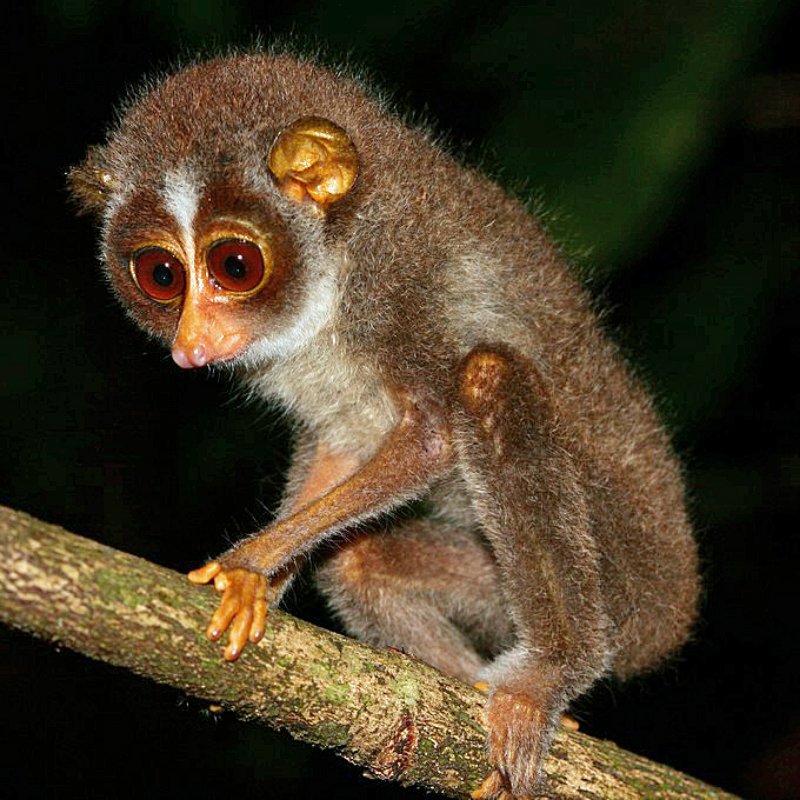
Despite being classed as “vulnerable” owing to habitat loss and hunting for its fur, the Red Slender Loris was reclassified as endangered by the IUCN.
Slender loris populations have fallen sharply because of Sri Lanka’s deforestation, leaving the animals confined to shrinking, isolated forest patches across the island’s southwestern and central regions.
The Zoological Society of London (ZSL) has worked to protect this species through its EDGE of Existence programme, which supports field research and conservation for the Horton Plains slender loris.
The Red Slender Loris has two subspecies. Loris tardigradus tardigradus is found in the wet lowland forests of southwestern Sri Lanka, while the montane Loris tardigradus nycticeboides — the Horton Plains slender loris — inhabits the central highlands.
However, the homes of the endangered red slender loris are being destroyed. It is a consequence of people building houses and collecting firewood from them. The Montane Slender Loris is caught in a bind and is considered threatened species.
The montane Horton Plains subspecies was feared extinct until it was rediscovered and photographed in 2010. Only about 80 individuals are believed to remain, making it one of the world’s most threatened primates.
Conservation
Threats
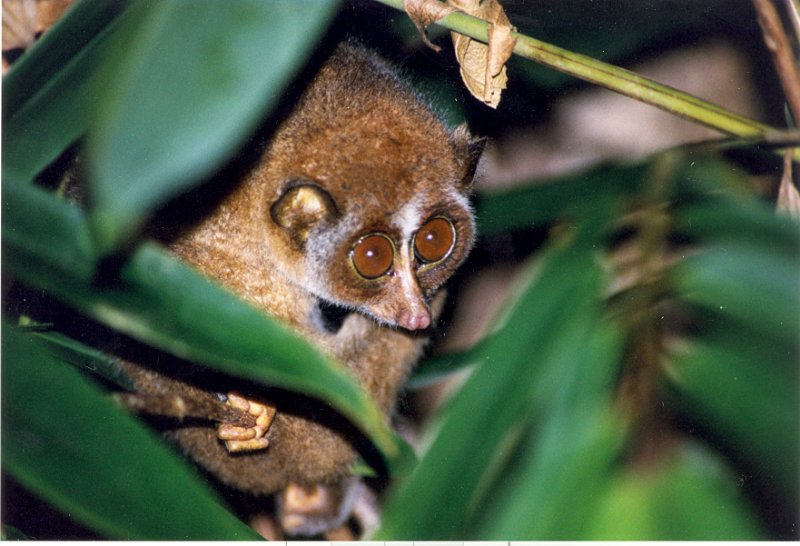
A whole battery of hazards confronts the red slender loris today.
Poaching and Illegal Wildlife Trade
Though legally protected and living in a theoretically protected habitat, poachers often target the Red Slender Loris. They capture them for their body parts, which are used in traditional medicine, or to sell them as pets.
In traditional medicine, various parts of the Red Slender Loris are believed to have medicinal properties. The fur is used in rituals, and the flesh is considered to have aphrodisiac properties. The oil from the loris is used to treat skin diseases and rheumatism. Despite lacking scientific evidence to support these claims, the demand for loris parts remains high, particularly in Asian countries.
The Red Slender Loris is also targeted for the illegal pet trade. These lorises have a cute and distinctive appearance. And it makes them popular among people who keep exotic animals as pets.
However, they are not suitable as pets as they have complex needs. And they require specific habitats, diets, and social structures. The capture and transportation of lorises for the pet trade are often inhuman. And it leads to injuries and stress, and many die before reaching their destination.
The poaching and illegal wildlife trade of Red Slender Lorises have severe consequences for their survival. Removing individuals from the wild can lead to a decline in the population and a loss of genetic diversity. And it makes the remaining population more vulnerable to disease and environmental changes.
Additionally, the illegal pet trade perpetuates the demand for lorises as pets. It leads to more capture and trafficking and a further decline in population numbers.
Habitat Loss and Fragmentation
The destruction and fragmentation of the Red Slender Loris’ natural habitat due to human activities have impacted the loris population.
Deforestation is the primary cause of habitat loss for the Red Slender Loris. Forests are being cleared for various human activities such as logging, agriculture, and infrastructure development. It has resulted in the loss of large tracts of forested land, which is the primary habitat of the Red Slender Loris. The destruction of their habitat has resulted in a decline in their population. And it reduced their geographical range.
The expansion of agriculture is another factor that contributes to habitat loss and fragmentation for the Red Slender Loris. Many farmers clear the forests to plant crops. And it reduces the availability of suitable habitats for the lorises.
Moreover, pesticides and fertilizers in agriculture can lead to soil and water pollution, harming the loris population.
Urbanization and industrialization are also significant contributors to habitat loss and fragmentation. As human populations continue to grow, urban and industrial areas expand, encroaching on the natural habitats of the Red Slender Loris.
The construction of buildings, roads, and other infrastructure fragments the forests. And it creates barriers that prevent the lorises from moving freely. As a result, the lorises are forced to live in smaller, isolated patches of forests. And it can negatively affect their access to food, shelter, and mates.
Road Accidents
Road accidents are another significant threat to the Red Slender Loris. As nocturnal animals, the lorises are adapted to live in the dark. And they are often disoriented by the headlights of vehicles. It makes it difficult for them to avoid traffic while crossing roads. And many lorises are struck and killed by cars.
Roads and highways often fragment the loris’ habitat. It makes it more difficult for them to move freely between forest areas. It can also lead to genetic isolation and inbreeding, negatively impacting the species’ long-term survival. Additionally, roads can act as a barrier to dispersal. And it makes it harder for the lorises to find suitable habitats and resources.
Electrocution
The Red Slender Loris is at risk of electrocution when it climbs on power lines, which can be deadly. Power lines can appear as vines or branches to the lorises. And they may attempt to mount them to move between trees or to cross roads. However, the electric current running through the lines can result in electrocution and severe injuries, leading to the animal’s death.
Electrocution is a severe problem for many arboreal animals, including primates like the Red Slender Loris. The lorises’ habitat fragmentation and destruction often lead them to travel along electrical wires as a means of movement, increasing the risk of electrocution.
In addition to electrocution, power lines can cause other problems for the lorises. For instance, the lines can act as barriers. And it isolates the animals from their food and other necessary resources. It can lead to a decline in the loris population over time.
Predation
While they face various threats to their survival, predation is one of the most significant. Natural predators of the Red Slender Loris include birds of prey, snakes, and other larger predatory animals. With the loss of their natural habitat, the lorises are more vulnerable to predation.
The Red Slender Loris is often preyed upon by birds of prey such as owls and eagles. These birds can swoop down from above and capture the lorises. And they are often caught unaware due to their slow movements and nocturnal lifestyle. Some larger birds of prey can also carry the lorises away, making it difficult for them to escape.
Snakes are another predator of the Red Slender Loris. The lorises are nocturnal and slow-moving. And they often cannot avoid snakes as quickly as diurnal animals can. Venomous snakes such as cobras, vipers, and kraits are a particular threat to the lorises. And they have little defense against their toxic bites.
The Red Slender Loris is also vulnerable to predatory animals such as civets, mongooses, and wild cats. While these animals may not specifically target the lorises, they can still pose a significant threat, especially in areas with small and isolated populations.
Illegal logging
Illegal logging is a significant threat to the survival of the Red Slender Loris. Large areas of forests are being cleared by unlawful loggers, leading to habitat loss and fragmentation. The Red Slender Loris requires dense forests for its survival. And the destruction of its natural habitat has had a severe impact on its population.
Massive habitat loss from illegal logging, and the spread of cinnamon, oil palm, tea, and rubber plantations, are devastating the loris’s environment and may seal off any possibility of future recovery.
The destruction of forests is detrimental to the Red Slender Loris and affects the entire ecosystem. Forests play a vital role in regulating the climate. And their loss can lead to various environmental problems, such as soil erosion, water pollution, and climate change.
Conservation efforts
One of the best hopes for the loris comes from NGOs (non-governmental organizations) that work with local people. For example, Land Owners Restore Rainforest in Sri Lanka, or LORRIS, is an alliance of landowners and environmental scientists attempting to restore some rainforest to a crucial loris region.
Other organizations are attempting similar medium-scale grass-roots initiatives.
Organizations
Do you know of or are you a part of an organization that works to conserve the Red Slender Loris, then please contact us to have it featured on Our Endangered World.
See Related: Animals That Start With V
Conclusion
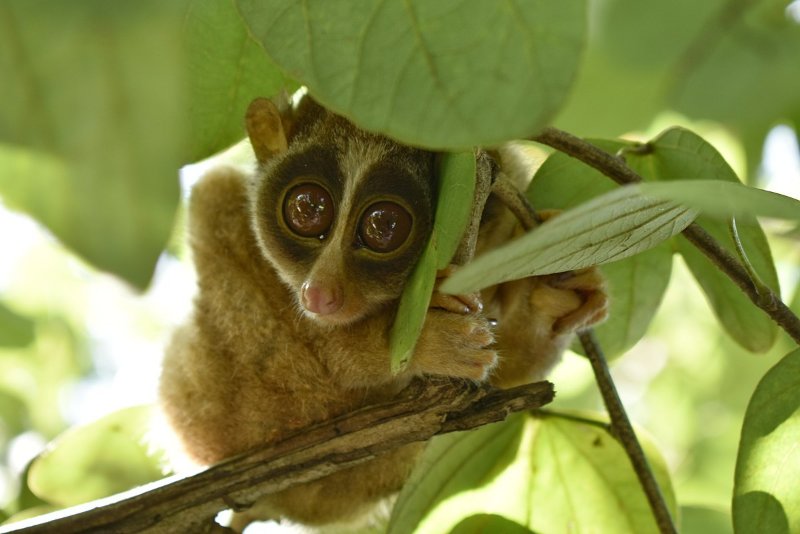
Red Slender Lorises are small, agile primates that live in the southwestern corner of Sri Lanka, where they prefer lowland rainforests but can be found at elevations up to 900 meters above sea level if living in mountain rainforests.
They weigh around 150 grams and measure between 11.5 and 17 centimeters long with huge red eyes, rounded ears, and long slender arms and legs.
Lorises have opposable thumbs that help them climb trees. They are also predators because they hunt for lizards or other reptiles. At night, they come out and play until they mate. They do this by climbing up to the branch and hanging underneath it.
Red slender lorises are endangered because they live in an area where there is not enough space for them. The animals are hunted down. And their bodies are used as medicine, even though it is illegal to do so. But now organizations who protect the animals are helping them to live on and thrive.
The red slender loris is listed as Endangered on the IUCN Red List because of habitat loss and hunting for body parts used in traditional “medicine.” Despite legal protection, it continues to be poached.
FAQ
What is Red Slender Loris?
Sri Lankan slender lorises are a species of tiny, agile primates that dwell in the southwestern province of Sri Lanka and prefer lowland rainforests. Still, they can survive at elevations up to 900 meters above sea level in mountainous regions.
They weigh approximately 150 grams. And are between 11.5 and 17 centimeters long with large red eyes, rounded ears, and long slender arms and legs.
At night, Red Slenders Lorises use their opposable thumbs to climb trees. But at dusk, they come out and playmate until both individuals hang from a tree upside down and intertwine their arms (upon which mating occurs).
How many Red slender lorises are left in the wild?
The red slender loris is found only in Sri Lanka, so it does not occur anywhere else in Asia or in Africa. It belongs to the family Lorisidae, which contains the slender lorises and the African pottos, not 92 species.
The species is classified as Endangered on the IUCN Red List, and its Critically Endangered montane subspecies, the Horton Plains slender loris, may number only about 80 individuals. The main threats are deforestation, hunting for the pet and traditional-medicine trades, and road deaths.
Where do Red slender lorises currently live and why?
The red slender loris lives only in Sri Lanka, in the rainforests of the island’s southwestern wet zone, and not in India, China, or mainland Asia. It is endangered because its forest home is being cleared for logging, agriculture, and development, and because of the pet trade and killing for use in traditional medicine.
How do Red Slender Lorises protect themselves?
Unlike the slow lorises, slender lorises are not venomous. The red slender loris relies mainly on camouflage, stealth, and its slow, silent movements to avoid predators, and it usually rests by day hidden in dense foliage or curled up in a tree.
It is a strepsirrhine primate, closely related to other nocturnal primates such as the slow lorises, pottos, and bushbabies (galagos). Its large, forward-facing eyes are backed by a reflective layer called the tapetum lucidum, which gives it excellent night vision.
Are Red Slender Lorises omnivorous?
The red slender loris is classified as an omnivore. Red slender lorises are omnivores which means that they eat meat and plants. They eat insects, small birds, rodents, reptiles, fruits, and leaves. They have strong jaws to help crack the exoskeleton of the insects they eat.
This species has a shortened snout and sharp canine teeth. It also has two small lower canines for eating insects such as ants, termites, and bee larvae with molars in the rear of the mouth. It can grind up their necessary food.
What is a threat to Red slender lorises today, and how can we protect them better?
Human encroachment into Red Slender Loris natural habitats has increased. It is due to human population growth and the demand for black magic rituals.
These species’ bodies are requested by witch doctors to be used in certain ceremonies. It is because they are thought to bring good luck. Its body parts are used in ceremonies to bring the owner wealth, health, and good fortune.
However, human population growth and development are the leading causes of endangerment for today’s Red Slender Lorises. Fortunately, this is beginning to change owing to nations like Sri Lanka. They have prohibited the sale of its kind from implementing rehabilitation and conservation initiatives.
The Red Slender Loris is a primate that lives in Sri Lanka’s wet zone. And fewer than 60 individuals remain in its natural habitat, fragmented into three isolated regions.
It is susceptible to any change in its surroundings. And they have already declined due to deforestation and habitat fragmentation. Less than 100 Red Slender Lorises are estimated to survive in the wild today.
Other Species Profile
See Related: Monkeys With Red Butts: 5 Species and Why Their Rumps Turn Red
See Related: Red Panda Network