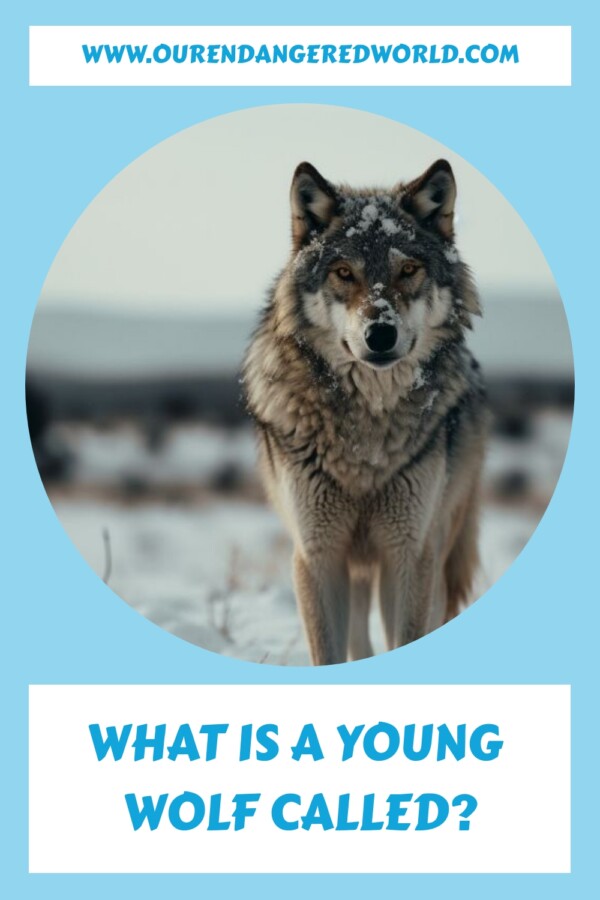
What is a young wolf called? A young wolf is called a pup. Whelp is also correct, and cub is sometimes used in general English, but wildlife researchers and conservation organizations most often use pup. Pups born in the same birth are a litter.
The name does not change for Arctic, Mexican, red, Ethiopian, or other wolves: their young are still pups. What does change is the pup’s developmental stage—from a blind, dependent newborn to a fast-growing juvenile that learns from the entire family pack.
Wolf pup facts at a glance
- Standard baby name: pup
- Other accepted terms: whelp and, less commonly, cub
- Group of siblings: litter; each sibling is a littermate
- Birthplace: den
- Eyes open: usually around 11 to 15 days
- Weaning: commonly around 5 to 9 weeks in gray wolves
- Around one year old: yearling or juvenile
- Family group: pack
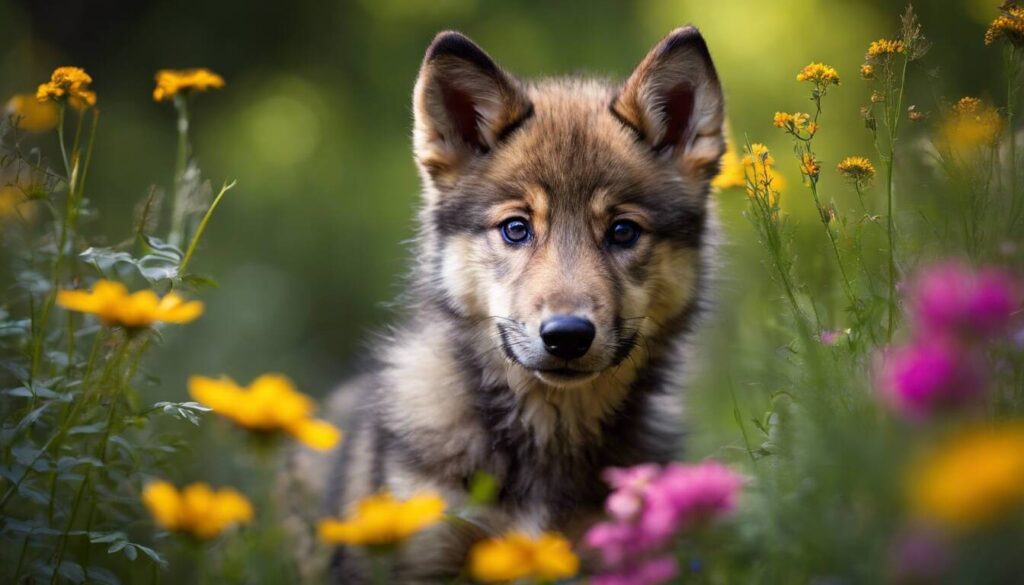
What is a baby wolf called: pup, whelp, or cub?
Pup is the clearest and most widely used answer. The National Park Service, International Wolf Center, U.S. Fish and Wildlife Service, and other wildlife organizations consistently refer to young wolves as pups.
Whelp is a valid term for the young of carnivorous mammals and can also describe the act of giving birth, as in whelping season. It sounds old-fashioned in everyday speech but still appears in wildlife and veterinary contexts.
Cub is also understood and appears in general dictionaries and some British wildlife writing. It is not wrong, but wolf pup is more precise and more common in North American scientific and conservation sources. Puppy is informal and usually refers to a young domestic dog.
| Term | Meaning | Best use |
|---|---|---|
| Pup | A baby or young wolf | Standard wildlife and scientific usage |
| Whelp | A young carnivorous mammal; also a verb meaning to give birth | Correct but less common in everyday language |
| Cub | A young wolf or another large carnivore | General English; less common in wolf research |
| Puppy | A young domestic dog | Informal when applied to wolves |
| Litter | All pups born in one birth | The group of newborn siblings |
| Yearling | A wolf around one year old | An older juvenile, not a newborn pup |
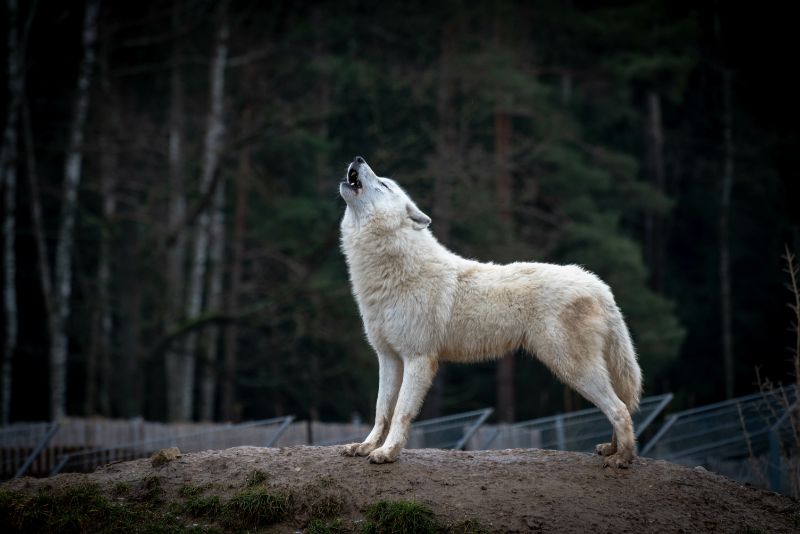
Do different wolf species have different names for their young?
No. The term pup applies across wolf species, populations, and subspecies. There is no standard zoological convention that assigns “kids” to Mexican wolves or separate formal baby names to Arctic, Northern Rocky Mountain, or Eurasian wolves.
Wolf taxonomy is more complicated than the baby names. The American Society of Mammalogists’ Mammal Diversity Database currently lists several species in the genus Canis whose common names include “wolf.” Other authorities may classify some populations differently as genetic research develops. For a plain-language overview, see our guide to what a species is.
| Common name | Scientific name | Name for the young |
|---|---|---|
| Gray wolf | Canis lupus | Pup |
| Red wolf | Canis rufus | Pup |
| Eastern wolf | Canis lycaon | Pup |
| Ethiopian wolf | Canis simensis | Pup |
| African wolf | Canis lupaster | Pup |
Names such as Arctic wolf, Mexican wolf, Eurasian wolf, Indian wolf, and Himalayan wolf usually refer to gray wolf subspecies, populations, or evolutionary lineages, depending on the authority. Their offspring do not receive separate formal baby names. Explore the differences in our guide to the types of wolves.
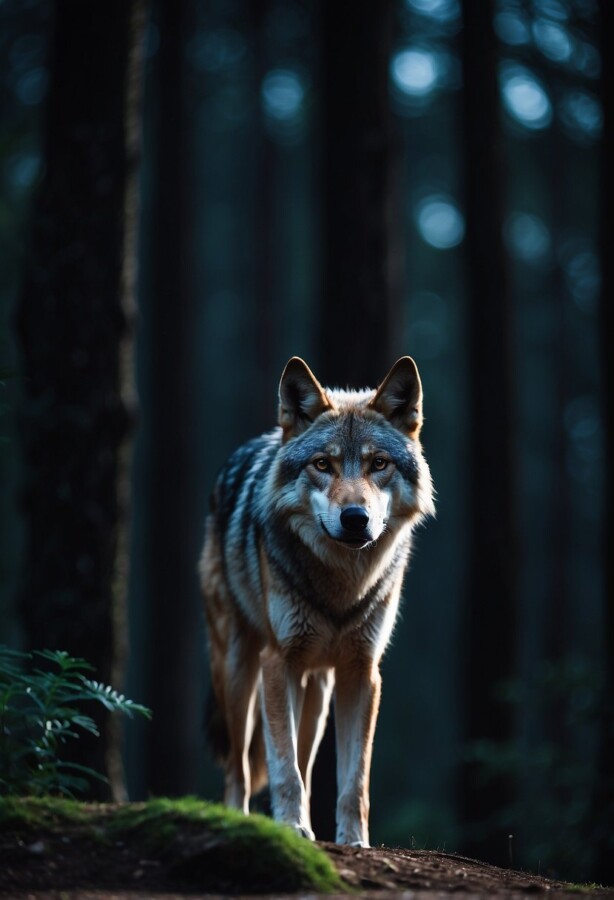
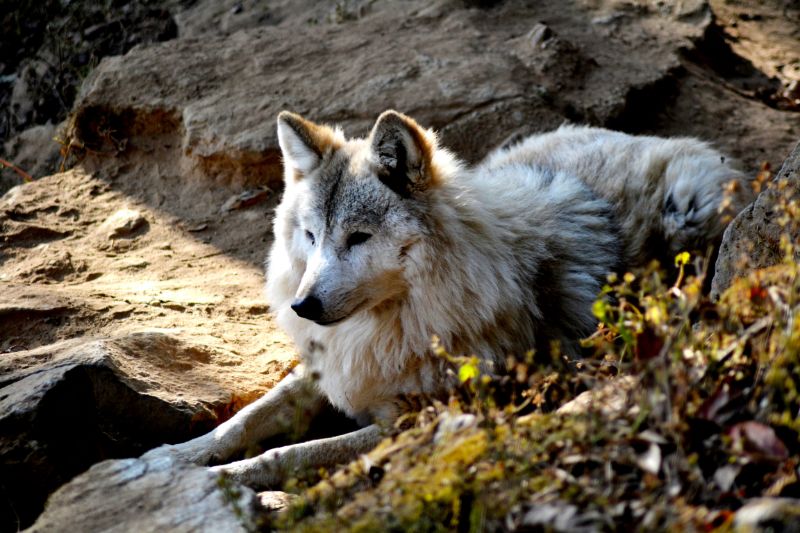
Wolf pup development: from birth to yearling
The milestones below describe a typical gray wolf pup. Timing varies with the individual, population, climate, food supply, and research method. The International Wolf Center’s development timeline and Yellowstone wolf data provide the most useful reference points.
| Age | Typical development |
|---|---|
| Birth to 12 days | Pups are blind, deaf, unable to regulate body temperature well, and limited to crawling, nursing, and sleeping. |
| 11 to 15 days | Eyes begin to open and are blue at first. Vision remains poorly developed. |
| About 2 to 4 weeks | Milk teeth appear, pups begin standing and walking, hearing improves, and they may eat small amounts of regurgitated meat. |
| About 3 to 8 weeks | Pups appear outside the den, play with littermates, practice social signals, and begin the gradual weaning process. |
| About 5 to 9 weeks | Gray wolf pups are commonly weaned from milk, although adults continue bringing regurgitated food. |
| About 8 to 16 weeks | The pack may shift the pups from the den to one or more rendezvous sites. Adult guard hairs appear, eye color changes, and pups follow adults for short distances. |
| About 4 to 7 months | Growth remains rapid, adult teeth replace milk teeth, and the young wolves increasingly resemble adults. |
| About 7 to 12 months | Pups travel more extensively with the pack and begin participating in hunts. Around one year, they may be called yearlings. |
| About 1 to 3 years | Many young wolves disperse to seek a mate and territory. Sexual maturity is generally reached during this period. |
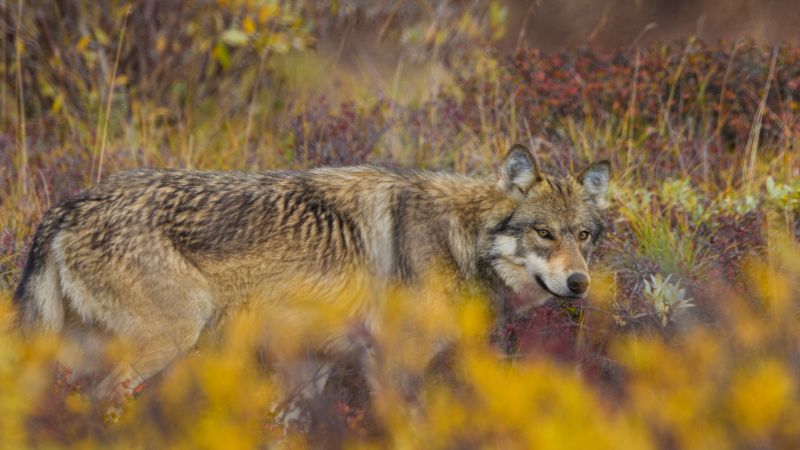
How a wolf pack raises its pups
A wild wolf pack is usually a family: the adult parents, pups from the current year, older offspring, and occasionally other wolves. The mother nurses the newborns, while the father and other pack members help supply food, guard the den area, and care for the growing pups. This cooperative care gives the breeding female time to recover and eventually leave the den to feed.
As the pups grow, adults and older siblings bring them meat—often by regurgitating food after returning from a hunt. Play also matters. Chasing, wrestling, stalking, biting gently, and responding to body language help pups build coordination and learn the social rules used by the pack.
The familiar “alpha wolf” label can create the wrong picture. The National Park Service explains that wild packs are usually family units, so the leaders are generally the parents. The International Wolf Center therefore favors terms such as breeding pair, breeders, or parents for typical wild packs. Captive groups of unrelated wolves may show a more competitive rank structure.
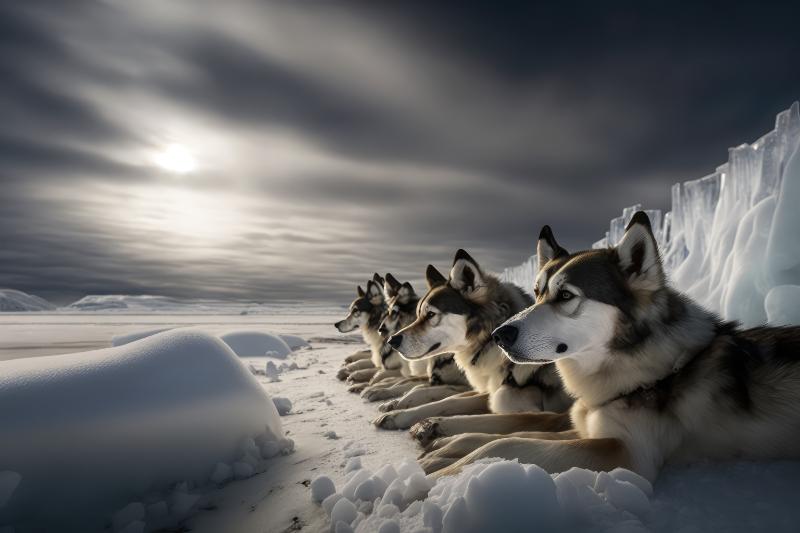
How to recognize a young wolf
Very young pups have dark, soft fur, rounded heads, short muzzles, small folded ears, and limited mobility. During the socialization period, their feet and heads can look disproportionately large. Their eyes open blue and usually shift toward yellow, gold, green, or brown as they mature.
Age becomes harder to judge after several months because young wolves grow quickly and develop adult guard hairs. Size alone is unreliable: sex, nutrition, season, geographic population, camera perspective, and coat thickness all change how large a wolf appears. Our wolf size comparison explains why body measurements overlap.
A photograph may not be enough to distinguish a young wolf from a coyote, large domestic dog, or wolf-dog hybrid. Location, tracks, movement, pack behavior, genetics, and expert field assessment can all matter. Never approach a suspected pup, den, or rendezvous site. Give the animals space, keep dogs controlled, and follow the rules of the local park or wildlife agency.
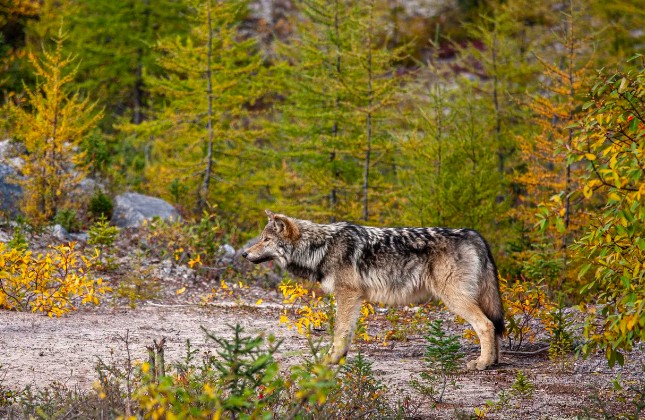
Wolf terms worth knowing
| Wolf term | Definition |
|---|---|
| Den | A protected shelter where the breeding female gives birth and cares for newborn pups. |
| Rendezvous site | An above-ground home base used after pups become old enough to leave the birth den. |
| Pack | A family group that commonly includes the parents and offspring from one or more years. |
| Breeding pair | The adult male and female that produce pups; often simply the parents. |
| Juvenile | A broad term for a young wolf that is no longer a newborn but is not fully mature. |
| Yearling | A young wolf around one year old. |
| Disperser | A wolf that leaves its birth pack to seek a mate, territory, or another pack. |
Frequently asked questions
What is a baby wolf called?
A baby wolf is called a pup. Whelp is also correct, and cub is sometimes used in general English, but pup is the standard term in wildlife sources.
What is a group of baby wolves called?
Pups born in the same birth are a litter, and the siblings are littermates. A pack includes the parents and offspring from one or more years.
When do wolf pups open their eyes?
Gray wolf pups generally open their eyes at about 11 to 15 days old. Their eyes are blue at first and change color as they mature.
When does a wolf pup leave the den?
Timing varies, but pups begin appearing near the den entrance at about three to four weeks. Packs commonly move older pups to rendezvous sites at roughly eight to sixteen weeks.
What is a one-year-old wolf called?
A wolf around one year old is commonly called a yearling or juvenile. Many remain with their family pack until they disperse between one and three years of age.
Is an alpha wolf the father of the pups?
In a typical wild pack, the adult parents are usually the breeding pair and are naturally dominant to their offspring. Biologists increasingly prefer parent, breeding male, and breeding female over alpha.
The simple answer
A young wolf is called a pup. A group of newborn siblings is a litter, an older young wolf may be called a juvenile or yearling, and the family group that raises it is a pack. The same basic terminology applies across wolf species and populations.
Continue exploring with our guide to the largest wolves in the world.